×

Guyana🇬🇾 | townsBarticaSpeedboat stelling, Front Street rum shops, river confluence, goldfield gateway | things to do and best time to go

Explore BamichiExplore Lethem

Backpacking in Bartica
🌟 Highlighttown ranked #2
By Johan Kruseman 🇳🇱 | Updated October 19, 2026

Bartica suits backpackers who like their travel a little rough, with a river on one side and the rainforest interior on the other. If you need polished sights or a long list of museums, you may find it less rewarding. The town sits in the north of Guyana, where the Essequibo, Cuyuni and Mazaruni rivers meet, and it works as the gateway to the interior rather than a place with big monuments. Speedboats slap across the brown water to the stelling (the main dock), diesel and fried fish drift along Front Street, and minibuses honk past the market. Getting here is a fast boat ride from Parika, which feels like part of the trip. Evenings are social in a low-key way: rum shops, cookshops and a few guesthouses make it easy to fall into conversation with miners, locals and fellow travelers. Those who want river islands, waterfalls and sandy beaches will like it most. Those chasing comfort and nightlife won't.

Discover everything you want to know in the 📖 Guyana Travel Guide.


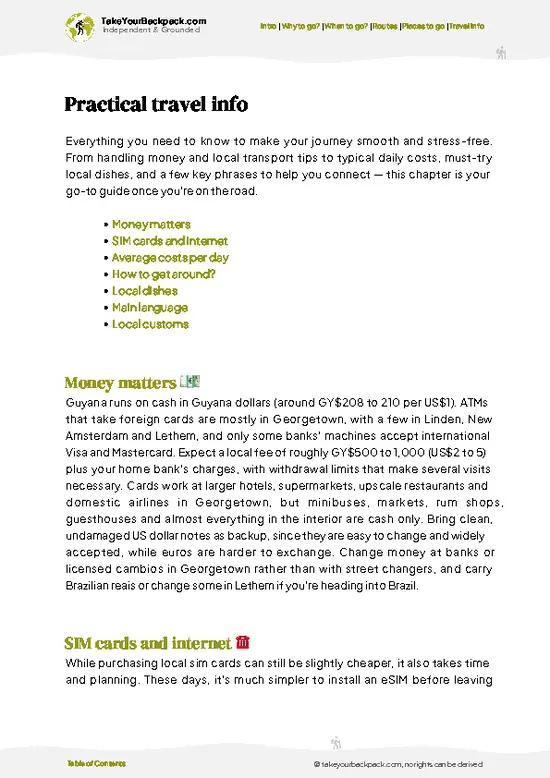
example page 0 from our offline Travel Guide for Guyana
example page 1 from our offline Travel Guide for Guyana
example page 2 from our offline Travel Guide for Guyana
example page 3 from our offline Travel Guide for Guyana
example page 4 from our offline Travel Guide for Guyana
example page 5 from our offline Travel Guide for Guyana
example page 6 from our offline Travel Guide for Guyana
example page 7 from our offline Travel Guide for Guyana
Loading the map 🌍
CLICK TO FILTER
cities
towns
villages
landmarks
national parks
hikes
beaches
attractions
festivals
regions
SHOW COUNTRY’S BESTSHOW ALL

✨ Why go?
Ranked #2 town in Guyana
What makes this town worth visiting

Bartica is the jumping-off point for the Essequibo, Cuyuni and Mazaruni country, and that is the whole reason to come. From here you can reach Kaieteur-bound flights and river trips arranged through local operators, the sandbar beaches of Parika-side islands, and the rapids at Marshall Falls without needing your own vehicle. Most people give it two or three nights, which is enough for a couple of boat days and a slow evening on the waterfront. Guesthouses are small and family-run, so you will end up chatting with the owner about which boat captain to trust. The town is walkable in twenty minutes, and the food is straightforward: pepperpot, fried rice, curry and fresh river fish. It is best for solo travelers, small groups and anyone happy to trade polish for access to real forest and river … read more 👉
Bartica is the jumping-off point for the Essequibo, Cuyuni and Mazaruni country, and that is the whole reason to come. From here you can reach Kaieteur-bound flights and river trips arranged through local operators, the sandbar beaches of Parika-side islands, and the rapids at Marshall Falls without needing your own vehicle. Most people give it two or three nights, which is enough for a couple of boat days and a slow evening on the waterfront. Guesthouses are small and family-run, so you will end up chatting with the owner about which boat captain to trust. The town is walkable in twenty minutes, and the food is straightforward: pepperpot, fried rice, curry and fresh river fish. It is best for solo travelers, small groups and anyone happy to trade polish for access to real forest and river life. If you want a lively party scene, treat it as a short stop. It does reward people who like to talk with locals.

💡 HighlightsEssential experiences to have while visiting Bartica

  1. Stelling and Waterfront: The river landing is where Bartica announces itself, with speedboats unloading passengers, vendors selling snacks and miners hauling gear. Go in the early morning or late afternoon when boats arrive in waves. Free, 30 minutes to an hour.
  2. Bartica Market: A working market close to the stelling, with fresh produce, fish, cassava bread and small stalls selling rubber boots and mining supplies. Morning is best, before the heat. Entry is free, snacks cost a couple of dollars, and an hour is plenty.
  3. Riverfront Promenade: The riverfront stretch is the place for a slow walk with a cold drink, watching boats cross the wide, brown junction of the rivers. Late afternoon has the best breeze. Free, about an hour.
  4. Bartica Sandbar and Riverside Beach Areas: Sandy riverbanks near town
… read more 👉
  1. Stelling and Waterfront: The river landing is where Bartica announces itself, with speedboats unloading passengers, vendors selling snacks and miners hauling gear. Go in the early morning or late afternoon when boats arrive in waves. Free, 30 minutes to an hour.
  2. Bartica Market: A working market close to the stelling, with fresh produce, fish, cassava bread and small stalls selling rubber boots and mining supplies. Morning is best, before the heat. Entry is free, snacks cost a couple of dollars, and an hour is plenty.
  3. Riverfront Promenade: The riverfront stretch is the place for a slow walk with a cold drink, watching boats cross the wide, brown junction of the rivers. Late afternoon has the best breeze. Free, about an hour.
  4. Bartica Sandbar and Riverside Beach Areas: Sandy riverbanks near town give you a swim spot where locals gather, especially on weekends. Dry months have the most exposed sand. Free, 1 to 2 hours; check currents with locals before swimming.
  5. Rum shops and cookshops on Front Street: An evening here is the town’s real social scene, with pepperpot, fried fish and cold local beer, plus conversation with people heading to or from the goldfields. Go after dark. Meals run US$3 to 8, 1 to 2 hours.
Close to town, day trips include Marshall Falls, the Teperu river resort, the Penal Settlement ruins and river islands such as Kaow Island by boat. All five entries together take about half a day, with a few hours more if you linger over a meal.
Spotted a mistake or missing something? Contact us.

Things to do near Bartica

Ratings based on Tripadvisor reviews. When you book through this link, you support our work at no extra cost to you.

🏘️ NeighborhoodsHow different areas shape the experience

Bartica is small enough to cover on foot in an afternoon, and each patch of it has its own noise and smell.
  • Stelling and Front Street. Speedboats slam against the wooden stelling, engines gargle, and touts shout destinations. Front Street runs along the Essequibo, lined with shops, rum bars and fried-fish stalls, and the river breeze cuts the heat. Walk it at dusk with a cold Banks beer and watch the boats come in loaded with mining gear.
  • Market area and the numbered avenues. Behind the waterfront, the streets of the numbered avenues smell of diesel, fresh bread and frying plantain. Gold shops, hardware stores and pepper-pot stalls crowd together, and hand-painted signs hang over open doorways. Walking here is easy but hot by midday, so start early. You come away with a plate of cook-up rice
… read more 👉
Bartica is small enough to cover on foot in an afternoon, and each patch of it has its own noise and smell.
  • Stelling and Front Street. Speedboats slam against the wooden stelling, engines gargle, and touts shout destinations. Front Street runs along the Essequibo, lined with shops, rum bars and fried-fish stalls, and the river breeze cuts the heat. Walk it at dusk with a cold Banks beer and watch the boats come in loaded with mining gear.
  • Market area and the numbered avenues. Behind the waterfront, the streets of the numbered avenues smell of diesel, fresh bread and frying plantain. Gold shops, hardware stores and pepper-pot stalls crowd together, and hand-painted signs hang over open doorways. Walking here is easy but hot by midday, so start early. You come away with a plate of cook-up rice for a few dollars and a feel for a frontier town that lives off the interior.
  • Waterfront stretch and Triangle. Toward the edge of town, the road widens, the traffic of minibuses and motorbikes thins, and the river opens out into a wide, brown sheet. Locals sit on seawall ledges in the evening. It is quiet, a little rough underfoot, and the best place to catch the sunset light on the water.
  • Hill and residential streets. Climb a few blocks uphill and wooden stilted houses sit among mango trees, roosters call, and music drifts from yards. It is a ten to fifteen minute walk from the center. You get shade, a view back over the zinc roofs to the river, and a slower pace.
  • Nightlife strip. After dark, bars along and just off Front Street thump with soca and dancehall, and the crowd of miners and day-trippers spills onto the road. Expect loud, sweaty and friendly. Everything stays within a short walk, so you can stumble back without a ride.

⌛️ 1 dayA smart one-day plan

6:30 AM: Stelling (Bartica waterfront)
Start at the stelling where the speedboats from Parika dock, because the town is at its busiest and best before the sun gets hot. Fishermen unload, vendors set out cooked food and the brown Essequibo spreads wide in front of you. Grab a seat on the seawall and watch the traffic for twenty minutes.

7:30 AM: Market area and Second Avenue
Walk a few minutes up the main street to the market stalls, where produce, fresh fish and gold-country supplies are sold side by side. Buy a fried bake with saltfish or a pastry from a bakery counter for breakfast. The point here is the mix of miners, boatmen and families doing their weekly shopping.

9:30 AM: The back streets
Walk the residential streets just back from the waterfront, which rarely see visitors. Wooden houses … read more 👉
6:30 AM: Stelling (Bartica waterfront)
Start at the stelling where the speedboats from Parika dock, because the town is at its busiest and best before the sun gets hot. Fishermen unload, vendors set out cooked food and the brown Essequibo spreads wide in front of you. Grab a seat on the seawall and watch the traffic for twenty minutes.

7:30 AM: Market area and Second Avenue
Walk a few minutes up the main street to the market stalls, where produce, fresh fish and gold-country supplies are sold side by side. Buy a fried bake with saltfish or a pastry from a bakery counter for breakfast. The point here is the mix of miners, boatmen and families doing their weekly shopping.

9:30 AM: The back streets
Walk the residential streets just back from the waterfront, which rarely see visitors. Wooden houses on stilts, kids in school uniforms and the sound of generators and reggae give a truer picture of Bartica than the waterfront does. Keep it to an hour and say hello to everyone.

11:00 AM: River views
Back at the waterfront, negotiate a small boat to the Essequibo islands, or simply follow the shoreline road to a quiet stretch with open views across the junction of the Essequibo and Mazaruni rivers. Sit in the shade and watch barges push upriver toward the mining camps.

1:00 PM: Lunch
Eat at a local spot near the waterfront. Chicken and rice, cook-up rice or fresh river fish with a cold Banks beer or a ginger drink is the standard order. Take your time, since the midday heat makes everything slow.

3:00 PM: Rest and sunset Stelling stroll
Retreat to your guesthouse for a shower and a nap. Later, walk the seawall again as the light softens and locals gather to play dominoes and cool off.

6:30 PM: Evening on the waterfront
Finish with a drink at one of the riverside bars. Music rises as night falls, and this is where you will meet other travelers heading to Kaieteur or the interior. Order one more round, then head home before the boats stop.

🌤️ When to go?Weather, crowds, and seasonal trade-offs

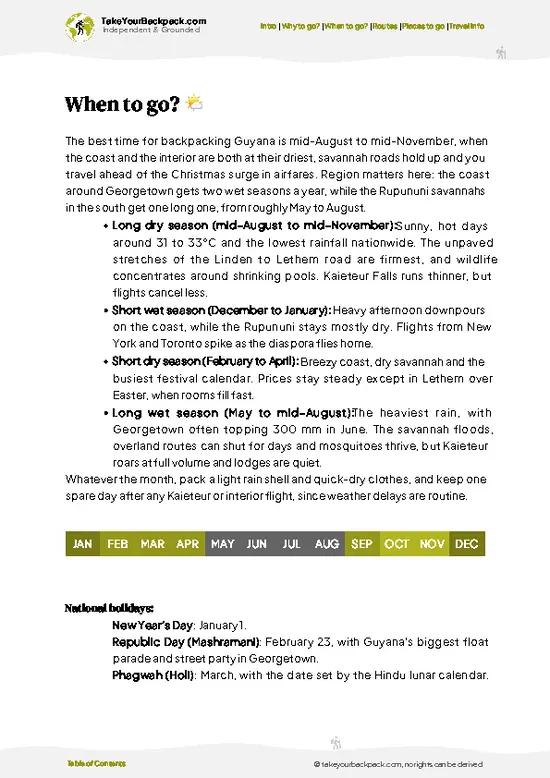
The long dry spell from August to mid-November is the most comfortable time for Bartica, with roads firm and river trips smooth.
  • Long Dry Season (Aug to Nov): Highs of 31 to 33°C (88 to 91°F), lows near 23°C (73°F), and little rain. Boat rides to Kaieteur-bound and Essequibo islands are easiest now. Daylight stays close to 12 hours all year.
  • Short Wet Season (Dec to Jan): Showers come in bursts, but the heat eases slightly. Christmas brings returning families and fuller boats.
  • Short Dry Season (Feb to Apr): Hot and bright, with similar temperatures. Mashramani in February brings parades and music, and lodging gets tighter.
  • Main Wet Season (May to Jul): Heavy rain, mud on interior tracks, and high humidity. Rooms and boat tours are easier to bargain for, and the river runs high and brown.
  • Easter
… read more 👉
The long dry spell from August to mid-November is the most comfortable time for Bartica, with roads firm and river trips smooth.
  • Long Dry Season (Aug to Nov): Highs of 31 to 33°C (88 to 91°F), lows near 23°C (73°F), and little rain. Boat rides to Kaieteur-bound and Essequibo islands are easiest now. Daylight stays close to 12 hours all year.
  • Short Wet Season (Dec to Jan): Showers come in bursts, but the heat eases slightly. Christmas brings returning families and fuller boats.
  • Short Dry Season (Feb to Apr): Hot and bright, with similar temperatures. Mashramani in February brings parades and music, and lodging gets tighter.
  • Main Wet Season (May to Jul): Heavy rain, mud on interior tracks, and high humidity. Rooms and boat tours are easier to bargain for, and the river runs high and brown.
  • Easter Regatta: Easter weekend fills the town with speedboat racing, crowds and higher prices for beds and food.
Book a bed at least a few weeks ahead if your trip lands on Easter or Mashramani.


source: climatestotravel.comJANJanuary: highly recommended for travelingFEBFebruary: highly recommended for travelingMARMarch: excellent for travelingAPRApril: excellent for travelingMAYMay: fair for travelingJUNJune: fair for travelingJULJuly: fair for travelingAUGAugust: fair for travelingSEPSeptember: highly recommended for travelingOCTOctober: highly recommended for travelingNOVNovember: good for travelingDECDecember: good for traveling
when-to-go

✈️ The backpacker research shortcutGuyana Travel Guide

An offline-friendly backpacking guide with optimized travel routes, ranked highlights, transport advice, and the best areas to stay.
example page 0 from our offline Travel Guide for Guyana
example page 1 from our offline Travel Guide for Guyana
example page 2 from our offline Travel Guide for Guyana
example page 3 from our offline Travel Guide for Guyana
example page 4 from our offline Travel Guide for Guyana
example page 5 from our offline Travel Guide for Guyana
example page 6 from our offline Travel Guide for Guyana
example page 7 from our offline Travel Guide for Guyana
The digital guide (161 pages) contains:
✅ 43 highlights, ranked by travel appeal
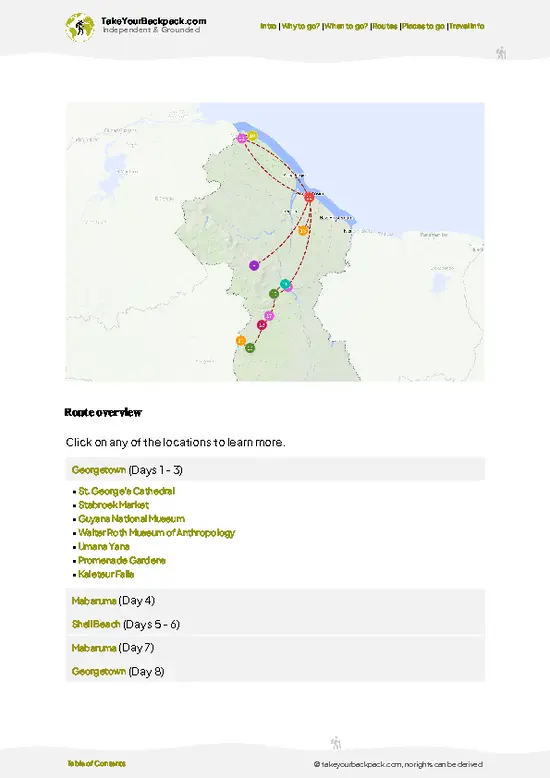
✅ Optimized 5, 10 & 15-day travel routes
✅ Cities, national parks, landmarks, beaches
✅ How to get around
✅ Offline-friendly for travel without Wi-Fi
👉 Click to see all 30+ guide features

📅 Plan smarter in minutes, not weeks
✅ Month by month travel advice
✅ Festivals & national holidays
✅ Budget expectations

🗺️ Go to the right places, skip the overrated ones
✅ Honest pros & cons of destinations
✅ Top hikes, parks & viewpoints
✅ Lesser-known places most travelers miss
✅ Clear “worth it vs skip it” guidance

🛏️ Travel smoothly without rookie mistakes
✅ Best areas to stay
✅ Transport systems explained simply
✅ Common scams & safety advice
✅ SIM cards, money & practical tips

🌍 Understand the country, not just visit it
✅ Culture & traditions
✅ Local customs
✅ Festivals worth planning around
✅ Traveler-friendly historical context
✅ Insights that make places more meaningful

📱 Built for real travel conditions
✅ Fully downloadable PDF
✅ Works completely offline
✅ Optimized for phone use
✅ Useful in remote areas & buses
✅ Everything in one place
Stop searching, start planning
Get instant access to your full guide. 30‑day money-back guarantee.
+ Add another guide for just

By proceeding you agree to our terms.
Sent to your inbox immediately after payment • 100% Secure Checkout
Best Backpacking Travel Advisor 2025 tourism awardBest Backpacking
Travel Advisor
2025
What others say about Take Your Backpack Guides:
⭐⭐⭐⭐⭐
Fantastic, amazing amount of information!
⭐⭐⭐⭐⭐
My goodness this is amazing, it's what I've been looking for hats off too you!
⭐⭐⭐⭐⭐
I think this is absolutely BRILLIANT
⭐⭐⭐⭐
Very complete and informative. It's still missing places, but I gotta to commend you
⭐⭐⭐⭐⭐
This is truly amazing, thank you, can't wait to explore it with my kids!
⭐⭐⭐⭐⭐
Awesome resource, thank you!
⭐⭐⭐⭐⭐
This is amazing! Can't wait to explore the ones I haven't seen
⭐⭐⭐⭐
I love this! Well done, great idea.
⭐⭐⭐⭐⭐
Thanks for taking the time to make this gem!
⭐⭐⭐⭐⭐
This might be the best website I've ever seen.
⭐⭐⭐⭐⭐
Congratulations, and thank you so much for your work; it's incredibly valuable.
⭐⭐⭐⭐
In all seriousness I think you did a great job pointing out the important spots
⭐⭐⭐⭐⭐
10/10 very good
⭐⭐⭐⭐⭐
As someone who's only just starting to visit regularly this is awesome, thank you.
⭐⭐⭐⭐
Thank you very much! I'm going to visit my dad, it's going to be very useful!
⭐⭐⭐⭐⭐
This is really cool! We'll be travelling for the first time and this definitely come in handy.
⭐⭐⭐⭐⭐
You are now our minister of culture, congratulations 👨‍💼
⭐⭐⭐⭐⭐
Just wanted to tell you that this is a pearl! Going to follow your recommendations.
⭐⭐⭐⭐⭐
This is so cool. I'll definitely be using the resource for my travels soon.
⭐⭐⭐⭐⭐
This is very impressive! Good work.
⭐⭐⭐⭐⭐
This is an amazing and informative site. Very well done!

🛏️ Where to stay?Choosing the right base

The waterfront and Main Street area is the best base in Bartica, with the most budget rooms and guesthouses within a 10 minute walk of the boats. Beds are mostly private rooms or small guesthouse dorms, since formal hostels are rare, and fan rooms start around US$15 to 30.
Staying near the stelling puts you next to early speedboats, minibuses, food stalls and ATMs. Noise is the price: engines start before dawn and bars along the seawall play music until late on weekends. Bring earplugs and ask for a room at the back. The streets are lit and busy until around 10 pm, so walking back is fine.
The quieter … read more 👉
The waterfront and Main Street area is the best base in Bartica, with the most budget rooms and guesthouses within a 10 minute walk of the boats. Beds are mostly private rooms or small guesthouse dorms, since formal hostels are rare, and fan rooms start around US$15 to 30.
Staying near the stelling puts you next to early speedboats, minibuses, food stalls and ATMs. Noise is the price: engines start before dawn and bars along the seawall play music until late on weekends. Bring earplugs and ask for a room at the back. The streets are lit and busy until around 10 pm, so walking back is fine.
The quieter option is the residential streets just behind Main Street and toward First Avenue. Guesthouses here are calmer, often with a fan and shared bathroom, and prices stay similar. You are still a short walk from restaurants and the market, but away from the loudest bars. Taxis are easy to call if you arrive late.
Three Mile and the outskirts have resorts and a few budget cabins, but they cost more, and you rely on taxis to get into town. Book ahead around Easter and Mashramani, when beds fill quickly.

🚌 Getting aroundHow to get around Bartica

From the minibus park near the market, the stelling and Main Street are a 5 to 10 minute walk, and most of Bartica is easily covered on foot. Traffic is light apart from minibus horns and motorbikes, and everything runs on a loose schedule once the boats arrive. The mix of public vans and taxis is reliable enough, but there are few fixed timetables.
  • Walking: The center is flat and compact, so you cross it in 15 to 20 minutes. Expect strong sun, puddles after rain and a steady stream of greetings. You pass fruit sellers and rum shops and get a feel for the river light by the seawall.
  • Minibuses: Short hops along the main road cost about US$1 to 2. They are loud, crowded and often full of mining gear, but they take you out to Three Mile and nearby beaches. Service thins out after dark.
  • Taxis: Shared
… read more 👉
From the minibus park near the market, the stelling and Main Street are a 5 to 10 minute walk, and most of Bartica is easily covered on foot. Traffic is light apart from minibus horns and motorbikes, and everything runs on a loose schedule once the boats arrive. The mix of public vans and taxis is reliable enough, but there are few fixed timetables.
  • Walking: The center is flat and compact, so you cross it in 15 to 20 minutes. Expect strong sun, puddles after rain and a steady stream of greetings. You pass fruit sellers and rum shops and get a feel for the river light by the seawall.
  • Minibuses: Short hops along the main road cost about US$1 to 2. They are loud, crowded and often full of mining gear, but they take you out to Three Mile and nearby beaches. Service thins out after dark.
  • Taxis: Shared cars and private cabs within town cost roughly US$2 to 5, and longer rides to resorts run US$8 to 15. Agree the fare first. A cabbie often points out landmarks and local history on the way.
  • Speedboats from Parika: Water taxis connect Bartica to Parika, taking about 60 to 75 minutes for US$10 to 14 each way. They leave when full, usually from early morning until mid-afternoon. Spray, engine roar and the wide river views make the ride memorable, so bring a rain jacket and wrap electronics in plastic.
  • Ferry from Parika: The slower passenger ferry takes around 2 hours and costs about US$6 to 9. You get a seat in the shade, a breeze and time to watch islands drift by. Sailings are limited, so check the day before.

👛 Costs (as of 19 October 2026)Travel costs and budget guide for Bartica

Bartica costs about US$55 to 85 a day for a backpacker, and the table below uses US$73 as the total with a high-season dorm bed. Prices run higher than the coast because food and fuel arrive by boat.
CategoryBudget RangeLocal Reality
Dorm accommodationUS$15 to 30Dorms are rare, so most travelers take a basic private room or guesthouse bed. Rooms with a fan sit near US$20 to 35 and cost less if shared. Figure US$25 in high season.
MealsUS$12 to 22Cook-up rice, fried chicken and Chinese-style plates from local shops cost US$3 to 6. Fish at a riverside spot runs a bit more. Allow US$18.
Local transportUS$3 to 8Minibuses and shared taxis within town are cheap. Tuk-tuk and motorbike rides cost a few dollars. Allow US$5.
Basic activities/entry feesUS$10 to 25A shared boat trip to nearby falls or sandbanks
… read more 👉
Bartica costs about US$55 to 85 a day for a backpacker, and the table below uses US$73 as the total with a high-season dorm bed. Prices run higher than the coast because food and fuel arrive by boat.
CategoryBudget RangeLocal Reality
Dorm accommodationUS$15 to 30Dorms are rare, so most travelers take a basic private room or guesthouse bed. Rooms with a fan sit near US$20 to 35 and cost less if shared. Figure US$25 in high season.
MealsUS$12 to 22Cook-up rice, fried chicken and Chinese-style plates from local shops cost US$3 to 6. Fish at a riverside spot runs a bit more. Allow US$18.
Local transportUS$3 to 8Minibuses and shared taxis within town are cheap. Tuk-tuk and motorbike rides cost a few dollars. Allow US$5.
Basic activities/entry feesUS$10 to 25A shared boat trip to nearby falls or sandbanks costs roughly US$10 to 25 per person. Budget US$15.
Miscellaneous expensesUS$5 to 12Bottled water, a few beers, snacks and a cash fee for the boat luggage. Allow US$10.
Total Daily BudgetUS$55 to 85About US$73 a day
Pay in Guyanese dollars and carry plenty of cash, since ATMs are limited and card machines are scarce. To save money, share boat and taxi fares with other travelers and eat at the market-area food stalls instead of waterfront restaurants.
⚠️ Prices can change and everyone travels differently, so take this as a rough guide. Hope it helps you plan your adventure!

🚌 Day tripsEasy escapes and nearby places

Bartica works well as a base for river and rainforest day trips, and most leave early by boat or taxi and return by evening.
Fort Island and Old Dutch Fort:
The ruins of Fort Island sit in the Essequibo, a boat ride of about 45 to 60 minutes from Bartica, and make a quiet morning of crumbling stone walls and river views. Expect to pay US$20 to 40 for a shared boat. Go in the dry season, when the river is calmer, and carry water because there is little shade.

Marshall Falls:
This small waterfall on the Mazaruni River is reached by a 30 to 45 minute boat ride and a short jungle walk, then a cool dip in the pools. Group boat tours cost about US$25 to 50 a person. Avoid the wet months, when the water is high and murky, and keep to the slippery rocks only with proper sandals.

Baganara Island: … read more 👉
Bartica works well as a base for river and rainforest day trips, and most leave early by boat or taxi and return by evening.
Fort Island and Old Dutch Fort:
The ruins of Fort Island sit in the Essequibo, a boat ride of about 45 to 60 minutes from Bartica, and make a quiet morning of crumbling stone walls and river views. Expect to pay US$20 to 40 for a shared boat. Go in the dry season, when the river is calmer, and carry water because there is little shade.

Marshall Falls:
This small waterfall on the Mazaruni River is reached by a 30 to 45 minute boat ride and a short jungle walk, then a cool dip in the pools. Group boat tours cost about US$25 to 50 a person. Avoid the wet months, when the water is high and murky, and keep to the slippery rocks only with proper sandals.

Baganara Island:
A short speedboat ride of around 20 to 30 minutes brings you to a sandy island with swimming, kayaking and a relaxed lunch spot. Day passes and boat fares total roughly US$30 to 60. Many first-timers arrive without booking, so confirm entry the day before.

Kurupung and Peters Mine Road:
A long day by hired vehicle along the Bartica-Potaro road shows mining camps, red earth and thick forest, taking 1 to 2 hours each way to the nearer sights. Costs run from US$50 to 100 split among a group. Go in the dry months, as the road turns to mud when it rains.

🛡️ SafetyStaying Safe: What Travelers Should Know

Bartica is generally friendly, but it is a mining gateway, so a bit of street sense matters, especially after dark. Bars along the waterfront can get rowdy on payday and holiday weekends, and fights occasionally break out. Keep your phone out of sight on crowded sidewalks, carry only the cash you need and leave passports in your room. Snatch theft happens in busy spots, particularly near the stelling and market.
Solo travelers, including women, usually find people curious and helpful, though catcalling is common. Stick to lit streets after 9 or 10 pm and take a taxi rather than walking dark back roads or the road to Three Mile. Taxi drivers sometimes quote tourist prices, so agree the fare first. Boat touts at the stelling can be pushy, so compare a few quotes and insist on life jackets. Carry … read more 👉
Bartica is generally friendly, but it is a mining gateway, so a bit of street sense matters, especially after dark. Bars along the waterfront can get rowdy on payday and holiday weekends, and fights occasionally break out. Keep your phone out of sight on crowded sidewalks, carry only the cash you need and leave passports in your room. Snatch theft happens in busy spots, particularly near the stelling and market.
Solo travelers, including women, usually find people curious and helpful, though catcalling is common. Stick to lit streets after 9 or 10 pm and take a taxi rather than walking dark back roads or the road to Three Mile. Taxi drivers sometimes quote tourist prices, so agree the fare first. Boat touts at the stelling can be pushy, so compare a few quotes and insist on life jackets. Carry mosquito repellent, since bites are an everyday annoyance.

FAQFrequently asked questions about Bartica

Bartica is worth visiting for a night or two rather than as a pure stopover, especially if you want river life and gold-mining culture. You can swim at Three Mile, take a boat to Fort Island or Marshall Falls for US$25 to 50, and join the crowds at the Easter Regatta. Many travelers also use it as the gateway to the interior.
Two to three days is enough for Bartica. One day covers the waterfront, market and Three Mile, and a second day fits a boat trip to Marshall Falls or Fort Island. A third day suits Baganara Island or a ride along the interior road, with costs of roughly US$60 to 85 a day.
Bartica can be done as a day trip from Georgetown, though it makes for a long day. The road to Parika takes about 1.5 to 2 hours, and the speedboat adds 60 to 75 minutes each way for US$10 to 14. Staying one night lets you see the town properly and avoid rushing to catch the last boats in mid-afternoon.
⚠️ Things can change over time, so always validate details locally before you go.

Other Guyanese towns near Bartica

Explore more nearby:

  • Linden—Bauxite pits, Demerara lift bridge, Blue Lake, company bungalows| 56 km away
  • Bamichi—Makushi village, forest trails, traditional farming| 69 km away
  • Mahdia—Gold shops, red laterite road, Potaro riverbank, miners' bars| 138 km away

💡 Not sure where to go next?
Create a personalized itinerary for Guyana including Bartica and the places that fit your trip.

Generate my itinerary

👉 Discover all towns

Or checkout all Guyana has to offer (think cities, towns, villages, national parks, hikes, beaches, festivals)
Country photo of Guyana

We 💚 feedbackFinal thoughts on visiting Bartica

Bartica trips go wrong when travelers book a boat ride at the stelling on impulse and pay tourist rates. Ask your guesthouse host for a captain they know, agree the price and the route before leaving, and bring cash. Pack insect repellent and a rain jacket, and give the town an unhurried evening.

✍️ Help improve this page!
The information on this page is based on in-depth research, insights shared by experienced travelers, and feedback from the local travel community in Guyana. While every effort is made to keep the information accurate and current, conditions can change — so if you spot anything incorrect or outdated, please get in touch.


🙋‍♂️ Give feedback

👋 Meet the founderWho’s Behind Take Your Backpack?

Johan, backpacker and founder of TakeYourBackpackHi, I’m Johan (Netherlands 🇳🇱), the creator of TakeYourBackpack. Over the past 3 decades, I’ve backpacked through 90+ countries across six continents, gaining extensive experience with independent travel, long-term trips, and overland routes.

This site is built on a combination of firsthand travel experience and carefully curated insights from other backpackers. Many guides are based on places I’ve personally visited, while others bring together tips, observations, and practical advice shared by trusted travelers I’ve met along the way.

The goal is to provide realistic, experience-driven guidance — not generic itineraries — so you can explore destinations with better context, clearer expectations, and more confidence.