

×

Guyana🇬🇾 | attractionsSt. George’s CathedralWooden spire, timber nave, stained glass, Sunday services | things to do and best time to go

Explore Iwokrama Canopy WalkwayExplore Stabroek Market

Backpacking in St. George’s Cathedral
🏆 Top pickattraction ranked #1
By Johan Kruseman 🇳🇱 | Updated October 19, 2026

People come for the wood: St. George’s Cathedral is among the tallest wooden buildings on earth, and standing under its spire you smell warm timber and old varnish rather than cold stone. Less obvious, and just as useful, is that it sits among Georgetown’s other colonial landmarks, so it works as an anchor for a walking loop rather than a stop of its own. It stands in Guyana’s capital, a short stroll from the city’s main government buildings. Inside, ceiling fans stir the air, shutters throw slatted light across pale pews, and the floor creaks under every step. It is worth your time for the structure and the quiet. It is not worth a whole morning, since the interior can be seen in under an hour. Start with the exterior around midmorning, step inside for the woodwork, then keep walking the nearby streets while the heat is still manageable.

Discover everything you want to know in the 📖 Guyana Travel Guide.


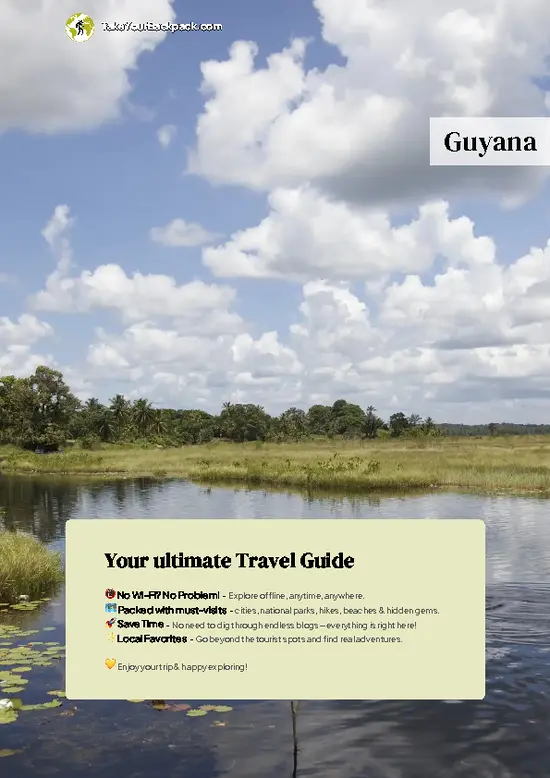
example page 0 from our offline Travel Guide for Guyana
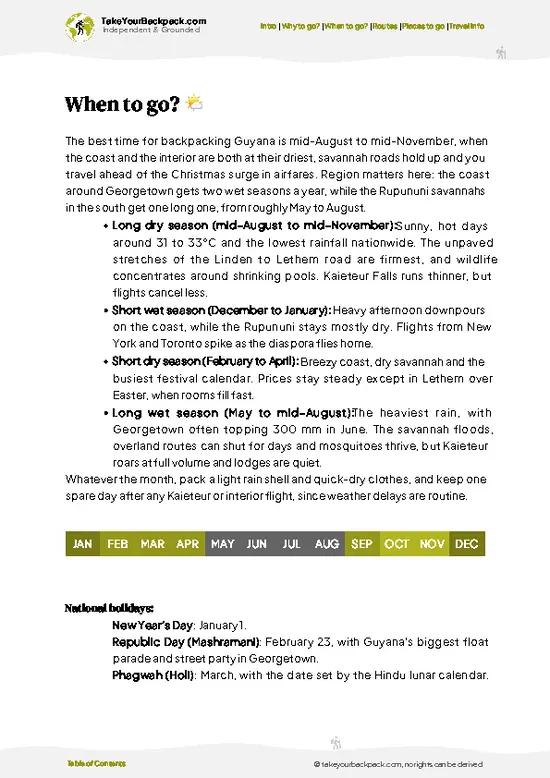
example page 1 from our offline Travel Guide for Guyana
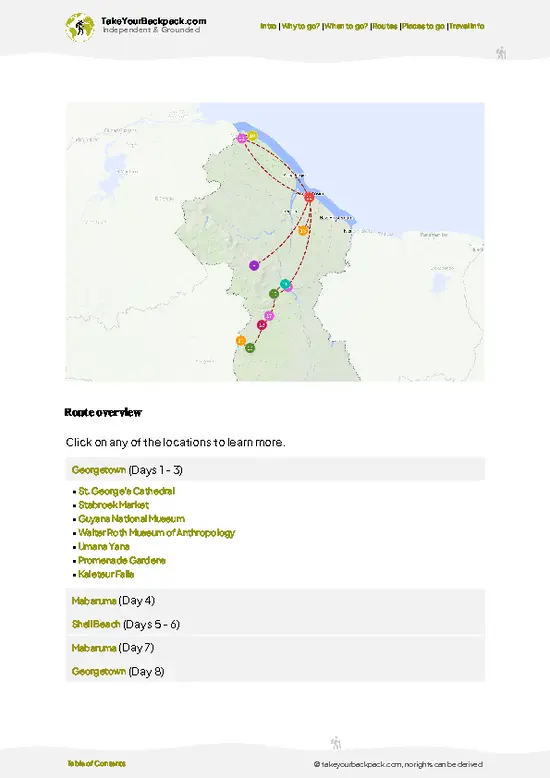
example page 2 from our offline Travel Guide for Guyana
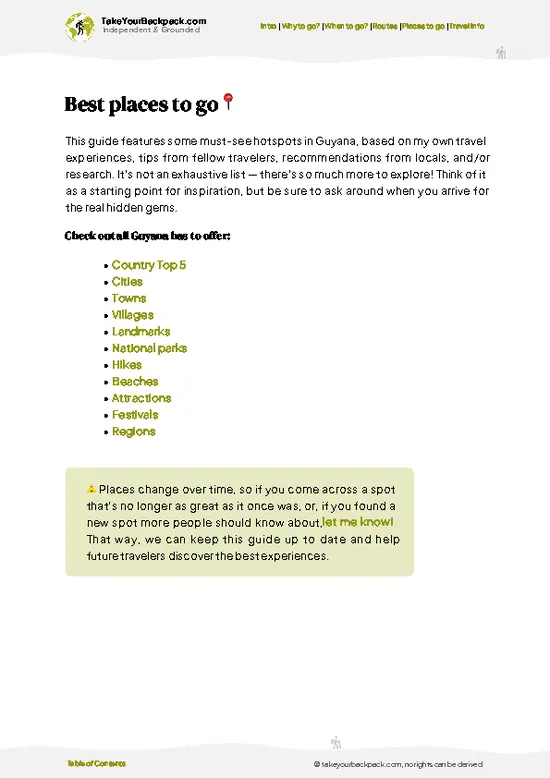
example page 3 from our offline Travel Guide for Guyana
example page 4 from our offline Travel Guide for Guyana
example page 5 from our offline Travel Guide for Guyana
example page 6 from our offline Travel Guide for Guyana
example page 7 from our offline Travel Guide for Guyana
Loading the map 🌍
CLICK TO FILTER
cities
towns
villages
landmarks
national parks
hikes
beaches
attractions
festivals
regions
SHOW COUNTRY’S BESTSHOW ALL

✨ Why go?
Ranked #1 attraction in Guyana
What makes it a must-see attraction

St. George’s Cathedral earns a place on a Guyana route because of one fact you can see with your own eyes: a Gothic Revival church of roughly 43.5 meters built almost entirely of timber. Look up and you see how carpenters carried a European stone-cathedral plan into a tropical hardwood. The design came from Sir Arthur Blomfield, a prominent English church architect, which gives the building a pedigree most wooden churches never had.

It also makes a very good first lesson in Georgetown. The city’s character comes from wooden construction, raised on stilts, with shutters and white paint, and the cathedral is the grandest example. Once you have read its proportions, the smaller wooden houses along the surrounding streets start to make sense.

The third reason is practical. Entry is low-key, the … read more 👉
St. George’s Cathedral earns a place on a Guyana route because of one fact you can see with your own eyes: a Gothic Revival church of roughly 43.5 meters built almost entirely of timber. Look up and you see how carpenters carried a European stone-cathedral plan into a tropical hardwood. The design came from Sir Arthur Blomfield, a prominent English church architect, which gives the building a pedigree most wooden churches never had.

It also makes a very good first lesson in Georgetown. The city’s character comes from wooden construction, raised on stilts, with shutters and white paint, and the cathedral is the grandest example. Once you have read its proportions, the smaller wooden houses along the surrounding streets start to make sense.

The third reason is practical. Entry is low-key, the crowds are thin, and you can slow down. Few places in the country let you sit in a major landmark and hear only fans and footsteps. For a traveler moving between the coast and the interior, it is a calm hour in a hot city.

💡 HighlightsMust-see experiences and standout moments

  1. The wooden exterior and spire: This is what people search for. Walk the full perimeter and look at the white-painted boards, the pointed windows and the tower rising above the flat capital skyline. At about 43.5 meters, it dwarfs the neighboring houses.
  2. The timber nave: Inside, the structure is exposed wood, with beams and arches that resemble a ship’s hull. It smells of polished timber, and the light is soft and filtered.
  3. Stained glass windows: Colored panes cast patches of light on the pews and walls in the morning. They are most striking when the sun is low and strikes the glass directly.
  4. Memorial plaques: Brass and stone tablets on the walls record clergy, officials and families from the colonial period. They are a quick, tangible read on who ran Georgetown in the nineteenth century.
  5. The cathedral
… read more 👉
  1. The wooden exterior and spire: This is what people search for. Walk the full perimeter and look at the white-painted boards, the pointed windows and the tower rising above the flat capital skyline. At about 43.5 meters, it dwarfs the neighboring houses.
  2. The timber nave: Inside, the structure is exposed wood, with beams and arches that resemble a ship’s hull. It smells of polished timber, and the light is soft and filtered.
  3. Stained glass windows: Colored panes cast patches of light on the pews and walls in the morning. They are most striking when the sun is low and strikes the glass directly.
  4. Memorial plaques: Brass and stone tablets on the walls record clergy, officials and families from the colonial period. They are a quick, tangible read on who ran Georgetown in the nineteenth century.
  5. The cathedral grounds: The lawn and trees around the building give you room to step back for photographs. Wide shots of the whole facade work only from here.
  6. Sunday worship: Anglican services fill the nave with hymns and a congregation in their best clothes. If your timing fits, sitting quietly at the back teaches you more about local life than any plaque.
  7. The surrounding Georgetown walk: Within a short walk are City Hall, with its Gothic towers and fretwork, and the Catholic Cathedral of the Immaculate Conception, built of reinforced concrete. Seeing them together lets you compare three very different building traditions.
Most visitors photograph the front and leave, but the best view of the spire’s timber detailing is from the side, where you can see how the boards overlap and the buttresses are fixed.
Spotted a mistake or missing something? Contact us.

Things to do near St. George’s Cathedral

Ratings based on Tripadvisor reviews. When you book through this link, you support our work at no extra cost to you.

🌤️ When to go?When to go for the best experience

  • Feb to April (short dry season): Highs of 29 to 31°C (84 to 88°F), lows near 24°C (75°F), and the lightest rain of the year. February brings Mashramani, so the streets around the cathedral fill with costumes and music, and guesthouse prices climb.
  • Mid-August to November (long dry season): Similar temperatures with steadier skies. Sightseeing on foot is comfortable and rooms are easier to find.
  • May to mid-August (main wet season): Heavy downpours that flood Georgetown’s low-lying streets for an hour or two. The cathedral’s white timber looks best against dark clouds, and prices are at their lowest.
  • Mid-November to January (short wet season): Lighter showers, with a Christmas surge in diaspora visitors that pushes up beds and flights.
  • Daylight: About 12 hours all year, so plan visits for morning
… read more 👉
  • Feb to April (short dry season): Highs of 29 to 31°C (84 to 88°F), lows near 24°C (75°F), and the lightest rain of the year. February brings Mashramani, so the streets around the cathedral fill with costumes and music, and guesthouse prices climb.
  • Mid-August to November (long dry season): Similar temperatures with steadier skies. Sightseeing on foot is comfortable and rooms are easier to find.
  • May to mid-August (main wet season): Heavy downpours that flood Georgetown’s low-lying streets for an hour or two. The cathedral’s white timber looks best against dark clouds, and prices are at their lowest.
  • Mid-November to January (short wet season): Lighter showers, with a Christmas surge in diaspora visitors that pushes up beds and flights.
  • Daylight: About 12 hours all year, so plan visits for morning before the heat builds.
Services and Sunday worship draw the most visitors, so go on a weekday morning if you want the interior to yourself.


source: climatestotravel.comJANJanuary: fair for travelingFEBFebruary: excellent for travelingMARMarch: excellent for travelingAPRApril: highly recommended for travelingMAYMay: fair for travelingJUNJune: fair for travelingJULJuly: fair for travelingAUGAugust: good for travelingSEPSeptember: highly recommended for travelingOCTOctober: highly recommended for travelingNOVNovember: fair for travelingDECDecember: fair for traveling
guyana-attraction-st-georges-cathedral
© Google |

✈️ The backpacker research shortcutGuyana Travel Guide

An offline-friendly backpacking guide with optimized travel routes, ranked highlights, transport advice, and the best areas to stay.
example page 0 from our offline Travel Guide for Guyana
example page 1 from our offline Travel Guide for Guyana
example page 2 from our offline Travel Guide for Guyana
example page 3 from our offline Travel Guide for Guyana
example page 4 from our offline Travel Guide for Guyana
example page 5 from our offline Travel Guide for Guyana
example page 6 from our offline Travel Guide for Guyana
example page 7 from our offline Travel Guide for Guyana
The digital guide (161 pages) contains:
✅ 43 highlights, ranked by travel appeal
✅ Optimized 5, 10 & 15-day travel routes
✅ Cities, national parks, landmarks, beaches
✅ How to get around
✅ Offline-friendly for travel without Wi-Fi
👉 Click to see all 30+ guide features

📅 Plan smarter in minutes, not weeks
✅ Month by month travel advice
✅ Festivals & national holidays
✅ Budget expectations

🗺️ Go to the right places, skip the overrated ones
✅ Honest pros & cons of destinations
✅ Top hikes, parks & viewpoints
✅ Lesser-known places most travelers miss
✅ Clear “worth it vs skip it” guidance

🛏️ Travel smoothly without rookie mistakes
✅ Best areas to stay
✅ Transport systems explained simply
✅ Common scams & safety advice
✅ SIM cards, money & practical tips

🌍 Understand the country, not just visit it
✅ Culture & traditions
✅ Local customs
✅ Festivals worth planning around
✅ Traveler-friendly historical context
✅ Insights that make places more meaningful

📱 Built for real travel conditions
✅ Fully downloadable PDF
✅ Works completely offline
✅ Optimized for phone use
✅ Useful in remote areas & buses
✅ Everything in one place
Stop searching, start planning
Get instant access to your full guide. 30‑day money-back guarantee.
+ Add another guide for just

By proceeding you agree to our terms.
Sent to your inbox immediately after payment • 100% Secure Checkout
Best Backpacking Travel Advisor 2025 tourism awardBest Backpacking
Travel Advisor
2025
What others say about Take Your Backpack Guides:
⭐⭐⭐⭐⭐
Fantastic, amazing amount of information!
⭐⭐⭐⭐⭐
My goodness this is amazing, it's what I've been looking for hats off too you!
⭐⭐⭐⭐⭐
I think this is absolutely BRILLIANT
⭐⭐⭐⭐
Very complete and informative. It's still missing places, but I gotta to commend you
⭐⭐⭐⭐⭐
This is truly amazing, thank you, can't wait to explore it with my kids!
⭐⭐⭐⭐⭐
Awesome resource, thank you!
⭐⭐⭐⭐⭐
This is amazing! Can't wait to explore the ones I haven't seen
⭐⭐⭐⭐
I love this! Well done, great idea.
⭐⭐⭐⭐⭐
Thanks for taking the time to make this gem!
⭐⭐⭐⭐⭐
This might be the best website I've ever seen.
⭐⭐⭐⭐⭐
Congratulations, and thank you so much for your work; it's incredibly valuable.
⭐⭐⭐⭐
In all seriousness I think you did a great job pointing out the important spots
⭐⭐⭐⭐⭐
10/10 very good
⭐⭐⭐⭐⭐
As someone who's only just starting to visit regularly this is awesome, thank you.
⭐⭐⭐⭐
Thank you very much! I'm going to visit my dad, it's going to be very useful!
⭐⭐⭐⭐⭐
This is really cool! We'll be travelling for the first time and this definitely come in handy.
⭐⭐⭐⭐⭐
You are now our minister of culture, congratulations 👨‍💼
⭐⭐⭐⭐⭐
Just wanted to tell you that this is a pearl! Going to follow your recommendations.
⭐⭐⭐⭐⭐
This is so cool. I'll definitely be using the resource for my travels soon.
⭐⭐⭐⭐⭐
This is very impressive! Good work.
⭐⭐⭐⭐⭐
This is an amazing and informative site. Very well done!

🛏️ Where to stay?Where staying makes the most sense

Queenstown is the best base for backpackers visiting St. George’s Cathedral, since it sits a short walk from the building and has the densest cluster of guesthouses and budget stays in Georgetown. The streets are quiet and lined with colonial wooden houses, and you can reach the Botanical Gardens, the Umana Yana and the cathedral on foot in daylight.

Alberttown and Bourda, just east, suit travelers who want a more local feel. Main Street and the Bourda Market area have cheap cook shops, bakeries and rum shops, and you are a short taxi hop from the cathedral and the minibus routes. Rooms here run … read more 👉
Queenstown is the best base for backpackers visiting St. George’s Cathedral, since it sits a short walk from the building and has the densest cluster of guesthouses and budget stays in Georgetown. The streets are quiet and lined with colonial wooden houses, and you can reach the Botanical Gardens, the Umana Yana and the cathedral on foot in daylight.

Alberttown and Bourda, just east, suit travelers who want a more local feel. Main Street and the Bourda Market area have cheap cook shops, bakeries and rum shops, and you are a short taxi hop from the cathedral and the minibus routes. Rooms here run cheaper, though some blocks feel rougher after dark.

Kitty is the livelier choice, with bars, street food and the most social crowd, and it draws other budget travelers and volunteers. It sits a bit farther from the cathedral, so expect a US$2 to 4 taxi ride rather than a stroll.

Wherever you sleep, treat Georgetown as a city where you take a licensed taxi after dark, even for short hops. Stay away from the Stabroek Market zone at night, and pick places with secure gates and a 24-hour guard. Solo travelers do best choosing guesthouses with a shared kitchen or common veranda, since that is where tips on onward trips to the interior get traded.

👛 Costs (as of 19 October 2026)Typical daily expenses

A day around St. George’s Cathedral costs roughly US$55 for a backpacker, because entry is free and most spending goes on a bed and food.
CategoryBudget RangeLocal Reality
Cathedral entryUS$0 to 3No set ticket. A small donation is welcome and helps upkeep of the wooden structure.
Accommodation (high season)US$25 to 45Basic guesthouse rooms or private rooms in Queenstown and Kitty. Dorm beds are scarce. Prices rise around Mashramani and Christmas.
FoodUS$8 to 15Cook shops serve curry, chow mein and roti for a few dollars. Sit-down restaurants cost more.
Local transportUS$3 to 6Shared minibuses cost under US$1 a ride. Short taxi trips in town run US$2 to 5, and you pay in Guyanese dollars.
Nearby sightsUS$0 to 5Stabroek Market, the seawall and the Botanical Gardens are free or nearly so. Museums charge
… read more 👉
A day around St. George’s Cathedral costs roughly US$55 for a backpacker, because entry is free and most spending goes on a bed and food.
CategoryBudget RangeLocal Reality
Cathedral entryUS$0 to 3No set ticket. A small donation is welcome and helps upkeep of the wooden structure.
Accommodation (high season)US$25 to 45Basic guesthouse rooms or private rooms in Queenstown and Kitty. Dorm beds are scarce. Prices rise around Mashramani and Christmas.
FoodUS$8 to 15Cook shops serve curry, chow mein and roti for a few dollars. Sit-down restaurants cost more.
Local transportUS$3 to 6Shared minibuses cost under US$1 a ride. Short taxi trips in town run US$2 to 5, and you pay in Guyanese dollars.
Nearby sightsUS$0 to 5Stabroek Market, the seawall and the Botanical Gardens are free or nearly so. Museums charge small fees.
Total Daily BudgetUS$55Based on mid-range of each row with high-season accommodation. Carry cash, as many small vendors do not take cards.
⚠️ Prices can change and everyone travels differently, so take this as a rough guide. Hope it helps you plan your adventure!

FAQFrequently asked questions about St. George’s Cathedral

St. George’s Cathedral needs only 30 to 45 minutes for a look at the interior and the exterior. Add another hour if you want to photograph the timber facade from Church Street and walk to the nearby Umana Yana and the Walter Roth Museum. Sunday services last about 90 minutes and make a good reason to stay longer.
St. George’s Cathedral is free to enter, with only a small donation welcome (US$0 to 3), so it is easily worth the cost. It is among the tallest wooden buildings in the world at roughly 43 meters (about 140 feet), and the interior is cool, quiet and full of carved timber and stained glass. You can see it in under an hour on the way between Stabroek Market and the Botanical Gardens.
St. George’s Cathedral stands in central Georgetown, about 40 km from Cheddi Jagan International Airport, a taxi ride of 45 to 60 minutes that costs roughly US$25 to 30. From the Stabroek Market area it is about a 10 minute walk or a US$2 to 4 taxi ride. Minibuses along Main Street and Brickdam cost under US$1, and the cathedral is a short walk from most Queenstown guesthouses.
⚠️ Things can change over time, so always validate details locally before you go.

Other Guyanese attractions near St. George’s Cathedral

Explore more nearby:


💡 Not sure where to go next?
Create a personalized itinerary for Guyana including St. George’s Cathedral and the places that fit your trip.

Generate my itinerary

👉 Discover all attractions

Or checkout all Guyana has to offer (think cities, towns, villages, national parks, hikes, beaches, festivals)
Country photo of Guyana

We 💚 feedbackSumming up the experience

St. George’s Cathedral hides its best detail in the ceiling, where the wooden framing runs overhead like the ribs of an upturned boat. Most people look at the altar and miss it. I would stand in the center aisle, tilt your head back, and give it a full minute. Bring a light layer for the fans, and skip rushing.

✍️ Help improve this page!
The information on this page is based on in-depth research, insights shared by experienced travelers, and feedback from the local travel community in Guyana. While every effort is made to keep the information accurate and current, conditions can change — so if you spot anything incorrect or outdated, please get in touch.


🙋‍♂️ Give feedback

👋 Meet the founderWho’s Behind Take Your Backpack?

Johan, backpacker and founder of TakeYourBackpackHi, I’m Johan (Netherlands 🇳🇱), the creator of TakeYourBackpack. Over the past 3 decades, I’ve backpacked through 90+ countries across six continents, gaining extensive experience with independent travel, long-term trips, and overland routes.

This site is built on a combination of firsthand travel experience and carefully curated insights from other backpackers. Many guides are based on places I’ve personally visited, while others bring together tips, observations, and practical advice shared by trusted travelers I’ve met along the way.

The goal is to provide realistic, experience-driven guidance — not generic itineraries — so you can explore destinations with better context, clearer expectations, and more confidence.