v2.webp)
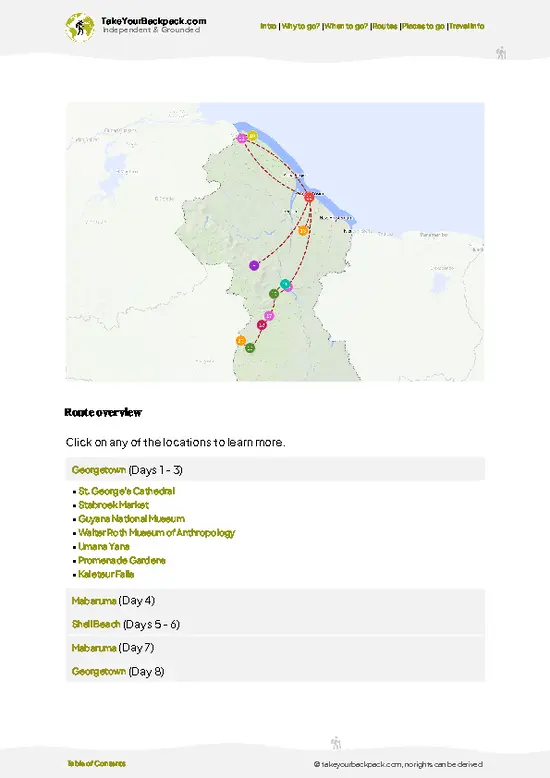
- The Main Benab. Umana Yana is best known for this single open-sided, conical hall in Georgetown, built by hand from thatch and timber without nails. Stand in the middle and look up into the rafters, where poles radiate like the ribs of an umbrella. It’s one of the largest benabs in the country, and the shape alone explains why people search for it.
- The Thatched Roof Up Close. Walk the perimeter and check the trimmed palm leaves, which are layered so tightly that rain runs off instead of through. The fibers smell sweet and grassy when the sun hits them. Crews re-thatch the roof periodically, so the texture varies from shaggy to neat.
- Wai Wai Craftsmanship. The building was made by Wai Wai people from Guyana’s southern interior, using traditional lashing and joinery. Look for the bound joints
- The Main Benab. Umana Yana is best known for this single open-sided, conical hall in Georgetown, built by hand from thatch and timber without nails. Stand in the middle and look up into the rafters, where poles radiate like the ribs of an umbrella. It’s one of the largest benabs in the country, and the shape alone explains why people search for it.
- The Thatched Roof Up Close. Walk the perimeter and check the trimmed palm leaves, which are layered so tightly that rain runs off instead of through. The fibers smell sweet and grassy when the sun hits them. Crews re-thatch the roof periodically, so the texture varies from shaggy to neat.
- Wai Wai Craftsmanship. The building was made by Wai Wai people from Guyana’s southern interior, using traditional lashing and joinery. Look for the bound joints at the posts, where vine and fiber replace metal fasteners. Few other places in the capital let you see Amerindian building methods at this scale.
- The Open Floor and Air Flow. There are no walls, so breezes from Main Street drift straight through. Even on a hot afternoon the shade is noticeably cooler than the pavement. Sit on the edge for ten minutes and you will hear traffic, crows and the creak of timber.
- The Non-Aligned Movement Link. Umana Yana was put up for the 1972 meeting of foreign ministers of the Non-Aligned Movement, and it served as a reception hall for delegates. Reading its story here adds weight to a building that otherwise looks purely rustic.
- Photography from Main Street. The best frames come from the road side, where the roofline fills the shot against the sky. Late afternoon light brings out warm browns in the thatch. A wide lens helps, since the street is narrow.
- Craft and Event Spaces Inside. When events or small craft displays are set up under the roof, you can see local Amerindian work such as woven items. Check for activity before you go, because the schedule changes.
Spotted a mistake or missing something? Contact us.

5 Island and Town Hopping Tour with Lunch

Georgetown 7 Curry Tour

Demerara Sunset Cruise

Guyana's City Center Tour with Lunch

Dinner in the Secret Garden of Guyana with The Singing Chef

Bicycle Guided Tour in Guyana

Guyana Cheddi Jagan Intl Airport Transfer to Georgetown Hotels

One Cent Magenta Stamp Tour with Lunch

Day Tour into the Story of Emancipation and Slavery in Guyana


 Best Backpacking
.jpg) Hi, I’m Johan (Netherlands 🇳🇱), the creator of TakeYourBackpack. Over the past 3 decades, I’ve backpacked through 90+ countries across six continents, gaining extensive experience with independent travel, long-term trips, and overland routes.
Hi, I’m Johan (Netherlands 🇳🇱), the creator of TakeYourBackpack. Over the past 3 decades, I’ve backpacked through 90+ countries across six continents, gaining extensive experience with independent travel, long-term trips, and overland routes.