
×

Haiti🇭🇹 | attractionsHistoric Centre of Cap-HaïtienPlace d’Armes, French balconies, north coast, colonial quarter | things to do and best time to go

Explore Cathedral of Cap-HaïtienExplore National Theatre of Haiti

Backpacking in Historic Centre of Cap-Haïtien
👍 Recommendedattraction ranked #7
By Johan Kruseman 🇳🇱 | Updated October 20, 2026

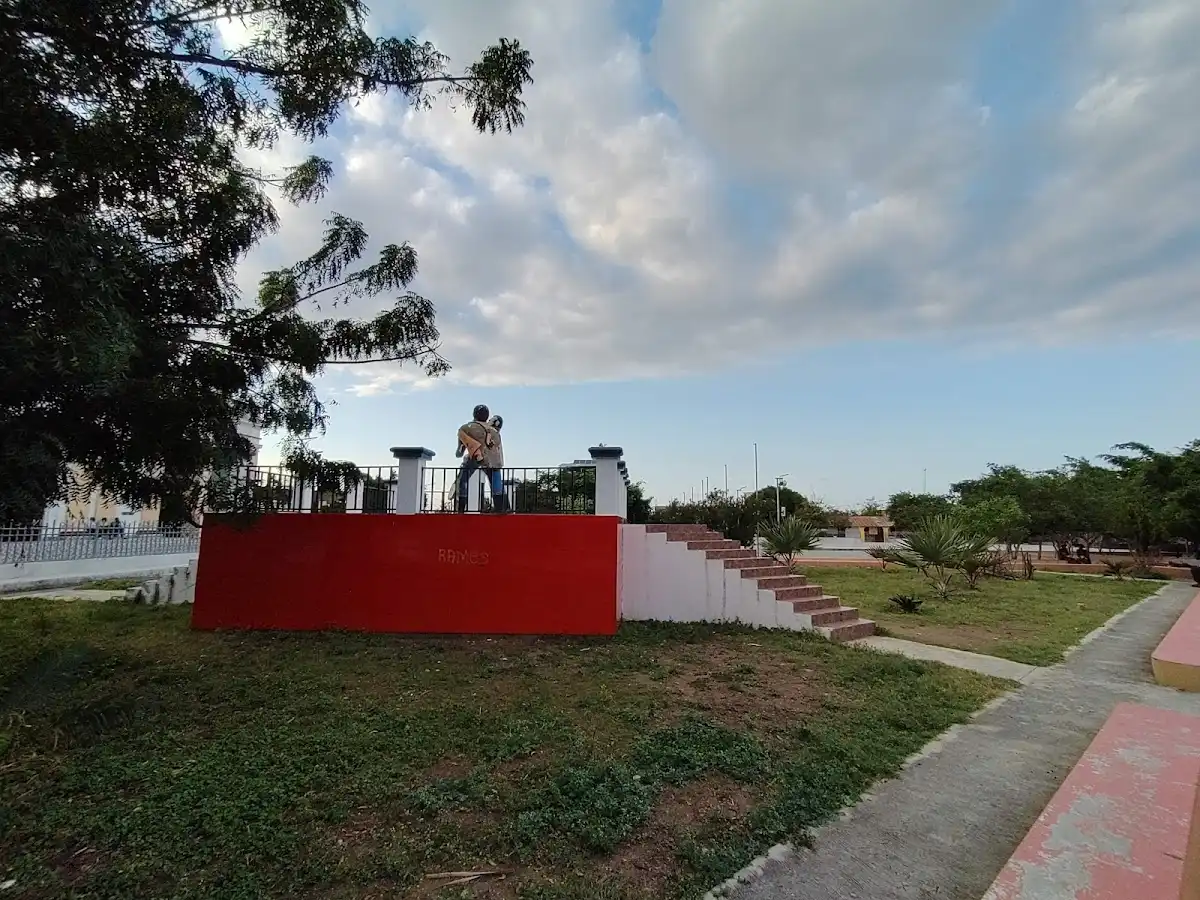
Motorbike taxis whine past walls the color of old custard, a vendor shouts over a speaker blaring kompa, and the smell of frying plantain and diesel hangs in the heat. Historic Centre of Cap-Haïtien sits on the north coast of Haiti, on a harbor ringed by green hills. The grid of French colonial streets is the draw: wrought-iron balconies, gingerbread trim, shuttered townhouses in various states of collapse. Skip the waterfront if you want polish, because traffic and trash dominate. Crowds are thin, foreign tourists rare, and wandering costs nothing. Expect uneven sidewalks, patchy repairs and touts who need a firm, friendly no. What makes it worth the journey is the architecture, and the Rue 24 corner where fretwork balconies lean over a street of shops.

Discover everything you want to know in the 📖 Haiti Travel Guide.
Safety warning

The current risk level for Haiti is high. Check the advice before going.


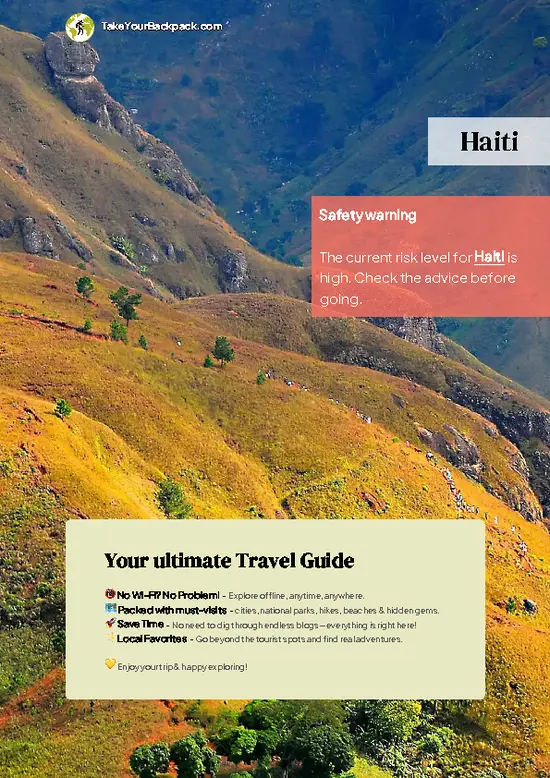
example page 0 from our offline Travel Guide for Haiti
example page 1 from our offline Travel Guide for Haiti
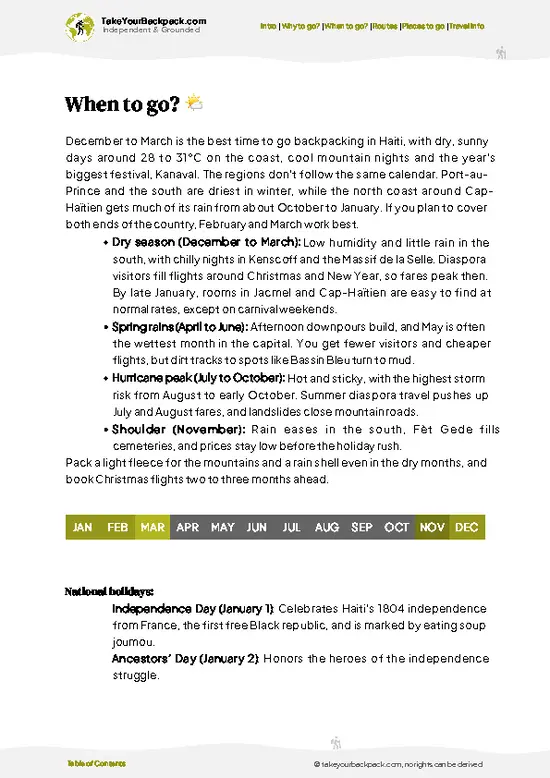
example page 2 from our offline Travel Guide for Haiti
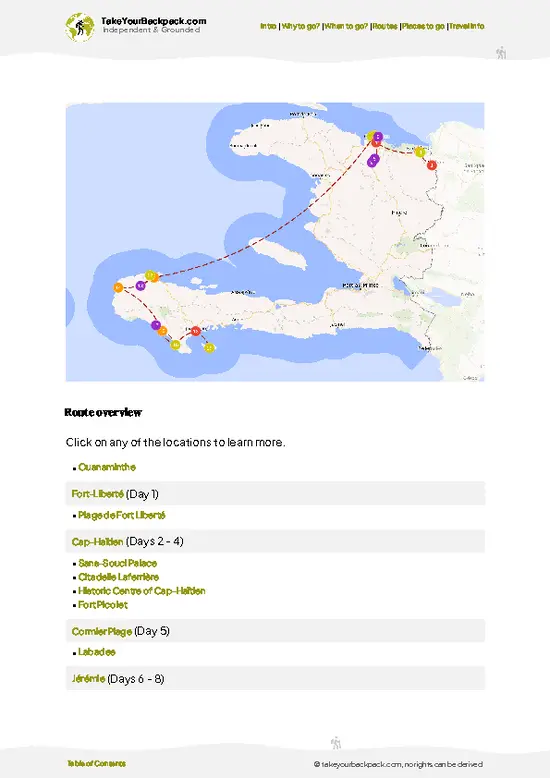
example page 3 from our offline Travel Guide for Haiti
example page 4 from our offline Travel Guide for Haiti
example page 5 from our offline Travel Guide for Haiti
example page 6 from our offline Travel Guide for Haiti
example page 7 from our offline Travel Guide for Haiti
Loading the map 🌍
CLICK TO FILTER
cities
towns
villages
landmarks
national parks
hikes
beaches
attractions
festivals
regions
SHOW COUNTRY’S BESTSHOW ALL

✨ Why go?
Ranked #7 attraction in Haiti
Reasons people choose to visit here

Historic Centre of Cap-Haïtien is where you see what Haiti looked like when it was Saint-Domingue's richest colonial city, then the capital of Henri Christophe's northern kingdom. Few Caribbean towns let you walk this much French-era grid without a ticket booth or a tour bus in sight. The Rue 24 and Rue 20 blocks carry the best surviving balconies, and you can read centuries of repair, neglect and improvisation in a single street.
It also works as a milestone on a northern route. The town is the base for Citadelle Laferrière and the ruins of Sans-Souci, so the old center gives you the context before you climb to the fortress. Add the fresh seafood, the rum-and-music evenings and a pace you can set yourself, and the town earns a place on a Haiti route.

💡 HighlightsThe experiences that define the visit

  1. Rue 24 balconies: The most photographed stretch of colonial townhouses, with iron lacework, louvered shutters and painted trim above working shops.
  2. Place d'Armes: The main square, shaded by trees, with benches for watching vendors, students and the cathedral crowd.
  3. Cathédrale Notre-Dame de l'Assomption: The town's principal church, a solid and plain landmark facing the square, with a calm interior away from the street noise.
  4. Le Cap waterfront (Boulevard): A working harbor edge with fishing boats, ferries and sea breeze, loud and messy but full of life at dusk.
  5. Marché Cluny and the covered markets: Stalls of produce, secondhand clothes, spices and handicrafts, best for sampling local snacks and watching bargaining.
  6. Rue 20 and the old merchant houses: Quieter side streets where crumbling facades
… read more 👉
  1. Rue 24 balconies: The most photographed stretch of colonial townhouses, with iron lacework, louvered shutters and painted trim above working shops.
  2. Place d'Armes: The main square, shaded by trees, with benches for watching vendors, students and the cathedral crowd.
  3. Cathédrale Notre-Dame de l'Assomption: The town's principal church, a solid and plain landmark facing the square, with a calm interior away from the street noise.
  4. Le Cap waterfront (Boulevard): A working harbor edge with fishing boats, ferries and sea breeze, loud and messy but full of life at dusk.
  5. Marché Cluny and the covered markets: Stalls of produce, secondhand clothes, spices and handicrafts, best for sampling local snacks and watching bargaining.
  6. Rue 20 and the old merchant houses: Quieter side streets where crumbling facades show the original French grid and old courtyards.
  7. Fort Picolet: Ruined coastal fortifications at the harbor mouth, with cannon positions and views over the water, reached by a short trip from town.
Allow half a day to wander the whole center, or a full day if you add the fort and linger in the markets.
Spotted a mistake or missing something? Contact us.
🌤️ When to go?Best time to visit Historic Centre of Cap-Haïtien

  • Cooler Dry Months (November to March): Days run 27 to 30°C (81 to 86°F) with nights near 21°C (70°F), and rain is light, so the old streets and the walk to Fort Picolet are comfortable. Daylight lasts roughly 11 to 12 hours. Christmas and New Year bring returning Haitians, and flights and rooms get pricier.
  • Carnival (February): Parades fill the streets and rooms book out, so reserve early and expect higher prices.
  • Hot Shoulder Months (April to June): Highs reach 31 to 33°C (88 to 91°F), with spring showers. Crowds are thin and rooms are easy to find.
  • Hurricane Season (July to October): Hot, humid, and 31 to 34°C (88 to 93°F), with heavy downpours and storm risk peaking August to October. Prices are lowest, but roads to the Citadelle can turn muddy.
Book Citadelle visits for a weekday morning in … read more 👉
  • Cooler Dry Months (November to March): Days run 27 to 30°C (81 to 86°F) with nights near 21°C (70°F), and rain is light, so the old streets and the walk to Fort Picolet are comfortable. Daylight lasts roughly 11 to 12 hours. Christmas and New Year bring returning Haitians, and flights and rooms get pricier.
  • Carnival (February): Parades fill the streets and rooms book out, so reserve early and expect higher prices.
  • Hot Shoulder Months (April to June): Highs reach 31 to 33°C (88 to 91°F), with spring showers. Crowds are thin and rooms are easy to find.
  • Hurricane Season (July to October): Hot, humid, and 31 to 34°C (88 to 93°F), with heavy downpours and storm risk peaking August to October. Prices are lowest, but roads to the Citadelle can turn muddy.
Book Citadelle visits for a weekday morning in December or January, before cloud builds on the ridge.


source: climatestotravel.comJANJanuary: highly recommended for travelingFEBFebruary: excellent for travelingMARMarch: highly recommended for travelingAPRApril: fair for travelingMAYMay: fair for travelingJUNJune: fair for travelingJULJuly: fair for travelingAUGAugust: fair for travelingSEPSeptember: below average for travelingOCTOctober: fair for travelingNOVNovember: highly recommended for travelingDECDecember: good for traveling
haiti-attraction-historic-centre-of-cap-haitien
© Google |

✈️ The backpacker research shortcutHaiti Travel Guide

An offline-friendly backpacking guide with optimized travel routes, ranked highlights, transport advice, and the best areas to stay.
example page 0 from our offline Travel Guide for Haiti
example page 1 from our offline Travel Guide for Haiti
example page 2 from our offline Travel Guide for Haiti
example page 3 from our offline Travel Guide for Haiti
example page 4 from our offline Travel Guide for Haiti
example page 5 from our offline Travel Guide for Haiti
example page 6 from our offline Travel Guide for Haiti
example page 7 from our offline Travel Guide for Haiti
The digital guide (332 pages) contains:
✅ 89 highlights, ranked by travel appeal
✅ Optimized 5, 10 & 15-day travel routes
✅ Cities, national parks, landmarks, beaches
✅ How to get around
✅ Offline-friendly for travel without Wi-Fi
👉 Click to see all 30+ guide features

📅 Plan smarter in minutes, not weeks
✅ Month by month travel advice
✅ Festivals & national holidays
✅ Budget expectations

🗺️ Go to the right places, skip the overrated ones
✅ Honest pros & cons of destinations
✅ Top hikes, parks & viewpoints
✅ Lesser-known places most travelers miss
✅ Clear “worth it vs skip it” guidance

🛏️ Travel smoothly without rookie mistakes
✅ Best areas to stay
✅ Transport systems explained simply
✅ Common scams & safety advice
✅ SIM cards, money & practical tips

🌍 Understand the country, not just visit it
✅ Culture & traditions
✅ 52 Essential phrases & customs
✅ Festivals worth planning around
✅ Traveler-friendly historical context
✅ Insights that make places more meaningful

📱 Built for real travel conditions
✅ Fully downloadable PDF
✅ Works completely offline
✅ Optimized for phone use
✅ Useful in remote areas & buses
✅ Everything in one place
Stop searching, start planning
Get instant access to your full guide. 30‑day money-back guarantee.
+ Add another guide for just

By proceeding you agree to our terms.
Sent to your inbox immediately after payment • 100% Secure Checkout
Best Backpacking Travel Advisor 2025 tourism awardBest Backpacking
Travel Advisor
2025
What others say about Take Your Backpack Guides:
⭐⭐⭐⭐⭐
Fantastic, amazing amount of information!
⭐⭐⭐⭐⭐
My goodness this is amazing, it's what I've been looking for hats off too you!
⭐⭐⭐⭐⭐
I think this is absolutely BRILLIANT
⭐⭐⭐⭐
Very complete and informative. It's still missing places, but I gotta to commend you
⭐⭐⭐⭐⭐
This is truly amazing, thank you, can't wait to explore it with my kids!
⭐⭐⭐⭐⭐
Awesome resource, thank you!
⭐⭐⭐⭐⭐
This is amazing! Can't wait to explore the ones I haven't seen
⭐⭐⭐⭐
I love this! Well done, great idea.
⭐⭐⭐⭐⭐
Thanks for taking the time to make this gem!
⭐⭐⭐⭐⭐
This might be the best website I've ever seen.
⭐⭐⭐⭐⭐
Congratulations, and thank you so much for your work; it's incredibly valuable.
⭐⭐⭐⭐
In all seriousness I think you did a great job pointing out the important spots
⭐⭐⭐⭐⭐
10/10 very good
⭐⭐⭐⭐⭐
As someone who's only just starting to visit regularly this is awesome, thank you.
⭐⭐⭐⭐
Thank you very much! I'm going to visit my dad, it's going to be very useful!
⭐⭐⭐⭐⭐
This is really cool! We'll be travelling for the first time and this definitely come in handy.
⭐⭐⭐⭐⭐
You are now our minister of culture, congratulations 👨‍💼
⭐⭐⭐⭐⭐
Just wanted to tell you that this is a pearl! Going to follow your recommendations.
⭐⭐⭐⭐⭐
This is so cool. I'll definitely be using the resource for my travels soon.
⭐⭐⭐⭐⭐
This is very impressive! Good work.
⭐⭐⭐⭐⭐
This is an amazing and informative site. Very well done!

🛏️ Where to stay?Best areas to stay in Haiti

The most practical base is the area around the historic center itself, close to Place d’Armes and the grid of gingerbread-trimmed streets, where you can walk to the cathedral, the waterfront, and the market without paying for taxis. It is the easiest spot to meet other travelers, because guesthouses here cluster along a few blocks and share the same restaurants and moto-taxi drivers. Stay inside the grid and walk home before dark, as streets outside the center are poorly lit.

The quieter waterfront edge toward the bay gives sea breezes and calmer nights, which helps in the heat. Expect small … read more 👉
The most practical base is the area around the historic center itself, close to Place d’Armes and the grid of gingerbread-trimmed streets, where you can walk to the cathedral, the waterfront, and the market without paying for taxis. It is the easiest spot to meet other travelers, because guesthouses here cluster along a few blocks and share the same restaurants and moto-taxi drivers. Stay inside the grid and walk home before dark, as streets outside the center are poorly lit.

The quieter waterfront edge toward the bay gives sea breezes and calmer nights, which helps in the heat. Expect small guesthouses with shared courtyards, so solo travelers chat over breakfast and split guides to the Citadelle Laferrière and Sans-Souci. Generators and water supply vary, so ask about power at night.

The beach strip east of town, around Cormier and Labadee road, suits those who want sand and resort-style rooms. It is pricier, quieter socially, and needs a ride into the center each day. For most backpackers, the center wins on cost, safety in numbers, and walkability.

👛 Costs (as of 20 October 2026)How expensive it really is

Historic Centre of Cap-Haïtien costs roughly US$56 to 118 a day for a backpacker, with lodging the biggest line. Walking the streets is free, and most spending goes to rooms, guides, and rides. Travelers pay in gourdes or US dollars, and many places accept either.
CategoryBudget RangeLocal Reality
Accommodation (high season)US$30 to 55Simple guesthouses; fans and generator hours common, hot water rare.
FoodUS$8 to 18Street plates of rice, beans, and fried plantain are cheapest; restaurant meals cost more.
Local transportUS$3 to 8Moto-taxis and shared tap-taps within town; privately hired cars cost far more.
Sites and guidesUS$5 to 12Wandering the center is free; church and fort visits ask small donations or guide tips.
Citadelle excursionUS$10 to 25Entry fee plus guide and horse or motorbike ride
… read more 👉
Historic Centre of Cap-Haïtien costs roughly US$56 to 118 a day for a backpacker, with lodging the biggest line. Walking the streets is free, and most spending goes to rooms, guides, and rides. Travelers pay in gourdes or US dollars, and many places accept either.
CategoryBudget RangeLocal Reality
Accommodation (high season)US$30 to 55Simple guesthouses; fans and generator hours common, hot water rare.
FoodUS$8 to 18Street plates of rice, beans, and fried plantain are cheapest; restaurant meals cost more.
Local transportUS$3 to 8Moto-taxis and shared tap-taps within town; privately hired cars cost far more.
Sites and guidesUS$5 to 12Wandering the center is free; church and fort visits ask small donations or guide tips.
Citadelle excursionUS$10 to 25Entry fee plus guide and horse or motorbike ride up from Milot, if you go.
Total Daily BudgetUS$56 to 118Based on high-season lodging and a mid-range day of food and rides.


source: haitilibre.com
⚠️ Prices can change and everyone travels differently, so take this as a rough guide. Hope it helps you plan your adventure!

FAQFrequently asked questions about Historic Centre of Cap-Haïtien

Half a day covers the Historic Centre of Cap-Haïtien on foot, around 3 to 4 hours for Place d’Armes, the cathedral, the waterfront, and the market. Add a full second day if you want the Citadelle Laferrière and Sans-Souci Palace in Milot, about 40 minutes by road from town. Carnival or market days deserve extra time.
Historic Centre of Cap-Haïtien is worth visiting because wandering its streets is free, so the only costs are guides and tips of roughly US$5 to 12. You get colorful colonial-era facades, the Place d’Armes, and a working harbor without a ticket queue. The paid highlight nearby is the Citadelle in Milot, where entry plus transport runs about US$10 to 25.
Most travelers fly to Cap-Haïtien International Airport, about 10 minutes from the Historic Centre of Cap-Haïtien by taxi for roughly US$5 to 15. From Port-au-Prince, domestic flights take about an hour, and the road is far slower and carries security concerns. Once in town, the center is walkable, and moto-taxis cost about US$1 to 3 a ride.
⚠️ Things can change over time, so always validate details locally before you go.

Other Haitian attractions near Historic Centre of Cap-Haïtien

Explore more nearby:


💡 Not sure where to go next?
Create a personalized itinerary for Haiti including Historic Centre of Cap-Haïtien and the places that fit your trip.

Generate my itinerary

👉 Discover all attractions

Or checkout all Haiti has to offer (think cities, towns, villages, national parks, hikes, beaches, festivals)
Country photo of Haiti

We 💚 feedbackFinal thoughts on visiting Historic Centre of Cap-Haïtien

Historic Centre of Cap-Haïtien looks best in the early morning, when shutters are opening, the heat is mild and the light rakes across the balconies. I would walk the grid then, break for a long lunch, and stay off the streets during midday traffic. Bring small bills and a hat.

✍️ Help improve this page!
The information on this page is based on in-depth research, insights shared by experienced travelers, and feedback from the local travel community in Haiti. While every effort is made to keep the information accurate and current, conditions can change — so if you spot anything incorrect or outdated, please get in touch.


🙋‍♂️ Give feedback

👋 Meet the founderWho’s Behind Take Your Backpack?

Johan, backpacker and founder of TakeYourBackpackHi, I’m Johan (Netherlands 🇳🇱), the creator of TakeYourBackpack. Over the past 3 decades, I’ve backpacked through 90+ countries across six continents, gaining extensive experience with independent travel, long-term trips, and overland routes.

This site is built on a combination of firsthand travel experience and carefully curated insights from other backpackers. Many guides are based on places I’ve personally visited, while others bring together tips, observations, and practical advice shared by trusted travelers I’ve met along the way.

The goal is to provide realistic, experience-driven guidance — not generic itineraries — so you can explore destinations with better context, clearer expectations, and more confidence.