×

Haiti🇭🇹 | best attractionsExplore the 11 Best attractions in Haiti

Attractions in Haiti are historic fortresses, waterfall pools, beach towns and craft-and-carnival culture, all spread across a country where access decides the trip. The north around Cap-Haïtien is the easiest and most rewarding, with the best sites close together and a calm atmosphere. The south coast is quieter, cheaper and slower to reach. Port-au-Prince is not worth planning around, because gang violence has made much of the capital region unsafe. Independent travel works, but it means local fixers, motorbike taxis and no tour-bus infrastructure. Crowds are almost nonexistent, and costs are modest but rise with every private driver you hire.

By Johan Kruseman 🇳🇱 | Updated October 20, 2026
Explore the best festivals in Haiti

Why go?Why These attraction Stand Out

Haiti is unlike its neighbors because its attractions come from history, not resort infrastructure. It was the first nation founded by a successful slave revolt, in 1804, and the fortresses, ruined palaces and Vodou-rooted art that followed are found nowhere else in the Caribbean. The mountainous interior, which covers most of the country, adds waterfalls, cloud forest and cool highland air, while the coast adds reefs and quiet beaches.

What Haiti does not have is tourism infrastructure. Signage is minimal, opening hours are informal, public transport is crowded tap-tap pickups, and electricity is unreliable outside the larger towns. Anyone expecting Dominican Republic or Jamaica polish will be frustrated. Anyone who wants uncrowded sites and direct contact with local guides will find it … read more 👉
Haiti is unlike its neighbors because its attractions come from history, not resort infrastructure. It was the first nation founded by a successful slave revolt, in 1804, and the fortresses, ruined palaces and Vodou-rooted art that followed are found nowhere else in the Caribbean. The mountainous interior, which covers most of the country, adds waterfalls, cloud forest and cool highland air, while the coast adds reefs and quiet beaches.

What Haiti does not have is tourism infrastructure. Signage is minimal, opening hours are informal, public transport is crowded tap-tap pickups, and electricity is unreliable outside the larger towns. Anyone expecting Dominican Republic or Jamaica polish will be frustrated. Anyone who wants uncrowded sites and direct contact with local guides will find it exciting.

Before choosing Haiti, check current government travel advisories. Several governments advise against all travel because of kidnapping and gang control in and around Port-au-Prince, and road conditions can change quickly. Domestic flights, trusted local contacts and flexible plans are not optional extras here. Cruise-ship enclaves on the north coast are sealed off from the rest of the country and add little to a backpacker’s understanding of it. Skip them and spend time in the towns instead.
Evaluating the Top Choices
The list of best attractions in Haiti is created based on cultural significance or entertainment value. If you feel a attraction is missing in this list, please let us know.

When to go?When to Plan Your Trip

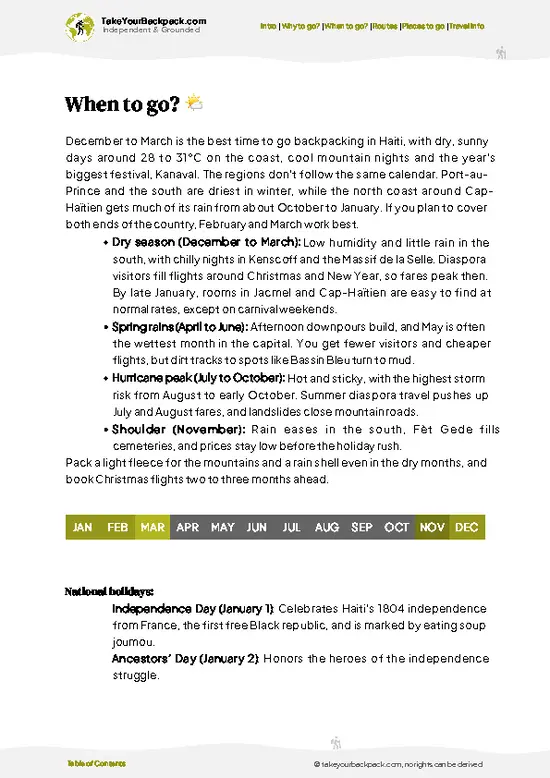
Best months: November to March: The best months for attractions in Haiti are December to March, when the dry season brings sunny days of 26 to 32°C on the coast, lower humidity and passable roads to the highlands. Waterfall hikes and fortress climbs are far more comfortable then, and trails are less slippery. Nights in the mountains drop to roughly 10 to 18°C, so a light jacket is useful.

Shoulder seasons and rain: April to May and November are shoulder months. Showers are frequent, but mornings are often clear, and fewer visitors means easier bargaining with guides. The north coast is the exception to the dry-season rule. Cap-Haïtien gets heavy rain in November through January, so check forecasts before committing to river or waterfall trips. The south coast stays drier in winter.

Months … read more 👉
Best months: November to March: The best months for attractions in Haiti are December to March, when the dry season brings sunny days of 26 to 32°C on the coast, lower humidity and passable roads to the highlands. Waterfall hikes and fortress climbs are far more comfortable then, and trails are less slippery. Nights in the mountains drop to roughly 10 to 18°C, so a light jacket is useful.

Shoulder seasons and rain: April to May and November are shoulder months. Showers are frequent, but mornings are often clear, and fewer visitors means easier bargaining with guides. The north coast is the exception to the dry-season rule. Cap-Haïtien gets heavy rain in November through January, so check forecasts before committing to river or waterfall trips. The south coast stays drier in winter.

Months to skip: June to October is the wet season and also the hurricane season, peaking from August to October. Heavy rain washes out rural roads and swells rivers, and flights can be canceled at short notice. Temperatures climb to 33 to 36°C with sticky humidity. Not worth the risk for sightseeing.

Festivals and prices: Prices barely change by season, since there is no real tourist market. Carnival in February and Rara processions after Easter are the exceptions. Transport and rooms in carnival towns fill and cost 20 to 50 percent more, so book ahead.

attraction hoppingPlanning Your Route Efficiently

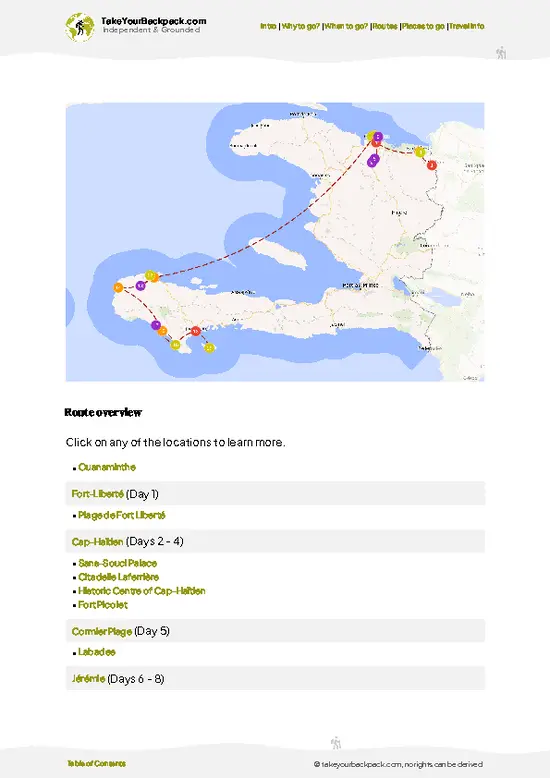
How long to allow: A trip combining several attractions in Haiti needs 8 to 12 days, because slow roads and informal schedules eat time. Allow 2 to 3 days per base for a region, so that rain, a missed ride or a late guide does not break the plan.

Which regions group well: The north is the strongest cluster. Cap-Haïtien is the hub, and its main sites sit within 1 to 2 hours by road, so they work as day trips from one base. The south coast is the second cluster, with Les Cayes as the hub for beaches and island boat trips, and Jacmel as the arts town. Between them lies the Port-au-Prince area, which should not be crossed overland. Fly between regions on domestic flights (about 45 to 60 minutes) instead of taking roads that can take 6 to 10 hours when open and are exposed to blockades.

Direction … read more 👉
How long to allow: A trip combining several attractions in Haiti needs 8 to 12 days, because slow roads and informal schedules eat time. Allow 2 to 3 days per base for a region, so that rain, a missed ride or a late guide does not break the plan.

Which regions group well: The north is the strongest cluster. Cap-Haïtien is the hub, and its main sites sit within 1 to 2 hours by road, so they work as day trips from one base. The south coast is the second cluster, with Les Cayes as the hub for beaches and island boat trips, and Jacmel as the arts town. Between them lies the Port-au-Prince area, which should not be crossed overland. Fly between regions on domestic flights (about 45 to 60 minutes) instead of taking roads that can take 6 to 10 hours when open and are exposed to blockades.

Direction of travel: Start in the north, where logistics are simplest and you can learn how local transport and guides work, then fly south if conditions allow. Roads in the south are rougher, so end there when you are ready for slower days.

Planning mistakes: Cramming a site into every day is the most common error. Rural distances of 40 to 60 kilometers can take 2 to 3 hours. Book flights with buffer days, never same-day onward connections. Travelers also underestimate the importance of leaving daylight for the return. Be back at your base before dark.

The ListTop attractions of Haiti

1 Iron Market

Red spires, market maze, vodou talismans, spices

Push through narrow aisles under the red iron roof, where stalls sell everything from spices and talismans to sneakers, and bargaining never pauses.

haiti-attraction-iron-market
© Google |

2 Gingerbread Houses of Pacot and Turgeau

Fretwork facades, Pacot, Turgeau, early-morning walk

Wander tree-shaded streets at first light to study ornate fretwork, bright paint and tall verandas on century-old houses.

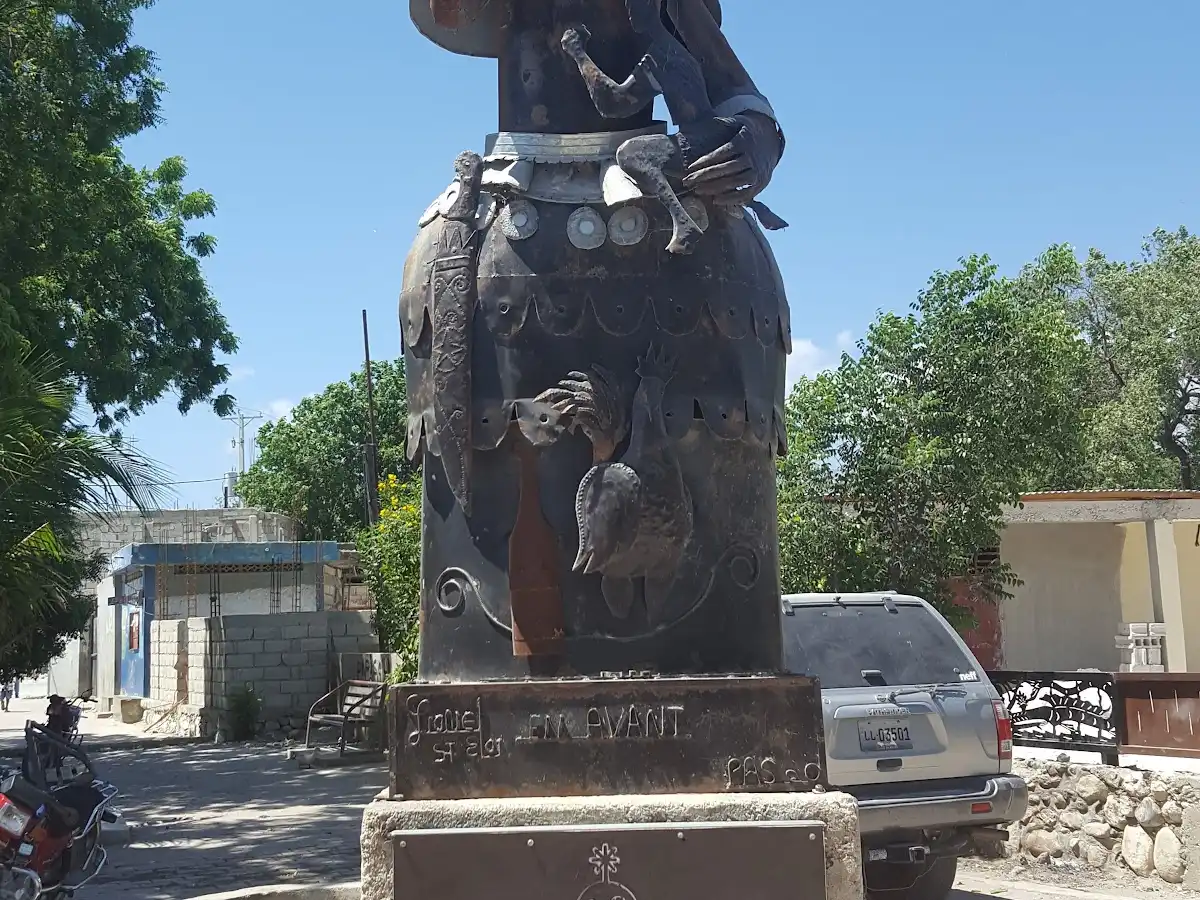
3 Artisan Village of Noailles

Oil-drum metalwork, open-air workshops, Croix-des-Bouquets, bargaining

Watch sculptors hammer and cut scrap steel drums into figures in open-air workshops, then haggle directly with the artists who made them.

haiti-attraction-artisan-village-of-noailles
© Google |

4 Fort Jacques

Mountain fortress, Kenscoff, cannons, uphill walk

Climb to the stone walls and cannons above Port-au-Prince, where cool Kenscoff air and local guides bring the revolutionary past into focus.

haiti-attraction-fort-jacques
© Google |

5 Musée Ogier-Fombrun

Colonial sugar mill, Montrouis, slavery exhibits, Arcadins coast

Tour a restored sugar mill on the Arcadins coast, where hands-on exhibits and sharp guides cover slavery and the revolution.

haiti-attraction-musee-ogier-fombrun
© Google |

6 Historic Centre of Cap-Haïtien

Place d’Armes, French balconies, north coast, colonial quarter

Circle the Place d’Armes and nearby lanes beneath faded French balconies, tracing the north coast city’s layered revolutionary history on foot.

haiti-attraction-historic-centre-of-cap-haitien
© Google |

7 Centre d’Art

Working studios, Port-au-Prince, canvases, turpentine

Walk through a battered studio building near the National Palace and meet painters at work on canvases, with entry kept low.

haiti-attraction-centre-dart
© Google |

8 Galerie Monnin

Family gallery, Pétion-Ville, Haitian paintings, hillside

Browse room after room of Haitian canvases in a family-run Pétion-Ville gallery, where admission is small and buying is entirely optional.

9 Musée du Panthéon National Haïtien

Revolutionary relics, memorials, Presidential Palace area, security checkpoint

Pass the checkpoint and trace Haiti’s path to independence through artifacts and memorials, steps from the Presidential Palace in central Port-au-Prince.

10 Cathedral of Cap-Haïtien

White twin towers, old-town square, street music, Cap-Haïtien

Stand in the square before the white facade and twin towers, where vendors, motorbikes and street conversation fill the old town around the church.

11 National Theatre of Haiti

Live drumming, stage dance, peeling paint, Port-au-Prince

Catch a drum or dance performance in a worn theater north of downtown, where showtimes shift and ticket prices vary by event.

Loading the map 🌍

Expert viewExpert Commentary on attractions

How many attractions to visit: Plan on 6 to 8 attractions in a 10-day trip, not a long checklist. Road time, guide negotiations and weather will eat roughly half of each day, so more than one major site per day leads to rushed visits and missed return transport. Fewer, well-chosen stops also leave room for the unscheduled market or village visit that often makes the trip.

Prioritizing by travel style: History-minded travelers should put forts and palace ruins first, since they are Haiti’s clearest draw and need only a guide and a half-day. Outdoor travelers should favor waterfalls, river pools and highland hikes, but only in the dry season. Culture seekers should focus on art towns, markets and festival dates. Beach time is better on the south coast than at the enclosed cruise resorts, which … read more 👉
How many attractions to visit: Plan on 6 to 8 attractions in a 10-day trip, not a long checklist. Road time, guide negotiations and weather will eat roughly half of each day, so more than one major site per day leads to rushed visits and missed return transport. Fewer, well-chosen stops also leave room for the unscheduled market or village visit that often makes the trip.

Prioritizing by travel style: History-minded travelers should put forts and palace ruins first, since they are Haiti’s clearest draw and need only a guide and a half-day. Outdoor travelers should favor waterfalls, river pools and highland hikes, but only in the dry season. Culture seekers should focus on art towns, markets and festival dates. Beach time is better on the south coast than at the enclosed cruise resorts, which charge US$ prices for little local contact.

What it costs: Expect US$40 to 70 a day for a backpacker (roughly 5,200 to 9,100 gourdes). That is high for the region, because transport and guides are charged individually. Entry to major sites runs about US$5 to 10, and a required local guide US$10 to 25 per visit. Motorbike taxis cost US$1 to 5 per ride and a private driver for a day US$60 to 120. A basic guesthouse room is US$20 to 45, and a meal of rice, beans and fried plantain is US$2 to 5. Domestic flights run US$100 to 200 one way. US dollars are widely accepted, but carry small bills, since change is scarce and ATMs are unreliable.

Costs and delays that catch travelers out: Agreeing a guide price after the hike is the classic trap. Fix the fee, the hours and what it includes before you set off. Flights are often delayed or rescheduled, so keep a day of slack and never book non-refundable onward travel tightly. Power cuts can leave phones dead, so carry a power bank and cash for everything.

Safety and cultural considerations: Check government advisories immediately before departure, and avoid Port-au-Prince entirely. Travel only in daylight, never hitchhike, and arrange pickups through your guesthouse or a trusted contact. Roadblocks and fuel shortages can appear with little warning, so keep a contingency day and carry extra water and food.

Always ask before photographing people, religious ceremonies and Vodou sites, and expect to pay a small gift or fee. Vodou is a living religion, not a performance, and treating it as a spectacle will close doors quickly. Dress modestly in towns. Learning a few phrases of Haitian Creole (bonjou, mèsi) goes further than French, which many people speak only as a second language.

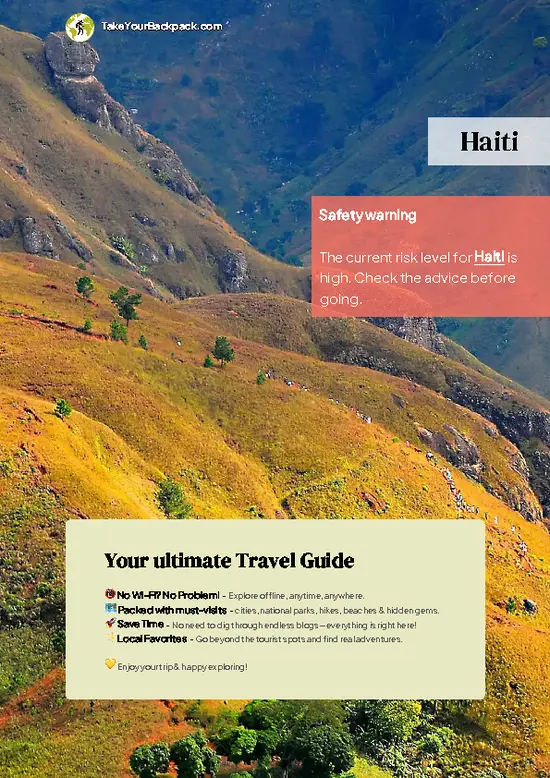
✈️ The backpacker research shortcutHaiti Travel Guide

An offline-friendly backpacking guide with optimized travel routes, ranked highlights, transport advice, and the best areas to stay.
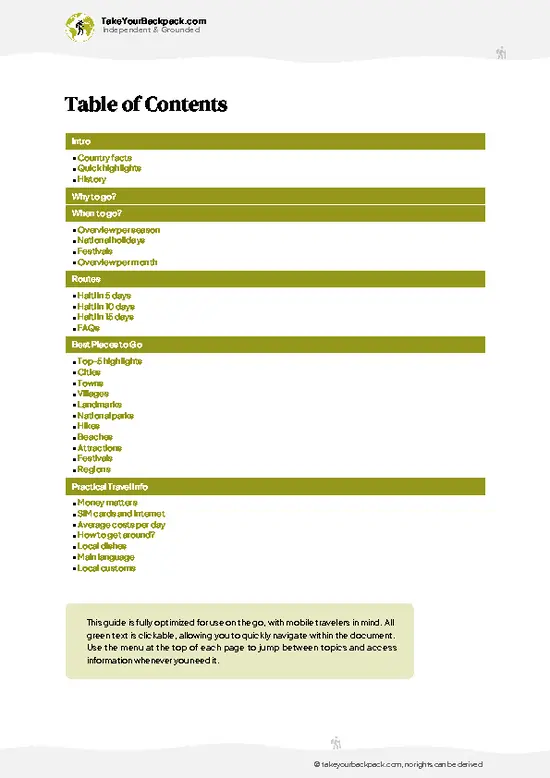
example page 0 from our offline Travel Guide for Haiti
example page 1 from our offline Travel Guide for Haiti
example page 2 from our offline Travel Guide for Haiti
example page 3 from our offline Travel Guide for Haiti
example page 4 from our offline Travel Guide for Haiti
example page 5 from our offline Travel Guide for Haiti
example page 6 from our offline Travel Guide for Haiti
example page 7 from our offline Travel Guide for Haiti
The digital guide (332 pages) contains:
✅ 89 highlights, ranked by travel appeal
✅ Optimized 5, 10 & 15-day travel routes
✅ Cities, national parks, landmarks, beaches
✅ How to get around
✅ Offline-friendly for travel without Wi-Fi
👉 Click to see all 30+ guide features

📅 Plan smarter in minutes, not weeks
✅ Month by month travel advice
✅ Festivals & national holidays
✅ Budget expectations

🗺️ Go to the right places, skip the overrated ones
✅ Honest pros & cons of destinations
✅ Top hikes, parks & viewpoints
✅ Lesser-known places most travelers miss
✅ Clear “worth it vs skip it” guidance

🛏️ Travel smoothly without rookie mistakes
✅ Best areas to stay
✅ Transport systems explained simply
✅ Common scams & safety advice
✅ SIM cards, money & practical tips

🌍 Understand the country, not just visit it
✅ Culture & traditions
✅ 52 Essential phrases & customs
✅ Festivals worth planning around
✅ Traveler-friendly historical context
✅ Insights that make places more meaningful

📱 Built for real travel conditions
✅ Fully downloadable PDF
✅ Works completely offline
✅ Optimized for phone use
✅ Useful in remote areas & buses
✅ Everything in one place
Stop searching, start planning
Get instant access to your full guide. 30‑day money-back guarantee.
+ Add another guide for just

By proceeding you agree to our terms.
Sent to your inbox immediately after payment • 100% Secure Checkout
Best Backpacking Travel Advisor 2025 tourism awardBest Backpacking
Travel Advisor
2025
What others say about Take Your Backpack Guides:
⭐⭐⭐⭐⭐
Fantastic, amazing amount of information!
⭐⭐⭐⭐⭐
My goodness this is amazing, it's what I've been looking for hats off too you!
⭐⭐⭐⭐⭐
I think this is absolutely BRILLIANT
⭐⭐⭐⭐
Very complete and informative. It's still missing places, but I gotta to commend you
⭐⭐⭐⭐⭐
This is truly amazing, thank you, can't wait to explore it with my kids!
⭐⭐⭐⭐⭐
Awesome resource, thank you!
⭐⭐⭐⭐⭐
This is amazing! Can't wait to explore the ones I haven't seen
⭐⭐⭐⭐
I love this! Well done, great idea.
⭐⭐⭐⭐⭐
Thanks for taking the time to make this gem!
⭐⭐⭐⭐⭐
This might be the best website I've ever seen.
⭐⭐⭐⭐⭐
Congratulations, and thank you so much for your work; it's incredibly valuable.
⭐⭐⭐⭐
In all seriousness I think you did a great job pointing out the important spots
⭐⭐⭐⭐⭐
10/10 very good
⭐⭐⭐⭐⭐
As someone who's only just starting to visit regularly this is awesome, thank you.
⭐⭐⭐⭐
Thank you very much! I'm going to visit my dad, it's going to be very useful!
⭐⭐⭐⭐⭐
This is really cool! We'll be travelling for the first time and this definitely come in handy.
⭐⭐⭐⭐⭐
You are now our minister of culture, congratulations 👨‍💼
⭐⭐⭐⭐⭐
Just wanted to tell you that this is a pearl! Going to follow your recommendations.
⭐⭐⭐⭐⭐
This is so cool. I'll definitely be using the resource for my travels soon.
⭐⭐⭐⭐⭐
This is very impressive! Good work.
⭐⭐⭐⭐⭐
This is an amazing and informative site. Very well done!

🛏️ Where to stay?Best Stay Options in Haiti

Haiti has almost no hostels in the dorm-bed sense, so budget travel here means family-run guesthouses and small hotels, typically around 4,000 to 8,000 HTG (US$30 to 60) a night. In Cap-Haïtien, the grid-street Centre-Ville keeps you close to the waterfront boulevard and to transport for the Citadelle, with the calmest evenings in the country, while the beach strip at Cormier west of town is quieter but needs a car or moto to get anywhere; in Jacmel, the walkable historic center among the old iron-balconied mansions has the easiest low-key bar scene. Pétion-Ville in Port-au-Prince has the capital’s widest choice of rooms and restaurants, but gang violence affects much of the city and the roads … read more 👉
Haiti has almost no hostels in the dorm-bed sense, so budget travel here means family-run guesthouses and small hotels, typically around 4,000 to 8,000 HTG (US$30 to 60) a night. In Cap-Haïtien, the grid-street Centre-Ville keeps you close to the waterfront boulevard and to transport for the Citadelle, with the calmest evenings in the country, while the beach strip at Cormier west of town is quieter but needs a car or moto to get anywhere; in Jacmel, the walkable historic center among the old iron-balconied mansions has the easiest low-key bar scene. Pétion-Ville in Port-au-Prince has the capital’s widest choice of rooms and restaurants, but gang violence affects much of the city and the roads in and out, so stay there only with a current security briefing and pre-arranged transport.

If you enjoy meeting fellow travelers, consider choosing hostels with high ratings for atmosphere. On the other hand, if you prefer having your own space, a hotel might be a better option.

HaitiWhere to Go Next

👋 Meet the founderWho’s Behind Take Your Backpack?

Johan, backpacker and founder of TakeYourBackpackHi, I’m Johan (Netherlands 🇳🇱), the creator of TakeYourBackpack. Over the past 3 decades, I’ve backpacked through 90+ countries across six continents, gaining extensive experience with independent travel, long-term trips, and overland routes.

This site is built on a combination of firsthand travel experience and carefully curated insights from other backpackers. Many guides are based on places I’ve personally visited, while others bring together tips, observations, and practical advice shared by trusted travelers I’ve met along the way.

The goal is to provide realistic, experience-driven guidance — not generic itineraries — so you can explore destinations with better context, clearer expectations, and more confidence.