×

Hong Kong🇭🇰 | townsLamma IslandHiking trails, laid-back cafés, fishing hamlets | things to do and best time to go

Explore Cheung ChauExplore Tung Chung

Backpacking in Lamma Island
🌟 Highlighttown ranked #9
By Johan Kruseman 🇳🇱 | Updated September 4, 2026

Lamma Island is not for you if you want skyscraper views, luxury malls, or big-night-out energy every evening. It earns its place on a backpacking route because it gives you the opposite: slow lanes, sea air, and trails that start almost at your guesthouse door. Sitting just southwest of Hong Kong Island, a short ferry ride from Central, it works best as a nature base and decompression stop rather than a long-term hub. Yung Shue Wan feels like a low-rise fishing village with cafés, simple seafood joints, a small beach, and trailheads leading to quiet coves and the island’s ridge walk. There are no cars, so you walk everywhere; ferries are the only link. It’s cheaper and calmer than Central or Tsim Sha Tsui, sociable in a mellow, early-night way, and generally very safe, but nightlife and hostel options are limited.

Discover everything you want to know in the 📖 Hong Kong Travel Guide.
Loading the map 🌍
CLICK TO FILTER
towns
landmarks
national parks
hikes
beaches
attractions
festivals
regions
SHOW COUNTRY’S BESTSHOW ALL

✨ Why go?
Ranked #9 town in Hong Kong
Why visitors keep coming back

Lamma Island draws backpackers for its convenience and charm. Just a short ferry ride from Hong Kong, it’s a perfect base for hiking the scenic trails that wind through lush greenery and coastal views. The beaches here are inviting, offering a serene escape from the city’s chaos. Small-scale hostels and guesthouses provide a cozy atmosphere, making it easy to meet fellow travelers. The local food scene is a highlight—fresh seafood and laid-back eateries serve up authentic flavors that linger long after the meal. Streets are walkable, encouraging exploration at a leisurely pace. Most backpackers stay a couple of days, soaking in the friendly vibe and connecting with others. This spot suits slow travelers, hikers, and solo adventurers looking for a break from the hustle, rather than those seeking … read more 👉
Lamma Island draws backpackers for its convenience and charm. Just a short ferry ride from Hong Kong, it’s a perfect base for hiking the scenic trails that wind through lush greenery and coastal views. The beaches here are inviting, offering a serene escape from the city’s chaos. Small-scale hostels and guesthouses provide a cozy atmosphere, making it easy to meet fellow travelers. The local food scene is a highlight—fresh seafood and laid-back eateries serve up authentic flavors that linger long after the meal. Streets are walkable, encouraging exploration at a leisurely pace. Most backpackers stay a couple of days, soaking in the friendly vibe and connecting with others. This spot suits slow travelers, hikers, and solo adventurers looking for a break from the hustle, rather than those seeking nightlife or urban excitement. It’s a place to breathe, reflect, and recharge.
Want to include Lamma Island in your Hong Kong route?
Create a personalized Hong Kong itinerary that includes Lamma Island and the places that fit your trip — based on your travel style, budget, and available time. Get your route in seconds.

Generate my trip

💡 HighlightsKey sights and experiences for travelers

  • Yung Shue Wan Village & Pier — The island’s social heart: narrow lanes, banyan-shaded squares, ferry arrivals and a relaxed mix of cafés, small shops and local life that shows why people come to Lamma to slow down.
  • Sok Kwu Wan Seafood Village — A working fishing village famous for its row of seafood restaurants along the pier; eating fresh prawns and watching sampans come and go is the classic Lamma experience.
  • Lamma Main Trail (Yung Shue Wan → Sok Kwu Wan) — An easy, rewarding coastal hike with constant sea views, hidden bays, and a feel for how the island links its villages; you’ll meet locals, dogs, and great photo spots.
  • Hung Shing Yeh Beach — The island’s largest sandy beach with clear water, BBQ pits and low-key sunset crowds — perfect for a swim after a hike or a casual picnic
read more 👉
  • Yung Shue Wan Village & Pier — The island’s social heart: narrow lanes, banyan-shaded squares, ferry arrivals and a relaxed mix of cafés, small shops and local life that shows why people come to Lamma to slow down.
  • Sok Kwu Wan Seafood Village — A working fishing village famous for its row of seafood restaurants along the pier; eating fresh prawns and watching sampans come and go is the classic Lamma experience.
  • Lamma Main Trail (Yung Shue Wan → Sok Kwu Wan) — An easy, rewarding coastal hike with constant sea views, hidden bays, and a feel for how the island links its villages; you’ll meet locals, dogs, and great photo spots.
  • Hung Shing Yeh Beach — The island’s largest sandy beach with clear water, BBQ pits and low-key sunset crowds — perfect for a swim after a hike or a casual picnic on the sand.
  • Lamma Wind Turbine & Lookout — That lone white turbine is oddly photogenic; the short walk up gives you sweeping views of the power-station chimneys, neighboring islands and open water — a good place to catch the breeze and a panorama.
  • Tin Hau Temple (Sok Kwu Wan) — A fishermen’s shrine still used by locals; it’s cultural, atmospheric and often decorated with incense and offerings — you’ll feel the living traditions of an island community.
  • Tin Hau Temple (Yung Shue Wan) — Smaller and tucked near the pier, this temple offers a compact, authentic look at local worship and is easy to drop into between coffees and errands.
  • Lo So Shing Beach & Village — A quieter, less-visited bay reached by trail; great if you want solitude, simple rock pools and a taste of abandoned-village vibes without straying off the beaten path.
  • Mo Tat Wan Cove — A tiny, photogenic stretch of shoreline with old boats and village houses; feels like stepping into slower island life and makes a nice pause on longer walks.
  • Yung Shue Wan cafés, vegetarian spots & community art — Lamma’s bohemian side: small galleries, vegetarian restaurants and murals scattered around the village give the place a friendly, creative atmosphere worth exploring over a long lunch.
A few easy day trips from Lamma are Aberdeen (sampan rides and harbour life), Stanley (seaside market and beaches), and Central on Hong Kong Island (ferries, promenades and Peak access).
Spotted a mistake or missing something? Contact us.

🏘️ NeighborhoodsKey areas and districts to know

Lamma Island is a breath of fresh air in the bustling chaos of Hong Kong. With its laid-back vibe and stunning coastal views, it’s a perfect escape for backpackers seeking both adventure and relaxation.

Yung Shue Wan: This is the main hub, where the ferry drops you off. The atmosphere is lively, with plenty of affordable eateries and shops. Walkable streets make it easy to explore, and the beach is just a short stroll away. Nightlife is casual, with a few bars offering live music. Perfect for short stays, but you might find yourself wanting to linger longer.

Pak Kok: A quieter area, ideal for those seeking solitude. It’s less touristy, with a few local restaurants and a serene beach. The vibe is peaceful, making it great for longer stays if you want to recharge. Transport is limited, so … read more 👉
Lamma Island is a breath of fresh air in the bustling chaos of Hong Kong. With its laid-back vibe and stunning coastal views, it’s a perfect escape for backpackers seeking both adventure and relaxation.

Yung Shue Wan: This is the main hub, where the ferry drops you off. The atmosphere is lively, with plenty of affordable eateries and shops. Walkable streets make it easy to explore, and the beach is just a short stroll away. Nightlife is casual, with a few bars offering live music. Perfect for short stays, but you might find yourself wanting to linger longer.

Pak Kok: A quieter area, ideal for those seeking solitude. It’s less touristy, with a few local restaurants and a serene beach. The vibe is peaceful, making it great for longer stays if you want to recharge. Transport is limited, so be prepared to walk or bike.

Lo So Shing: This area is more remote, with hiking trails leading to stunning viewpoints. It’s less developed, so expect a more rugged experience. Ideal for backpackers looking for adventure and solitude. Access is mainly by foot, making it a great spot for those who want to disconnect.

⌛️ 1 day1-day itinerary for Lamma Island

Lamma Island, just a short ferry ride from Hong Kong, offers a refreshing escape from the city’s frenetic pace. With its laid-back vibe, stunning coastal views, and a blend of local culture, it’s a place where you can truly unwind and explore.

Start your morning with a stroll along the waterfront at Yung Shue Wan. The salty breeze carries the scent of fresh seafood, and the colorful fishing boats bob gently in the harbor. Grab a breakfast bun from one of the local bakeries—try the pineapple bun, warm and slightly sweet. After fueling up, head to the Lamma Island Family Trail. This scenic path winds through lush greenery and offers glimpses of the ocean. The trail is well-marked, making it easy to navigate while soaking in the sights.

In the afternoon, make your way to the lesser-known village … read more 👉
Lamma Island, just a short ferry ride from Hong Kong, offers a refreshing escape from the city’s frenetic pace. With its laid-back vibe, stunning coastal views, and a blend of local culture, it’s a place where you can truly unwind and explore.

Start your morning with a stroll along the waterfront at Yung Shue Wan. The salty breeze carries the scent of fresh seafood, and the colorful fishing boats bob gently in the harbor. Grab a breakfast bun from one of the local bakeries—try the pineapple bun, warm and slightly sweet. After fueling up, head to the Lamma Island Family Trail. This scenic path winds through lush greenery and offers glimpses of the ocean. The trail is well-marked, making it easy to navigate while soaking in the sights.

In the afternoon, make your way to the lesser-known village of Sok Kwu Wan. Here, you’ll find the famous seafood restaurants, but also a quieter beach where you can dip your toes in the water. The local fishermen often sell their catch right off the boat, so don’t miss the chance to chat with them about their day’s haul.

As evening approaches, return to Yung Shue Wan for dinner. Choose a spot with outdoor seating to enjoy the sunset painting the sky in hues of orange and pink. Afterward, take a leisurely walk along the beach, letting the sound of the waves wash over you. This day on Lamma Island isn’t just a getaway; it’s a reminder of the simple joys that come from slowing down and savoring each moment.
Turn your Lamma Island visit into an Hong Kong adventure
Build a complete Hong Kong route with Lamma Island, hidden gems, must-see destinations, and realistic travel times included.

Generate my trip

🌤️ When to go?When to go for the best experience


  • Weather: Lamma Island’s subtropical climate means hot, humid summers with frequent rain showers, often above 28°C (82°F). Winters are mild and dry, hovering around 15°C (59°F), making hiking and beach time more comfortable without the sticky sweat or sudden downpours.

  • Temperature: Spring and autumn offer the sweet spot—temperatures between 18-25°C (64-77°F) balance warmth and freshness. You’ll avoid the oppressive heat of summer and the chillier evenings of winter, perfect for long walks and sunset views.

  • Daylight Hours: Longer days from April to September mean more daylight for exploring trails and beaches. In winter, shorter days limit your window, so plan hikes earlier to catch the golden hour light.

  • Crowds: Weekends and public holidays bring a flood of locals escaping the city,
read more 👉

  • Weather: Lamma Island’s subtropical climate means hot, humid summers with frequent rain showers, often above 28°C (82°F). Winters are mild and dry, hovering around 15°C (59°F), making hiking and beach time more comfortable without the sticky sweat or sudden downpours.

  • Temperature: Spring and autumn offer the sweet spot—temperatures between 18-25°C (64-77°F) balance warmth and freshness. You’ll avoid the oppressive heat of summer and the chillier evenings of winter, perfect for long walks and sunset views.

  • Daylight Hours: Longer days from April to September mean more daylight for exploring trails and beaches. In winter, shorter days limit your window, so plan hikes earlier to catch the golden hour light.

  • Crowds: Weekends and public holidays bring a flood of locals escaping the city, especially in spring and autumn. Visiting on weekdays or off-peak seasons means quieter trails and more space at waterfront eateries.

  • Seasonal Activities: Summer hosts lively beach barbecues and water sports, while autumn features local festivals with food stalls and traditional performances—each season offers a different vibe to tap into.

  • Price Fluctuations: Accommodation and ferry prices stay fairly stable year-round, but weekends and holidays can spike costs and availability. Booking midweek or off-season nets better deals and a calmer pace.


Pro-tip: Aim for late autumn—cool breezes, fewer crowds, and clear skies make every step on Lamma’s trails feel like a reward, not a slog.


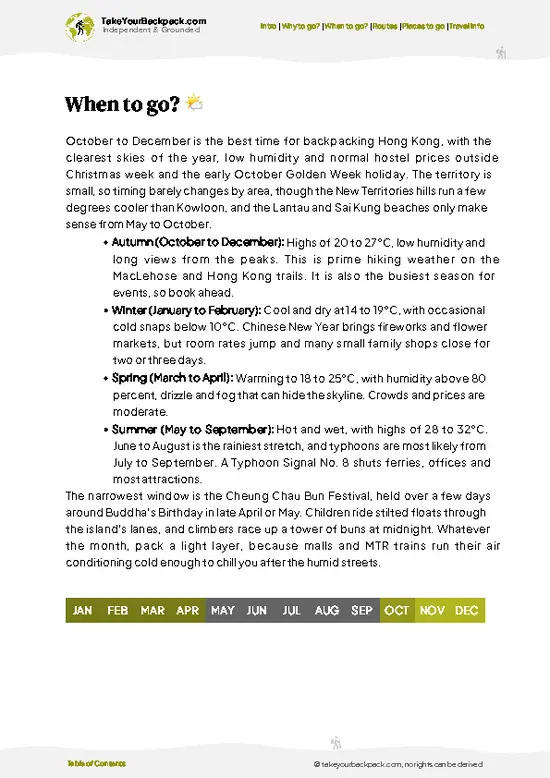
source: climatestotravel.comJANJanuary: highly recommended for travelingFEBFebruary: highly recommended for travelingMARMarch: highly recommended for travelingAPRApril: highly recommended for travelingMAYMay: good for travelingJUNJune: fair for travelingJULJuly: fair for travelingAUGAugust: fair for travelingSEPSeptember: good for travelingOCTOctober: excellent for travelingNOVNovember: excellent for travelingDECDecember: highly recommended for traveling
when-to-go

✈️ The backpacker research shortcutHong Kong Travel Guide

An offline-friendly backpacking guide with optimized travel routes, ranked highlights, transport advice, and the best areas to stay.
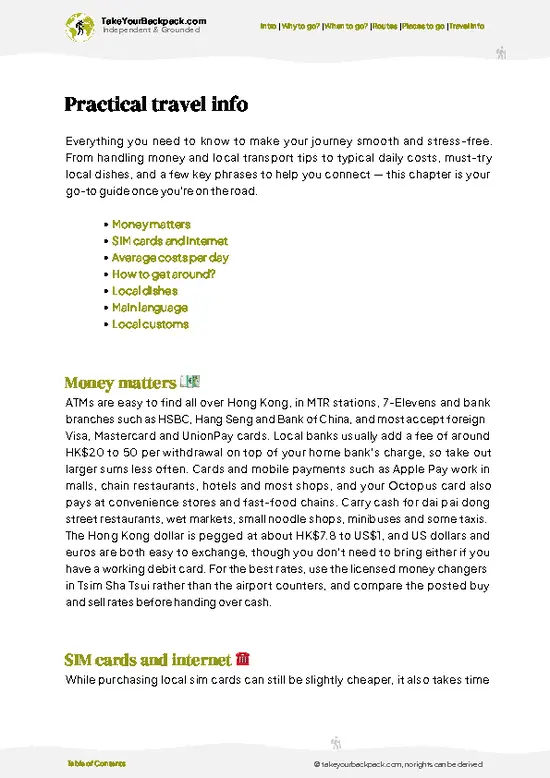
example page 0 from our offline Travel Guide for Hong Kong
example page 1 from our offline Travel Guide for Hong Kong
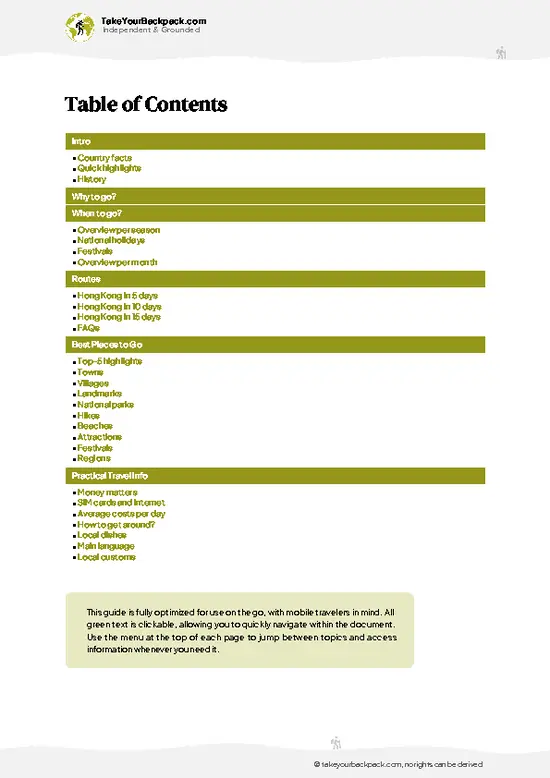
example page 2 from our offline Travel Guide for Hong Kong
example page 3 from our offline Travel Guide for Hong Kong
example page 4 from our offline Travel Guide for Hong Kong
example page 5 from our offline Travel Guide for Hong Kong
example page 6 from our offline Travel Guide for Hong Kong
example page 7 from our offline Travel Guide for Hong Kong
The digital guide (357 pages) contains:
98 highlights, ranked by travel appeal
Optimized 5, 10 & 15-day travel routes
Cities, national parks, landmarks, beaches
How to get around
Offline-friendly for travel without Wi-Fi
👉 Click to see all 30+ guide features

📅 Plan smarter in minutes, not weeks
Month by month travel advice
Festivals & national holidays
Budget expectations

🗺️ Go to the right places, skip the overrated ones
Honest pros & cons of destinations
Top hikes, parks & viewpoints
Lesser-known places most travelers miss
Clear “worth it vs skip it” guidance

🛏️ Travel smoothly without rookie mistakes
Best areas to stay
Transport systems explained simply
Common scams & safety advice
SIM cards, money & practical tips

🌍 Understand the country, not just visit it
Culture & traditions
52 Essential phrases & customs
Festivals worth planning around
Traveler-friendly historical context
Insights that make places more meaningful

📱 Built for real travel conditions
Fully downloadable PDF
Works completely offline
Optimized for phone use
Useful in remote areas & buses
Everything in one place
Save weeks of stressful planning
Get instant access to your full guide. 30‑day money-back guarantee.
+ Add another guide for just US$7.80

By proceeding you agree to our terms.
Sent to your inbox immediately after payment • 100% Secure Checkout
Best Backpacking Travel Advisor 2025 tourism awardBest Backpacking
Travel Advisor
2025
What others say about Take Your Backpack Guides:
⭐⭐⭐⭐⭐
Fantastic, amazing amount of information!
⭐⭐⭐⭐⭐
My goodness this is amazing, it's what I've been looking for hats off too you!
⭐⭐⭐⭐⭐
I think this is absolutely BRILLIANT
⭐⭐⭐⭐
Very complete and informative. It's still missing places, but I gotta to commend you
⭐⭐⭐⭐⭐
This is truly amazing, thank you, can't wait to explore it with my kids!
⭐⭐⭐⭐⭐
Awesome resource, thank you!
⭐⭐⭐⭐⭐
This is amazing! Can't wait to explore the ones I haven't seen
⭐⭐⭐⭐
I love this! Well done, great idea.
⭐⭐⭐⭐⭐
Thanks for taking the time to make this gem!
⭐⭐⭐⭐⭐
This might be the best website I've ever seen.
⭐⭐⭐⭐⭐
Congratulations, and thank you so much for your work; it's incredibly valuable.
⭐⭐⭐⭐
In all seriousness I think you did a great job pointing out the important spots
⭐⭐⭐⭐⭐
10/10 very good
⭐⭐⭐⭐⭐
As someone who's only just starting to visit regularly this is awesome, thank you.
⭐⭐⭐⭐
Thank you very much! I'm going to visit my dad, it's going to be very useful!
⭐⭐⭐⭐⭐
This is really cool! We'll be travelling for the first time and this definitely come in handy.
⭐⭐⭐⭐⭐
You are now our minister of culture, congratulations 👨‍💼
⭐⭐⭐⭐⭐
Just wanted to tell you that this is a pearl! Going to follow your recommendations.
⭐⭐⭐⭐⭐
This is so cool. I'll definitely be using the resource for my travels soon.
⭐⭐⭐⭐⭐
This is very impressive! Good work.
⭐⭐⭐⭐⭐
This is an amazing and informative site. Very well done!

🛏️ Where to stay?Best areas to stay in Hong Kong

Lamma Island’s real draw for backpackers is its laid-back villages where the pace slows and the salty sea air mixes with the scent of pine and grilled seafood. The best spot to drop your pack is around Yung Shue Wan. This village pulses with a casual, communal vibe—think barefoot locals and travelers swapping stories over cold beers at beachside bars. It’s safe, compact, and easy to navigate on foot, which means you’re never far from a friendly face or a cheap meal. Hostels here cater to solo travelers and budget adventurers, offering simple dorms that feel more like a shared campfire than a crowded … read more 👉
Lamma Island’s real draw for backpackers is its laid-back villages where the pace slows and the salty sea air mixes with the scent of pine and grilled seafood. The best spot to drop your pack is around Yung Shue Wan. This village pulses with a casual, communal vibe—think barefoot locals and travelers swapping stories over cold beers at beachside bars. It’s safe, compact, and easy to navigate on foot, which means you’re never far from a friendly face or a cheap meal. Hostels here cater to solo travelers and budget adventurers, offering simple dorms that feel more like a shared campfire than a crowded room.

Skip the more residential or isolated parts of the island like Sok Kwu Wan if you want to stay social; those areas are quieter and more suited for day-trippers or couples seeking peace. Yung Shue Wan’s narrow lanes, dotted with quirky cafes and small shops, create a natural meeting ground. Staying here means you’re plugged into the island’s heartbeat, not just passing through. It’s the kind of place where the sunset’s glow on the water feels earned after a day of hiking or kayaking.

🚌 Getting aroundMoving around without the hassle

Lamma Island moves at its own rhythm—no rush, no honking horns, just the gentle slap of waves against wooden piers and the occasional clatter of bicycle wheels on narrow paths. Time here feels elastic, stretching to fit the slow shuffle of hikers and the casual chatter of fishermen mending nets. The island’s charm isn’t in strict schedules or rigid timetables but in the ebb and flow of boats and footsteps syncing with the salty breeze and dappled sunlight filtering through eucalyptus leaves. You don’t just get around Lamma; you soak it in, letting the pace shape your day.


  • Ferry from Central Pier to Yung Shue Wan: Runs roughly every 30 minutes from early morning (around 7:30 AM) until late evening (about 10 PM). It’s the lifeline for budget travelers—cheap (under HKD 20), reliable, and
read more 👉
Lamma Island moves at its own rhythm—no rush, no honking horns, just the gentle slap of waves against wooden piers and the occasional clatter of bicycle wheels on narrow paths. Time here feels elastic, stretching to fit the slow shuffle of hikers and the casual chatter of fishermen mending nets. The island’s charm isn’t in strict schedules or rigid timetables but in the ebb and flow of boats and footsteps syncing with the salty breeze and dappled sunlight filtering through eucalyptus leaves. You don’t just get around Lamma; you soak it in, letting the pace shape your day.


  • Ferry from Central Pier to Yung Shue Wan: Runs roughly every 30 minutes from early morning (around 7:30 AM) until late evening (about 10 PM). It’s the lifeline for budget travelers—cheap (under HKD 20), reliable, and scenic, with the salty spray and skyline views making the 20-minute ride feel like a mini escape rather than a commute.


  • Walking Trails: The island is famously car-free, so walking is the default transit. The main trail from Yung Shue Wan to Sok Kwu Wan takes about 90 minutes, winding through shaded forests and open bays. It’s not just a path but a sensory journey—earthy scents, bird calls, and glimpses of fishing boats bobbing in the coves. Pack water and wear sturdy shoes; the terrain varies from smooth dirt to rocky inclines.


  • Electric Bicycles and Scooters: Available for rent in Yung Shue Wan, these offer a faster, sweat-free way to cover the island’s modest distances. Rentals start around HKD 150 per day. They’re quiet and nimble, perfect for zipping past slower walkers, but watch your speed on narrow, uneven trails—there’s no rush, and the island’s vibe rewards patience.


  • Water Taxis: Less frequent and pricier than the ferry, water taxis can be flagged down for direct trips between piers or to nearby islands. Expect to pay a premium (several hundred HKD) but gain flexibility and privacy. Ideal if you’re traveling in a group or chasing a sunset from a less accessible beach.

👛 Costs (as of 4 September 2026)How expensive it really is

Backpacking on Lamma Island, Hong Kong, offers a unique blend of laid-back island vibes and easy access to urban energy, but it comes with a distinct cost profile shaped by its small size and limited services.
  • Dorm Accommodation: Lamma Island doesn’t have traditional hostels, so dorm-style stays are rare. Expect to pay around $20-$35 USD per night for a bed in a guesthouse or shared room, often in simple, no-frills settings. Booking ahead is smart since options are limited and tend to fill up quickly, especially on weekends.
  • Meals: Food here leans toward local seafood and casual eateries. A basic meal at a dai pai dong (open-air food stall) or small café will run about $5-$10 USD. If you opt for fresh seafood or a sit-down meal with a view, prices can climb to $15-$25 USD. Self-catering
read more 👉
Backpacking on Lamma Island, Hong Kong, offers a unique blend of laid-back island vibes and easy access to urban energy, but it comes with a distinct cost profile shaped by its small size and limited services.
  • Dorm Accommodation: Lamma Island doesn’t have traditional hostels, so dorm-style stays are rare. Expect to pay around $20-$35 USD per night for a bed in a guesthouse or shared room, often in simple, no-frills settings. Booking ahead is smart since options are limited and tend to fill up quickly, especially on weekends.
  • Meals: Food here leans toward local seafood and casual eateries. A basic meal at a dai pai dong (open-air food stall) or small café will run about $5-$10 USD. If you opt for fresh seafood or a sit-down meal with a view, prices can climb to $15-$25 USD. Self-catering is possible but limited by small grocery stores and markets.
  • Local Transport: Getting around Lamma is mostly on foot, as motor vehicles are banned. The main cost is the ferry from Central Hong Kong to Yung Shue Wan or Sok Kwu Wan, which is about $3-$4 USD one way. Once on the island, walking trails connect the villages, so no extra transport costs there.
  • Basic Activities/Entry Fees: Lamma is all about nature and free exploration. Hiking the family trail or visiting the beaches costs nothing. If you want to rent a kayak or join a guided tour, expect to pay $15-$30 USD. There are no major entry fees, but some small cultural sites or events might ask for a modest donation or fee.
  • Miscellaneous Expenses: Water, snacks, and occasional treats like a cold drink or ice cream will add $2-$5 USD daily. Wi-Fi is patchy; if you need reliable internet, consider a local SIM card or portable hotspot rental, which can cost $10-$20 USD for a few days.

Overall, a day on Lamma Island for a backpacker typically falls between $35 and $70 USD. This range reflects the island’s simplicity and charm—no flashy comforts, just the quiet rhythm of sea air, hiking trails, and fresh seafood, all priced for travelers who value experience over luxury.
⚠️ Prices can change and everyone travels differently, so take this as a rough guide. Hope it helps you plan your adventure!

🚌 Day tripsWhere to go beyond the main area

Lamma Island is a fantastic launchpad for day trips that blend adventure with local culture. The ferry ride itself is a treat, offering sweeping views of the harbor and a refreshing breeze that hints at the day’s possibilities.

1. Hiking to the Peak of Lamma
Start your day with a hike to the island’s peak. The trail winds through lush greenery, with the scent of wild herbs filling the air. It takes about an hour to reach the top, where you’re rewarded with panoramic views of the South China Sea. Bring water and snacks; you’ll want to linger. Many first-timers underestimate the trail’s difficulty, so wear sturdy shoes. This hike is best in the cooler months, from October to March, when the humidity is manageable.
👉 Explore Lamma Island

2. Visit to Cheung Chau
Hop on a ferry to Cheung … read more 👉
Lamma Island is a fantastic launchpad for day trips that blend adventure with local culture. The ferry ride itself is a treat, offering sweeping views of the harbor and a refreshing breeze that hints at the day’s possibilities.

1. Hiking to the Peak of Lamma
Start your day with a hike to the island’s peak. The trail winds through lush greenery, with the scent of wild herbs filling the air. It takes about an hour to reach the top, where you’re rewarded with panoramic views of the South China Sea. Bring water and snacks; you’ll want to linger. Many first-timers underestimate the trail’s difficulty, so wear sturdy shoes. This hike is best in the cooler months, from October to March, when the humidity is manageable.
👉 Explore Lamma Island

2. Visit to Cheung Chau
Hop on a ferry to Cheung Chau, just a 30-minute ride away. This island is famous for its fishing village charm and the annual Bun Festival. Stroll along the waterfront, savoring fresh seafood from local stalls. The cost is minimal—around HKD 30 for the ferry and a few bucks for lunch. Avoid the mistake of sticking to the main street; venture into the back alleys for authentic local experiences. Spring is ideal, with vibrant flowers and mild weather.
👉 Explore Cheung Chau

3. Exploring Tai O Fishing Village
A trip to Tai O is like stepping back in time. The village is known for its stilt houses and traditional fishing culture. It’s about an hour’s journey via ferry and bus, costing around HKD 50 total. The best time to visit is early morning when the village is waking up, and the air is filled with the salty scent of the sea. Don’t miss the local shrimp paste; it’s a unique taste of the region. Many first-timers overlook the bus connection, so plan accordingly.
👉 Explore Tai O

4. Sunset at Big Wave Bay
For a relaxing end to your day, take a bus to Big Wave Bay. The journey takes about 40 minutes, and the beach is perfect for unwinding. Bring a towel and a snack; the sunset views are spectacular. The best time to go is in the late afternoon during the summer months when the days are long. A common mistake is arriving too late; the golden hour is fleeting, and you’ll want to capture that magic.
👉 Explore Big Wave Bay
Want to know what more Hong Kong offers?
The Hong Kong Travel Guide describes 98 highlights, from cities to national parks, from beaches to hikes

Get the Travel Guide -

🛡️ SafetyScams, Hazards, and Annoyances

Lamma Island is generally safe, but a few practical tips can enhance your experience. The ferry terminal area can get busy, so keep an eye on your belongings, especially during peak hours. If you’re wandering solo at night, stick to well-lit paths and avoid shortcuts through dark alleys; the main streets are lively and welcoming.

While scams are rare, be cautious of overly friendly locals offering unsolicited help, especially near tourist spots. They might expect a tip for their “guidance.”

Everyday annoyances include the occasional stray dog or the odd mosquito, so a little insect repellent goes a long way. Embrace the laid-back vibe, and you’ll find that a calm demeanor and awareness will unlock a smoother, more enjoyable adventure.

FAQCommon questions from travelers

Yes, Lamma Island is worth visiting for its relaxed atmosphere, scenic hiking trails, and seafood restaurants. It offers a break from the urban hustle of Hong Kong and a chance to experience local village life and beaches.
One to two days are sufficient to explore Lamma Island thoroughly. This allows time to hike the main trail between Yung Shue Wan and Sok Kwu Wan, enjoy the beaches, and sample local food.
Yes, Lamma Island can be visited as a day trip from Hong Kong Island. Ferries run regularly from Central Pier, taking about 30 minutes each way, making it easy to explore the island within a day.
⚠️ Things can change over time, so always validate details locally before you go.

Other Hong Kongese towns near Lamma Island

Explore more nearby:

  • Aberdeen—Floating village, seafood boats, typhoon shelter| 6 km away
  • Stanley—Seaside market, colonial buildings, promenade| 8 km away
  • Kennedy Town—Harborfront bars, swimming pier, quiet streets| 9 km away

💡 Not sure where to go next?
Create a personalized itinerary for Hong Kong including Lamma Island and the places that fit your trip.

Generate my itinerary

👉 Discover all towns

Or checkout all Hong Kong has to offer (think cities, towns, villages, national parks, hikes, beaches, festivals)
Country photo of Hong Kong

We 💚 feedbackIs it worth it?

Lamma Island has a laid-back vibe that feels like a world away from Hong Kong’s hustle. The best surprise? Stumbling upon a local seafood joint where the catch of the day is grilled to perfection, and the ocean breeze carries the scent of salt and spice. Just a heads-up: the trails can get muddy after rain, so sturdy shoes are a must. Embrace the journey; it’s all part of the charm.

✍️ Help improve this page!
The information on this page is based on in-depth research, insights shared by experienced travelers, and feedback from the local travel community in Hong Kong. While every effort is made to keep the information accurate and current, conditions can change — so if you spot anything incorrect or outdated, please get in touch.


🙋‍♂️ Give feedback

👋 Meet the founderWho’s Behind Take Your Backpack?

Johan, backpacker and founder of TakeYourBackpackHi, I’m Johan (Netherlands 🇳🇱), the creator of TakeYourBackpack. Over the past decade, I’ve backpacked through 80+ countries across six continents, gaining extensive experience with independent travel, long-term trips, and overland routes.

This site is built on a combination of firsthand travel experience and carefully curated insights from other backpackers. Many guides are based on places I’ve personally visited, while others bring together tips, observations, and practical advice shared by trusted travelers I’ve met along the way.

The goal is to provide realistic, experience-driven guidance — not generic itineraries — so you can explore destinations with better context, clearer expectations, and more confidence.

Get full Hong Kong guide •
Instant download • 98 highlights • Full Offline guide