×

Hong Kong🇭🇰 | townsSheung WanAntique shops, dried seafood, indie cafés | things to do and best time to go

Explore CentralExplore Kennedy Town

Backpacking in Sheung Wan
👍 Recommendedtown ranked #16
By Johan Kruseman 🇳🇱 | Updated October 15, 2026

Everyone talks about Sheung Wan for Instagrammable coffee shops and antique stores, but what actually matters to you as a backpacker is how it works as your Hong Kong launchpad. It sits just west of Central on Hong Kong Island, close enough to the skyscraper core that you can walk there, but with steeper streets, older shopfronts, and air that smells like incense, dried seafood, and espresso all at once. As a base, it’s gold: MTR, trams, and ferries put beaches, hikes, and outlying islands within easy reach, while you sleep in quieter lanes than Central or Tsim Sha Tsui. Hostels and small guesthouses make it social without feeling like a party zoo; you’ll meet other travelers over craft coffee, not beer funnels. It’s still Hong Kong-expensive, but cooking a bit and eating at cha chaan teng diners keeps it manageable. Compared with Central’s corporate gloss or Mong Kok’s chaos, Sheung Wan feels more lived-in and relaxed, but just as practical for moving fast.

Discover everything you want to know in the 📖 Hong Kong Travel Guide.


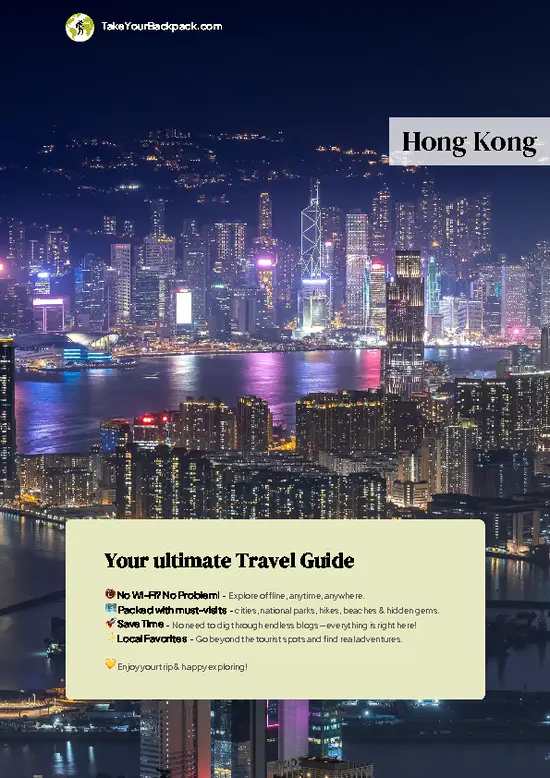
example page 0 from our offline Travel Guide for Hong Kong
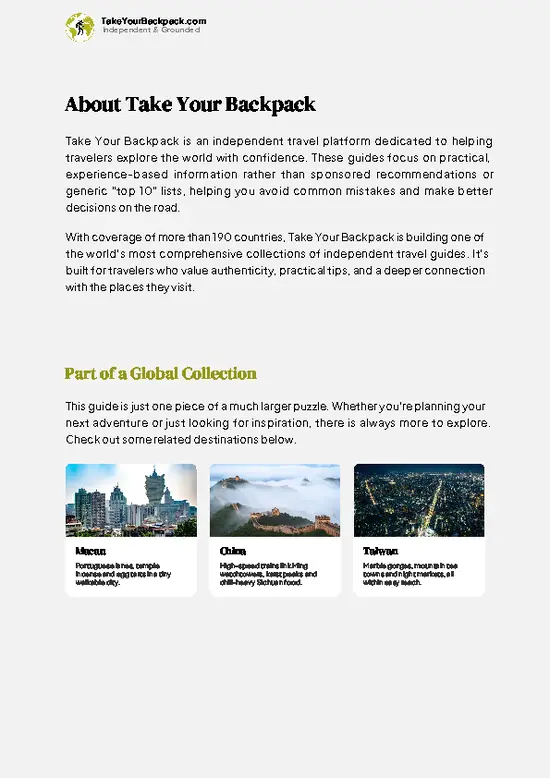
example page 1 from our offline Travel Guide for Hong Kong
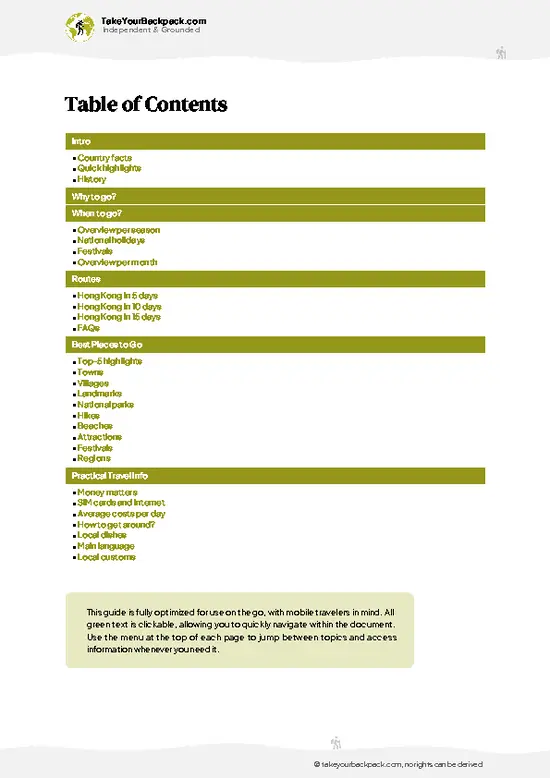
example page 2 from our offline Travel Guide for Hong Kong
example page 3 from our offline Travel Guide for Hong Kong
example page 4 from our offline Travel Guide for Hong Kong
example page 5 from our offline Travel Guide for Hong Kong
example page 6 from our offline Travel Guide for Hong Kong
example page 7 from our offline Travel Guide for Hong Kong
Loading the map 🌍
CLICK TO FILTER
towns
villages
landmarks
national parks
hikes
beaches
attractions
festivals
regions
SHOW COUNTRY’S BESTSHOW ALL

✨ Why go?
Ranked #16 town in Hong Kong
What makes this town worth visiting

Sheung Wan is a backpacker’s haven that thrives on its convenience and authenticity. Nestled near the ferry terminal, it’s a strategic launchpad for hikes on Lantau Island or beach days at Repulse Bay. The walkable streets are lined with small-scale hostels and guesthouses, offering a cozy atmosphere that invites slow travelers and solo adventurers to linger. You’ll find local food stalls serving up dim sum and fresh seafood, where the scent of roasted meats fills the air, making every meal an experience.

While some backpackers might just pass through, many stay a few days to soak in the cultural richness and friendly vibe. The pace is relaxed, perfect for those who want to connect with fellow travelers or simply enjoy a quiet afternoon in a local café. If you’re seeking a blend of urban … read more 👉
Sheung Wan is a backpacker’s haven that thrives on its convenience and authenticity. Nestled near the ferry terminal, it’s a strategic launchpad for hikes on Lantau Island or beach days at Repulse Bay. The walkable streets are lined with small-scale hostels and guesthouses, offering a cozy atmosphere that invites slow travelers and solo adventurers to linger. You’ll find local food stalls serving up dim sum and fresh seafood, where the scent of roasted meats fills the air, making every meal an experience.

While some backpackers might just pass through, many stay a few days to soak in the cultural richness and friendly vibe. The pace is relaxed, perfect for those who want to connect with fellow travelers or simply enjoy a quiet afternoon in a local café. If you’re seeking a blend of urban charm and natural escapes, Sheung Wan is more than a stopover; it’s a place to recharge and explore.

💡 HighlightsPlaces and moments you shouldn't skip

Man Mo Temple
Step inside and the air thickens with sandalwood. Spirals of incense hang from the rafters, their smoke curling toward the gods. This is Hong Kong’s oldest temple, a living relic from 1847, where locals still come to bargain with the gods of literature and war. The red pillars, the golden calligraphy, the hush broken only by murmured prayers—this is Sheung Wan’s spiritual heart. Visit early morning to catch the temple at its most atmospheric, before tour groups arrive. Entry is free. You’ll want 20-30 minutes, longer if you linger over the details.


Western Market
A red-brick Edwardian building that looks like it belongs in a different century—because it does. Inside, you’ll find tailors, fabric merchants, and quirky souvenir stalls, but the real draw is the building itself: … read more 👉
Man Mo Temple
Step inside and the air thickens with sandalwood. Spirals of incense hang from the rafters, their smoke curling toward the gods. This is Hong Kong’s oldest temple, a living relic from 1847, where locals still come to bargain with the gods of literature and war. The red pillars, the golden calligraphy, the hush broken only by murmured prayers—this is Sheung Wan’s spiritual heart. Visit early morning to catch the temple at its most atmospheric, before tour groups arrive. Entry is free. You’ll want 20-30 minutes, longer if you linger over the details.


Western Market
A red-brick Edwardian building that looks like it belongs in a different century—because it does. Inside, you’ll find tailors, fabric merchants, and quirky souvenir stalls, but the real draw is the building itself: thick stone walls, stained glass, and a sense of old-world commerce. It’s a rare survivor of pre-war Hong Kong, and wandering its halls feels like time travel. Open daily, free to enter. Give yourself 30-45 minutes, more if you’re shopping for custom cheongsams or hand-stitched bags.


Upper Lascar Row (Cat Street)
This isn’t a sanitized antique market. It’s a jumble of jade, Mao-era propaganda, dusty porcelain, and the occasional oddity (vintage cameras, opium pipes, a taxidermy monkey if you’re lucky). The street hums with bargaining and the scent of incense from nearby shops. Go in the late morning or early afternoon for the liveliest scene. Browsing is free, but haggling is expected if you buy. Allow 30-60 minutes, depending on your curiosity.


PMQ (Former Police Married Quarters)
Once home to police families, now a creative hub. PMQ is a maze of indie design studios, pop-up galleries, and hands-on workshops. The concrete stairwells echo with the chatter of artists and the clink of coffee cups. It’s the best place in Sheung Wan to see Hong Kong’s creative pulse up close. Go late afternoon for the best energy and to catch events. Entry is free; workshops and shops vary in price. Plan for 1-2 hours.


Teakha
A tiny teahouse tucked on a quiet side street, where the scent of fresh-baked matcha cake mingles with rare teas from Yunnan and Taiwan. Locals come for slow afternoons, reading or chatting under the shade of a banyan tree. It’s a gentle antidote to the city’s pace. Best in mid-afternoon, when the light slants through the windows and the cakes are still warm. Expect to spend HK$50-100 for tea and cake. Stay 30-60 minutes, or until you feel your shoulders drop.


If you want to stretch your legs beyond Sheung Wan, ferries to Lantau Island, the Mid-Levels Escalator, and the hiking trails of Victoria Peak are all within easy reach for a day’s adventure.
Spotted a mistake or missing something? Contact us.

Things to do around Sheung Wan

Ratings based on Tripadvisor reviews. When you book through this link, you support our work at no extra cost to you.

🏘️ NeighborhoodsWhere things are and how it's laid out

Sheung Wan is a vibrant blend of old and new, where traditional markets meet chic cafes. It’s a backpacker’s playground, offering a taste of Hong Kong’s rich culture without breaking the bank.

Western District: This area buzzes with local life. You’ll find street food stalls and traditional herbal shops. It’s affordable and walkable, making it perfect for short stays. The nightlife is low-key, with cozy bars rather than loud clubs. Easy access to trams means you can explore further afield without hassle.

Hollywood Road: Known for its art galleries and antique shops, Hollywood Road is a feast for the senses. The vibe is artsy and laid-back, ideal for those who appreciate culture. Prices can vary, but budget options are available. It’s great for longer stays, with plenty of cafes to settle … read more 👉
Sheung Wan is a vibrant blend of old and new, where traditional markets meet chic cafes. It’s a backpacker’s playground, offering a taste of Hong Kong’s rich culture without breaking the bank.

Western District: This area buzzes with local life. You’ll find street food stalls and traditional herbal shops. It’s affordable and walkable, making it perfect for short stays. The nightlife is low-key, with cozy bars rather than loud clubs. Easy access to trams means you can explore further afield without hassle.

Hollywood Road: Known for its art galleries and antique shops, Hollywood Road is a feast for the senses. The vibe is artsy and laid-back, ideal for those who appreciate culture. Prices can vary, but budget options are available. It’s great for longer stays, with plenty of cafes to settle into. The nearby Man Mo Temple adds a spiritual touch, perfect for a reflective moment.

Des Voeux Road: This bustling thoroughfare is the heart of Sheung Wan. It’s a bit more commercial, with shops and eateries lining the streets. While it can get crowded, the energy is infectious. It’s well-connected by MTR, making it easy to hop around the city. Ideal for those who want a mix of convenience and local flavor.

Tai Ping Shan Street: A quieter escape, this area is dotted with hip cafes and boutique shops. It’s perfect for a leisurely stroll. Prices are moderate, and it’s a great spot for longer stays if you prefer a more relaxed atmosphere. The street art here adds character, making every corner a photo opportunity.

⌛️ 1 daySeeing the highlights in 24 hours

Sheung Wan, a vibrant blend of old and new, pulses with life. The air is rich with the scent of dried seafood and herbal teas, a sensory reminder of its history as a trading hub. This neighborhood is where traditional Chinese culture meets modern creativity, making it a perfect spot for a day of exploration.

Start your morning with a stroll along the bustling streets. Head to the iconic Cat Street, where you can browse antiques and quirky shops. The light filtering through the narrow alleys creates a warm glow, inviting you to linger. Grab a traditional Hong Kong breakfast at a local cha chaan teng, like Australia Dairy Company. Their creamy milk tea and fluffy toast will fuel your adventure.

In the afternoon, make your way to the Man Mo Temple. The incense wafts through the air, creating … read more 👉
Sheung Wan, a vibrant blend of old and new, pulses with life. The air is rich with the scent of dried seafood and herbal teas, a sensory reminder of its history as a trading hub. This neighborhood is where traditional Chinese culture meets modern creativity, making it a perfect spot for a day of exploration.

Start your morning with a stroll along the bustling streets. Head to the iconic Cat Street, where you can browse antiques and quirky shops. The light filtering through the narrow alleys creates a warm glow, inviting you to linger. Grab a traditional Hong Kong breakfast at a local cha chaan teng, like Australia Dairy Company. Their creamy milk tea and fluffy toast will fuel your adventure.

In the afternoon, make your way to the Man Mo Temple. The incense wafts through the air, creating a serene atmosphere amidst the city’s hustle. Spend some time here, absorbing the intricate carvings and the soft glow of the candles. Afterward, wander over to the nearby PMQ, a creative hub housed in a former police married quarters. Explore local artisans’ shops and grab a coffee at one of the chic cafes. This spot is often overlooked by tourists, but it’s a treasure trove of local talent.

As evening falls, head to the waterfront at the Central Harbourfront. The skyline lights up, reflecting on the water, creating a stunning backdrop for your dinner. Choose a local seafood restaurant like Mak’s Noodle for a taste of authentic Cantonese cuisine. Savor the flavors while soaking in the vibrant atmosphere, a perfect end to your day in Sheung Wan. Each moment here is a reminder that the journey is as rich as the destination.

🌤️ When to go?When to go for the best experience

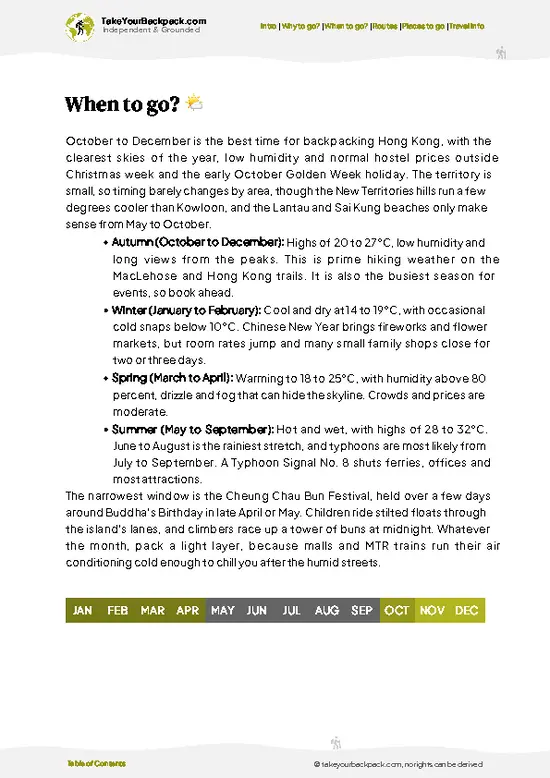
  • Weather: Hong Kong’s subtropical climate means summers (June to August) are hot and humid, often above 30°C (86°F), with frequent rain and typhoons. Winters (December to February) are mild and dry, hovering around 15-20°C (59-68°F), making outdoor wandering in Sheung Wan far more pleasant.
  • Temperature: Spring and autumn offer the best balance, with temperatures between 20-25°C (68-77°F). This means you can explore the narrow streets and markets without sweating through your shirt or bundling up.
  • Daylight Hours: Longer days from April to September provide more time to soak in the neighborhood’s vibe, from morning dim sum to evening street food stalls.
  • Crowds: Peak tourist seasons around Chinese New Year and National Day (October 1) bring throngs to Sheung Wan’s markets and cafes, which
… read more 👉
  • Weather: Hong Kong’s subtropical climate means summers (June to August) are hot and humid, often above 30°C (86°F), with frequent rain and typhoons. Winters (December to February) are mild and dry, hovering around 15-20°C (59-68°F), making outdoor wandering in Sheung Wan far more pleasant.
  • Temperature: Spring and autumn offer the best balance, with temperatures between 20-25°C (68-77°F). This means you can explore the narrow streets and markets without sweating through your shirt or bundling up.
  • Daylight Hours: Longer days from April to September provide more time to soak in the neighborhood’s vibe, from morning dim sum to evening street food stalls.
  • Crowds: Peak tourist seasons around Chinese New Year and National Day (October 1) bring throngs to Sheung Wan’s markets and cafes, which can dilute the experience and hike prices.
  • Seasonal Activities: Autumn hosts local festivals and art fairs, adding layers of culture to your visit. Summer’s indoor art spaces offer refuge from the heat but expect air-conditioned crowds.
  • Price Fluctuations: Accommodation and flights spike during holidays and festivals. Booking in shoulder seasons like March-April or September-October can save you money and grant easier access to sought-after spots.
Pro-tip: Aim for late autumn—cool, crisp air with fewer tourists—so you can savor Sheung Wan’s blend of old-school markets and hip cafes without the sweat or the scramble.


source: climatestotravel.comJANJanuary: highly recommended for travelingFEBFebruary: highly recommended for travelingMARMarch: highly recommended for travelingAPRApril: excellent for travelingMAYMay: good for travelingJUNJune: fair for travelingJULJuly: fair for travelingAUGAugust: fair for travelingSEPSeptember: highly recommended for travelingOCTOctober: excellent for travelingNOVNovember: excellent for travelingDECDecember: highly recommended for traveling
hong-kong-city-sheung-wan
© Google |

✈️ The backpacker research shortcutHong Kong Travel Guide

An offline-friendly backpacking guide with optimized travel routes, ranked highlights, transport advice, and the best areas to stay.
example page 0 from our offline Travel Guide for Hong Kong
example page 1 from our offline Travel Guide for Hong Kong
example page 2 from our offline Travel Guide for Hong Kong
example page 3 from our offline Travel Guide for Hong Kong
example page 4 from our offline Travel Guide for Hong Kong
example page 5 from our offline Travel Guide for Hong Kong
example page 6 from our offline Travel Guide for Hong Kong
example page 7 from our offline Travel Guide for Hong Kong
The digital guide (359 pages) contains:
✅ 97 highlights, ranked by travel appeal
✅ Optimized 5, 10 & 15-day travel routes
✅ Cities, national parks, landmarks, beaches
✅ How to get around
✅ Offline-friendly for travel without Wi-Fi
👉 Click to see all 30+ guide features

📅 Plan smarter in minutes, not weeks
✅ Month by month travel advice
✅ Festivals & national holidays
✅ Budget expectations

🗺️ Go to the right places, skip the overrated ones
✅ Honest pros & cons of destinations
✅ Top hikes, parks & viewpoints
✅ Lesser-known places most travelers miss
✅ Clear “worth it vs skip it” guidance

🛏️ Travel smoothly without rookie mistakes
✅ Best areas to stay
✅ Transport systems explained simply
✅ Common scams & safety advice
✅ SIM cards, money & practical tips

🌍 Understand the country, not just visit it
✅ Culture & traditions
✅ 52 Essential phrases & customs
✅ Festivals worth planning around
✅ Traveler-friendly historical context
✅ Insights that make places more meaningful

📱 Built for real travel conditions
✅ Fully downloadable PDF
✅ Works completely offline
✅ Optimized for phone use
✅ Useful in remote areas & buses
✅ Everything in one place
Stop searching, start planning
Get instant access to your full guide. 30‑day money-back guarantee.
+ Add another guide for just

By proceeding you agree to our terms.
Sent to your inbox immediately after payment • 100% Secure Checkout
Best Backpacking Travel Advisor 2025 tourism awardBest Backpacking
Travel Advisor
2025
What others say about Take Your Backpack Guides:
⭐⭐⭐⭐⭐
Fantastic, amazing amount of information!
⭐⭐⭐⭐⭐
My goodness this is amazing, it's what I've been looking for hats off too you!
⭐⭐⭐⭐⭐
I think this is absolutely BRILLIANT
⭐⭐⭐⭐
Very complete and informative. It's still missing places, but I gotta to commend you
⭐⭐⭐⭐⭐
This is truly amazing, thank you, can't wait to explore it with my kids!
⭐⭐⭐⭐⭐
Awesome resource, thank you!
⭐⭐⭐⭐⭐
This is amazing! Can't wait to explore the ones I haven't seen
⭐⭐⭐⭐
I love this! Well done, great idea.
⭐⭐⭐⭐⭐
Thanks for taking the time to make this gem!
⭐⭐⭐⭐⭐
This might be the best website I've ever seen.
⭐⭐⭐⭐⭐
Congratulations, and thank you so much for your work; it's incredibly valuable.
⭐⭐⭐⭐
In all seriousness I think you did a great job pointing out the important spots
⭐⭐⭐⭐⭐
10/10 very good
⭐⭐⭐⭐⭐
As someone who's only just starting to visit regularly this is awesome, thank you.
⭐⭐⭐⭐
Thank you very much! I'm going to visit my dad, it's going to be very useful!
⭐⭐⭐⭐⭐
This is really cool! We'll be travelling for the first time and this definitely come in handy.
⭐⭐⭐⭐⭐
You are now our minister of culture, congratulations 👨‍💼
⭐⭐⭐⭐⭐
Just wanted to tell you that this is a pearl! Going to follow your recommendations.
⭐⭐⭐⭐⭐
This is so cool. I'll definitely be using the resource for my travels soon.
⭐⭐⭐⭐⭐
This is very impressive! Good work.
⭐⭐⭐⭐⭐
This is an amazing and informative site. Very well done!

🛏️ Where to stay?Best areas and accommodation options

Sheung Wan is a sweet spot for backpackers who want to feel the pulse of Hong Kong without drowning in the chaos of Central. The vibe here is a mix of old-school charm and modern grit—think narrow streets lined with dried seafood stalls, incense smoke curling from tiny temples, and hip cafes tucked between traditional shops. It’s safe, walkable, and buzzing enough to meet fellow travelers without the tourist crush of Tsim Sha Tsui or Mong Kok.

Hostels cluster around the main arteries, offering clean, affordable beds with a social atmosphere that’s perfect for solo adventurers. The area’s compact … read more 👉
Sheung Wan is a sweet spot for backpackers who want to feel the pulse of Hong Kong without drowning in the chaos of Central. The vibe here is a mix of old-school charm and modern grit—think narrow streets lined with dried seafood stalls, incense smoke curling from tiny temples, and hip cafes tucked between traditional shops. It’s safe, walkable, and buzzing enough to meet fellow travelers without the tourist crush of Tsim Sha Tsui or Mong Kok.

Hostels cluster around the main arteries, offering clean, affordable beds with a social atmosphere that’s perfect for solo adventurers. The area’s compact size means you can stumble into a lively bar or a quiet tea house within minutes, making it easy to switch gears from day exploring to night chilling. Plus, the MTR station here connects you swiftly to the rest of the city, so you’re never far from the action or a quiet retreat. Staying in Sheung Wan means you’re living the city’s layered story, not just passing through it.

🚌 Getting aroundTransportation options and practical tips

Sheung Wan moves at a rhythm that’s part old-school hustle, part laid-back local groove. The narrow streets hum with the scent of dried seafood and fresh herbs, while neon signs flicker against the fading daylight. It’s not a place where you’ll find strict timetables or polished tourist shuttles. Instead, you navigate by instinct, by the pulse of the neighborhood—where a quick ferry ride or a short walk can shift your day from ordinary to something textured and real. The flow here rewards those who lean into its mix of tradition and efficiency, where every step and transfer feels like a small discovery rather than a chore.

Walking: Sheung Wan is compact and packed with character, making walking your best bet. The streets are a patchwork of old markets, quirky cafes, and temples. Walking costs … read more 👉
Sheung Wan moves at a rhythm that’s part old-school hustle, part laid-back local groove. The narrow streets hum with the scent of dried seafood and fresh herbs, while neon signs flicker against the fading daylight. It’s not a place where you’ll find strict timetables or polished tourist shuttles. Instead, you navigate by instinct, by the pulse of the neighborhood—where a quick ferry ride or a short walk can shift your day from ordinary to something textured and real. The flow here rewards those who lean into its mix of tradition and efficiency, where every step and transfer feels like a small discovery rather than a chore.

Walking: Sheung Wan is compact and packed with character, making walking your best bet. The streets are a patchwork of old markets, quirky cafes, and temples. Walking costs nothing, and you’ll catch the changing light on the harbor or the smell of incense from a side alley. It’s slow but immersive, perfect for budget travelers who want to soak in the atmosphere.

MTR (Mass Transit Railway): The Sheung Wan station on the Island Line is a fast, reliable way to connect with the rest of Hong Kong. Trains run roughly from 6:00 AM to 1:00 AM, with fares starting around HKD 4. The underground is clean and air-conditioned, a sharp contrast to the street-level buzz, and it’s the quickest way to reach Central or Causeway Bay without traffic delays.

Tram (Ding Ding): The iconic double-decker tram snakes through Sheung Wan and beyond. It’s slow, but that’s the point—you get a street-level view of the city’s layers for just HKD 3. It runs from about 6:00 AM to midnight. It’s a budget-friendly, atmospheric ride that’s less about speed and more about soaking in the city’s texture.

Star Ferry: For a small fare (around HKD 3), the Star Ferry connects Sheung Wan to Tsim Sha Tsui across Victoria Harbour. It runs from early morning until midnight. The breeze, the water’s scent, and the skyline views make this a transit option that doubles as a mini-adventure.

Minibus: Green minibuses offer flexible routes through Sheung Wan and neighboring districts. They don’t follow strict schedules but run frequently during the day. Fares hover around HKD 6-10. They’re a bit cramped but faster than trams and cheaper than taxis, ideal for budget travelers who want to cut through traffic without breaking the bank.

👛 Costs (as of 15 October 2026)What things cost and how to budget

Backpacking in Sheung Wan, Hong Kong, means navigating a dense urban maze where every dollar counts but the experience is rich and immediate. Here’s what you’re looking at for daily costs, broken down by essentials.
  • Dorm Accommodation: Expect to pay between $20 and $35 USD per night for a bed in a shared dorm. Hostels here are compact but clean, often tucked into old buildings with narrow staircases and the faint scent of incense from nearby temples. The trade-off is a central location with easy access to the city’s pulse.
  • Meals: Street food and local eateries dominate the scene. A typical meal from a dai pai dong or small noodle shop will run you about $3 to $6 USD. If you want something a bit more substantial or Western-style, budget closer to $8 to $12 USD. Fresh seafood and dim sum are
… read more 👉
Backpacking in Sheung Wan, Hong Kong, means navigating a dense urban maze where every dollar counts but the experience is rich and immediate. Here’s what you’re looking at for daily costs, broken down by essentials.
  • Dorm Accommodation: Expect to pay between $20 and $35 USD per night for a bed in a shared dorm. Hostels here are compact but clean, often tucked into old buildings with narrow staircases and the faint scent of incense from nearby temples. The trade-off is a central location with easy access to the city’s pulse.
  • Meals: Street food and local eateries dominate the scene. A typical meal from a dai pai dong or small noodle shop will run you about $3 to $6 USD. If you want something a bit more substantial or Western-style, budget closer to $8 to $12 USD. Fresh seafood and dim sum are highlights but come at a premium.
  • Local Transport: The MTR (subway) is the lifeline here. A single ride within Sheung Wan or nearby districts costs around $0.50 to $1.50 USD. Buses and trams are similarly priced. Grab an Octopus card for smooth tap-and-go access, which also works for convenience stores and some eateries.
  • Basic Activities/Entry Fees: Many cultural spots like Man Mo Temple are free or ask for a small donation ($0 to $2 USD). Museums and galleries typically charge $3 to $7 USD. If you want to hop on the Star Ferry for a classic harbor view, it’s about $0.50 to $1 USD.
  • Miscellaneous Expenses: This covers bottled water, snacks, occasional coffee, or a local SIM card top-up. Budget around $3 to $7 USD daily. Convenience stores are everywhere, but prices can creep up if you’re not careful.

All told, a realistic daily budget for backpacking in Sheung Wan hovers between $30 and $60 USD. You’re paying for efficiency and location—close enough to the action to soak in the city’s layered textures without breaking the bank. The modest costs are the price of admission to a place where the streets hum with history and the scent of roasted chestnuts in the evening air.


source: numbeo.com
⚠️ Prices can change and everyone travels differently, so take this as a rough guide. Hope it helps you plan your adventure!

🚌 Day tripsShort trips worth adding

Sheung Wan is a backpacker’s dream base in Hong Kong, offering a blend of urban energy and easy access to stunning day trips.

1. Lantau Island Adventure
Just a ferry ride away, Lantau Island is a breath of fresh air. You’ll find the iconic Big Buddha and serene hiking trails that lead you through lush landscapes. The ferry takes about 30 minutes, and you can budget around HKD 50 for the round trip. Aim for early morning to beat the crowds and soak in the tranquility. A common mistake? Many rush to the Buddha and miss the enchanting Ngong Ping Village and its charming shops.
👉 Explore Lantau Island

2. Sai Kung’s Coastal Wonders
Hop on a bus from Sheung Wan to Sai Kung, where the coastline is a feast for the senses. The journey takes about an hour, and you can expect to spend around HKD … read more 👉
Sheung Wan is a backpacker’s dream base in Hong Kong, offering a blend of urban energy and easy access to stunning day trips.

1. Lantau Island Adventure
Just a ferry ride away, Lantau Island is a breath of fresh air. You’ll find the iconic Big Buddha and serene hiking trails that lead you through lush landscapes. The ferry takes about 30 minutes, and you can budget around HKD 50 for the round trip. Aim for early morning to beat the crowds and soak in the tranquility. A common mistake? Many rush to the Buddha and miss the enchanting Ngong Ping Village and its charming shops.
👉 Explore Lantau Island

2. Sai Kung’s Coastal Wonders
Hop on a bus from Sheung Wan to Sai Kung, where the coastline is a feast for the senses. The journey takes about an hour, and you can expect to spend around HKD 30 on transport. Once there, the seafood market is a must-visit; the scent of fresh fish mingles with the salty sea air. Grab a bite, then explore the nearby beaches or take a boat to the stunning islands. The best time to visit is during the cooler months, when the weather is perfect for hiking. Don’t forget to bring cash; many vendors don’t accept cards.
👉 Explore Sai Kung

3. Macau’s Cultural Escape
A quick ferry ride will whisk you to Macau in about an hour. For around HKD 300 round trip, you can dive into a mix of Portuguese and Chinese cultures. Stroll through the historic streets, savor the famous egg tarts, and explore the ruins of St. Paul’s. The best time to visit is on a weekday to avoid the weekend crowds. A rookie mistake is underestimating the size of the city; plan your route to maximize your time.


4. Tai O Fishing Village
Catch a bus to Tai O, a traditional fishing village that feels worlds away from the city. The trip takes about 45 minutes, costing around HKD 25. Here, stilt houses line the waterways, and the air is filled with the aroma of dried seafood. Take a boat tour to spot pink dolphins, or simply wander the narrow streets. The best time to visit is during the late afternoon for stunning sunset views. Many first-timers miss the local snacks; don’t skip the shrimp paste!
👉 Explore Tai O

🛡️ SafetyTraveler Safety Guide

Sheung Wan is generally safe, but a few practical tips can enhance your experience. The bustling streets can be disorienting, especially near the wet markets. Keep your belongings close, particularly in crowded areas.

If you’re solo and out at night, stick to well-lit streets. The vibe is lively, but it’s wise to avoid quieter alleys.

Watch for common scams, like overly friendly locals offering unsolicited help or deals that seem too good to be true—especially with street vendors. A polite smile and a firm “no, thank you” usually do the trick.

Annoyances can include aggressive sales tactics in some shops. Just walk away if it feels overwhelming. Carry yourself confidently; a relaxed demeanor often disarms potential issues. Enjoy the rich atmosphere, and let the city’s energy guide you.

FAQCommon questions from travelers

Yes, Sheung Wan is worth visiting for its blend of traditional markets, trendy cafes, and historic sites like Man Mo Temple. It offers a unique glimpse into Hong Kong's culture beyond the typical tourist spots.
One to two days are sufficient to explore Sheung Wan thoroughly, allowing time to visit local markets, art galleries, and enjoy the waterfront promenade.
Yes, Sheung Wan can be visited as a day trip from nearby cities like Shenzhen or Guangzhou, with travel times around 1 to 2 hours by train and ferry, making it accessible for a full day of exploration.
⚠️ Things can change over time, so always validate details locally before you go.

Other Hongkonger towns near Sheung Wan

Explore more nearby:

  • Central—Skyscrapers, mid-levels escalator, finance hub| 1 km away
  • Kennedy Town—Harborfront bars, swimming pier, quiet streets| 2 km away
  • Tsim Sha Tsui—Harbor views, museums, luxury shopping| 3 km away

💡 Not sure where to go next?
Create a personalized itinerary for Hong Kong including Sheung Wan and the places that fit your trip.

Generate my itinerary

👉 Discover all towns

Or checkout all Hong Kong has to offer (think cities, towns, villages, national parks, hikes, beaches, festivals)
Country photo of Hong Kong

We 💚 feedbackParting advice and final tips

Sheung Wan is a delightful mix of old and new. The air is thick with the scent of herbal medicine shops, and the narrow streets hum with life. Don’t miss the local dim sum spots; they’re a revelation. But be ready for the crowds, especially on weekends. Embrace the chaos—it’s part of the charm. The best surprise? Stumbling upon a quiet temple amid the hustle. It’s a perfect moment of peace in a vibrant city.

✍️ Help improve this page!
The information on this page is based on in-depth research, insights shared by experienced travelers, and feedback from the local travel community in Hong Kong. While every effort is made to keep the information accurate and current, conditions can change — so if you spot anything incorrect or outdated, please get in touch.


🙋‍♂️ Give feedback

👋 Meet the founderWho’s Behind Take Your Backpack?

Johan, backpacker and founder of TakeYourBackpackHi, I’m Johan (Netherlands 🇳🇱), the creator of TakeYourBackpack. Over the past 3 decades, I’ve backpacked through 90+ countries across six continents, gaining extensive experience with independent travel, long-term trips, and overland routes.

This site is built on a combination of firsthand travel experience and carefully curated insights from other backpackers. Many guides are based on places I’ve personally visited, while others bring together tips, observations, and practical advice shared by trusted travelers I’ve met along the way.

The goal is to provide realistic, experience-driven guidance — not generic itineraries — so you can explore destinations with better context, clearer expectations, and more confidence.