×
Budapest

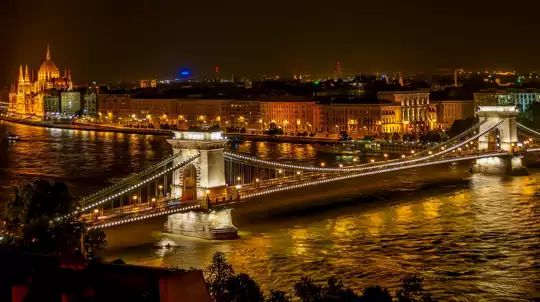
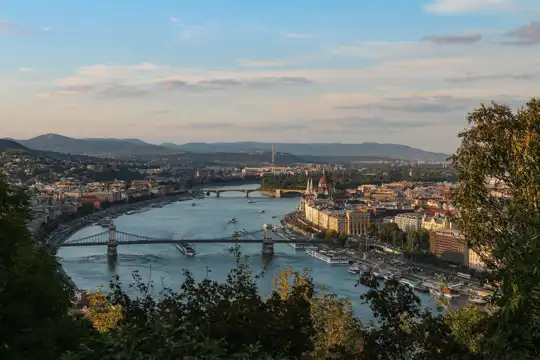
Hungary🇭🇺 | citiesBudapestDanube panorama, ruin bars, thermal baths | things to do and best time to go

Explore Zamárdi BeachExplore Miskolc

Backpacking in Budapest
UNESCO World Heritage site
🏆 Top pickcity ranked #1
By Johan Kruseman 🇳🇱 | Updated June 5, 2026

Budapest is not for anyone chasing spotless perfection, luxury malls, or a frictionless, theme-park version of Europe. It’s a little rough at the edges, occasionally bureaucratic, and the nightlife can feel like a magnet for stag parties. But for backpackers, that trade-off pays off. Sitting on the Danube in central-north Hungary, Budapest gives you grand architecture, thermal baths, and ruin bars in crumbling courtyards for a fraction of Western Europe’s prices. Transit is cheap and logical, hostels are social without being chaotic if you choose carefully, and it’s easy to meet other travelers around Gozsdu Udvar or in the baths. Safety is solid if you use basic street sense, though watch for petty scams around party zones. Compared with smaller Hungarian cities like Pécs or Debrecen, Budapest is louder, more international, less “authentically local,” but far better as a base camp for budget-minded, city-focused exploring.

Discover everything you want to know in the 📖 Hungary Travel Guide.


Get your Hungary guide
90 ranked highlights, routes & tips, works offline (351 pages)
Loading the map 🌍
CLICK TO FILTER
cities
towns
villages
landmarks
national parks
hikes
beaches
attractions
festivals
regions
SHOW COUNTRY’S BESTSHOW ALL

✨ Why go?
Ranked #1 city in Hungary
What sets this place apart

Budapest is a backpacker’s dream for several reasons. First, the affordability of hostels here is a game-changer. You can find clean, social spots that make it easy to meet fellow travelers without breaking the bank. The city is also incredibly walkable, with a layout that invites exploration. You can stroll along the Danube, hop from café to ruin pub, and soak in the atmosphere without needing a metro pass.

When it comes to food, Budapest offers a delightful mix of street eats and cozy bistros, allowing you to indulge without overspending. Plus, the nightlife is vibrant and varied, from chill bars to energetic clubs, making it easy to unwind after a day of sightseeing.

As a basecamp, Budapest is strategically located for day trips to nearby attractions, giving you the flexibility to explore … read more 👉
Budapest is a backpacker’s dream for several reasons. First, the affordability of hostels here is a game-changer. You can find clean, social spots that make it easy to meet fellow travelers without breaking the bank. The city is also incredibly walkable, with a layout that invites exploration. You can stroll along the Danube, hop from café to ruin pub, and soak in the atmosphere without needing a metro pass.

When it comes to food, Budapest offers a delightful mix of street eats and cozy bistros, allowing you to indulge without overspending. Plus, the nightlife is vibrant and varied, from chill bars to energetic clubs, making it easy to unwind after a day of sightseeing.

As a basecamp, Budapest is strategically located for day trips to nearby attractions, giving you the flexibility to explore beyond the city. The easy onward travel options mean you can seamlessly continue your journey to other European hotspots.

In short, Budapest is not just a stopover; it’s a strategic choice that balances high-value experiences with comfort, making it a worthy addition to your backpacking route.
Want to include Budapest in your Hungary route?
Create a personalized Hungary itinerary that includes Budapest and the places that fit your trip — based on your travel style, budget, and available time. Get your route in seconds.

Generate my trip

💡 HighlightsPlaces and moments you shouldn't skip

  1. Buda Castle & Castle Hill — The historic heart on the Buda side: cobbled streets, the National Gallery and National Széchényi Library, and honest-as-it-gets views over the Danube. Great for wandering, history, and skyline photos without a strict itinerary.
  2. Fisherman’s Bastion (Halászbástya) — Fairy-tale lookout towers and sweeping panoramas of Pest and the river; early morning or late afternoon is best to avoid coach crowds and to catch the light on the Parliament façade.
  3. Hungarian Parliament Building — One of Europe’s most ornate parliaments; the guided interior tour is worth booking in advance (bring ID) to see the crown jewels and grand assembly halls up close.
  4. Széchenyi Thermal Bath — Massive outdoor pools and classic spa culture in City Park. It’s a social, healing, slightly chaotic
read more 👉
  1. Buda Castle & Castle Hill — The historic heart on the Buda side: cobbled streets, the National Gallery and National Széchényi Library, and honest-as-it-gets views over the Danube. Great for wandering, history, and skyline photos without a strict itinerary.
  2. Fisherman’s Bastion (Halászbástya) — Fairy-tale lookout towers and sweeping panoramas of Pest and the river; early morning or late afternoon is best to avoid coach crowds and to catch the light on the Parliament façade.
  3. Hungarian Parliament Building — One of Europe’s most ornate parliaments; the guided interior tour is worth booking in advance (bring ID) to see the crown jewels and grand assembly halls up close.
  4. Széchenyi Thermal Bath — Massive outdoor pools and classic spa culture in City Park. It’s a social, healing, slightly chaotic experience — bring swim trunks, a towel, and patience for weekend crowds.
  5. Great Market Hall (Nagyvásárcsarnok) — A colourful, noisy market where you can buy paprika, salami, lángos, and cheap souvenirs; perfect for tasting local produce and practicing haggling with a smile.
  6. Dohány Street Synagogue & Jewish Quarter — Europe’s largest synagogue plus the moving Raoul Wallenberg memorial and Jewish Museum; the surrounding neighborhood also tells the story of Budapest’s wartime and cultural revival (and hosts the ruin pubs).
  7. Gellért Hill & Citadel — A short hike for one of the best outlooks over the city; the hill mixes history (Citadel, statues) with local exercise routes and sunset-watching spots.
  8. House of Terror Museum — A heavy but essential visit about Hungary under Nazi and Soviet rule; well-curated exhibits that paint the human cost behind the 20th-century headlines.
  9. Hospital in the Rock Nuclear Bunker Museum — A surprising, intimate museum inside a former wartime hospital and Cold War bunker under Castle Hill. It’s atmospheric, hands-on, and a very different way to see Budapest’s past.
  10. Szimpla Kert and the ruin-pub scene — More than a bar: an improvised art space, flea market on Sunday mornings, and the birthplace of Budapest’s post-communist nightlife vibe. Go for the decor and stay for the people-watching.
A few great day-trip options just outside Budapest: the riverside artists’ town of Szentendre, the royal Gödöllő Palace, and the Danube Bend towns around Visegrád and Esztergom.
Spotted a mistake or missing something? Contact us.

Things to do in Budapest

Ratings based on Tripadvisor reviews. When you book through this link, you support our work at no extra cost to you.

🏘️ NeighborhoodsKey areas and districts to know

Budapest is a city that thrives on contrasts, making it a playground for backpackers. Each neighborhood offers a unique flavor, so let’s break down the essentials.

District VII (Erzsébetváros): This is the heart of Budapest’s nightlife. Known for its ruin bars, it’s vibrant and youthful, perfect for those who want to party. Costs here can be moderate, but you can find budget-friendly hostels. Walkability is high, with plenty of cafes and street food. Ideal for short stays if you want to soak up the nightlife.

District V (Belváros-Lipótváros): The city center, where you’ll find iconic sights like the Parliament and St. Stephen’s Basilica. It’s a bit pricier, but the convenience is unmatched. Everything is within walking distance, and public transport is top-notch. Great for first-timers wanting … read more 👉
Budapest is a city that thrives on contrasts, making it a playground for backpackers. Each neighborhood offers a unique flavor, so let’s break down the essentials.

District VII (Erzsébetváros): This is the heart of Budapest’s nightlife. Known for its ruin bars, it’s vibrant and youthful, perfect for those who want to party. Costs here can be moderate, but you can find budget-friendly hostels. Walkability is high, with plenty of cafes and street food. Ideal for short stays if you want to soak up the nightlife.

District V (Belváros-Lipótváros): The city center, where you’ll find iconic sights like the Parliament and St. Stephen’s Basilica. It’s a bit pricier, but the convenience is unmatched. Everything is within walking distance, and public transport is top-notch. Great for first-timers wanting to hit the major attractions quickly, though longer stays can feel touristy.

District IX (Ferencváros): A quieter area with a more local vibe. It’s affordable and offers a mix of culture and parks. Walkability is decent, but you might need to rely on trams for longer distances. Perfect for longer stays if you want to escape the hustle while still being close to the action.

District I (Castle District): A historical area with stunning views and cobblestone streets. Costs can be higher here, especially for accommodations. It’s less lively at night, making it suitable for those seeking a peaceful retreat. Ideal for a short stay to explore the castle and enjoy the scenery without the party scene.

Each neighborhood has its trade-offs. Choose wisely based on your priorities for time, money, and comfort.

⌛️ 1 daySeeing the highlights in 24 hours

Budapest is a city that dances between history and modernity, where thermal baths bubble alongside vibrant ruin bars. It’s a place where the Danube River slices through, offering stunning views of both Buda and Pest. You can easily spend a day here, soaking in the essence of this captivating city.

Start your morning in the historic Castle District. Grab a coffee at a local café, then wander through the cobblestone streets. The Fisherman’s Bastion offers panoramic views of the Parliament building across the river. It’s a popular spot, but the early hours are quieter, allowing you to appreciate the architecture without the crowds. After soaking in the sights, head to Buda Castle. The grandeur of the palace is impressive, and the surrounding gardens are perfect for a leisurely stroll.

As the … read more 👉
Budapest is a city that dances between history and modernity, where thermal baths bubble alongside vibrant ruin bars. It’s a place where the Danube River slices through, offering stunning views of both Buda and Pest. You can easily spend a day here, soaking in the essence of this captivating city.

Start your morning in the historic Castle District. Grab a coffee at a local café, then wander through the cobblestone streets. The Fisherman’s Bastion offers panoramic views of the Parliament building across the river. It’s a popular spot, but the early hours are quieter, allowing you to appreciate the architecture without the crowds. After soaking in the sights, head to Buda Castle. The grandeur of the palace is impressive, and the surrounding gardens are perfect for a leisurely stroll.

As the afternoon rolls in, make your way down to the Jewish Quarter. This area is rich in history and culture. Visit the Dohany Street Synagogue, the largest in Europe, and take a moment to reflect on its poignant past. For lunch, dive into a local eatery like Mazel Tov, where you can enjoy delicious Middle Eastern dishes in a vibrant courtyard setting. Afterward, explore the nearby ruin bars, like Szimpla Kert. These eclectic spaces are a mix of art, music, and community, showcasing Budapest’s creative spirit.

As evening approaches, head to the banks of the Danube for a sunset cruise. This isn’t just a tourist trap; it’s a chance to see the city light up as the sun dips below the horizon. If you’re up for something off the beaten path, check out the Gellért Hill for a stunning view of the city at night. The hike is worth it, and you’ll find fewer tourists there.

Wrap up your day with dinner at a traditional Hungarian restaurant, savoring goulash or chimney cake. Budapest is a city that rewards those who take the time to explore its layers, and in just one day, you’ll have tasted its heart and soul.
Turn your Budapest visit into an Hungary adventure
Build a complete Hungary route with Budapest, hidden gems, must-see destinations, and realistic travel times included.

Generate my trip

🌤️ When to go?Best time to visit Budapest


  • Weather: Budapest’s weather swings from cold winters to hot summers. Spring (April-May) and early autumn (September-October) offer mild temperatures, usually between 10-20°C (50-68°F), making outdoor exploration comfortable without overheating or freezing.

  • Temperature: Summer highs can hit 30-35°C (86-95°F), which can drain your energy on long walks. Winters dip below freezing, often hovering around -1 to 4°C (30-39°F), requiring heavy layers and limiting outdoor time.

  • Daylight Hours: Long summer days stretch up to 16 hours, perfect for squeezing in more sightseeing. Winter days shrink to about 8 hours, compressing your schedule and making early sunsets a factor.

  • Crowds: Peak tourist season is June to August, when the city buzzes with festivals but also swells with visitors. Shoulder
read more 👉

  • Weather: Budapest’s weather swings from cold winters to hot summers. Spring (April-May) and early autumn (September-October) offer mild temperatures, usually between 10-20°C (50-68°F), making outdoor exploration comfortable without overheating or freezing.

  • Temperature: Summer highs can hit 30-35°C (86-95°F), which can drain your energy on long walks. Winters dip below freezing, often hovering around -1 to 4°C (30-39°F), requiring heavy layers and limiting outdoor time.

  • Daylight Hours: Long summer days stretch up to 16 hours, perfect for squeezing in more sightseeing. Winter days shrink to about 8 hours, compressing your schedule and making early sunsets a factor.

  • Crowds: Peak tourist season is June to August, when the city buzzes with festivals but also swells with visitors. Shoulder seasons (spring and autumn) balance fewer crowds with lively city life, letting you enjoy landmarks without elbowing through throngs.

  • Seasonal Activities: Summer hosts open-air concerts and river cruises, while winter brings Christmas markets and thermal baths with a festive vibe. Spring and autumn offer cultural festivals and quieter café scenes.

  • Price Fluctuations: Accommodation and flights spike in summer and around Christmas. Booking in shoulder seasons can save you 20-40% without sacrificing much on experience quality.


Pro-tip: Target late April to early June or September for the smartest balance of weather, crowd size, and cost—your wallet and feet will thank you.


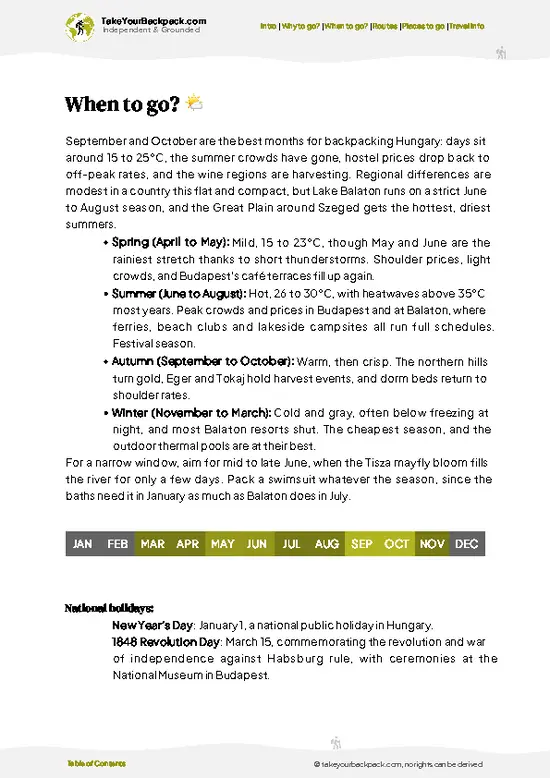
source: climatestotravel.comJANJanuary: fair for travelingFEBFebruary: fair for travelingMARMarch: good for travelingAPRApril: highly recommended for travelingMAYMay: excellent for travelingJUNJune: highly recommended for travelingJULJuly: good for travelingAUGAugust: good for travelingSEPSeptember: excellent for travelingOCTOctober: highly recommended for travelingNOVNovember: good for travelingDECDecember: fair for traveling
Hungary - Budapest

✈️ The backpacker research shortcutHungary Travel Guide

An offline-friendly backpacking guide with optimized travel routes, ranked highlights, transport advice, and the best areas to stay.
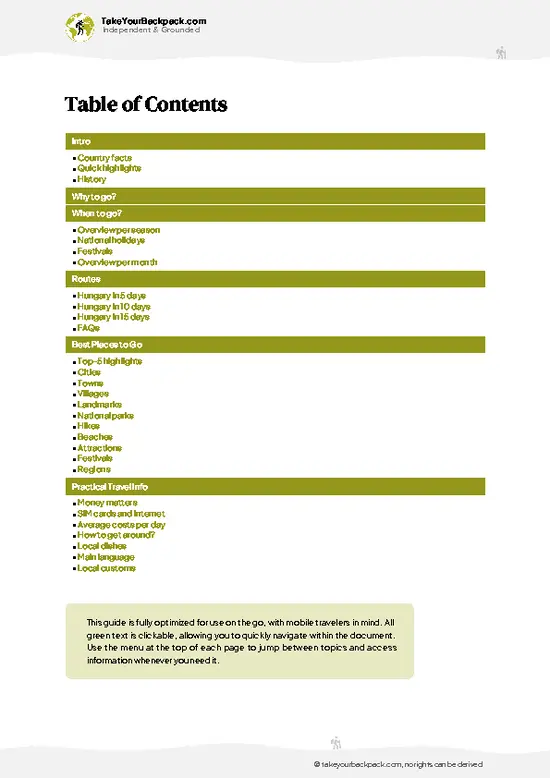
example page 0 from our offline Travel Guide for Hungary
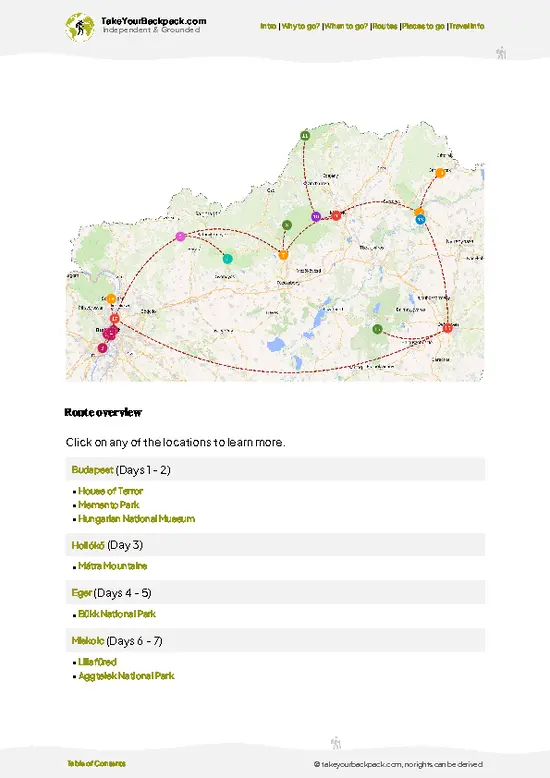
example page 1 from our offline Travel Guide for Hungary
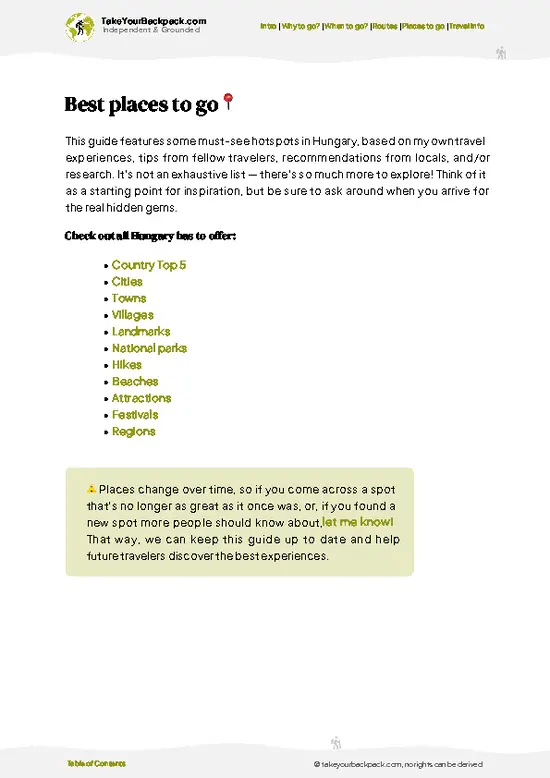
example page 2 from our offline Travel Guide for Hungary
example page 3 from our offline Travel Guide for Hungary
example page 4 from our offline Travel Guide for Hungary
example page 5 from our offline Travel Guide for Hungary
example page 6 from our offline Travel Guide for Hungary
example page 7 from our offline Travel Guide for Hungary
The digital guide (351 pages) contains:
90 highlights, ranked by travel appeal
Optimized 5, 10 & 15-day travel routes
Cities, national parks, landmarks, beaches
How to get around
Offline-friendly for travel without Wi-Fi
👉 Click to see all 30+ guide features

📅 Plan smarter in minutes, not weeks
Month by month travel advice
Festivals & national holidays
Budget expectations

🗺️ Go to the right places, skip the overrated ones
Honest pros & cons of destinations
Top hikes, parks & viewpoints
Lesser-known places most travelers miss
Clear “worth it vs skip it” guidance

🛏️ Travel smoothly without rookie mistakes
Best areas to stay
Transport systems explained simply
Common scams & safety advice
SIM cards, money & practical tips

🌍 Understand the country, not just visit it
Culture & traditions
52 Essential phrases & customs
Festivals worth planning around
Traveler-friendly historical context
Insights that make places more meaningful

📱 Built for real travel conditions
Fully downloadable PDF
Works completely offline
Optimized for phone use
Useful in remote areas & buses
Everything in one place
Save weeks of stressful planning
Get instant access to your full guide. 30‑day money-back guarantee.


By proceeding you agree to our terms.
Sent to your inbox immediately after payment • 100% Secure Checkout
Best Backpacking Travel Advisor 2025 tourism awardBest Backpacking
Travel Advisor
2025
What others say about Take Your Backpack Guides:
⭐⭐⭐⭐⭐
Fantastic, amazing amount of information!
⭐⭐⭐⭐⭐
My goodness this is amazing, it's what I've been looking for hats off too you!
⭐⭐⭐⭐⭐
I think this is absolutely BRILLIANT
⭐⭐⭐⭐
Very complete and informative. It's still missing places, but I gotta to commend you
⭐⭐⭐⭐⭐
This is truly amazing, thank you, can't wait to explore it with my kids!
⭐⭐⭐⭐⭐
Awesome resource, thank you!
⭐⭐⭐⭐⭐
This is amazing! Can't wait to explore the ones I haven't seen
⭐⭐⭐⭐
I love this! Well done, great idea.
⭐⭐⭐⭐⭐
Thanks for taking the time to make this gem!
⭐⭐⭐⭐⭐
This might be the best website I've ever seen.
⭐⭐⭐⭐⭐
Congratulations, and thank you so much for your work; it's incredibly valuable.
⭐⭐⭐⭐
In all seriousness I think you did a great job pointing out the important spots
⭐⭐⭐⭐⭐
10/10 very good
⭐⭐⭐⭐⭐
As someone who's only just starting to visit regularly this is awesome, thank you.
⭐⭐⭐⭐
Thank you very much! I'm going to visit my dad, it's going to be very useful!
⭐⭐⭐⭐⭐
This is really cool! We'll be travelling for the first time and this definitely come in handy.
⭐⭐⭐⭐⭐
You are now our minister of culture, congratulations 👨‍💼
⭐⭐⭐⭐⭐
Just wanted to tell you that this is a pearl! Going to follow your recommendations.
⭐⭐⭐⭐⭐
This is so cool. I'll definitely be using the resource for my travels soon.
⭐⭐⭐⭐⭐
This is very impressive! Good work.
⭐⭐⭐⭐⭐
This is an amazing and informative site. Very well done!

🛏️ Where to stay?Choosing the right base

Budapest’s backpacker sweet spot is unquestionably the 7th District, also known as Erzsébetváros. It’s the city’s social engine, packed with ruin bars, street food stalls, and a vibe that’s both gritty and welcoming. For budget travelers, this area strikes a near-perfect balance between cost and convenience. You’re close to major sights like the Great Synagogue and the buzzing Kazinczy Street, but the real win is the density of hostels and guesthouses catering to solo travelers and groups alike. Safety here is solid, especially compared to some outer districts, and the streets hum with a youthful … read more 👉
Budapest’s backpacker sweet spot is unquestionably the 7th District, also known as Erzsébetváros. It’s the city’s social engine, packed with ruin bars, street food stalls, and a vibe that’s both gritty and welcoming. For budget travelers, this area strikes a near-perfect balance between cost and convenience. You’re close to major sights like the Great Synagogue and the buzzing Kazinczy Street, but the real win is the density of hostels and guesthouses catering to solo travelers and groups alike. Safety here is solid, especially compared to some outer districts, and the streets hum with a youthful energy that makes meeting people effortless.

If you want to dial up comfort without blowing your budget, the adjacent 6th District (Terézváros) is worth considering. It’s a bit more polished, quieter at night, and still within walking distance of the party core. Hostels here tend to be slightly pricier but offer a calmer retreat after late nights out.

Avoid the outer districts unless you’re on a tight budget and don’t mind long commutes. They save money but cost you time and social opportunities. In Budapest, time is a currency you don’t want to waste on transit when the city’s heart beats so strongly in these central neighborhoods. Choosing Erzsébetváros or Terézváros means you’re investing in both your social life and your sanity—two essentials for a memorable trip.

🚌 Getting aroundGetting around like a local

Budapest moves with a rhythm that’s part clockwork, part improvisation. The city’s public transit system is impressively punctual, but the real flow comes from knowing when to lean into the schedule and when to trust your instincts—like hopping off a tram early to explore a side street or timing your metro ride to avoid the crush. It’s a dance between efficiency and spontaneity, where every choice you make about time, money, and comfort shapes your experience. Mastering this trade-off map means you’re not just getting from A to B—you’re hacking the city’s pulse.


  • Walking: Budapest’s compact downtown makes walking a top contender. It costs nothing, offers maximum flexibility, and lets you soak in the city’s layered architecture and street life at your own pace. Expect to cover 3-5 km in
read more 👉
Budapest moves with a rhythm that’s part clockwork, part improvisation. The city’s public transit system is impressively punctual, but the real flow comes from knowing when to lean into the schedule and when to trust your instincts—like hopping off a tram early to explore a side street or timing your metro ride to avoid the crush. It’s a dance between efficiency and spontaneity, where every choice you make about time, money, and comfort shapes your experience. Mastering this trade-off map means you’re not just getting from A to B—you’re hacking the city’s pulse.


  • Walking: Budapest’s compact downtown makes walking a top contender. It costs nothing, offers maximum flexibility, and lets you soak in the city’s layered architecture and street life at your own pace. Expect to cover 3-5 km in about an hour, depending on your stride and detours. It’s the ultimate comfort choice if you’re light on time but heavy on curiosity.


  • Metro: The backbone of Budapest’s transit, the metro runs from roughly 4:30 AM to 11 PM. Tickets cost about 350 HUF (~$1), making it a budget champion. It’s fast—trains come every 2-5 minutes during peak hours—but can get crowded, especially on the M3 line. Comfort dips during rush hour, but you save serious time crossing the city’s sprawling east-west and north-south axes.


  • Trams: Trams are the city’s scenic arteries, slower than the metro but more comfortable and reliable than buses. Lines 4 and 6 run 24/7 along the Grand Boulevard, with trams every 2-7 minutes during the day. Tickets are the same price as the metro. You trade speed for a smoother ride and a chance to watch Budapest’s neighborhoods unfold outside your window.


  • Buses: Buses fill in the gaps where metro and tram lines don’t reach, especially in outer districts. They run from around 4:30 AM to midnight, with less frequency late at night. Tickets cost the same but expect slower travel and less comfort—crowded, bumpy rides are common. Use buses when you want to save money but can afford extra travel time.


  • Night Buses: After the metro shuts down, night buses take over, running roughly from midnight to 4:30 AM. They’re slower and less frequent, with tickets costing the same as daytime transit. Comfort and speed drop, but they’re a budget-friendly lifeline if you’re out late and want to avoid pricey taxis.

👛 Costs (as of 5 June 2026)What things cost and how to budget

Backpacking in Budapest offers a clear trade-off map between time, money, and comfort, and understanding the daily costs lets you play the system smartly.
  • Dorm Accommodation (High Season): Expect to pay around €15-€25 per night for a bed in a well-located hostel dorm during peak tourist months (spring to early autumn). These prices reflect demand spikes and the city’s growing popularity.
  • Dorm Accommodation (Off-Season): In the quieter months (late autumn to winter), prices drop to about €10-€18 per night. You sacrifice some social buzz and longer daylight hours but gain better rates and less crowded hostels.
  • Meals: Budget meals from street food vendors or local markets typically cost €3-€6. A mid-range sit-down meal runs €8-€15. Cooking your own food can cut costs but costs time and access
read more 👉
Backpacking in Budapest offers a clear trade-off map between time, money, and comfort, and understanding the daily costs lets you play the system smartly.
  • Dorm Accommodation (High Season): Expect to pay around €15-€25 per night for a bed in a well-located hostel dorm during peak tourist months (spring to early autumn). These prices reflect demand spikes and the city’s growing popularity.
  • Dorm Accommodation (Off-Season): In the quieter months (late autumn to winter), prices drop to about €10-€18 per night. You sacrifice some social buzz and longer daylight hours but gain better rates and less crowded hostels.
  • Meals: Budget meals from street food vendors or local markets typically cost €3-€6. A mid-range sit-down meal runs €8-€15. Cooking your own food can cut costs but costs time and access to kitchen facilities.
  • Local Transport: Single tickets for buses, trams, or metro rides cost about €1.10 each. If you plan multiple trips, buying individual tickets adds up quickly.
  • City Transport Pass: A 24-hour public transport pass is around €5.50, offering unlimited rides on buses, trams, and metro. This is a clear win if you’re moving around a lot in a day, saving both money and time.
  • Basic Activities/Entry Fees: Museums and attractions typically charge €5-€10. Some landmarks have free entry or discounted days, but planning ahead is key to maximizing value.
  • Miscellaneous Expenses: This covers essentials like bottled water (€0.50-€1), occasional coffee (€1.50-€3), and small souvenirs or toiletries. Budget around €3-€5 daily here to avoid surprises.

Budapest’s daily backpacking budget ranges roughly from €25 on a tight, off-season plan to about €50 if you lean into comfort and convenience during high season. Knowing where your money goes lets you decide what’s worth the splurge and what’s better saved for the next adventure.


source: numbeo.com
⚠️ Prices can change and everyone travels differently, so take this as a rough guide. Hope it helps you plan your adventure!

🚌 Day tripsEasy escapes and nearby places

Budapest is a fantastic launchpad for day trips that blend culture, history, and nature. With efficient transport options and a variety of destinations, you can easily explore the surrounding gems without breaking the bank.

Szentendre
Just a 40-minute train ride from Budapest, Szentendre is a charming riverside town known for its art scene and cobblestone streets. You can wander through galleries, sample local pastries, and soak in the vibrant atmosphere. The cost is minimal; a round-trip ticket is around €3, and you can easily spend a day here without splurging. Aim for spring or early fall when the weather is pleasant, and the crowds are manageable. A common mistake? Many first-timers rush through without taking the time to explore the quirky shops and cafes tucked away from the main … read more 👉
Budapest is a fantastic launchpad for day trips that blend culture, history, and nature. With efficient transport options and a variety of destinations, you can easily explore the surrounding gems without breaking the bank.

Szentendre
Just a 40-minute train ride from Budapest, Szentendre is a charming riverside town known for its art scene and cobblestone streets. You can wander through galleries, sample local pastries, and soak in the vibrant atmosphere. The cost is minimal; a round-trip ticket is around €3, and you can easily spend a day here without splurging. Aim for spring or early fall when the weather is pleasant, and the crowds are manageable. A common mistake? Many first-timers rush through without taking the time to explore the quirky shops and cafes tucked away from the main square.
👉 Explore Szentendre

Visegrád
Head to Visegrád, about an hour from Budapest, for a mix of history and stunning views. The highlight is the medieval citadel, which offers panoramic vistas of the Danube Bend. Entry is around €6, and you can hike the trails nearby for free. Late spring or early autumn is ideal for hiking, as the trails can get muddy in winter. A common pitfall is underestimating the hike up to the citadel; wear good shoes and bring water.
👉 Explore Visegrád

Esztergom
Esztergom, roughly an hour and a half away, is home to Hungary’s largest basilica. The architecture is breathtaking, and the town itself is steeped in history. A round-trip train ticket costs about €5, and you can easily spend a few hours exploring the basilica and the surrounding area. Late spring is perfect for visiting, as the gardens bloom beautifully. First-timers often miss the chance to cross the bridge into Slovakia for a different perspective—don’t skip it!
👉 Explore Esztergom

Lake Balaton
For a taste of nature, consider Lake Balaton, about two hours from Budapest. This massive lake is perfect for swimming, hiking, or just relaxing by the shore. The train fare is around €10, and you can find budget-friendly accommodations if you decide to stay longer. Summer is peak season, but early fall offers a quieter experience. Many backpackers overlook the smaller towns around the lake, which often have more character than the tourist hotspots.


Gödöllő
Gödöllő, only 30 minutes away, is famous for its royal palace, once a favorite of Empress Elisabeth of Austria. The entry fee is about €8, and you can stroll through the gardens for free. Spring and summer are ideal for visiting, as the gardens are in full bloom. A common mistake is to underestimate the time needed to explore the palace; plan for at least a couple of hours to fully appreciate it.
Want to know what more Hungary offers?
The Hungary Travel Guide describes 90 highlights, from cities to national parks, from beaches to hikes

Get the Travel Guide -

🍲 FoodLocal Cuisine & Drinks

In Budapest, food and drink are not just sustenance; they’re a celebration of culture. Start with gulyás, a hearty beef soup seasoned with paprika that warms you from the inside out. Pair it with lángos, a deep-fried flatbread topped with sour cream and cheese, perfect for grabbing on the go at street stalls.

The Great Market Hall is a must-visit. Here, you’ll find stalls brimming with local produce, meats, and cheeses. The aroma of fresh pastries wafts through the air, tempting you to try a slice of dobos torte, a layered sponge cake with chocolate buttercream.

When it comes to drinks, don’t miss out on pálinka, a potent fruit brandy that locals sip as a rite of passage. You’ll find it in cozy bars, often accompanied by a toast and a hearty laugh.

Dining here is casual and communal. … read more 👉
In Budapest, food and drink are not just sustenance; they’re a celebration of culture. Start with gulyás, a hearty beef soup seasoned with paprika that warms you from the inside out. Pair it with lángos, a deep-fried flatbread topped with sour cream and cheese, perfect for grabbing on the go at street stalls.

The Great Market Hall is a must-visit. Here, you’ll find stalls brimming with local produce, meats, and cheeses. The aroma of fresh pastries wafts through the air, tempting you to try a slice of dobos torte, a layered sponge cake with chocolate buttercream.

When it comes to drinks, don’t miss out on pálinka, a potent fruit brandy that locals sip as a rite of passage. You’ll find it in cozy bars, often accompanied by a toast and a hearty laugh.

Dining here is casual and communal. Expect to share tables in bustling bistros or sip coffee in quaint cafés where conversations flow as freely as the drinks. Remember, it’s customary to say “Egészségedre!” (Cheers!) before taking a sip. Embrace the local rhythm, and you’ll find that every bite and sip tells a story.

🛡️ SafetyTraveler Safety Guide

Budapest is generally safe, but like any city, it has its quirks. Stay aware in crowded areas like the markets or near major tourist spots; pickpockets can be a nuisance. When wandering the streets at night, especially in districts like District VII, keep your wits about you. Stick to well-lit areas and avoid empty side streets.

Solo travelers should feel comfortable, but trust your instincts. If something feels off, it probably is.

Scams do pop up, particularly around popular attractions. Be cautious of overly friendly locals offering unsolicited help or trying to sell you something. A common trick involves fake petitions; once you engage, they might demand money.

Everyday annoyances include aggressive street performers or vendors. Politely decline and keep moving. Carry your belongings … read more 👉
Budapest is generally safe, but like any city, it has its quirks. Stay aware in crowded areas like the markets or near major tourist spots; pickpockets can be a nuisance. When wandering the streets at night, especially in districts like District VII, keep your wits about you. Stick to well-lit areas and avoid empty side streets.

Solo travelers should feel comfortable, but trust your instincts. If something feels off, it probably is.

Scams do pop up, particularly around popular attractions. Be cautious of overly friendly locals offering unsolicited help or trying to sell you something. A common trick involves fake petitions; once you engage, they might demand money.

Everyday annoyances include aggressive street performers or vendors. Politely decline and keep moving. Carry your belongings close and maintain a confident posture. This isn’t just about safety; it’s about enjoying the experience without unnecessary distractions. With a bit of awareness, you can navigate Budapest smoothly and focus on its rich culture.

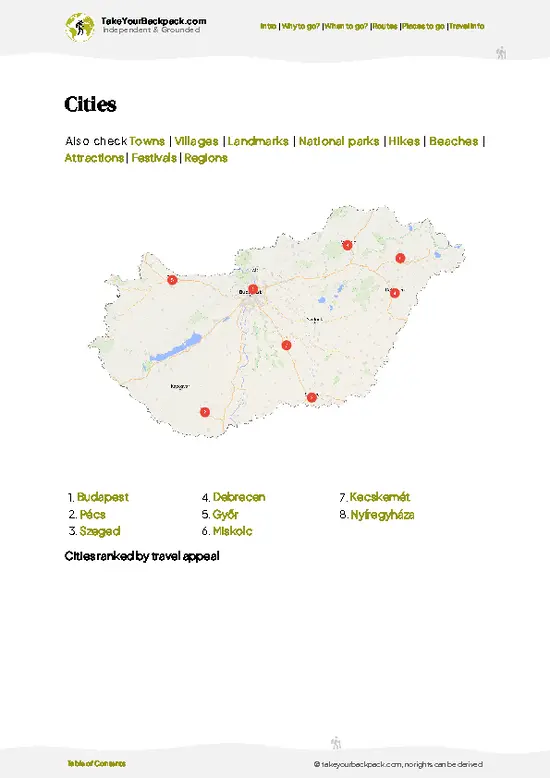
Other Hungarian cities near Budapest

Explore more nearby:

  • Kecskemét—secessionist buildings, apricot brandy, music festivals| 88 km away
  • Győr—baroque squares, rivers confluence, industrial heritage| 109 km away
  • Miskolc—cave baths, industrial districts, Bükk foothills| 139 km away

💡 Not sure where to go next?
Create a personalized itinerary for Hungary including Budapest and the places that fit your trip.

Generate my itinerary

👉 Discover all cities

Or checkout all Hungary has to offer (think cities, towns, villages, national parks, hikes, beaches, festivals)
Country photo of Hungary

We 💚 feedbackKey takeaways before you go

Budapest has a pulse that’s hard to resist. The thermal baths? A must—nothing beats soaking in history while the city buzzes around you. But don’t skip the ruin pubs; they’re a delightful surprise, blending art and nightlife in a way that feels uniquely local. Just a heads-up: the public transport can be a bit of a maze, so grab a map or download an app. Embrace the chaos; it’s part of the charm. You’ll leave with stories that linger long after you’ve gone.

✍️ Help improve this page!
The information on this page is based on in-depth research, insights shared by experienced travelers, and feedback from the local travel community in Hungary. While every effort is made to keep the information accurate and current, conditions can change — so if you spot anything incorrect or outdated, please get in touch.


🙋‍♂️ Give feedback

👋 Meet the founderWho’s Behind Take Your Backpack?

Johan, backpacker and founder of TakeYourBackpackHi, I’m Johan (Netherlands 🇳🇱), the creator of TakeYourBackpack. Over the past decade, I’ve backpacked through 80+ countries across six continents, gaining extensive experience with independent travel, long-term trips, and overland routes.

This site is built on a combination of firsthand travel experience and carefully curated insights from other backpackers. Many guides are based on places I’ve personally visited, while others bring together tips, observations, and practical advice shared by trusted travelers I’ve met along the way.

The goal is to provide realistic, experience-driven guidance — not generic itineraries — so you can explore destinations with better context, clearer expectations, and more confidence.

Get full Hungary guide •
Instant download • 90 highlights • Full Offline guide