×

Hungary🇭🇺 | best citiesYour Guide to the 8 Best cities in Hungary

Hungary’s cities split into two worlds. Budapest is the loud, steamy, tram-rattling capital where thermal vapor drifts over stone baths and ruin bars glow past midnight, and it costs the most. Beyond it, the university and county-seat towns run on quieter rhythms: church bells, espresso machines, paprika-dusted lunch counters, pastel Baroque facades fading in afternoon sun. Prices drop fast once you leave the capital, and crowds thin to almost nothing outside summer. For backpacking or any independent trip, the radial rail network makes nearly everything reachable, though the east and south mean slower trains and fewer English speakers. Pick by mood: nightlife and baths, wine hills, or cobbled calm.

By Johan Kruseman 🇳🇱 | Updated October 19, 2026
Explore the best towns in Hungary

Why go?Key Factors That Shape the Experience

Hungary suits city travel because its history is stacked in plain sight. Roman, Ottoman, Habsburg and socialist layers sit on the same streets, so you can walk past a Turkish bath, a yellow Baroque square and a concrete housing block within minutes. Much of the country is the flat Great Plain, which means settlements grew around rivers, market squares and rail junctions rather than mountains, and almost everything is walkable in a day.

The country is compact and heavily centralized. Nearly all rail lines radiate from one capital, so travel between provincial towns often means going through it or taking a slow regional train. Thermal water lies beneath much of the country, which is why a hot, mineral-smelling soak is a normal part of urban life here, not a special trip.

Before choosing Hungary, … read more 👉
Hungary suits city travel because its history is stacked in plain sight. Roman, Ottoman, Habsburg and socialist layers sit on the same streets, so you can walk past a Turkish bath, a yellow Baroque square and a concrete housing block within minutes. Much of the country is the flat Great Plain, which means settlements grew around rivers, market squares and rail junctions rather than mountains, and almost everything is walkable in a day.

The country is compact and heavily centralized. Nearly all rail lines radiate from one capital, so travel between provincial towns often means going through it or taking a slow regional train. Thermal water lies beneath much of the country, which is why a hot, mineral-smelling soak is a normal part of urban life here, not a special trip.

Before choosing Hungary, know that the forint keeps costs lower than in Western Europe, but card payments are common while cash helps in small places. Hungarian is unrelated to its neighbors’ languages, so signs are hard to decode and a few phrases go a long way. Summer pavements radiate heat, and winter brings gray skies and cold, damp air. Outside the capital, expect empty streets after 9 pm.
How the List Was Created
The list of best cities in Hungary is created based on culture, vibe, attractions, transport ease, and local charm. If you feel a city is missing in this list, please let us know.

When to go?Optimal Periods for Travel

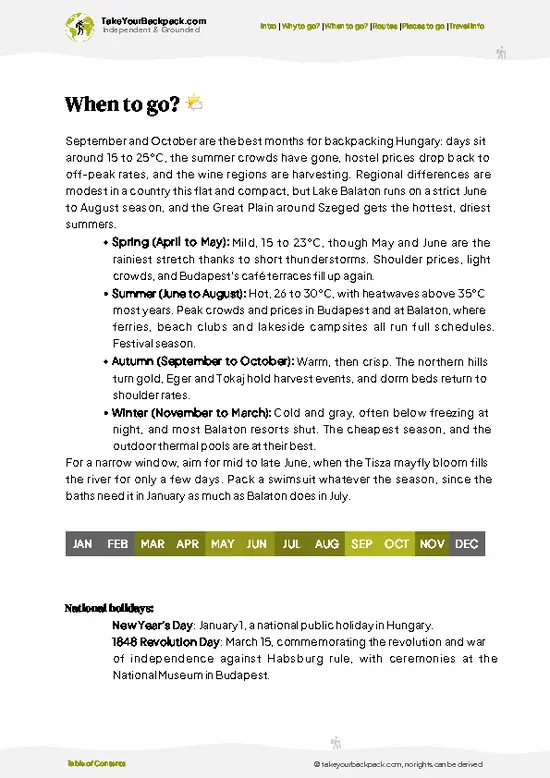
Best months and shoulder seasons: The best months for Hungary’s cities are May, June and September, when daytime temperatures sit around 18 to 26°C, terraces are open and evening light stays soft until nearly 9 pm in early summer. Rain is modest, roughly 50 to 70 mm a month, often arriving as short, sharp thunderstorms.

Summer heat and crowds: July and August can push 30 to 35°C, with asphalt holding heat into the night and little air movement in stone courtyards. Budapest is busiest then, with higher hotel prices, often 20 to 40 percent above spring rates, and long queues at baths. Lake Balaton towns in the west peak in these same months, while the interior cities feel calmer. Many university towns empty out as students leave.

Autumn, winter and openings: October brings grape harvest smells … read more 👉
Best months and shoulder seasons: The best months for Hungary’s cities are May, June and September, when daytime temperatures sit around 18 to 26°C, terraces are open and evening light stays soft until nearly 9 pm in early summer. Rain is modest, roughly 50 to 70 mm a month, often arriving as short, sharp thunderstorms.

Summer heat and crowds: July and August can push 30 to 35°C, with asphalt holding heat into the night and little air movement in stone courtyards. Budapest is busiest then, with higher hotel prices, often 20 to 40 percent above spring rates, and long queues at baths. Lake Balaton towns in the west peak in these same months, while the interior cities feel calmer. Many university towns empty out as students leave.

Autumn, winter and openings: October brings grape harvest smells in wine regions like Eger and Tokaj, with temperatures around 10 to 17°C. From November to February, expect 0 to 5°C, fog and early dusk, but also Christmas markets from late November, steaming mulled wine and the best-value rooms of the year, often 30 percent below summer. Thermal baths are most atmospheric in cold weather, with steam rising into freezing air. Some museums and seasonal attractions shorten hours or close on Mondays and in winter, and smaller towns shut earlier. Spring, particularly April, is changeable with sun and cold rain in one afternoon.

city hoppingTips for Visiting Multiple Destinations

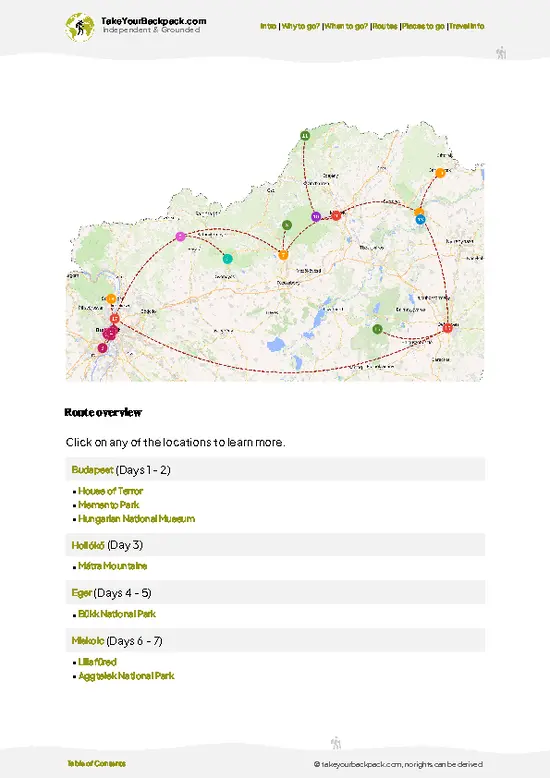
How long and in what order: A trip combining several Hungarian cities needs 7 to 12 days. Start in the capital, where international flights and trains arrive, then fan out in one loop rather than returning repeatedly. Northeast routes toward the wine and spa towns group well together, as do routes west toward the Danube Bend and Lake Balaton, and the southwest toward Pécs. The Great Plain in the east pairs with the northeast, since regional trains link them.

Time per stop and transfers: Give each provincial stop 1 to 2 nights, and allow 3 to 4 nights in Budapest, which has the densest schedule of baths, markets and museums. Typical train times from the capital are 1.5 to 2.5 hours to most regional centers, and about 2.5 to 3 hours to the farthest ones in the south and east. Intercity trains … read more 👉
How long and in what order: A trip combining several Hungarian cities needs 7 to 12 days. Start in the capital, where international flights and trains arrive, then fan out in one loop rather than returning repeatedly. Northeast routes toward the wine and spa towns group well together, as do routes west toward the Danube Bend and Lake Balaton, and the southwest toward Pécs. The Great Plain in the east pairs with the northeast, since regional trains link them.

Time per stop and transfers: Give each provincial stop 1 to 2 nights, and allow 3 to 4 nights in Budapest, which has the densest schedule of baths, markets and museums. Typical train times from the capital are 1.5 to 2.5 hours to most regional centers, and about 2.5 to 3 hours to the farthest ones in the south and east. Intercity trains run on a fast hub-and-spoke pattern, so a cross-country trip between two non-capital towns can take 4 to 6 hours with changes.

Common planning mistakes: The biggest error is treating the map as a grid. Because lines radiate from one point, zigzagging between small towns burns half-days waiting on platforms. Plan a loop and use the capital as one pass-through. Another mistake is leaving too little buffer for slower regional trains with scuffed seats and limited air conditioning in summer. Book longer intercity seats ahead for weekends and holidays, and avoid scheduling a late arrival in a small town, where food closes early.

The ListHighly Recommended cities of Hungary

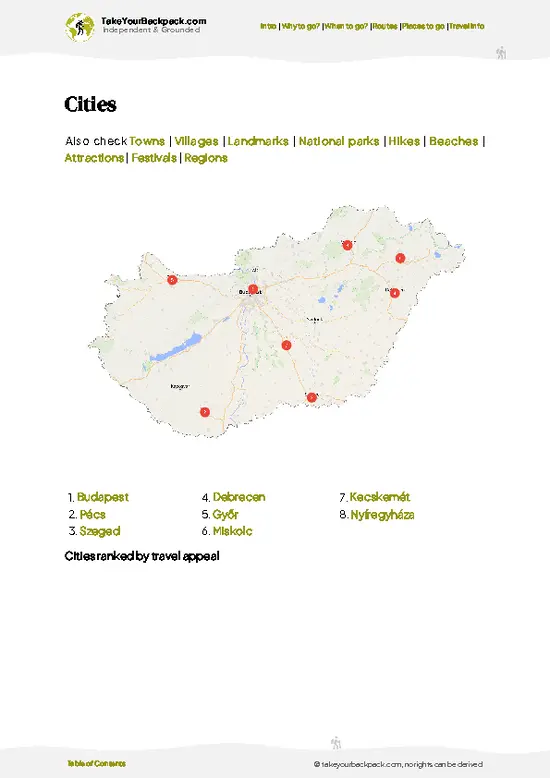
1 Budapest

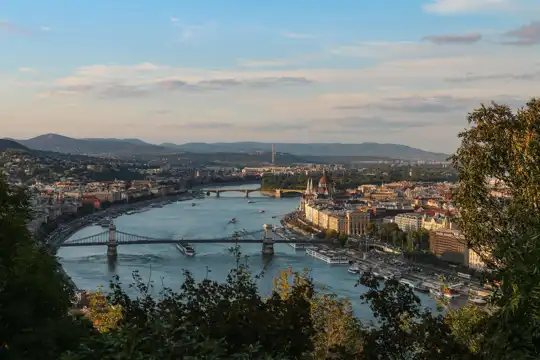
Danube panorama, ruin bars, thermal baths

Cross iconic bridges, soak in historic baths, and explore nightlife in a capital where grand architecture meets everyday local scenes.

Hungary - Budapest

2 Pécs

Roman ruins, Zsolnay ceramics, Mediterranean microclimate

Stroll through a city with ancient roots, distinctive tilework, and a mild climate that shapes its outdoor cafés and relaxed pace.

hungary-city-pecs
© Google | Luck Star

3 Szeged

Art Nouveau facades, university life, paprika markets

Experience a southern city known for its bold architecture, youthful energy, and the unmistakable scent of spice in its bustling markets.

4 Debrecen

Protestant Great Church, thermal baths, academic hub

Visit Hungary’s eastern center for its prominent religious landmarks, student-driven atmosphere, and a network of relaxing spa complexes.

5 Győr

baroque squares, rivers confluence, industrial heritage

Discover a city shaped by its waterways and ornate architecture, with a lively center and a strong connection to Hungary’s manufacturing past.

6 Miskolc

cave baths, industrial districts, Bükk foothills

Venture into a city where spa culture meets rugged landscapes, with easy access to forested hills and remnants of heavy industry.

hungary-city-miskolc
© Google | Kamil Kaliciński

7 Kecskemét

secessionist buildings, apricot brandy, music festivals

Sample local spirits and enjoy a calendar of cultural events in a city marked by ornate facades and a strong musical tradition.

8 Nyíregyháza

thermal lake, zoo, leafy boulevards

Wander through a city where wellness, animal encounters, and broad green streets create a relaxed pace away from Hungary’s main tourist routes.

hungary-city-nyiregyhaza
© Google |
Loading the map 🌍

Expert viewWhat You Should Know

How many cities to visit: I advise two to four cities for a week to ten days. Hungary is small, but its rail network is built around the capital, and each stop deserves at least a full day to feel the textures: warm bread and sausage at a market, the sulfur tang of thermal water, the clack of a tram. Four is the limit before the trip turns into transfers. Two works well if you want to linger over wine cellars or long soaks.

Which kind suits your style: Choose the capital if you want nightlife, big museums and a sharp hostel social scene. It is the most crowded and most expensive, especially along the main tourist streets, where menus are inflated. Choose a smaller university or wine town if you prefer quiet squares, cheaper meals and chats with locals over a glass of local white wine. Spa-focused … read more 👉
How many cities to visit: I advise two to four cities for a week to ten days. Hungary is small, but its rail network is built around the capital, and each stop deserves at least a full day to feel the textures: warm bread and sausage at a market, the sulfur tang of thermal water, the clack of a tram. Four is the limit before the trip turns into transfers. Two works well if you want to linger over wine cellars or long soaks.

Which kind suits your style: Choose the capital if you want nightlife, big museums and a sharp hostel social scene. It is the most crowded and most expensive, especially along the main tourist streets, where menus are inflated. Choose a smaller university or wine town if you prefer quiet squares, cheaper meals and chats with locals over a glass of local white wine. Spa-focused travelers should look for towns with historic thermal baths, which are everywhere in the country. History lovers do well in older Roman and Ottoman centers in the south.

What it costs: Budget US$45 to 70 a day in the capital and US$30 to 50 elsewhere, using forints (roughly 400 to 500 HUF per US$1 gives a feel for local prices). Dorm beds run about US$14 to 28 in the capital and US$10 to 20 in provincial towns. A sit-down lunch of goulash or stuffed cabbage costs US$6 to 10 at a local place. Thermal bath entry is typically US$15 to 30, higher on weekends, and many museums charge US$5 to 12. A guided walking tour runs US$15 to 30 unless it is tip-based. Regional trains cost roughly US$5 to 15 per leg, and a 24 hour public transport pass in the capital is around US$6 to 8.

Safety and etiquette: Hungary is generally safe, with petty crime the main concern. Pickpockets work crowded trams, market halls and the main sightseeing strips, so keep phones and wallets in front pockets. Nightlife districts can bring overcharging and inflated drink bills, so check prices before ordering and be wary of unlicensed taxis; use a licensed app or a company with a posted rate. Validate public transport tickets, as inspectors in dark jackets issue on-the-spot fines of roughly US$25 to 50.

Greeting shopkeepers with a quiet “jó napot” goes a long way. Tipping of 10 percent is customary in restaurants, and some add a service charge already, so check the bill. Bring layers, since summer heat and winter damp both catch people out, and carry cash for small cellars and rural cafés.

The reward is a country where an evening can mean steaming water, paprika-heavy stew and music drifting from a courtyard, all for far less than in Vienna or Prague.

✈️ The backpacker research shortcutHungary Travel Guide

An offline-friendly backpacking guide with optimized travel routes, ranked highlights, transport advice, and the best areas to stay.
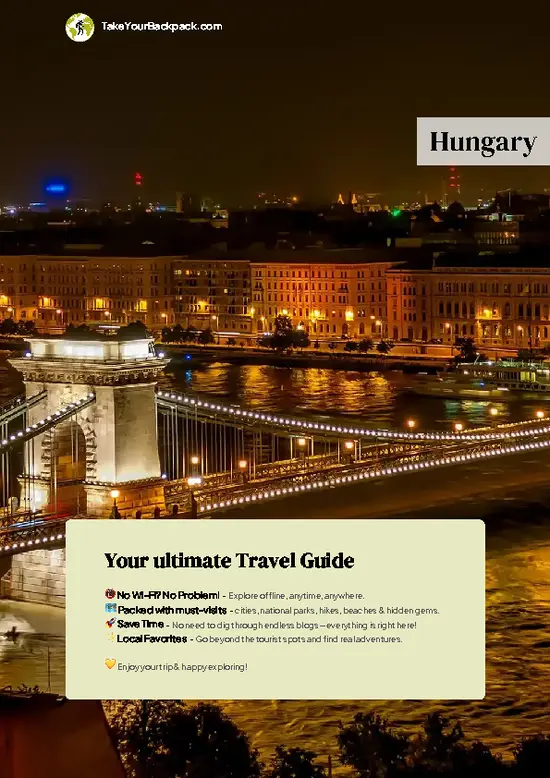
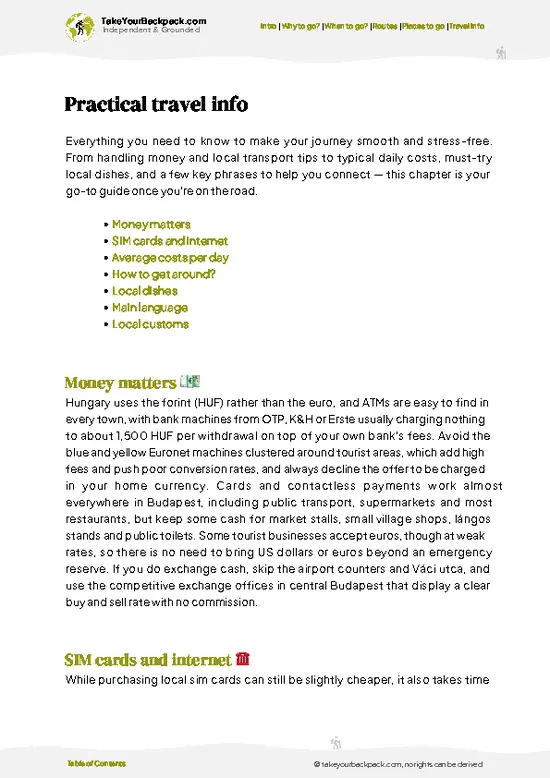
example page 0 from our offline Travel Guide for Hungary
example page 1 from our offline Travel Guide for Hungary
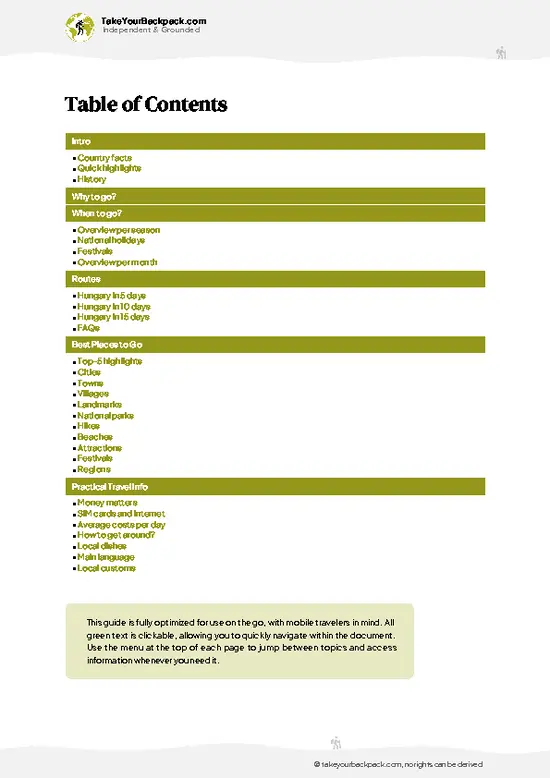
example page 2 from our offline Travel Guide for Hungary
example page 3 from our offline Travel Guide for Hungary
example page 4 from our offline Travel Guide for Hungary
example page 5 from our offline Travel Guide for Hungary
example page 6 from our offline Travel Guide for Hungary
example page 7 from our offline Travel Guide for Hungary
The digital guide (334 pages) contains:
✅ 86 highlights, ranked by travel appeal
✅ Optimized 5, 10 & 15-day travel routes
✅ Cities, national parks, landmarks, beaches
✅ How to get around
✅ Offline-friendly for travel without Wi-Fi
👉 Click to see all 30+ guide features

📅 Plan smarter in minutes, not weeks
✅ Month by month travel advice
✅ Festivals & national holidays
✅ Budget expectations

🗺️ Go to the right places, skip the overrated ones
✅ Honest pros & cons of destinations
✅ Top hikes, parks & viewpoints
✅ Lesser-known places most travelers miss
✅ Clear “worth it vs skip it” guidance

🛏️ Travel smoothly without rookie mistakes
✅ Best areas to stay
✅ Transport systems explained simply
✅ Common scams & safety advice
✅ SIM cards, money & practical tips

🌍 Understand the country, not just visit it
✅ Culture & traditions
✅ 52 Essential phrases & customs
✅ Festivals worth planning around
✅ Traveler-friendly historical context
✅ Insights that make places more meaningful

📱 Built for real travel conditions
✅ Fully downloadable PDF
✅ Works completely offline
✅ Optimized for phone use
✅ Useful in remote areas & buses
✅ Everything in one place
Stop searching, start planning
Get instant access to your full guide. 30‑day money-back guarantee.
+ Add another guide for just

By proceeding you agree to our terms.
Sent to your inbox immediately after payment • 100% Secure Checkout
Best Backpacking Travel Advisor 2025 tourism awardBest Backpacking
Travel Advisor
2025
What others say about Take Your Backpack Guides:
⭐⭐⭐⭐⭐
Fantastic, amazing amount of information!
⭐⭐⭐⭐⭐
My goodness this is amazing, it's what I've been looking for hats off too you!
⭐⭐⭐⭐⭐
I think this is absolutely BRILLIANT
⭐⭐⭐⭐
Very complete and informative. It's still missing places, but I gotta to commend you
⭐⭐⭐⭐⭐
This is truly amazing, thank you, can't wait to explore it with my kids!
⭐⭐⭐⭐⭐
Awesome resource, thank you!
⭐⭐⭐⭐⭐
This is amazing! Can't wait to explore the ones I haven't seen
⭐⭐⭐⭐
I love this! Well done, great idea.
⭐⭐⭐⭐⭐
Thanks for taking the time to make this gem!
⭐⭐⭐⭐⭐
This might be the best website I've ever seen.
⭐⭐⭐⭐⭐
Congratulations, and thank you so much for your work; it's incredibly valuable.
⭐⭐⭐⭐
In all seriousness I think you did a great job pointing out the important spots
⭐⭐⭐⭐⭐
10/10 very good
⭐⭐⭐⭐⭐
As someone who's only just starting to visit regularly this is awesome, thank you.
⭐⭐⭐⭐
Thank you very much! I'm going to visit my dad, it's going to be very useful!
⭐⭐⭐⭐⭐
This is really cool! We'll be travelling for the first time and this definitely come in handy.
⭐⭐⭐⭐⭐
You are now our minister of culture, congratulations 👨‍💼
⭐⭐⭐⭐⭐
Just wanted to tell you that this is a pearl! Going to follow your recommendations.
⭐⭐⭐⭐⭐
This is so cool. I'll definitely be using the resource for my travels soon.
⭐⭐⭐⭐⭐
This is very impressive! Good work.
⭐⭐⭐⭐⭐
This is an amazing and informative site. Very well done!

🛏️ Where to stay?Accommodation Highlights

Hungary has plenty of hostels and budget guesthouses, with dorm beds in Budapest typically running about 5,000 to 10,000 HUF (US$14 to 28) a night and private rooms starting around 15,000 HUF (US$42). The densest cluster sits in Erzsébetváros (District VII, the old Jewish Quarter), which puts you steps from the ruin bars and a short walk from most sights, though weekend noise can run past 3 am; Terézváros (District VI) along Andrássy út is nearly as central and a bit calmer. Belváros (District V) gets you closest to the river and Parliament at higher prices, while the inner Palace District of Józsefváros (District VIII) is cheaper and quieter, with streets that feel rougher the farther you go … read more 👉
Hungary has plenty of hostels and budget guesthouses, with dorm beds in Budapest typically running about 5,000 to 10,000 HUF (US$14 to 28) a night and private rooms starting around 15,000 HUF (US$42). The densest cluster sits in Erzsébetváros (District VII, the old Jewish Quarter), which puts you steps from the ruin bars and a short walk from most sights, though weekend noise can run past 3 am; Terézváros (District VI) along Andrássy út is nearly as central and a bit calmer. Belváros (District V) gets you closest to the river and Parliament at higher prices, while the inner Palace District of Józsefváros (District VIII) is cheaper and quieter, with streets that feel rougher the farther you go from the Museum Boulevard ring.

If you enjoy meeting fellow travelers, consider choosing hostels with high ratings for atmosphere. On the other hand, if you prefer having your own space, a hotel might be a better option.

HungarySee More of Hungary

👋 Meet the founderWho’s Behind Take Your Backpack?

Johan, backpacker and founder of TakeYourBackpackHi, I’m Johan (Netherlands 🇳🇱), the creator of TakeYourBackpack. Over the past 3 decades, I’ve backpacked through 90+ countries across six continents, gaining extensive experience with independent travel, long-term trips, and overland routes.

This site is built on a combination of firsthand travel experience and carefully curated insights from other backpackers. Many guides are based on places I’ve personally visited, while others bring together tips, observations, and practical advice shared by trusted travelers I’ve met along the way.

The goal is to provide realistic, experience-driven guidance — not generic itineraries — so you can explore destinations with better context, clearer expectations, and more confidence.