v2.webp)





1. The Old Masters: The Real Heavyweights
Let’s cut through the hype: Budapest’s Museum of Fine Arts is not some sleepy provincial gallery. The Old Masters collection is a punch to the senses—Rembrandt, El Greco, Goya, Velázquez, and Rubens, all in one place. You’re not just ticking off famous names; you’re face-to-face with the brushstrokes that shaped European art. The Rembrandt self-portrait here is the kind of painting that makes you forget to breathe. And unlike the Louvre or the Prado, you can actually get close. No elbowing through a sea of selfie sticks. This is the real privilege: time and space to actually see the art.
2. The Egyptian Collection: Sarcophagi Without the Circus
Most people don’t expect to find mummies in Budapest, but the Egyptian Collection is a wild card. It’s not … read more 👉
Let’s cut through the hype: Budapest’s Museum of Fine Arts is not some sleepy provincial gallery. The Old Masters collection is a punch to the senses—Rembrandt, El Greco, Goya, Velázquez, and Rubens, all in one place. You’re not just ticking off famous names; you’re face-to-face with the brushstrokes that shaped European art. The Rembrandt self-portrait here is the kind of painting that makes you forget to breathe. And unlike the Louvre or the Prado, you can actually get close. No elbowing through a sea of selfie sticks. This is the real privilege: time and space to actually see the art.
2. The Egyptian Collection: Sarcophagi Without the Circus
Most people don’t expect to find mummies in Budapest, but the Egyptian Collection is a wild card. It’s not … read more 👉
1. The Old Masters: The Real Heavyweights
Let’s cut through the hype: Budapest’s Museum of Fine Arts is not some sleepy provincial gallery. The Old Masters collection is a punch to the senses—Rembrandt, El Greco, Goya, Velázquez, and Rubens, all in one place. You’re not just ticking off famous names; you’re face-to-face with the brushstrokes that shaped European art. The Rembrandt self-portrait here is the kind of painting that makes you forget to breathe. And unlike the Louvre or the Prado, you can actually get close. No elbowing through a sea of selfie sticks. This is the real privilege: time and space to actually see the art.
2. The Egyptian Collection: Sarcophagi Without the Circus
Most people don’t expect to find mummies in Budapest, but the Egyptian Collection is a wild card. It’s not the biggest in Europe, but it’s one of the most atmospheric. The galleries are moody, the artifacts are displayed with a sense of drama, and you can get within inches of ancient coffins, painted masks, and even a real mummy. No Vegas-style theatrics—just the eerie, quiet thrill of standing eye-to-eye with three-thousand-year-old craftsmanship.
3. The Romanesque Hall: A Cathedral for Art Lovers
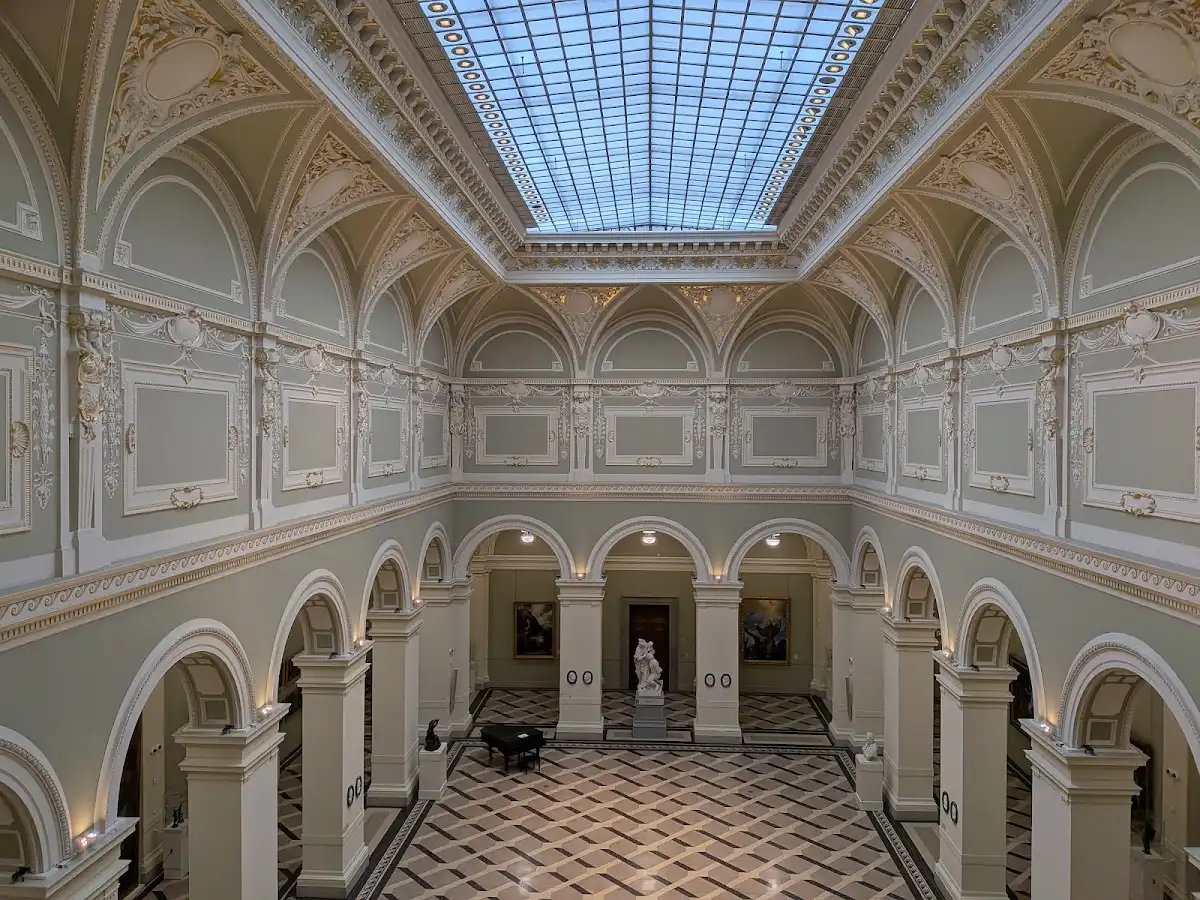
This isn’t just a room; it’s an experience. The Romanesque Hall was closed for decades and only reopened after a meticulous restoration. Walking in feels like stumbling into a medieval fantasy—vaulted ceilings, frescoes, and a sense of grandeur that’s almost cinematic. It’s the kind of space that makes you want to whisper, even if you’re just gawking at the architecture. If you want to feel the weight of history, this is your spot.
4. Spanish Art: The Underdog’s Triumph
Here’s a secret: the Museum of Fine Arts has one of the best Spanish painting collections outside Spain. We’re talking Murillo, Ribera, and a roomful of El Greco. The colors are wild, the religious drama is dialed up to eleven, and the emotional punch is real. If you’ve ever wondered why Spanish art has such a cult following, this is where you find out. It’s intense, it’s weird, and it’s absolutely worth your time.
5. The Basement Lapidarium: Stone, Silence, and Solitude
Skip the crowds upstairs and head down to the Lapidarium. This is where the museum hides its medieval and Roman stonework—fragments of churches, tombstones, and ancient columns. It’s cool, quiet, and just a little bit spooky. You’ll probably have the place to yourself, which makes it feel like you’ve discovered a secret level. For anyone who likes their art with a side of mystery, this is the museum’s best-kept secret.
Let’s cut through the hype: Budapest’s Museum of Fine Arts is not some sleepy provincial gallery. The Old Masters collection is a punch to the senses—Rembrandt, El Greco, Goya, Velázquez, and Rubens, all in one place. You’re not just ticking off famous names; you’re face-to-face with the brushstrokes that shaped European art. The Rembrandt self-portrait here is the kind of painting that makes you forget to breathe. And unlike the Louvre or the Prado, you can actually get close. No elbowing through a sea of selfie sticks. This is the real privilege: time and space to actually see the art.
2. The Egyptian Collection: Sarcophagi Without the Circus
Most people don’t expect to find mummies in Budapest, but the Egyptian Collection is a wild card. It’s not the biggest in Europe, but it’s one of the most atmospheric. The galleries are moody, the artifacts are displayed with a sense of drama, and you can get within inches of ancient coffins, painted masks, and even a real mummy. No Vegas-style theatrics—just the eerie, quiet thrill of standing eye-to-eye with three-thousand-year-old craftsmanship.
3. The Romanesque Hall: A Cathedral for Art Lovers
This isn’t just a room; it’s an experience. The Romanesque Hall was closed for decades and only reopened after a meticulous restoration. Walking in feels like stumbling into a medieval fantasy—vaulted ceilings, frescoes, and a sense of grandeur that’s almost cinematic. It’s the kind of space that makes you want to whisper, even if you’re just gawking at the architecture. If you want to feel the weight of history, this is your spot.
4. Spanish Art: The Underdog’s Triumph
Here’s a secret: the Museum of Fine Arts has one of the best Spanish painting collections outside Spain. We’re talking Murillo, Ribera, and a roomful of El Greco. The colors are wild, the religious drama is dialed up to eleven, and the emotional punch is real. If you’ve ever wondered why Spanish art has such a cult following, this is where you find out. It’s intense, it’s weird, and it’s absolutely worth your time.
5. The Basement Lapidarium: Stone, Silence, and Solitude
Skip the crowds upstairs and head down to the Lapidarium. This is where the museum hides its medieval and Roman stonework—fragments of churches, tombstones, and ancient columns. It’s cool, quiet, and just a little bit spooky. You’ll probably have the place to yourself, which makes it feel like you’ve discovered a secret level. For anyone who likes their art with a side of mystery, this is the museum’s best-kept secret.
Spotted a mistake or missing something? Contact us.

1 Hour Budapest Segway Tour - Parliament Hightails

Private Sightseeing Tour using Electric Tuk Tuk Ride in Budapest

Budapest: Best City Highlights Segway Tour with Local Guide

Budapest Private Walking Tour

Budapest Grand Full City Segway Tours ( Buda + Pest )

Budapest Private Guided Tour with Memory Photos - Big(3hrs)

Classic Walk in Budapest

Budapest Grand Walk

4 hours long private walking tour in Budapest

 Best Backpacking
.jpg) Hi, I’m Johan (Netherlands 🇳🇱), the creator of TakeYourBackpack. Over the past 3 decades, I’ve backpacked through 90+ countries across six continents, gaining extensive experience with independent travel, long-term trips, and overland routes.
Hi, I’m Johan (Netherlands 🇳🇱), the creator of TakeYourBackpack. Over the past 3 decades, I’ve backpacked through 90+ countries across six continents, gaining extensive experience with independent travel, long-term trips, and overland routes.