

×
Hungarian State Opera House

Hungary🇭🇺 | attractionsHungarian State Opera HouseRenaissance Revival, frescoed auditorium, marble staircases | things to do and best time to go

Explore HollókőExplore Buda Castle

Backpacking in Hungarian State Opera House
👍 Recommendedattraction ranked #7
By Johan Kruseman 🇳🇱 | Updated October 15, 2026

Here’s what nobody tells you until it’s too late: the Hungarian State Opera House is one of the few world-class opera venues where you can snag a last-minute ticket for less than the price of a Budapest ruin bar crawl—if you know to check the box office in person, not just online. Smack in the heart of Budapest on Andrássy Avenue, this neo-Renaissance showstopper is impossible to miss, but easy to underestimate if you’re used to skipping “fancy” spots on a backpacker’s budget. Here’s the real deal: yes, you’ll be sharing the marble staircases with tour groups and selfie sticks, and yes, the guided tours can feel a bit conveyor-belt. But the acoustics are world-class, the ceiling frescoes are jaw-droppers, and the people-watching is pure Budapest theater—equal parts highbrow and streetwise. Compared to the city’s thermal baths or ruin pubs, the Opera House is less about wild energy and more about soaking up old-world grandeur for pocket change, if you play it smart.

Discover everything you want to know in the 📖 Hungary Travel Guide.


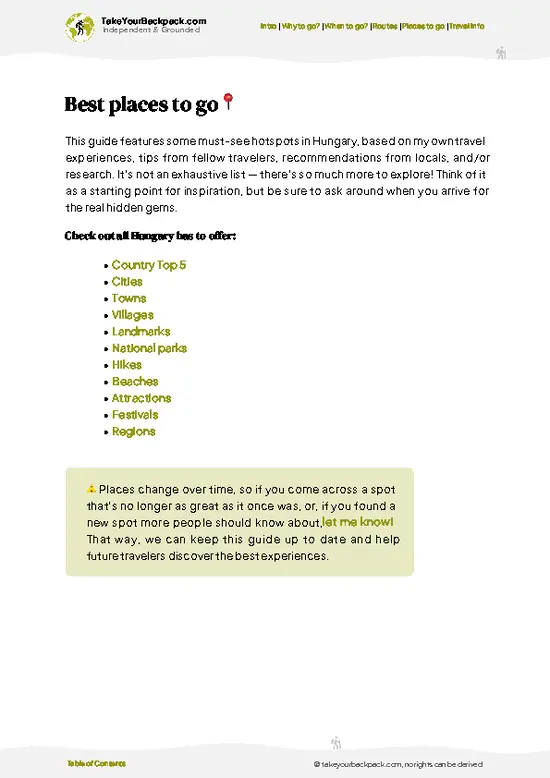
example page 0 from our offline Travel Guide for Hungary
example page 1 from our offline Travel Guide for Hungary
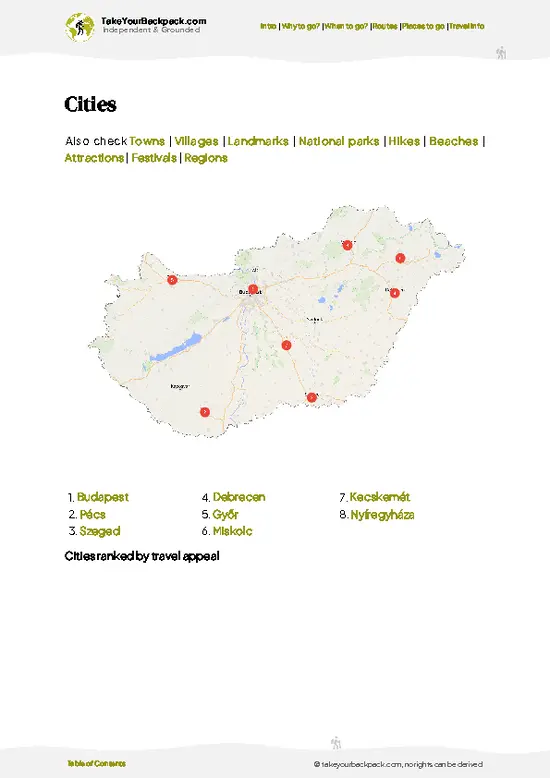
example page 2 from our offline Travel Guide for Hungary
example page 3 from our offline Travel Guide for Hungary
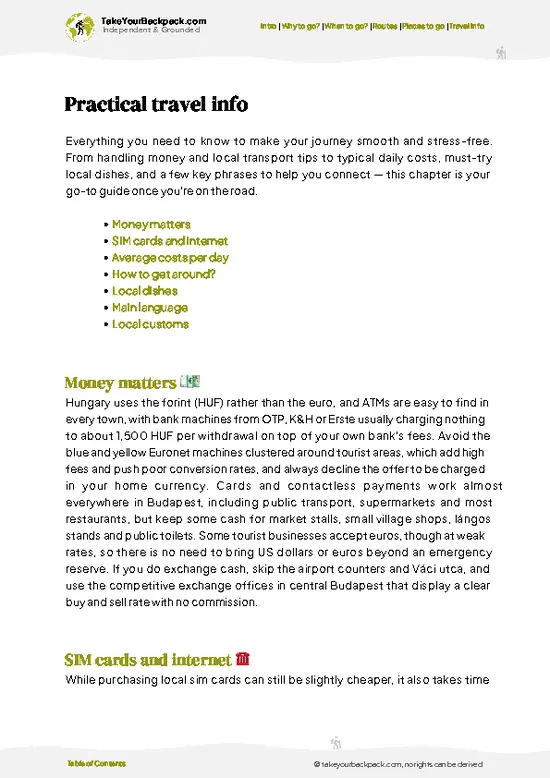
example page 4 from our offline Travel Guide for Hungary
example page 5 from our offline Travel Guide for Hungary
example page 6 from our offline Travel Guide for Hungary
example page 7 from our offline Travel Guide for Hungary
Loading the map 🌍
CLICK TO FILTER
cities
towns
villages
landmarks
national parks
hikes
beaches
attractions
festivals
regions
SHOW COUNTRY’S BESTSHOW ALL

✨ Why go?
Ranked #7 attraction in Hungary
The unique appeal for travelers

The Hungarian State Opera House is not just another pretty building to snap for Instagram—it’s a full-throttle dive into Hungary’s soul. Sure, it’s crowded, especially during peak tourist season, and tickets can feel pricey compared to other local attractions. But here’s the kicker: this place is a living monument to Budapest’s rich cultural heartbeat. Walking through its ornate Neo-Renaissance halls, you’re stepping into a space where legends like Bartók and Kodály once shaped music history. The acoustics inside are so sharp, even a whisper feels like a secret shared just with you.

Backpackers who make the effort to catch a performance or even a guided tour aren’t just ticking a box—they’re marking a milestone on their Hungary route. It’s a rare chance to connect with a tradition that’s … read more 👉
The Hungarian State Opera House is not just another pretty building to snap for Instagram—it’s a full-throttle dive into Hungary’s soul. Sure, it’s crowded, especially during peak tourist season, and tickets can feel pricey compared to other local attractions. But here’s the kicker: this place is a living monument to Budapest’s rich cultural heartbeat. Walking through its ornate Neo-Renaissance halls, you’re stepping into a space where legends like Bartók and Kodály once shaped music history. The acoustics inside are so sharp, even a whisper feels like a secret shared just with you.

Backpackers who make the effort to catch a performance or even a guided tour aren’t just ticking a box—they’re marking a milestone on their Hungary route. It’s a rare chance to connect with a tradition that’s both grand and intimate, a reminder that art isn’t just for the elite but a pulse that runs through the city’s veins. The adrenaline rush comes from knowing you’re part of something timeless, not just another tourist in a crowd. If you want to feel Hungary’s cultural depth beyond the usual sights, this is where you get real.

💡 HighlightsMust-see experiences and standout moments

1. The Main Auditorium: Velvet, Gold, and Acoustics That Punch Above Their Weight
Forget the Instagram shots of the grand staircase—everyone gets that same angle. The real showstopper is the auditorium itself. Step inside and you’re hit with a sensory overload: gold leaf everywhere, plush red velvet, and a horseshoe shape that wraps you in sound. The acoustics here are so sharp that even a whisper from the stage carries to the cheap seats. This isn’t just pretty architecture; it’s a purpose-built sound machine, and it’s still one of the best in Europe. If you’ve only seen opera in modern halls, this place will recalibrate your expectations.


2. The Ceiling Fresco: Where Mythology and Ego Collide
Look up. Seriously, don’t miss this. The ceiling is a riot of color and drama, painted by Károly … read more 👉
1. The Main Auditorium: Velvet, Gold, and Acoustics That Punch Above Their Weight
Forget the Instagram shots of the grand staircase—everyone gets that same angle. The real showstopper is the auditorium itself. Step inside and you’re hit with a sensory overload: gold leaf everywhere, plush red velvet, and a horseshoe shape that wraps you in sound. The acoustics here are so sharp that even a whisper from the stage carries to the cheap seats. This isn’t just pretty architecture; it’s a purpose-built sound machine, and it’s still one of the best in Europe. If you’ve only seen opera in modern halls, this place will recalibrate your expectations.


2. The Ceiling Fresco: Where Mythology and Ego Collide
Look up. Seriously, don’t miss this. The ceiling is a riot of color and drama, painted by Károly Lotz, Hungary’s Michelangelo-in-miniature. It’s a swirling, almost chaotic depiction of the Greek gods—think Zeus, Apollo, and the whole dysfunctional family—watching over the arts. It’s not subtle, and it’s not supposed to be. This is 19th-century flexing at its finest: “We’re cultured, we’re powerful, and we want you to know it.” The detail work is so good you’ll catch yourself craning your neck for longer than you planned.


3. The Royal Box: Power, Privilege, and the Best Seat in the House
You can’t sit in it (unless you’re a head of state or have a time machine), but you can see it. The Royal Box is pure theater—literally and figuratively. It’s front and center, dripping with gold, and flanked by a pair of marble caryatids that look like they could judge your outfit. This is where emperors and empresses watched the show, and the view is unbeatable. It’s a reminder that opera was once as much about being seen as seeing the performance.


4. The Grand Staircase: More Than a Selfie Backdrop
Yes, it’s all over social media, but the staircase is more than just a photo op. It’s a parade route for the city’s elite, designed to make you feel important whether you’re in a tux or hiking boots. The marble is real, the balustrades are hand-carved, and the chandeliers are original. Walk it slowly—this is where Budapest’s high society once strutted their stuff, and you can still feel the echoes.


5. The Backstage Tour: The Grit Behind the Glamour
If you want the real story, skip the lobby and go backstage. The guided tours pull back the curtain on the mechanics: trapdoors, costume rooms, and the kind of organized chaos that keeps the magic running. You’ll see how 19th-century stagecraft meets 21st-century tech, and you’ll leave with a new respect for the people who make the spectacle happen. This is where the Opera House stops being a museum and starts feeling alive.
Spotted a mistake or missing something? Contact us.

Things to do around Hungarian State Opera House

Ratings based on Tripadvisor reviews. When you book through this link, you support our work at no extra cost to you.

🌤️ When to go?Best time to visit Hungarian State Opera House

  • Weather: Budapest’s climate swings from cold winters to warm summers. January and February hover around -1°C to 3°C (30°F to 37°F), often biting cold, while July and August heat up to 25°C to 30°C (77°F to 86°F). Spring (April-May) and autumn (September-October) offer mild, comfortable weather perfect for exploring without sweating or freezing.
  • Daylight Hours: Winter days are short, with about 8 hours of light in December, limiting sightseeing time. By June, daylight stretches to nearly 16 hours, giving you more time to soak in the city’s vibe before catching an evening opera.
  • Crowds: Summer months (June-August) bring tourists in droves, especially around the Opera House. Expect packed lobbies and higher ticket demand. Late autumn and winter see fewer visitors, making it easier to snag
… read more 👉
  • Weather: Budapest’s climate swings from cold winters to warm summers. January and February hover around -1°C to 3°C (30°F to 37°F), often biting cold, while July and August heat up to 25°C to 30°C (77°F to 86°F). Spring (April-May) and autumn (September-October) offer mild, comfortable weather perfect for exploring without sweating or freezing.
  • Daylight Hours: Winter days are short, with about 8 hours of light in December, limiting sightseeing time. By June, daylight stretches to nearly 16 hours, giving you more time to soak in the city’s vibe before catching an evening opera.
  • Crowds: Summer months (June-August) bring tourists in droves, especially around the Opera House. Expect packed lobbies and higher ticket demand. Late autumn and winter see fewer visitors, making it easier to snag last-minute tickets and enjoy a quieter atmosphere.
  • Seasonal Activities: The Opera House calendar peaks in autumn and winter with grand performances and holiday specials. Spring offers a mix of classical concerts and less formal events, while summer leans toward outdoor festivals, meaning fewer indoor shows at the Opera House itself.
  • Price Fluctuations: Ticket prices spike during the high season (spring and autumn) and around major holidays. Winter months, excluding Christmas and New Year, often have discounted tickets. Booking in advance is crucial during peak times to avoid inflated prices or sold-out shows.
Pro-tip: Aim for late September to early November—cool weather, manageable crowds, and a rich lineup of performances make it the sweet spot for experiencing the Hungarian State Opera House without the tourist crush or summer heat.


source: climatestotravel.comJANJanuary: good for travelingFEBFebruary: good for travelingMARMarch: good for travelingAPRApril: highly recommended for travelingMAYMay: highly recommended for travelingJUNJune: fair for travelingJULJuly: fair for travelingAUGAugust: fair for travelingSEPSeptember: excellent for travelingOCTOctober: excellent for travelingNOVNovember: highly recommended for travelingDECDecember: good for traveling
Hungary - Hungarian State Opera House

✈️ The backpacker research shortcutHungary Travel Guide

An offline-friendly backpacking guide with optimized travel routes, ranked highlights, transport advice, and the best areas to stay.
example page 0 from our offline Travel Guide for Hungary
example page 1 from our offline Travel Guide for Hungary
example page 2 from our offline Travel Guide for Hungary
example page 3 from our offline Travel Guide for Hungary
example page 4 from our offline Travel Guide for Hungary
example page 5 from our offline Travel Guide for Hungary
example page 6 from our offline Travel Guide for Hungary
example page 7 from our offline Travel Guide for Hungary
The digital guide (334 pages) contains:
✅ 86 highlights, ranked by travel appeal
✅ Optimized 5, 10 & 15-day travel routes
✅ Cities, national parks, landmarks, beaches
✅ How to get around
✅ Offline-friendly for travel without Wi-Fi
👉 Click to see all 30+ guide features

📅 Plan smarter in minutes, not weeks
✅ Month by month travel advice
✅ Festivals & national holidays
✅ Budget expectations

🗺️ Go to the right places, skip the overrated ones
✅ Honest pros & cons of destinations
✅ Top hikes, parks & viewpoints
✅ Lesser-known places most travelers miss
✅ Clear “worth it vs skip it” guidance

🛏️ Travel smoothly without rookie mistakes
✅ Best areas to stay
✅ Transport systems explained simply
✅ Common scams & safety advice
✅ SIM cards, money & practical tips

🌍 Understand the country, not just visit it
✅ Culture & traditions
✅ 52 Essential phrases & customs
✅ Festivals worth planning around
✅ Traveler-friendly historical context
✅ Insights that make places more meaningful

📱 Built for real travel conditions
✅ Fully downloadable PDF
✅ Works completely offline
✅ Optimized for phone use
✅ Useful in remote areas & buses
✅ Everything in one place
Stop searching, start planning
Get instant access to your full guide. 30‑day money-back guarantee.
+ Add another guide for just

By proceeding you agree to our terms.
Sent to your inbox immediately after payment • 100% Secure Checkout
Best Backpacking Travel Advisor 2025 tourism awardBest Backpacking
Travel Advisor
2025
What others say about Take Your Backpack Guides:
⭐⭐⭐⭐⭐
Fantastic, amazing amount of information!
⭐⭐⭐⭐⭐
My goodness this is amazing, it's what I've been looking for hats off too you!
⭐⭐⭐⭐⭐
I think this is absolutely BRILLIANT
⭐⭐⭐⭐
Very complete and informative. It's still missing places, but I gotta to commend you
⭐⭐⭐⭐⭐
This is truly amazing, thank you, can't wait to explore it with my kids!
⭐⭐⭐⭐⭐
Awesome resource, thank you!
⭐⭐⭐⭐⭐
This is amazing! Can't wait to explore the ones I haven't seen
⭐⭐⭐⭐
I love this! Well done, great idea.
⭐⭐⭐⭐⭐
Thanks for taking the time to make this gem!
⭐⭐⭐⭐⭐
This might be the best website I've ever seen.
⭐⭐⭐⭐⭐
Congratulations, and thank you so much for your work; it's incredibly valuable.
⭐⭐⭐⭐
In all seriousness I think you did a great job pointing out the important spots
⭐⭐⭐⭐⭐
10/10 very good
⭐⭐⭐⭐⭐
As someone who's only just starting to visit regularly this is awesome, thank you.
⭐⭐⭐⭐
Thank you very much! I'm going to visit my dad, it's going to be very useful!
⭐⭐⭐⭐⭐
This is really cool! We'll be travelling for the first time and this definitely come in handy.
⭐⭐⭐⭐⭐
You are now our minister of culture, congratulations 👨‍💼
⭐⭐⭐⭐⭐
Just wanted to tell you that this is a pearl! Going to follow your recommendations.
⭐⭐⭐⭐⭐
This is so cool. I'll definitely be using the resource for my travels soon.
⭐⭐⭐⭐⭐
This is very impressive! Good work.
⭐⭐⭐⭐⭐
This is an amazing and informative site. Very well done!

🛏️ Where to stay?Choosing the right base

The Hungarian State Opera House sits smack in the middle of Budapest’s bustling downtown, which means you’re not going to find a quiet, tucked-away village vibe here. The reality? This area draws crowds—tourists, office workers, and locals alike—so expect a lively, sometimes noisy backdrop. But that’s part of the charm. If you want to be close enough to catch a late-night performance or just soak in the architectural grandeur without a long commute, the neighborhoods around Andrássy Avenue and Erzsébetváros are your best bets.

These areas are safe, well-lit, and packed with cafés, bars, and street … read more 👉
The Hungarian State Opera House sits smack in the middle of Budapest’s bustling downtown, which means you’re not going to find a quiet, tucked-away village vibe here. The reality? This area draws crowds—tourists, office workers, and locals alike—so expect a lively, sometimes noisy backdrop. But that’s part of the charm. If you want to be close enough to catch a late-night performance or just soak in the architectural grandeur without a long commute, the neighborhoods around Andrássy Avenue and Erzsébetváros are your best bets.

These areas are safe, well-lit, and packed with cafés, bars, and street food stalls where solo travelers can easily strike up conversations. Erzsébetváros, in particular, is a magnet for budget backpackers because it balances affordability with a social atmosphere—think communal spaces, quirky pubs, and a youthful crowd. Plus, you’re within walking distance of the Opera House, so you can ditch public transport and save both time and money. It’s not a secret hideaway, but it’s where the real Budapest pulse beats, and that’s worth every step.

👛 Costs (as of 15 October 2026)Typical daily expenses

As of the 2025/2026 season, ticket prices for performances at the Hungarian State Opera House vary based on seating and event type. Prices range from approximately €6 for standing room tickets to €100 for premium seats. Guided tours are available daily at 1:30 PM, 3:00 PM, and 4:30 PM, with prices starting at €26 for English-language tours.

source: opera.hu
⚠️ Prices can change and everyone travels differently, so take this as a rough guide. Hope it helps you plan your adventure!

FAQTraveler FAQ

You need about 1 to 1.5 hours to visit the Hungarian State Opera House, including a guided tour. Tours typically last around 45 minutes and provide detailed insights into the building's architecture and history.
Yes, the Hungarian State Opera House is worth the entrance fee, which is around 3,000 HUF (approximately 8-10 USD) for a guided tour. The stunning architecture and rich cultural history make it a valuable experience for travelers interested in art and music.
You can get to the Hungarian State Opera House by taking the M1 metro line to the Opera station, which is right next to the building. It is also accessible by several tram lines, including 4 and 6, which stop nearby on Andrássy Avenue.
⚠️ Things can change over time, so always validate details locally before you go.

Other Hungarian attractions near Hungarian State Opera House

Explore more nearby:


💡 Not sure where to go next?
Create a personalized itinerary for Hungary including Hungarian State Opera House and the places that fit your trip.

Generate my itinerary

👉 Discover all attractions

Or checkout all Hungary has to offer (think cities, towns, villages, national parks, hikes, beaches, festivals)
Country photo of Hungary

We 💚 feedbackWhat to keep in mind

The Hungarian State Opera House isn’t just a pretty face on Instagram—it’s a living, breathing slice of Budapest’s soul. Sure, it gets busy, especially during peak season, and tickets can pinch your wallet if you’re not careful. But here’s the kicker: the acoustics inside are jaw-dropping, and catching a lesser-known local performance feels like stepping into a secret club. Skip the flashy tours and grab a last-minute ticket for a real show—you’ll leave with more than just photos, I promise.

✍️ Help improve this page!
The information on this page is based on in-depth research, insights shared by experienced travelers, and feedback from the local travel community in Hungary. While every effort is made to keep the information accurate and current, conditions can change — so if you spot anything incorrect or outdated, please get in touch.


🙋‍♂️ Give feedback

👋 Meet the founderWho’s Behind Take Your Backpack?

Johan, backpacker and founder of TakeYourBackpackHi, I’m Johan (Netherlands 🇳🇱), the creator of TakeYourBackpack. Over the past 3 decades, I’ve backpacked through 90+ countries across six continents, gaining extensive experience with independent travel, long-term trips, and overland routes.

This site is built on a combination of firsthand travel experience and carefully curated insights from other backpackers. Many guides are based on places I’ve personally visited, while others bring together tips, observations, and practical advice shared by trusted travelers I’ve met along the way.

The goal is to provide realistic, experience-driven guidance — not generic itineraries — so you can explore destinations with better context, clearer expectations, and more confidence.