


×

India🇮🇳 | townsHampiboulder fields, temple ruins, riverside sunsets | things to do and best time to go

Explore DawkiExplore Mandawa

Backpacking in Hampi
🏆 Top picktown ranked #1
By Johan Kruseman 🇳🇱 | Updated September 4, 2026

Your fingers come away red from the stone as you steady yourself on a boulder, the sun dropping behind a horizon made of granite piles, temple gopurams ringing softly with evening bells while someone nearby peels an orange and the citrus cuts through the dust and cow dung in the air. This is Hampi, in northern Karnataka, inland between Goa and Bangalore, and it feels more like a scattered dream of ruins than a town.

For backpackers, Hampi is less “town” and more “base camp in a boulder field.” The old bazaar area and across-the-river side are compact and walkable, but you’ll use rickshaws or scooters to link temples, viewpoints, and riverside chill spots. It’s cheaper and slower than Goa, more scenic and playful than Hospet, and way less intense than Bangalore. Social life clusters in simple guesthouses and thali cafés; it’s easy to meet people, harder to find nightlife. Buses and trains via Hospet make it reachable, but the last stretch always feels just remote enough to be earned.

Discover everything you want to know in the 📖 India Travel Guide.


Get your India guide
162 ranked highlights, routes & tips, works offline (498 pages)
Loading the map 🌍
CLICK TO FILTER
cities
towns
villages
landmarks
national parks
hikes
beaches
attractions
festivals
regions
SHOW COUNTRY’S BESTSHOW ALL

✨ Why go?
Ranked #1 town in India
Reasons people choose to visit here

Hampi draws backpackers for its convenience as a hub in southern India, perfectly positioned between hikes, cultural sites, and even beaches. The bouldered landscape invites exploration, with trails that lead to ancient temples and panoramic views. You can easily spend a day wandering through the ruins, then retreat to a small-scale guesthouse where the scent of fresh chai fills the air.

The walkable streets create a sense of intimacy, making it easy to connect with fellow travelers. You’ll find a mix of slow travelers and solo adventurers, all sharing stories over local dishes like dosa and sambar. The atmosphere is friendly but not overwhelming; it’s a place where you can linger for a few days or just stop by on your route.

While the nightlife isn’t a major draw, the social vibe in the … read more 👉
Hampi draws backpackers for its convenience as a hub in southern India, perfectly positioned between hikes, cultural sites, and even beaches. The bouldered landscape invites exploration, with trails that lead to ancient temples and panoramic views. You can easily spend a day wandering through the ruins, then retreat to a small-scale guesthouse where the scent of fresh chai fills the air.

The walkable streets create a sense of intimacy, making it easy to connect with fellow travelers. You’ll find a mix of slow travelers and solo adventurers, all sharing stories over local dishes like dosa and sambar. The atmosphere is friendly but not overwhelming; it’s a place where you can linger for a few days or just stop by on your route.

While the nightlife isn’t a major draw, the social vibe in the cafes and common areas of hostels fosters connections. If you’re looking for a spot to recharge after a trek or dive into local culture, Hampi is ideal. It’s not just a stop; it’s a chance to soak in the essence of India’s rich history and vibrant community.
Want to include Hampi in your India route?
Create a personalized India itinerary that includes Hampi and the places that fit your trip — based on your travel style, budget, and available time. Get your route in seconds.

Generate my trip

💡 HighlightsEssential experiences to have while visiting Hampi

  • Virupaksha Temple — The living heart of Hampi: an active 7th-16th century temple with ornate pillared halls, colourful daily rituals and a huge gopura that anchors the whole village. Visiting at dusk when lamps go on is quietly magical.
  • Hampi Bazaar (the old market street) — A long line of ruined pavilions and carved platforms that once hosted pilgrims and traders; wandering here gives you the feel of village life layered over imperial remains, and it’s where locals still meet and sell souvenirs.
  • Hemakuta Hill temples — A compact cluster of small, early temples and Shiva shrines tucked between giant boulders; great for short, atmospheric temple-hopping and easy sunset views without the crowds of other viewpoints.
  • Matanga Hill — The best sunrise spot if you’re willing to climb early: panoramic
read more 👉
  • Virupaksha Temple — The living heart of Hampi: an active 7th-16th century temple with ornate pillared halls, colourful daily rituals and a huge gopura that anchors the whole village. Visiting at dusk when lamps go on is quietly magical.
  • Hampi Bazaar (the old market street) — A long line of ruined pavilions and carved platforms that once hosted pilgrims and traders; wandering here gives you the feel of village life layered over imperial remains, and it’s where locals still meet and sell souvenirs.
  • Hemakuta Hill temples — A compact cluster of small, early temples and Shiva shrines tucked between giant boulders; great for short, atmospheric temple-hopping and easy sunset views without the crowds of other viewpoints.
  • Matanga Hill — The best sunrise spot if you’re willing to climb early: panoramic sweep over the whole site, temple-dotted ridgelines and the river glinting below. It’s also a quiet shrine area with a memorable vantage point.
  • Lotus Mahal (Zenana Enclosure) — Delicate Indo-Islamic pavilion architecture that once sheltered the royal women; the graceful arches and chilled gardens are a nice contrast to the heavy, carved stone elsewhere.
  • Elephant Stables — That long, domed arcade where royal elephants were housed; it’s architecturally distinctive and photographs great, and you can easily imagine the bustle that once happened here.
  • Hazara Rama Temple — A surprisingly intimate temple covered in detailed bas-reliefs of the Ramayana; it’s compact but packed with narrative carvings that make the mythic past feel immediate.
  • Sasivekalu & Kadalekalu Ganesha — Two huge, sculpted Ganeshas carved straight from boulders (one seated, one standing); they’re off the main tourist line and perfect for a quiet moment of discovery and photography.
  • Tungabhadra river ghats & coracle rides — The riverfront in Hampi village is where locals bathe, fishermen work and small coracles launch; a short coracle trip across the river changes your perspective of the ruins and is fabulously low-effort and memorable.
  • Queen’s Bath — An ornamental royal bathhouse with tiled floors, arched galleries and a surprisingly domestic scale; climbing onto the surrounding platforms gives a good sense of the royal quarter’s layout.
Nearby day-trip highlights just outside the village include the Vittala Temple complex with its famous stone chariot and musical pillars, the old-world settlements and temples of Anegundi (Pampa Sarovar, Anjaneya Hill), and the swimming/boat-friendly Sanapur Lake — my personal favourite to revisit is the Vittala Temple (that chariot and the musical pillars are pure Hampi).
Spotted a mistake or missing something? Contact us.

Things to do around Hampi

Ratings based on Tripadvisor reviews. When you book through this link, you support our work at no extra cost to you.

🏘️ NeighborhoodsUnderstanding the local layout

Hampi is a mesmerizing blend of ancient ruins and vibrant culture, making it a must-visit for backpackers seeking both adventure and tranquility. Here’s how to navigate its neighborhoods like a pro.

Hampi Bazaar
This is the heart of Hampi, buzzing with energy. You’ll find affordable guesthouses and eateries serving local fare. The atmosphere is lively, especially at sunset when the temples glow. It’s walkable, with easy access to major sites like the Virupaksha Temple. Perfect for short stays, but the noise might not suit those seeking peace.

Virupapur Gaddi
Cross the river to this laid-back area, where the vibe shifts to chill and scenic. It’s dotted with cozy cafes and yoga spots, ideal for longer stays. The views of the bouldered landscape are breathtaking, and you can rent a bike … read more 👉
Hampi is a mesmerizing blend of ancient ruins and vibrant culture, making it a must-visit for backpackers seeking both adventure and tranquility. Here’s how to navigate its neighborhoods like a pro.

Hampi Bazaar
This is the heart of Hampi, buzzing with energy. You’ll find affordable guesthouses and eateries serving local fare. The atmosphere is lively, especially at sunset when the temples glow. It’s walkable, with easy access to major sites like the Virupaksha Temple. Perfect for short stays, but the noise might not suit those seeking peace.

Virupapur Gaddi
Cross the river to this laid-back area, where the vibe shifts to chill and scenic. It’s dotted with cozy cafes and yoga spots, ideal for longer stays. The views of the bouldered landscape are breathtaking, and you can rent a bike to explore. Nightlife is minimal, but you’ll find a few spots for a relaxed evening.

Anegundi
A bit off the beaten path, Anegundi offers a quieter experience. It’s rich in history and surrounded by lush fields. The cost of living is lower here, making it great for budget travelers. Walkability is decent, but you might need to hire a local guide to uncover its hidden treasures. Perfect for those wanting to immerse themselves in local culture.

Hospet
This is the gateway to Hampi, with more urban amenities. It’s less picturesque but offers better transport links. If you’re planning day trips or need to stock up on supplies, this is your spot. The nightlife is more vibrant here, catering to a mix of locals and travelers. Suitable for short stays, especially if you’re in transit.

⌛️ 1 daySeeing the highlights in 24 hours

Hampi, a UNESCO World Heritage Site, is a mesmerizing blend of ancient ruins and vibrant local life. The air hums with the scent of sandalwood and spices, while the landscape is dotted with boulders that seem to have been tossed around like pebbles. This is a place where history whispers through the stones, and every corner reveals a story waiting to be uncovered.

Start your day early, as the sun rises over the ruins, casting a golden hue on the iconic Virupaksha Temple. The intricate carvings and towering gopuram are best appreciated in the soft morning light. Grab a cup of strong South Indian coffee from a nearby stall, where the aroma of freshly brewed filter coffee mingles with the earthy scent of the surrounding temples. Take your time here; the temple is not just a sight but a living … read more 👉
Hampi, a UNESCO World Heritage Site, is a mesmerizing blend of ancient ruins and vibrant local life. The air hums with the scent of sandalwood and spices, while the landscape is dotted with boulders that seem to have been tossed around like pebbles. This is a place where history whispers through the stones, and every corner reveals a story waiting to be uncovered.

Start your day early, as the sun rises over the ruins, casting a golden hue on the iconic Virupaksha Temple. The intricate carvings and towering gopuram are best appreciated in the soft morning light. Grab a cup of strong South Indian coffee from a nearby stall, where the aroma of freshly brewed filter coffee mingles with the earthy scent of the surrounding temples. Take your time here; the temple is not just a sight but a living space, filled with worshippers and the sounds of bells ringing.

As the morning unfolds, head towards the lesser-known neighborhood of Anegundi. This area is often overlooked by tourists but offers a glimpse into local life. Wander through the narrow lanes, where you might catch a glimpse of women weaving colorful sarees or children playing cricket in the dusty streets. Stop by the ancient Ranganathaswamy Temple, where the atmosphere is serene and the locals are welcoming.

In the afternoon, make your way to the Royal Enclosure, a sprawling complex that once housed kings. The remnants of palaces and audience halls are fascinating, but don’t miss the nearby Lotus Mahal, with its unique Indo-Islamic architecture. The afternoon sun can be intense, so find a shady spot to rest and soak in the history around you.

As evening approaches, climb up to Matanga Hill for a breathtaking sunset. The panoramic view of Hampi’s landscape, with its boulders and temples bathed in orange and pink hues, is a reward for the short hike. After descending, treat yourself to dinner at a local eatery, where you can savor traditional dishes like dosa and sambar, surrounded by the sounds of laughter and chatter.

Hampi is not just a destination; it’s an experience that invites you to slow down and connect with its rich tapestry of history and culture. Embrace the journey, and you’ll find that every moment spent here is a treasure.
Turn your Hampi visit into an India adventure
Build a complete India route with Hampi, hidden gems, must-see destinations, and realistic travel times included.

Generate my trip

🌤️ When to go?When to go for the best experience


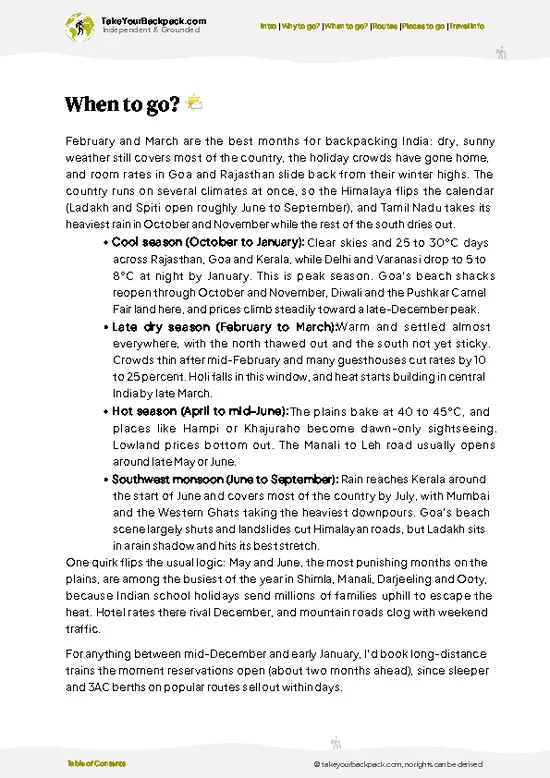
  • Weather: Hampi’s dry season from October to February offers clear skies and minimal rain, making the rocky landscape easier and safer to explore. Avoid the monsoon months (June to September) when heavy rains turn paths slippery and obscure views.

  • Temperature: Daytime temps hover around 25-30°C (77-86°F) in the dry season, perfect for trekking without overheating. Summers (March to May) can scorch you with highs near 40°C (104°F), turning stone ruins into ovens.

  • Daylight Hours: Around 11-12 hours of daylight during the dry season means you can start early and still have plenty of light to roam the ruins and riverbanks before dusk cools the air.

  • Crowds: Peak tourist season aligns with the dry, cooler months, so expect more visitors around December and January. For a quieter vibe, aim
read more 👉

  • Weather: Hampi’s dry season from October to February offers clear skies and minimal rain, making the rocky landscape easier and safer to explore. Avoid the monsoon months (June to September) when heavy rains turn paths slippery and obscure views.

  • Temperature: Daytime temps hover around 25-30°C (77-86°F) in the dry season, perfect for trekking without overheating. Summers (March to May) can scorch you with highs near 40°C (104°F), turning stone ruins into ovens.

  • Daylight Hours: Around 11-12 hours of daylight during the dry season means you can start early and still have plenty of light to roam the ruins and riverbanks before dusk cools the air.

  • Crowds: Peak tourist season aligns with the dry, cooler months, so expect more visitors around December and January. For a quieter vibe, aim for October or late February when the weather is still pleasant but crowds thin out.

  • Seasonal Activities: The Hampi Utsav festival in November fills the town with music, dance, and color—great if you want culture with your ruins. Otherwise, the dry season’s calm lets you soak in the landscape without distractions.

  • Price Fluctuations: Accommodation and transport costs spike during peak season (December-January). Booking in shoulder months like October or February can save you money without sacrificing comfort.


Pro-tip: Arrive just after the monsoon, when the air is fresh, the landscape lush, and the crowds haven’t yet arrived—this window is your sweet spot for both beauty and ease.


source: climatestotravel.comJANJanuary: highly recommended for travelingFEBFebruary: highly recommended for travelingMARMarch: fair for travelingAPRApril: fair for travelingMAYMay: fair for travelingJUNJune: below average for travelingJULJuly: below average for travelingAUGAugust: below average for travelingSEPSeptember: below average for travelingOCTOctober: excellent for travelingNOVNovember: excellent for travelingDECDecember: highly recommended for traveling
when-to-go

✈️ The backpacker research shortcutIndia Travel Guide

An offline-friendly backpacking guide with optimized travel routes, ranked highlights, transport advice, and the best areas to stay.
example page 0 from our offline Travel Guide for India
example page 1 from our offline Travel Guide for India
example page 2 from our offline Travel Guide for India
example page 3 from our offline Travel Guide for India
example page 4 from our offline Travel Guide for India
example page 5 from our offline Travel Guide for India
example page 6 from our offline Travel Guide for India
example page 7 from our offline Travel Guide for India
The digital guide (498 pages) contains:
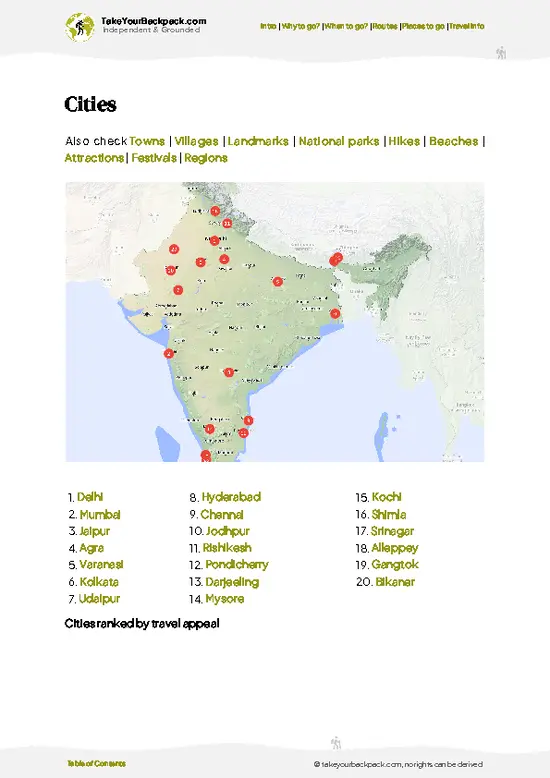
162 highlights, ranked by travel appeal
Optimized 14, 21 & 30-day travel routes
Cities, national parks, landmarks, beaches
How to get around
Offline-friendly for travel without Wi-Fi
👉 Click to see all 30+ guide features

📅 Plan smarter in minutes, not weeks
Month by month travel advice
Festivals & national holidays
Budget expectations

🗺️ Go to the right places, skip the overrated ones
Honest pros & cons of destinations
Top hikes, parks & viewpoints
Lesser-known places most travelers miss
Clear “worth it vs skip it” guidance

🛏️ Travel smoothly without rookie mistakes
Best areas to stay
Transport systems explained simply
Common scams & safety advice
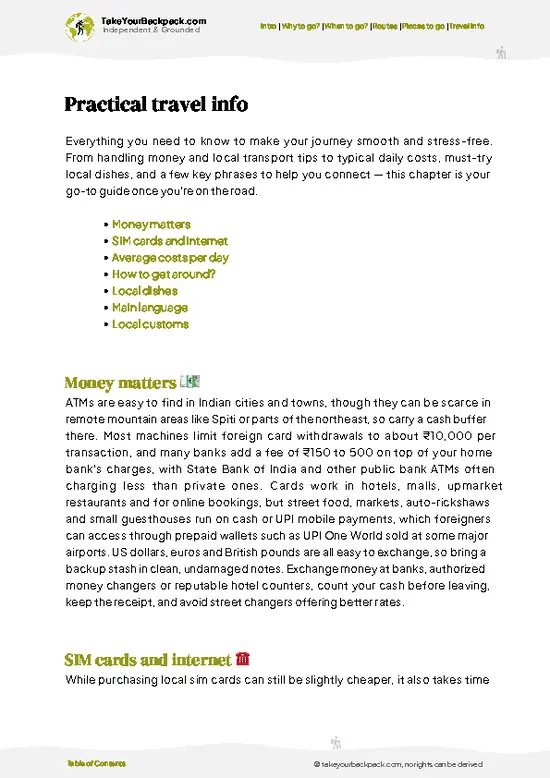
SIM cards, money & practical tips

🌍 Understand the country, not just visit it
Culture & traditions
52 Essential phrases & customs
Festivals worth planning around
Traveler-friendly historical context
Insights that make places more meaningful

📱 Built for real travel conditions
Fully downloadable PDF
Works completely offline
Optimized for phone use
Useful in remote areas & buses
Everything in one place
Save weeks of stressful planning
Get instant access to your full guide. 30‑day money-back guarantee.
+ Add another guide for just US$7.80

By proceeding you agree to our terms.
Sent to your inbox immediately after payment • 100% Secure Checkout
Best Backpacking Travel Advisor 2025 tourism awardBest Backpacking
Travel Advisor
2025
What others say about Take Your Backpack Guides:
⭐⭐⭐⭐⭐
Fantastic, amazing amount of information!
⭐⭐⭐⭐⭐
My goodness this is amazing, it's what I've been looking for hats off too you!
⭐⭐⭐⭐⭐
I think this is absolutely BRILLIANT
⭐⭐⭐⭐
Very complete and informative. It's still missing places, but I gotta to commend you
⭐⭐⭐⭐⭐
This is truly amazing, thank you, can't wait to explore it with my kids!
⭐⭐⭐⭐⭐
Awesome resource, thank you!
⭐⭐⭐⭐⭐
This is amazing! Can't wait to explore the ones I haven't seen
⭐⭐⭐⭐
I love this! Well done, great idea.
⭐⭐⭐⭐⭐
Thanks for taking the time to make this gem!
⭐⭐⭐⭐⭐
This might be the best website I've ever seen.
⭐⭐⭐⭐⭐
Congratulations, and thank you so much for your work; it's incredibly valuable.
⭐⭐⭐⭐
In all seriousness I think you did a great job pointing out the important spots
⭐⭐⭐⭐⭐
10/10 very good
⭐⭐⭐⭐⭐
As someone who's only just starting to visit regularly this is awesome, thank you.
⭐⭐⭐⭐
Thank you very much! I'm going to visit my dad, it's going to be very useful!
⭐⭐⭐⭐⭐
This is really cool! We'll be travelling for the first time and this definitely come in handy.
⭐⭐⭐⭐⭐
You are now our minister of culture, congratulations 👨‍💼
⭐⭐⭐⭐⭐
Just wanted to tell you that this is a pearl! Going to follow your recommendations.
⭐⭐⭐⭐⭐
This is so cool. I'll definitely be using the resource for my travels soon.
⭐⭐⭐⭐⭐
This is very impressive! Good work.
⭐⭐⭐⭐⭐
This is an amazing and informative site. Very well done!

🛏️ Where to stay?Where staying makes the most sense

Hampi’s backpacker heartbeat pulses strongest around the Virupapur Gadde area, often called the “hippie island.” This stretch along the Tungabhadra River is where you’ll find the most social buzz, with budget guesthouses and hostels clustered close enough to hear the evening jam sessions and chatter spilling from open-air cafes. The vibe here is laid-back but lively, a mix of travelers swapping stories under the dappled shade of tamarind trees. It’s safe, with a steady flow of fellow backpackers, making it easy to connect without feeling overwhelmed.

Why settle here? Because it’s the perfect … read more 👉
Hampi’s backpacker heartbeat pulses strongest around the Virupapur Gadde area, often called the “hippie island.” This stretch along the Tungabhadra River is where you’ll find the most social buzz, with budget guesthouses and hostels clustered close enough to hear the evening jam sessions and chatter spilling from open-air cafes. The vibe here is laid-back but lively, a mix of travelers swapping stories under the dappled shade of tamarind trees. It’s safe, with a steady flow of fellow backpackers, making it easy to connect without feeling overwhelmed.

Why settle here? Because it’s the perfect launchpad for exploring the ruins on foot or by rented bike, with the river breeze cutting through the midday heat. The hostels here often double as community hubs, offering everything from yoga classes to group meals, which means you’re not just booking a bed—you’re stepping into a ready-made tribe.

Contrast this with the more isolated areas near the main temple complex or the busier Virupaksha Temple zone, where accommodation tends to be pricier or less social. Staying on the “island” means you avoid the tourist crush but still soak in the magic of Hampi’s landscape—the cracked boulders glowing gold at sunset, the scent of jasmine in the air, and the quiet hum of history all around.

🚌 Getting aroundTransportation options and practical tips

Hampi moves at its own rhythm—less a clock-driven town and more a place where time stretches and bends with the heat and dust. The sun slants low, casting long shadows over crumbling stone temples and boulder-strewn fields, while the scent of wood smoke and spices drifts lazily through the air. Here, schedules are loose suggestions, and the real flow comes from the slow shuffle of feet on uneven paths, the occasional honk of a scooter, and the steady pedal of a bicycle. You don’t rush Hampi; you let it unfold around you, and that’s where the magic happens. But if you want to move smartly and save your energy for exploring, knowing the transit options and their quirks is your secret weapon.


  • Walking: The heart of Hampi’s transit. Most ruins and guesthouses cluster within a 3-5 km radius,
read more 👉
Hampi moves at its own rhythm—less a clock-driven town and more a place where time stretches and bends with the heat and dust. The sun slants low, casting long shadows over crumbling stone temples and boulder-strewn fields, while the scent of wood smoke and spices drifts lazily through the air. Here, schedules are loose suggestions, and the real flow comes from the slow shuffle of feet on uneven paths, the occasional honk of a scooter, and the steady pedal of a bicycle. You don’t rush Hampi; you let it unfold around you, and that’s where the magic happens. But if you want to move smartly and save your energy for exploring, knowing the transit options and their quirks is your secret weapon.


  • Walking: The heart of Hampi’s transit. Most ruins and guesthouses cluster within a 3-5 km radius, making walking not just practical but immersive. The terrain is uneven—expect dusty, rocky paths and occasional steep climbs—so sturdy shoes are a must. Early mornings and late afternoons offer cooler temperatures and softer light, perfect for wandering without frying in the midday sun.


  • Rental Bicycle: Around 150-200 INR per day, bicycles are the budget traveler’s best friend for covering more ground without losing the intimate pace. The flat stretches along the Tungabhadra River are a breeze, but be ready for some uphill pushes near the hills and temples. Rentals usually open by 8 AM and close by sunset, so plan your rides accordingly to avoid being stranded in the dark.


  • Motorbike/Scooter Rental: For about 300-400 INR per day, a scooter gives you speed and flexibility, especially if you want to hit spots like Anegundi or the more distant ruins. Fuel is cheap, but roads can be rough and dusty, so a helmet and some off-road caution go a long way. Rentals typically require a deposit and ID, and most shops operate from 8 AM to 7 PM.


  • Auto Rickshaw: Not a fixed schedule here—autos wait near the main bus stand and market areas, ready to negotiate fares. Short rides within the town usually cost 50-100 INR, but always agree on the price before hopping in. They’re handy for quick trips when you’re tired or pressed for time, but expect a bumpy, noisy ride through narrow lanes.


  • Local Bus: If you’re heading to nearby towns like Hospet or Kampli, buses run roughly every hour from early morning (6 AM) until early evening (6 PM). Tickets are dirt cheap, often under 50 INR, but buses can be crowded and slow, with frequent stops. This is a no-frills option best for those who want to travel like locals and don’t mind the extra time.

👛 Costs (as of 4 September 2026)How expensive it really is

Backpacking in Hampi is a sensory dive into ancient ruins and dusty trails, and knowing the daily costs helps you focus on soaking it all in without surprises.
  • Dorm Accommodation: Expect to pay around $5 to $10 per night for a bed in a basic dorm. These places are simple but clean, often with a fan and shared bathrooms. The vibe is laid-back, with travelers swapping stories over chai in common areas.
  • Meals: Local eateries serve hearty thali meals for about $1.50 to $3. Street food like dosas and samosas can be even cheaper, around $0.50 to $1. For a splurge, small cafes with a view of the ruins might charge $4 to $6 for a meal, but the fresh ingredients and relaxed atmosphere make it worth it.
  • Local Transport: Hampi’s charm is best explored on foot or rented bicycle, which costs roughly
read more 👉
Backpacking in Hampi is a sensory dive into ancient ruins and dusty trails, and knowing the daily costs helps you focus on soaking it all in without surprises.
  • Dorm Accommodation: Expect to pay around $5 to $10 per night for a bed in a basic dorm. These places are simple but clean, often with a fan and shared bathrooms. The vibe is laid-back, with travelers swapping stories over chai in common areas.
  • Meals: Local eateries serve hearty thali meals for about $1.50 to $3. Street food like dosas and samosas can be even cheaper, around $0.50 to $1. For a splurge, small cafes with a view of the ruins might charge $4 to $6 for a meal, but the fresh ingredients and relaxed atmosphere make it worth it.
  • Local Transport: Hampi’s charm is best explored on foot or rented bicycle, which costs roughly $2 to $3 per day. Auto-rickshaws are available for short trips, usually $1 to $2 depending on distance. The air carries a mix of dust and earth, so cycling early in the morning is a sensory win.
  • Basic Activities/Entry Fees: The main archaeological site entry fee is about $5 for foreigners. Exploring temples and ruins beyond the main complex is often free or costs a dollar or two. Hiring a local guide for a half-day can run $10 to $15, which unlocks stories and details you won’t find on your own.
  • Miscellaneous Expenses: Bottled water and snacks add up to around $1 to $2 daily. If you want to grab a cold drink or a coffee at a tourist spot, budget an extra $1 to $3. Small souvenirs or postcards usually cost under $2.

All told, you’re looking at roughly $12 to $25 per day to cover the essentials in Hampi. This range lets you move comfortably between basic and a few small indulgences without breaking the bank. The dry heat and dusty paths make early starts and plenty of water your best friends—budgeting for these little comforts pays off in energy and enjoyment.


source: karnatakatourism.org
⚠️ Prices can change and everyone travels differently, so take this as a rough guide. Hope it helps you plan your adventure!

🚌 Day tripsExploring the surroundings

Hampi is a backpacker’s dream base, with its ancient ruins and vibrant culture. From here, you can easily embark on day trips that reveal the true essence of this region.

1. Aihole and Pattadakal
These twin towns are a treasure trove of ancient temples, showcasing the evolution of Indian architecture. The ride from Hampi takes about an hour and a half, winding through fields that smell of earth after the monsoon. Entry fees are minimal, around 30 INR, making it a budget-friendly excursion. Aim for the early morning to catch the soft light illuminating the intricate carvings. Many first-timers miss the chance to explore the lesser-known temples in Aihole, which offer a quieter, more intimate experience.


2. Badami Caves
Just a bit further out, the Badami Caves are a stunning sight carved … read more 👉
Hampi is a backpacker’s dream base, with its ancient ruins and vibrant culture. From here, you can easily embark on day trips that reveal the true essence of this region.

1. Aihole and Pattadakal
These twin towns are a treasure trove of ancient temples, showcasing the evolution of Indian architecture. The ride from Hampi takes about an hour and a half, winding through fields that smell of earth after the monsoon. Entry fees are minimal, around 30 INR, making it a budget-friendly excursion. Aim for the early morning to catch the soft light illuminating the intricate carvings. Many first-timers miss the chance to explore the lesser-known temples in Aihole, which offer a quieter, more intimate experience.


2. Badami Caves
Just a bit further out, the Badami Caves are a stunning sight carved into red sandstone cliffs. The journey takes about two hours, and the landscape shifts from flat fields to dramatic hills. Expect to spend around 50 INR for entry. The best time to visit is during the cooler months, from October to February. A common mistake is underestimating the climb; wear sturdy shoes and bring water to stay hydrated as you navigate the steep steps. The views from the top are worth every effort.


3. Tungabhadra Dam
A short 30-minute ride from Hampi, the Tungabhadra Dam offers a refreshing escape. The cool breeze off the water is a welcome relief, especially in the heat of the day. Entry is free, making it a perfect spot for a budget traveler. Visit in the late afternoon for a stunning sunset, but don’t forget to pack a snack; the local food stalls can be hit or miss. Many backpackers overlook this spot, but it’s a great place to unwind and soak in the scenery.


4. Hospet
Just 30 minutes away, Hospet is often overlooked but has its own charm. The bustling markets and local eateries provide a taste of everyday life in Karnataka. You can easily spend a few hours exploring the streets and sampling street food for under 200 INR. The best time to visit is during festivals when the town comes alive with color and energy. First-timers often miss the chance to chat with locals, who can share stories and tips that enrich your experience.


5. Sanapur Lake
This serene lake, about 30 minutes from Hampi, is perfect for a day of relaxation. Rent a coracle for a unique paddling experience, and enjoy the tranquility of the water surrounded by boulders. Expect to spend around 300 INR for the coracle rental. The best time to go is early morning or late afternoon to avoid the heat. Many backpackers skip this spot, but it’s a peaceful retreat that offers a chance to recharge before diving back into Hampi’s vibrant scene.
Want to know what more India offers?
The India Travel Guide describes 162 highlights, from cities to national parks, from beaches to hikes

Get the Travel Guide -

🛡️ SafetyTraveler Safety Guide

Hampi is generally safe, but a few practical tips can enhance your experience. The main areas, like the Virupaksha Temple and the bazaar, are bustling with travelers and locals alike, creating a lively atmosphere. However, be mindful of your belongings in crowded spots; pickpockets can be a nuisance.

If you’re traveling solo, especially at night, stick to well-lit paths and avoid wandering too far from the main areas. The streets can feel eerily quiet after dark, so it’s best to head back to your accommodation before the sun dips below the horizon.

Common scams are rare, but some touts may try to sell you overpriced tours or services. Approach any offers with a healthy dose of skepticism. Always ask for prices upfront and don’t hesitate to walk away if something feels off.

Overall, carry … read more 👉
Hampi is generally safe, but a few practical tips can enhance your experience. The main areas, like the Virupaksha Temple and the bazaar, are bustling with travelers and locals alike, creating a lively atmosphere. However, be mindful of your belongings in crowded spots; pickpockets can be a nuisance.

If you’re traveling solo, especially at night, stick to well-lit paths and avoid wandering too far from the main areas. The streets can feel eerily quiet after dark, so it’s best to head back to your accommodation before the sun dips below the horizon.

Common scams are rare, but some touts may try to sell you overpriced tours or services. Approach any offers with a healthy dose of skepticism. Always ask for prices upfront and don’t hesitate to walk away if something feels off.

Overall, carry yourself with confidence, engage with locals, and embrace the vibrant energy of Hampi. The rewards of this ancient town are well worth the minor inconveniences.

FAQFrequently asked questions about Hampi

Yes, Hampi is worth visiting for its unique blend of ancient ruins, stunning landscapes, and vibrant local culture. It offers a rare glimpse into the Vijayanagara Empire with well-preserved temples and monuments. Many travelers spend at least 2-3 days exploring the site thoroughly.
You need 2 to 3 days in Hampi to cover the main ruins, temples, and nearby attractions like the Tungabhadra River and the boulder-strewn landscape. This allows time for both sightseeing and some relaxation without rushing. Staying overnight is recommended to experience the town's atmosphere and sunrise views.
No, Hampi is not ideal as a day trip from nearby cities like Hospet or Bangalore due to travel time and the size of the site. Hospet is about 13 km away and can be reached in 30 minutes, but exploring Hampi properly requires more time. A day trip would be rushed and limit your experience of the ruins and surroundings.
⚠️ Things can change over time, so always validate details locally before you go.

Other Indian towns near Hampi

Explore more nearby:

  • Mahabalipuram—rock-cut temples, shore monuments, stone carving| 503 km away
  • Auroville—experimental township, Matrimandir, community living| 518 km away
  • Kodaikanal—hill station, pine forests, misty lake| 578 km away

💡 Not sure where to go next?
Create a personalized itinerary for India including Hampi and the places that fit your trip.

Generate my itinerary

👉 Discover all towns

Or checkout all India has to offer (think cities, towns, villages, national parks, hikes, beaches, festivals)
Country photo of India

We 💚 feedbackParting advice and final tips

Hampi’s ancient ruins whisper stories of a bygone era, their weathered stones warmed by the sun and surrounded by the sweet scent of tamarind. You’ll feel the pulse of history in every step. But be ready for the heat; it can be relentless. Hydration is key, and early mornings are your best friend. Embrace the challenge, and the reward is a mesmerizing landscape that feels like stepping into a living painting.

✈️ When did I visit India?
As part of my 1.5 year travel around the world trip, I visited India in December 2015.

✍️ Help improve this page!
The information on this page is based on my own backpacking experience in India, supplemented with up-to-date research and feedback from other travelers. Travel details can change, so if you notice anything outdated or incomplete, feel free to let me know.


🙋‍♂️ Give feedback

👋 Meet the founderWho’s Behind Take Your Backpack?

Johan, backpacker and founder of TakeYourBackpackHi, I’m Johan (Netherlands 🇳🇱), the creator of TakeYourBackpack. Over the past decade, I’ve backpacked through 80+ countries across six continents, gaining extensive experience with independent travel, long-term trips, and overland routes.

This site is built on a combination of firsthand travel experience and carefully curated insights from other backpackers. Many guides are based on places I’ve personally visited, while others bring together tips, observations, and practical advice shared by trusted travelers I’ve met along the way.

The goal is to provide realistic, experience-driven guidance — not generic itineraries — so you can explore destinations with better context, clearer expectations, and more confidence.

Get full India guide •
Instant download • 162 highlights • Full Offline guide