×

India🇮🇳 | best townsExplore the 10 Best towns in India

In India, the best towns are more than just dots on a map; they are vibrant ecosystems of culture, history, and local life. Each region offers a unique flavor, from the hustle of urban centers to the serenity of hill stations. Choosing the right town can shape your entire backpacking experience, influencing everything from your budget to your safety and cultural immersion.

In the north, towns like Dharamshala and Rishikesh draw those seeking spiritual growth and adventure, while the desert towns of Rajasthan, such as Jaisalmer, offer a glimpse into royal history and vibrant markets. The south presents a different rhythm, with coastal towns like Varkala and Pondicherry inviting you to unwind and soak in local traditions.

Seasonality also plays a crucial role. The monsoon can transform landscapes but may limit accessibility, while the winter months attract more travelers, driving up prices. Understanding these nuances helps you navigate choices effectively, ensuring you preserve your energy and budget for the experiences that truly matter.

Ultimately, the right town choice can enhance your journey, offering a deeper connection to India’s rich tapestry of life.

By Johan Kruseman 🇳🇱 | Updated September 4, 2026
Explore the best villages in India

Why go?Why These town Stand Out

In India, towns are not just stops on a map; they are living, breathing entities that pulse with local charm and unique character. Each town offers a distinct pace of life, often slower than the frenetic energy of cities, allowing travelers to soak in the nuances of daily existence. This is where you’ll find the heart of Indian culture, from the culinary delights that vary dramatically across regions to the rich tapestry of local traditions and festivals that define community life.

The regional differences in India are stark and significant. The north boasts majestic mountains and vibrant festivals, while the south offers lush landscapes and intricate temple architecture. The east is known for its rich literary heritage and culinary diversity, while the west showcases a blend of modernity … read more 👉
In India, towns are not just stops on a map; they are living, breathing entities that pulse with local charm and unique character. Each town offers a distinct pace of life, often slower than the frenetic energy of cities, allowing travelers to soak in the nuances of daily existence. This is where you’ll find the heart of Indian culture, from the culinary delights that vary dramatically across regions to the rich tapestry of local traditions and festivals that define community life.

The regional differences in India are stark and significant. The north boasts majestic mountains and vibrant festivals, while the south offers lush landscapes and intricate temple architecture. The east is known for its rich literary heritage and culinary diversity, while the west showcases a blend of modernity and tradition. This diversity means that travelers can curate experiences that resonate with their interests, but it also requires careful itinerary planning. Clustering towns can maximize exploration, but it often comes at the cost of travel time. Distances can be deceptive; what looks close on a map may involve hours of travel on winding roads or congested highways.

India’s infrastructure can be a double-edged sword. While major towns are generally accessible, the journey between them can be time-consuming. This is a crucial consideration for those looking to dive deep into the local culture. The trade-off is clear: spend more time traveling or spend more time experiencing. Opting for fewer towns allows for a richer, more immersive experience, while trying to cover too much ground can lead to fatigue and missed opportunities.

The climatic factors also play a role in travel decisions. The best time to explore many towns is during the cooler months, but this is also peak tourist season, leading to crowded attractions and inflated prices. Understanding the local climate can help in planning visits that avoid both the heat and the crowds, allowing for a more authentic experience.

Ultimately, India’s towns are a microcosm of its vast cultural landscape. They offer a chance to engage with the local populace, savor regional cuisines, and witness traditions that have stood the test of time. However, travelers must navigate the complexities of distance, infrastructure, and climate to truly appreciate what these towns have to offer. The rewards are immense, but only for those willing to invest the time and energy to explore beyond the surface.
How the List Was Created
The list of best towns in India is created based on charm, local culture, atmosphere, hidden gems, and visitor appeal. If you feel a town is missing in this list, please let us know.

When to go?Best Time to Visit India for towns

Seasonality and Local Life


India’s towns pulse with life, but the rhythm changes with the seasons. Understanding this can save energy and budget for the experiences that truly matter.

Weather Patterns


The country experiences distinct seasons: summer, monsoon, and winter. Summer, from March to June, can be blistering in many regions. Temperatures soar, especially in the plains, making outdoor activities exhausting. Monsoon arrives around June and lasts until September, bringing heavy rains that can disrupt travel plans. While some towns thrive during this season, others may become less accessible. Winter, from November to February, offers cooler temperatures, making it ideal for exploration. However, in some areas, nights can be chilly, requiring warm clothing.

Optimal Months


The best … read more 👉

Seasonality and Local Life


India’s towns pulse with life, but the rhythm changes with the seasons. Understanding this can save energy and budget for the experiences that truly matter.

Weather Patterns


The country experiences distinct seasons: summer, monsoon, and winter. Summer, from March to June, can be blistering in many regions. Temperatures soar, especially in the plains, making outdoor activities exhausting. Monsoon arrives around June and lasts until September, bringing heavy rains that can disrupt travel plans. While some towns thrive during this season, others may become less accessible. Winter, from November to February, offers cooler temperatures, making it ideal for exploration. However, in some areas, nights can be chilly, requiring warm clothing.

Optimal Months


The best months to visit most towns are typically from October to March. This period aligns with pleasant weather and vibrant local festivals. The cooler temperatures invite exploration, and the festive atmosphere enhances the experience.

Shoulder Seasons


Shoulder seasons, like late September to early October and late March to early April, present a mixed bag. Crowds are thinner, and costs can drop, but weather can be unpredictable. Early monsoon may still linger in some areas, while late summer heat can be oppressive. Travelers should weigh the trade-offs: fewer tourists versus potential discomfort.

Peak Periods


Peak tourist seasons coincide with major festivals and holidays. These times can lead to crowded towns and inflated prices. While the energy is palpable, securing accommodations and navigating local transport can become challenging. Planning around these periods is crucial for a smoother experience.

Seasonal Constraints


Travelers should also consider local events and agricultural cycles. Harvest seasons can bring vibrant markets but may also lead to increased local traffic. Additionally, some towns may close or limit services during off-peak times, impacting the overall experience.

Understanding these seasonal dynamics allows for informed decisions, ensuring that the journey through India’s towns is not just enjoyable but also enriching.

town hoppingOptimizing Your Multi-Stop Itinerary

Regional Clustering
To make the most of your time in India, think in terms of regions. Each area has its own flavor, culture, and experiences. For example, the Golden Triangle—Delhi, Agra, and Jaipur—offers a rich tapestry of history and architecture. This trio is easily connected by trains and roads, minimizing travel fatigue. In the south, consider combining Mysore, Coorg, and Hampi for a mix of royal heritage, lush landscapes, and ancient ruins.

Direction of Travel
Plan your route logically. Start from a major hub, like Delhi or Mumbai, and work your way outward. This reduces backtracking and wasted time. If you’re heading south, consider flying into Chennai and then moving west to explore the coastal towns before heading inland. Each leg of your journey should feel like a natural progression, … read more 👉
Regional Clustering
To make the most of your time in India, think in terms of regions. Each area has its own flavor, culture, and experiences. For example, the Golden Triangle—Delhi, Agra, and Jaipur—offers a rich tapestry of history and architecture. This trio is easily connected by trains and roads, minimizing travel fatigue. In the south, consider combining Mysore, Coorg, and Hampi for a mix of royal heritage, lush landscapes, and ancient ruins.

Direction of Travel
Plan your route logically. Start from a major hub, like Delhi or Mumbai, and work your way outward. This reduces backtracking and wasted time. If you’re heading south, consider flying into Chennai and then moving west to explore the coastal towns before heading inland. Each leg of your journey should feel like a natural progression, allowing for spontaneous detours without derailing your schedule.

Optimal Sequencing
Think about the experiences you want. If you’re after vibrant markets and street food, prioritize towns known for these features. Spend a couple of days in each place to soak it all in. Typically, two to three nights per stop is ideal, allowing for exploration without feeling rushed. This pacing helps you avoid the common pitfall of trying to see too much too quickly, which can lead to burnout.

Common Planning Mistakes
One major mistake is underestimating travel times. Roads can be congested, and trains may not always run on schedule. Factor in delays and plan for flexibility. Another error is overloading the itinerary. It’s tempting to cram in as many towns as possible, but this often leads to a shallow experience. Focus on quality over quantity.

Trade-offs and Constraints
Speed versus depth is a constant balancing act. Fast travel can save time but often sacrifices the richness of local experiences. Budget constraints may push you toward cheaper accommodations, but don’t skimp on comfort where it counts. A good night’s sleep can make all the difference in your energy levels.

Realistic Pacing
Embrace the unpredictability of travel. Allow for downtime to recharge and reflect. This flexibility can lead to unexpected adventures and deeper connections with the places you visit. Strategic planning is essential, but so is the willingness to adapt. Prioritize what truly matters to you, and let the journey unfold.

The ListMust-Visit towns in India

1 Hampi

boulder fields, temple ruins, riverside sunsets

Cycle between surreal stone landscapes, climb ancient ruins, and watch the sun set over the Tungabhadra River’s rocky banks.

2 Leh

High-altitude town, Buddhist monasteries, mountain passes

Acclimatize slowly, visit centuries-old gompas, and cross stark landscapes shaped by altitude and silence.

3 Jaisalmer

sandstone fort, desert vistas, camel safaris

Wander through narrow lanes inside a living fort, then venture into the Thar Desert for stark landscapes and quiet nights under open skies.

india-city-jaisalmer
© Google |

4 McLeod Ganj

Tibetan enclave, monastery life, mountain views

Absorb the rhythms of Tibetan culture, join meditation sessions, and hike forested trails with panoramic Himalayan backdrops.

india-city-mcleod-ganj
© Google |

5 Kodaikanal

hill station, pine forests, misty lake

Cycle around a cool mountain lake, trek through shola woods, and sample homemade chocolates in a town shaped by colonial retreat.

india-city-kodaikanal
© Google |

6 Pushkar

sacred lake, temple ghats, annual fair

Experience daily rituals by the holy lake, browse bustling bazaars, and time your visit for the spectacle of the world-famous camel fair.

7 Auroville

experimental township, Matrimandir, community living

Engage with international residents, explore sustainable projects, and reflect in the tranquil gardens surrounding the iconic golden sphere.

8 Mahabalipuram

rock-cut temples, shore monuments, stone carving

Trace ancient stories etched in granite, watch artisans at work, and walk the breezy coastline dotted with UNESCO-listed relics.

9 Cherrapunji

living root bridges, heavy rainfall, limestone caves

Trek to natural bridges woven from tree roots, explore deep caves, and witness monsoon downpours in one of the world’s wettest places.

10 Tawang

mountain monastery, high-altitude passes, Buddhist culture

Visit a remote monastery perched above valleys, cross dramatic mountain passes, and experience the rhythms of daily monastic life.

11 Rameswaram

pilgrimage island, temple corridors, Pamban Bridge

Cross the sea to reach a temple town where rituals unfold on the shore and the landscape blurs between land and water.

12 Mount Abu

marble temples, hilltop lake, sunset points

Visit intricately carved Jain temples, paddle on a mountain lake, and watch the sun drop behind rugged Aravalli hills.

13 Dawki

crystal river, border crossing, boat rides

Glide over clear waters in wooden boats, peer into Bangladesh across the river, and camp beside pebbled banks under starry skies.

14 Kalimpong

flower markets, Buddhist monasteries, tea estates

Browse vibrant nurseries, sip tea overlooking valleys, and visit hilltop monasteries with views stretching to distant snow peaks.

15 Orchha

riverside palaces, cenotaphs, medieval murals

Climb palace towers for sweeping views, paddle along the Betwa River, and discover faded frescoes in quiet, atmospheric ruins.

16 Mandawa

painted havelis, merchant mansions, desert town

Wander quiet lanes lined with frescoed mansions, glimpse fading trade wealth, and experience the slow pace of Rajasthan’s Shekhawati region.

17 Kargil

Mountain passes, war memorials, apricot orchards

Cross high-altitude roads, visit sites of remembrance, and see orchards thrive in a stark landscape.

18 Ziro Valley

rice fields, Apatani villages, music festival

Stay in bamboo homestays, walk through terraced fields, and time your visit for a grassroots music festival in the hills.

19 Munar

tea plantations, misty hills, winding roads

Walk through emerald tea gardens, drive twisting mountain roads, and watch clouds drift over rolling Western Ghats slopes.

Think you know India?

Prove you’re a true local — uncover 9 lesser-known towns in India that locals tend to keep to themselves.
Loading the map 🌍

Expert viewInsights from Locals and Experts

Regional Clusters


India is a vast tapestry of cultures, languages, and landscapes. When planning your journey, think in terms of regional clusters. You’ll want to focus on three to five towns per region to maximize your experience without burning out. Each region has its own rhythm, and understanding this can save you time and energy. For example, the North is known for its majestic mountains and historical forts, while the South boasts serene backwaters and rich temple architecture.

Traveling between towns can be a slog if you don’t plan wisely. Distances can be deceptive; a few hundred kilometers might take longer than you think due to road conditions or traffic. Prioritize towns that are geographically close to each other to minimize travel time. This way, you can spend more time soaking … read more 👉

Regional Clusters


India is a vast tapestry of cultures, languages, and landscapes. When planning your journey, think in terms of regional clusters. You’ll want to focus on three to five towns per region to maximize your experience without burning out. Each region has its own rhythm, and understanding this can save you time and energy. For example, the North is known for its majestic mountains and historical forts, while the South boasts serene backwaters and rich temple architecture.

Traveling between towns can be a slog if you don’t plan wisely. Distances can be deceptive; a few hundred kilometers might take longer than you think due to road conditions or traffic. Prioritize towns that are geographically close to each other to minimize travel time. This way, you can spend more time soaking in the local culture rather than being stuck on a bus or train.

Local Charm


Each town has its own unique charm, but not all are created equal. Some are tourist-heavy, while others offer a more authentic experience. If you’re seeking genuine interactions, steer clear of the overly commercialized spots. Instead, look for towns where local festivals are celebrated, or where artisans still practice traditional crafts.

However, be prepared for the trade-off: these less-traveled towns may lack some modern amenities. You might find fewer ATMs or limited dining options. Embrace this as part of the adventure. It’s often in these moments of discomfort that you’ll find the most rewarding experiences.

Logistical Considerations


Transportation in India can be a mixed bag. While trains are a popular choice, they can be overcrowded and delayed. Buses are another option, but they vary widely in quality. If you’re short on time, consider hiring a local driver. This can be a bit pricier, but it allows for flexibility and comfort.

Budget-wise, expect to spend more in touristy areas. Local eateries will be cheaper and often serve the best food. Street food is a must-try, but be cautious about hygiene. Stick to busy stalls where you see locals eating. This is usually a good sign.

Time Management


When it comes to time, aim for a balance. Spending a week in one region allows you to dive deeper into the local culture. If you’re on a tighter schedule, two to three days per town can work, but you’ll need to prioritize what you want to see.

Consider the season as well. The best time to visit varies by region. The North is best in the cooler months, while the South can be enjoyed year-round. However, the monsoon season can disrupt travel plans, especially in rural areas.

Safety & Cultural Considerations


Safety is paramount. While India is generally safe for travelers, it’s wise to stay alert, especially in crowded areas. Keep your belongings secure and be cautious when using public transport.

Culturally, respect is key. Dress modestly, especially in rural areas and religious sites. Learning a few basic phrases in the local language can go a long way in building rapport with locals. They appreciate the effort, and it can open doors to experiences you wouldn’t otherwise have.

Planning & Prioritizing


When planning your itinerary, think about what you want to get out of your trip. Are you looking for adventure, relaxation, or cultural immersion? This will guide your choices.

Research local events or festivals that might coincide with your visit. These can be transformative experiences that give you a deeper understanding of the culture. However, be aware that accommodations can fill up quickly during these times, so plan ahead.

In summary, focus on three to five towns per region, prioritize local experiences over tourist traps, and be mindful of logistics. Embrace the unpredictability of travel in India; it’s often where the magic happens. With the right planning and an open mind, you’ll find that the journey is just as rewarding as the destination.

✈️ The backpacker research shortcutIndia Travel Guide

An offline-friendly backpacking guide with optimized travel routes, ranked highlights, transport advice, and the best areas to stay.
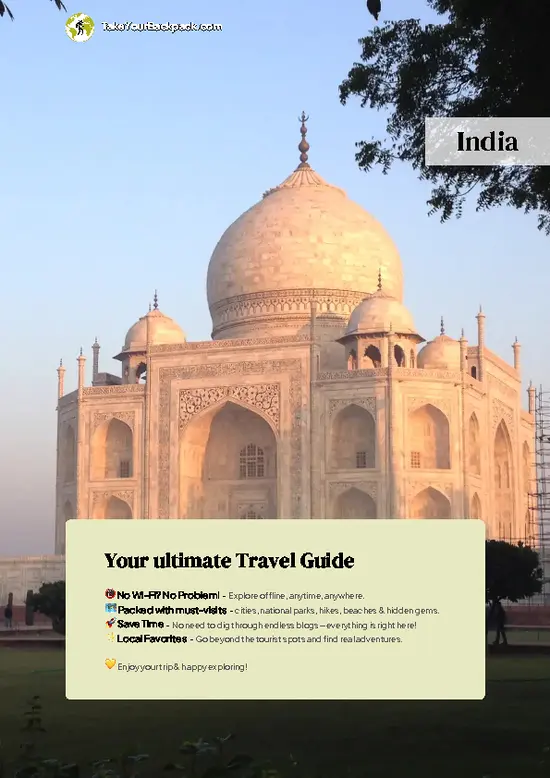
example page 0 from our offline Travel Guide for India
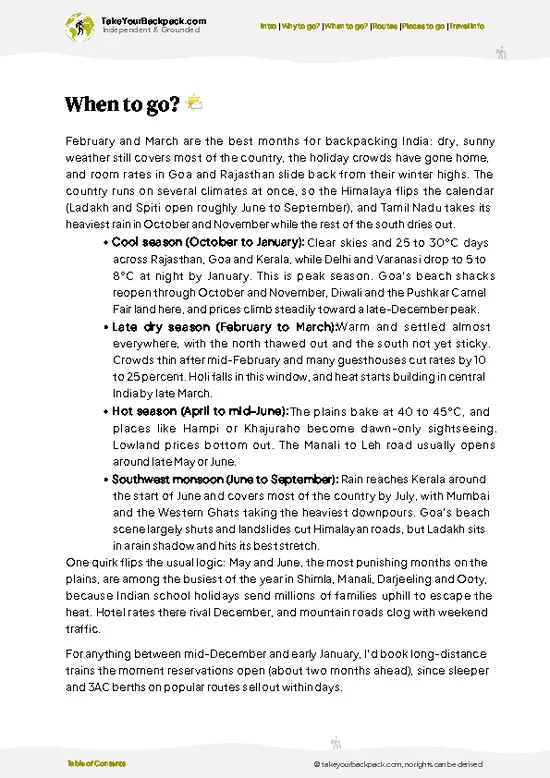
example page 1 from our offline Travel Guide for India
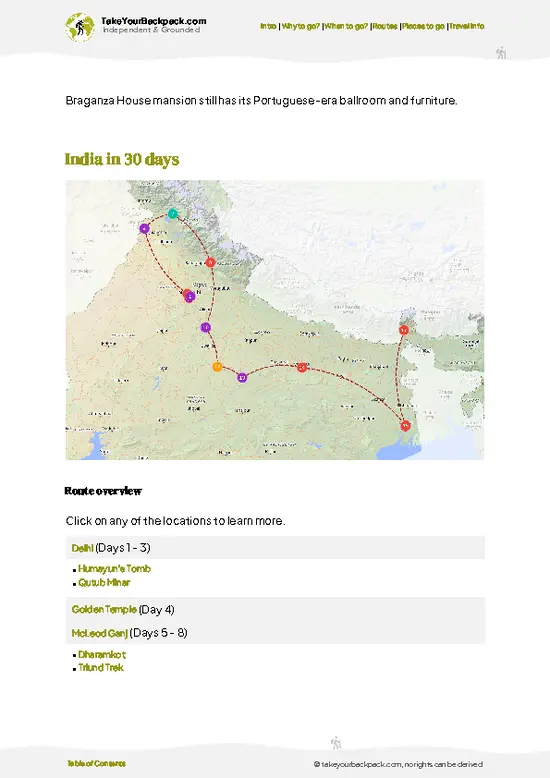
example page 2 from our offline Travel Guide for India
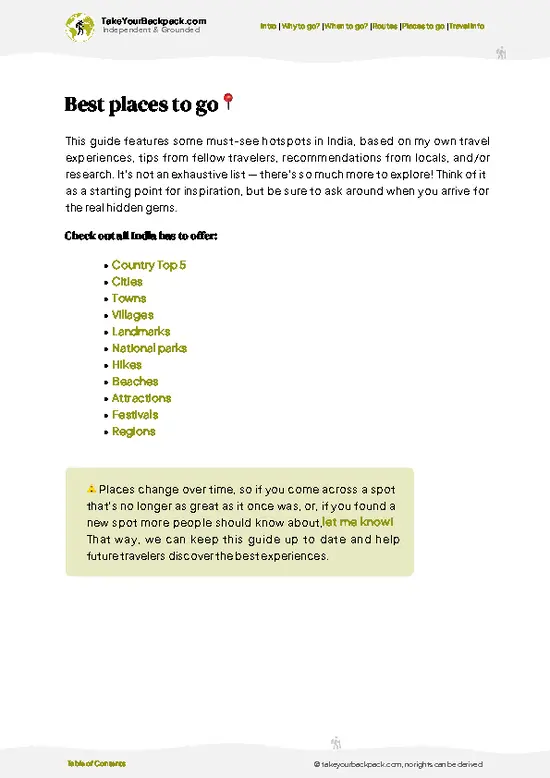
example page 3 from our offline Travel Guide for India
example page 4 from our offline Travel Guide for India
example page 5 from our offline Travel Guide for India
example page 6 from our offline Travel Guide for India
example page 7 from our offline Travel Guide for India
The digital guide (498 pages) contains:
162 highlights, ranked by travel appeal
Optimized 14, 21 & 30-day travel routes
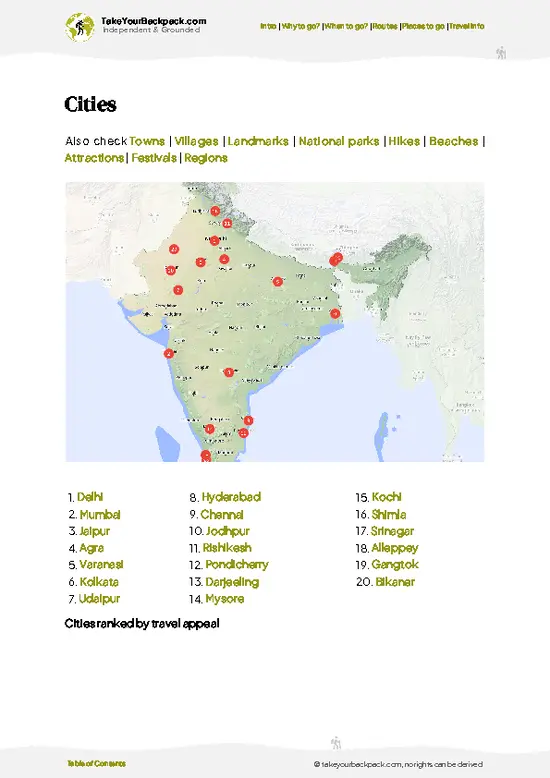
Cities, national parks, landmarks, beaches
How to get around
Offline-friendly for travel without Wi-Fi
👉 Click to see all 30+ guide features

📅 Plan smarter in minutes, not weeks
Month by month travel advice
Festivals & national holidays
Budget expectations

🗺️ Go to the right places, skip the overrated ones
Honest pros & cons of destinations
Top hikes, parks & viewpoints
Lesser-known places most travelers miss
Clear “worth it vs skip it” guidance

🛏️ Travel smoothly without rookie mistakes
Best areas to stay
Transport systems explained simply
Common scams & safety advice
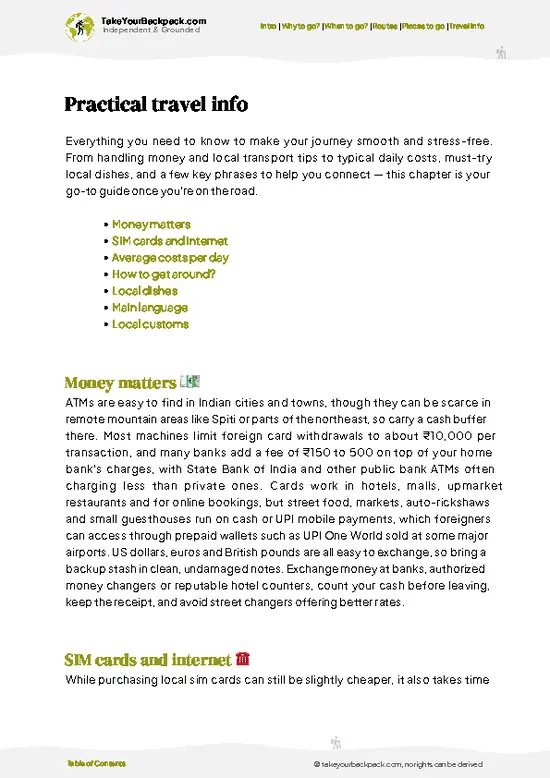
SIM cards, money & practical tips

🌍 Understand the country, not just visit it
Culture & traditions
52 Essential phrases & customs
Festivals worth planning around
Traveler-friendly historical context
Insights that make places more meaningful

📱 Built for real travel conditions
Fully downloadable PDF
Works completely offline
Optimized for phone use
Useful in remote areas & buses
Everything in one place
Save weeks of stressful planning
Get instant access to your full guide. 30‑day money-back guarantee.
+ Add another guide for just US$7.80

By proceeding you agree to our terms.
Sent to your inbox immediately after payment • 100% Secure Checkout
Best Backpacking Travel Advisor 2025 tourism awardBest Backpacking
Travel Advisor
2025
What others say about Take Your Backpack Guides:
⭐⭐⭐⭐⭐
Fantastic, amazing amount of information!
⭐⭐⭐⭐⭐
My goodness this is amazing, it's what I've been looking for hats off too you!
⭐⭐⭐⭐⭐
I think this is absolutely BRILLIANT
⭐⭐⭐⭐
Very complete and informative. It's still missing places, but I gotta to commend you
⭐⭐⭐⭐⭐
This is truly amazing, thank you, can't wait to explore it with my kids!
⭐⭐⭐⭐⭐
Awesome resource, thank you!
⭐⭐⭐⭐⭐
This is amazing! Can't wait to explore the ones I haven't seen
⭐⭐⭐⭐
I love this! Well done, great idea.
⭐⭐⭐⭐⭐
Thanks for taking the time to make this gem!
⭐⭐⭐⭐⭐
This might be the best website I've ever seen.
⭐⭐⭐⭐⭐
Congratulations, and thank you so much for your work; it's incredibly valuable.
⭐⭐⭐⭐
In all seriousness I think you did a great job pointing out the important spots
⭐⭐⭐⭐⭐
10/10 very good
⭐⭐⭐⭐⭐
As someone who's only just starting to visit regularly this is awesome, thank you.
⭐⭐⭐⭐
Thank you very much! I'm going to visit my dad, it's going to be very useful!
⭐⭐⭐⭐⭐
This is really cool! We'll be travelling for the first time and this definitely come in handy.
⭐⭐⭐⭐⭐
You are now our minister of culture, congratulations 👨‍💼
⭐⭐⭐⭐⭐
Just wanted to tell you that this is a pearl! Going to follow your recommendations.
⭐⭐⭐⭐⭐
This is so cool. I'll definitely be using the resource for my travels soon.
⭐⭐⭐⭐⭐
This is very impressive! Good work.
⭐⭐⭐⭐⭐
This is an amazing and informative site. Very well done!

🛏️ Where to stay?Top Areas to Stay

Yes — hostels and budget accommodation in India are widespread, concentrated in backpacker hubs like Delhi (Paharganj, Hauz Khas), Mumbai (Colaba, Bandra), Goa (Anjuna/Arambol, Calangute), Jaipur (Old City), Varanasi (Ghats), Rishikesh (Laxman Jhula), Manali (Old Manali) and Hampi (Hampi Bazaar).

Paharganj is very cheap and next to the main station but chaotic and dusty; Hauz Khas is safer with nightlife and pricier; Colaba puts you by major sights and transport but has fewer low-cost beds and higher rates while Bandra offers nightlife and cafes at a premium; Anjuna/Arambol have the biggest hostel scene and beach parties but get noisy and seasonal, Calangute is crowded and touristy; Old City … read more 👉
Yes — hostels and budget accommodation in India are widespread, concentrated in backpacker hubs like Delhi (Paharganj, Hauz Khas), Mumbai (Colaba, Bandra), Goa (Anjuna/Arambol, Calangute), Jaipur (Old City), Varanasi (Ghats), Rishikesh (Laxman Jhula), Manali (Old Manali) and Hampi (Hampi Bazaar).

Paharganj is very cheap and next to the main station but chaotic and dusty; Hauz Khas is safer with nightlife and pricier; Colaba puts you by major sights and transport but has fewer low-cost beds and higher rates while Bandra offers nightlife and cafes at a premium; Anjuna/Arambol have the biggest hostel scene and beach parties but get noisy and seasonal, Calangute is crowded and touristy; Old City Jaipur is ideal for forts and markets but busy and hot; Varanasi ghats give unmatched river access and ritual atmosphere but are noisy with basic facilities; Rishikesh near Laxman Jhula is quiet, yoga-focused and alcohol-restricted; Old Manali is the trekking base with lively nightlife in season; Hampi Bazaar is cheap and peaceful but very limited in services.

If you enjoy meeting fellow travelers, consider choosing hostels with high ratings for atmosphere. On the other hand, if you prefer having your own space, a hotel might be a better option.

IndiaDiscover the Country

👋 Meet the founderWho’s Behind Take Your Backpack?

Johan, backpacker and founder of TakeYourBackpackHi, I’m Johan (Netherlands 🇳🇱), the creator of TakeYourBackpack. Over the past decade, I’ve backpacked through 80+ countries across six continents, gaining extensive experience with independent travel, long-term trips, and overland routes.

This site is built on a combination of firsthand travel experience and carefully curated insights from other backpackers. Many guides are based on places I’ve personally visited, while others bring together tips, observations, and practical advice shared by trusted travelers I’ve met along the way.

The goal is to provide realistic, experience-driven guidance — not generic itineraries — so you can explore destinations with better context, clearer expectations, and more confidence.

Get full India guide •
Instant download • 162 highlights • Full Offline guide