v2.webp)
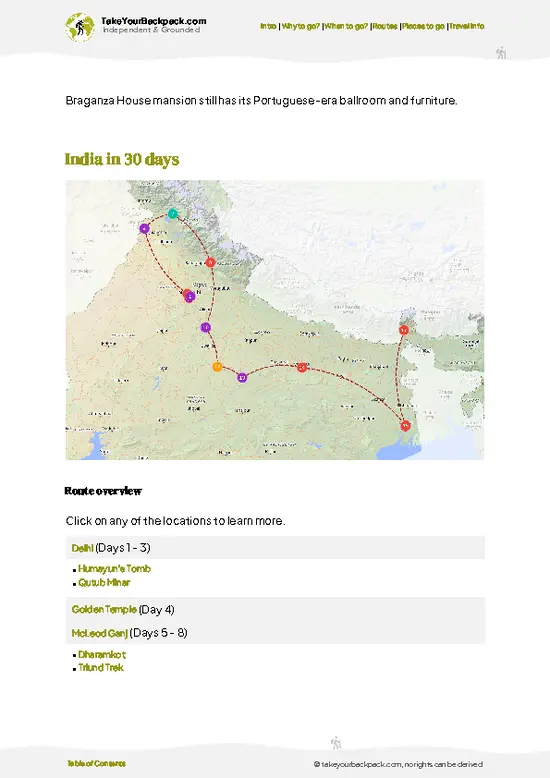
- Amber Fort (Amer Fort) — Massive hilltop palace with mirrored Sheesh Mahal, layered courtyards and surprise viewpoints over Maota Lake; it’s where Rajput pomp meets good hiking and evening light-and-sound shows. Walking the ramps and exploring the royal chambers gives a real sense of why Jaipur’s fort circuit matters.
- Jaigarh Fort — A tougher, militaristic complement to Amber: thick walls, cannon platforms and the famous Jaivana artillery piece. It’s less fussy than Amber and great for imagining how the city was defended; the views back toward Amber are top-notch.
- Nahargarh Fort — The best sunset perch above Jaipur. The fort’s terraces and old palaces are easy to wander, there are short ridge hikes, and the skyline at dusk—pink city below, Aravalli ridgeline beyond—is a proper reward.
- Amber Fort (Amer Fort) — Massive hilltop palace with mirrored Sheesh Mahal, layered courtyards and surprise viewpoints over Maota Lake; it’s where Rajput pomp meets good hiking and evening light-and-sound shows. Walking the ramps and exploring the royal chambers gives a real sense of why Jaipur’s fort circuit matters.
- Jaigarh Fort — A tougher, militaristic complement to Amber: thick walls, cannon platforms and the famous Jaivana artillery piece. It’s less fussy than Amber and great for imagining how the city was defended; the views back toward Amber are top-notch.
- Nahargarh Fort — The best sunset perch above Jaipur. The fort’s terraces and old palaces are easy to wander, there are short ridge hikes, and the skyline at dusk—pink city below, Aravalli ridgeline beyond—is a proper reward.
- Hawa Mahal — The iconic honeycomb façade you’ve seen in postcards, and yes it’s worth seeing in person for the intricate jharokhas and early-morning light. Inside is small but you get the visual logic of royal privacy and postcard-perfect photo ops.
- City Palace — A lived-in royal complex with ornate courtyards, Mubarak Mahal and museums showing textiles, arms and court life. It’s where you actually feel Jaipur’s royal history, not just look at it from afar.
- Jantar Mantar — The large, functioning 18th-century astronomical observatory and a UNESCO site. The sculptural instruments are surprisingly tactile and intuitive; bring a small guide or a local explain-er and it clicks into place.
- Albert Hall Museum (Sawai Man Singh Museum) — Housed in an attractive Indo-Saracenic building inside Ram Niwas Bagh, it’s a compact, well-curated primer on Rajasthan’s crafts, pottery, paintings and arms. Good for a couple of hours when you want real context away from the crowds.
- Johari Bazaar — The old-city jewelry and craft market near Hawa Mahal: gem shops, lac bangles, mirror-work textiles and street food. It’s chaotic and bargaining-friendly, and it’s the best place to feel Jaipur’s pulse and pick up handmade souvenirs.
- Panna Meena ka Kund — A geometric, atmospheric stepwell just outside the Amber approach. Smaller and far less crowded than the big monuments; early morning light here makes for quiet photos and a cool, unexpectedly intimate experience.
- Anokhi Museum of Hand Printing — A tiny, focused museum dedicated to block-printing craft and techniques. Hands-on displays, artisan stories and a small shop with authentic pieces—perfect if you care about how Jaipur’s textiles are actually made.
Spotted a mistake or missing something? Contact us.

Guided Morning Bicycle Tour with Food Tasting in Jaipur

Private Full-Day Jaipur Sightseeing by Car

Jaipur Half-Day Heritage Tour with Guided Walk & Rickshaw Ride

PRIVATE Market Tour & Cooking Class in Shalini’s Jaipur Home

Jaipur Full-Day Private Tour by Car or Tuk-Tuk with Local Guide

Private Guided Sightseeing Tour of Jaipur Highlights

Jaipur Private Shopping Tour with Pickup

Jaipur Tuk tuk tour English speaking driver

Jaipur- 1 Day Private Tour With Guide


 Best Backpacking
.jpg) Hi, I’m Johan (Netherlands 🇳🇱), the creator of TakeYourBackpack. Over the past 3 decades, I’ve backpacked through 90+ countries across six continents, gaining extensive experience with independent travel, long-term trips, and overland routes.
Hi, I’m Johan (Netherlands 🇳🇱), the creator of TakeYourBackpack. Over the past 3 decades, I’ve backpacked through 90+ countries across six continents, gaining extensive experience with independent travel, long-term trips, and overland routes.