×

India🇮🇳 | landmarksPatanstepwells, medieval city walls, textile workshops | things to do and best time to go

Explore Meenakshi TempleExplore Ramappa Temple

Backpacking in Patan
👀 For curious travelersunique site ranked #22
By Johan Kruseman 🇳🇱 | Updated September 4, 2026

Most people only realize after they leave that Patan is where you finally get space to breathe after the chaos of bigger Gujarati cities, while still being close enough to use Ahmedabad as your cheap transport hub. Patan, in northern Gujarat, is all about Rani ki Vav, the stepwell that looks like someone dropped an underground temple into the earth. The carvings are outrageous, the history is deep, and yes, it’s absolutely worth it. But it’s not some lonely ruin; school groups, domestic tourists, and selfie crews roll through in waves, and ticket prices for foreigners feel high for the time you actually spend inside. The good news: it’s compact, walkable, easy to DIY by bus or train, and the town itself is low-key and friendly, with just enough chaos to feel real but not enough to fry your brain. Photos are incredible if you’re patient between crowd surges, and the vibe is more “quietly powerful” than “mind blown every second,” which I actually prefer.

Discover everything you want to know in the 📖 India Travel Guide.


Get your India guide
162 ranked highlights, routes & tips, works offline (498 pages)
Loading the map 🌍
CLICK TO FILTER
cities
towns
villages
landmarks
national parks
hikes
beaches
attractions
festivals
regions
SHOW COUNTRY’S BESTSHOW ALL

✨ Why go?
Ranked #22 unique site in India
What sets this place apart

Patan isn’t just another stop; it’s a living museum of craftsmanship. Yes, the crowds can be overwhelming, especially during peak season, but that’s part of the experience. You’ll see artisans at work, creating intricate patola silk and stunning wood carvings. The entry fee is a steal, making it accessible for any backpacker.

Nestled between Ahmedabad and Gandhinagar, it fits seamlessly into your route. Spend a few hours wandering the stepwells and temples, and you’ll feel the pulse of history. It’s not just about the sights; it’s about the stories that unfold in every corner.
Want to include Patan in your India route?
Create a personalized India itinerary that includes Patan and the places that fit your trip — based on your travel style, budget, and available time. Get your route in seconds.

Generate my trip

💡 HighlightsKey sights and experiences for travelers

  • Rani ki Vav (the Queen’s Stepwell) — A seven-tiered 11th-century stepwell built by Queen Udayamati in memory of King Bhima I. It’s a UNESCO site for good reason: the walls are dense with carved panels of gods, goddesses and myth scenes, and the light in the lower chambers is unexpectedly cinematic.
  • Sahasralinga Talav — An old reservoir whose floor and banks are studded with rows of Shiva lingas. It’s peaceful, slightly eerie, and a rare example of ritual landscape engineering from medieval Gujarat — best to visit when the water is calm so the reflections play off the stones.
  • Patola weaving workshops — Patan’s double-ikat Patola sarees are legendary: an insanely complex tie-and-dye technique that produces crisp, geometric patterns on silk. A few families still weave them here; watching
read more 👉
  • Rani ki Vav (the Queen’s Stepwell) — A seven-tiered 11th-century stepwell built by Queen Udayamati in memory of King Bhima I. It’s a UNESCO site for good reason: the walls are dense with carved panels of gods, goddesses and myth scenes, and the light in the lower chambers is unexpectedly cinematic.
  • Sahasralinga Talav — An old reservoir whose floor and banks are studded with rows of Shiva lingas. It’s peaceful, slightly eerie, and a rare example of ritual landscape engineering from medieval Gujarat — best to visit when the water is calm so the reflections play off the stones.
  • Patola weaving workshops — Patan’s double-ikat Patola sarees are legendary: an insanely complex tie-and-dye technique that produces crisp, geometric patterns on silk. A few families still weave them here; watching the process is a hands-on cultural lesson and good for buying an authentic (albeit pricey) souvenir. (personal favorite)
  • Patan Museum — Small but focused: local stone and bronze sculptures, inscriptions and artifacts that help explain the art and politics behind places like Rani ki Vav. Nice stop if you want context without a long museum slog.
  • Jain heritage and Hemachandra sites — Patan was an important center for Jain learning (Hemachandra, the 12th-century scholar, is linked to the city). You’ll find several calm temples and carved interiors that show a different, quieter side of Patan’s medieval art.
  • Old town lanes and historic façades — Wander the narrow streets around the archaeological core: carved stone doorways, old merchant houses and compact courtyards. It’s where the city’s medieval layout still feels alive and easy to explore on foot.
  • Local markets and street eats — Markets around the stepwell sell textiles, brassware and smaller Patola pieces; street stalls serve Gujarati snacks. Perfect for bargain hunting, people-watching and grabbing a simple, tasty bite between sights.
Spotted a mistake or missing something? Contact us.

Things to do near Patan

Ratings based on Tripadvisor reviews. When you book through this link, you support our work at no extra cost to you.

🌤️ When to go?When to go for the best experience


  • Weather: Patan’s best window is October to March when the air is crisp and dry. Expect 15-25°C (59-77°F), perfect for wandering without melting or freezing.

  • Temperature: Summers scorch, hitting 35-40°C (95-104°F), brutal for trekking and temple-hopping. Winters dip to 5-10°C (41-50°F) at night—bring layers.

  • Daylight Hours: Around 10-11 hours in winter, stretching to 13-14 in summer. Longer days mean more time to explore but also more heat.

  • Crowds: Peak season (Oct-Mar) draws tourists and pilgrims, especially during festivals. Off-season is quieter but less comfortable weather-wise.

  • Seasonal Activities: Festivals like Rato Machhindranath (April-May) are intense cultural experiences but pack the streets and drive prices up.

  • Price Fluctuations: Expect higher accommodation and transport
read more 👉

  • Weather: Patan’s best window is October to March when the air is crisp and dry. Expect 15-25°C (59-77°F), perfect for wandering without melting or freezing.

  • Temperature: Summers scorch, hitting 35-40°C (95-104°F), brutal for trekking and temple-hopping. Winters dip to 5-10°C (41-50°F) at night—bring layers.

  • Daylight Hours: Around 10-11 hours in winter, stretching to 13-14 in summer. Longer days mean more time to explore but also more heat.

  • Crowds: Peak season (Oct-Mar) draws tourists and pilgrims, especially during festivals. Off-season is quieter but less comfortable weather-wise.

  • Seasonal Activities: Festivals like Rato Machhindranath (April-May) are intense cultural experiences but pack the streets and drive prices up.

  • Price Fluctuations: Expect higher accommodation and transport costs during peak season and festivals. Off-season offers bargains but fewer services.


Pro-tip: Aim for late autumn—cool, manageable crowds, and a taste of local life before the festival chaos kicks in.


source: climatestotravel.comJANJanuary: excellent for travelingFEBFebruary: excellent for travelingMARMarch: excellent for travelingAPRApril: good for travelingMAYMay: good for travelingJUNJune: below average for travelingJULJuly: below average for travelingAUGAugust: below average for travelingSEPSeptember: fair for travelingOCTOctober: excellent for travelingNOVNovember: excellent for travelingDECDecember: excellent for traveling
when-to-go

✈️ The backpacker research shortcutIndia Travel Guide

An offline-friendly backpacking guide with optimized travel routes, ranked highlights, transport advice, and the best areas to stay.
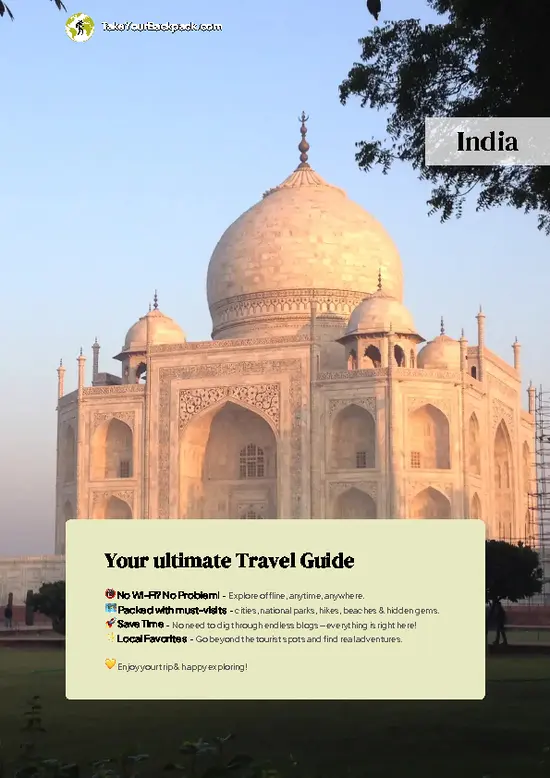
example page 0 from our offline Travel Guide for India
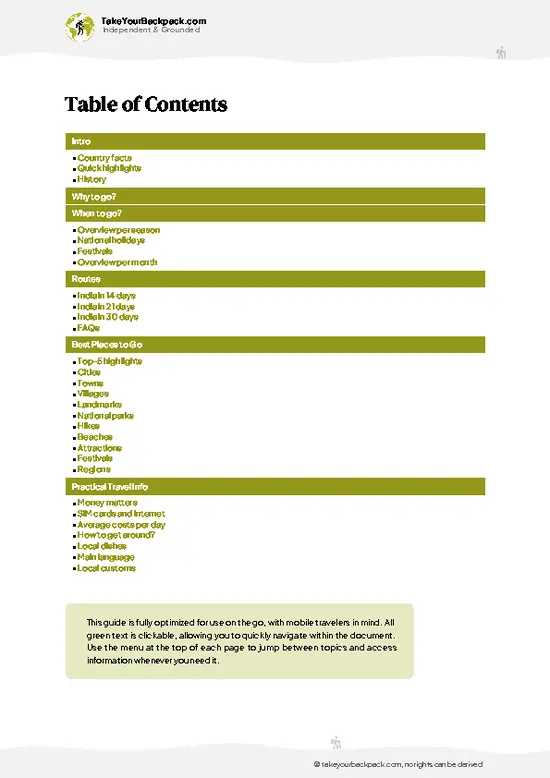
example page 1 from our offline Travel Guide for India
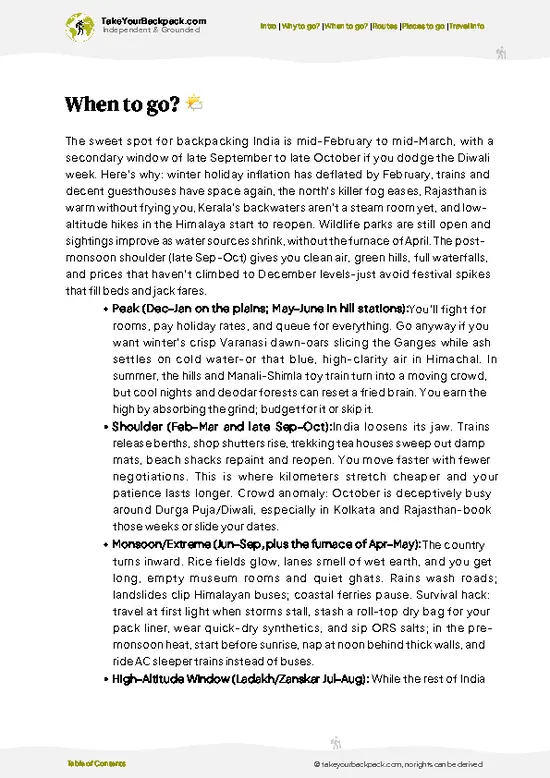
example page 2 from our offline Travel Guide for India
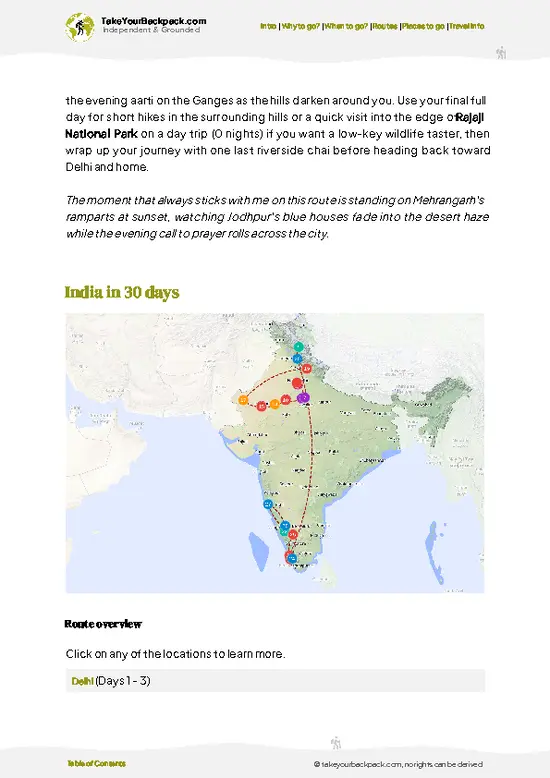
example page 3 from our offline Travel Guide for India
example page 4 from our offline Travel Guide for India
example page 5 from our offline Travel Guide for India
example page 6 from our offline Travel Guide for India
example page 7 from our offline Travel Guide for India
The digital guide (498 pages) contains:
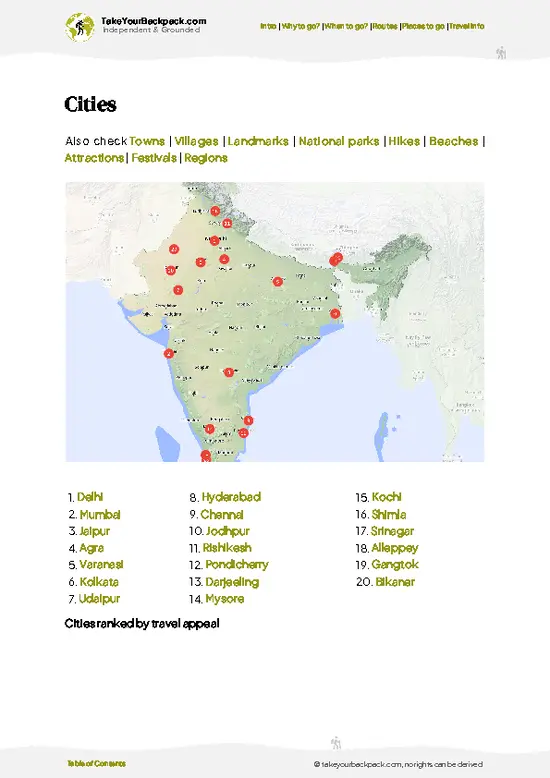
162 highlights, ranked by travel appeal
Optimized 14, 21 & 30-day travel routes
Cities, national parks, landmarks, beaches
How to get around
Offline-friendly for travel without Wi-Fi
👉 Click to see all 30+ guide features

📅 Plan smarter in minutes, not weeks
Month by month travel advice
Festivals & national holidays
Budget expectations

🗺️ Go to the right places, skip the overrated ones
Honest pros & cons of destinations
Top hikes, parks & viewpoints
Lesser-known places most travelers miss
Clear “worth it vs skip it” guidance

🛏️ Travel smoothly without rookie mistakes
Best areas to stay
Transport systems explained simply
Common scams & safety advice
SIM cards, money & practical tips

🌍 Understand the country, not just visit it
Culture & traditions
52 Essential phrases & customs
Festivals worth planning around
Traveler-friendly historical context
Insights that make places more meaningful

📱 Built for real travel conditions
Fully downloadable PDF
Works completely offline
Optimized for phone use
Useful in remote areas & buses
Everything in one place
Save weeks of stressful planning
Get instant access to your full guide. 30‑day money-back guarantee.
+ Add another guide for just US$7.80

By proceeding you agree to our terms.
Sent to your inbox immediately after payment • 100% Secure Checkout
Best Backpacking Travel Advisor 2025 tourism awardBest Backpacking
Travel Advisor
2025
What others say about Take Your Backpack Guides:
⭐⭐⭐⭐⭐
Fantastic, amazing amount of information!
⭐⭐⭐⭐⭐
My goodness this is amazing, it's what I've been looking for hats off too you!
⭐⭐⭐⭐⭐
I think this is absolutely BRILLIANT
⭐⭐⭐⭐
Very complete and informative. It's still missing places, but I gotta to commend you
⭐⭐⭐⭐⭐
This is truly amazing, thank you, can't wait to explore it with my kids!
⭐⭐⭐⭐⭐
Awesome resource, thank you!
⭐⭐⭐⭐⭐
This is amazing! Can't wait to explore the ones I haven't seen
⭐⭐⭐⭐
I love this! Well done, great idea.
⭐⭐⭐⭐⭐
Thanks for taking the time to make this gem!
⭐⭐⭐⭐⭐
This might be the best website I've ever seen.
⭐⭐⭐⭐⭐
Congratulations, and thank you so much for your work; it's incredibly valuable.
⭐⭐⭐⭐
In all seriousness I think you did a great job pointing out the important spots
⭐⭐⭐⭐⭐
10/10 very good
⭐⭐⭐⭐⭐
As someone who's only just starting to visit regularly this is awesome, thank you.
⭐⭐⭐⭐
Thank you very much! I'm going to visit my dad, it's going to be very useful!
⭐⭐⭐⭐⭐
This is really cool! We'll be travelling for the first time and this definitely come in handy.
⭐⭐⭐⭐⭐
You are now our minister of culture, congratulations 👨‍💼
⭐⭐⭐⭐⭐
Just wanted to tell you that this is a pearl! Going to follow your recommendations.
⭐⭐⭐⭐⭐
This is so cool. I'll definitely be using the resource for my travels soon.
⭐⭐⭐⭐⭐
This is very impressive! Good work.
⭐⭐⭐⭐⭐
This is an amazing and informative site. Very well done!

🛏️ Where to stay?How to pick the right area

Stay around the Patan Durbar Square area for a vibrant backpacker vibe. It’s bustling, with street vendors and local cafes serving up delicious dal bhat. You’ll find plenty of budget-friendly guesthouses that welcome solo travelers and create a social atmosphere.

The Thamel neighborhood is another solid option, just a short ride away. It’s a hub for backpackers, packed with shops and eateries. Expect crowds, but that’s part of the charm. You’ll meet fellow adventurers and share stories over a cup of chai. Safety is generally good, but keep your wits about you, especially at night.

👛 Costs (as of 4 September 2026)Typical daily expenses

Visiting Patan, India, can be a rewarding experience, but it’s essential to know what you’re getting into financially. Here’s a breakdown of typical costs to help you plan wisely.
  • Accommodation: Expect to pay between $10 to $50 per night. Budget options like hostels or guesthouses are available, while mid-range hotels offer more comfort. Luxury stays can go up to $150 or more, but they often come with amenities that might not be necessary for a short visit.
  • Food: Street food is a steal, with meals costing as little as $1 to $3. If you prefer dining in restaurants, budget around $5 to $15 per meal. For a more upscale experience, you might spend $20 to $30, but remember, the local flavors are often best enjoyed at the street stalls.
  • Transportation: Local transport is affordable. Auto-rickshaws
read more 👉
Visiting Patan, India, can be a rewarding experience, but it’s essential to know what you’re getting into financially. Here’s a breakdown of typical costs to help you plan wisely.
  • Accommodation: Expect to pay between $10 to $50 per night. Budget options like hostels or guesthouses are available, while mid-range hotels offer more comfort. Luxury stays can go up to $150 or more, but they often come with amenities that might not be necessary for a short visit.
  • Food: Street food is a steal, with meals costing as little as $1 to $3. If you prefer dining in restaurants, budget around $5 to $15 per meal. For a more upscale experience, you might spend $20 to $30, but remember, the local flavors are often best enjoyed at the street stalls.
  • Transportation: Local transport is affordable. Auto-rickshaws and buses typically cost between $0.50 to $3 for short distances. If you’re considering a taxi, expect to pay around $5 to $15 for longer trips. Renting a bicycle can be a fun way to explore, usually costing about $2 to $5 per day.
  • Entry Fees: Many temples and historical sites charge entry fees ranging from $1 to $10. Some may be free, but for places with significant cultural value, it’s worth the small fee. Always check if there are additional costs for photography or guided tours.
  • Shopping: If you’re looking to take home some local crafts, set aside $10 to $50, depending on what you buy. Bargaining is common, so don’t hesitate to negotiate prices at local markets.

Patan offers a mix of experiences that can fit various budgets. Just be prepared for the crowds and the hustle, but know that the authentic culture and history make it all worthwhile.


source: incredibleindia.org
⚠️ Prices can change and everyone travels differently, so take this as a rough guide. Hope it helps you plan your adventure!

FAQTraveler FAQ

Patan is an ancient city in Gujarat, India, known for its rich history, intricate architecture, and the famous Rani ki Vav stepwell, a UNESCO World Heritage site. It was once the capital of the Chalukya dynasty and is renowned for its traditional Patola silk weaving.
Visiting Patan typically requires about half a day to a full day to explore the main attractions like Rani ki Vav, Patan Patola Heritage, and local markets. If you want to delve deeper into the history and crafts, plan for at least one full day.
Patan is accessible by road and rail. The nearest major city is Ahmedabad, about 130 kilometers away, with regular buses and trains connecting to Patan. The closest airport is Sardar Vallabhbhai Patel International Airport in Ahmedabad.
⚠️ Things can change over time, so always validate details locally before you go.

Other Indian landmarks near Patan

Explore more nearby:

  • Rani ki Vav—stepwell corridors, sculpted pillars, subterranean chambers| 2 km away
  • Statue of Unity—colossal sculpture, riverside plaza, viewing gallery| 277 km away
  • Ajanta Caves—rock-cut monasteries, Buddhist murals, ancient frescoes| 522 km away

💡 Not sure where to go next?
Create a personalized itinerary for India including Patan and the places that fit your trip.

Generate my itinerary

👉 Discover all landmarks

Or checkout all India has to offer (think cities, towns, villages, national parks, hikes, beaches, festivals)
Country photo of India

We 💚 feedbackKey takeaways before you go

Patan’s intricate stepwells are a marvel—each one tells a story of ancient engineering and community life. But brace yourself for the crowds; they can be overwhelming, especially during peak season. Still, the history and craftsmanship make it worth the hustle.

✈️ When did I visit India?
As part of my 1.5 year travel around the world trip, I visited India in December 2015.

✍️ Help improve this page!
The information on this page is based on my own backpacking experience in India, supplemented with up-to-date research and feedback from other travelers. Travel details can change, so if you notice anything outdated or incomplete, feel free to let me know.


🙋‍♂️ Give feedback

👋 Meet the founderWho’s Behind Take Your Backpack?

Johan, backpacker and founder of TakeYourBackpackHi, I’m Johan (Netherlands 🇳🇱), the creator of TakeYourBackpack. Over the past decade, I’ve backpacked through 80+ countries across six continents, gaining extensive experience with independent travel, long-term trips, and overland routes.

This site is built on a combination of firsthand travel experience and carefully curated insights from other backpackers. Many guides are based on places I’ve personally visited, while others bring together tips, observations, and practical advice shared by trusted travelers I’ve met along the way.

The goal is to provide realistic, experience-driven guidance — not generic itineraries — so you can explore destinations with better context, clearer expectations, and more confidence.

Get full India guide •
Instant download • 162 highlights • Full Offline guide