×

Indonesia🇮🇩 | regionsFloresKomodo gateway, Kelimutu crater lakes, Labuan Bajo, Trans-Flores road | things to do and best time to go

Explore Derawan IslandsExplore Gili Islands

Backpacking in Flores
🌟 Highlightregion ranked #8
By Johan Kruseman 🇳🇱 | Updated October 15, 2026

Flores is not the overcrowded island most travel blogs describe. It's a long, narrow chain of volcanic ridges in eastern Indonesia, east of Bali, where infrastructure is sparse enough to keep crowds thin but developed enough to move between towns without heroic effort. The island stretches 360 kilometers and forces you to choose: rush through the highlights or slow down and actually live here for a week. I remember sitting on a wooden bench in Moni, watching a family prepare dinner over a wood fire while the volcano Kelimutu glowed orange above us, and realizing that Flores rewards the traveler who commits time rather than ticks boxes. The payoff is real: dramatic volcanic landscapes, traditional villages where life moves at a human pace, and a mix of Hindu, Muslim, and Christian cultures that feels lived-in rather than performed. Compared to Lombok or the Gili Islands, Flores demands more patience but offers far more authenticity.

Discover everything you want to know in the 📖 Indonesia Travel Guide.


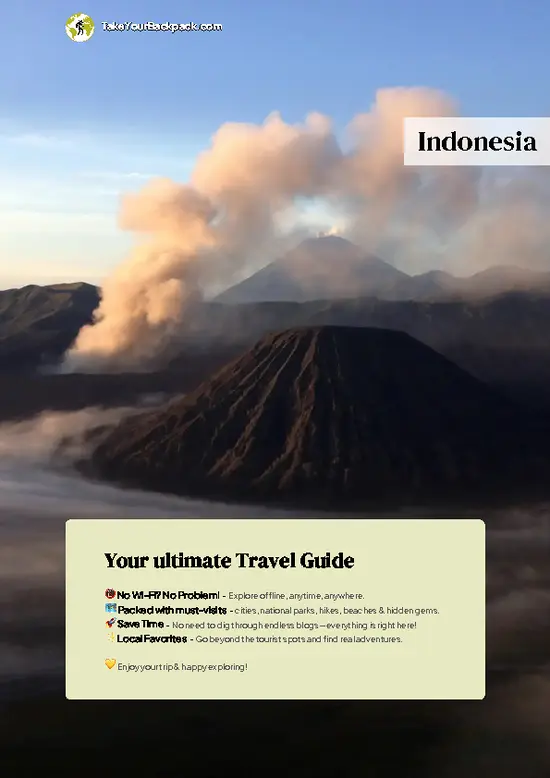
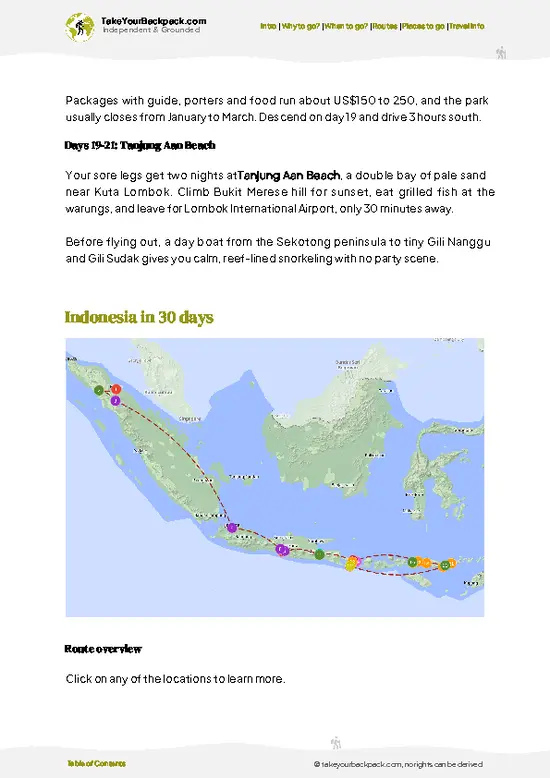
example page 0 from our offline Travel Guide for Indonesia
example page 1 from our offline Travel Guide for Indonesia
example page 2 from our offline Travel Guide for Indonesia
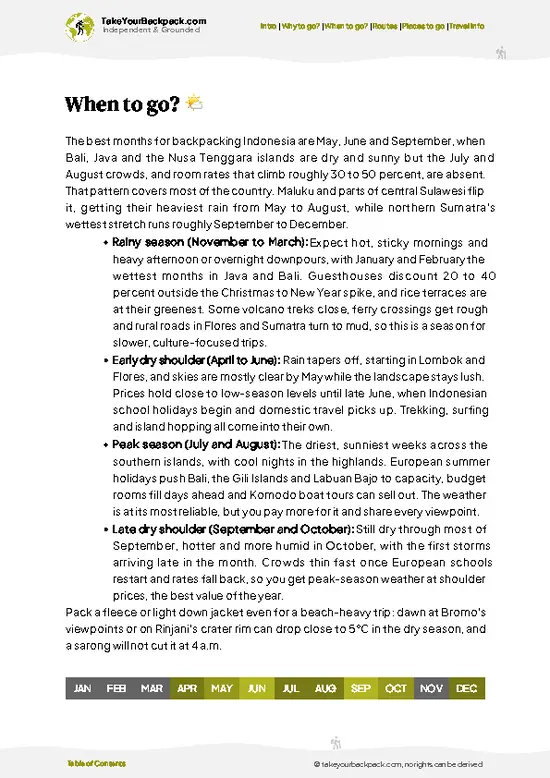
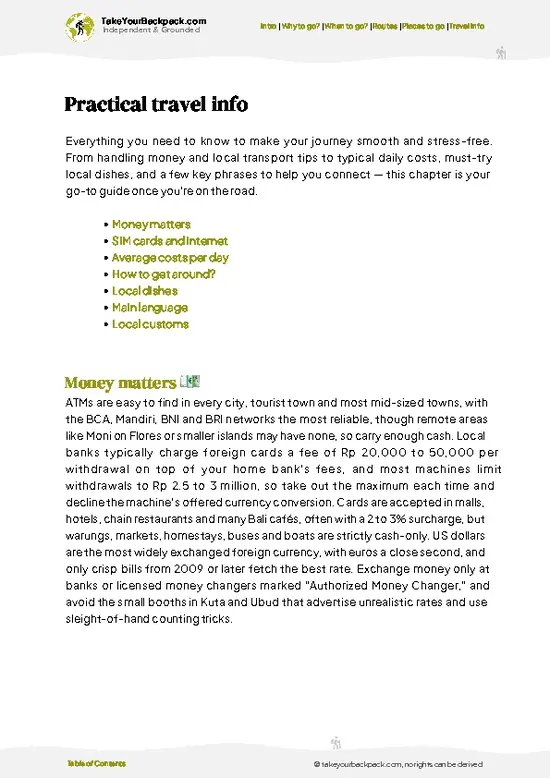
example page 3 from our offline Travel Guide for Indonesia
example page 4 from our offline Travel Guide for Indonesia
example page 5 from our offline Travel Guide for Indonesia
example page 6 from our offline Travel Guide for Indonesia
example page 7 from our offline Travel Guide for Indonesia
Loading the map 🌍
CLICK TO FILTER
cities
towns
villages
landmarks
national parks
hikes
beaches
attractions
festivals
regions
SHOW COUNTRY’S BESTSHOW ALL

✨ Why go?
Ranked #8 region in Indonesia
What sets this place apart

Flores works as a slow-travel base because it combines multiple landscapes without requiring constant relocation. You can move from volcanic highlands to coastal towns to traditional weaving villages in five days without backtracking. The island's limited transport network actually becomes an advantage: buses move slowly enough that you see the landscape change, and the lack of direct flights keeps independent travelers from rushing through. You'll find cultural depth that feels genuine because tourism hasn't yet reshaped daily life. The cost stays low across accommodation, food, and transport, which means you can afford to stay longer and move less frequently. Most importantly, Flores lets you mix nature and culture on the same day: hike a volcano in the morning, visit a traditional weaving … read more 👉
Flores works as a slow-travel base because it combines multiple landscapes without requiring constant relocation. You can move from volcanic highlands to coastal towns to traditional weaving villages in five days without backtracking. The island's limited transport network actually becomes an advantage: buses move slowly enough that you see the landscape change, and the lack of direct flights keeps independent travelers from rushing through. You'll find cultural depth that feels genuine because tourism hasn't yet reshaped daily life. The cost stays low across accommodation, food, and transport, which means you can afford to stay longer and move less frequently. Most importantly, Flores lets you mix nature and culture on the same day: hike a volcano in the morning, visit a traditional weaving workshop in the afternoon, and eat fresh fish on a quiet beach at sunset.

💡 HighlightsMust-see experiences and standout moments

  1. Kelimutu Volcano: Three crater lakes shift between blue, green, and red depending on mineral content and light. The hike starts before dawn from Moni, takes two hours, and the payoff is watching sunrise paint the lakes in colors that seem unreal.
  2. Komodo National Park: Home to the Komodo dragon, the world's largest lizard. Day trips from Labuan Bajo include boat rides to Rinca Island, where you trek with a ranger to spot dragons in their natural habitat.
  3. Moni Village: A small mountain town where Kelimutu dominates the skyline and locals still weave traditional ikat cloth. Stay here to wake early for the volcano and spend afternoons in family-run warungs.
  4. Ruteng Weaving Workshops: In the highlands, women weave ikat using natural dyes and traditional looms. Visiting workshops directly supports families
… read more 👉
  1. Kelimutu Volcano: Three crater lakes shift between blue, green, and red depending on mineral content and light. The hike starts before dawn from Moni, takes two hours, and the payoff is watching sunrise paint the lakes in colors that seem unreal.
  2. Komodo National Park: Home to the Komodo dragon, the world's largest lizard. Day trips from Labuan Bajo include boat rides to Rinca Island, where you trek with a ranger to spot dragons in their natural habitat.
  3. Moni Village: A small mountain town where Kelimutu dominates the skyline and locals still weave traditional ikat cloth. Stay here to wake early for the volcano and spend afternoons in family-run warungs.
  4. Ruteng Weaving Workshops: In the highlands, women weave ikat using natural dyes and traditional looms. Visiting workshops directly supports families and lets you watch the entire process from dyeing to finished cloth.
  5. Labuan Bajo Harbor: The main port town on the west coast, where fishing boats dock and the waterfront fills with seafood restaurants. It's the gateway to Komodo but worth exploring for its own energy and fresh catch.
  6. Bena Traditional Village: A highland settlement where houses still follow ancestral design, with graves integrated into the village layout. The walk through Bena feels like stepping into a living museum without the tourist infrastructure.
  7. Riung Marine Park: A lesser-known coastal area with 17 small islands, coral reefs, and minimal tourist presence. Boat trips from the village of Riung cost less than Komodo tours and offer genuine snorkeling without crowds.
  8. Bajawa Market: The highland town's morning market overflows with local produce, spices, and woven goods. It's where locals shop, not tourists, and the energy is raw and unfiltered.
  9. Cunca Wulang Waterfall: A two-hour trek from Bajawa through rice paddies and forest leads to a waterfall with a natural pool. Few tourists make the effort, so you'll likely have it to yourself.
  10. Ende Town: The island's oldest port and former capital, with colonial architecture and a quieter vibe than Labuan Bajo. It's a practical stop between Moni and the west coast, with character that rewards a night's stay.


I'd start with Kelimutu at dawn from Moni because it sets the tone for the entire island: dramatic, accessible, and worth the early wake-up. Everything else flows from there.
Spotted a mistake or missing something? Contact us.

Things to do near Flores

Ratings based on Tripadvisor reviews. When you book through this link, you support our work at no extra cost to you.

⌛️ 5 daysSeeing the highlights in 5 days

Day 1: Moni:
Arrive in Moni, a mountain town built around Kelimutu Volcano. Most flights land in Labuan Bajo on the west coast, so you'll need to travel overland. A minibus takes 8 to 10 hours from Labuan Bajo to Moni, which sounds brutal but moves you through the island's spine and deposits you perfectly positioned for the volcano hike. Spend the afternoon walking the village, eating at a family warung, and preparing for a 4 a.m. wake-up.

Day 2: Kelimutu & Moni:
Hike Kelimutu before dawn. The two-hour trek rewards early risers with sunrise over three crater lakes that shift color depending on mineral content. Return to Moni by mid-morning, then spend the afternoon visiting ikat weaving workshops where you can watch weavers work and buy directly from families. This day justifies the entire … read more 👉
Day 1: Moni:
Arrive in Moni, a mountain town built around Kelimutu Volcano. Most flights land in Labuan Bajo on the west coast, so you'll need to travel overland. A minibus takes 8 to 10 hours from Labuan Bajo to Moni, which sounds brutal but moves you through the island's spine and deposits you perfectly positioned for the volcano hike. Spend the afternoon walking the village, eating at a family warung, and preparing for a 4 a.m. wake-up.

Day 2: Kelimutu & Moni:
Hike Kelimutu before dawn. The two-hour trek rewards early risers with sunrise over three crater lakes that shift color depending on mineral content. Return to Moni by mid-morning, then spend the afternoon visiting ikat weaving workshops where you can watch weavers work and buy directly from families. This day justifies the entire trip: it combines landscape, culture, and the kind of quiet morning that makes slow travel worth it.

Day 3: Bajawa:
Travel north to Bajawa, a highland town in cooler air. The minibus takes 3 to 4 hours and winds through rice paddies and traditional villages. Explore Bajawa's market in the morning, visit nearby Bena traditional village in the afternoon, and eat at a local warung in the evening. The town feels less touristy than Moni and gives you a different angle on highland life.

Day 4: Riung:
Head to Riung, a coastal village on the north shore. The drive takes 2 to 3 hours and drops you into a fishing community with minimal tourism infrastructure. Arrange a boat trip to the 17 islands of Riung Marine Park for snorkeling and island hopping. The cost is half what you'd pay for Komodo, and the crowds are nonexistent.

Day 5: Labuan Bajo:
Return to Labuan Bajo for your onward flight or a Komodo day trip. The drive takes 4 to 5 hours, so leave early. If you have time, explore the harbor and eat fresh fish at a waterfront warung.

Off-Path Reward: Skip Riung and detour to Cunca Wulang Waterfall near Bajawa instead. A local guide from Bajawa can arrange a trek through rice paddies to a waterfall with a natural pool. It takes 4 to 5 hours round trip and costs less than a Komodo tour, with zero tourists.

🌤️ When to go?Seasonal considerations and timing

  • Dry Season (April to November): The best window for Flores. Expect clear skies, calm seas for snorkeling and boat trips, and temperatures around 25 to 30°C (77 to 86°F). Daylight runs roughly 12 hours. Prices rise slightly and popular spots see more backpackers, but conditions are ideal for hiking and water activities.
  • Wet Season (December to March): Heavy rainfall, especially January and February, can close mountain roads and delay ferries. Temperatures hover around 26 to 32°C (79 to 90°F) with high humidity. Fewer tourists mean lower prices and quieter villages, but hiking becomes risky and transport unreliable.
  • Shoulder Months (April, May, October, November): Sweet spot for weather and crowds. Rains taper off, seas remain calm, and prices haven't peaked. Daylight is consistent at roughly
… read more 👉
  • Dry Season (April to November): The best window for Flores. Expect clear skies, calm seas for snorkeling and boat trips, and temperatures around 25 to 30°C (77 to 86°F). Daylight runs roughly 12 hours. Prices rise slightly and popular spots see more backpackers, but conditions are ideal for hiking and water activities.
  • Wet Season (December to March): Heavy rainfall, especially January and February, can close mountain roads and delay ferries. Temperatures hover around 26 to 32°C (79 to 90°F) with high humidity. Fewer tourists mean lower prices and quieter villages, but hiking becomes risky and transport unreliable.
  • Shoulder Months (April, May, October, November): Sweet spot for weather and crowds. Rains taper off, seas remain calm, and prices haven't peaked. Daylight is consistent at roughly 12 hours year-round.
Book transport and accommodations in advance during July and August when Australian school holidays drive numbers up.


source: climatestotravel.comJANJanuary: fair for travelingFEBFebruary: fair for travelingMARMarch: fair for travelingAPRApril: fair for travelingMAYMay: highly recommended for travelingJUNJune: excellent for travelingJULJuly: excellent for travelingAUGAugust: excellent for travelingSEPSeptember: highly recommended for travelingOCTOctober: fair for travelingNOVNovember: fair for travelingDECDecember: fair for traveling
when-to-go

✈️ The backpacker research shortcutIndonesia Travel Guide

An offline-friendly backpacking guide with optimized travel routes, ranked highlights, transport advice, and the best areas to stay.
example page 0 from our offline Travel Guide for Indonesia
example page 1 from our offline Travel Guide for Indonesia
example page 2 from our offline Travel Guide for Indonesia
example page 3 from our offline Travel Guide for Indonesia
example page 4 from our offline Travel Guide for Indonesia
example page 5 from our offline Travel Guide for Indonesia
example page 6 from our offline Travel Guide for Indonesia
example page 7 from our offline Travel Guide for Indonesia
The digital guide (460 pages) contains:
✅ 153 highlights, ranked by travel appeal
✅ Optimized 14, 21 & 30-day travel routes
✅ Cities, national parks, landmarks, beaches
✅ How to get around
✅ Offline-friendly for travel without Wi-Fi
👉 Click to see all 30+ guide features

📅 Plan smarter in minutes, not weeks
✅ Month by month travel advice
✅ Festivals & national holidays
✅ Budget expectations

🗺️ Go to the right places, skip the overrated ones
✅ Honest pros & cons of destinations
✅ Top hikes, parks & viewpoints
✅ Lesser-known places most travelers miss
✅ Clear “worth it vs skip it” guidance

🛏️ Travel smoothly without rookie mistakes
✅ Best areas to stay
✅ Transport systems explained simply
✅ Common scams & safety advice
✅ SIM cards, money & practical tips

🌍 Understand the country, not just visit it
✅ Culture & traditions
✅ 52 Essential phrases & customs
✅ Festivals worth planning around
✅ Traveler-friendly historical context
✅ Insights that make places more meaningful

📱 Built for real travel conditions
✅ Fully downloadable PDF
✅ Works completely offline
✅ Optimized for phone use
✅ Useful in remote areas & buses
✅ Everything in one place
Stop searching, start planning
Get instant access to your full guide. 30‑day money-back guarantee.
+ Add another guide for just

By proceeding you agree to our terms.
Sent to your inbox immediately after payment • 100% Secure Checkout
Best Backpacking Travel Advisor 2025 tourism awardBest Backpacking
Travel Advisor
2025
What others say about Take Your Backpack Guides:
⭐⭐⭐⭐⭐
Fantastic, amazing amount of information!
⭐⭐⭐⭐⭐
My goodness this is amazing, it's what I've been looking for hats off too you!
⭐⭐⭐⭐⭐
I think this is absolutely BRILLIANT
⭐⭐⭐⭐
Very complete and informative. It's still missing places, but I gotta to commend you
⭐⭐⭐⭐⭐
This is truly amazing, thank you, can't wait to explore it with my kids!
⭐⭐⭐⭐⭐
Awesome resource, thank you!
⭐⭐⭐⭐⭐
This is amazing! Can't wait to explore the ones I haven't seen
⭐⭐⭐⭐
I love this! Well done, great idea.
⭐⭐⭐⭐⭐
Thanks for taking the time to make this gem!
⭐⭐⭐⭐⭐
This might be the best website I've ever seen.
⭐⭐⭐⭐⭐
Congratulations, and thank you so much for your work; it's incredibly valuable.
⭐⭐⭐⭐
In all seriousness I think you did a great job pointing out the important spots
⭐⭐⭐⭐⭐
10/10 very good
⭐⭐⭐⭐⭐
As someone who's only just starting to visit regularly this is awesome, thank you.
⭐⭐⭐⭐
Thank you very much! I'm going to visit my dad, it's going to be very useful!
⭐⭐⭐⭐⭐
This is really cool! We'll be travelling for the first time and this definitely come in handy.
⭐⭐⭐⭐⭐
You are now our minister of culture, congratulations 👨‍💼
⭐⭐⭐⭐⭐
Just wanted to tell you that this is a pearl! Going to follow your recommendations.
⭐⭐⭐⭐⭐
This is so cool. I'll definitely be using the resource for my travels soon.
⭐⭐⭐⭐⭐
This is very impressive! Good work.
⭐⭐⭐⭐⭐
This is an amazing and informative site. Very well done!

🛏️ Where to stay?How to pick the right area

Moni is the essential base: it sits at the foot of Kelimutu, has enough guesthouses and warungs to feel social, and forces you to slow down because there's nowhere to rush to. The town is small enough that you'll recognize faces by day two, and the volcano hike at dawn is the island's best single experience. Bajawa works as a highland alternative, cooler and quieter, with access to traditional villages and the Cunca Wulang waterfall. Labuan Bajo is the transport hub on the west coast, necessary for Komodo trips and flights, but it's noisier and more touristy than the interior. Riung appeals if … read more 👉
Moni is the essential base: it sits at the foot of Kelimutu, has enough guesthouses and warungs to feel social, and forces you to slow down because there's nowhere to rush to. The town is small enough that you'll recognize faces by day two, and the volcano hike at dawn is the island's best single experience. Bajawa works as a highland alternative, cooler and quieter, with access to traditional villages and the Cunca Wulang waterfall. Labuan Bajo is the transport hub on the west coast, necessary for Komodo trips and flights, but it's noisier and more touristy than the interior. Riung appeals if you want coastal quiet and snorkeling without the Komodo crowds. Ende, the old port town, offers colonial character and a slower pace than Labuan Bajo, making it a good overnight stop between Moni and the west coast.

🚌 Getting aroundTransportation options and practical tips

The biggest mistake is underestimating travel time between towns. Flores' roads are rough, ferries run on island time, and distances that look short on a map consume entire days. Most backpackers move by local buses (bemos), ferries, and occasional shared minivans, which are reliable enough if you build in buffer time.

  • Bemos (minibuses): US$2 to 6 per journey depending on distance, 3 to 6 hours typical, cramped but social. Depart when full, not on schedule, so arrive early and expect delays.
  • Ferries: US$8 to 20 for inter-island routes, 2 to 8 hours depending on destination, subject to weather cancellations. Book a day ahead and confirm the morning of departure.
  • Shared minivans: US$4 to 10 per seat, slightly faster and more comfortable than bemos, but less frequent. Useful for longer routes
… read more 👉
The biggest mistake is underestimating travel time between towns. Flores' roads are rough, ferries run on island time, and distances that look short on a map consume entire days. Most backpackers move by local buses (bemos), ferries, and occasional shared minivans, which are reliable enough if you build in buffer time.

  • Bemos (minibuses): US$2 to 6 per journey depending on distance, 3 to 6 hours typical, cramped but social. Depart when full, not on schedule, so arrive early and expect delays.
  • Ferries: US$8 to 20 for inter-island routes, 2 to 8 hours depending on destination, subject to weather cancellations. Book a day ahead and confirm the morning of departure.
  • Shared minivans: US$4 to 10 per seat, slightly faster and more comfortable than bemos, but less frequent. Useful for longer routes like Labuan Bajo to Ruteng.
  • Ojeks (motorcycle taxis): US$1 to 3 for short distances, instant availability, good for getting around towns or reaching trailheads. Negotiate price before boarding.
  • Hired drivers: US$40 to 80 per day for a car and driver, gives flexibility for village visits and detours. Worth splitting among 2 to 3 travelers.
Book transport the day before if possible, especially ferries. Arrive at terminals early and confirm departure times with locals, not posted schedules.

🍲 FoodLocal Flavors for Backpackers

Flores' food reflects its position between Java and the eastern islands. Nasi kuning (turmeric rice) and ikan bakar (grilled fish) appear everywhere, often served with sambal and fresh vegetables. Tinutuan, a rice porridge, is a breakfast staple. Look for cakalang (smoked pork ribs) in Christian areas like Ruteng and Labuan Bajo, a regional specialty unavailable elsewhere in Indonesia. Warung (small family-run restaurants) are where backpackers eat, serving rice plates with 2 to 3 sides for US$2 to 4. Markets in Bajawa and Maumere sell fresh fruit, coconuts, and local snacks. Coffee culture is strong; ask for local Flores coffee, which is smooth and affordable. Dining customs are casual; eat with your right hand or utensils, and finishing your plate is appreciated. Alcohol is available in … read more 👉
Flores' food reflects its position between Java and the eastern islands. Nasi kuning (turmeric rice) and ikan bakar (grilled fish) appear everywhere, often served with sambal and fresh vegetables. Tinutuan, a rice porridge, is a breakfast staple. Look for cakalang (smoked pork ribs) in Christian areas like Ruteng and Labuan Bajo, a regional specialty unavailable elsewhere in Indonesia. Warung (small family-run restaurants) are where backpackers eat, serving rice plates with 2 to 3 sides for US$2 to 4. Markets in Bajawa and Maumere sell fresh fruit, coconuts, and local snacks. Coffee culture is strong; ask for local Flores coffee, which is smooth and affordable. Dining customs are casual; eat with your right hand or utensils, and finishing your plate is appreciated. Alcohol is available in tourist areas and Christian towns but less visible in Muslim-majority villages. Street food is safe and cheap, especially grilled corn and fried snacks sold from carts in the evening.

FAQFrequently asked questions about Flores

Five to seven days lets you experience the island's core: Kelimutu volcano, highland villages, and either Komodo or Riung. A minibus from Labuan Bajo to Moni takes 8 to 10 hours; from Moni to Bajawa takes 3 to 4 hours. Most backpackers spend two nights in Moni, one in Bajawa, and one on the coast before returning to Labuan Bajo.
Minibuses connect all towns and villages, though schedules are loose and departures depend on passenger load. Renting a motorbike costs US$5 to 8 per day and gives you flexibility, but roads are rough and navigation requires attention. Most backpackers use minibuses between towns and hire local guides or drivers for day trips from their base.
Flores is known for Kelimutu Volcano's three crater lakes, Komodo dragons in the national park, and traditional ikat weaving in highland villages. The island also represents a cultural crossroads where Hindu, Muslim, and Christian traditions coexist, visible in daily life and local festivals. It's one of Indonesia's least touristy major destinations, which is part of its appeal.
⚠️ Things can change over time, so always validate details locally before you go.

📸 PhotosWhat it looks like on the ground

Take your backpack - Flores - 0
Take your backpack - Flores - 1
Take your backpack - Flores - 2
Take your backpack - Flores - 3
Take your backpack - Flores - 4
Take your backpack - Flores - 5
Photographed by: Johan Kruseman

Other Indonesian regions near Flores

Explore more nearby:

  • Sumba Island—megalithic tombs, grassland savannah, ikat textiles| 184 km away
  • Lombok—Mount Rinjani, Kuta beaches, Sasak villages, southern surf| 554 km away
  • Gili Islands—Trawangan, Meno, Air, no motor vehicles, turtle snorkeling| 585 km away

💡 Not sure where to go next?
Create a personalized itinerary for Indonesia including Flores and the places that fit your trip.

Generate my itinerary

👉 Discover all regions

Or checkout all Indonesia has to offer (think cities, towns, villages, national parks, hikes, beaches, festivals)
Country photo of Indonesia

We 💚 feedbackFinal thoughts on visiting Flores

Flores rewards patience. The island's slow transport and lack of direct flights mean you'll spend real time here, not just pass through. The catch is that infrastructure is genuinely basic: roads are rough, minibuses are crowded, and English is sparse outside tourist towns. But that's exactly why the culture feels alive.

✈️ When did I visit Indonesia?
As part of my 1.5 year travel around the world trip, I visited Indonesia twice (and it was worth it): first in September 2015 and a bit later again in January and February 2016.

✍️ Help improve this page!
The information on this page is based on my own backpacking experience in Indonesia, supplemented with up-to-date research and feedback from other travelers. Travel details can change, so if you notice anything outdated or incomplete, feel free to let me know.


🙋‍♂️ Give feedback

👋 Meet the founderWho’s Behind Take Your Backpack?

Johan, backpacker and founder of TakeYourBackpackHi, I’m Johan (Netherlands 🇳🇱), the creator of TakeYourBackpack. Over the past 3 decades, I’ve backpacked through 90+ countries across six continents, gaining extensive experience with independent travel, long-term trips, and overland routes.

This site is built on a combination of firsthand travel experience and carefully curated insights from other backpackers. Many guides are based on places I’ve personally visited, while others bring together tips, observations, and practical advice shared by trusted travelers I’ve met along the way.

The goal is to provide realistic, experience-driven guidance — not generic itineraries — so you can explore destinations with better context, clearer expectations, and more confidence.