×

Indonesia🇮🇩 | regionsGili IslandsTrawangan, Meno, Air, no motor vehicles, turtle snorkeling | things to do and best time to go

Explore FloresExplore Java

Backpacking in Gili Islands
🌟 Highlightregion ranked #9
By Johan Kruseman 🇳🇱 | Updated October 15, 2026

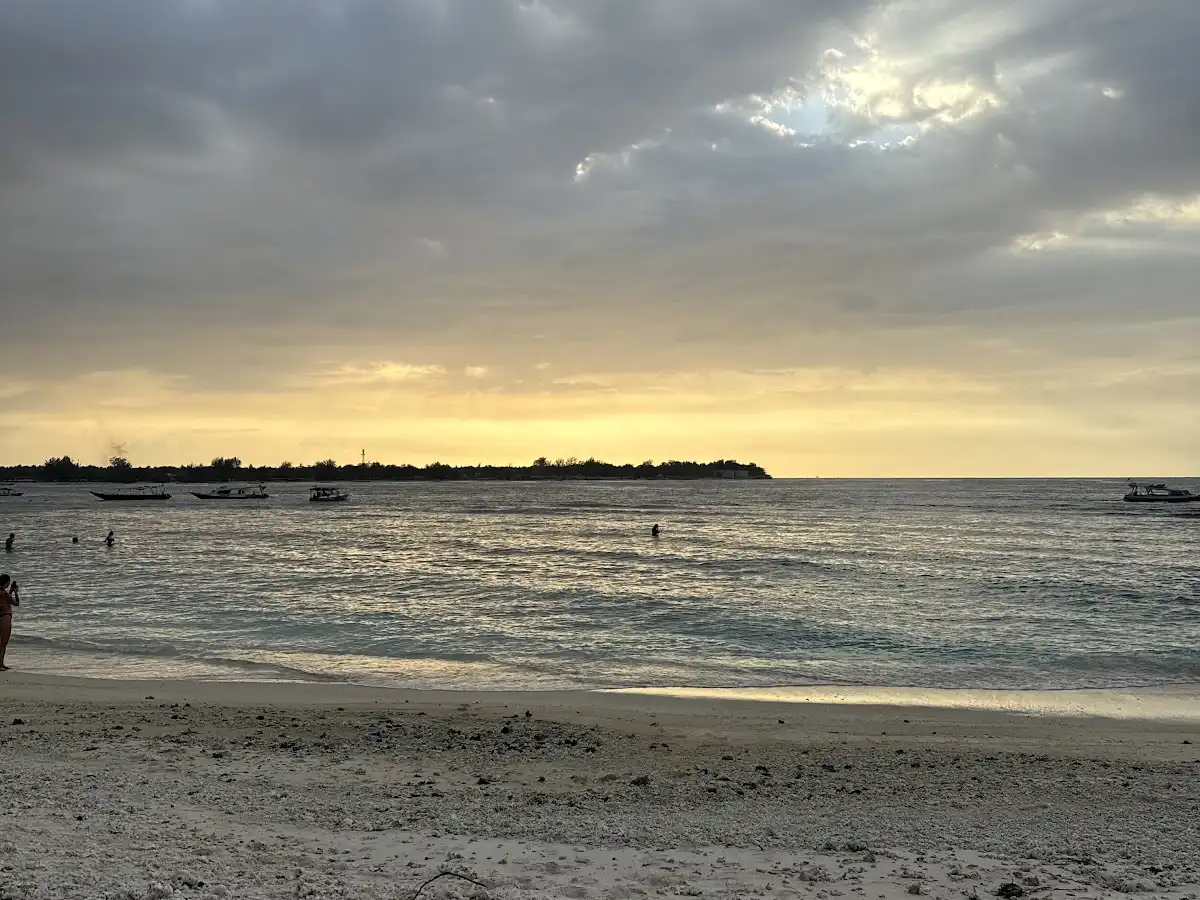
The boat cuts through turquoise water, and you feel the salt spray on your face as the engine throttles down. Three small islands materialize ahead, fringed with white sand and coconut palms. The Gili Islands sit off the northwest coast of Lombok, Indonesia, just a short ferry ride from Bali. This trio of car-free islands offers a rare combination: reef-quality snorkeling steps from shore, laid-back beach culture without the overdevelopment of Bali's south coast, and enough variety to hold your attention for a week. Gili Trawangan draws the party crowd and divers; Gili Meno appeals to those seeking quiet; Gili Air splits the difference. The trade-off is real: prices run higher than mainland Lombok, and the islands can feel crowded during peak season. But the water clarity, the absence of motorbikes, and the genuine friendliness of locals make the premium worth paying.

Discover everything you want to know in the 📖 Indonesia Travel Guide.


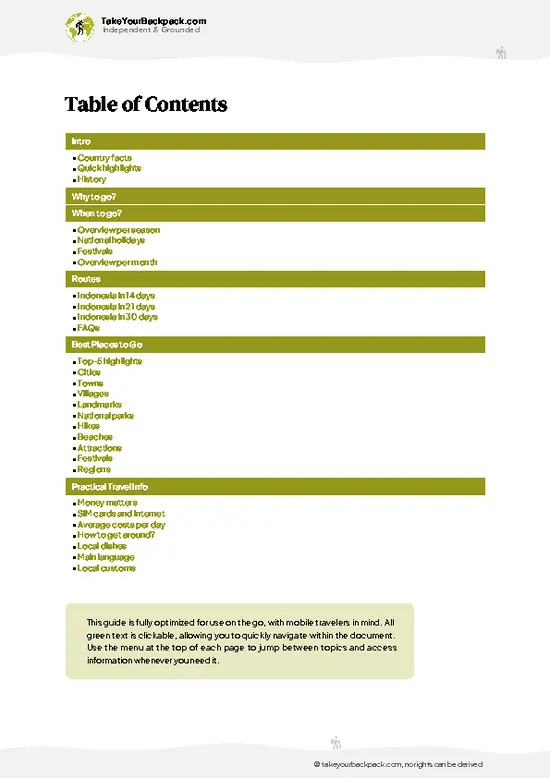
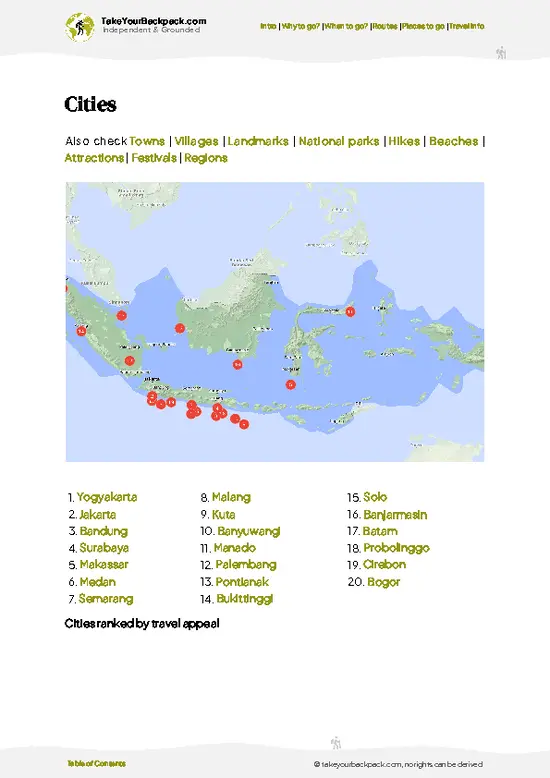
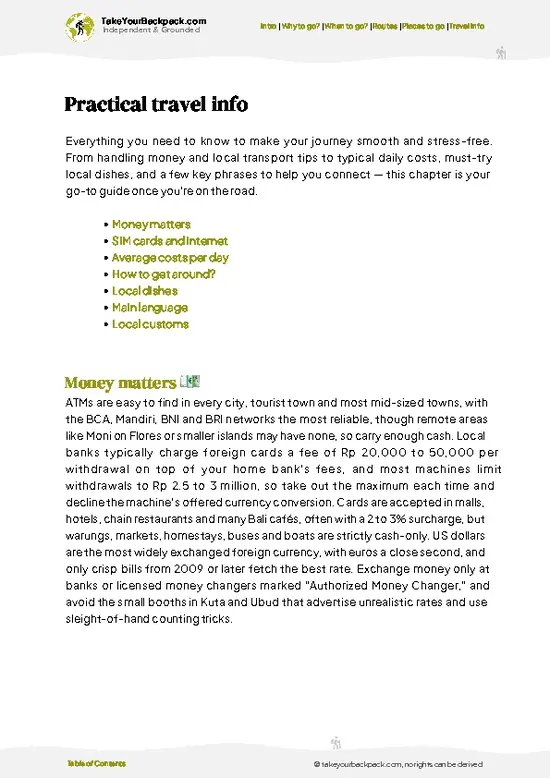
example page 0 from our offline Travel Guide for Indonesia
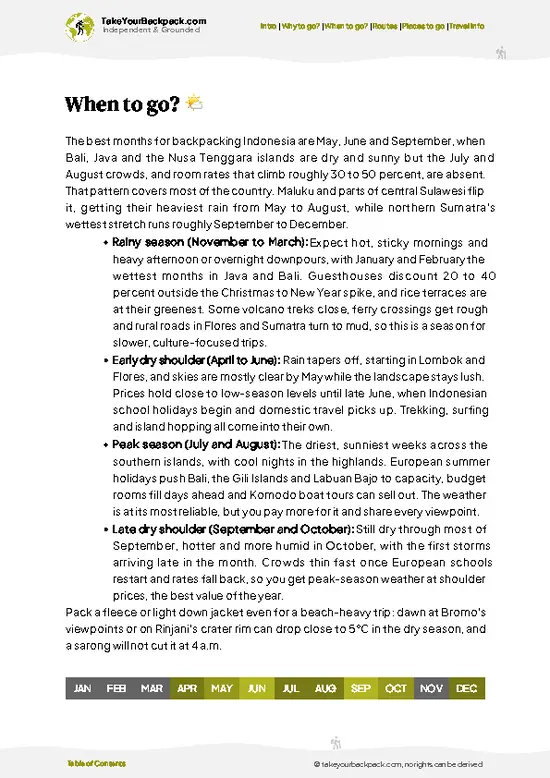
example page 1 from our offline Travel Guide for Indonesia
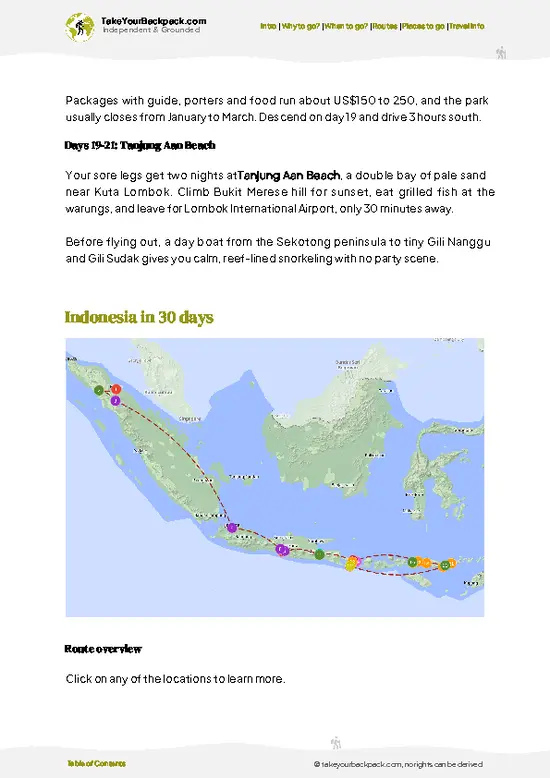
example page 2 from our offline Travel Guide for Indonesia
example page 3 from our offline Travel Guide for Indonesia
example page 4 from our offline Travel Guide for Indonesia
example page 5 from our offline Travel Guide for Indonesia
example page 6 from our offline Travel Guide for Indonesia
example page 7 from our offline Travel Guide for Indonesia
Loading the map 🌍
CLICK TO FILTER
cities
towns
villages
landmarks
national parks
hikes
beaches
attractions
festivals
regions
SHOW COUNTRY’S BESTSHOW ALL

✨ Why go?
Ranked #9 region in Indonesia
Reasons people choose to visit here

The Gili Islands reward slow travel. You can base yourself on one island and explore three without constant packing, since ferries between them cost just a few dollars and run hourly. The reef system starts in waist-deep water, so snorkeling requires no boat trip or certification. Diving is world-class if you want to go deeper, with sites like the Halik wreck and coral gardens accessible from shore. The no-vehicle rule means the islands feel fundamentally different from the rest of Indonesia: no honking, no exhaust, just footpaths and bicycles. You can mix beach time, water sports, and village exploration without the logistics headache of constant travel. The islands also sit at a sweet spot between accessibility and authenticity, close enough to Bali for easy arrival but far enough to feel genuinely separate.

💡 HighlightsEssential experiences to have while visiting Gili Islands

  1. Gili Trawangan's Turtle Point: A shallow reef where green and hawksbill turtles feed regularly. Snorkel directly from the beach on the island's east side; the turtles are accustomed to humans and often swim within arm's reach.
  2. The Halik Wreck: A Japanese patrol boat sunk during World War II, now a dive site teeming with fish and coral. The wreck sits in 12 to 16 meters of water and is accessible from all three islands.
  3. Gili Meno's Salt Lake: A hypersaline lagoon in the island's center where you float effortlessly, similar to the Dead Sea. Few tourists venture here, making it a peaceful, surreal experience.
  4. Gili Air's Sunset Beach: The western shore of Gili Air offers unobstructed sunset views and a social atmosphere without the party intensity of Trawangan. Local warungs serve cold drinks as
… read more 👉
  1. Gili Trawangan's Turtle Point: A shallow reef where green and hawksbill turtles feed regularly. Snorkel directly from the beach on the island's east side; the turtles are accustomed to humans and often swim within arm's reach.
  2. The Halik Wreck: A Japanese patrol boat sunk during World War II, now a dive site teeming with fish and coral. The wreck sits in 12 to 16 meters of water and is accessible from all three islands.
  3. Gili Meno's Salt Lake: A hypersaline lagoon in the island's center where you float effortlessly, similar to the Dead Sea. Few tourists venture here, making it a peaceful, surreal experience.
  4. Gili Air's Sunset Beach: The western shore of Gili Air offers unobstructed sunset views and a social atmosphere without the party intensity of Trawangan. Local warungs serve cold drinks as the sun drops.
  5. Coral Restoration Project at Gili Meno: Several dive operators run community-based coral restoration dives where you help replant coral fragments. It's hands-on conservation and a meaningful way to spend a dive.
  6. Gili Trawangan's Night Market: A weekly gathering of food stalls and local vendors on the main street. The grilled fish, satay, and fresh fruit smoothies are cheap and authentic, and the crowd is mostly local.
  7. Lombok Strait Dive Sites: The channel between the islands hosts pelagic life, including sharks and rays. Operators run drift dives here; the current can be strong, but the payoff is dramatic marine encounters.
  8. Gili Air's Mangrove Snorkel: A guided snorkel through shallow mangrove roots where juvenile fish shelter. It's a different ecosystem from the open reef and often overlooked by tourists.
  9. Gili Meno's Meno House Reef: A house reef that rivals Trawangan's in quality but with a fraction of the divers. Macro life and smaller fish dominate; it's ideal for photographers and those seeking solitude.
  10. Trawangan's Bike Ride to the North Point: Rent a bicycle and pedal to the island's northern tip, where a small lighthouse overlooks the Lombok Strait. The ride takes 30 minutes and passes through quiet village areas rarely seen by tourists.
I'd pick Turtle Point first. It's the easiest entry into the underwater world here, requires no certification or boat, and the turtles create a moment of genuine connection that sets the tone for the rest of your time on the islands.
Spotted a mistake or missing something? Contact us.

Things to do around Gili Islands

Ratings based on Tripadvisor reviews. When you book through this link, you support our work at no extra cost to you.

⌛️ 5 daysHow to make the most of Gili Islands

Day 1: Gili Trawangan:

Arrive by fast boat from Lombok (30 to 40 minutes from Bangsal port). Gili Trawangan is the largest and most developed of the three islands, with the best transport connections and widest range of accommodation. Spend the afternoon settling in, swimming off the main beach, and walking the island's perimeter (about 14 kilometers on foot or by cidomo, the horse-drawn cart). The evening social scene centers on beachfront bars where travelers naturally cluster.

Day 2-3: Gili Meno:

Take a local boat or cidomo to Gili Meno (15 to 20 minutes). This middle island is quieter, with fewer tourists and a slower rhythm. Snorkel directly from the beach to see turtles and reef fish, or visit the salt lake in the island's center. The trade-off is fewer restaurants and nightlife, … read more 👉
Day 1: Gili Trawangan:

Arrive by fast boat from Lombok (30 to 40 minutes from Bangsal port). Gili Trawangan is the largest and most developed of the three islands, with the best transport connections and widest range of accommodation. Spend the afternoon settling in, swimming off the main beach, and walking the island's perimeter (about 14 kilometers on foot or by cidomo, the horse-drawn cart). The evening social scene centers on beachfront bars where travelers naturally cluster.

Day 2-3: Gili Meno:

Take a local boat or cidomo to Gili Meno (15 to 20 minutes). This middle island is quieter, with fewer tourists and a slower rhythm. Snorkel directly from the beach to see turtles and reef fish, or visit the salt lake in the island's center. The trade-off is fewer restaurants and nightlife, but you gain solitude and genuine marine life encounters. Use the second day to explore the island's quiet paths and eat at family-run warungs.

Day 4-5: Gili Air:

Move to Gili Air (10 to 15 minutes by boat), the smallest and most local-feeling island. The beach here is narrower but the vibe is more grounded. Snorkel the house reef, visit the seaweed farms to understand local livelihoods, and eat fresh fish at beachside stalls. On your final day, take the morning boat back to Trawangan if you need to catch an onward ferry to Bali.

Off-Path Reward: Hire a boat for a sunset trip to an unnamed reef between the islands where few tourists venture; the coral and fish density rivals the main snorkel sites but without the crowds.

Must-Do Day: Day 2 on Gili Meno. The turtle encounters and salt lake offer experiences you cannot replicate on the other islands, and the slower pace justifies the whole trip.

🌤️ When to go?When to go for the best experience

  • Dry Season (April to October): The best window for visiting. Expect calm seas, clear water for snorkeling and diving, and daytime temperatures around 28 to 32°C (82 to 90°F). Crowds peak in July and August, and prices rise accordingly. Daylight runs roughly 12 hours year-round.
  • Wet Season (November to March): Afternoon rain is common, and seas can be choppy, making snorkeling less reliable. Temperatures hover around 26 to 30°C (79 to 86°F). Fewer tourists mean lower prices and a more relaxed vibe, though some dive sites may close on rough days.
  • Shoulder Months (March to April, September to October): A compromise: fewer crowds than peak season, still-good weather, and moderate prices.
Arrive during the dry season if snorkeling or diving is your priority; visit in the wet season if you value solitude and savings.

source: climatestotravel.comJANJanuary: fair for travelingFEBFebruary: fair for travelingMARMarch: fair for travelingAPRApril: fair for travelingMAYMay: highly recommended for travelingJUNJune: excellent for travelingJULJuly: highly recommended for travelingAUGAugust: highly recommended for travelingSEPSeptember: highly recommended for travelingOCTOctober: fair for travelingNOVNovember: fair for travelingDECDecember: fair for traveling
indonesia-region-gili-islands
© Google |

✈️ The backpacker research shortcutIndonesia Travel Guide

An offline-friendly backpacking guide with optimized travel routes, ranked highlights, transport advice, and the best areas to stay.
example page 0 from our offline Travel Guide for Indonesia
example page 1 from our offline Travel Guide for Indonesia
example page 2 from our offline Travel Guide for Indonesia
example page 3 from our offline Travel Guide for Indonesia
example page 4 from our offline Travel Guide for Indonesia
example page 5 from our offline Travel Guide for Indonesia
example page 6 from our offline Travel Guide for Indonesia
example page 7 from our offline Travel Guide for Indonesia
The digital guide (460 pages) contains:
✅ 153 highlights, ranked by travel appeal
✅ Optimized 14, 21 & 30-day travel routes
✅ Cities, national parks, landmarks, beaches
✅ How to get around
✅ Offline-friendly for travel without Wi-Fi
👉 Click to see all 30+ guide features

📅 Plan smarter in minutes, not weeks
✅ Month by month travel advice
✅ Festivals & national holidays
✅ Budget expectations

🗺️ Go to the right places, skip the overrated ones
✅ Honest pros & cons of destinations
✅ Top hikes, parks & viewpoints
✅ Lesser-known places most travelers miss
✅ Clear “worth it vs skip it” guidance

🛏️ Travel smoothly without rookie mistakes
✅ Best areas to stay
✅ Transport systems explained simply
✅ Common scams & safety advice
✅ SIM cards, money & practical tips

🌍 Understand the country, not just visit it
✅ Culture & traditions
✅ 52 Essential phrases & customs
✅ Festivals worth planning around
✅ Traveler-friendly historical context
✅ Insights that make places more meaningful

📱 Built for real travel conditions
✅ Fully downloadable PDF
✅ Works completely offline
✅ Optimized for phone use
✅ Useful in remote areas & buses
✅ Everything in one place
Stop searching, start planning
Get instant access to your full guide. 30‑day money-back guarantee.
+ Add another guide for just

By proceeding you agree to our terms.
Sent to your inbox immediately after payment • 100% Secure Checkout
Best Backpacking Travel Advisor 2025 tourism awardBest Backpacking
Travel Advisor
2025
What others say about Take Your Backpack Guides:
⭐⭐⭐⭐⭐
Fantastic, amazing amount of information!
⭐⭐⭐⭐⭐
My goodness this is amazing, it's what I've been looking for hats off too you!
⭐⭐⭐⭐⭐
I think this is absolutely BRILLIANT
⭐⭐⭐⭐
Very complete and informative. It's still missing places, but I gotta to commend you
⭐⭐⭐⭐⭐
This is truly amazing, thank you, can't wait to explore it with my kids!
⭐⭐⭐⭐⭐
Awesome resource, thank you!
⭐⭐⭐⭐⭐
This is amazing! Can't wait to explore the ones I haven't seen
⭐⭐⭐⭐
I love this! Well done, great idea.
⭐⭐⭐⭐⭐
Thanks for taking the time to make this gem!
⭐⭐⭐⭐⭐
This might be the best website I've ever seen.
⭐⭐⭐⭐⭐
Congratulations, and thank you so much for your work; it's incredibly valuable.
⭐⭐⭐⭐
In all seriousness I think you did a great job pointing out the important spots
⭐⭐⭐⭐⭐
10/10 very good
⭐⭐⭐⭐⭐
As someone who's only just starting to visit regularly this is awesome, thank you.
⭐⭐⭐⭐
Thank you very much! I'm going to visit my dad, it's going to be very useful!
⭐⭐⭐⭐⭐
This is really cool! We'll be travelling for the first time and this definitely come in handy.
⭐⭐⭐⭐⭐
You are now our minister of culture, congratulations 👨‍💼
⭐⭐⭐⭐⭐
Just wanted to tell you that this is a pearl! Going to follow your recommendations.
⭐⭐⭐⭐⭐
This is so cool. I'll definitely be using the resource for my travels soon.
⭐⭐⭐⭐⭐
This is very impressive! Good work.
⭐⭐⭐⭐⭐
This is an amazing and informative site. Very well done!

🛏️ Where to stay?Best areas to stay in Indonesia

Gili Trawangan is the social hub and best base for first-timers or those seeking nightlife and restaurant variety. The main beach strip has the highest concentration of budget hostels and guesthouses, with dorm beds from US$8 to 15 per night and private rooms from US$15 to 30. Transport connections are strongest here, and you can reach Gili Meno and Gili Air by short boat rides.

Gili Meno suits travelers seeking calm and fewer tourists. Accommodation is more scattered and basic, with guesthouses at US$12 to 25 per night. The trade-off is fewer dining options and less nightlife, but the island … read more 👉
Gili Trawangan is the social hub and best base for first-timers or those seeking nightlife and restaurant variety. The main beach strip has the highest concentration of budget hostels and guesthouses, with dorm beds from US$8 to 15 per night and private rooms from US$15 to 30. Transport connections are strongest here, and you can reach Gili Meno and Gili Air by short boat rides.

Gili Meno suits travelers seeking calm and fewer tourists. Accommodation is more scattered and basic, with guesthouses at US$12 to 25 per night. The trade-off is fewer dining options and less nightlife, but the island feels genuinely quieter and more connected to local rhythms.

Gili Air balances social energy with local character. Budget lodging ranges from US$10 to 20 per night, and the beach is walkable end-to-end in under an hour. It attracts a mix of backpackers and longer-term travelers, making it a sweet spot for those who want community without Trawangan's intensity.

🚌 Getting aroundHow to get around Gili Islands

From the ferry terminal on Lombok, a shuttle or ojek (motorcycle taxi) takes you to the harbor in Bangsal (15 to 20 minutes, US$3 to 5). From there, public ferries depart for the Gili Islands roughly every hour. Most backpackers move between islands and towns using a combination of ferries and bicycles, which is reliable and cheap.

  • Public Ferries Between Islands: Hourly boats connect Gili Trawangan, Gili Meno, and Gili Air. Cost is US$2 to 3 per trip, journey time 20 to 40 minutes depending on route, and comfort is basic but functional. Frequency is high, so schedules are flexible.
  • Speedboat Charters: Private or semi-private boats cut travel time to 10 to 15 minutes between islands and cost US$8 to 15 per person. Use these if you're short on time or traveling with a group.
  • Bicycle Rental: Every
… read more 👉
From the ferry terminal on Lombok, a shuttle or ojek (motorcycle taxi) takes you to the harbor in Bangsal (15 to 20 minutes, US$3 to 5). From there, public ferries depart for the Gili Islands roughly every hour. Most backpackers move between islands and towns using a combination of ferries and bicycles, which is reliable and cheap.

  • Public Ferries Between Islands: Hourly boats connect Gili Trawangan, Gili Meno, and Gili Air. Cost is US$2 to 3 per trip, journey time 20 to 40 minutes depending on route, and comfort is basic but functional. Frequency is high, so schedules are flexible.
  • Speedboat Charters: Private or semi-private boats cut travel time to 10 to 15 minutes between islands and cost US$8 to 15 per person. Use these if you're short on time or traveling with a group.
  • Bicycle Rental: Every island rents bicycles for US$2 to 4 per day. Flat terrain and short distances make cycling the primary way to explore each island. Comfort is high, cost is minimal, and you move at your own pace.
  • Walking: All three islands are small enough to walk end-to-end in 45 minutes to an hour. Cost is zero, comfort depends on heat and your fitness, and it's the best way to stumble on local spots.
  • Ojek (Motorcycle Taxi): Available on Trawangan and Air for short hops; cost is US$1 to 2 per ride. Speed is fast, but comfort is cramped, and they're unnecessary given the islands' small size.
Rent a bicycle on arrival and use it as your base transport. Ferries run frequently enough that you don't need to plan ahead; just walk to the dock and catch the next boat.

🍲 FoodEating & Drinking in Gili Islands

The Gili Islands' food reflects Lombok's coastal culture. Grilled fish is the staple, sold at night markets and beachfront warungs, often caught that morning and cooked over charcoal. Satay (grilled meat skewers with peanut sauce) and lumpia (fried spring rolls) are ubiquitous street foods. Nasi goreng and mie goreng (fried rice and noodles) are cheap, filling breakfast options. Fresh tropical fruit smoothies made with mango, papaya, and banana cost US$1 to 2 and are refreshing in the heat. Eating happens at night markets (especially on Trawangan), casual warungs (small family-run restaurants), and beachfront shacks. Meals cost US$2 to 5 for a full plate. Local etiquette is relaxed; eat with your right hand or utensils, and it's normal to point at what you want if language is a barrier. Alcohol … read more 👉
The Gili Islands' food reflects Lombok's coastal culture. Grilled fish is the staple, sold at night markets and beachfront warungs, often caught that morning and cooked over charcoal. Satay (grilled meat skewers with peanut sauce) and lumpia (fried spring rolls) are ubiquitous street foods. Nasi goreng and mie goreng (fried rice and noodles) are cheap, filling breakfast options. Fresh tropical fruit smoothies made with mango, papaya, and banana cost US$1 to 2 and are refreshing in the heat. Eating happens at night markets (especially on Trawangan), casual warungs (small family-run restaurants), and beachfront shacks. Meals cost US$2 to 5 for a full plate. Local etiquette is relaxed; eat with your right hand or utensils, and it's normal to point at what you want if language is a barrier. Alcohol is available but expensive compared to mainland Indonesia; local beer costs US$2 to 3 per bottle. Coffee culture is strong; ask for kopi tubruk (strong, unfiltered coffee) at any warung for under US$1.

FAQFrequently asked questions about Gili Islands

Five to seven days is ideal. Spend two to three days on Gili Trawangan for diving and snorkeling, one full day on Gili Meno for the Salt Lake and quiet reef, and one to two days on Gili Air for a middle-ground vibe. This allows time to explore each island's character without rushing.
Ferries run hourly between the three islands, costing US$2 to 3 per trip and taking 20 to 40 minutes depending on route. Bicycles are the primary transport on each island, renting for US$2 to 4 per day. Walking is also practical since each island is small enough to cross on foot in under an hour.
The Gili Islands are known for world-class snorkeling and diving, particularly the Halik Wreck and Turtle Point reef. They're also famous for being car-free, creating a uniquely peaceful atmosphere compared to the rest of Indonesia. The islands attract divers, snorkelers, and backpackers seeking a slower pace with reliable water access.
⚠️ Things can change over time, so always validate details locally before you go.

Other Indonesian regions near Gili Islands

Explore more nearby:

  • Gili Nanggu—Nanggu islet, house reef, Sekotong boats, palm-fringed sand| 41 km away
  • Lombok—Mount Rinjani, Kuta beaches, Sasak villages, southern surf| 45 km away
  • Gili Layar—Southwest Lombok islet, white sand, day trips, clear shallows| 45 km away

💡 Not sure where to go next?
Create a personalized itinerary for Indonesia including Gili Islands and the places that fit your trip.

Generate my itinerary

👉 Discover all regions

Or checkout all Indonesia has to offer (think cities, towns, villages, national parks, hikes, beaches, festivals)
Country photo of Indonesia

We 💚 feedbackFinal thoughts on visiting Gili Islands

The Gili Islands deliver what few places in Indonesia still do: genuine reef snorkeling, a car-free pace, and a social backpacker scene without feeling manufactured. The catch is cost; expect to pay 30 to 50 percent more than mainland Lombok for food and accommodation. If you value clear water, easy diving, and a slower rhythm, the premium is worth it.

✈️ When did I visit Indonesia?
As part of my 1.5 year travel around the world trip, I visited Indonesia twice (and it was worth it): first in September 2015 and a bit later again in January and February 2016.

✍️ Help improve this page!
The information on this page is based on my own backpacking experience in Indonesia, supplemented with up-to-date research and feedback from other travelers. Travel details can change, so if you notice anything outdated or incomplete, feel free to let me know.


🙋‍♂️ Give feedback

👋 Meet the founderWho’s Behind Take Your Backpack?

Johan, backpacker and founder of TakeYourBackpackHi, I’m Johan (Netherlands 🇳🇱), the creator of TakeYourBackpack. Over the past 3 decades, I’ve backpacked through 90+ countries across six continents, gaining extensive experience with independent travel, long-term trips, and overland routes.

This site is built on a combination of firsthand travel experience and carefully curated insights from other backpackers. Many guides are based on places I’ve personally visited, while others bring together tips, observations, and practical advice shared by trusted travelers I’ve met along the way.

The goal is to provide realistic, experience-driven guidance — not generic itineraries — so you can explore destinations with better context, clearer expectations, and more confidence.