×

Indonesia🇮🇩 | citiesManokwariCenderawasih Bay, rainforest hills, missionary sites | things to do and best time to go

Explore TualExplore Merauke

Backpacking in Manokwari
👀 For curious travelerscity ranked #43
By Johan Kruseman 🇳🇱 | Updated June 1, 2026

Your flip-flops slap against wet concrete as the call to prayer threads over the harbor, clashing with the thump of distant karaoke and the smell of clove cigarettes and fried pisang goreng. This is Manokwari, on the north coast of West Papua, far off Indonesia’s usual backpacker loop. It’s scruffy, humid, and more about everyday Papuan life than sights, though the Japanese WWII caves, Mansinam Island, and nearby Arfak Mountains are genuinely worth your time. Travel here is slower, English is rare, and you’ll see almost no other foreigners, which can feel isolating if you’re used to Bali-style hostels but also makes every shared bemo ride or warung chat feel like a small win. It’s cheap, reasonably safe if you stay street-smart at night, and compared with Sorong or Jayapura it’s less chaotic, more small-town port with a side of edge.

Discover everything you want to know in the 📖 Indonesia Travel Guide.
Loading the map 🌍
CLICK TO FILTER
cities
towns
landmarks
national parks
hikes
beaches
attractions
festivals
regions
SHOW COUNTRY’S BESTSHOW ALL

✨ Why go?
Ranked #43 city in Indonesia
What sets this place apart

Manokwari is a strategic basecamp for backpackers exploring West Papua. It offers a mix of affordable hostels and local eateries that keep your budget in check while providing a taste of authentic Indonesian life. The city’s walkability makes it easy to navigate, whether you’re hunting for street food or planning your next adventure. With a vibrant nightlife scene, you can unwind after a day of exploration. Plus, it’s a convenient jumping-off point for day trips to stunning natural sites. If you’re looking for a place that balances comfort and adventure, Manokwari is worth your time.
Want to include Manokwari in your Indonesia route?
Create a personalized Indonesia itinerary that includes Manokwari and the places that fit your trip — based on your travel style, budget, and available time. Get your route in seconds.

Generate my trip

💡 HighlightsTop highlights of Manokwari

  • Museum Negeri Provinsi Papua Barat (West Papua State Museum) — The best place to get oriented: displays of Arfak and other Papua tribes, colonial-era artifacts, and regional natural history that explain why Manokwari looks and feels the way it does.
  • Pantai Sanggeng (Sanggeng Beach) — A short walk from the city center, this sandy bay is where locals gather for sunsets, street-food stalls, and low-key coastal life; good for people-watching and an easy evening stroll.
  • Manokwari Waterfront & Fish Market (pelabuhan/dermaga area) — The working harbor area is alive early in the morning: boats, fresh fish, and traders. It’s a raw, sensory way to see the city’s connection to the sea and local livelihoods.
  • Teluk Doreri (Doreri Bay) and nearby wartime relics — Mangrove-lined bay within the city’s
read more 👉
  • Museum Negeri Provinsi Papua Barat (West Papua State Museum) — The best place to get oriented: displays of Arfak and other Papua tribes, colonial-era artifacts, and regional natural history that explain why Manokwari looks and feels the way it does.
  • Pantai Sanggeng (Sanggeng Beach) — A short walk from the city center, this sandy bay is where locals gather for sunsets, street-food stalls, and low-key coastal life; good for people-watching and an easy evening stroll.
  • Manokwari Waterfront & Fish Market (pelabuhan/dermaga area) — The working harbor area is alive early in the morning: boats, fresh fish, and traders. It’s a raw, sensory way to see the city’s connection to the sea and local livelihoods.
  • Teluk Doreri (Doreri Bay) and nearby wartime relics — Mangrove-lined bay within the city’s coastal fringe where you can still find remnants and memorials from the WWII era and Dutch missionary period, plus quiet boardwalks and coastal views.
  • Bukit Arfai (Arfai Hill) viewpoint — A short climb/drive gives sweeping views over Manokwari bay and the city; great for sunrise/sunset photos and to get a geographic sense of the place.
  • Taman Budaya Saereri (Saereri Cultural Center) — The city’s main cultural venue for performances, traditional craft displays, and occasional festivals — your chance to see contemporary Papuan culture staged locally.
  • Universitas Papua (UNIPA) campus — More than a university: a hub of student life, small museums/exhibits, and viewpoints. Walking the campus lets you meet locals, see student art, and watch informal gatherings that reflect modern West Papuan life.
  • Pasar Wosi / Central Wet Market — The wet market is where food culture happens: tropical fruits, sago, spices, and regional produce. Visiting early gives an authentic taste of daily trade and local ingredients.
  • Taman Makam Pahlawan (Heroes’ Cemetery) and local memorials — Small memorial parks and cemeteries around the city commemorate wartime and national history; quiet, reflective places that tell another layer of Manokwari’s past.
  • Rendani Airport area (viewpoints & WWII history) — The airport is part of the city’s story: aircraft-spotting, nearby vantage points, and reminders of the area’s strategic role in the 20th century make for a short, tangible stop.
A few excellent day trips just outside Manokwari are Mansinam Island (historic missionary landing and snorkeling), the Arfak Mountains (birdwatching and village treks), and Warmare Beach; Mansinam is my personal favorite for its easy access from the city and strong mix of history and shoreline views.
Spotted a mistake or missing something? Contact us.

🏘️ NeighborhoodsNeighborhood guide to Manokwari

Manokwari offers a unique blend of culture and nature, making it a fascinating stop for backpackers.

Downtown Manokwari: This is the heart of the city. Expect a lively atmosphere with local markets and eateries. It’s walkable and budget-friendly, perfect for short stays. Nightlife is low-key, with a few bars and cafes.

Pantai Pasir Putih: A quieter coastal area ideal for relaxation. The vibe is laid-back, with stunning beach views. Accommodation here can be pricier, but it’s worth it for the scenery. Great for longer stays if you want to unwind.

Kota Baru: A mix of residential and commercial spaces. It’s less touristy, offering a more authentic experience. Transport links are decent, making it easy to explore. Suitable for those looking to immerse themselves in local life.

⌛️ 1 daySeeing the highlights in 24 hours

Manokwari, the capital of West Papua, is a vibrant blend of culture and nature, where the lush landscape meets the rich traditions of the indigenous Papuan people. Start your day with a visit to the local market in the heart of the city. The bustling stalls offer fresh produce, spices, and handmade crafts. It’s a sensory overload, but that’s where the magic lies. Grab a traditional breakfast of papeda, a starchy dish that pairs perfectly with fish.

In the afternoon, head to the beautiful Pasir Putih Beach. It’s a local favorite, where you can relax on the sand or take a dip in the clear waters. If you’re feeling adventurous, rent a kayak to explore the nearby mangroves. This isn’t on the typical tourist path, but it’s a slice of paradise that reveals the area’s natural beauty.

As the sun … read more 👉
Manokwari, the capital of West Papua, is a vibrant blend of culture and nature, where the lush landscape meets the rich traditions of the indigenous Papuan people. Start your day with a visit to the local market in the heart of the city. The bustling stalls offer fresh produce, spices, and handmade crafts. It’s a sensory overload, but that’s where the magic lies. Grab a traditional breakfast of papeda, a starchy dish that pairs perfectly with fish.

In the afternoon, head to the beautiful Pasir Putih Beach. It’s a local favorite, where you can relax on the sand or take a dip in the clear waters. If you’re feeling adventurous, rent a kayak to explore the nearby mangroves. This isn’t on the typical tourist path, but it’s a slice of paradise that reveals the area’s natural beauty.

As the sun sets, make your way to the waterfront promenade. Enjoy dinner at a local seafood restaurant, where the catch of the day is always fresh. The atmosphere is lively, and you’ll find yourself immersed in the warmth of the community. This day in Manokwari is not just about sights; it’s about connecting with the heart of the place.
Turn your Manokwari visit into an Indonesia adventure
Build a complete Indonesia route with Manokwari, hidden gems, must-see destinations, and realistic travel times included.

Generate my trip

🌤️ When to go?When to go for the best experience


  • Topic: Weather – Manokwari’s tropical climate means heavy rain from November to March, making trails slippery and travel slower. The dry season, April to October, offers clearer skies and easier hiking conditions.

  • Topic: Temperature – Expect steady warmth year-round, averaging 26–30°C (79–86°F). Nights cool slightly but rarely drop below 22°C (72°F), so pack light layers.

  • Topic: Daylight Hours – Roughly 12 hours of daylight year-round, with sunrise around 6 AM and sunset near 6 PM, giving you consistent daylight for planning daily treks or beach time.

  • Topic: Crowds – Tourist traffic peaks during the dry season, especially July and August, so expect busier trails and higher accommodation prices then.

  • Topic: Seasonal Activities – Dry months are best for diving, trekking, and cultural
read more 👉

  • Topic: Weather – Manokwari’s tropical climate means heavy rain from November to March, making trails slippery and travel slower. The dry season, April to October, offers clearer skies and easier hiking conditions.

  • Topic: Temperature – Expect steady warmth year-round, averaging 26–30°C (79–86°F). Nights cool slightly but rarely drop below 22°C (72°F), so pack light layers.

  • Topic: Daylight Hours – Roughly 12 hours of daylight year-round, with sunrise around 6 AM and sunset near 6 PM, giving you consistent daylight for planning daily treks or beach time.

  • Topic: Crowds – Tourist traffic peaks during the dry season, especially July and August, so expect busier trails and higher accommodation prices then.

  • Topic: Seasonal Activities – Dry months are best for diving, trekking, and cultural festivals, while the wet season limits outdoor options but offers lush landscapes and fewer tourists.

  • Topic: Price Fluctuations – Accommodation and flights spike in the dry season’s peak months; traveling shoulder months like April or September can save money without sacrificing weather quality.


Pro-tip: Aim for the shoulder dry season—April or September—to balance good weather, manageable crowds, and better prices, turning your trip into a strategic win.


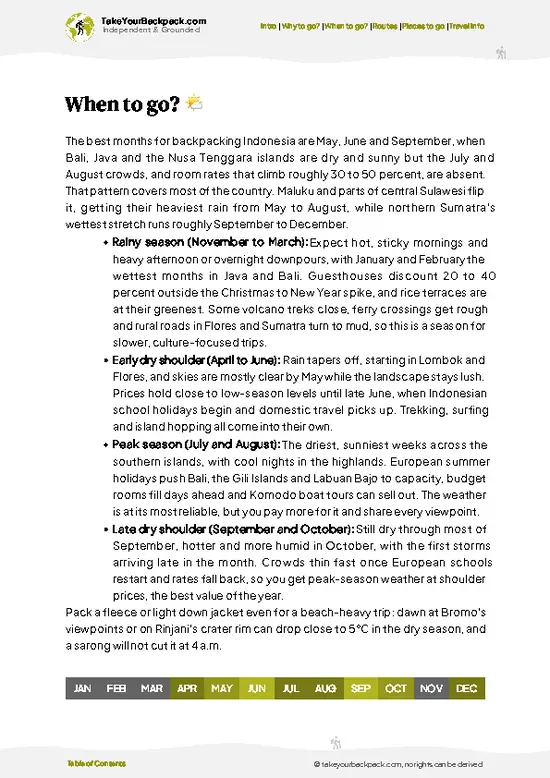
source: climatestotravel.comJANJanuary: fair for travelingFEBFebruary: fair for travelingMARMarch: fair for travelingAPRApril: highly recommended for travelingMAYMay: highly recommended for travelingJUNJune: highly recommended for travelingJULJuly: good for travelingAUGAugust: good for travelingSEPSeptember: highly recommended for travelingOCTOctober: highly recommended for travelingNOVNovember: fair for travelingDECDecember: fair for traveling
when-to-go

✈️ The backpacker research shortcutIndonesia Travel Guide

An offline-friendly backpacking guide with optimized travel routes, ranked highlights, transport advice, and the best areas to stay.
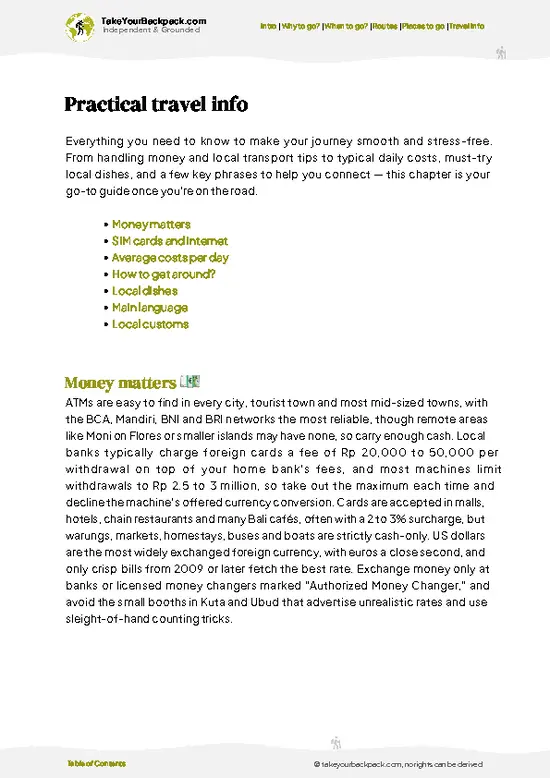
example page 0 from our offline Travel Guide for Indonesiaexample page 1 from our offline Travel Guide for Indonesiaexample page 2 from our offline Travel Guide for Indonesiaexample page 3 from our offline Travel Guide for Indonesiaexample page 4 from our offline Travel Guide for Indonesiaexample page 5 from our offline Travel Guide for Indonesiaexample page 6 from our offline Travel Guide for Indonesiaexample page 7 from our offline Travel Guide for Indonesia
The digital guide (550 pages) contains:
155 highlights, ranked by travel appeal
Optimized 14, 21 & 30-day travel routes
Cities, national parks, landmarks, beaches
How to get around
Offline-friendly for travel without Wi-Fi
👉 Click to see all 30+ guide features

📅 Plan smarter in minutes, not weeks
Month by month travel advice
Festivals & national holidays
Budget expectations

🗺️ Go to the right places, skip the overrated ones
Honest pros & cons of destinations
Top hikes, parks & viewpoints
Lesser-known places most travelers miss
Clear “worth it vs skip it” guidance

🛏️ Travel smoothly without rookie mistakes
Best areas to stay
Transport systems explained simply
Common scams & safety advice
SIM cards, money & practical tips

🌍 Understand the country, not just visit it
Culture & traditions
52 Essential phrases & customs
Festivals worth planning around
Traveler-friendly historical context
Insights that make places more meaningful

📱 Built for real travel conditions
Fully downloadable PDF
Works completely offline
Optimized for phone use
Useful in remote areas & buses
Everything in one place
Save weeks of stressful planning
Get instant access to your full guide. 30‑day money-back guarantee.


By proceeding you agree to our terms.
Sent to your inbox immediately after payment • 100% Secure Checkout
Best Backpacking Travel Advisor 2025 tourism awardBest Backpacking
Travel Advisor
2025
What others say about Take Your Backpack Guides:
⭐⭐⭐⭐⭐
Fantastic, amazing amount of information!
⭐⭐⭐⭐⭐
My goodness this is amazing, it's what I've been looking for hats off too you!
⭐⭐⭐⭐⭐
I think this is absolutely BRILLIANT
⭐⭐⭐⭐
Very complete and informative. It's still missing places, but I gotta to commend you
⭐⭐⭐⭐⭐
This is truly amazing, thank you, can't wait to explore it with my kids!
⭐⭐⭐⭐⭐
Awesome resource, thank you!
⭐⭐⭐⭐⭐
This is amazing! Can't wait to explore the ones I haven't seen
⭐⭐⭐⭐
I love this! Well done, great idea.
⭐⭐⭐⭐⭐
Thanks for taking the time to make this gem!
⭐⭐⭐⭐⭐
This might be the best website I've ever seen.
⭐⭐⭐⭐⭐
Congratulations, and thank you so much for your work; it's incredibly valuable.
⭐⭐⭐⭐
In all seriousness I think you did a great job pointing out the important spots
⭐⭐⭐⭐⭐
10/10 very good
⭐⭐⭐⭐⭐
As someone who's only just starting to visit regularly this is awesome, thank you.
⭐⭐⭐⭐
Thank you very much! I'm going to visit my dad, it's going to be very useful!
⭐⭐⭐⭐⭐
This is really cool! We'll be travelling for the first time and this definitely come in handy.
⭐⭐⭐⭐⭐
You are now our minister of culture, congratulations 👨‍💼
⭐⭐⭐⭐⭐
Just wanted to tell you that this is a pearl! Going to follow your recommendations.
⭐⭐⭐⭐⭐
This is so cool. I'll definitely be using the resource for my travels soon.
⭐⭐⭐⭐⭐
This is very impressive! Good work.
⭐⭐⭐⭐⭐
This is an amazing and informative site. Very well done!

🛏️ Where to stay?Best areas to stay in Indonesia

Manokwari’s best backpacker zone centers around the city’s waterfront district and the adjacent downtown core. This area strikes a smart balance: it’s safe enough to wander after dark, lively enough to meet fellow travelers, and packed with budget hostels that cater to solo adventurers. You’ll find a mix of local markets, street food stalls, and casual hangouts that keep the vibe social without the touristy overload. Compared to the quieter residential neighborhoods, this spot offers more energy and easier access to transport hubs, making it a strategic base for exploring West Papua without sacrificing comfort or breaking the bank.

🚌 Getting aroundGetting around like a local

Manokwari moves at its own rhythm—neither a frantic rush nor a laid-back drift. It’s a city where schedules exist but bend to local intuition, where timing is a flexible dance rather than a strict march. You’ll find that getting around here means balancing patience with savvy, knowing when to wait and when to jump on the next ride. The trade-off between time, money, and comfort is clear: cheaper options demand more time and tolerance, while faster, more comfortable rides come at a premium. Understanding this flow lets you play the system smartly, turning transit into a strategic advantage rather than a hassle.


  • Walking: The ultimate budget choice—free, flexible, and immersive. Manokwari’s compact center makes walking practical, though tropical heat and occasional rain can slow you down.
read more 👉
Manokwari moves at its own rhythm—neither a frantic rush nor a laid-back drift. It’s a city where schedules exist but bend to local intuition, where timing is a flexible dance rather than a strict march. You’ll find that getting around here means balancing patience with savvy, knowing when to wait and when to jump on the next ride. The trade-off between time, money, and comfort is clear: cheaper options demand more time and tolerance, while faster, more comfortable rides come at a premium. Understanding this flow lets you play the system smartly, turning transit into a strategic advantage rather than a hassle.


  • Walking: The ultimate budget choice—free, flexible, and immersive. Manokwari’s compact center makes walking practical, though tropical heat and occasional rain can slow you down.

  • Angkot (Shared Minivan): Runs roughly from 6 AM to 6 PM, fares around IDR 5,000–10,000. Slow and crowded but dirt cheap and a great way to experience local life. Expect frequent stops and no fixed schedule.

  • Ojek (Motorcycle Taxi): Available all day, fares vary but start at about IDR 10,000 for short trips. Fast and nimble through traffic, offering a balance between speed and cost, though comfort is minimal and safety varies.

  • Taxi (Metered or Fixed Fare): Less common and pricier, starting around IDR 50,000 for short rides. Offers comfort and direct routes but often requires negotiation and can be scarce outside peak hours.

👛 Costs (as of 18 December 2024)Travel costs and budget guide for Manokwari

Backpacking in Manokwari, Indonesia, offers a clear trade-off between cost and comfort, with prices reflecting its status as a less touristy, off-the-beaten-path destination.
  • Dorm Accommodation (High Season): Expect to pay around $10-$15 per night for a bed in a basic dormitory. High season sees a slight uptick due to limited availability, but it remains affordable compared to more popular Indonesian cities.
  • Dorm Accommodation (Off-Season): Prices drop to about $7-$10 per night. Off-season means fewer travelers, so you can negotiate or find quieter spots with better conditions.
  • Meals: Local warungs (small eateries) serve filling meals for $1.50-$3.50. Western-style or tourist-targeted restaurants push that to $5-$8. Street food is your best bet for budget and authentic flavor.
  • Local Transport:
read more 👉
Backpacking in Manokwari, Indonesia, offers a clear trade-off between cost and comfort, with prices reflecting its status as a less touristy, off-the-beaten-path destination.
  • Dorm Accommodation (High Season): Expect to pay around $10-$15 per night for a bed in a basic dormitory. High season sees a slight uptick due to limited availability, but it remains affordable compared to more popular Indonesian cities.
  • Dorm Accommodation (Off-Season): Prices drop to about $7-$10 per night. Off-season means fewer travelers, so you can negotiate or find quieter spots with better conditions.
  • Meals: Local warungs (small eateries) serve filling meals for $1.50-$3.50. Western-style or tourist-targeted restaurants push that to $5-$8. Street food is your best bet for budget and authentic flavor.
  • Local Transport: Short rides on motorbike taxis (ojeks) cost roughly $0.50-$1.50 depending on distance. Renting a scooter for the day runs about $7-$10, giving you freedom but requiring confidence in local traffic.
  • City Transport Pass: Manokwari doesn’t have a formal city transport pass system. Most travel is by ojeks or walking, so budget accordingly for individual rides.
  • Basic Activities/Entry Fees: Entry to local attractions or cultural sites typically costs between $1 and $3. Guided tours or special excursions can push this higher but remain reasonable.
  • Miscellaneous Expenses: Budget $1-$3 daily for bottled water, snacks, or small essentials. Internet cafes or SIM cards are cheap, around $2-$5 for decent data packages.

All told, a realistic daily budget for backpacking in Manokwari ranges from about $15 on the leanest days to $30 if you lean into a bit more comfort or explore more activities. The key trade-off here is between simplicity and convenience—spend less by embracing local transport and street food, or pay a bit more for ease and variety. Either way, Manokwari rewards those who plan with a clear sense of what they’re trading off.


source: indonesia.travel
⚠️ Prices can change and everyone travels differently, so take this as a rough guide. Hope it helps you plan your adventure!

🚌 Day tripsEasy escapes and nearby places

Manokwari, Indonesia, is a fantastic base for day trips that blend adventure with cultural immersion. Here are some standout options that make the most of your time and budget.

Raja Ampat Snorkeling Adventure
Just a few hours by boat, Raja Ampat offers some of the world’s best snorkeling. The vibrant coral reefs teem with life, and you’ll feel like you’ve stepped into an aquarium. Expect to spend around $30 for a day trip, including gear rental. The best time to go is during the dry season, from October to April. A common mistake is underestimating the boat ride; it can be bumpy, so pack seasickness meds just in case.


Cultural Day in Mansinam Island
A quick 30-minute boat ride takes you to Mansinam Island, where you can explore local villages and learn about the history of Christianity … read more 👉
Manokwari, Indonesia, is a fantastic base for day trips that blend adventure with cultural immersion. Here are some standout options that make the most of your time and budget.

Raja Ampat Snorkeling Adventure
Just a few hours by boat, Raja Ampat offers some of the world’s best snorkeling. The vibrant coral reefs teem with life, and you’ll feel like you’ve stepped into an aquarium. Expect to spend around $30 for a day trip, including gear rental. The best time to go is during the dry season, from October to April. A common mistake is underestimating the boat ride; it can be bumpy, so pack seasickness meds just in case.


Cultural Day in Mansinam Island
A quick 30-minute boat ride takes you to Mansinam Island, where you can explore local villages and learn about the history of Christianity in Papua. The island is dotted with traditional houses and offers stunning views of Manokwari. Budget about $10 for the boat and lunch. The dry season is ideal for clear skies. First-timers often miss the local markets, which are a great way to connect with the community.


Hiking to the Arfak Mountains
A day hike in the Arfak Mountains is a must for nature lovers. Just an hour’s drive from Manokwari, the trails lead you through lush forests and offer breathtaking views. Expect to spend around $15 for transportation and snacks. The best time to hike is early morning to avoid the heat. Many newcomers underestimate the trail difficulty, so wear sturdy shoes and bring plenty of water.
Want to know what more Indonesia offers?
The Indonesia Travel Guide describes 155 highlights, from cities to national parks, from beaches to hikes

Get the Travel Guide -

🍲 FoodLocal Cuisine & Drinks

In Manokwari, local cuisine bursts with flavor. Dive into Papua’s signature dishes like ikan bakar, grilled fish marinated in spices, or sagu, a starchy staple that pairs perfectly with rich sauces. Street food stalls are your best bet for authentic bites; the night market hums with sizzling sounds and enticing aromas.

When it comes to drinks, try arack, a local spirit that packs a punch. Customs here lean towards communal eating; sharing dishes is the norm, fostering a warm, social vibe. Don’t rush—savor each bite and sip, as meals are a chance to connect with locals and fellow travelers alike.

🛡️ SafetyScams, Hazards, and Annoyances

Manokwari is generally safe, but staying aware is key. Stick to well-lit areas at night, especially if you’re solo. The waterfront can be lively, but it’s wise to keep your belongings close.

Scams are rare, yet some locals might overcharge for transport or goods. Always agree on a price beforehand. Expect the occasional vendor to be persistent; a polite but firm “no” usually does the trick. Carry yourself confidently, and you’ll navigate the city like a pro.

Other Indonesian cities near Manokwari

Explore more nearby:

  • Timika—mining hub, Mimika culture, airport gateway| 516 km away
  • Tual—island port, Muslim communities, coral reefs| 549 km away
  • Ambon—spice port, Maluku music, coastal markets| 724 km away

💡 Not sure where to go next?
Create a personalized itinerary for Indonesia including Manokwari and the places that fit your trip.

Generate my itinerary

👉 Discover all cities

Or checkout all Indonesia has to offer (think cities, towns, villages, national parks, hikes, beaches, festivals)
Country photo of Indonesia

We 💚 feedbackIs it worth it?

Manokwari is a treasure for those craving authentic Papuan culture and stunning coastal views. But be ready for the heat and occasional logistical hiccups; it’s not the most tourist-friendly spot. Embrace the challenge, and the rewards will be worth it.

✈️ When did I visit Indonesia?
As part of my 1.5 year travel around the world trip, I visited Indonesia twice (and it was worth it. First in September 2015 and a bit later again in January and February 2016.

✍️ Help improve this page!
The information on this page is based on my own backpacking experience in Indonesia, supplemented with up-to-date research and feedback from other travelers. Travel details can change, so if you notice anything outdated or incomplete, feel free to let me know.


🙋‍♂️ Give feedback

👋 Meet the founderWho’s Behind Take Your Backpack?

Johan, backpacker and founder of TakeYourBackpackHi, I’m Johan (Netherlands 🇳🇱), the creator of TakeYourBackpack. Over the past decade, I’ve backpacked through 80+ countries across six continents, gaining extensive experience with independent travel, long-term trips, and overland routes.

This site is built on a combination of firsthand travel experience and carefully curated insights from other backpackers. Many guides are based on places I’ve personally visited, while others bring together tips, observations, and practical advice shared by trusted travelers I’ve met along the way.

The goal is to provide realistic, experience-driven guidance — not generic itineraries — so you can explore destinations with better context, clearer expectations, and more confidence.

Get full Indonesia guide •
Instant download • 155 highlights • Full Offline guide