
×

Indonesia🇮🇩 | citiesTualisland port, Muslim communities, coral reefs | things to do and best time to go

Explore Bau-BauExplore Manokwari

Backpacking in Tual
👀 For curious travelerscity ranked #35
By Johan Kruseman 🇳🇱 | Updated September 4, 2026

Most people talk about Tual as the “gateway to Kei’s white-sand beaches,” but the real reason it matters to you is more basic: this is where boats, planes, fuel, and food actually line up so your island time doesn’t fall apart. Tual sits in Southeast Maluku, far east Indonesia, straddling the bridge to Langgur on Kei Kecil, and it feels more like a working port town than a postcard. For backpackers, it’s a functional base and transit hub, not the main attraction. You come here to stock up, find an ojek, sort a homestay, and then fan out to quieter beaches and villages. Streets are walkable but hot and dusty, angkot and motorbikes do the real work, and nights are low-key: warungs, a few simple guesthouses, almost no hostel scene. It’s cheaper and more grounded than Langgur’s beach-facing side, reasonably safe if you use normal street sense, and best treated as your logistics brain, not your heart-place.

Discover everything you want to know in the 📖 Indonesia Travel Guide.
Loading the map 🌍
CLICK TO FILTER
cities
towns
landmarks
national parks
hikes
beaches
attractions
festivals
regions
SHOW COUNTRY’S BESTSHOW ALL

✨ Why go?
Ranked #35 city in Indonesia
What makes it a must-see city

Tual serves as a gateway for backpackers exploring the Maluku Islands. Its walkable streets make it easy to navigate between small-scale hostels and local eateries, where you can savor fresh seafood and traditional dishes. Many travelers use Tual as a base for nearby hikes and beaches, making it a practical stop for those seeking adventure. The atmosphere is friendly, perfect for solo travelers or small groups looking to connect. While some stay just a night, others linger for a few days, soaking in the laid-back vibe. If you appreciate a mix of culture and nature, Tual is worth your time.
Want to include Tual in your Indonesia route?
Create a personalized Indonesia itinerary that includes Tual and the places that fit your trip — based on your travel style, budget, and available time. Get your route in seconds.

Generate my trip

💡 HighlightsWhat this place is best known for

  • Pelabuhan Tual (Tual Harbor) — The beating heart of the city: ferries, fishing boats and local trade converge here. Visiting the harbor gives you a real sense of how the town works, with lively boat traffic, cargo handling, and the informal life of crewmembers and stevedores.
  • Pasar Ikan Tual (Tual Fish Market) — Raw, colorful and loud: early-morning auctions and the mix of fresh reef fish and tuna make this the best place to see local livelihoods and taste the sea. Friendly sellers will let you watch or buy catch-of-the-day to grill on the spot.
  • Tual Waterfront and Pier — A short stroll along the pier and shoreline reveals local life, simple cafés, boatbuilders and sunset views over the Kei archipelago. It’s where locals gather, kids play, and you can watch crews prepare boats for island
read more 👉
  • Pelabuhan Tual (Tual Harbor) — The beating heart of the city: ferries, fishing boats and local trade converge here. Visiting the harbor gives you a real sense of how the town works, with lively boat traffic, cargo handling, and the informal life of crewmembers and stevedores.
  • Pasar Ikan Tual (Tual Fish Market) — Raw, colorful and loud: early-morning auctions and the mix of fresh reef fish and tuna make this the best place to see local livelihoods and taste the sea. Friendly sellers will let you watch or buy catch-of-the-day to grill on the spot.
  • Tual Waterfront and Pier — A short stroll along the pier and shoreline reveals local life, simple cafés, boatbuilders and sunset views over the Kei archipelago. It’s where locals gather, kids play, and you can watch crews prepare boats for island runs.
For quick day trips outside Tual try Pantai Ngurbloat (the famous long white-sand beach on Kei Kecil), the crystal snorkeling spots around nearby islets, and the charming coastal villages of Kei Kecil — Ngurbloat is my personal favorite.
Spotted a mistake or missing something? Contact us.

🏘️ NeighborhoodsWhere things are and how it's laid out

Tual, Indonesia, is a vibrant hub that offers a unique blend of culture and adventure for backpackers. Here’s how to navigate its neighborhoods:

Pasar Tual: This bustling market area is the heart of local life. Expect lively street vendors and a sensory overload of spices and fresh produce. It’s budget-friendly and walkable, making it ideal for short stays. The nightlife is low-key, with local eateries serving up authentic dishes.

Kelurahan Tual: A quieter residential area, perfect for longer stays. You’ll find cozy guesthouses and a more relaxed vibe. It’s less touristy, allowing for deeper cultural immersion. Transport options are decent, but walking is best to soak in the atmosphere.

Pelabuhan Tual: The port area is a gateway to nearby islands. It’s bustling during the day, with ferries … read more 👉
Tual, Indonesia, is a vibrant hub that offers a unique blend of culture and adventure for backpackers. Here’s how to navigate its neighborhoods:

Pasar Tual: This bustling market area is the heart of local life. Expect lively street vendors and a sensory overload of spices and fresh produce. It’s budget-friendly and walkable, making it ideal for short stays. The nightlife is low-key, with local eateries serving up authentic dishes.

Kelurahan Tual: A quieter residential area, perfect for longer stays. You’ll find cozy guesthouses and a more relaxed vibe. It’s less touristy, allowing for deeper cultural immersion. Transport options are decent, but walking is best to soak in the atmosphere.

Pelabuhan Tual: The port area is a gateway to nearby islands. It’s bustling during the day, with ferries and local transport. Stay here if you plan to island-hop, but expect noise and activity.

⌛️ 1 dayWhat you can realistically do in a day

Tual, Indonesia, is a vibrant town where the scent of saltwater mingles with the aroma of street food. It’s a place where traditional culture meets the rhythm of daily life, making it a perfect spot for a day of exploration.

Start your morning at the bustling Pasar Tual, the local market. The colors of fresh produce and spices pop against the backdrop of chatter and laughter. Grab a warm, flaky pastel (a local pastry) and a cup of robust Indonesian coffee. The energy here is infectious, setting a lively tone for your day.

In the afternoon, head to the nearby beach at Pantai Pintu Kota. The soft sand and gentle waves invite you to relax. While most tourists flock to the more popular beaches, this spot offers a quieter escape. Take a dip or simply soak in the sun while watching fishermen mend … read more 👉
Tual, Indonesia, is a vibrant town where the scent of saltwater mingles with the aroma of street food. It’s a place where traditional culture meets the rhythm of daily life, making it a perfect spot for a day of exploration.

Start your morning at the bustling Pasar Tual, the local market. The colors of fresh produce and spices pop against the backdrop of chatter and laughter. Grab a warm, flaky pastel (a local pastry) and a cup of robust Indonesian coffee. The energy here is infectious, setting a lively tone for your day.

In the afternoon, head to the nearby beach at Pantai Pintu Kota. The soft sand and gentle waves invite you to relax. While most tourists flock to the more popular beaches, this spot offers a quieter escape. Take a dip or simply soak in the sun while watching fishermen mend their nets.

As evening approaches, wander through the charming streets of the old town. The wooden houses, painted in faded pastels, tell stories of a bygone era. Stop by a local warung for dinner; the grilled fish here is a must-try. The day wraps up with the sun setting over the horizon, casting a golden glow that feels like a well-earned reward for your adventures.
Turn your Tual visit into an Indonesia adventure
Build a complete Indonesia route with Tual, hidden gems, must-see destinations, and realistic travel times included.

Generate my trip

🌤️ When to go?When to go for the best experience


  • Weather: Tual’s tropical climate means wet and dry seasons. The dry season from May to October offers clearer skies and less humidity, making trekking and beach time more enjoyable. The wet season, November to April, brings heavy rains that can turn trails to mud and disrupt boat schedules.

  • Temperature: Expect steady warmth year-round, hovering between 26°C and 32°C (79°F to 90°F). Nights cool slightly but rarely drop below 24°C (75°F), so pack light, breathable clothing for day and a thin layer for evenings.

  • Daylight Hours: Near the equator, daylight stays consistent—about 12 hours daily. Sunrise around 6 AM and sunset near 6 PM give you a reliable window for exploring without early darkness creeping in.

  • Crowds: Tual is off the beaten path, so crowds are minimal year-round. However,
read more 👉

  • Weather: Tual’s tropical climate means wet and dry seasons. The dry season from May to October offers clearer skies and less humidity, making trekking and beach time more enjoyable. The wet season, November to April, brings heavy rains that can turn trails to mud and disrupt boat schedules.

  • Temperature: Expect steady warmth year-round, hovering between 26°C and 32°C (79°F to 90°F). Nights cool slightly but rarely drop below 24°C (75°F), so pack light, breathable clothing for day and a thin layer for evenings.

  • Daylight Hours: Near the equator, daylight stays consistent—about 12 hours daily. Sunrise around 6 AM and sunset near 6 PM give you a reliable window for exploring without early darkness creeping in.

  • Crowds: Tual is off the beaten path, so crowds are minimal year-round. However, local holidays and festivals can bring a burst of activity, especially during the dry season when travel is easier.

  • Seasonal Activities: Dry months are prime for diving and island hopping, with better underwater visibility and calmer seas. Wet season limits water activities but can offer lush, vibrant landscapes for those willing to brave the rain.

  • Price Fluctuations: Accommodation and transport prices dip slightly during the wet season due to fewer tourists, but some services may be less reliable. The dry season commands a modest premium but rewards with smoother logistics.


Pro-tip: Aim for late May or early June—just as the rains ease and before the dry season crowds peak. You’ll catch fresh greenery, manageable weather, and a quieter vibe that feels like a personal invitation to explore.


source: climatestotravel.comJANJanuary: fair for travelingFEBFebruary: fair for travelingMARMarch: fair for travelingAPRApril: fair for travelingMAYMay: highly recommended for travelingJUNJune: excellent for travelingJULJuly: excellent for travelingAUGAugust: excellent for travelingSEPSeptember: excellent for travelingOCTOctober: highly recommended for travelingNOVNovember: fair for travelingDECDecember: fair for traveling
when-to-go

✈️ The backpacker research shortcutIndonesia Travel Guide

An offline-friendly backpacking guide with optimized travel routes, ranked highlights, transport advice, and the best areas to stay.
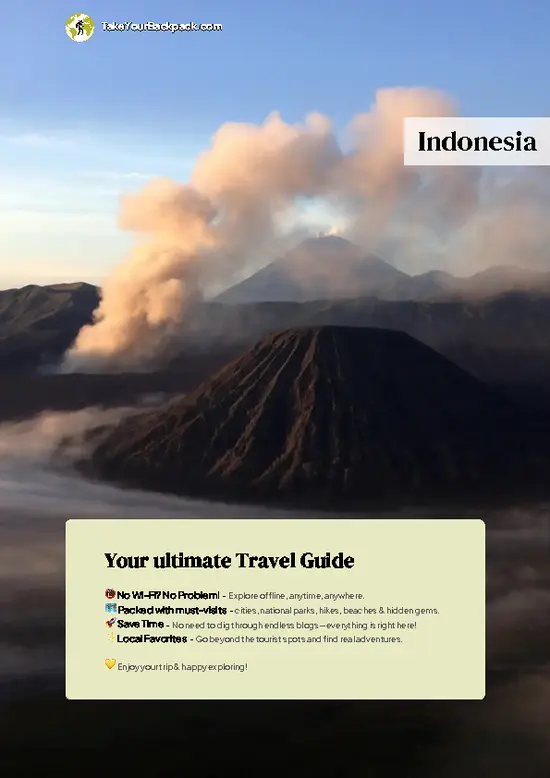
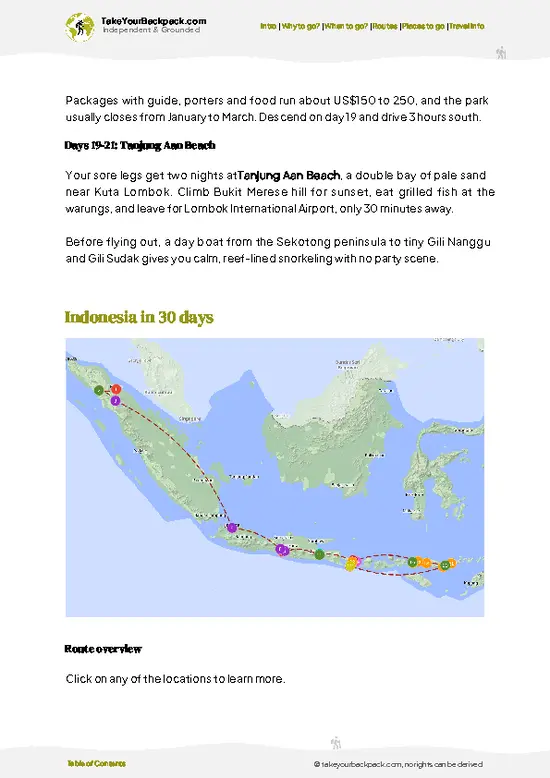
example page 0 from our offline Travel Guide for Indonesia
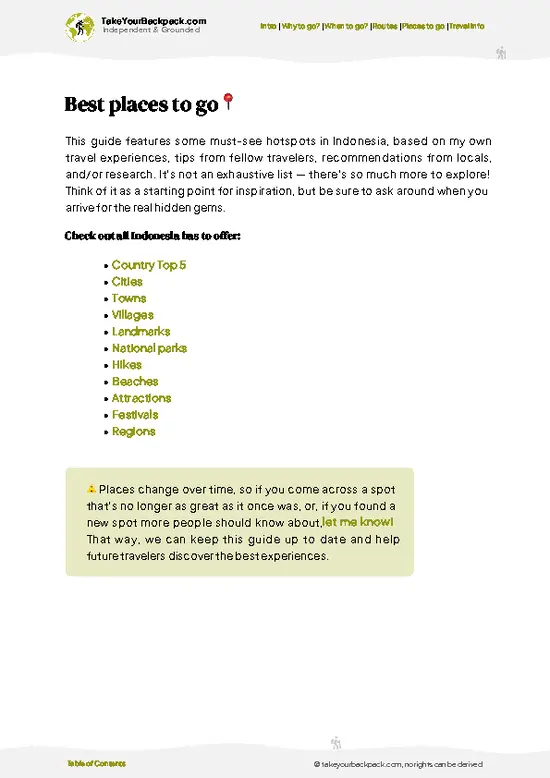
example page 1 from our offline Travel Guide for Indonesia
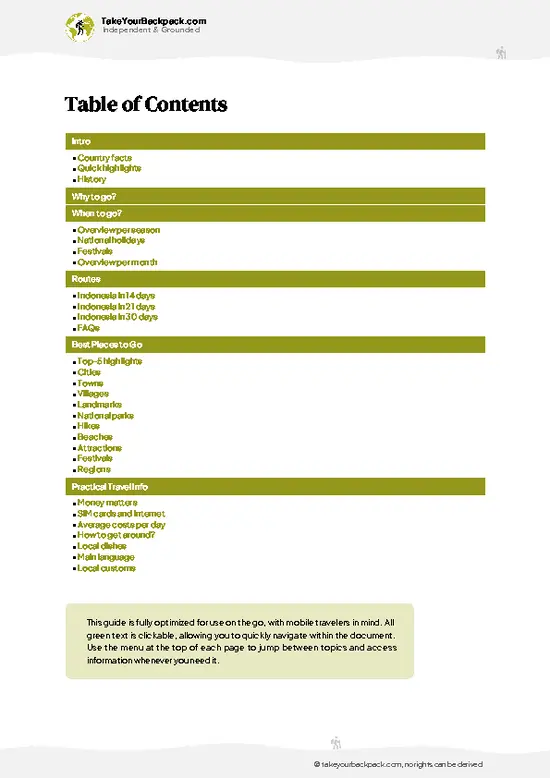
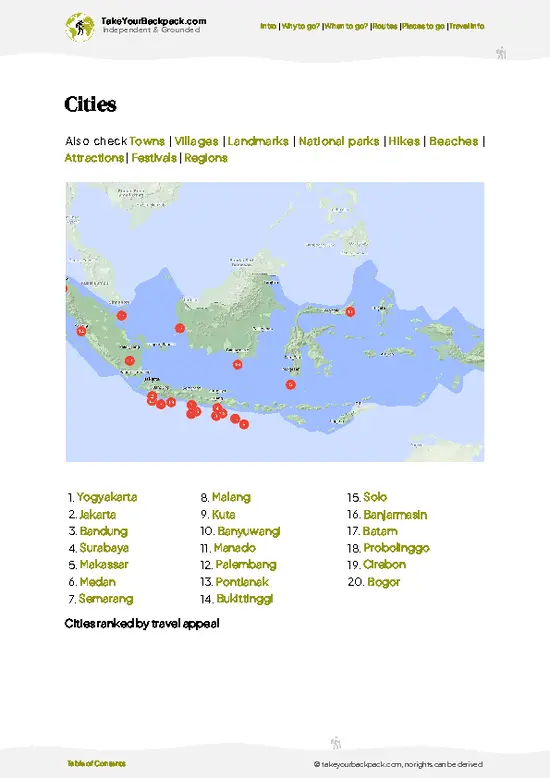
example page 2 from our offline Travel Guide for Indonesia
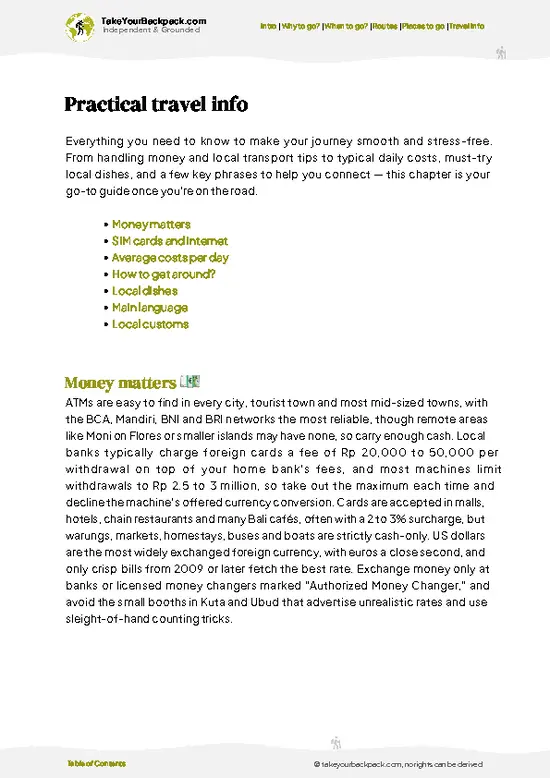
example page 3 from our offline Travel Guide for Indonesia
example page 4 from our offline Travel Guide for Indonesia
example page 5 from our offline Travel Guide for Indonesia
example page 6 from our offline Travel Guide for Indonesia
example page 7 from our offline Travel Guide for Indonesia
The digital guide (546 pages) contains:
156 highlights, ranked by travel appeal
Optimized 14, 21 & 30-day travel routes
Cities, national parks, landmarks, beaches
How to get around
Offline-friendly for travel without Wi-Fi
👉 Click to see all 30+ guide features

📅 Plan smarter in minutes, not weeks
Month by month travel advice
Festivals & national holidays
Budget expectations

🗺️ Go to the right places, skip the overrated ones
Honest pros & cons of destinations
Top hikes, parks & viewpoints
Lesser-known places most travelers miss
Clear “worth it vs skip it” guidance

🛏️ Travel smoothly without rookie mistakes
Best areas to stay
Transport systems explained simply
Common scams & safety advice
SIM cards, money & practical tips

🌍 Understand the country, not just visit it
Culture & traditions
52 Essential phrases & customs
Festivals worth planning around
Traveler-friendly historical context
Insights that make places more meaningful

📱 Built for real travel conditions
Fully downloadable PDF
Works completely offline
Optimized for phone use
Useful in remote areas & buses
Everything in one place
Save weeks of stressful planning
Get instant access to your full guide. 30‑day money-back guarantee.
+ Add another guide for just US$7.80

By proceeding you agree to our terms.
Sent to your inbox immediately after payment • 100% Secure Checkout
Best Backpacking Travel Advisor 2025 tourism awardBest Backpacking
Travel Advisor
2025
What others say about Take Your Backpack Guides:
⭐⭐⭐⭐⭐
Fantastic, amazing amount of information!
⭐⭐⭐⭐⭐
My goodness this is amazing, it's what I've been looking for hats off too you!
⭐⭐⭐⭐⭐
I think this is absolutely BRILLIANT
⭐⭐⭐⭐
Very complete and informative. It's still missing places, but I gotta to commend you
⭐⭐⭐⭐⭐
This is truly amazing, thank you, can't wait to explore it with my kids!
⭐⭐⭐⭐⭐
Awesome resource, thank you!
⭐⭐⭐⭐⭐
This is amazing! Can't wait to explore the ones I haven't seen
⭐⭐⭐⭐
I love this! Well done, great idea.
⭐⭐⭐⭐⭐
Thanks for taking the time to make this gem!
⭐⭐⭐⭐⭐
This might be the best website I've ever seen.
⭐⭐⭐⭐⭐
Congratulations, and thank you so much for your work; it's incredibly valuable.
⭐⭐⭐⭐
In all seriousness I think you did a great job pointing out the important spots
⭐⭐⭐⭐⭐
10/10 very good
⭐⭐⭐⭐⭐
As someone who's only just starting to visit regularly this is awesome, thank you.
⭐⭐⭐⭐
Thank you very much! I'm going to visit my dad, it's going to be very useful!
⭐⭐⭐⭐⭐
This is really cool! We'll be travelling for the first time and this definitely come in handy.
⭐⭐⭐⭐⭐
You are now our minister of culture, congratulations 👨‍💼
⭐⭐⭐⭐⭐
Just wanted to tell you that this is a pearl! Going to follow your recommendations.
⭐⭐⭐⭐⭐
This is so cool. I'll definitely be using the resource for my travels soon.
⭐⭐⭐⭐⭐
This is very impressive! Good work.
⭐⭐⭐⭐⭐
This is an amazing and informative site. Very well done!

🛏️ Where to stay?Best areas to stay in Indonesia

In Tual, the best spot for backpackers is the area around the city center, near the harbor. This neighborhood hums with local life—fishermen unloading their catch, vendors shouting over the scent of fresh spices, and the salty breeze mixing with the aroma of grilled fish. It’s safe, well-lit at night, and the streets pulse with enough energy to keep you engaged without overwhelming you. This is where budget travelers and solo backpackers naturally gravitate, drawn by the cluster of affordable guesthouses and hostels that offer simple, clean rooms and a chance to meet fellow travelers over shared … read more 👉
In Tual, the best spot for backpackers is the area around the city center, near the harbor. This neighborhood hums with local life—fishermen unloading their catch, vendors shouting over the scent of fresh spices, and the salty breeze mixing with the aroma of grilled fish. It’s safe, well-lit at night, and the streets pulse with enough energy to keep you engaged without overwhelming you. This is where budget travelers and solo backpackers naturally gravitate, drawn by the cluster of affordable guesthouses and hostels that offer simple, clean rooms and a chance to meet fellow travelers over shared meals or late-night chats.

Compared to the quieter residential outskirts, staying near the harbor means you’re steps away from the ferry terminals and local markets, making logistics smoother and your days more flexible. The vibe here is unpretentious and welcoming—no tourist traps, just genuine interactions and the rhythm of daily life. If you want to soak in Tual’s character without the hassle of long commutes or feeling isolated, this is your base. It’s where the town’s pulse is strongest, and your backpacker experience feels both authentic and comfortably connected.

🚌 Getting aroundHow to get around Tual

Tual moves at its own rhythm—less a clock-driven city and more a place where the tide and the sun set the pace. The air carries a salty tang from the nearby sea, and the streets hum with a mix of purposeful locals and the occasional burst of market chatter. You won’t find rigid schedules here; instead, transit flows with a kind of loose intuition, where timing is flexible but the options are straightforward. This is a town where patience pays off, and understanding the local pulse unlocks a smoother ride through its compact, coastal charm.


  • Walking: The heart of Tual is best explored on foot. Streets are narrow, and many key spots—markets, waterfront, local eateries—are within a 20-minute stroll. Walking costs nothing, lets you soak in the salty breeze, and reveals the town’s textures,
read more 👉
Tual moves at its own rhythm—less a clock-driven city and more a place where the tide and the sun set the pace. The air carries a salty tang from the nearby sea, and the streets hum with a mix of purposeful locals and the occasional burst of market chatter. You won’t find rigid schedules here; instead, transit flows with a kind of loose intuition, where timing is flexible but the options are straightforward. This is a town where patience pays off, and understanding the local pulse unlocks a smoother ride through its compact, coastal charm.


  • Walking: The heart of Tual is best explored on foot. Streets are narrow, and many key spots—markets, waterfront, local eateries—are within a 20-minute stroll. Walking costs nothing, lets you soak in the salty breeze, and reveals the town’s textures, from peeling paint on old shops to the scent of grilled fish wafting through alleys.


  • Ojek (Motorcycle Taxi): These are everywhere and perfect for quick hops. Expect to pay around 10,000 to 20,000 IDR per ride. They don’t run on a schedule, so you can flag one down anytime, day or night. It’s a fast, nimble way to navigate narrow streets or reach spots just beyond walking distance, but hold on tight—the ride can be bumpy and the wind sharp.


  • Public Minibuses (Angkot): The angkot network is limited but budget-friendly, with fares typically under 10,000 IDR. They run roughly from 6 AM to 6 PM, weaving through main roads. Don’t expect comfort or strict timing—these minibuses fill up and leave when full, so flexibility is key. They’re a good choice if you want to travel like a local and save cash.


  • Shared Bemo Vans: For slightly longer trips outside the town center, shared bemo vans offer a cheap option, around 15,000 to 25,000 IDR. They leave once full, so timing is unpredictable but the price is right. Vans can be cramped but provide a window into everyday life, with locals chatting and goods piled high.


  • Boat Taxi: If you’re heading to nearby islands or coastal points, boat taxis run from early morning until late afternoon. Prices vary by distance but expect to negotiate around 50,000 IDR for short hops. The ride is scenic, with salt spray and sea breeze refreshing you, but schedules depend on weather and passenger demand—so plan with flexibility.

👛 Costs (as of 4 September 2026)Travel costs and budget guide for Tual

Backpacking in Tual, Indonesia, means embracing a slower pace where the costs stay low but the experience feels rich and authentic. Here’s what you can expect day-to-day:
  • Dorm Accommodation: Dorm beds in Tual typically run between $5 and $10 per night. These are basic but clean guesthouses or hostels, often with shared bathrooms and simple fan cooling. Expect modest facilities, but a chance to meet other travelers or locals in a laid-back setting.
  • Meals: Food here is a highlight and very affordable. Street food and warungs (small local eateries) serve meals for $1.50 to $3.50. Fresh fish, rice, and tropical fruits dominate the menu. If you opt for a Western-style café or a sit-down restaurant, prices can climb to around $5 to $8 per meal.
  • Local Transport: Getting around Tual is mostly by
read more 👉
Backpacking in Tual, Indonesia, means embracing a slower pace where the costs stay low but the experience feels rich and authentic. Here’s what you can expect day-to-day:
  • Dorm Accommodation: Dorm beds in Tual typically run between $5 and $10 per night. These are basic but clean guesthouses or hostels, often with shared bathrooms and simple fan cooling. Expect modest facilities, but a chance to meet other travelers or locals in a laid-back setting.
  • Meals: Food here is a highlight and very affordable. Street food and warungs (small local eateries) serve meals for $1.50 to $3.50. Fresh fish, rice, and tropical fruits dominate the menu. If you opt for a Western-style café or a sit-down restaurant, prices can climb to around $5 to $8 per meal.
  • Local Transport: Getting around Tual is mostly by ojek (motorcycle taxi) or small shared vans. Short rides cost about $0.50 to $1.50. For longer trips or island hopping, budget $5 to $15 depending on distance and negotiation skills. The scent of sea salt and diesel lingers as you zip through town streets or coastal roads.
  • Basic Activities/Entry Fees: Many natural attractions and cultural sites in and around Tual have minimal or no entry fees, often under $2. Boat trips to nearby islands or snorkeling excursions can cost $10 to $25, depending on the length and group size. These trips reward you with crystal-clear water and vibrant coral, making the modest expense feel like a steal.
  • Miscellaneous Expenses: This includes bottled water, snacks, phone credit, and occasional treats like fresh coconut or a cold drink. Expect to spend around $1 to $3 daily. Keep cash handy, as card payments are rare and small vendors prefer rupiah.

All told, a daily budget in Tual comfortably fits between $12 and $30, depending on your style and how many island adventures you squeeze in. The town’s quiet charm and easy pace mean you’re not paying for flashy comforts but for genuine moments — the kind that stick with you long after the trip ends.


source: indonesia.travel
⚠️ Prices can change and everyone travels differently, so take this as a rough guide. Hope it helps you plan your adventure!

🚌 Day tripsExploring the surroundings

Tual, Indonesia, is a backpacker’s dream base, offering easy access to stunning day trips that blend adventure with local culture.

1. Dive into the Blue Hole
Just a short boat ride away, the Blue Hole is a diver’s paradise. The vibrant coral reefs and schools of fish will leave you breathless. Expect to spend around 30 minutes getting there, and budget about $30 for gear rental and a guide. The best time to dive is during the dry season, from April to October. A common mistake? Underestimating the currents; always check local conditions before diving.


2. Explore the Spice Islands
A day trip to the Spice Islands is like stepping back in time. You’ll wander through clove and nutmeg plantations, inhaling the rich, earthy scents. The boat ride takes about an hour, costing around $20. … read more 👉
Tual, Indonesia, is a backpacker’s dream base, offering easy access to stunning day trips that blend adventure with local culture.

1. Dive into the Blue Hole
Just a short boat ride away, the Blue Hole is a diver’s paradise. The vibrant coral reefs and schools of fish will leave you breathless. Expect to spend around 30 minutes getting there, and budget about $30 for gear rental and a guide. The best time to dive is during the dry season, from April to October. A common mistake? Underestimating the currents; always check local conditions before diving.


2. Explore the Spice Islands
A day trip to the Spice Islands is like stepping back in time. You’ll wander through clove and nutmeg plantations, inhaling the rich, earthy scents. The boat ride takes about an hour, costing around $20. Late morning is ideal for visiting, as the heat can be intense by afternoon. Many first-timers miss the local markets; don’t skip them for a taste of authentic island life.


3. Hike to Mount Api
For the adventurous, a hike to Mount Api offers breathtaking views and a chance to see the volcanic landscape up close. The trek takes about two hours, and you’ll need to budget for a local guide at around $15. Early mornings are best to avoid the heat and catch the sunrise. A common pitfall is not bringing enough water; pack extra to stay hydrated.
Want to know what more Indonesia offers?
The Indonesia Travel Guide describes 156 highlights, from cities to national parks, from beaches to hikes

Get the Travel Guide -

🍲 FoodLocal Cuisine & Drinks

In Tual, food is a lively negotiation between the sea’s bounty and fiery local spices. You’ll want to dive into ikan bakar, grilled fish slathered in a tangy, chili-laced marinade that hits your tongue with a smoky punch. Another must-try is papeda, a sticky sago porridge that’s a textural adventure, usually paired with a rich, savory fish broth—comfort food with a twist you won’t forget.

Backpackers find their rhythm in bustling markets and street stalls, where the air is thick with the scent of coconut and lemongrass. These spots are where locals gather, so you’re not just eating; you’re stepping into the daily pulse of Tual. Casual eateries offer simple, hearty plates without the fuss, perfect for refueling after a day of exploring.

Drinking here is straightforward—expect sweet, strong read more 👉
In Tual, food is a lively negotiation between the sea’s bounty and fiery local spices. You’ll want to dive into ikan bakar, grilled fish slathered in a tangy, chili-laced marinade that hits your tongue with a smoky punch. Another must-try is papeda, a sticky sago porridge that’s a textural adventure, usually paired with a rich, savory fish broth—comfort food with a twist you won’t forget.

Backpackers find their rhythm in bustling markets and street stalls, where the air is thick with the scent of coconut and lemongrass. These spots are where locals gather, so you’re not just eating; you’re stepping into the daily pulse of Tual. Casual eateries offer simple, hearty plates without the fuss, perfect for refueling after a day of exploring.

Drinking here is straightforward—expect sweet, strong coffee or fresh coconut water straight from the shell. Sharing food is common, so don’t be surprised if you’re invited to sample a bit from someone else’s plate. Respect for communal dining is part of the charm, making every meal a social experience, not just fuel.

🛡️ SafetySafety Tips and Common Scams in Tual

Tual is generally safe, but staying aware enhances your experience. Stick to well-lit areas at night, especially near the waterfront, where the atmosphere shifts. Solo travelers should blend in; avoid drawing attention with flashy gear.

Watch for common scams like inflated prices at markets. Always ask locals for fair rates. The occasional street vendor might push for a sale, but a polite “no, thank you” usually suffices. Carry yourself confidently, and you’ll navigate Tual’s charm without a hitch.

FAQCommon questions from travelers

2 to 3 days are sufficient to explore Tual, covering its main attractions and nearby islands. This allows time for local markets, cultural sites, and a boat trip to nearby islands like Kei or Aru. Longer stays are recommended only if island hopping extensively.
Yes, Tual is generally safe for solo backpackers, with low crime rates and friendly locals. Standard precautions apply, especially when traveling at night or in less populated areas. It is advisable to stay informed about local conditions and respect cultural norms.
Tual is known for its role as a gateway to the Maluku Islands, particularly the Kei and Aru archipelagos. It is famous for its marine biodiversity, traditional fishing culture, and vibrant local markets. The city also serves as a hub for exploring remote islands with pristine beaches and coral reefs.
⚠️ Things can change over time, so always validate details locally before you go.

Other Indonesian cities near Tual

Explore more nearby:

  • Timika—mining hub, Mimika culture, airport gateway| 473 km away
  • Manokwari—Cenderawasih Bay, rainforest hills, missionary sites| 549 km away
  • Ambon—spice port, Maluku music, coastal markets| 554 km away

💡 Not sure where to go next?
Create a personalized itinerary for Indonesia including Tual and the places that fit your trip.

Generate my itinerary

👉 Discover all cities

Or checkout all Indonesia has to offer (think cities, towns, villages, national parks, hikes, beaches, festivals)
Country photo of Indonesia

We 💚 feedbackKey takeaways before you go

Tual’s vibrant markets pulse with life, where the scent of grilled fish mingles with spices, creating a feast for the senses. But be ready for the humidity; it can be stifling. Embrace it, and you’ll find the warmth of the people makes every drop worth it.

✈️ When did I visit Indonesia?
As part of my 1.5 year travel around the world trip, I visited Indonesia twice (and it was worth it. First in September 2015 and a bit later again in January and February 2016.

✍️ Help improve this page!
The information on this page is based on my own backpacking experience in Indonesia, supplemented with up-to-date research and feedback from other travelers. Travel details can change, so if you notice anything outdated or incomplete, feel free to let me know.


🙋‍♂️ Give feedback

👋 Meet the founderWho’s Behind Take Your Backpack?

Johan, backpacker and founder of TakeYourBackpackHi, I’m Johan (Netherlands 🇳🇱), the creator of TakeYourBackpack. Over the past decade, I’ve backpacked through 80+ countries across six continents, gaining extensive experience with independent travel, long-term trips, and overland routes.

This site is built on a combination of firsthand travel experience and carefully curated insights from other backpackers. Many guides are based on places I’ve personally visited, while others bring together tips, observations, and practical advice shared by trusted travelers I’ve met along the way.

The goal is to provide realistic, experience-driven guidance — not generic itineraries — so you can explore destinations with better context, clearer expectations, and more confidence.

Get full Indonesia guide •
Instant download • 156 highlights • Full Offline guide