×

Indonesia🇮🇩 | attractionsSpring water of Narmadaholy springs, bathing pools, temple gardens | things to do and best time to go

Explore Taman Budaya Garuda Wisnu KencanaExplore Lingsar rafting

Backpacking in Spring water of Narmada
👀 For curious travelersattraction ranked #28
By Johan Kruseman 🇳🇱 | Updated September 4, 2026

Your skin prickles as the spring water hits—cool, almost electric, a shock after the sticky heat of Lombok’s midday sun. The air smells faintly of moss and old stone, and the splash of local kids echoes off the temple walls. This isn’t some remote jungle pool; the Spring water of Narmada sits right inside Narmada Park, about a half-hour drive east of Mataram, Lombok’s main city.

Let’s drop the fantasy: you won’t have the place to yourself. School groups, families, and the odd Instagrammer all jostle for a spot, especially on weekends. But here’s the real hook—this spring isn’t just for show. Locals believe the water is sacred, drawn from the same source as Mount Rinjani’s crater lake, and you’ll see people actually collecting it for blessings. The entry fee is pocket change, and the vibe is more “community hangout” than “tourist circus.” Compared to Bali’s overhyped water temples, Narmada feels refreshingly lived-in, a place where ritual and daily life still overlap. If you’re chasing authenticity over aesthetics, this is where you’ll find it.

Discover everything you want to know in the 📖 Indonesia Travel Guide.
Loading the map 🌍
CLICK TO FILTER
cities
towns
landmarks
national parks
hikes
beaches
attractions
festivals
regions
SHOW COUNTRY’S BESTSHOW ALL

✨ Why go?
Ranked #28 attraction in Indonesia
Reasons people choose to visit here

The Spring Water of Narmada isn’t some Instagram-filtered postcard you stumble upon by accident. It’s a destination that demands effort—and that’s exactly why backpackers respect it. Yes, it’s crowded during peak season, and the modest entrance fee can feel steep compared to other natural springs in Indonesia. But here’s the kicker: this isn’t just about a pretty pool of water. The spring is iconic, a living thread in the fabric of Indonesia’s spiritual and cultural history. Locals have revered it for centuries, believing its waters hold healing powers and a connection to ancient rituals that predate modern tourism.

For backpackers trekking across Java or Sumatra, stopping here is a major milestone—a moment to pause, reflect, and soak in something far deeper than just nature’s beauty. The … read more 👉
The Spring Water of Narmada isn’t some Instagram-filtered postcard you stumble upon by accident. It’s a destination that demands effort—and that’s exactly why backpackers respect it. Yes, it’s crowded during peak season, and the modest entrance fee can feel steep compared to other natural springs in Indonesia. But here’s the kicker: this isn’t just about a pretty pool of water. The spring is iconic, a living thread in the fabric of Indonesia’s spiritual and cultural history. Locals have revered it for centuries, believing its waters hold healing powers and a connection to ancient rituals that predate modern tourism.

For backpackers trekking across Java or Sumatra, stopping here is a major milestone—a moment to pause, reflect, and soak in something far deeper than just nature’s beauty. The effort to reach the spring, often involving a hike through dense jungle or a bumpy ride on rural roads, pays off with a rare kind of authenticity. It’s not polished or commercialized; it’s raw, real, and humbling. If you’re chasing adrenaline, the trek itself offers enough challenge to get your heart racing before you even dip your toes in the water. This isn’t a tourist trap—it’s a rite of passage for anyone serious about experiencing Indonesia beyond the surface.
Want to include Spring water of Narmada in your Indonesia route?
Create a personalized Indonesia itinerary that includes Spring water of Narmada and the places that fit your trip — based on your travel style, budget, and available time. Get your route in seconds.

Generate my trip

💡 HighlightsMust-see experiences and standout moments

1. The Crystal-Clear Pools
Forget the filtered photos—this water is so clear you’ll see every pebble, every darting fish, and, yes, every stray toe. The pools at Spring water of Narmada aren’t just for looking; they’re for plunging. Locals and travelers alike come here to cool off, and the water is genuinely cold, not the tepid stuff you find in overhyped “natural springs.” You’ll feel the shock down to your bones, and that’s half the fun. No spa treatment can match the jolt of a real mountain spring.


2. The Ritual Bathing Experience
This isn’t a tourist sideshow—it’s a living tradition. People come to Narmada for ritual cleansing, believing the water brings health and luck. You’ll see families, elders, and young couples all lining up for their turn under the stone spouts. It’s not staged for … read more 👉
1. The Crystal-Clear Pools
Forget the filtered photos—this water is so clear you’ll see every pebble, every darting fish, and, yes, every stray toe. The pools at Spring water of Narmada aren’t just for looking; they’re for plunging. Locals and travelers alike come here to cool off, and the water is genuinely cold, not the tepid stuff you find in overhyped “natural springs.” You’ll feel the shock down to your bones, and that’s half the fun. No spa treatment can match the jolt of a real mountain spring.


2. The Ritual Bathing Experience
This isn’t a tourist sideshow—it’s a living tradition. People come to Narmada for ritual cleansing, believing the water brings health and luck. You’ll see families, elders, and young couples all lining up for their turn under the stone spouts. It’s not staged for your camera; it’s the real deal. If you’re respectful, you can join in. The sensation of icy water pounding your shoulders, surrounded by the quiet hum of prayer, is a world away from the usual “spiritual” attractions that feel more like Instagram sets than sacred spaces.


3. The Ancient Balinese Architecture
Narmada isn’t just about the water. The temple complex is a patchwork of mossy stone, carved gates, and shrines that feel genuinely ancient—because they are. You can wander through shaded courtyards and stumble upon corners where time seems to have stopped. Unlike the polished, ticketed temples elsewhere, here you’ll find cracked statues, faded offerings, and the kind of lived-in beauty that doesn’t care about your selfie stick.


4. The Local Snack Stalls
You’re not coming here for fine dining, but the food stalls outside the park are a crash course in Lombok’s snack culture. Try the grilled corn, sticky rice cakes, or a cup of sweet, smoky coffee. It’s cheap, it’s loud, and it’s where you’ll actually meet locals—not just other travelers clutching guidebooks. Skip the overpriced “authentic” restaurants and eat where the grandmas are gossiping.


5. The Sunset Over the Park(Personal Favorite)
Here’s the real secret: as the day winds down, the crowds thin out, and the light turns gold. The pools reflect the sky, the temple stones glow, and suddenly the whole place feels like it belongs to you. No filter needed. I’ve sat on the edge of the water, feet dangling, watching the sun drop behind the trees, and it’s the kind of quiet, perfect moment you can’t buy or schedule. If you want the magic, stay late and let the day end here.
Spotted a mistake or missing something? Contact us.

Things to do near Spring water of Narmada

Ratings based on Tripadvisor reviews. When you book through this link, you support our work at no extra cost to you.

🌤️ When to go?Seasonal considerations and timing


  • Weather: The best time to visit the Spring Water of Narmada is during the dry season, from May to September. Expect minimal rain, which means easier hiking and less mud. The wet season, from October to April, brings heavy showers that can turn trails slippery and obscure views.

  • Temperature: Temperatures hover between 24°C and 30°C (75°F to 86°F) year-round, but the dry season feels more comfortable with lower humidity. The wet season’s heat combined with humidity can make trekking exhausting.

  • Daylight Hours: Daylight remains fairly consistent, around 11 to 12 hours daily. Arriving early maximizes your time to explore before the afternoon heat peaks or crowds swell.

  • Crowds: Peak tourist months are July and August when local and international visitors converge. If you want fewer people,
read more 👉

  • Weather: The best time to visit the Spring Water of Narmada is during the dry season, from May to September. Expect minimal rain, which means easier hiking and less mud. The wet season, from October to April, brings heavy showers that can turn trails slippery and obscure views.

  • Temperature: Temperatures hover between 24°C and 30°C (75°F to 86°F) year-round, but the dry season feels more comfortable with lower humidity. The wet season’s heat combined with humidity can make trekking exhausting.

  • Daylight Hours: Daylight remains fairly consistent, around 11 to 12 hours daily. Arriving early maximizes your time to explore before the afternoon heat peaks or crowds swell.

  • Crowds: Peak tourist months are July and August when local and international visitors converge. If you want fewer people, aim for May, June, or September—still dry but quieter.

  • Seasonal Activities: The dry season is prime for trekking and swimming in the spring pools. During the wet season, the water flow is stronger but trails can be dangerous, limiting access.

  • Price Fluctuations: Accommodation and transport costs spike in July and August. Visiting just before or after these months can save you 20-30% without sacrificing the experience.


Pro-tip: Hit the trail in late May or early September—dry, cool, and calm—perfect for soaking in the spring’s true vibe without the Instagram crowd stampede.


source: climatestotravel.comJANJanuary: fair for travelingFEBFebruary: fair for travelingMARMarch: fair for travelingAPRApril: fair for travelingMAYMay: excellent for travelingJUNJune: excellent for travelingJULJuly: highly recommended for travelingAUGAugust: highly recommended for travelingSEPSeptember: excellent for travelingOCTOctober: fair for travelingNOVNovember: fair for travelingDECDecember: fair for traveling
when-to-go

✈️ The backpacker research shortcutIndonesia Travel Guide

An offline-friendly backpacking guide with optimized travel routes, ranked highlights, transport advice, and the best areas to stay.
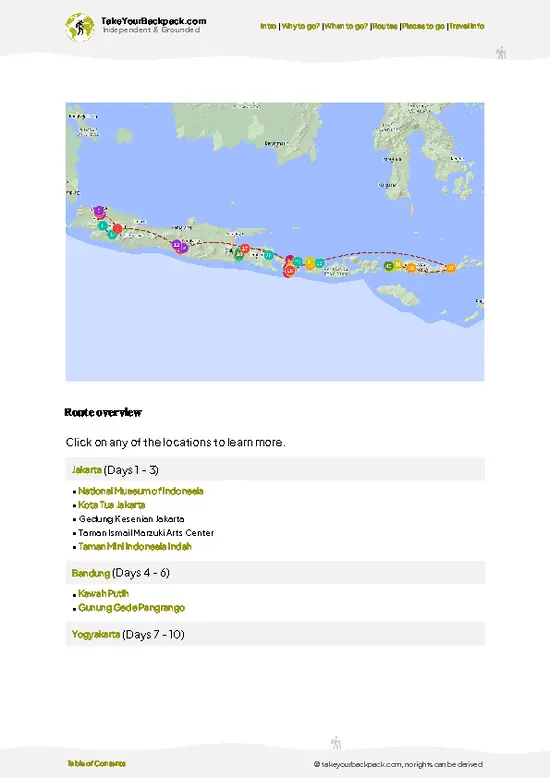
example page 0 from our offline Travel Guide for Indonesia
example page 1 from our offline Travel Guide for Indonesia
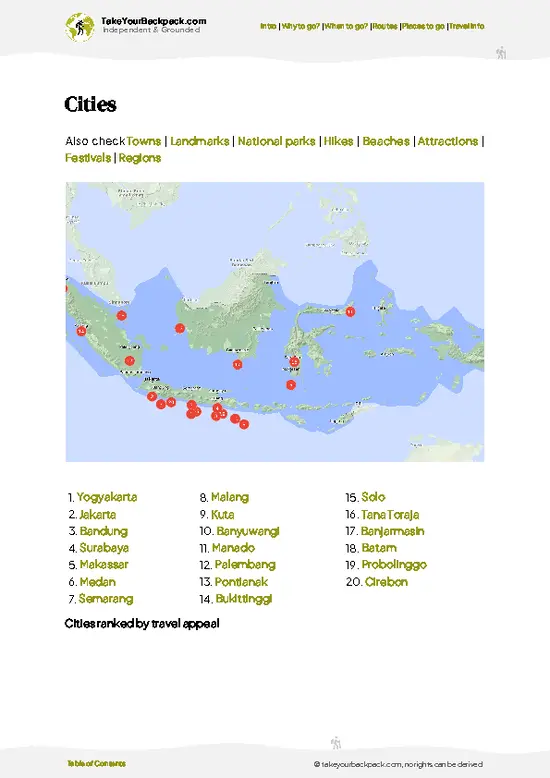
example page 2 from our offline Travel Guide for Indonesia
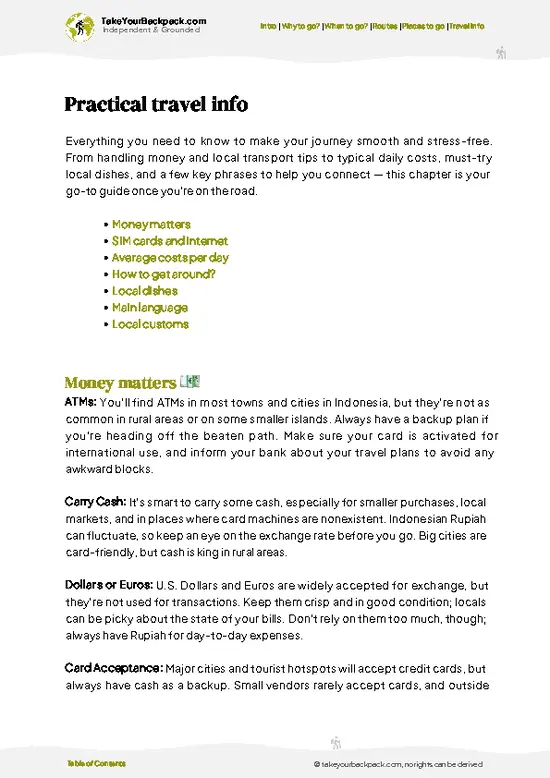
example page 3 from our offline Travel Guide for Indonesia
example page 4 from our offline Travel Guide for Indonesia
example page 5 from our offline Travel Guide for Indonesia
example page 6 from our offline Travel Guide for Indonesia
example page 7 from our offline Travel Guide for Indonesia
The digital guide (546 pages) contains:
156 highlights, ranked by travel appeal
Optimized 14, 21 & 30-day travel routes
Cities, national parks, landmarks, beaches
How to get around
Offline-friendly for travel without Wi-Fi
👉 Click to see all 30+ guide features

📅 Plan smarter in minutes, not weeks
Month by month travel advice
Festivals & national holidays
Budget expectations

🗺️ Go to the right places, skip the overrated ones
Honest pros & cons of destinations
Top hikes, parks & viewpoints
Lesser-known places most travelers miss
Clear “worth it vs skip it” guidance

🛏️ Travel smoothly without rookie mistakes
Best areas to stay
Transport systems explained simply
Common scams & safety advice
SIM cards, money & practical tips

🌍 Understand the country, not just visit it
Culture & traditions
52 Essential phrases & customs
Festivals worth planning around
Traveler-friendly historical context
Insights that make places more meaningful

📱 Built for real travel conditions
Fully downloadable PDF
Works completely offline
Optimized for phone use
Useful in remote areas & buses
Everything in one place
Save weeks of stressful planning
Get instant access to your full guide. 30‑day money-back guarantee.
+ Add another guide for just US$7.80

By proceeding you agree to our terms.
Sent to your inbox immediately after payment • 100% Secure Checkout
Best Backpacking Travel Advisor 2025 tourism awardBest Backpacking
Travel Advisor
2025
What others say about Take Your Backpack Guides:
⭐⭐⭐⭐⭐
Fantastic, amazing amount of information!
⭐⭐⭐⭐⭐
My goodness this is amazing, it's what I've been looking for hats off too you!
⭐⭐⭐⭐⭐
I think this is absolutely BRILLIANT
⭐⭐⭐⭐
Very complete and informative. It's still missing places, but I gotta to commend you
⭐⭐⭐⭐⭐
This is truly amazing, thank you, can't wait to explore it with my kids!
⭐⭐⭐⭐⭐
Awesome resource, thank you!
⭐⭐⭐⭐⭐
This is amazing! Can't wait to explore the ones I haven't seen
⭐⭐⭐⭐
I love this! Well done, great idea.
⭐⭐⭐⭐⭐
Thanks for taking the time to make this gem!
⭐⭐⭐⭐⭐
This might be the best website I've ever seen.
⭐⭐⭐⭐⭐
Congratulations, and thank you so much for your work; it's incredibly valuable.
⭐⭐⭐⭐
In all seriousness I think you did a great job pointing out the important spots
⭐⭐⭐⭐⭐
10/10 very good
⭐⭐⭐⭐⭐
As someone who's only just starting to visit regularly this is awesome, thank you.
⭐⭐⭐⭐
Thank you very much! I'm going to visit my dad, it's going to be very useful!
⭐⭐⭐⭐⭐
This is really cool! We'll be travelling for the first time and this definitely come in handy.
⭐⭐⭐⭐⭐
You are now our minister of culture, congratulations 👨‍💼
⭐⭐⭐⭐⭐
Just wanted to tell you that this is a pearl! Going to follow your recommendations.
⭐⭐⭐⭐⭐
This is so cool. I'll definitely be using the resource for my travels soon.
⭐⭐⭐⭐⭐
This is very impressive! Good work.
⭐⭐⭐⭐⭐
This is an amazing and informative site. Very well done!

🛏️ Where to stay?Best areas to stay in Indonesia

The “Spring water of Narmada” in Indonesia isn’t some Instagram-perfect oasis where you’ll find endless solitude or a polished tourist trap. Expect crowds, especially on weekends and holidays, when locals flock here for ritual baths and family outings. It’s not a secret spot, and the influx can feel overwhelming if you’re chasing quiet reflection. The entrance fees and local vendor prices can add up, so don’t expect a free ride or a bargain bonanza.

That said, the real magic isn’t in escaping the crowd—it’s in soaking up the cultural pulse and the genuine spiritual vibe that’s been alive for … read more 👉
The “Spring water of Narmada” in Indonesia isn’t some Instagram-perfect oasis where you’ll find endless solitude or a polished tourist trap. Expect crowds, especially on weekends and holidays, when locals flock here for ritual baths and family outings. It’s not a secret spot, and the influx can feel overwhelming if you’re chasing quiet reflection. The entrance fees and local vendor prices can add up, so don’t expect a free ride or a bargain bonanza.

That said, the real magic isn’t in escaping the crowd—it’s in soaking up the cultural pulse and the genuine spiritual vibe that’s been alive for centuries. To tap into this, you want to stay in the nearby town of Mataram or Senggigi. These areas are backpacker-friendly, with a mix of budget guesthouses and homestays that offer safety and a chance to meet fellow travelers. Mataram is the urban hub, giving you access to local markets, street food, and transport options, while Senggigi has a more laid-back beach town feel, perfect for winding down after a day at the springs.

Both spots are social without being party central, so you get a good balance of connection and chill. Staying here means you’re close enough for a quick morning visit before the crowds swell, yet far enough to decompress in a genuine local atmosphere. This is where the attraction’s soul lives—not in sanitized tourist zones, but in the everyday rhythms of the people who’ve cherished these waters for generations.

👛 Costs (as of 4 September 2026)Typical daily expenses

As of the most recent estimates, the entrance fee for Taman Narmada, also known as the Spring Water of Narmada, is approximately IDR 10,000 per person, which is about €0.60. This fee grants access to the park's gardens, temples, and the sacred spring believed to offer eternal youth. Additional costs may include purchasing local snacks or souvenirs from vendors within the park. Please note that prices are subject to change, so it's advisable to check the latest information before your visit.

source: forevervacation.com
⚠️ Prices can change and everyone travels differently, so take this as a rough guide. Hope it helps you plan your adventure!

FAQFrequently asked questions about Spring water of Narmada

Visiting the Spring water of Narmada typically requires about 1 to 2 hours to fully explore the site and enjoy the surroundings.
Yes, the entrance fee is worth it as it is usually inexpensive, around 10,000 to 15,000 IDR, and offers a unique cultural and natural experience with historical significance.
You can get to the Spring water of Narmada by taking a local bus or renting a scooter from Mataram city, located about 10 kilometers away, with clear signage directing to the site.
⚠️ Things can change over time, so always validate details locally before you go.

Other Indonesian attractions near Spring water of Narmada

Explore more nearby:

  • Tirta Gangga—water palace, koi ponds, stone fountains| 71 km away
  • Besakih Great Temple—mother temple, sacred courtyards, panoramic views| 87 km away
  • Besakih—temple complex, Mount Agung slopes, Balinese ceremonies| 87 km away

💡 Not sure where to go next?
Create a personalized itinerary for Indonesia including Spring water of Narmada and the places that fit your trip.

Generate my itinerary

👉 Discover all attractions

Or checkout all Indonesia has to offer (think cities, towns, villages, national parks, hikes, beaches, festivals)
Country photo of Indonesia

We 💚 feedbackKey takeaways before you go

The Spring Water of Narmada isn’t some Instagram-perfect postcard—expect crowds, especially on weekends, and don’t come here if you want solitude. But if you’re after a raw connection to local life and a chance to dip into water that’s been revered for centuries, it’s worth the hassle. The real magic is in the ritual, the stories locals share, and the way the water cools you down after a sweaty trek. It’s a genuine slice of culture, not a polished tourist trap.

✈️ When did I visit Indonesia?
As part of my 1.5 year travel around the world trip, I visited Indonesia twice (and it was worth it. First in September 2015 and a bit later again in January and February 2016.

✍️ Help improve this page!
The information on this page is based on my own backpacking experience in Indonesia, supplemented with up-to-date research and feedback from other travelers. Travel details can change, so if you notice anything outdated or incomplete, feel free to let me know.


🙋‍♂️ Give feedback

👋 Meet the founderWho’s Behind Take Your Backpack?

Johan, backpacker and founder of TakeYourBackpackHi, I’m Johan (Netherlands 🇳🇱), the creator of TakeYourBackpack. Over the past decade, I’ve backpacked through 80+ countries across six continents, gaining extensive experience with independent travel, long-term trips, and overland routes.

This site is built on a combination of firsthand travel experience and carefully curated insights from other backpackers. Many guides are based on places I’ve personally visited, while others bring together tips, observations, and practical advice shared by trusted travelers I’ve met along the way.

The goal is to provide realistic, experience-driven guidance — not generic itineraries — so you can explore destinations with better context, clearer expectations, and more confidence.

Get full Indonesia guide •
Instant download • 156 highlights • Full Offline guide