×

Indonesia🇮🇩 | citiesSumenepMadura palace, salt pans, island ferries | things to do and best time to go

Explore ProbolinggoExplore Sumbawa Besar

Backpacking in Sumenep
👀 For curious travelerscity ranked #40
By Johan Kruseman 🇳🇱 | Updated June 6, 2026

Everyone talks about Sumenep for the karst islands and Instagrammy beaches off eastern Madura, but what actually matters more for most backpackers is how slow, local, and almost pre-tourism the town still feels. Sitting on the far eastern tip of Madura Island, off Java’s north coast, Sumenep is cheap, safe, and very Indonesian: kraton palace, old mosque, sleepy alun-alun, night food stalls, almost no foreigner scene. It’s less polished than Surabaya, less intense than Bangkalan, and you’ll work harder to meet other travelers—but that effort buys you real conversations with locals and a sense you’re not just following the usual Java–Bali conveyor belt.

Discover everything you want to know in the 📖 Indonesia Travel Guide.
Loading the map 🌍
CLICK TO FILTER
cities
towns
landmarks
national parks
hikes
beaches
attractions
festivals
regions
SHOW COUNTRY’S BESTSHOW ALL

✨ Why go?
Ranked #40 city in Indonesia
What makes this city worth visiting

Sumenep is a strategic basecamp for backpackers exploring Madura Island. It offers a mix of affordable hostels and local eateries, making it easy to stretch your budget. The city is walkable, allowing you to soak in the local vibe without the hassle of transport. While nightlife isn’t wild, you’ll find cozy spots to unwind after a day of exploration. Plus, it’s a convenient launchpad for day trips to nearby attractions, ensuring you maximize your time. If you’re after a blend of culture and ease, Sumenep is worth more than just a quick stop.
Want to include Sumenep in your Indonesia route?
Create a personalized Indonesia itinerary that includes Sumenep and the places that fit your trip — based on your travel style, budget, and available time. Get your route in seconds.

Generate my trip

💡 HighlightsKey sights and experiences for travelers

  • Keraton Sumenep (Sumenep Palace) — The actual royal palace complex still stands in town; wander its pendopo (open halls), see carved doors and old court rooms, and feel the island’s history concentrated in one compact site.
  • Museum Keraton Sumenep — Housed inside palace grounds, this small museum shows royal regalia, old photographs, batik samples and kris — a perfect place to get context before wandering the city.
  • Masjid Agung / Masjid Jami’ Sumenep — A central mosque with layered influences in its architecture and a calm courtyard; great for photography and for seeing daily religious life up close.
  • Asta Tinggi (Royal Cemetery) — The hilltop graveyard of Sumenep’s rulers has ornate tombs, carved gates and quiet paths — more atmospheric than touristy, and offers decent views over the town.
read more 👉
  • Keraton Sumenep (Sumenep Palace) — The actual royal palace complex still stands in town; wander its pendopo (open halls), see carved doors and old court rooms, and feel the island’s history concentrated in one compact site.
  • Museum Keraton Sumenep — Housed inside palace grounds, this small museum shows royal regalia, old photographs, batik samples and kris — a perfect place to get context before wandering the city.
  • Masjid Agung / Masjid Jami’ Sumenep — A central mosque with layered influences in its architecture and a calm courtyard; great for photography and for seeing daily religious life up close.
  • Asta Tinggi (Royal Cemetery) — The hilltop graveyard of Sumenep’s rulers has ornate tombs, carved gates and quiet paths — more atmospheric than touristy, and offers decent views over the town.
  • Kota Tua / Colonial Quarter — Walk the old Dutch-era administrative strip and post-office style buildings; the faded facades and narrow streets are honest, photogenic reminders of the town’s layered past.
  • Alun-Alun Sumenep (Town Square) — The social heart of the city: people-watching, evening food stalls, kids playing and occasional cultural events. It’s simple, lively and where daily Sumenep happens.
  • Pasar Tradisional (Sumenep Market) — The local market is loud, colorful and useful: fresh seafood, spices, street snacks and fabrics. Walk through early morning for the best action and real food bargains.
  • Batik and Craft Workshops — Small family-run studios around the palace make Madurese/Sumenep batik and other crafts; you can watch the process, ask questions, and buy pieces without overpaying.
  • Sumenep Harbour & Fish Landing — The working waterfront is where boats, fishermen and daily commerce converge; lively, a bit gritty, and excellent if you like seafood straight off the boat.
  • Local Performance Spots (Pendopo & Community Halls) — Traditional music, wayang or seasonal shows (and sometimes karapan sapi-related festivities) are staged in town halls or the palace pendopo — check schedules and catch a performance for real cultural flavor.
A few great day trips from Sumenep are Gili Labak (fantastic snorkeling and my personal favorite), Pantai Lombang (local beach life and small-town seafood), and nearby islands like Talango or Sapudi if you’ve got time and a boat.
Spotted a mistake or missing something? Contact us.
🏘️ NeighborhoodsUnderstanding the local layout

Sumenep offers a unique blend of culture and accessibility for backpackers. Here’s how the neighborhoods stack up:

City Center: The heartbeat of Sumenep. Bustling markets and street food galore. Affordable guesthouses are plentiful, making it ideal for budget travelers. Walkable streets lead to local attractions. Perfect for short stays with vibrant nightlife.

Gili Labak: A quieter escape. This island vibe is all about relaxation. Limited accommodations, but stunning beaches. Great for longer stays if you want to unwind. Access requires a boat ride, so plan ahead.

Karang Penang: A local neighborhood with a genuine feel. Less touristy, but you’ll find cozy homestays. Walkable and close to local eateries. Best for those wanting to immerse themselves in daily life, suitable for both short and extended visits.

⌛️ 1 dayHow to make the most of one day

Sumenep, a charming city on Madura Island, offers a blend of rich history and local culture that’s often overlooked by travelers. Start your day at the historic Sumenep Palace, where you can wander through its beautiful gardens and learn about the royal lineage. The morning light makes the intricate architecture pop, perfect for some photos.

After soaking in the palace vibes, head to the Pasar Sumenep, the bustling local market. Here, you can grab a traditional breakfast of nasi jagung (corn rice) and sip on sweet kopi Madura. The market is a sensory overload, with vibrant colors and the chatter of locals—an authentic slice of daily life.

In the afternoon, take a short trip to Gili Labak, a lesser-known island nearby. The pristine beaches and crystal-clear waters are ideal for a refreshing … read more 👉
Sumenep, a charming city on Madura Island, offers a blend of rich history and local culture that’s often overlooked by travelers. Start your day at the historic Sumenep Palace, where you can wander through its beautiful gardens and learn about the royal lineage. The morning light makes the intricate architecture pop, perfect for some photos.

After soaking in the palace vibes, head to the Pasar Sumenep, the bustling local market. Here, you can grab a traditional breakfast of nasi jagung (corn rice) and sip on sweet kopi Madura. The market is a sensory overload, with vibrant colors and the chatter of locals—an authentic slice of daily life.

In the afternoon, take a short trip to Gili Labak, a lesser-known island nearby. The pristine beaches and crystal-clear waters are ideal for a refreshing swim or just lounging in the sun.

As evening approaches, return to Sumenep and enjoy dinner at a local warung, savoring bebek sinjay (fried duck). The day wraps up perfectly with a stroll along the waterfront, where you can watch the sunset paint the sky in hues of orange and pink. This day in Sumenep is not just a visit; it’s an experience that connects you to the heart of Madura.
Turn your Sumenep visit into an Indonesia adventure
Build a complete Indonesia route with Sumenep, hidden gems, must-see destinations, and realistic travel times included.

Generate my trip

🌤️ When to go?Seasonal considerations and timing


  • Topic: Weather – Sumenep’s dry season from May to September offers the most reliable sunshine and minimal rain, perfect for trekking and beach time. The wet season, November to March, brings heavy showers that can disrupt plans and muddy trails.

  • Topic: Temperature – Expect a steady 27-32°C (80-90°F) year-round. The dry season feels more comfortable with lower humidity, while the wet season’s heat can feel sticky and oppressive.

  • Topic: Daylight Hours – Roughly 11-12 hours of daylight throughout the year, so timing won’t affect how much you can explore daily.

  • Topic: Crowds – Tourist numbers peak during the dry season, especially July and August, meaning higher prices and busier spots. Off-season offers solitude but at the risk of rain interruptions.

  • Topic: Seasonal Activities – Cultural
read more 👉

  • Topic: Weather – Sumenep’s dry season from May to September offers the most reliable sunshine and minimal rain, perfect for trekking and beach time. The wet season, November to March, brings heavy showers that can disrupt plans and muddy trails.

  • Topic: Temperature – Expect a steady 27-32°C (80-90°F) year-round. The dry season feels more comfortable with lower humidity, while the wet season’s heat can feel sticky and oppressive.

  • Topic: Daylight Hours – Roughly 11-12 hours of daylight throughout the year, so timing won’t affect how much you can explore daily.

  • Topic: Crowds – Tourist numbers peak during the dry season, especially July and August, meaning higher prices and busier spots. Off-season offers solitude but at the risk of rain interruptions.

  • Topic: Seasonal Activities – Cultural festivals like the Kerapan Sapi (bull racing) happen in the dry months, adding a unique local flavor to your visit.

  • Topic: Price Fluctuations – Accommodation and transport costs spike in the dry season’s peak months; traveling shoulder months like May or September balances cost and weather well.


Pro-tip: Aim for early dry season—May or June—when you dodge crowds, catch festivals, and enjoy fair prices. It’s the sweet spot where timing turns into a strategic win.


source: climatestotravel.comJANJanuary: fair for travelingFEBFebruary: fair for travelingMARMarch: fair for travelingAPRApril: good for travelingMAYMay: excellent for travelingJUNJune: excellent for travelingJULJuly: highly recommended for travelingAUGAugust: highly recommended for travelingSEPSeptember: excellent for travelingOCTOctober: good for travelingNOVNovember: below average for travelingDECDecember: below average for traveling
when-to-go

✈️ The backpacker research shortcutIndonesia Travel Guide

An offline-friendly backpacking guide with optimized travel routes, ranked highlights, transport advice, and the best areas to stay.
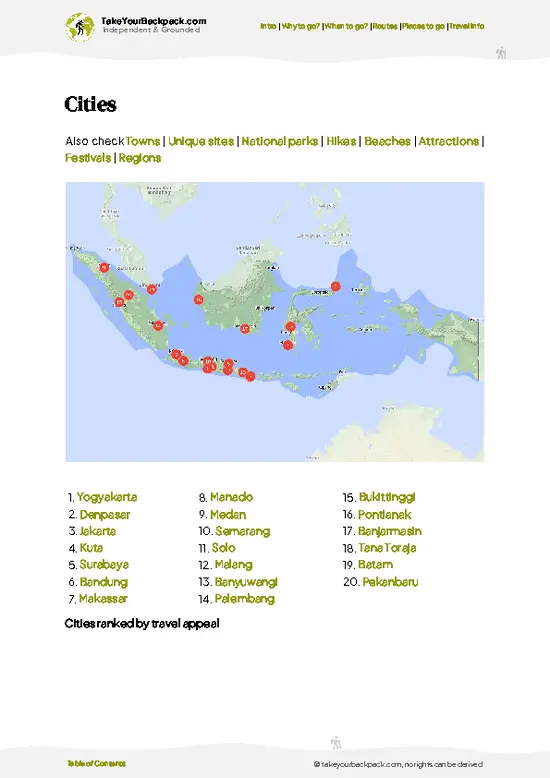
example page 0 from our offline Travel Guide for Indonesia
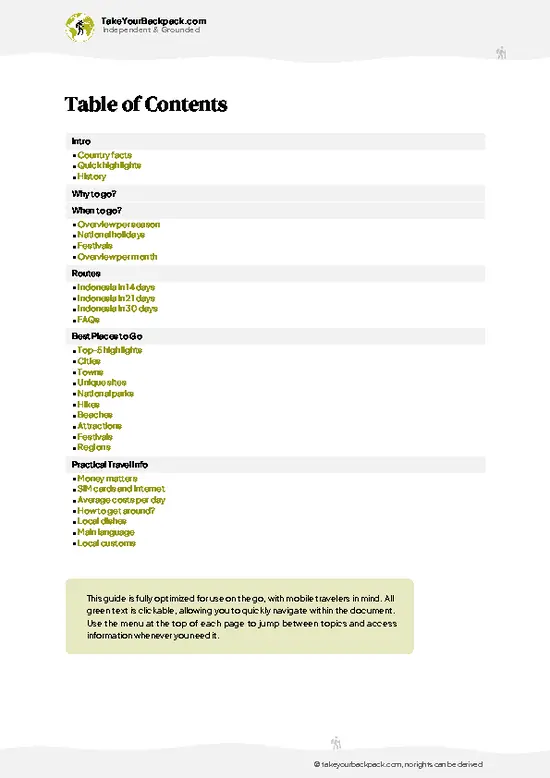
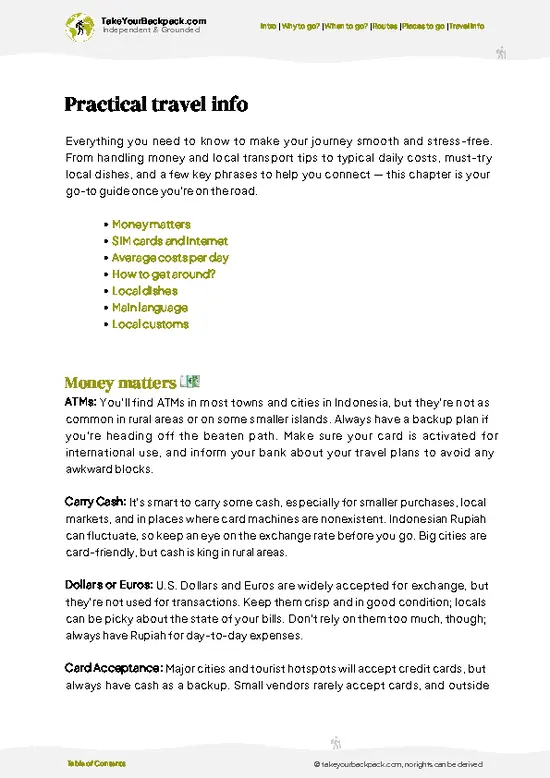
example page 1 from our offline Travel Guide for Indonesia
example page 2 from our offline Travel Guide for Indonesia
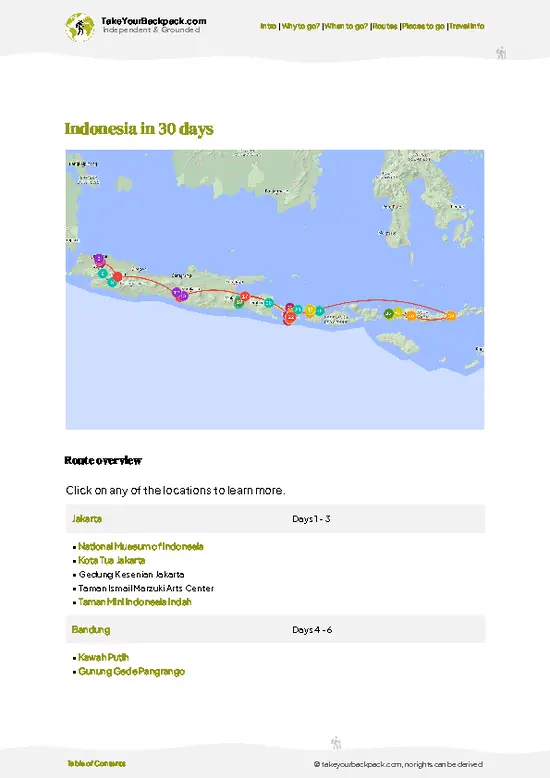
example page 3 from our offline Travel Guide for Indonesia
example page 4 from our offline Travel Guide for Indonesia
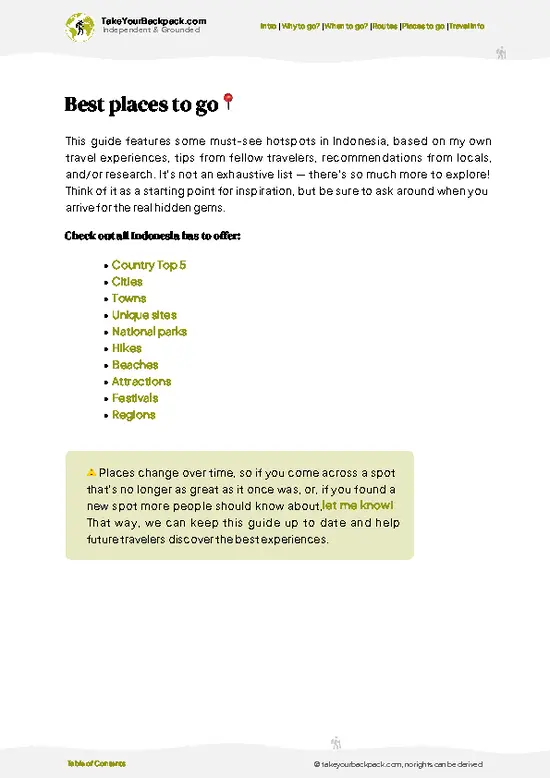
example page 5 from our offline Travel Guide for Indonesia
example page 6 from our offline Travel Guide for Indonesia
example page 7 from our offline Travel Guide for Indonesia
The digital guide (550 pages) contains:
155 highlights, ranked by travel appeal
Optimized 14, 21 & 30-day travel routes
Cities, national parks, landmarks, beaches
How to get around
Offline-friendly for travel without Wi-Fi
👉 Click to see all 30+ guide features

📅 Plan smarter in minutes, not weeks
Month by month travel advice
Festivals & national holidays
Budget expectations

🗺️ Go to the right places, skip the overrated ones
Honest pros & cons of destinations
Top hikes, parks & viewpoints
Lesser-known places most travelers miss
Clear “worth it vs skip it” guidance

🛏️ Travel smoothly without rookie mistakes
Best areas to stay
Transport systems explained simply
Common scams & safety advice
SIM cards, money & practical tips

🌍 Understand the country, not just visit it
Culture & traditions
52 Essential phrases & customs
Festivals worth planning around
Traveler-friendly historical context
Insights that make places more meaningful

📱 Built for real travel conditions
Fully downloadable PDF
Works completely offline
Optimized for phone use
Useful in remote areas & buses
Everything in one place
Save weeks of stressful planning
Get instant access to your full guide. 30‑day money-back guarantee.


By proceeding you agree to our terms.
Sent to your inbox immediately after payment • 100% Secure Checkout
Best Backpacking Travel Advisor 2025 tourism awardBest Backpacking
Travel Advisor
2025
What others say about Take Your Backpack Guides:
⭐⭐⭐⭐⭐
Fantastic, amazing amount of information!
⭐⭐⭐⭐⭐
My goodness this is amazing, it's what I've been looking for hats off too you!
⭐⭐⭐⭐⭐
I think this is absolutely BRILLIANT
⭐⭐⭐⭐
Very complete and informative. It's still missing places, but I gotta to commend you
⭐⭐⭐⭐⭐
This is truly amazing, thank you, can't wait to explore it with my kids!
⭐⭐⭐⭐⭐
Awesome resource, thank you!
⭐⭐⭐⭐⭐
This is amazing! Can't wait to explore the ones I haven't seen
⭐⭐⭐⭐
I love this! Well done, great idea.
⭐⭐⭐⭐⭐
Thanks for taking the time to make this gem!
⭐⭐⭐⭐⭐
This might be the best website I've ever seen.
⭐⭐⭐⭐⭐
Congratulations, and thank you so much for your work; it's incredibly valuable.
⭐⭐⭐⭐
In all seriousness I think you did a great job pointing out the important spots
⭐⭐⭐⭐⭐
10/10 very good
⭐⭐⭐⭐⭐
As someone who's only just starting to visit regularly this is awesome, thank you.
⭐⭐⭐⭐
Thank you very much! I'm going to visit my dad, it's going to be very useful!
⭐⭐⭐⭐⭐
This is really cool! We'll be travelling for the first time and this definitely come in handy.
⭐⭐⭐⭐⭐
You are now our minister of culture, congratulations 👨‍💼
⭐⭐⭐⭐⭐
Just wanted to tell you that this is a pearl! Going to follow your recommendations.
⭐⭐⭐⭐⭐
This is so cool. I'll definitely be using the resource for my travels soon.
⭐⭐⭐⭐⭐
This is very impressive! Good work.
⭐⭐⭐⭐⭐
This is an amazing and informative site. Very well done!

🛏️ Where to stay?How to pick the right area

Sumenep’s best backpacker zone centers around the city’s harbor district and the nearby old town area. This spot nails the balance between safety and social buzz, with plenty of budget guesthouses and hostels clustered close enough to mingle but far enough from noisy main roads. The vibe here is laid-back, with local markets and street food stalls that invite casual chats and cultural immersion without the touristy gloss. Compared to the quieter residential neighborhoods or the more commercial outskirts, this area offers a genuine slice of daily life and easy access to transport for island hopping, … read more 👉
Sumenep’s best backpacker zone centers around the city’s harbor district and the nearby old town area. This spot nails the balance between safety and social buzz, with plenty of budget guesthouses and hostels clustered close enough to mingle but far enough from noisy main roads. The vibe here is laid-back, with local markets and street food stalls that invite casual chats and cultural immersion without the touristy gloss. Compared to the quieter residential neighborhoods or the more commercial outskirts, this area offers a genuine slice of daily life and easy access to transport for island hopping, making it a smart base for solo travelers who want connection without sacrificing comfort or wallet control.

🚌 Getting aroundHow to get around Sumenep

Sumenep moves at a pace that’s neither frantic nor sluggish—it’s a city where schedules exist but bend to local rhythms. You’ll find a blend of predictable bus times and the more fluid, almost improvisational, approach of shared rides and motorbikes weaving through narrow streets. Here, time, money, and comfort are constantly in negotiation, and knowing the trade-offs lets you play the system like a pro.


  • Walking: The cheapest and most flexible way to explore Sumenep’s compact center. No cost, zero schedule, but expect heat and uneven sidewalks—perfect if you want to soak in the street life up close.

  • Local Bemos (minivans): Runs roughly from 6 AM to 6 PM, fares hover around 5,000 IDR. They’re slow and cramped but reliable for short hops and budget-friendly. Comfort is basic, but you get
read more 👉
Sumenep moves at a pace that’s neither frantic nor sluggish—it’s a city where schedules exist but bend to local rhythms. You’ll find a blend of predictable bus times and the more fluid, almost improvisational, approach of shared rides and motorbikes weaving through narrow streets. Here, time, money, and comfort are constantly in negotiation, and knowing the trade-offs lets you play the system like a pro.


  • Walking: The cheapest and most flexible way to explore Sumenep’s compact center. No cost, zero schedule, but expect heat and uneven sidewalks—perfect if you want to soak in the street life up close.

  • Local Bemos (minivans): Runs roughly from 6 AM to 6 PM, fares hover around 5,000 IDR. They’re slow and cramped but reliable for short hops and budget-friendly. Comfort is basic, but you get a front-row seat to daily life.

  • Ojek (motorcycle taxis): Available all day and night, prices start at 10,000 IDR for short rides. Fast and nimble, they cut through traffic but offer zero protection from weather or luggage hassles. Ideal when time beats comfort.

  • Public Buses: Scheduled departures mainly in the morning and late afternoon, fares around 15,000–20,000 IDR. They’re slower than ojeks but more comfortable and better for longer distances outside town.

👛 Costs (as of 20 December 2024)Travel costs and budget guide for Sumenep

Backpacking in Sumenep, Indonesia, offers a clear trade-off between cost and comfort, with prices that reflect its off-the-beaten-path status. Here’s how the daily expenses typically break down for an independent traveler:
  • Dorm Accommodation (High Season): Expect to pay around $8 to $12 per night. High season pushes prices up slightly due to demand, but options remain basic and clean rather than luxurious.
  • Dorm Accommodation (Off-Season): Prices drop to about $5 to $8 per night. Off-season means fewer tourists, so you can negotiate or find quieter spots with the same level of comfort.
  • Meals: Local warungs serve filling meals for $1.50 to $3 each. Stick to traditional dishes like nasi campur or soto madura for authentic flavors and budget-friendly prices. Western-style cafes are rare and
read more 👉
Backpacking in Sumenep, Indonesia, offers a clear trade-off between cost and comfort, with prices that reflect its off-the-beaten-path status. Here’s how the daily expenses typically break down for an independent traveler:
  • Dorm Accommodation (High Season): Expect to pay around $8 to $12 per night. High season pushes prices up slightly due to demand, but options remain basic and clean rather than luxurious.
  • Dorm Accommodation (Off-Season): Prices drop to about $5 to $8 per night. Off-season means fewer tourists, so you can negotiate or find quieter spots with the same level of comfort.
  • Meals: Local warungs serve filling meals for $1.50 to $3 each. Stick to traditional dishes like nasi campur or soto madura for authentic flavors and budget-friendly prices. Western-style cafes are rare and pricier.
  • Local Transport: Getting around town on a motorbike taxi (ojek) or local minibus (angkot) costs roughly $0.30 to $0.70 per trip. It’s cheap but expect basic vehicles and variable schedules.
  • City Transport Pass: Sumenep doesn’t have a formal city transport pass system. Budgeting for individual rides is more practical here.
  • Basic Activities/Entry Fees: Visiting cultural sites like the Sumenep Palace or local museums usually costs between $1 and $3. These modest fees support preservation and offer insight into local history without breaking the bank.
  • Miscellaneous Expenses: Budget around $1 to $2 for bottled water, snacks, or small souvenirs. Internet cafes or SIM cards for data are affordable, typically under $5 for a decent package lasting several days.

Sum it up, and you’re looking at a daily budget roughly between $10 and $20, depending on season and personal choices. This range balances basic comfort with authentic local experiences, letting you stretch your funds without sacrificing the essence of Sumenep. The key is embracing simplicity—this isn’t a luxury hub, but a place where every dollar goes toward genuine cultural immersion rather than tourist fluff.


source: indonesia.travel
⚠️ Prices can change and everyone travels differently, so take this as a rough guide. Hope it helps you plan your adventure!

🚌 Day tripsShort trips worth adding

Sumenep, Indonesia, is a fantastic launchpad for day trips that blend culture, nature, and adventure. Here’s how to make the most of your time.

Karimunjawa Islands
A boat ride of about two hours takes you to these stunning islands. The crystal-clear waters and vibrant coral reefs make for excellent snorkeling. You can spend the day exploring pristine beaches and enjoying fresh seafood at local warungs. Budget around $30 for the round trip and lunch. The best time to visit is during the dry season, from April to October. A common mistake? Underestimating the boat schedule; plan ahead to avoid missing your return.
👉 Explore Karimunjawa Islands

Gili Labak
Just a short boat ride from Sumenep, Gili Labak is a slice of paradise. The island is small, making it easy to explore on foot. Spend … read more 👉
Sumenep, Indonesia, is a fantastic launchpad for day trips that blend culture, nature, and adventure. Here’s how to make the most of your time.

Karimunjawa Islands
A boat ride of about two hours takes you to these stunning islands. The crystal-clear waters and vibrant coral reefs make for excellent snorkeling. You can spend the day exploring pristine beaches and enjoying fresh seafood at local warungs. Budget around $30 for the round trip and lunch. The best time to visit is during the dry season, from April to October. A common mistake? Underestimating the boat schedule; plan ahead to avoid missing your return.
👉 Explore Karimunjawa Islands

Gili Labak
Just a short boat ride from Sumenep, Gili Labak is a slice of paradise. The island is small, making it easy to explore on foot. Spend your day swimming, sunbathing, or enjoying a beachside meal. Expect to spend around $25 for transport and food. The dry season is ideal for this trip, but be cautious of the tides when planning your return.


Asta Tinggi Palace
Only a 30-minute drive from Sumenep, this historical site offers a glimpse into the royal past of Madura. The architecture is unique, and the gardens are perfect for a leisurely stroll. Entry is usually free, but budget a few dollars for snacks. Early morning visits are best to avoid the heat and crowds. Don’t forget your camera; the palace is photogenic!
Want to know what more Indonesia offers?
The Indonesia Travel Guide describes 155 highlights, from cities to national parks, from beaches to hikes

Get the Travel Guide -

🍲 FoodWhat to Eat & Drink

In Sumenep, local cuisine is a vibrant tapestry of flavors. Don’t miss soto, a fragrant soup packed with spices and tender meat, often enjoyed with a side of rice. Nasi jagung, made with corn, is another staple that’s both filling and unique to the region.

Street food stalls are where the magic happens. The night market buzzes with energy, offering everything from grilled skewers to sweet treats like kue cubir.

When it comes to drinks, try es kelapa muda, refreshing young coconut water, perfect for cooling off. Embrace the local custom of sharing food; it’s a way to bond and enjoy the communal spirit.

🛡️ SafetyTraveler Safety Guide

Sumenep is generally safe, but awareness is key. Stick to well-lit areas at night, especially if you’re solo. The bustling market can be overwhelming; keep an eye on your belongings, as pickpocketing can happen in crowded spots. Be cautious with offers from overly friendly locals—sometimes, they lead to inflated prices or unwanted tours. Always negotiate before accepting services. Carry yourself confidently, and trust your instincts. This approach will help you navigate the city smoothly while enjoying its unique charm.

Other Indonesian cities near Sumenep

Explore more nearby:

  • Probolinggo—Bromo gateway, fishing port, mangrove trails| 112 km away
  • Surabaya—port city, colonial remnants, Arab quarter| 125 km away
  • Banyuwangi—Ijen volcano, gateway to Bali, multicultural town| 146 km away

💡 Not sure where to go next?
Create a personalized itinerary for Indonesia including Sumenep and the places that fit your trip.

Generate my itinerary

👉 Discover all cities

Or checkout all Indonesia has to offer (think cities, towns, villages, national parks, hikes, beaches, festivals)
Country photo of Indonesia

We 💚 feedbackWhat to keep in mind

Sumenep’s vibrant culture and stunning historical sites, like the intricately designed Sumenep Palace, are a real treat. But be ready for limited tourist infrastructure; it can feel a bit rough around the edges. Embrace the charm, but don’t expect luxury.

✈️ When did I visit Indonesia?
As part of my 1.5 year travel around the world trip, I visited Indonesia twice (and it was worth it. First in September 2015 and a bit later again in January and February 2016.

✍️ Help improve this page!
The information on this page is based on my own backpacking experience in Indonesia, supplemented with up-to-date research and feedback from other travelers. Travel details can change, so if you notice anything outdated or incomplete, feel free to let me know.


🙋‍♂️ Give feedback

👋 Meet the founderWho’s Behind Take Your Backpack?

Johan, backpacker and founder of TakeYourBackpackHi, I’m Johan (Netherlands 🇳🇱), the creator of TakeYourBackpack. Over the past decade, I’ve backpacked through 80+ countries across six continents, gaining extensive experience with independent travel, long-term trips, and overland routes.

This site is built on a combination of firsthand travel experience and carefully curated insights from other backpackers. Many guides are based on places I’ve personally visited, while others bring together tips, observations, and practical advice shared by trusted travelers I’ve met along the way.

The goal is to provide realistic, experience-driven guidance — not generic itineraries — so you can explore destinations with better context, clearer expectations, and more confidence.

Get full Indonesia guide •
Instant download • 155 highlights • Full Offline guide