×

Indonesia🇮🇩 | citiesProbolinggoBromo gateway, fishing port, mangrove trails | things to do and best time to go

Explore SingkawangExplore Sumenep

Backpacking in Probolinggo
👍 Recommendedcity ranked #20
By Johan Kruseman 🇳🇱 | Updated October 15, 2026

Most visitors miss the morning ritual of Probolinggo's fishing families, who still haul nets by hand at dawn along the harbor, a practice unchanged for generations. Tucked on East Java's northern coast, this working port city punches above its weight as a basecamp for volcano and island exploration. Probolinggo rewards travelers who skip the resort circuit: it's gritty, affordable, and genuinely lived-in, with excellent seafood and direct access to Mount Bromo and the Ijen crater. Compared to touristy Surabaya inland or beach-focused Bali, Probolinggo stays raw and unpretentious. I remember biting into a still-warm fish cake from a street vendor at 6 AM, salt spray on my face, watching boats motor out to sea. The trade-off is clear: comfort and polish for authenticity and adventure.

Discover everything you want to know in the 📖 Indonesia Travel Guide.


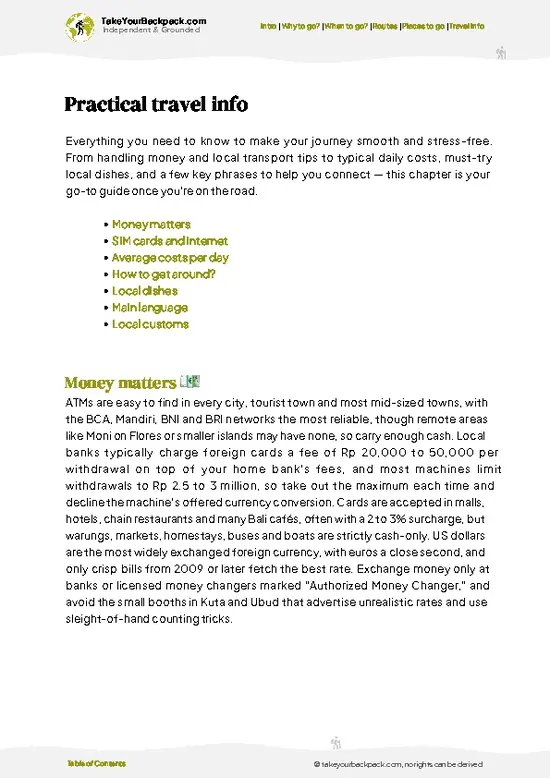
example page 0 from our offline Travel Guide for Indonesia
example page 1 from our offline Travel Guide for Indonesia
example page 2 from our offline Travel Guide for Indonesia
example page 3 from our offline Travel Guide for Indonesia
example page 4 from our offline Travel Guide for Indonesia
example page 5 from our offline Travel Guide for Indonesia
example page 6 from our offline Travel Guide for Indonesia
example page 7 from our offline Travel Guide for Indonesia
Loading the map 🌍
CLICK TO FILTER
cities
towns
villages
landmarks
national parks
hikes
beaches
attractions
festivals
regions
SHOW COUNTRY’S BESTSHOW ALL

✨ Why go?
Ranked #20 city in Indonesia
What makes this city worth visiting

Probolinggo exists primarily as a launch point for two of Indonesia's most dramatic natural sites: Mount Bromo and the Ijen crater. Most backpackers base themselves here for 2 to 3 days, using the city as a hub rather than a destination. The hostels are cheap and social, the food scene centers on fresh seafood at street prices, and the town is walkable enough to explore on foot. Getting onward is straightforward: buses and minivans depart daily for Surabaya, Bali, and the Gili Islands. If you're chasing volcanoes and want to skip the tourist markup of resort towns, Probolinggo delivers logistics and value without pretense.

💡 HighlightsKey sights and experiences for travelers

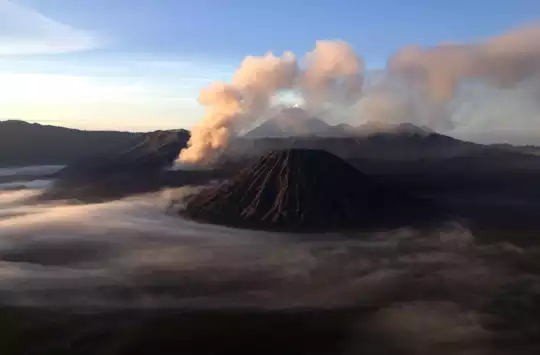
  1. Mount Bromo: Indonesia's most photographed volcano, accessible via jeep tour from Probolinggo (2 to 3 hours away). Sunrise hikes across the sand sea and crater rim are the main draw. Tours cost US$25 to 50 per person and depart before dawn; allow 8 to 10 hours total. Best visited June to September for clear skies.
  2. Ijen Crater and Blue Fire: A sulfur crater lake with an otherworldly blue glow at night, caused by burning sulfur gases. Located 2 to 3 hours from Probolinggo. Night hikes cost US$30 to 60 and take 6 to 8 hours; the hike is steep and physically demanding. Best November to April.
  3. Probolinggo Harbor at Dawn: Watch fishing boats depart and nets being hauled by hand. Free to observe; arrive by 5:30 AM. Takes 30 minutes to 1 hour. A quiet, unpolished glimpse of daily life most tourists
… read more 👉
  1. Mount Bromo: Indonesia's most photographed volcano, accessible via jeep tour from Probolinggo (2 to 3 hours away). Sunrise hikes across the sand sea and crater rim are the main draw. Tours cost US$25 to 50 per person and depart before dawn; allow 8 to 10 hours total. Best visited June to September for clear skies.
  2. Ijen Crater and Blue Fire: A sulfur crater lake with an otherworldly blue glow at night, caused by burning sulfur gases. Located 2 to 3 hours from Probolinggo. Night hikes cost US$30 to 60 and take 6 to 8 hours; the hike is steep and physically demanding. Best November to April.
  3. Probolinggo Harbor at Dawn: Watch fishing boats depart and nets being hauled by hand. Free to observe; arrive by 5:30 AM. Takes 30 minutes to 1 hour. A quiet, unpolished glimpse of daily life most tourists miss.
  4. Alun-Alun Probolinggo: The town square, ringed by colonial-era buildings and local warungs. Free to walk; best visited early morning or evening. Spend 1 to 2 hours. Offers a genuine sense of the city's rhythm without tourist overlay.
  5. Taman Hiburan Rakyat (People's Amusement Park): A modest, local-focused park with rides, gardens, and food stalls. Entry costs US$1 to 2. Spend 2 to 3 hours. Rarely visited by foreign backpackers but reveals how locals spend leisure time.
  6. Pantai Pasir Putih (White Sand Beach): A quiet beach 15 kilometers south, less crowded than resort beaches. Free entry; 30 minutes by local transport. Spend 2 to 3 hours swimming or walking. Best visited on weekdays.
Day trips from Probolinggo also reach Madura Island (ferry 1 hour, known for salt farms and local culture) and the Madakaripura Waterfall (1.5 hours by car, a dramatic gorge with a 200-meter cascade). I'd pick Mount Bromo first because the sunrise experience justifies the early wake-up and the logistics are straightforward from town.
Spotted a mistake or missing something? Contact us.

Things to do near Probolinggo

Ratings based on Tripadvisor reviews. When you book through this link, you support our work at no extra cost to you.

🏘️ NeighborhoodsKey areas and districts to know

Probolinggo spreads across a compact grid that rewards walking and exploring on foot. The town splits into distinct zones, each with its own rhythm.
  • Central Probolinggo (around Jalan Soekarno-Hatta): The commercial heart pulses with markets, shops, and street food stalls. Walk the main drag for local energy, grab breakfast at warung clusters, and navigate the organized chaos of daily life. Highly walkable, moderate noise.
  • Harbor District (north toward the coast): Fishing boats, seafood vendors, and salt warehouses define this working area. Less polished but authentic, with fresh fish markets and waterfront warung. Walkable but rougher underfoot; fewer tourists.
  • Residential Neighborhoods (south and east): Quieter streets lined with family homes, small shops, and local cafés. Slower pace, safer
… read more 👉
Probolinggo spreads across a compact grid that rewards walking and exploring on foot. The town splits into distinct zones, each with its own rhythm.
  • Central Probolinggo (around Jalan Soekarno-Hatta): The commercial heart pulses with markets, shops, and street food stalls. Walk the main drag for local energy, grab breakfast at warung clusters, and navigate the organized chaos of daily life. Highly walkable, moderate noise.
  • Harbor District (north toward the coast): Fishing boats, seafood vendors, and salt warehouses define this working area. Less polished but authentic, with fresh fish markets and waterfront warung. Walkable but rougher underfoot; fewer tourists.
  • Residential Neighborhoods (south and east): Quieter streets lined with family homes, small shops, and local cafés. Slower pace, safer for solo evening walks, good for understanding how locals live. Very walkable, minimal nightlife.

⌛️ 1 day1-day itinerary for Probolinggo

Probolinggo rewards early risers and those comfortable with unvarnished street life. This itinerary captures the city's working rhythm and key landmarks without rushing.

5:30 AM: Probolinggo Harbor. Arrive before dawn to watch fishing boats motor out and crews haul nets. The light is soft, the air smells of salt and diesel, and you'll see almost no other tourists. Walk along the waterfront for 45 minutes, then grab coffee and a fried fish cake from a nearby warung.

7:30 AM: Alun-Alun Probolinggo. Head to the town square, ringed by colonial buildings and local shops opening for the day. Sit on a bench, order tea or fresh juice from a vendor, and watch the city wake up. Spend 1 hour here.

8:45 AM: Jalan Soekarno-Hatta Market. Walk through the main commercial street's morning market, where … read more 👉
Probolinggo rewards early risers and those comfortable with unvarnished street life. This itinerary captures the city's working rhythm and key landmarks without rushing.

5:30 AM: Probolinggo Harbor. Arrive before dawn to watch fishing boats motor out and crews haul nets. The light is soft, the air smells of salt and diesel, and you'll see almost no other tourists. Walk along the waterfront for 45 minutes, then grab coffee and a fried fish cake from a nearby warung.

7:30 AM: Alun-Alun Probolinggo. Head to the town square, ringed by colonial buildings and local shops opening for the day. Sit on a bench, order tea or fresh juice from a vendor, and watch the city wake up. Spend 1 hour here.

8:45 AM: Jalan Soekarno-Hatta Market. Walk through the main commercial street's morning market, where vendors sell produce, fish, and prepared foods. It's chaotic and authentic. Spend 45 minutes browsing and eating if hungry.

10:00 AM: Taman Hiburan Rakyat. Visit this local amusement park, a genuine window into how Probolinggo residents spend weekends. Wander the gardens, watch families on rides, and grab lunch at a food stall. Spend 2 hours. By midday, heat builds and most backpackers rest before evening or depart for volcano tours.

🌤️ When to go?Choosing the right time of year

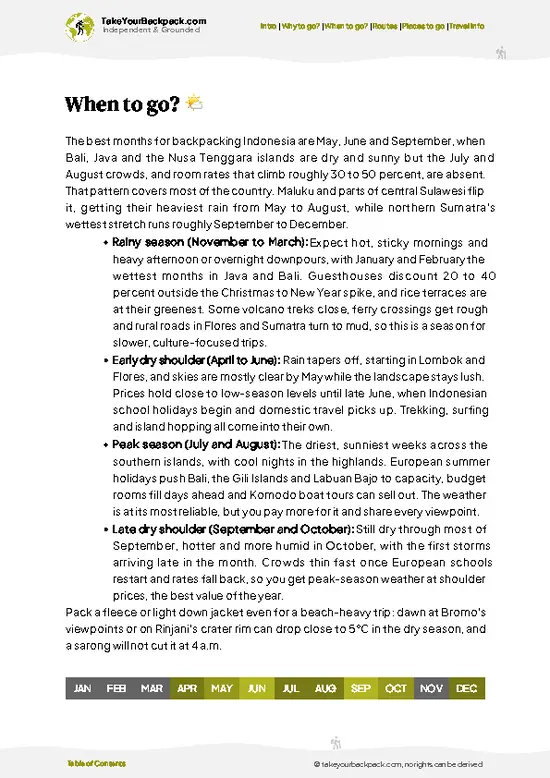
  • Dry Season (May to September): Clear skies, warm days (28 to 32°C / 82 to 90°F), and reliable weather for outdoor activities. Fewer tourists, lower prices. Best window for climbing Mount Bromo.
  • Wet Season (October to April): Frequent rain, higher humidity (25 to 28°C / 77 to 82°F), and muddy trails. Fewer crowds, cheapest accommodation. Bromo visibility drops significantly.
Visit May to September for the clearest mountain views and most comfortable hiking conditions.

source: climatestotravel.comJANJanuary: fair for travelingFEBFebruary: fair for travelingMARMarch: fair for travelingAPRApril: fair for travelingMAYMay: highly recommended for travelingJUNJune: excellent for travelingJULJuly: highly recommended for travelingAUGAugust: highly recommended for travelingSEPSeptember: highly recommended for travelingOCTOctober: fair for travelingNOVNovember: fair for travelingDECDecember: fair for traveling
when-to-go

✈️ The backpacker research shortcutIndonesia Travel Guide

An offline-friendly backpacking guide with optimized travel routes, ranked highlights, transport advice, and the best areas to stay.
example page 0 from our offline Travel Guide for Indonesia
example page 1 from our offline Travel Guide for Indonesia
example page 2 from our offline Travel Guide for Indonesia
example page 3 from our offline Travel Guide for Indonesia
example page 4 from our offline Travel Guide for Indonesia
example page 5 from our offline Travel Guide for Indonesia
example page 6 from our offline Travel Guide for Indonesia
example page 7 from our offline Travel Guide for Indonesia
The digital guide (460 pages) contains:
✅ 153 highlights, ranked by travel appeal
✅ Optimized 14, 21 & 30-day travel routes
✅ Cities, national parks, landmarks, beaches
✅ How to get around
✅ Offline-friendly for travel without Wi-Fi
👉 Click to see all 30+ guide features

📅 Plan smarter in minutes, not weeks
✅ Month by month travel advice
✅ Festivals & national holidays
✅ Budget expectations

🗺️ Go to the right places, skip the overrated ones
✅ Honest pros & cons of destinations
✅ Top hikes, parks & viewpoints
✅ Lesser-known places most travelers miss
✅ Clear “worth it vs skip it” guidance

🛏️ Travel smoothly without rookie mistakes
✅ Best areas to stay
✅ Transport systems explained simply
✅ Common scams & safety advice
✅ SIM cards, money & practical tips

🌍 Understand the country, not just visit it
✅ Culture & traditions
✅ 52 Essential phrases & customs
✅ Festivals worth planning around
✅ Traveler-friendly historical context
✅ Insights that make places more meaningful

📱 Built for real travel conditions
✅ Fully downloadable PDF
✅ Works completely offline
✅ Optimized for phone use
✅ Useful in remote areas & buses
✅ Everything in one place
Stop searching, start planning
Get instant access to your full guide. 30‑day money-back guarantee.
+ Add another guide for just

By proceeding you agree to our terms.
Sent to your inbox immediately after payment • 100% Secure Checkout
Best Backpacking Travel Advisor 2025 tourism awardBest Backpacking
Travel Advisor
2025
What others say about Take Your Backpack Guides:
⭐⭐⭐⭐⭐
Fantastic, amazing amount of information!
⭐⭐⭐⭐⭐
My goodness this is amazing, it's what I've been looking for hats off too you!
⭐⭐⭐⭐⭐
I think this is absolutely BRILLIANT
⭐⭐⭐⭐
Very complete and informative. It's still missing places, but I gotta to commend you
⭐⭐⭐⭐⭐
This is truly amazing, thank you, can't wait to explore it with my kids!
⭐⭐⭐⭐⭐
Awesome resource, thank you!
⭐⭐⭐⭐⭐
This is amazing! Can't wait to explore the ones I haven't seen
⭐⭐⭐⭐
I love this! Well done, great idea.
⭐⭐⭐⭐⭐
Thanks for taking the time to make this gem!
⭐⭐⭐⭐⭐
This might be the best website I've ever seen.
⭐⭐⭐⭐⭐
Congratulations, and thank you so much for your work; it's incredibly valuable.
⭐⭐⭐⭐
In all seriousness I think you did a great job pointing out the important spots
⭐⭐⭐⭐⭐
10/10 very good
⭐⭐⭐⭐⭐
As someone who's only just starting to visit regularly this is awesome, thank you.
⭐⭐⭐⭐
Thank you very much! I'm going to visit my dad, it's going to be very useful!
⭐⭐⭐⭐⭐
This is really cool! We'll be travelling for the first time and this definitely come in handy.
⭐⭐⭐⭐⭐
You are now our minister of culture, congratulations 👨‍💼
⭐⭐⭐⭐⭐
Just wanted to tell you that this is a pearl! Going to follow your recommendations.
⭐⭐⭐⭐⭐
This is so cool. I'll definitely be using the resource for my travels soon.
⭐⭐⭐⭐⭐
This is very impressive! Good work.
⭐⭐⭐⭐⭐
This is an amazing and informative site. Very well done!

🛏️ Where to stay?Best areas and accommodation options

Central Probolinggo offers the best balance of budget beds, walkability, and access to transport for day trips. Hostels and budget guesthouses cluster around Jalan Soekarno-Hatta and the market district, where rooms run US$8 to 15 per night. This area stays safe after dark, has minimal noise compared to larger cities, and puts you within walking distance of food, shops, and minivan terminals heading to Mount Bromo. Avoid the harbor district for sleeping; it's authentic but noisier and less convenient for backpackers.

🚌 Getting aroundHow to get from A to B

Walking is the fastest way to move through Probolinggo's compact center, and the town is small enough that most backpackers cover it on foot. Ojek (motorcycle taxis) fill gaps for longer distances or when tired, while local buses and minivans connect to nearby towns and Mount Bromo. Traffic is light compared to larger cities, and navigation is straightforward.
  • Walking: Free, immediate, and covers the entire town center in 20 to 30 minutes. Best for exploring markets, eating, and soaking in local life. Safe during daylight and early evening.
  • Ojek (motorcycle taxi): US$1 to 3 per ride depending on distance. Fast, flexible, and door-to-door. Negotiate price before boarding. Operates dawn to late evening.
  • Local minivans (angkot): US$0.50 to 1 per journey. Shared routes, frequent stops, and packed
… read more 👉
Walking is the fastest way to move through Probolinggo's compact center, and the town is small enough that most backpackers cover it on foot. Ojek (motorcycle taxis) fill gaps for longer distances or when tired, while local buses and minivans connect to nearby towns and Mount Bromo. Traffic is light compared to larger cities, and navigation is straightforward.
  • Walking: Free, immediate, and covers the entire town center in 20 to 30 minutes. Best for exploring markets, eating, and soaking in local life. Safe during daylight and early evening.
  • Ojek (motorcycle taxi): US$1 to 3 per ride depending on distance. Fast, flexible, and door-to-door. Negotiate price before boarding. Operates dawn to late evening.
  • Local minivans (angkot): US$0.50 to 1 per journey. Shared routes, frequent stops, and packed during rush hours. Slower but cheapest option for moving between neighborhoods.
  • Rental motorbike: US$5 to 8 per day. Gives freedom to explore surrounding villages and reach Bromo independently. Requires an international license and comfort with Indonesian traffic.

👛 Costs (as of 15 October 2026)What things cost and how to budget

Budget backpacking in Probolinggo costs US$20 to 35 per day, making it one of Indonesia's cheapest bases for exploring East Java. Accommodation is the biggest variable; dorm beds and basic private rooms are genuinely affordable, while meals and transport remain minimal expenses.
CategoryBudget RangeLocal Reality
Dorm bed (high season)US$10 to 15Clean, basic rooms with fans; hot water varies. High season is May to September.
Dorm bed (off-season)US$8 to 12Same quality, lower demand. October to April sees discounts.
Meals (per day)US$4 to 8Warung meals US$1 to 3 each. Street food and markets are cheapest. Western food costs more.
Local transportUS$0.50 to 3Ojek US$1 to 3 per ride. Minivans US$0.50 to 1. Walking is free.
City transport passN/ANo pass system; pay per journey. Minimal daily transport
… read more 👉
Budget backpacking in Probolinggo costs US$20 to 35 per day, making it one of Indonesia's cheapest bases for exploring East Java. Accommodation is the biggest variable; dorm beds and basic private rooms are genuinely affordable, while meals and transport remain minimal expenses.
CategoryBudget RangeLocal Reality
Dorm bed (high season)US$10 to 15Clean, basic rooms with fans; hot water varies. High season is May to September.
Dorm bed (off-season)US$8 to 12Same quality, lower demand. October to April sees discounts.
Meals (per day)US$4 to 8Warung meals US$1 to 3 each. Street food and markets are cheapest. Western food costs more.
Local transportUS$0.50 to 3Ojek US$1 to 3 per ride. Minivans US$0.50 to 1. Walking is free.
City transport passN/ANo pass system; pay per journey. Minimal daily transport cost in a small town.
Activities and entry feesUS$3 to 15Mount Bromo park fee US$3 to 5. Ijen crater US$8 to 15. Waterfalls US$2 to 5.
MiscellaneousUS$2 to 5Coffee, snacks, laundry, and incidentals.
Total Daily BudgetUS$20 to 35Covers accommodation, food, local movement, and one activity every few days.
Eat at warung markets instead of tourist restaurants to stretch your budget further.
⚠️ Prices can change and everyone travels differently, so take this as a rough guide. Hope it helps you plan your adventure!

🚌 Day tripsExploring the surroundings

Mount Bromo
The volcanic crater dominates the region and makes for the most popular day trip from Probolinggo. Most travelers leave before dawn (around 3 to 4 a.m.) to catch sunrise over the otherworldly landscape of ash plains and smoking vents. The journey takes 1.5 to 2 hours by jeep from town, and costs run US$25 to 50 per person for a guided tour including transport and park fees. The best window is May through September when dry conditions make the roads passable and visibility clear. First-timers often underestimate how cold the summit gets at dawn; bring a jacket even though Probolinggo feels tropical.
👉 Explore Mount Bromo

Ijen Crater
This sulfur mine and crater lake sits about 2.5 to 3 hours away and rewards the longer journey with an otherworldly blue glow at night (visible only in … read more 👉
Mount Bromo
The volcanic crater dominates the region and makes for the most popular day trip from Probolinggo. Most travelers leave before dawn (around 3 to 4 a.m.) to catch sunrise over the otherworldly landscape of ash plains and smoking vents. The journey takes 1.5 to 2 hours by jeep from town, and costs run US$25 to 50 per person for a guided tour including transport and park fees. The best window is May through September when dry conditions make the roads passable and visibility clear. First-timers often underestimate how cold the summit gets at dawn; bring a jacket even though Probolinggo feels tropical.
👉 Explore Mount Bromo

Ijen Crater
This sulfur mine and crater lake sits about 2.5 to 3 hours away and rewards the longer journey with an otherworldly blue glow at night (visible only in darkness). Budget US$40 to 70 for a guided tour with transport, park entry, and a local guide to the crater rim. The hike itself takes 2 to 3 hours uphill. Go between May and October for the best conditions; the rainy season makes the trail treacherous. The sulfur miners work year-round, and watching them haul heavy loads up the slope puts the experience in sharp perspective.
👉 Explore Ijen Crater

Madakaripura Waterfall
Indonesia's tallest waterfall cascades through a narrow canyon about 1.5 hours south of Probolinggo. The hike through the river gorge is short but involves wading and scrambling over rocks; wear shoes with grip. Total cost runs US$15 to 25 including transport and a local guide. The waterfall flows year-round but is most powerful during the wet season (November to March). Go early to avoid crowds and the afternoon heat that builds in the canyon.


Taman Hiburan Jatim Park
This theme park sprawls across the hills between Probolinggo and Surabaya, about 45 minutes away by car. It's a mixed bag: the rides and animal encounters appeal to families, but backpackers often find it overpriced at US$20 to 35 entry. The park is busiest on weekends and school holidays. If you're traveling with others or want a break from volcanoes, it's a reasonable half-day option, though the reward doesn't match the cost.

🍲 FoodLocal Cuisine & Drinks

Signature dishes reflect East Java's coastal and agricultural character. Rawon, a dark beef soup flavored with black nuts, is a local staple. Soto Ayam (turmeric chicken soup) appears everywhere and costs US$1 to 2. Fresh seafood dominates the harbor district; grilled fish and squid are cheap and excellent. Lumpia (fried spring rolls) and perkedel (potato fritters) fill street stalls.

Where to eat: Warung clusters around the central market and Jalan Soekarno-Hatta serve authentic meals for US$2 to 4. Street vendors sell snacks and breakfast items from dawn. Small family-run restaurants near the harbor offer the freshest seafood at low prices. Coffee culture is strong; local kopi (black coffee) costs US$0.50 and tastes excellent.

Customs: Eat with your right hand or utensils. Spicy is the … read more 👉
Signature dishes reflect East Java's coastal and agricultural character. Rawon, a dark beef soup flavored with black nuts, is a local staple. Soto Ayam (turmeric chicken soup) appears everywhere and costs US$1 to 2. Fresh seafood dominates the harbor district; grilled fish and squid are cheap and excellent. Lumpia (fried spring rolls) and perkedel (potato fritters) fill street stalls.

Where to eat: Warung clusters around the central market and Jalan Soekarno-Hatta serve authentic meals for US$2 to 4. Street vendors sell snacks and breakfast items from dawn. Small family-run restaurants near the harbor offer the freshest seafood at low prices. Coffee culture is strong; local kopi (black coffee) costs US$0.50 and tastes excellent.

Customs: Eat with your right hand or utensils. Spicy is the default; ask for mild if needed. Sharing dishes is normal. Tipping is not expected but appreciated.

🛡️ SafetySafety Tips and Common Scams in Probolinggo

Probolinggo is a safe, low-crime town for backpackers. Petty theft is rare, and violent crime is not a concern. Walk confidently during the day and early evening without worry. Solo travelers, including women, move freely without harassment. Avoid displaying expensive cameras or jewelry, as you would anywhere, but this is standard travel sense rather than a specific local risk. The main annoyance is persistent touts near transport terminals offering overpriced tours; politely decline and book directly with established operators or your guesthouse. Night walking is safe, though the town quiets after 10 p.m., so plan accordingly.

FAQFrequently asked questions about Probolinggo

Two to three days is ideal. Most backpackers spend one night, take a Mount Bromo or Ijen tour the next day, and depart. Staying longer lets you explore the harbor, town markets, and nearby beaches without rushing, or combine multiple volcano tours.
Yes, Probolinggo is generally safe for solo backpackers. Petty theft and scams exist in crowded markets and bus stations, but violent crime is rare. Use standard precautions: avoid displaying valuables, stay aware in crowded areas, and use registered taxis or ride-sharing apps at night. The backpacker community is small but welcoming.
Probolinggo is known as the gateway to Mount Bromo and Ijen crater, two of Indonesia's most dramatic volcanoes. It's also a working fishing port with authentic street food, colonial-era architecture, and a genuine local atmosphere untouched by mass tourism. Most visitors come for the volcano tours, not the city itself.
⚠️ Things can change over time, so always validate details locally before you go.

Other Indonesian cities near Probolinggo

Explore more nearby:

  • Malang—colonial lanes, university town, cool climate| 69 km away
  • Surabaya—port city, colonial remnants, Arab quarter| 74 km away
  • Sumenep—Madura palace, salt pans, island ferries| 108 km away

💡 Not sure where to go next?
Create a personalized itinerary for Indonesia including Probolinggo and the places that fit your trip.

Generate my itinerary

👉 Discover all cities

Or checkout all Indonesia has to offer (think cities, towns, villages, national parks, hikes, beaches, festivals)
Country photo of Indonesia

We 💚 feedbackIs it worth it?

Probolinggo is worth visiting for its unfiltered authenticity and strategic position between two world-class volcanoes. The main drawback is that the city itself offers limited attractions; most backpackers stay 2 to 3 days as a basecamp, not a destination.

✈️ When did I visit Indonesia?
As part of my 1.5 year travel around the world trip, I visited Indonesia twice (and it was worth it): first in September 2015 and a bit later again in January and February 2016.

✍️ Help improve this page!
The information on this page is based on my own backpacking experience in Indonesia, supplemented with up-to-date research and feedback from other travelers. Travel details can change, so if you notice anything outdated or incomplete, feel free to let me know.


🙋‍♂️ Give feedback

👋 Meet the founderWho’s Behind Take Your Backpack?

Johan, backpacker and founder of TakeYourBackpackHi, I’m Johan (Netherlands 🇳🇱), the creator of TakeYourBackpack. Over the past 3 decades, I’ve backpacked through 90+ countries across six continents, gaining extensive experience with independent travel, long-term trips, and overland routes.

This site is built on a combination of firsthand travel experience and carefully curated insights from other backpackers. Many guides are based on places I’ve personally visited, while others bring together tips, observations, and practical advice shared by trusted travelers I’ve met along the way.

The goal is to provide realistic, experience-driven guidance — not generic itineraries — so you can explore destinations with better context, clearer expectations, and more confidence.