×

Indonesia🇮🇩 | national parksTropical Rainforest Heritage of Sumatramontane forest, endemic wildlife, interconnected reserves | things to do and best time to go

Explore Tanjung Puting National ParkExplore Ujung Kulon National Park

Backpacking in Tropical Rainforest Heritage of Sumatra
UNESCO World Heritage site
👍 Recommendednational park ranked #9
By Johan Kruseman 🇳🇱 | Updated April 18, 2026

Your boots sink into black mud, leeches flick at your ankles, and a hornbill crashes through the canopy so loudly it feels like a falling tree. Sweat stings your eyes, but somewhere above, a gibbon whoops like an alarm clock you can’t snooze. This is the Tropical Rainforest Heritage of Sumatra, a UNESCO cluster of parks (Gunung Leuser, Kerinci Seblat, Bukit Barisan Selatan) stretched along Sumatra’s spine in western Indonesia. For backpackers, it’s raw and rewarding: real jungle trekking, serious elevation, wild rivers, and a genuine shot at orangutans, elephants, even (very rarely) tigers. It’s cheaper and rougher than many Java or Bali parks, but also slower to reach, with patchy transport, basic homestays instead of slick hostels, and trails that can feel more like routes than paths. Compared with, say, Bromo or Ijen, you trade easy sunrise viewpoints and crowds for long, wet hikes, fewer people, and a vibe that’s more field expedition than holiday. Entrance fees and mandatory guides add up, yet they also keep the circus away; if you’re willing to sweat and accept some discomfort, this is where Indonesia stops being a postcard and starts feeling like a living, breathing forest.

Discover everything you want to know in the 📖 Indonesia Travel Guide.
Loading the map 🌍
CLICK TO FILTER
city
town
unique site
national park
hike
beach
attraction
festival
region
SHOW COUNTRY’S BESTSHOW ALL

✨ Why go?
Ranked #9 national park in Indonesia
What sets this place apart

Backpackers flock to the Tropical Rainforest Heritage of Sumatra for a mix of independent exploration and budget-friendly options. The park offers a range of campsites and hostels nearby, making it easy to stretch your funds while soaking in the lush surroundings.

Trails vary from easy walks to challenging treks, catering to all levels of experience. This diversity allows you to tailor your adventure, whether you want a leisurely stroll or a rigorous hike.

Self-guided travelers thrive here; the park is well-marked, and the wildlife is often more visible when you’re on your own schedule. While guided tours exist, they can feel restrictive. Embracing the freedom of solo exploration lets you connect with the vibrant ecosystem at your own pace, ensuring your energy and budget are spent on the moments that truly matter.
Get the complete Travel Guide for Indonesia
Everything organized for offline planning — routes, highlights, costs & tips

See what’s inside 👉

Get the Travel Guide -

💡 HighlightsThe experiences that define the visit

  • Bukit Lawang orangutan treks — The easiest, most rewarding place to actually see wild orangutans up close without a zoo vibe. Short jungle walks from the riverside village take you into primary forest where habituated adults and playful juveniles come within arm’s reach. Great for backpackers: cheap guides, river swims, and an instant feel for the jungle.
  • Mount Kerinci ascent — Sumatra’s highest volcano and a proper multi-day hike through montane forest to alpine ridges. The views from the crater rim at sunrise are brutal in the best way — cloud seas, steaming fumaroles and prime birdwatching on the way up. Require stamina, basic gear and patience for the weather.
  • Danau Gunung Tujuh (Crater Lake) — A remote, mirror-blue crater lake sitting inside a green amphitheatre below Kerinci’s peaks.
read more 👉
  • Bukit Lawang orangutan treks — The easiest, most rewarding place to actually see wild orangutans up close without a zoo vibe. Short jungle walks from the riverside village take you into primary forest where habituated adults and playful juveniles come within arm’s reach. Great for backpackers: cheap guides, river swims, and an instant feel for the jungle.
  • Mount Kerinci ascent — Sumatra’s highest volcano and a proper multi-day hike through montane forest to alpine ridges. The views from the crater rim at sunrise are brutal in the best way — cloud seas, steaming fumaroles and prime birdwatching on the way up. Require stamina, basic gear and patience for the weather.
  • Danau Gunung Tujuh (Crater Lake) — A remote, mirror-blue crater lake sitting inside a green amphitheatre below Kerinci’s peaks. The walk to the lake and the quiet shoreline make a perfect one-day side trip after the Kerinci climb or as a mellow alternative to long trekking.
  • Rafflesia blooms — Seeing the world’s largest single flower is a freaky, rare thrill — a smelly, gigantic bloom that pops up for a few days and then disappears. Kerinci Seblat is one of the better places to catch one if local guides and timing line up. Definitely a “you had to be there” kind of moment.
  • Sumatran tiger habitat and wildlife-watching — This isn’t a safari where you tick off big cats every hour, but the parks (especially Kerinci Seblat) protect important tiger country. Tracks, scent marks, camera-trap photos and glimpses of elusive wildlife (gaurs, deer, macaques) make jungle trekking feel alive with possibility.
  • Lowland rainforest and elephant country (Leuser Ecosystem) — Vast, biodiverse lowland jungle with river systems, canopy life and wild elephants. The scale here is what hits you — the jungle feels continuous, full of birds, frogs, and the slow, deep traces of large mammals.
  • Bukit Barisan coastal forests and beaches — The southern strip of the heritage area drops to long, quiet beaches, mangroves and coastal forest patches where turtles nest and shorebirds gather. It’s a nice contrast to the highland trails: salt, sand and different wildlife after days in damp jungle.
  • Personal favorite: Bukit Lawang orangutan treks — It’s accessible, emotional and genuinely wild — you can be deep in rainforest within hours, meet orangutans in their element, and still sleep in a cheap guesthouse by the river. Perfect combo for a budget backpacker.
Spotted a mistake or missing something? Contact us.

🌤️ When to go?Choosing the right time of year


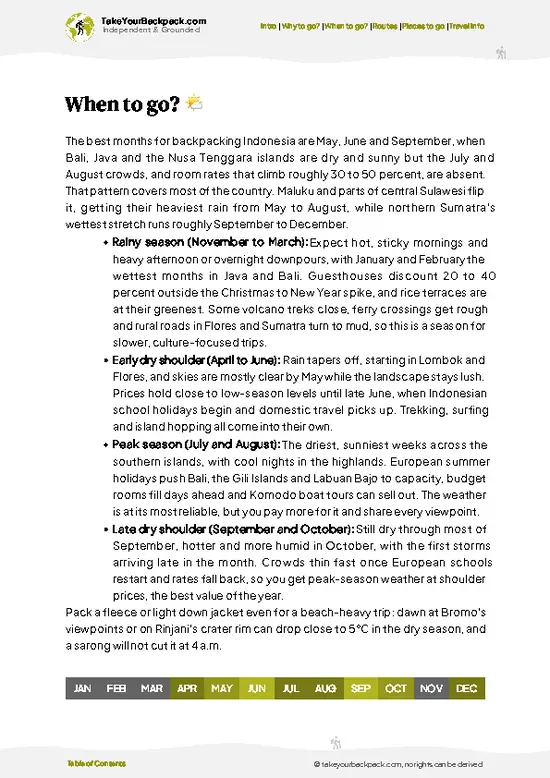
  • Topic: Weather – The dry season from June to September is your best bet. Rainfall drops significantly, making trails less slippery and river crossings safer. Avoid the wet season (November to March), when heavy rains can turn paths into mud pits and increase leech activity.

  • Topic: Temperature – Expect daytime highs around 28-32°C (82-90°F) and cooler nights near 20°C (68°F). Humidity stays high year-round, so pack breathable gear and prepare for sweat, even in the dry season.

  • Topic: Daylight Hours – Daylight is fairly consistent, roughly 11 to 12 hours daily. Plan hikes early to avoid afternoon heat and maximize wildlife spotting in cooler morning light.

  • Topic: Crowds – Peak tourist flow aligns with the dry season, especially July and August. If you want solitude, aim for shoulder
read more 👉

  • Topic: Weather – The dry season from June to September is your best bet. Rainfall drops significantly, making trails less slippery and river crossings safer. Avoid the wet season (November to March), when heavy rains can turn paths into mud pits and increase leech activity.

  • Topic: Temperature – Expect daytime highs around 28-32°C (82-90°F) and cooler nights near 20°C (68°F). Humidity stays high year-round, so pack breathable gear and prepare for sweat, even in the dry season.

  • Topic: Daylight Hours – Daylight is fairly consistent, roughly 11 to 12 hours daily. Plan hikes early to avoid afternoon heat and maximize wildlife spotting in cooler morning light.

  • Topic: Crowds – Peak tourist flow aligns with the dry season, especially July and August. If you want solitude, aim for shoulder months like May or October, but be ready for occasional showers.

  • Topic: Seasonal Activities – Wildlife sightings, especially orangutans, peak during the dry season when animals are more active and easier to spot. River activities are safer and more accessible then, too.

  • Topic: Price Fluctuations – Accommodation and guided tours hike prices during the dry season. Booking ahead can save you from last-minute surges, but off-season rates drop significantly, offering better value if you can handle wetter conditions.


Pro-tip: Time your visit for early dry season—June or September—to dodge the worst crowds and still enjoy mostly dry trails and active wildlife without paying peak prices.


source: climatestotravel.comJANJanuary: below average for travelingFEBFebruary: below average for travelingMARMarch: fair for travelingAPRApril: fair for travelingMAYMay: good for travelingJUNJune: excellent for travelingJULJuly: highly recommended for travelingAUGAugust: highly recommended for travelingSEPSeptember: excellent for travelingOCTOctober: good for travelingNOVNovember: below average for travelingDECDecember: below average for traveling
when-to-go

✈️ The backpacker research shortcutIndonesia Travel Guide

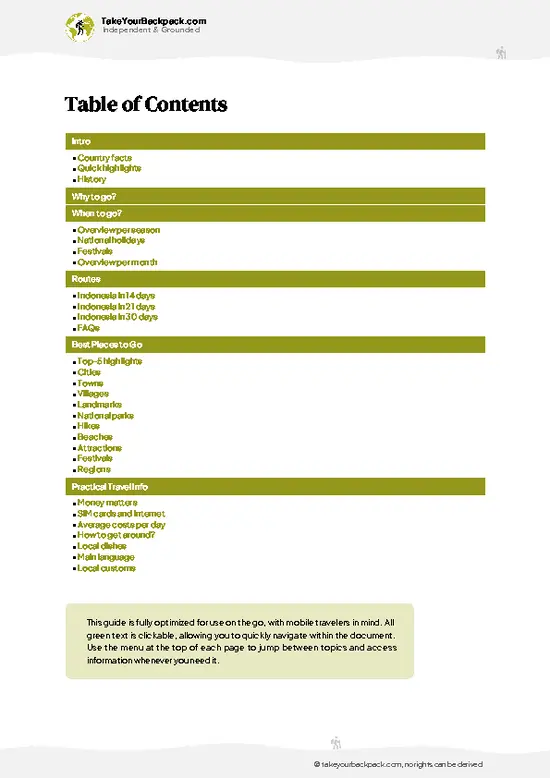
An offline-friendly backpacking guide with optimized travel routes, ranked highlights, transport advice, and the best areas to stay.
example page 0 from our offline Travel Guide for Indonesiaexample page 1 from our offline Travel Guide for Indonesiaexample page 2 from our offline Travel Guide for Indonesiaexample page 3 from our offline Travel Guide for Indonesiaexample page 4 from our offline Travel Guide for Indonesiaexample page 5 from our offline Travel Guide for Indonesiaexample page 6 from our offline Travel Guide for Indonesiaexample page 7 from our offline Travel Guide for Indonesia
The digital guide (550 pages) contains:
155 highlights, ranked by travel appeal
Optimized 14, 21 & 30-day travel routes
Cities, national parks, beaches, historical sites, ...
How to get around
Offline-friendly for travel without Wi-Fi
👉 Click to see all 30+ guide features

📅 Plan smarter in minutes, not weeks
Month by month travel advice
Festivals & national holidays
Budget expectations

🗺️ Go to the right places, skip the overrated ones
Honest pros & cons of destinations
Top hikes, parks & viewpoints
Lesser-known places most travelers miss
Clear “worth it vs skip it” guidance

🛏️ Travel smoothly without rookie mistakes
Best areas to stay
Transport systems explained simply
Common scams & safety advice
SIM cards, money & practical tips

🌍 Understand the country, not just visit it
Culture & traditions
52 Essential phrases & customs
Festivals worth planning around
Traveler-friendly historical context
Insights that make places more meaningful

📱 Built for real travel conditions
Fully downloadable PDF
Works completely offline
Optimized for phone use
Useful in remote areas & buses
Everything in one place
Save weeks of stressful planning
Get instant access to the full guide directly. 30-day money-back guarantee.


Sent to your inbox immediately after payment • 100% Secure Checkout
Best Backpacking Travel Advisor 2025 tourism awardBest Backpacking
Travel Advisor
2025
What others say about Take Your Backpack Guides:
⭐⭐⭐⭐⭐
Fantastic, amazing amount of information!
⭐⭐⭐⭐⭐
My goodness this is amazing, it's what I've been looking for hats off too you!
⭐⭐⭐⭐⭐
I think this is absolutely BRILLIANT
⭐⭐⭐⭐
Very complete and informative. It's still missing places, but I gotta to commend you
⭐⭐⭐⭐⭐
This is truly amazing, thank you, can't wait to explore it with my kids!
⭐⭐⭐⭐⭐
Awesome resource, thank you!
⭐⭐⭐⭐⭐
This is amazing! Can't wait to explore the ones I haven't seen
⭐⭐⭐⭐
I love this! Well done, great idea.
⭐⭐⭐⭐⭐
Thanks for taking the time to make this gem!
⭐⭐⭐⭐⭐
This might be the best website I've ever seen.
⭐⭐⭐⭐⭐
Congratulations, and thank you so much for your work; it's incredibly valuable.
⭐⭐⭐⭐
In all seriousness I think you did a great job pointing out the important spots
⭐⭐⭐⭐⭐
10/10 very good
⭐⭐⭐⭐⭐
As someone who's only just starting to visit regularly this is awesome, thank you.
⭐⭐⭐⭐
Thank you very much! I'm going to visit my dad, it's going to be very useful!
⭐⭐⭐⭐⭐
This is really cool! We'll be travelling for the first time and this definitely come in handy.
⭐⭐⭐⭐⭐
You are now our minister of culture, congratulations 👨‍💼
⭐⭐⭐⭐⭐
Just wanted to tell you that this is a pearl! Going to follow your recommendations.
⭐⭐⭐⭐⭐
This is so cool. I'll definitely be using the resource for my travels soon.
⭐⭐⭐⭐⭐
This is very impressive! Good work.
⭐⭐⭐⭐⭐
This is an amazing and informative site. Very well done!

🛏️ Where to stay?Where staying makes the most sense

For backpackers heading to the Tropical Rainforest Heritage of Sumatra, options are limited but solid. Inside the national park, accommodations are basic but functional. Look for eco-lodges like the Bukit Lawang Eco Lodge. It’s a great base for jungle treks and river activities. Expect shared bathrooms and simple meals, but the proximity to nature is unbeatable.

If you prefer more amenities, head to nearby Bukit Lawang. This small village offers guesthouses like Jungle Inn, where you can enjoy a bit more comfort without breaking the bank. Prices are reasonable, and you’ll find local eateries … read more 👉
For backpackers heading to the Tropical Rainforest Heritage of Sumatra, options are limited but solid. Inside the national park, accommodations are basic but functional. Look for eco-lodges like the Bukit Lawang Eco Lodge. It’s a great base for jungle treks and river activities. Expect shared bathrooms and simple meals, but the proximity to nature is unbeatable.

If you prefer more amenities, head to nearby Bukit Lawang. This small village offers guesthouses like Jungle Inn, where you can enjoy a bit more comfort without breaking the bank. Prices are reasonable, and you’ll find local eateries serving up delicious Indonesian fare.

Another option is to stay in Medan, about a three-hour drive from the park. While it’s a bustling city, it provides a range of accommodations, from budget hostels to mid-range hotels. Just be mindful of transportation costs and time when planning your trips to the park. Prioritize your energy and budget for the experiences that matter most.

👛 Costs (as of 18 November 2024)Typical daily expenses

Visiting the Tropical Rainforest Heritage of Sumatra can be a rewarding experience, but it’s essential to be aware of the costs involved to avoid surprises.

Entry fees to the national park typically range from €10 to €20 (about $11 to $22). This fee grants you access to the park’s stunning biodiversity and trails. However, if you plan to trek deeper into the park or join guided tours, expect to pay an additional €30 to €50 ($33 to $55) for a local guide. This is not just a luxury; it’s a necessity for navigating the terrain and enhancing your experience.

Accommodation options vary widely. Budget hostels can be found for around €10 to €15 ($11 to $17) per night, while mid-range hotels might charge €30 to €60 ($33 to $66). If you’re looking for something more upscale, expect to pay upwards … read more 👉
Visiting the Tropical Rainforest Heritage of Sumatra can be a rewarding experience, but it’s essential to be aware of the costs involved to avoid surprises.

Entry fees to the national park typically range from €10 to €20 (about $11 to $22). This fee grants you access to the park’s stunning biodiversity and trails. However, if you plan to trek deeper into the park or join guided tours, expect to pay an additional €30 to €50 ($33 to $55) for a local guide. This is not just a luxury; it’s a necessity for navigating the terrain and enhancing your experience.

Accommodation options vary widely. Budget hostels can be found for around €10 to €15 ($11 to $17) per night, while mid-range hotels might charge €30 to €60 ($33 to $66). If you’re looking for something more upscale, expect to pay upwards of €80 ($88) per night.

Transportation is another factor. Local transport can be quite affordable, with bus fares ranging from €1 to €5 ($1.10 to $5.50). However, if you’re considering private transport, costs can escalate to €30 to €50 ($33 to $55) for a day.

Food is generally inexpensive. Street food can cost as little as €1 to €3 ($1.10 to $3.30) per meal, while dining in a restaurant may set you back €5 to €15 ($5.50 to $17).

Plan for additional costs like park permits or fees for specific activities, which can add another €5 to €10 ($5.50 to $11) to your budget.

By keeping these costs in mind, you can allocate your resources wisely, ensuring you have the energy and funds for the experiences that truly matter in this incredible rainforest.


source: indonesia.travel
⚠️ Prices can change and everyone travels differently, so take this as a rough guide. Hope it helps you plan your adventure!

🥾 TrailsScenic routes and wildlife spotting in Tropical Rainforest Heritage of Sumatra

The Tropical Rainforest Heritage of Sumatra is a gem for those looking to immerse themselves in lush greenery and diverse wildlife. The hiking opportunities here are pretty fantastic, with trails that snake through dense jungles and lead to breathtaking viewpoints. You’ll encounter everything from towering trees to vibrant orchids, and if you’re lucky, you might spot orangutans swinging through the branches or hear the calls of gibbons echoing in the distance.

One notable trail is Gunung Leuser Trail. Here’s the scoop:
  • Length: 16 km
  • Estimated Duration: 6-8 hours
  • Difficulty Level: Moderate
read more 👉
The Tropical Rainforest Heritage of Sumatra is a gem for those looking to immerse themselves in lush greenery and diverse wildlife. The hiking opportunities here are pretty fantastic, with trails that snake through dense jungles and lead to breathtaking viewpoints. You’ll encounter everything from towering trees to vibrant orchids, and if you’re lucky, you might spot orangutans swinging through the branches or hear the calls of gibbons echoing in the distance.

One notable trail is Gunung Leuser Trail. Here’s the scoop:
  • Length: 16 km
  • Estimated Duration: 6-8 hours
  • Difficulty Level: Moderate to Challenging
  • Key Features: Stunning vistas, diverse flora and fauna, potential wildlife sightings
  • Terrain: Rugged paths, steep inclines, and some muddy sections

Getting to the park isn’t too tricky. Public transport options like buses and minivans run from major cities like Medan to the park’s entrance, but be prepared for some bumpy rides. It can get a bit crowded, especially during peak season, so if you prefer some solitude, aim for the shoulder months. Entrance fees are generally reasonable, but it’s wise to check for updates before you go, as they can vary. Just pack your sense of adventure and maybe a rain jacket or two—this is a rainforest, after all!
⚠️ Hiking info can sometimes be outdated or inaccurate. Before you hit the trail, check the latest conditions with locals. If you do spot anything that's off, I'd love to hear from you, so I can update it for fellow travelers.

🛡️ SafetyTraveler Safety Guide

The Tropical Rainforest Heritage of Sumatra offers a rich experience, but it’s essential to be prepared. Weather can shift quickly; expect rain, especially during the monsoon season. Dress in layers and carry a waterproof jacket.

The terrain varies from well-maintained paths to steep, muddy sections. Good footwear is crucial—opt for sturdy, grippy shoes to navigate slippery spots. River crossings can be tricky after heavy rain; assess the water level before proceeding.

Wildlife encounters are common. Keep a respectful distance from animals, and avoid feeding them. This helps maintain their natural behavior.

Plan your hikes early in the day to avoid afternoon storms and ensure you have ample daylight. With the right preparation, you can focus on the beauty around you.

Other Indonesian national parks near Tropical Rainforest Heritage of Sumatra

Explore more nearby:


👉 Discover all national parks

Or checkout all Indonesia has to offer (think cities, towns, villages, national parks, hikes, beaches, festivals)
Country photo of Indonesia

We 💚 feedbackFinal thoughts on exploring Tropical Rainforest Heritage of Sumatra

The Tropical Rainforest Heritage of Sumatra is a treasure trove of biodiversity. You’ll encounter wildlife that feels like a scene from a nature documentary. But be prepared: the humidity can be relentless, and trails can be muddy. Pack smart and pace yourself. Embrace the sweat; it’s part of the adventure. The payoff? An experience that connects you deeply with nature.

✈️ When did I visit Indonesia?
As part of my 1.5 year travel around the world trip, I visited Indonesia twice (and it was worth it. First in September 2015 and a bit later again in January and February 2016.

✍️ Help improve this page!
The information on this page is based on my own backpacking experience in Indonesia, supplemented with up-to-date research and feedback from other travelers. Travel details can change, so if you notice anything outdated or incomplete, feel free to let me know.


🙋‍♂️ Give feedback

👋 Meet the founderWho’s Behind Take Your Backpack?

Johan, backpacker and founder of TakeYourBackpackHi, I’m Johan (Netherlands 🇳🇱), the creator of TakeYourBackpack. Over the past decade, I’ve backpacked through 80+ countries across six continents, gaining extensive experience with independent travel, long-term trips, and overland routes.

This site is built on a combination of firsthand travel experience and carefully curated insights from other backpackers. Many guides are based on places I’ve personally visited, while others bring together tips, observations, and practical advice shared by trusted travelers I’ve met along the way.

The goal is to provide realistic, experience-driven guidance — not generic itineraries — so you can explore destinations with better context, clearer expectations, and more confidence.

Get full Indonesia guide •
Instant download • 155 highlights • Full Offline guide