×

Indonesia🇮🇩 | national parksSiberut National ParkMentawai culture, dugout canoes, primate endemics, tattooed shamans | things to do and best time to go

Explore Bukit Barisan Selatan National ParkExplore Nias Island

Backpacking in Siberut
👀 For curious travelersnational park ranked #18
By Johan Kruseman 🇳🇱 | Updated October 15, 2026

Mud squelches under your boots as you push through dense rainforest, the canopy so thick that noon feels like dusk. Siberut National Park sits off the west coast of Sumatra, Indonesia, a 4,000-square-kilometer reserve that feels genuinely remote despite Indonesia's popularity. The park rewards self-guided hikers with primary rainforest, endemic wildlife, and minimal crowds, but expect slow progress, high humidity, and serious mud. Compared to Java's volcanic peaks or Bali's trekking circuits, Siberut demands patience and fitness. The payoff is solitude and a landscape most Indonesian visitors never reach.

Discover everything you want to know in the 📖 Indonesia Travel Guide.


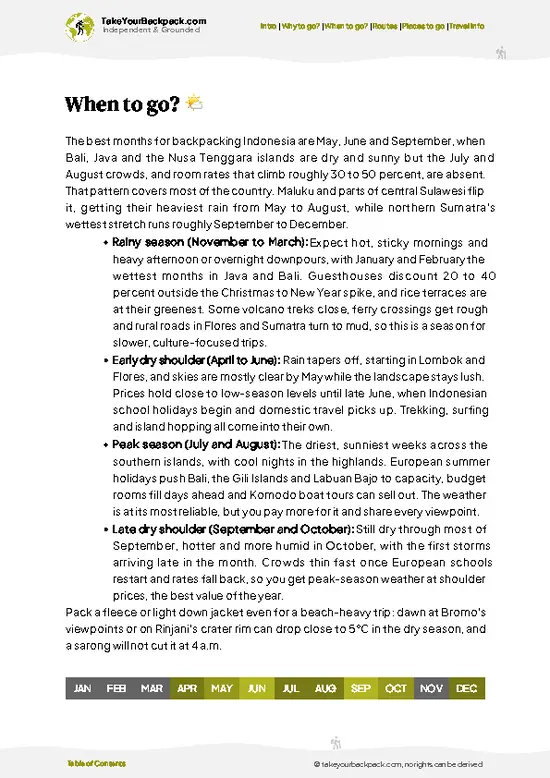
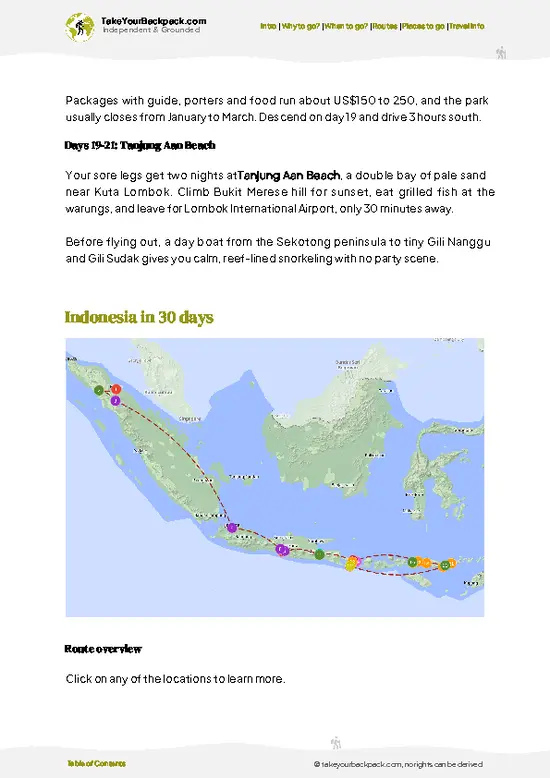
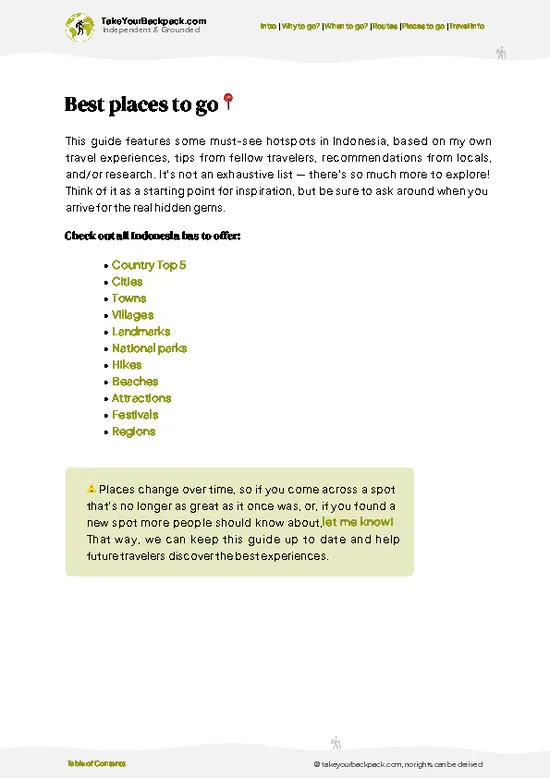
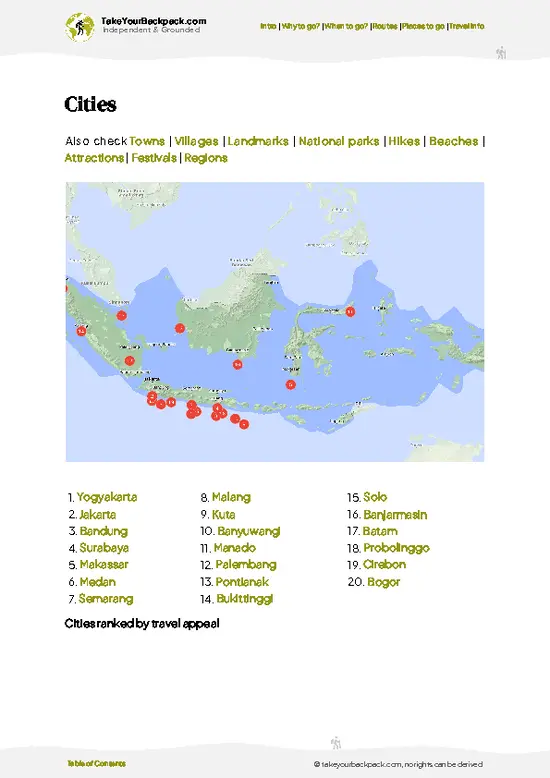
example page 0 from our offline Travel Guide for Indonesia
example page 1 from our offline Travel Guide for Indonesia
example page 2 from our offline Travel Guide for Indonesia
example page 3 from our offline Travel Guide for Indonesia
example page 4 from our offline Travel Guide for Indonesia
example page 5 from our offline Travel Guide for Indonesia
example page 6 from our offline Travel Guide for Indonesia
example page 7 from our offline Travel Guide for Indonesia
Loading the map 🌍
CLICK TO FILTER
cities
towns
villages
landmarks
national parks
hikes
beaches
attractions
festivals
regions
SHOW COUNTRY’S BESTSHOW ALL

✨ Why go?
Ranked #18 national park in Indonesia
What makes this national park worth exploring

Siberut draws backpackers seeking genuine isolation and pristine rainforest without the infrastructure of mainstream parks. The park is self-guided friendly, with local guides available but not mandatory, letting you set your own pace. Budget camping and homestays near the park entrance keep costs low. The trails suit experienced hikers more than beginners; terrain is challenging but rewards you with endemic primates, birds, and untouched forest. Few tourists venture here, which means authentic encounters with local Mentawai communities and untracked wilderness. It's the opposite of a circuit hike.

💡 HighlightsThe experiences that define the visit

  1. Sipora Island's Rainforest Canopy: The primary island within the park holds dense, unbroken jungle where gibbons call at dawn and flying lizards glide between emergent trees. Hiking here means stepping through layers of vegetation, from fern-covered forest floor to the high canopy where sunlight barely penetrates.
  2. Siberut River: This waterway cuts through the park's interior, offering both a navigation route and a wildlife corridor. Crocodiles, monitor lizards, and water birds concentrate along its banks, making it essential for any multi-day trek.
  3. Tropical Rainforest Biodiversity: The park protects one of Southeast Asia's most intact rainforests, home to endemic primates like the Kloss gibbon and pig-tailed macaque found nowhere else. The sheer density of species per hectare rivals any protected
… read more 👉
  1. Sipora Island's Rainforest Canopy: The primary island within the park holds dense, unbroken jungle where gibbons call at dawn and flying lizards glide between emergent trees. Hiking here means stepping through layers of vegetation, from fern-covered forest floor to the high canopy where sunlight barely penetrates.
  2. Siberut River: This waterway cuts through the park's interior, offering both a navigation route and a wildlife corridor. Crocodiles, monitor lizards, and water birds concentrate along its banks, making it essential for any multi-day trek.
  3. Tropical Rainforest Biodiversity: The park protects one of Southeast Asia's most intact rainforests, home to endemic primates like the Kloss gibbon and pig-tailed macaque found nowhere else. The sheer density of species per hectare rivals any protected area in the region.
  4. Coastal Mangrove Zones: Where the forest meets the sea, mangrove stands create a transition ecosystem rich with juvenile fish, crustaceans, and wading birds. These areas are accessible by boat and offer a stark contrast to inland jungle.
  5. Sakuddei and Mentawai Indigenous Villages: Several settlements within and adjacent to the park allow visitors to observe traditional lifeways largely unchanged for centuries. These are not tourist attractions but living communities; respectful presence requires patience and genuine interest.
  6. Pagai Islands' Coastal Trails: The southern islands offer shorter, less demanding hikes with ocean views and access to pristine beaches. These routes suit travelers with limited time or those seeking a break from deep jungle immersion.
I'd start with the Siberut River trek because it combines the park's defining feature (intact rainforest) with genuine wildlife encounters and the practical advantage of a clear navigation line through otherwise featureless jungle. The river also marks the boundary between exploration and getting lost.
Spotted a mistake or missing something? Contact us.

🌤️ When to go?When to go for the best experience

  • Dry Season (May to September): Best time to visit. Lower rainfall, more stable trails, and clearer skies. Temperatures range from 24 to 30°C (75 to 86°F). Daylight lasts roughly 12 hours year-round. Fewer tourists arrive, keeping the park quiet.
  • Wet Season (October to April): Heavy rain swells rivers and turns trails into mud channels. Temperatures stay 24 to 28°C (75 to 82°F). Humidity peaks above 80%. Landslides and flooding can block access. Prices drop slightly, but conditions demand serious experience.
Plan your trip for May through September if you want reliable hiking conditions.

source: climatestotravel.comJANJanuary: below average for travelingFEBFebruary: below average for travelingMARMarch: below average for travelingAPRApril: fair for travelingMAYMay: fair for travelingJUNJune: excellent for travelingJULJuly: excellent for travelingAUGAugust: highly recommended for travelingSEPSeptember: highly recommended for travelingOCTOctober: fair for travelingNOVNovember: below average for travelingDECDecember: below average for traveling
when-to-go

✈️ The backpacker research shortcutIndonesia Travel Guide

An offline-friendly backpacking guide with optimized travel routes, ranked highlights, transport advice, and the best areas to stay.
example page 0 from our offline Travel Guide for Indonesia
example page 1 from our offline Travel Guide for Indonesia
example page 2 from our offline Travel Guide for Indonesia
example page 3 from our offline Travel Guide for Indonesia
example page 4 from our offline Travel Guide for Indonesia
example page 5 from our offline Travel Guide for Indonesia
example page 6 from our offline Travel Guide for Indonesia
example page 7 from our offline Travel Guide for Indonesia
The digital guide (460 pages) contains:
✅ 153 highlights, ranked by travel appeal
✅ Optimized 14, 21 & 30-day travel routes
✅ Cities, national parks, landmarks, beaches
✅ How to get around
✅ Offline-friendly for travel without Wi-Fi
👉 Click to see all 30+ guide features

📅 Plan smarter in minutes, not weeks
✅ Month by month travel advice
✅ Festivals & national holidays
✅ Budget expectations

🗺️ Go to the right places, skip the overrated ones
✅ Honest pros & cons of destinations
✅ Top hikes, parks & viewpoints
✅ Lesser-known places most travelers miss
✅ Clear “worth it vs skip it” guidance

🛏️ Travel smoothly without rookie mistakes
✅ Best areas to stay
✅ Transport systems explained simply
✅ Common scams & safety advice
✅ SIM cards, money & practical tips

🌍 Understand the country, not just visit it
✅ Culture & traditions
✅ 52 Essential phrases & customs
✅ Festivals worth planning around
✅ Traveler-friendly historical context
✅ Insights that make places more meaningful

📱 Built for real travel conditions
✅ Fully downloadable PDF
✅ Works completely offline
✅ Optimized for phone use
✅ Useful in remote areas & buses
✅ Everything in one place
Stop searching, start planning
Get instant access to your full guide. 30‑day money-back guarantee.
+ Add another guide for just

By proceeding you agree to our terms.
Sent to your inbox immediately after payment • 100% Secure Checkout
Best Backpacking Travel Advisor 2025 tourism awardBest Backpacking
Travel Advisor
2025
What others say about Take Your Backpack Guides:
⭐⭐⭐⭐⭐
Fantastic, amazing amount of information!
⭐⭐⭐⭐⭐
My goodness this is amazing, it's what I've been looking for hats off too you!
⭐⭐⭐⭐⭐
I think this is absolutely BRILLIANT
⭐⭐⭐⭐
Very complete and informative. It's still missing places, but I gotta to commend you
⭐⭐⭐⭐⭐
This is truly amazing, thank you, can't wait to explore it with my kids!
⭐⭐⭐⭐⭐
Awesome resource, thank you!
⭐⭐⭐⭐⭐
This is amazing! Can't wait to explore the ones I haven't seen
⭐⭐⭐⭐
I love this! Well done, great idea.
⭐⭐⭐⭐⭐
Thanks for taking the time to make this gem!
⭐⭐⭐⭐⭐
This might be the best website I've ever seen.
⭐⭐⭐⭐⭐
Congratulations, and thank you so much for your work; it's incredibly valuable.
⭐⭐⭐⭐
In all seriousness I think you did a great job pointing out the important spots
⭐⭐⭐⭐⭐
10/10 very good
⭐⭐⭐⭐⭐
As someone who's only just starting to visit regularly this is awesome, thank you.
⭐⭐⭐⭐
Thank you very much! I'm going to visit my dad, it's going to be very useful!
⭐⭐⭐⭐⭐
This is really cool! We'll be travelling for the first time and this definitely come in handy.
⭐⭐⭐⭐⭐
You are now our minister of culture, congratulations 👨‍💼
⭐⭐⭐⭐⭐
Just wanted to tell you that this is a pearl! Going to follow your recommendations.
⭐⭐⭐⭐⭐
This is so cool. I'll definitely be using the resource for my travels soon.
⭐⭐⭐⭐⭐
This is very impressive! Good work.
⭐⭐⭐⭐⭐
This is an amazing and informative site. Very well done!

🛏️ Where to stay?Choosing the right base

No accommodation exists inside Siberut National Park itself. The nearest town is Muara Sikabaluan, a small port village on Siberut's east coast, where basic guesthouses and homestays cost USD 8 to 15 per night. Padang, the capital of West Sumatra on mainland Sumatra, is the main hub, 2 to 3 hours by boat from Siberut, with hostels and budget hotels ranging USD 10 to 25 nightly. Most backpackers base themselves in Padang, then take a day boat to Siberut for hiking. Local guides often arrange homestays with Mentawai families, offering cultural immersion and supporting the community directly.

👛 Costs (as of 15 October 2026)Travel costs and budget guide for Siberut

Visiting Siberut costs USD 25 to 50 per day for budget backpackers, depending on accommodation choices and whether you hire a guide. Entrance fees are minimal, but transport and guides add up quickly. Here's what to expect:
CategoryBudget RangeLocal Reality
Boat from Padang to SiberutUSD 15 to 25 round tripShared ferries run daily; private boats cost more but offer flexibility
Local Guide (per day)USD 20 to 35Essential for navigation; guides also arrange homestays and meals
Accommodation (homestay or guesthouse)USD 8 to 15 per nightBasic but clean; homestays include meals and cultural access
Food and suppliesUSD 5 to 10 per dayLimited shops; buy supplies in Padang; guides often provide meals
Park entrance and permitsUSD 0 to 5No official fee; some guides request small donations
⚠️ Prices can change and everyone travels differently, so take this as a rough guide. Hope it helps you plan your adventure!

🥾 TrailsBest hikes in Siberut national park

Hiking in Siberut demands fitness and patience. Trails are poorly marked, muddy year-round, and progress is slow, often 1 to 2 kilometers per hour. The rainforest is dense and humid, with river crossings and steep sections common. Wildlife includes endemic gibbons, macaques, flying lemurs, and numerous bird species; encounters are possible but not guaranteed. Most trails suit intermediate to advanced hikers comfortable with navigation and self-sufficiency.

Silabus River Trek
  • Length: 15 to 20 kilometers
  • Duration: 3 to 4 days
  • Difficulty: Intermediate to Advanced
  • Terrain: Rainforest, river crossings,
… read more 👉
Hiking in Siberut demands fitness and patience. Trails are poorly marked, muddy year-round, and progress is slow, often 1 to 2 kilometers per hour. The rainforest is dense and humid, with river crossings and steep sections common. Wildlife includes endemic gibbons, macaques, flying lemurs, and numerous bird species; encounters are possible but not guaranteed. Most trails suit intermediate to advanced hikers comfortable with navigation and self-sufficiency.

Silabus River Trek
  • Length: 15 to 20 kilometers
  • Duration: 3 to 4 days
  • Difficulty: Intermediate to Advanced
  • Terrain: Rainforest, river crossings, muddy sections, some steep climbs
  • Key Features: Gibbon sightings, pristine forest, river camping

Taileleu Waterfall Trail
  • Length: 8 to 10 kilometers round trip
  • Duration: 1 day
  • Difficulty: Intermediate
  • Terrain: Forest path, stream crossings, muddy sections
  • Key Features: Waterfall, swimming hole, endemic birds

Reaching Siberut requires flying to Padang, then a 2 to 3-hour boat ride to the park. Public transport is limited; most travelers hire local guides or arrange transport through guesthouses. The park has no entrance fee but requires a local guide for some areas. Crowds are minimal, especially outside July and August.
⚠️ Hiking info can sometimes be outdated or inaccurate. Before you hit the trail, check the latest conditions with locals. If you do spot anything that's off, I'd love to hear from you, so I can update it for fellow travelers.

🛡️ SafetyStaying Safe: What Travelers Should Know

Siberut's main hazards are environmental, not criminal. Mud and slippery terrain cause most injuries; wear proper hiking boots with good grip and move slowly on steep sections. River crossings can be dangerous during heavy rain; avoid hiking immediately after downpours. Leeches are common in wet season but harmless; salt or insect repellent removes them. Malaria and dengue are present; use mosquito nets and repellent, especially at dusk. The forest is remote; carry a GPS device or hire a local guide familiar with trails. Dehydration happens fast in humidity; drink constantly. Wildlife is shy and avoids humans; attacks are extremely rare. Most injuries stem from poor preparation, not the park itself.

FAQFrequently asked questions about Siberut

Three to four days is ideal for a meaningful experience. Most backpackers spend 2 to 3 days hiking the Silabus River Trek or Taileleu Waterfall, plus 1 day for travel and acclimatization. Longer stays (5 to 7 days) let you explore multiple trails and increase wildlife sighting chances.
Yes, but with limitations. Public boats run from Padang to Muara Sikabaluan daily, taking 2 to 3 hours. However, you'll need to hire a local guide (USD 20 to 35 per day) to navigate trails safely, as they're poorly marked. Guides arrange transport, meals, and homestays, making independent travel practical but not truly solo.
There is no official entrance fee for Siberut National Park. However, hiring a local guide (mandatory for most trails) costs USD 20 to 35 per day and effectively serves as park access. Some guides request small donations (USD 2 to 5) for conservation. Permits are not required for standard hiking.
⚠️ Things can change over time, so always validate details locally before you go.

Other Indonesian national parks near Siberut

Explore more nearby:


💡 Not sure where to go next?
Create a personalized itinerary for Indonesia including Siberut and the places that fit your trip.

Generate my itinerary

👉 Discover all national parks

Or checkout all Indonesia has to offer (think cities, towns, villages, national parks, hikes, beaches, festivals)
Country photo of Indonesia

We 💚 feedbackParting advice and final tips

Siberut delivers genuine wilderness and wildlife encounters that few Southeast Asian parks match, but the remoteness and logistical friction mean it suits independent travelers comfortable with uncertainty and basic conditions. The payoff is real solitude in a functioning ecosystem, not a curated experience.

✈️ When did I visit Indonesia?
As part of my 1.5 year travel around the world trip, I visited Indonesia twice (and it was worth it): first in September 2015 and a bit later again in January and February 2016.

✍️ Help improve this page!
The information on this page is based on my own backpacking experience in Indonesia, supplemented with up-to-date research and feedback from other travelers. Travel details can change, so if you notice anything outdated or incomplete, feel free to let me know.


🙋‍♂️ Give feedback

👋 Meet the founderWho’s Behind Take Your Backpack?

Johan, backpacker and founder of TakeYourBackpackHi, I’m Johan (Netherlands 🇳🇱), the creator of TakeYourBackpack. Over the past 3 decades, I’ve backpacked through 90+ countries across six continents, gaining extensive experience with independent travel, long-term trips, and overland routes.

This site is built on a combination of firsthand travel experience and carefully curated insights from other backpackers. Many guides are based on places I’ve personally visited, while others bring together tips, observations, and practical advice shared by trusted travelers I’ve met along the way.

The goal is to provide realistic, experience-driven guidance — not generic itineraries — so you can explore destinations with better context, clearer expectations, and more confidence.