×

Indonesia🇮🇩 | national parksUjung Kulon National ParkJavan rhino refuge, coastal wilderness, Krakatoa views | things to do and best time to go

Explore Tropical Rainforest Heritage of SumatraExplore Way Kambas National Park

Backpacking in Ujung Kulon
UNESCO World Heritage site
🌟 Highlightnational park ranked #7
By Johan Kruseman 🇳🇱 | Updated May 4, 2026

Most people only realize after they leave that Ujung Kulon quietly saves them money: once you’ve paid to get there and into the park, there’s almost nothing left to spend on except simple food, a boat, and time. Ujung Kulon National Park sits on the remote southwestern tip of Java, facing the Sunda Strait. It’s a low-key, humid, jungle-and-coast park with long, sweaty hikes, empty beaches, and a microscopic chance of seeing a Javan rhino. Trails are rough, leeches are common, and access from Jakarta is slow and boat-dependent, but entrance fees are reasonable and camping or basic homestays keep costs down. Compared with Bromo or Krakatau, it’s quieter, wilder, and far less photogenic-on-demand; you trade easy views and infrastructure for solitude, dense forest, and a slightly haunted, end-of-the-map vibe.

Discover everything you want to know in the 📖 Indonesia Travel Guide.
Loading the map 🌍
CLICK TO FILTER
city
town
unique site
national park
hike
beach
attraction
festival
region
SHOW COUNTRY’S BESTSHOW ALL

✨ Why go?
Ranked #7 national park in Indonesia
The unique appeal for travelers

Ujung Kulon National Park is a backpacker’s haven in Indonesia, offering a blend of independent exploration and budget-friendly options. The park is perfect for those who prefer to camp or stay in nearby hostels, keeping costs low while immersing themselves in nature.

With a variety of trails, from easy walks to more challenging treks, it caters to different skill levels. You can wander through lush jungles, spot wildlife, and enjoy stunning coastal views without the constraints of a guided tour. This flexibility allows you to set your own pace and discover the park’s hidden corners.

While some may opt for organized tours, self-guided travelers will find the park accessible and navigable. Just be aware of the entry fees and potential costs for permits, which can add up if you’re not prepared. … read more 👉
Ujung Kulon National Park is a backpacker’s haven in Indonesia, offering a blend of independent exploration and budget-friendly options. The park is perfect for those who prefer to camp or stay in nearby hostels, keeping costs low while immersing themselves in nature.

With a variety of trails, from easy walks to more challenging treks, it caters to different skill levels. You can wander through lush jungles, spot wildlife, and enjoy stunning coastal views without the constraints of a guided tour. This flexibility allows you to set your own pace and discover the park’s hidden corners.

While some may opt for organized tours, self-guided travelers will find the park accessible and navigable. Just be aware of the entry fees and potential costs for permits, which can add up if you’re not prepared. Planning ahead will help you avoid surprises and keep your budget intact, letting you focus on the experiences that truly matter.
Get the complete Travel Guide for Indonesia
Everything organized for offline planning — routes, highlights, costs & tips

See what’s inside 👉

Get the Travel Guide -

💡 HighlightsPlaces and moments you shouldn't skip

  • Javan rhinoceros habitat — The park is one of the last strongholds of the critically endangered Javan rhino. You’re extremely unlikely to “spot” one on a casual trip, but the place’s whole conservation vibe — ranger patrols, camera-trap projects and strict protected zones — is what makes Ujung Kulon special. It’s the real-deal place for anyone obsessed with rare wildlife and conservation history.
  • Pulau Peucang (Peucang Island) — White-sand beaches, tame deer that stroll the shore, and easy snorkeling off the reef. It’s the most visitor-friendly island in the park: simple guesthouses, good swimming, and a chilled-out island feel. (Personal favorite — best mix of wildlife, water and sleeping under simple mosquito netting.)
  • Gunung Honje and ranger trails — Short, well-marked hikes from the
read more 👉
  • Javan rhinoceros habitat — The park is one of the last strongholds of the critically endangered Javan rhino. You’re extremely unlikely to “spot” one on a casual trip, but the place’s whole conservation vibe — ranger patrols, camera-trap projects and strict protected zones — is what makes Ujung Kulon special. It’s the real-deal place for anyone obsessed with rare wildlife and conservation history.
  • Pulau Peucang (Peucang Island) — White-sand beaches, tame deer that stroll the shore, and easy snorkeling off the reef. It’s the most visitor-friendly island in the park: simple guesthouses, good swimming, and a chilled-out island feel. (Personal favorite — best mix of wildlife, water and sleeping under simple mosquito netting.)
  • Gunung Honje and ranger trails — Short, well-marked hikes from the main ranger station into lowland rainforest with viewpoints over bays and islands. The research station here is also a useful stop to learn about rhino protection and ask rangers about recent wildlife activity — practical for planning day treks.
  • Cidaon and Cibunar lowland forest — Classic jungle walks through dense coastal rainforest and mangrove fringes where you’ll hear gibbons, see macaques, and might glimpse banteng (wild cattle) at dawn/dusk. Trails are humid and rooty but reward you with proper jungle ambience and good birdwatching.
  • Coral reefs and snorkeling spots — The reefs around Peucang and nearby islets are surprisingly healthy: coral bommies, reef fish, and occasional turtles. Snorkel trips from the islands are quick and low-cost if you’re on a budget; bring reef-safe sunscreen and a basic mask/snorkel if you have them.
  • Turtle nesting beaches — Parts of the park are important nesting grounds for green turtles. Nesting is seasonal and patrolled by conservation staff, so you can sometimes join guided night watches or morning releases (check with rangers for timing and rules).
  • Remote islands and coastline (Panaitan, Handeuleum glimpses) — The park’s scatter of islands and jagged coastline give you dramatic sea views, quiet coves, and the feeling of real remoteness. Panaitan is wilder and less visited than Peucang; boat trips along the coast are worth it if you want beaches and solitude rather than facilities.
Spotted a mistake or missing something? Contact us.

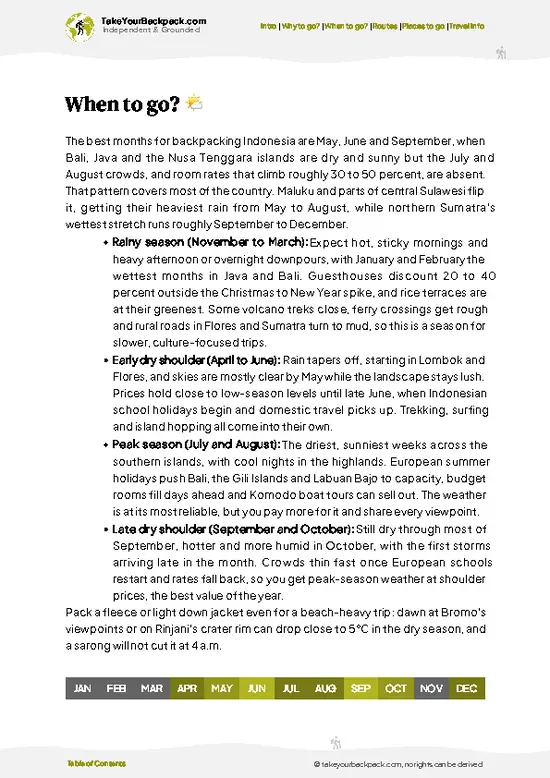
🌤️ When to go?Seasonal considerations and timing


  • Topic: Weather — The dry season from May to September is your best bet. Expect less rain, which means trails stay passable and wildlife is easier to spot. The wet season (October to April) brings heavy downpours that can turn paths into mudslides and limit boat access.

  • Topic: Temperature — Temperatures hover between 24°C to 32°C (75°F to 90°F) year-round. It’s warm but manageable if you start early and stay hydrated. Nights cool down slightly but rarely dip below 22°C (72°F).

  • Topic: Daylight Hours — Roughly 11 to 12 hours of daylight year-round, with sunrise around 6 AM and sunset near 6 PM. Plan hikes early to avoid midday heat and maximize wildlife viewing.

  • Topic: Crowds — Peak season in July and August sees more visitors, especially on weekends. For a quieter experience, aim for
read more 👉

  • Topic: Weather — The dry season from May to September is your best bet. Expect less rain, which means trails stay passable and wildlife is easier to spot. The wet season (October to April) brings heavy downpours that can turn paths into mudslides and limit boat access.

  • Topic: Temperature — Temperatures hover between 24°C to 32°C (75°F to 90°F) year-round. It’s warm but manageable if you start early and stay hydrated. Nights cool down slightly but rarely dip below 22°C (72°F).

  • Topic: Daylight Hours — Roughly 11 to 12 hours of daylight year-round, with sunrise around 6 AM and sunset near 6 PM. Plan hikes early to avoid midday heat and maximize wildlife viewing.

  • Topic: Crowds — Peak season in July and August sees more visitors, especially on weekends. For a quieter experience, aim for shoulder months like May or September.

  • Topic: Seasonal Activities — Dry months favor trekking, snorkeling, and boat tours to see the Javan rhino and marine life. Wet season limits these activities and increases leeches and mosquitoes.

  • Topic: Price Fluctuations — Expect higher prices for accommodation and tours during peak dry season. Booking in shoulder months can save money without sacrificing weather quality.


Pro-tip: Visit just before or after peak season to dodge crowds and rain, keeping your energy and budget focused on the park’s rare wildlife encounters.


source: climatestotravel.comJANJanuary: fair for travelingFEBFebruary: fair for travelingMARMarch: fair for travelingAPRApril: fair for travelingMAYMay: highly recommended for travelingJUNJune: excellent for travelingJULJuly: excellent for travelingAUGAugust: excellent for travelingSEPSeptember: highly recommended for travelingOCTOctober: fair for travelingNOVNovember: fair for travelingDECDecember: fair for traveling
when-to-go

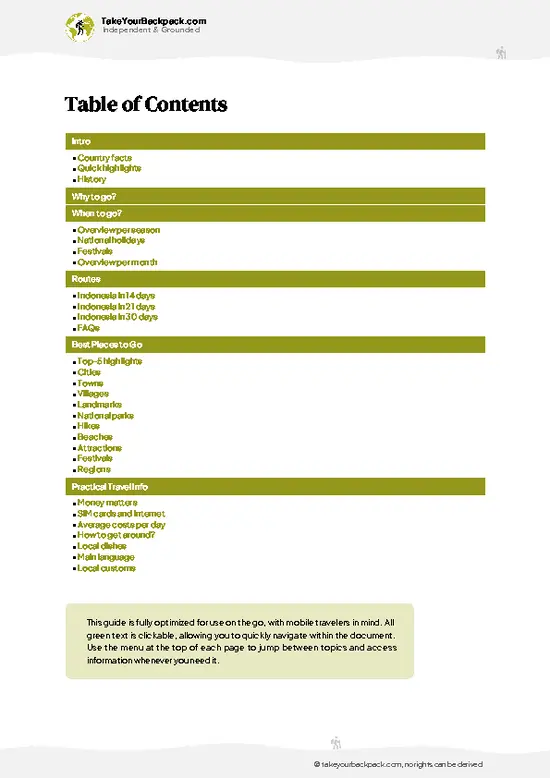
✈️ The backpacker research shortcutIndonesia Travel Guide

An offline-friendly backpacking guide with optimized travel routes, ranked highlights, transport advice, and the best areas to stay.
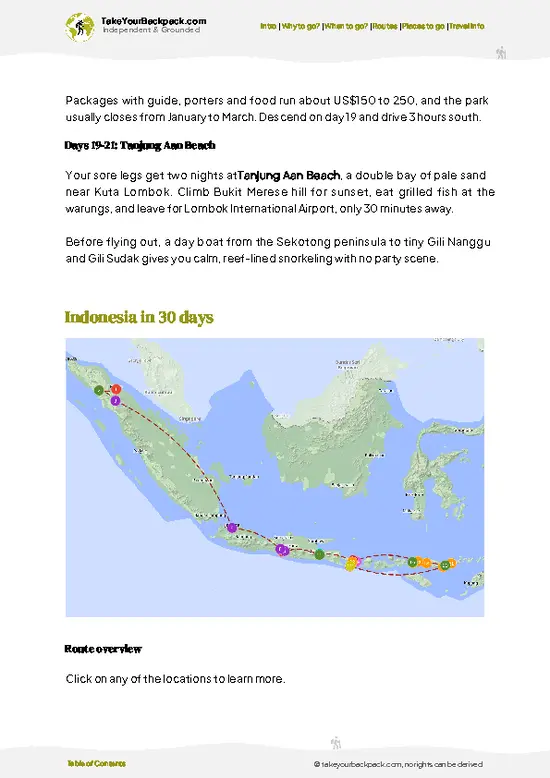
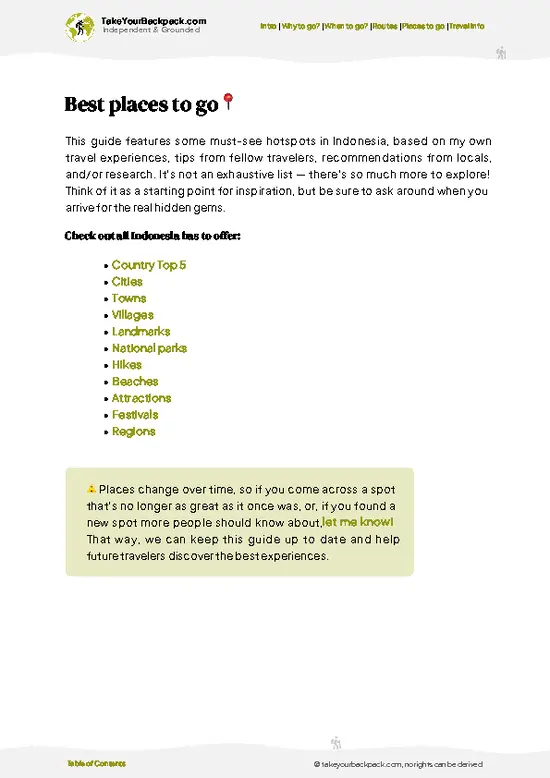
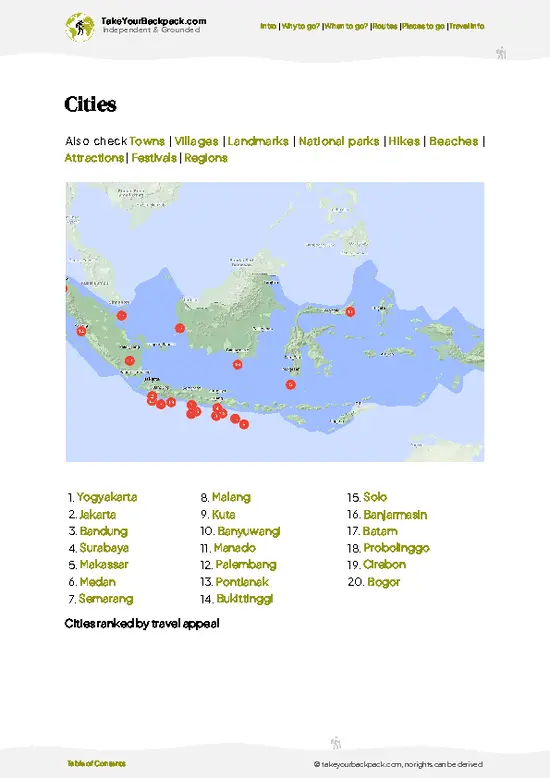
example page 0 from our offline Travel Guide for Indonesiaexample page 1 from our offline Travel Guide for Indonesiaexample page 2 from our offline Travel Guide for Indonesiaexample page 3 from our offline Travel Guide for Indonesiaexample page 4 from our offline Travel Guide for Indonesiaexample page 5 from our offline Travel Guide for Indonesiaexample page 6 from our offline Travel Guide for Indonesiaexample page 7 from our offline Travel Guide for Indonesia
The digital guide (550 pages) contains:
155 highlights, ranked by travel appeal
Optimized 14, 21 & 30-day travel routes
Cities, national parks, beaches, historical sites, ...
How to get around
Offline-friendly for travel without Wi-Fi
👉 Click to see all 30+ guide features

📅 Plan smarter in minutes, not weeks
Month by month travel advice
Festivals & national holidays
Budget expectations

🗺️ Go to the right places, skip the overrated ones
Honest pros & cons of destinations
Top hikes, parks & viewpoints
Lesser-known places most travelers miss
Clear “worth it vs skip it” guidance

🛏️ Travel smoothly without rookie mistakes
Best areas to stay
Transport systems explained simply
Common scams & safety advice
SIM cards, money & practical tips

🌍 Understand the country, not just visit it
Culture & traditions
52 Essential phrases & customs
Festivals worth planning around
Traveler-friendly historical context
Insights that make places more meaningful

📱 Built for real travel conditions
Fully downloadable PDF
Works completely offline
Optimized for phone use
Useful in remote areas & buses
Everything in one place
Save weeks of stressful planning
Get instant access to the full guide directly. 30-day money-back guarantee.


Sent to your inbox immediately after payment • 100% Secure Checkout
Best Backpacking Travel Advisor 2025 tourism awardBest Backpacking
Travel Advisor
2025
What others say about Take Your Backpack Guides:
⭐⭐⭐⭐⭐
Fantastic, amazing amount of information!
⭐⭐⭐⭐⭐
My goodness this is amazing, it's what I've been looking for hats off too you!
⭐⭐⭐⭐⭐
I think this is absolutely BRILLIANT
⭐⭐⭐⭐
Very complete and informative. It's still missing places, but I gotta to commend you
⭐⭐⭐⭐⭐
This is truly amazing, thank you, can't wait to explore it with my kids!
⭐⭐⭐⭐⭐
Awesome resource, thank you!
⭐⭐⭐⭐⭐
This is amazing! Can't wait to explore the ones I haven't seen
⭐⭐⭐⭐
I love this! Well done, great idea.
⭐⭐⭐⭐⭐
Thanks for taking the time to make this gem!
⭐⭐⭐⭐⭐
This might be the best website I've ever seen.
⭐⭐⭐⭐⭐
Congratulations, and thank you so much for your work; it's incredibly valuable.
⭐⭐⭐⭐
In all seriousness I think you did a great job pointing out the important spots
⭐⭐⭐⭐⭐
10/10 very good
⭐⭐⭐⭐⭐
As someone who's only just starting to visit regularly this is awesome, thank you.
⭐⭐⭐⭐
Thank you very much! I'm going to visit my dad, it's going to be very useful!
⭐⭐⭐⭐⭐
This is really cool! We'll be travelling for the first time and this definitely come in handy.
⭐⭐⭐⭐⭐
You are now our minister of culture, congratulations 👨‍💼
⭐⭐⭐⭐⭐
Just wanted to tell you that this is a pearl! Going to follow your recommendations.
⭐⭐⭐⭐⭐
This is so cool. I'll definitely be using the resource for my travels soon.
⭐⭐⭐⭐⭐
This is very impressive! Good work.
⭐⭐⭐⭐⭐
This is an amazing and informative site. Very well done!

🛏️ Where to stay?Choosing the right base

For backpackers heading to Ujung Kulon National Park, options are limited but solid. Inside the park, you’ll find basic accommodations like homestays and simple bungalows in the village of Taman Jaya. These spots offer a chance to connect with locals and experience the park’s raw beauty without frills. Expect shared facilities and a communal vibe—perfect for those who appreciate authenticity over luxury.

If you prefer a bit more comfort, consider staying in nearby towns like Sumur or Labuan. Both towns have guesthouses and budget hotels that provide a good base for exploring the park. Sumur is … read more 👉
For backpackers heading to Ujung Kulon National Park, options are limited but solid. Inside the park, you’ll find basic accommodations like homestays and simple bungalows in the village of Taman Jaya. These spots offer a chance to connect with locals and experience the park’s raw beauty without frills. Expect shared facilities and a communal vibe—perfect for those who appreciate authenticity over luxury.

If you prefer a bit more comfort, consider staying in nearby towns like Sumur or Labuan. Both towns have guesthouses and budget hotels that provide a good base for exploring the park. Sumur is particularly convenient, with easy access to boat services for island hopping and wildlife spotting.

Be prepared for limited amenities and bring your own supplies. Food options can be sparse, so stock up on snacks before you arrive. This way, you’ll save energy and funds for the real adventures—like trekking through the lush jungles or spotting the elusive Javan rhino. Keep your expectations grounded, and you’ll find the experience rewarding.

👛 Costs (as of 2 December 2024)Travel costs and budget guide for Ujung Kulon

Visiting Ujung Kulon National Park in Indonesia requires some careful budgeting. Here’s what you need to know to avoid surprises.

Entry fees for the park are around $10 to $15 USD per person. This fee grants you access to the park’s stunning landscapes and wildlife. However, it’s essential to note that this is just the starting point.

If you plan to camp or stay overnight, expect to pay an additional fee, typically ranging from $5 to $10 USD per night for camping permits. Accommodations in nearby villages can vary widely. Basic guesthouses may charge between $15 to $30 USD per night, while more comfortable options can go up to $50 USD.

Transportation to the park can be a significant cost. A boat transfer from the nearest port, Sumur, usually costs around $30 to $50 USD per person, depending … read more 👉
Visiting Ujung Kulon National Park in Indonesia requires some careful budgeting. Here’s what you need to know to avoid surprises.

Entry fees for the park are around $10 to $15 USD per person. This fee grants you access to the park’s stunning landscapes and wildlife. However, it’s essential to note that this is just the starting point.

If you plan to camp or stay overnight, expect to pay an additional fee, typically ranging from $5 to $10 USD per night for camping permits. Accommodations in nearby villages can vary widely. Basic guesthouses may charge between $15 to $30 USD per night, while more comfortable options can go up to $50 USD.

Transportation to the park can be a significant cost. A boat transfer from the nearest port, Sumur, usually costs around $30 to $50 USD per person, depending on the season and demand. If you’re traveling in a group, this cost can be shared, making it more manageable.

Guided tours are highly recommended for a richer experience. Prices for these tours can range from $50 to $150 USD per day, depending on the length and inclusions. Always clarify what’s included—meals, equipment, and park fees can add up.

Lastly, factor in food costs. Local meals can be quite affordable, typically around $2 to $5 USD, but dining at more established restaurants may push your budget to $10 to $20 USD per meal.

In summary, a trip to Ujung Kulon National Park can cost anywhere from $50 to $300 USD per person, depending on your choices for accommodation, transportation, and activities. Planning ahead will help you allocate your budget wisely and focus on enjoying the park’s natural beauty.


source: indonesia.travel
⚠️ Prices can change and everyone travels differently, so take this as a rough guide. Hope it helps you plan your adventure!

🥾 TrailsBest hikes in Ujung Kulon national park

Ujung Kulon National Park is a hidden gem for those who love to hike in a less-trodden part of the world. The scenery is stunning, with lush rainforests, pristine beaches, and the dramatic backdrop of volcanic mountains. You might even catch a glimpse of the endangered Javan rhinoceros if you’re lucky. The terrain varies quite a bit; you’ll find everything from sandy beach paths to muddy jungle trails, so be prepared for a little adventure.

One of the standout hikes is the Cidaon Trail. Here are the details:
  • Length: 5 km
  • Estimated Duration: 2-3 hours
  • Difficulty Level: Moderate
  • Key Features: Great
read more 👉
Ujung Kulon National Park is a hidden gem for those who love to hike in a less-trodden part of the world. The scenery is stunning, with lush rainforests, pristine beaches, and the dramatic backdrop of volcanic mountains. You might even catch a glimpse of the endangered Javan rhinoceros if you’re lucky. The terrain varies quite a bit; you’ll find everything from sandy beach paths to muddy jungle trails, so be prepared for a little adventure.

One of the standout hikes is the Cidaon Trail. Here are the details:
  • Length: 5 km
  • Estimated Duration: 2-3 hours
  • Difficulty Level: Moderate
  • Key Features: Great wildlife spotting opportunities, including deer and various bird species; scenic coastal views
  • Terrain: Mix of sandy paths and forest trails, some muddy sections

Getting to the park can be a bit of a journey, but it’s totally doable. You can take a bus from Jakarta to Labuan, and then hop on a boat to the park. Just keep in mind that the boat schedules can be a bit unpredictable, so plan ahead. It’s generally not too crowded, especially compared to other popular parks in Indonesia, which is a nice bonus. As for the entrance fee, it’s pretty reasonable, but check the latest rates before you go, as they can change. Just be ready to soak in the beauty without too many other hikers around!
⚠️ Hiking info can sometimes be outdated or inaccurate. Before you hit the trail, check the latest conditions with locals. If you do spot anything that's off, I'd love to hear from you, so I can update it for fellow travelers.

🛡️ SafetySafety Tips and Common Scams in Ujung Kulon

Ujung Kulon National Park offers a generally straightforward experience for backpackers, but a few realities can help you navigate it smoothly. The weather can shift quickly, especially during the rainy season, so pack a reliable rain jacket and quick-dry layers. Trails can be muddy and uneven, with sections that require careful footing, particularly after rain.

Wildlife encounters, including the endangered Javan rhino, are possible but rare. If you spot wildlife, keep your distance and avoid sudden movements.

Navigation is usually clear, but a good map or GPS is essential. Don’t underestimate the heat; pace yourself and stay hydrated. Lastly, respect local customs and fellow hikers. This isn’t just about safety; it’s about preserving the park’s spirit for everyone.

Other Indonesian national parks near Ujung Kulon

Explore more nearby:


👉 Discover all national parks

Or checkout all Indonesia has to offer (think cities, towns, villages, national parks, hikes, beaches, festivals)
Country photo of Indonesia

We 💚 feedbackFinal thoughts on exploring Ujung Kulon

Ujung Kulon National Park is a treasure for those who crave raw nature. The chance to spot the endangered Javan rhino in its natural habitat is a thrill that few places can offer. But be ready for the reality: the remoteness means limited facilities and sometimes tricky trails. Embrace the challenge, and you’ll find the real beauty lies in the journey, not just the destination.

✈️ When did I visit Indonesia?
As part of my 1.5 year travel around the world trip, I visited Indonesia twice (and it was worth it. First in September 2015 and a bit later again in January and February 2016.

✍️ Help improve this page!
The information on this page is based on my own backpacking experience in Indonesia, supplemented with up-to-date research and feedback from other travelers. Travel details can change, so if you notice anything outdated or incomplete, feel free to let me know.


🙋‍♂️ Give feedback

👋 Meet the founderWho’s Behind Take Your Backpack?

Johan, backpacker and founder of TakeYourBackpackHi, I’m Johan (Netherlands 🇳🇱), the creator of TakeYourBackpack. Over the past decade, I’ve backpacked through 80+ countries across six continents, gaining extensive experience with independent travel, long-term trips, and overland routes.

This site is built on a combination of firsthand travel experience and carefully curated insights from other backpackers. Many guides are based on places I’ve personally visited, while others bring together tips, observations, and practical advice shared by trusted travelers I’ve met along the way.

The goal is to provide realistic, experience-driven guidance — not generic itineraries — so you can explore destinations with better context, clearer expectations, and more confidence.

Get full Indonesia guide •
Instant download • 155 highlights • Full Offline guide