×

Iran🇮🇷 | citiesAhvazKarun River, palm groves, ethnic diversity | things to do and best time to go

Explore HamedanExplore Qeshm

Backpacking in Ahvaz
👍 Recommendedcity ranked #19
By Johan Kruseman 🇳🇱 | Updated June 15, 2026

You land in Ahvaz and hit your first real fork: do you burn time and sweat wandering its chaotic streets for cheap eats and local buses, or pay more for taxis, AC cafés, and a faster escape to the marshes and ruins around it. Ahvaz sits in southwest Iran, in Khuzestan, closer to Iraq than Tehran. It’s gritty, hot, industrial, with lively riverside nights and Arabic-Iranian culture, low costs, few tourists, decent safety, but far less charm than nearby Shushtar or Dezful.

Discover everything you want to know in the 📖 Iran Travel Guide.
Safety warning

The current risk level for Iran is high. Check the advice before going.


Get your Iran guide
121 ranked highlights, routes & tips, works offline (419 pages)
Loading the map 🌍
CLICK TO FILTER
cities
towns
villages
landmarks
national parks
hikes
beaches
attractions
festivals
regions
SHOW COUNTRY’S BESTSHOW ALL

✨ Why go?
Ranked #19 city in Iran
Why Ahvaz should be on your travel list

Ahvaz is a strategic basecamp for backpackers navigating Iran. It offers a mix of affordable hostels and local eateries that keep your budget in check while satisfying your appetite for authentic cuisine. The city’s walkability makes it easy to explore, and its vibrant nightlife adds a layer of excitement after a day of adventures. Plus, it’s a gateway for day trips to stunning nearby sites, making it a practical stop on your route. If you’re looking for a place that balances comfort and value, Ahvaz is worth considering, even if just for a short stay.
Want to include Ahvaz in your Iran route?
Create a personalized Iran itinerary that includes Ahvaz and the places that fit your trip — based on your travel style, budget, and available time. Get your route in seconds.

Generate my trip

💡 HighlightsDon't-miss highlights and experiences

  1. White Bridge (Pol-e Sefid) — Ahvaz’s most photographed landmark: a striking suspension bridge over the Karun that’s great for sunset photos and people-watching as ferries and small boats drift underneath.
  2. Black Bridge (Pol-e Siah) — The old iron railway bridge with gritty industrial charm; walk its approaches for atmospheric views of the river and a feeling of the city’s long transport history.
  3. Karun riverfront and promenades — Stroll the banks, hop on a short boat ride, or sit in a riverside tea house. The Karun is the city’s social spine — local life happens here, especially late afternoon and at night.
  4. Ahvaz Grand Bazaar (Bazaar-e Ahvaz) — A working market where you can buy spices, dates, local snacks and cheap gear, and hear Khuzestani accents. It’s messy, loud and useful for getting
read more 👉
  1. White Bridge (Pol-e Sefid) — Ahvaz’s most photographed landmark: a striking suspension bridge over the Karun that’s great for sunset photos and people-watching as ferries and small boats drift underneath.
  2. Black Bridge (Pol-e Siah) — The old iron railway bridge with gritty industrial charm; walk its approaches for atmospheric views of the river and a feeling of the city’s long transport history.
  3. Karun riverfront and promenades — Stroll the banks, hop on a short boat ride, or sit in a riverside tea house. The Karun is the city’s social spine — local life happens here, especially late afternoon and at night.
  4. Ahvaz Grand Bazaar (Bazaar-e Ahvaz) — A working market where you can buy spices, dates, local snacks and cheap gear, and hear Khuzestani accents. It’s messy, loud and useful for getting the taste of daily Ahvaz.
  5. Khuzestan Museum (regional archaeology & anthropology) — A compact museum with finds and exhibits that explain the long human story of Khuzestan province; useful context if you plan to visit nearby ancient sites.
  6. Jameh Mosque of Ahvaz — The city’s main Friday mosque and a good place to see local religious life and traditional Persian-Islamic architecture in practice (remember to dress respectfully).
  7. Ahvaz Railway Station (historic station area) — The old station and surrounding rail infrastructure tell the story of colonial-era rail development in southwestern Iran; interesting for train buffs and photographers.
  8. Mellat Park (Park-e Mellat) — One of the larger green lungs near the river where families picnic, joggers run and local vendors sell snacks — a practical stop for a relaxed break from the city bustle.
  9. Local tea houses and riverside cafés — Small, informal teahouses along the Karun are where you’ll overhear local gossip, try simple Khuzestani breakfasts and meet friendly locals over strong tea.
  10. City neighborhoods and street food corners (old Ahvaz quarters) — Wander the older residential lanes to find authentic street food (shawarma, kebabs, local breads), traditional architecture details, and unstyled daily life that guidebooks often miss.
If you have time for day trips, head out to the Shushtar Historical Hydraulic System, the Chogha Zanbil ziggurat, or the Shadegan Wetland — all visitable from Ahvaz and offering very different slices of the region.
Spotted a mistake or missing something? Contact us.

🏘️ NeighborhoodsKey areas and districts to know

Ahvaz offers a unique blend of culture and practicality for backpackers. Here’s how the neighborhoods stack up:

Downtown Ahvaz: The heart of the city, buzzing with energy. Affordable eateries and shops line the streets. Walkable and vibrant, it’s perfect for short stays. Nightlife is lively, with cafes and local music.

Shahrak-e Kord: A quieter residential area, ideal for longer stays. It’s less touristy, giving you a genuine feel of local life. Transport options are decent, but you’ll need to rely on taxis for late-night outings.

Karun Riverfront: Scenic and relaxing, this area is great for evening strolls. While it’s more tourist-friendly, prices can be higher. Perfect for unwinding after a day of exploration, but nightlife is limited.

Golestan: A mix of modern and traditional. It’s … read more 👉
Ahvaz offers a unique blend of culture and practicality for backpackers. Here’s how the neighborhoods stack up:

Downtown Ahvaz: The heart of the city, buzzing with energy. Affordable eateries and shops line the streets. Walkable and vibrant, it’s perfect for short stays. Nightlife is lively, with cafes and local music.

Shahrak-e Kord: A quieter residential area, ideal for longer stays. It’s less touristy, giving you a genuine feel of local life. Transport options are decent, but you’ll need to rely on taxis for late-night outings.

Karun Riverfront: Scenic and relaxing, this area is great for evening strolls. While it’s more tourist-friendly, prices can be higher. Perfect for unwinding after a day of exploration, but nightlife is limited.

Golestan: A mix of modern and traditional. It’s walkable and offers a variety of dining options. Good for both short and longer visits, with easy access to public transport.

⌛️ 1 day1-day itinerary for Ahvaz

Ahvaz, a bustling city in southwestern Iran, is a vibrant hub where ancient history meets modern life, all set against the backdrop of the Karun River. Start your morning at the lively Haft Tappeh archaeological site, where you can wander through ruins that whisper stories of the Elamite civilization. Grab a breakfast of fresh bread and local cheese from a nearby bakery, fueling up for the day ahead.

In the afternoon, head to the bustling Shahrak-e Kaveh neighborhood. Here, you can explore the local bazaars, filled with spices, textiles, and the warm chatter of vendors. Don’t miss the chance to sip on traditional tea at a local café, where you can soak in the everyday life of the city.

As evening approaches, stroll along the Karun River, where locals gather to unwind. For a unique experience, … read more 👉
Ahvaz, a bustling city in southwestern Iran, is a vibrant hub where ancient history meets modern life, all set against the backdrop of the Karun River. Start your morning at the lively Haft Tappeh archaeological site, where you can wander through ruins that whisper stories of the Elamite civilization. Grab a breakfast of fresh bread and local cheese from a nearby bakery, fueling up for the day ahead.

In the afternoon, head to the bustling Shahrak-e Kaveh neighborhood. Here, you can explore the local bazaars, filled with spices, textiles, and the warm chatter of vendors. Don’t miss the chance to sip on traditional tea at a local café, where you can soak in the everyday life of the city.

As evening approaches, stroll along the Karun River, where locals gather to unwind. For a unique experience, visit the lesser-known Khouzestan Museum, showcasing the region’s rich cultural heritage. Wrap up your day with a delicious dinner at a riverside restaurant, enjoying the flavors of Persian cuisine while watching the sunset.
Turn your Ahvaz visit into an Iran adventure
Build a complete Iran route with Ahvaz, hidden gems, must-see destinations, and realistic travel times included.

Generate my trip

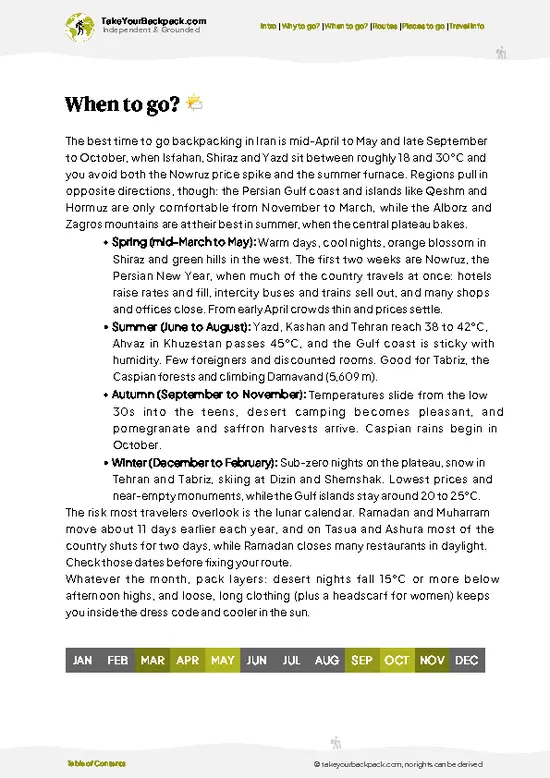
🌤️ When to go?When to go for the best experience


  • Weather: Ahvaz is scorching in summer, often hitting 45°C (113°F) or more, making daytime trekking brutal. Winter cools down to a comfortable 15-20°C (59-68°F), ideal for long walks without overheating.

  • Temperature: Spring and autumn offer a sweet spot, with highs around 25-30°C (77-86°F) and cooler nights. Avoid summer’s relentless heat unless you’re a heat warrior.

  • Daylight Hours: Longer days in summer mean more daylight but also more heat. Winter days are shorter, but the milder sun makes early starts and late afternoons perfect for exploring.

  • Crowds: Tourist traffic is minimal year-round, but local holidays can spike activity. Winter sees more domestic visitors escaping colder northern regions.

  • Seasonal Activities: Spring festivals and cultural events pop up, adding flavor without
read more 👉

  • Weather: Ahvaz is scorching in summer, often hitting 45°C (113°F) or more, making daytime trekking brutal. Winter cools down to a comfortable 15-20°C (59-68°F), ideal for long walks without overheating.

  • Temperature: Spring and autumn offer a sweet spot, with highs around 25-30°C (77-86°F) and cooler nights. Avoid summer’s relentless heat unless you’re a heat warrior.

  • Daylight Hours: Longer days in summer mean more daylight but also more heat. Winter days are shorter, but the milder sun makes early starts and late afternoons perfect for exploring.

  • Crowds: Tourist traffic is minimal year-round, but local holidays can spike activity. Winter sees more domestic visitors escaping colder northern regions.

  • Seasonal Activities: Spring festivals and cultural events pop up, adding flavor without the crowds. Summer is mostly downtime due to heat, so fewer events.

  • Price Fluctuations: Accommodation and transport costs dip in summer due to low demand, but the trade-off is extreme discomfort. Winter prices rise slightly but reward you with comfort and activity.


Pro-tip: Aim for late autumn or early spring—balance cool temps, manageable crowds, and fair prices for a backpacking experience that feels smart, not punishing.


source: climatestotravel.comJANJanuary: highly recommended for travelingFEBFebruary: highly recommended for travelingMARMarch: excellent for travelingAPRApril: excellent for travelingMAYMay: good for travelingJUNJune: below average for travelingJULJuly: below average for travelingAUGAugust: below average for travelingSEPSeptember: good for travelingOCTOctober: excellent for travelingNOVNovember: highly recommended for travelingDECDecember: highly recommended for traveling
when-to-go

✈️ The backpacker research shortcutIran Travel Guide

An offline-friendly backpacking guide with optimized travel routes, ranked highlights, transport advice, and the best areas to stay.
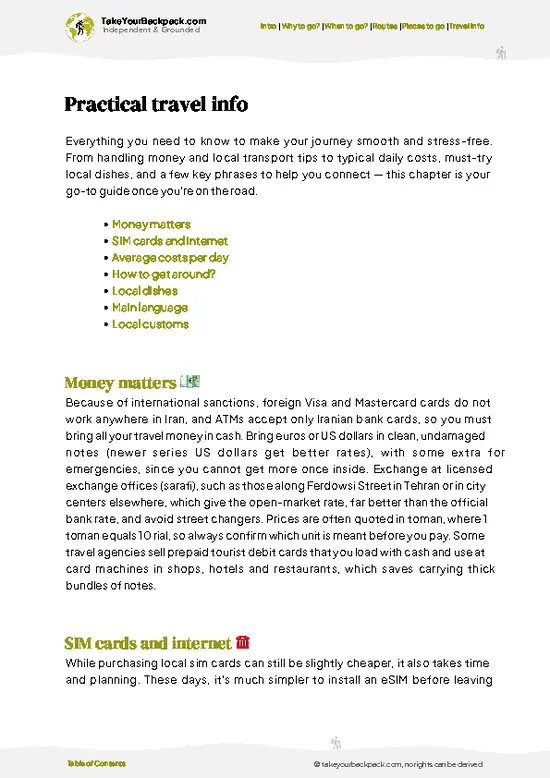
example page 0 from our offline Travel Guide for Iran
example page 1 from our offline Travel Guide for Iran
example page 2 from our offline Travel Guide for Iran
example page 3 from our offline Travel Guide for Iran
example page 4 from our offline Travel Guide for Iran
example page 5 from our offline Travel Guide for Iran
example page 6 from our offline Travel Guide for Iran
example page 7 from our offline Travel Guide for Iran
The digital guide (419 pages) contains:
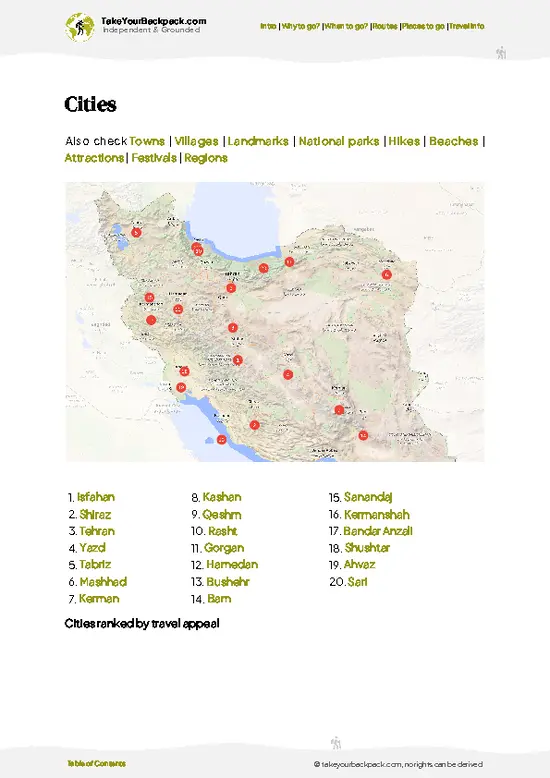
121 highlights, ranked by travel appeal
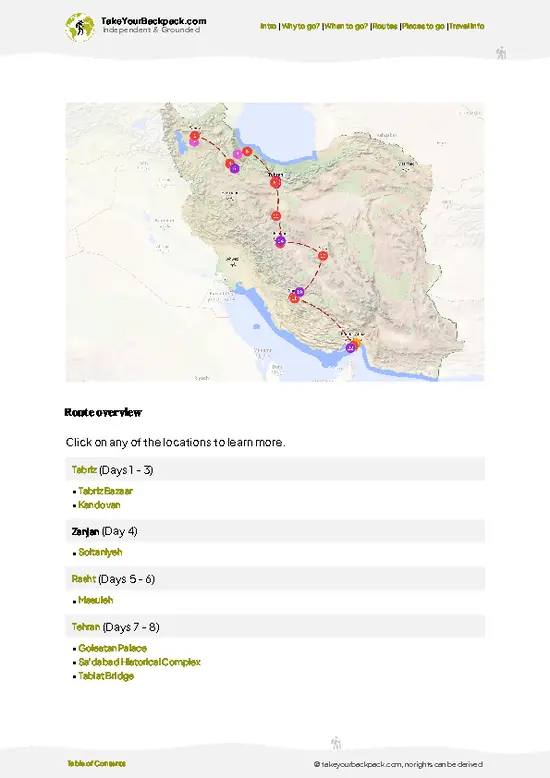
Optimized 7, 14 & 21-day travel routes
Cities, national parks, landmarks, beaches
How to get around
Offline-friendly for travel without Wi-Fi
👉 Click to see all 30+ guide features

📅 Plan smarter in minutes, not weeks
Month by month travel advice
Festivals & national holidays
Budget expectations

🗺️ Go to the right places, skip the overrated ones
Honest pros & cons of destinations
Top hikes, parks & viewpoints
Lesser-known places most travelers miss
Clear “worth it vs skip it” guidance

🛏️ Travel smoothly without rookie mistakes
Best areas to stay
Transport systems explained simply
Common scams & safety advice
SIM cards, money & practical tips

🌍 Understand the country, not just visit it
Culture & traditions
52 Essential phrases & customs
Festivals worth planning around
Traveler-friendly historical context
Insights that make places more meaningful

📱 Built for real travel conditions
Fully downloadable PDF
Works completely offline
Optimized for phone use
Useful in remote areas & buses
Everything in one place
Save weeks of stressful planning
Get instant access to your full guide. 30‑day money-back guarantee.


By proceeding you agree to our terms.
Sent to your inbox immediately after payment • 100% Secure Checkout
Best Backpacking Travel Advisor 2025 tourism awardBest Backpacking
Travel Advisor
2025
What others say about Take Your Backpack Guides:
⭐⭐⭐⭐⭐
Fantastic, amazing amount of information!
⭐⭐⭐⭐⭐
My goodness this is amazing, it's what I've been looking for hats off too you!
⭐⭐⭐⭐⭐
I think this is absolutely BRILLIANT
⭐⭐⭐⭐
Very complete and informative. It's still missing places, but I gotta to commend you
⭐⭐⭐⭐⭐
This is truly amazing, thank you, can't wait to explore it with my kids!
⭐⭐⭐⭐⭐
Awesome resource, thank you!
⭐⭐⭐⭐⭐
This is amazing! Can't wait to explore the ones I haven't seen
⭐⭐⭐⭐
I love this! Well done, great idea.
⭐⭐⭐⭐⭐
Thanks for taking the time to make this gem!
⭐⭐⭐⭐⭐
This might be the best website I've ever seen.
⭐⭐⭐⭐⭐
Congratulations, and thank you so much for your work; it's incredibly valuable.
⭐⭐⭐⭐
In all seriousness I think you did a great job pointing out the important spots
⭐⭐⭐⭐⭐
10/10 very good
⭐⭐⭐⭐⭐
As someone who's only just starting to visit regularly this is awesome, thank you.
⭐⭐⭐⭐
Thank you very much! I'm going to visit my dad, it's going to be very useful!
⭐⭐⭐⭐⭐
This is really cool! We'll be travelling for the first time and this definitely come in handy.
⭐⭐⭐⭐⭐
You are now our minister of culture, congratulations 👨‍💼
⭐⭐⭐⭐⭐
Just wanted to tell you that this is a pearl! Going to follow your recommendations.
⭐⭐⭐⭐⭐
This is so cool. I'll definitely be using the resource for my travels soon.
⭐⭐⭐⭐⭐
This is very impressive! Good work.
⭐⭐⭐⭐⭐
This is an amazing and informative site. Very well done!

🛏️ Where to stay?Best areas to stay in Iran

Ahvaz’s best backpacker zones cluster around the city center and the Karun River banks. These areas strike a smart balance between safety and social buzz, essential for solo travelers craving connection without the chaos. The city center offers easy access to markets and eateries where locals gather, making it a natural hub for budget travelers who want to stretch their rial while soaking in authentic street life. Hostels here are modest but functional, prioritizing clean basics over luxury, which suits the backpacker mindset perfectly. Compared to the quieter, more residential districts, these … read more 👉
Ahvaz’s best backpacker zones cluster around the city center and the Karun River banks. These areas strike a smart balance between safety and social buzz, essential for solo travelers craving connection without the chaos. The city center offers easy access to markets and eateries where locals gather, making it a natural hub for budget travelers who want to stretch their rial while soaking in authentic street life. Hostels here are modest but functional, prioritizing clean basics over luxury, which suits the backpacker mindset perfectly. Compared to the quieter, more residential districts, these neighborhoods pulse with energy and practical convenience—think less polished, more real. It’s where you trade a bit of comfort for genuine immersion and wallet-friendly logistics.

🚌 Getting aroundHow to get from A to B

Ahvaz moves with a pulse that’s part clockwork, part improvisation. The city’s rhythm isn’t about strict timetables but a blend of steady flow and bursts of unpredictability. You’ll find moments where buses and minibuses roll out like clockwork, then others where you’re negotiating rides with drivers who read the street’s mood better than any schedule. This mix means your choices between time, money, and comfort aren’t just about what’s available—they’re about how much control you want to wrestle from the city’s natural tempo.


  • Walking: The ultimate zero-cost option, perfect for short distances in central Ahvaz. It’s slow but gives you full control and a chance to absorb the city’s street-level energy.

  • City Buses: Running roughly from 6:00 AM to 10:00 PM, fares hover around a few cents.
read more 👉
Ahvaz moves with a pulse that’s part clockwork, part improvisation. The city’s rhythm isn’t about strict timetables but a blend of steady flow and bursts of unpredictability. You’ll find moments where buses and minibuses roll out like clockwork, then others where you’re negotiating rides with drivers who read the street’s mood better than any schedule. This mix means your choices between time, money, and comfort aren’t just about what’s available—they’re about how much control you want to wrestle from the city’s natural tempo.


  • Walking: The ultimate zero-cost option, perfect for short distances in central Ahvaz. It’s slow but gives you full control and a chance to absorb the city’s street-level energy.

  • City Buses: Running roughly from 6:00 AM to 10:00 PM, fares hover around a few cents. They’re slow and crowded but reliable enough if you’re patient and want to save money.

  • Minibuses (Savari): These dart through the city with no fixed stops or schedules, offering a faster, cheaper alternative to buses. Expect a bit of a squeeze and a lively ride, but they’re a budget traveler’s secret weapon.

  • Taxis: More expensive and less predictable in price, but they offer door-to-door comfort and speed. Ideal if you’re short on time or carrying heavy gear.

👛 Costs (as of 21 February 2026)Money, prices, and spending tips

Backpacking in Ahvaz, Iran, demands a clear-eyed view of where your money goes, balancing time, comfort, and cost with precision.
  • Dorm Accommodation (High Season): Expect to pay around $8 to $12 per night. High season sees a slight bump due to demand, but dorms remain basic, often with shared bathrooms and minimal amenities.
  • Dorm Accommodation (Off-Season): Prices drop to about $5 to $8. Off-season travel here means quieter hostels and more bargaining power, but don’t expect luxury—comfort is functional, not fancy.
  • Meals: Street food and local eateries dominate the scene. Budget $3 to $6 per day if you stick to staples like kebabs, rice dishes, and fresh bread. Eating at tourist-oriented restaurants will push costs higher, around $8 to $12 per meal.
  • Local Transport: Single bus or shared
read more 👉
Backpacking in Ahvaz, Iran, demands a clear-eyed view of where your money goes, balancing time, comfort, and cost with precision.
  • Dorm Accommodation (High Season): Expect to pay around $8 to $12 per night. High season sees a slight bump due to demand, but dorms remain basic, often with shared bathrooms and minimal amenities.
  • Dorm Accommodation (Off-Season): Prices drop to about $5 to $8. Off-season travel here means quieter hostels and more bargaining power, but don’t expect luxury—comfort is functional, not fancy.
  • Meals: Street food and local eateries dominate the scene. Budget $3 to $6 per day if you stick to staples like kebabs, rice dishes, and fresh bread. Eating at tourist-oriented restaurants will push costs higher, around $8 to $12 per meal.
  • Local Transport: Single bus or shared taxi rides cost roughly $0.20 to $0.50. These are the backbone of getting around quickly but can be crowded and less predictable in timing.
  • City Transport Pass: If you plan to move frequently, a weekly or monthly pass can save money, averaging about $3 to $5 for a week. This offers convenience and a small buffer against fluctuating fares.
  • Basic Activities/Entry Fees: Cultural sites and museums typically charge between $1 and $3. Many local attractions are low-cost or free, but budget a bit for the occasional paid experience.
  • Miscellaneous Expenses: This covers essentials like bottled water, snacks, and small tips. Allocate around $2 to $4 daily to avoid surprises.

Total daily costs for backpacking in Ahvaz hover between $15 and $30, depending on your choices around accommodation and dining. This range reflects a practical balance—spend too little, and you sacrifice comfort and convenience; spend more, and you gain ease but lose the gritty, authentic edge that makes travel memorable.


source: irantravelingcenter.com
⚠️ Prices can change and everyone travels differently, so take this as a rough guide. Hope it helps you plan your adventure!

🚌 Day tripsBest day trips from Ahvaz

Ahvaz serves as a fantastic launchpad for day trips that pack a punch without draining your wallet or time.

Shushtar Historical Hydraulic System
Just an hour away, this UNESCO World Heritage site showcases ancient engineering marvels. The intricate canals and waterfalls are not just visually striking; they tell the story of a civilization that thrived on water management. Expect to spend around 200,000 IRR for entry and transport. Spring is ideal, as the weather is mild and the water flows beautifully. A common mistake? Rushing through without taking the time to explore the surrounding gardens and viewpoints.
👉 Explore Shushtar Historical Hydraulic System

Chogha Zanbil
About 90 minutes from Ahvaz, this ancient ziggurat is a must-see for history buffs. It’s one of the best-preserved … read more 👉
Ahvaz serves as a fantastic launchpad for day trips that pack a punch without draining your wallet or time.

Shushtar Historical Hydraulic System
Just an hour away, this UNESCO World Heritage site showcases ancient engineering marvels. The intricate canals and waterfalls are not just visually striking; they tell the story of a civilization that thrived on water management. Expect to spend around 200,000 IRR for entry and transport. Spring is ideal, as the weather is mild and the water flows beautifully. A common mistake? Rushing through without taking the time to explore the surrounding gardens and viewpoints.
👉 Explore Shushtar Historical Hydraulic System

Chogha Zanbil
About 90 minutes from Ahvaz, this ancient ziggurat is a must-see for history buffs. It’s one of the best-preserved examples of Elamite architecture. Entry is around 150,000 IRR, and the site is less crowded than you might expect. Visit in the cooler months, as summer heat can be intense. Many first-timers overlook the nearby museum, which adds context to what you’re seeing.


Khouzestan Wildlife Refuge
For nature lovers, this refuge is a 2-hour drive away and offers a chance to spot migratory birds and unique wildlife. The entrance fee is minimal, around 50,000 IRR. Fall and spring are prime times for birdwatching. Don’t forget your binoculars! A common pitfall is not planning ahead for transport; arrange a shared taxi or a local guide to maximize your experience.
Want to know what more Iran offers?
The Iran Travel Guide describes 121 highlights, from cities to national parks, from beaches to hikes

Get the Travel Guide -

🍲 FoodEating & Drinking in Ahvaz

In Ahvaz, the food scene is a vibrant tapestry of flavors. Dive into kebab—juicy, marinated meat grilled to perfection, often served with fluffy rice and tangy pickles. Don’t miss ghormeh sabzi, a fragrant herb stew that’s a local favorite.

Street food stalls are your best bet for authentic bites. Grab a samosa or falafel from a bustling market, where the air is thick with spices and laughter.

When it comes to drinks, doogh—a refreshing yogurt-based beverage—is a must. Locals sip it with meals, and it’s a great way to cool down. Remember, sharing food is key here; it’s about connection, not just consumption.

🛡️ SafetyScams, Hazards, and Annoyances

Ahvaz is generally safe for travelers, but staying aware is key. Stick to well-lit areas at night, especially around the bazaar and riverfront, where locals gather. Solo travelers should blend in; avoid drawing attention with flashy gear.

Common scams are rare, but be cautious of overly friendly strangers offering unsolicited help. They might expect a tip. Everyday annoyances include aggressive street vendors; a polite but firm “no, thank you” usually suffices. Carry yourself confidently, and you’ll navigate the city smoothly.

Other Iranian cities near Ahvaz

Explore more nearby:

  • Shushtar—Watermills, canals, ancient engineering| 83 km away
  • Dezful—Ancient bridge, riverbank parks, citrus gardens| 121 km away
  • Khorramabad—Hilltop castle, waterfalls, Lurish culture| 241 km away

💡 Not sure where to go next?
Create a personalized itinerary for Iran including Ahvaz and the places that fit your trip.

Generate my itinerary

👉 Discover all cities

Or checkout all Iran has to offer (think cities, towns, villages, national parks, hikes, beaches, festivals)
Country photo of Iran

We 💚 feedbackSumming up the experience

Ahvaz has a raw, bustling energy that’s hard to shake off. The best surprise? The warmth of the locals—genuine and curious. Just a heads-up: the heat can be relentless, so plan your explorations for early mornings or late afternoons. Embrace it all.

✍️ Help improve this page!
The information on this page is based on in-depth research, insights shared by experienced travelers, and feedback from the local travel community in Iran. While every effort is made to keep the information accurate and current, conditions can change — so if you spot anything incorrect or outdated, please get in touch.


🙋‍♂️ Give feedback

👋 Meet the founderWho’s Behind Take Your Backpack?

Johan, backpacker and founder of TakeYourBackpackHi, I’m Johan (Netherlands 🇳🇱), the creator of TakeYourBackpack. Over the past decade, I’ve backpacked through 80+ countries across six continents, gaining extensive experience with independent travel, long-term trips, and overland routes.

This site is built on a combination of firsthand travel experience and carefully curated insights from other backpackers. Many guides are based on places I’ve personally visited, while others bring together tips, observations, and practical advice shared by trusted travelers I’ve met along the way.

The goal is to provide realistic, experience-driven guidance — not generic itineraries — so you can explore destinations with better context, clearer expectations, and more confidence.

Get full Iran guide •
Instant download • 121 highlights • Full Offline guide