×

Iran🇮🇷 | best citiesExplore the 10 Best cities in Iran

Iran’s cities are a tapestry of history, culture, and modern life, each offering a unique experience for the backpacker or independent traveler. Major hubs like Tehran and Isfahan pulse with energy, showcasing a blend of ancient architecture and vibrant nightlife. In contrast, smaller urban centers like Yazd and Kerman provide a more intimate glimpse into local traditions and slower rhythms.

Understanding the regional nuances is crucial. For instance, the southern cities can be sweltering in summer, while the northern areas may be chilly in winter. Your choice of city directly impacts your budget and safety; larger cities often have better transport connections but can be pricier. Smaller towns may offer lower costs but require more planning for logistics.

Navigating these differences will enhance your cultural immersion and overall experience, ensuring you preserve your energy and funds for the moments that truly matter.

By Johan Kruseman 🇳🇱 | Updated September 4, 2026
Explore the best towns in Iran

Why go?Why These city Stand Out

Iran’s cities are a tapestry of cultural diversity and historical depth, each reflecting the rich legacies of various civilizations that have thrived here. Unlike many countries, Iran’s urban landscapes are shaped by a blend of Persian heritage, Islamic influences, and regional identities. This complexity offers travelers a chance to engage with a society that has been a crossroads of trade and culture for millennia.

The transport networks in Iran are extensive but can be a double-edged sword. While cities are generally well-connected, the quality and reliability of transport can vary significantly. Long bus rides or train journeys may seem daunting, but they often lead to deeper explorations of the country’s diverse regions. The trade-off here is clear: investing time in travel can yield … read more 👉
Iran’s cities are a tapestry of cultural diversity and historical depth, each reflecting the rich legacies of various civilizations that have thrived here. Unlike many countries, Iran’s urban landscapes are shaped by a blend of Persian heritage, Islamic influences, and regional identities. This complexity offers travelers a chance to engage with a society that has been a crossroads of trade and culture for millennia.

The transport networks in Iran are extensive but can be a double-edged sword. While cities are generally well-connected, the quality and reliability of transport can vary significantly. Long bus rides or train journeys may seem daunting, but they often lead to deeper explorations of the country’s diverse regions. The trade-off here is clear: investing time in travel can yield rich, immersive experiences that reveal the soul of Iran, but it requires patience and flexibility.

Geographically, Iran’s vastness means that climates can differ dramatically from one region to another. This affects not only the best times to visit but also the types of experiences available. For instance, the arid deserts contrast sharply with the lush Caspian coast, each offering unique cultural insights. Travelers must consider these climatic factors when planning their itineraries, as they can influence everything from local festivals to culinary offerings.

Moreover, Iran’s infrastructural development has made strides, yet challenges remain. Some cities may lack the amenities or services expected in more developed countries, which can impact comfort levels. Understanding these constraints is crucial for travelers seeking authenticity over convenience. Embracing the quirks of Iranian urban life can lead to rewarding encounters, but it requires a willingness to adapt and engage with the local rhythm.
Evaluating the Top Choices
The list of best cities in Iran is created based on culture, vibe, attractions, transport ease, and local charm. If you feel a city is missing in this list, please let us know.

When to go?When to Plan Your Trip

Seasonality in Iran significantly impacts travel experiences. The country has a diverse climate, with extremes that can affect comfort and accessibility.

Spring is often considered the best time to visit. Temperatures are mild, and the landscape bursts with life. However, this is also peak tourist season. Crowds can be intense, especially during major holidays. Prices for accommodations and tours may spike.

Summer brings heat, especially in southern regions. Temperatures can soar, making outdoor activities uncomfortable. While cities may be less crowded, the sweltering conditions can limit exploration. Costs may drop, but the trade-off is a less enjoyable experience.

Autumn offers a sweet spot. The weather cools down, and the tourist crowds thin out. This shoulder season allows for a … read more 👉
Seasonality in Iran significantly impacts travel experiences. The country has a diverse climate, with extremes that can affect comfort and accessibility.

Spring is often considered the best time to visit. Temperatures are mild, and the landscape bursts with life. However, this is also peak tourist season. Crowds can be intense, especially during major holidays. Prices for accommodations and tours may spike.

Summer brings heat, especially in southern regions. Temperatures can soar, making outdoor activities uncomfortable. While cities may be less crowded, the sweltering conditions can limit exploration. Costs may drop, but the trade-off is a less enjoyable experience.

Autumn offers a sweet spot. The weather cools down, and the tourist crowds thin out. This shoulder season allows for a more authentic experience, but some cultural events may be winding down. Prices are generally lower, making it a budget-friendly option.

Winter can be harsh, particularly in northern areas. Snow and cold can restrict travel plans, but this season also offers unique cultural insights. Fewer tourists mean lower prices, but some attractions may close.

Travelers should weigh the benefits of experiencing vibrant festivals against the challenges of peak crowds. Timing a visit around significant cultural events can enhance the experience, but it may come with higher costs and more competition for accommodations.

Understanding these seasonal dynamics is crucial for planning. It’s about balancing ideal weather, cultural richness, and budget considerations. Choose wisely to maximize the journey through Iran’s captivating cities.

city hoppingHow to Combine cities Into One Trip

Transport Networks
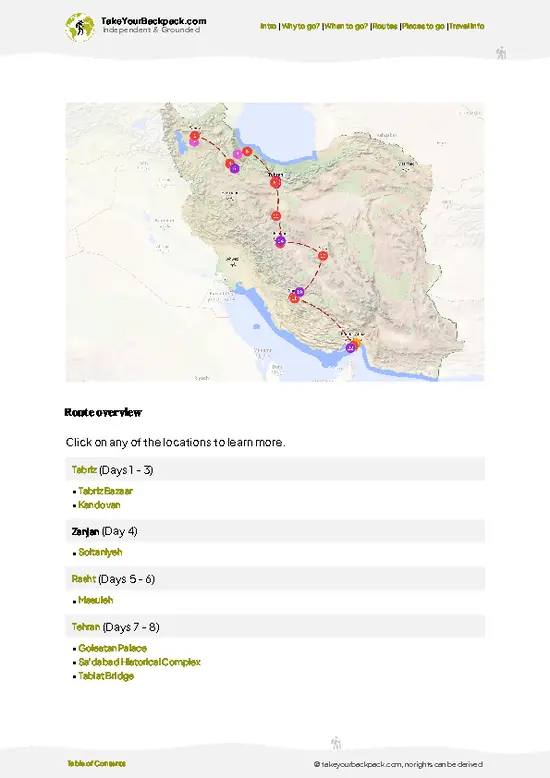
Iran’s transport system is surprisingly efficient. Major cities are well-connected by a mix of domestic flights, trains, and buses. For a seamless trip, focus on regional clusters. Start in Tehran, then move to Isfahan and Shiraz. This route minimizes backtracking and maximizes your time.

Routing Logic
Traveling south from Tehran to Isfahan and Shiraz allows you to experience the heart of Persian culture. Alternatively, consider heading north to Tabriz and then making your way south. Each region has its own flavor, so think about what you want to experience.

Time Management
Allocate at least two full days in each major city. This pacing allows for exploration without feeling rushed. If you’re short on time, prioritize key attractions but be prepared to miss some of … read more 👉
Transport Networks
Iran’s transport system is surprisingly efficient. Major cities are well-connected by a mix of domestic flights, trains, and buses. For a seamless trip, focus on regional clusters. Start in Tehran, then move to Isfahan and Shiraz. This route minimizes backtracking and maximizes your time.

Routing Logic
Traveling south from Tehran to Isfahan and Shiraz allows you to experience the heart of Persian culture. Alternatively, consider heading north to Tabriz and then making your way south. Each region has its own flavor, so think about what you want to experience.

Time Management
Allocate at least two full days in each major city. This pacing allows for exploration without feeling rushed. If you’re short on time, prioritize key attractions but be prepared to miss some of the smaller, enriching experiences.

Common Mistakes
One common pitfall is trying to see too much too quickly. Iran’s charm lies in its details. Rushing through cities can lead to fatigue and missed opportunities. Avoid cramming too many stops into a tight schedule; it’s better to savor a few places than skim over many.

Trade-offs and Constraints
Speed versus depth is a constant balancing act. If budget allows, consider flights for longer distances to save time. However, buses and trains offer a more immersive experience. Weigh comfort against cost; sometimes, the extra expense for a faster option pays off in energy saved for exploration.

Flexibility
Keep your itinerary flexible. Unexpected discoveries often lead to the best experiences. Allow for spontaneous detours; they can turn a good trip into a great one. Prioritize what truly matters to you, and let the journey unfold.

The ListMust-Visit cities in Iran

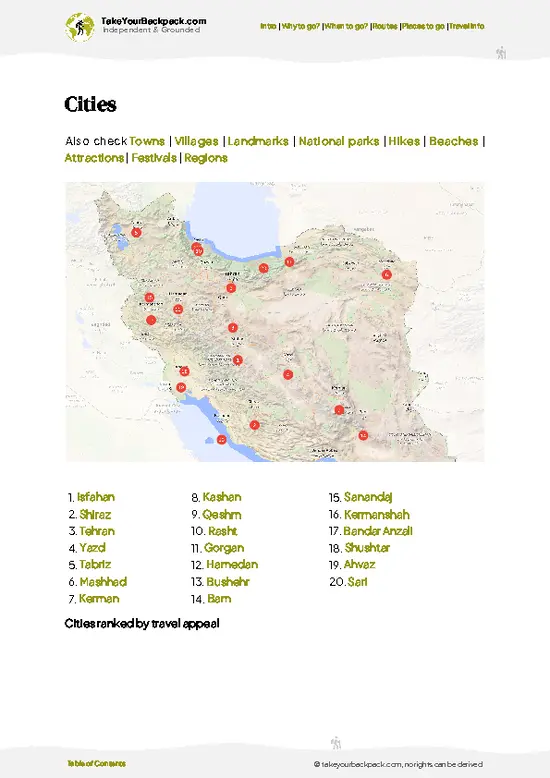
1 Isfahan

Blue-tiled mosques, river bridges, grand squares

Spend days wandering Isfahan’s shaded avenues, crossing historic bridges and discovering intricate tilework in vast public spaces.

iran-city-isfahan
© Google |

2 Shiraz

Poets’ gardens, ancient ruins, citrus courtyards

Stroll through Shiraz’s fragrant gardens, visit Persepolis, and relax in shaded courtyards filled with the scent of orange blossoms.

3 Tehran

Urban sprawl, mountain views, modern museums

Experience Tehran’s fast pace, from crowded streets to quiet parks, with the Alborz mountains always looming in the distance.

4 Yazd

Windcatchers, adobe lanes, Zoroastrian sites

Wander Yazd’s labyrinthine alleys, climb rooftops for sunset views, and visit fire temples that echo the city’s ancient roots.

5 Tabriz

Covered bazaar, mountain backdrop, Armenian quarter

Navigate Tabriz’s sprawling bazaar, then explore hillside neighborhoods and sample local food in the city’s diverse districts.

6 Mashhad

Shrine complex, religious center, urban sprawl

Experience the flow of pilgrims at the Imam Reza shrine, then navigate Mashhad’s vast cityscape and bustling bazaars.

7 Kerman

Bazaar labyrinth, desert fortresses, pistachio markets

Lose yourself in Kerman’s covered bazaars, then venture out to mudbrick forts and pistachio stalls on the desert’s edge.

iran-city-kerman
© Google |

8 Kashan

Historic houses, desert oasis, rosewater workshops

Tour Kashan’s ornate homes, then escape to lush gardens and learn about rosewater production in the city’s quiet backstreets.

9 Qeshm

Island geology, tidal mangroves, fishing villages

Explore Qeshm’s surreal rock formations, kayak through mangroves, and visit quiet coastal villages shaped by the tides.

10 Rasht

Rainy climate, Gilaki cuisine, central square

Sample Rasht’s distinctive food in bustling markets, then watch daily life unfold in the city’s lively main square.

11 Gorgan

Caspian forests, brick tower, Turkmen influence

Walk Gorgan’s leafy boulevards, visit the ancient tower, and notice Turkmen culture in the city’s food and festivals.

12 Hamedan

Ancient tombs, hillside parks, pottery workshops

Tour Hamedan’s archaeological sites, then relax in green parks and browse for handmade pottery in local studios.

13 Bushehr

Persian Gulf port, colonial houses, seafood markets

Stroll Bushehr’s old waterfront, admire faded colonial facades, and try fresh fish straight from the Gulf.

14 Bam

Mudbrick citadel, date plantations, desert silence

Climb the ruins of Bam’s ancient citadel, then wander through date groves and listen to the quiet of the surrounding desert.

15 Sanandaj

Kurdish music, mountain alleys, stone houses

Listen to live music in Sanandaj’s cafes, then wander narrow streets lined with traditional stone homes and mountain views.

16 Kermanshah

Rock reliefs, Kurdish neighborhoods, mountain foothills

Visit ancient carvings near Kermanshah, then explore Kurdish quarters and hike into the surrounding hills for panoramic views.

17 Anzali

Lagoon, fishing port, waterfront cafes

Watch fishing boats return at dawn, explore the lagoon’s birdlife, and sample local seafood along the breezy Caspian shoreline.

18 Shushtar

Watermills, canals, ancient engineering

Trace the flow of water through Shushtar’s historic mills and canals, then rest in cool courtyards shaped by centuries of ingenuity.

19 Ahvaz

Karun River, palm groves, ethnic diversity

Walk Ahvaz’s riverside promenades, cross modern bridges, and experience the city’s blend of cultures and southern heat.

20 Sari

Rice fields, citrus groves, forested hills

Travel through Sari’s green countryside, where rice paddies and citrus trees stretch from the city to the edge of the forest.

21 Gonbad-e Kavus

Brick tower, Turkmen culture, steppe horizon

Climb the ancient tower for sweeping views, then discover Turkmen influences in the city’s markets and distant grasslands.

22 Urmia

Salt lake, Armenian churches, apple orchards

Visit Urmia’s lakeshore for shifting colors, then explore local churches and sample apples from the region’s fertile farms.

23 Khorramabad

Hilltop castle, waterfalls, Lurish culture

Hike up to Khorramabad’s fortress, then cool off by city waterfalls and learn about local traditions in the heart of Lorestan.

24 Maragheh

Observatory ruins, red stone tombs, apple groves

Climb to Maragheh’s ancient observatory, then explore colorful tombs and orchards that dot the rolling hills.

25 Mahabad

Kurdish town, lakefront, mountain backdrop

Experience Kurdish hospitality, sample local bread, and set out for hikes along the lake and into rugged hills.

26 Borujerd

Bazaar arcades, mosque domes, mountain backdrop

Wander Borujerd’s covered markets, admire mosque architecture, and enjoy views of the Zagros peaks from city parks.

27 Zanjan

Copperware, salt mines, riverside bazaar

Browse Zanjan’s metalwork stalls, visit nearby salt domes, and walk along the river where the city’s daily life unfolds.

28 Amol

Mountain gateway, hot springs, rice paddies

Start your journey into the Alborz mountains from Amol, where thermal baths and lush fields shape the daily rhythm of life.

29 Neyshabur

Turquoise mines, poets’ tombs, rural villages

Visit Neyshabur for its famous turquoise, then reflect at the poets’ graves before heading out to quiet villages on the plain.

30 Dezful

Ancient bridge, riverbank parks, citrus gardens

Cross Dezful’s old bridge at sunset, then unwind in riverside parks and sample local citrus in the city’s shaded gardens.

31 Semnan

Desert gateway, old city walls, pistachio groves

Step through Semnan’s historic gates, then explore pistachio orchards and the dry, sun-baked landscape stretching south.

32 Shahrud

Forest edge, desert junction, pomegranate orchards

Move between forested slopes and arid plains in Shahrud, where pomegranate harvests mark the changing seasons.

33 Sirjan

Stone domes, mining hub, dry salt lakes

See Sirjan’s unique ice houses, then cross the arid landscape dotted with mines and shimmering salt pans.

34 Jiroft

Ancient mounds, citrus farms, Halil River

Explore archaeological sites near Jiroft, then relax by the river and sample fresh citrus from the surrounding orchards.

35 Tabas

Desert canyons, qanat gardens, earthquake ruins

Navigate palm-shaded gardens fed by ancient water channels and explore stark landscapes shaped by both nature and history.

36 Rafsanjan

Pistachio capital, desert plateau, caravan routes

Travel through Rafsanjan’s pistachio groves and desert flats, where old trade routes still shape the city’s quiet rhythm.

37 Sabzevar

Desert edge, caravanserai, saffron trade

Trace old Silk Road routes through Sabzevar’s mudbrick alleys, where the scent of saffron and history linger in the dry air.

38 Khoy

Silk Road town, Armenian heritage, mountain pass

Trace old caravan routes through Khoy, visit historic churches, and cross the mountain pass toward Turkey.

39 Maku

Rocky gorge, cliffside church, borderland bazaar

Climb to a remote sanctuary carved into stone, shop in lively markets, and watch daily life unfold beneath dramatic cliffs.

40 Birjand

Desert city, mudbrick forts, saffron fields

Walk Birjand’s quiet streets lined with adobe walls, then explore nearby forts and the saffron farms that color the landscape.

41 Babol

Caspian foothills, local bazaars, citrus orchards

Wander through Babol’s lively markets and tree-lined streets, then head out to nearby forests and orange groves for a slower pace.

42 Torbat-e Jam

Sufi shrine, steppe landscape, rural bazaars

Pause at the Sufi mausoleum before wandering through Torbat-e Jam’s open markets and the wide, wind-swept plains beyond.

Think you know Iran?

Prove you’re a true local — uncover 32 lesser-known cities in Iran that locals tend to keep to themselves.
Loading the map 🌍

Expert viewExpert Commentary on cities

Transport Hubs


Iran’s transport infrastructure is a mixed bag, but it’s functional enough to get you where you need to go. Major cities are well-connected by bus and train networks, but don’t expect the luxury of Western standards. Buses are generally the most reliable and economical option, with a range of comfort levels. Trains can be a bit hit-or-miss; while they offer a scenic route, delays are common. If you’re short on time, flying between cities is an option, but it can eat into your budget.

Consider this: the more cities you try to cram into your itinerary, the less you’ll actually experience. Aiming for three to five cities allows you to soak in the local culture without feeling like a pinball. Each city has its own rhythm, and rushing through them can leave you feeling disconnected. … read more 👉

Transport Hubs


Iran’s transport infrastructure is a mixed bag, but it’s functional enough to get you where you need to go. Major cities are well-connected by bus and train networks, but don’t expect the luxury of Western standards. Buses are generally the most reliable and economical option, with a range of comfort levels. Trains can be a bit hit-or-miss; while they offer a scenic route, delays are common. If you’re short on time, flying between cities is an option, but it can eat into your budget.

Consider this: the more cities you try to cram into your itinerary, the less you’ll actually experience. Aiming for three to five cities allows you to soak in the local culture without feeling like a pinball. Each city has its own rhythm, and rushing through them can leave you feeling disconnected.

Urban Pacing


Iranian cities have a unique pace that can be both exhilarating and exhausting. The hustle and bustle can be overwhelming, especially in larger urban centers. You’ll find yourself navigating crowded bazaars, busy streets, and the occasional traffic jam. This isn’t just a logistical challenge; it’s part of the experience.

If you’re someone who thrives on energy and excitement, you might love the chaos. But if you prefer a slower pace, plan your days accordingly. Allocate time for leisurely strolls, coffee breaks, and people-watching. This is where you’ll find the soul of the city.

Remember, urban life in Iran is vibrant, but it can also be draining. Factor in downtime to recharge. You’ll need it for those moments that truly matter—like sharing a meal with locals or exploring a hidden corner of a bazaar.

Local Costs


Iran is generally affordable, but costs can vary significantly between cities. In larger urban areas, prices for food and accommodation can be higher, especially in tourist hotspots. Street food is a fantastic way to eat well without breaking the bank, but don’t overlook local restaurants for a more authentic experience.

Budgeting isn’t just about money; it’s also about energy. If you’re constantly on the move, you’ll find yourself spending more on transport and less on experiences. Choose your cities wisely. Fewer cities mean more time to engage with locals and enjoy the nuances of each place.

Keep in mind that while some attractions may have low entrance fees, the costs can add up if you’re trying to see everything. Prioritize what truly interests you.

Exploring More Cities vs. Deeper Immersion


The trade-off between exploring multiple cities quickly and immersing yourself in fewer locations is crucial. If you rush through, you’ll miss the subtleties that make each city unique. On the flip side, spending too much time in one place can lead to stagnation.

Aim for a balance. Three to five cities is a sweet spot. This allows you to dive deep into local culture while still experiencing the diversity of Iran. Each region has its own character, influenced by history, geography, and local customs.

Consider the cultural context as well. Some areas may be more conservative, impacting how you interact with locals. Understanding these nuances can enhance your experience and keep you safe.

Safety & Cultural Considerations


Safety is generally not a major concern in Iran, but cultural sensitivity is paramount. Dress modestly, especially in more conservative areas. This isn’t just about following rules; it’s about respecting local customs.

Be prepared for the occasional cultural misunderstanding. Iranians are incredibly hospitable, but their ways of communicating can be different from what you’re used to. Patience and a willingness to learn will go a long way.

Traveling in Iran is about more than just seeing sights; it’s about connecting with people. Take the time to engage in conversations, share meals, and participate in local traditions. These moments are what will enrich your journey and make it worthwhile.

In summary, approach your trip to Iran with a clear plan but remain flexible. The beauty of this country lies in its unpredictability. Embrace the chaos, savor the moments, and remember that every city has its own story waiting to be discovered.

✈️ The backpacker research shortcutIran Travel Guide

An offline-friendly backpacking guide with optimized travel routes, ranked highlights, transport advice, and the best areas to stay.
example page 0 from our offline Travel Guide for Iran
example page 1 from our offline Travel Guide for Iran
example page 2 from our offline Travel Guide for Iran
example page 3 from our offline Travel Guide for Iran
example page 4 from our offline Travel Guide for Iran
example page 5 from our offline Travel Guide for Iran
example page 6 from our offline Travel Guide for Iran
example page 7 from our offline Travel Guide for Iran
The digital guide (412 pages) contains:
118 highlights, ranked by travel appeal
Optimized 7, 14 & 21-day travel routes
Cities, national parks, landmarks, beaches
How to get around
Offline-friendly for travel without Wi-Fi
👉 Click to see all 30+ guide features

📅 Plan smarter in minutes, not weeks
Month by month travel advice
Festivals & national holidays
Budget expectations

🗺️ Go to the right places, skip the overrated ones
Honest pros & cons of destinations
Top hikes, parks & viewpoints
Lesser-known places most travelers miss
Clear “worth it vs skip it” guidance

🛏️ Travel smoothly without rookie mistakes
Best areas to stay
Transport systems explained simply
Common scams & safety advice
SIM cards, money & practical tips

🌍 Understand the country, not just visit it
Culture & traditions
52 Essential phrases & customs
Festivals worth planning around
Traveler-friendly historical context
Insights that make places more meaningful

📱 Built for real travel conditions
Fully downloadable PDF
Works completely offline
Optimized for phone use
Useful in remote areas & buses
Everything in one place
Save weeks of stressful planning
Get instant access to your full guide. 30‑day money-back guarantee.
+ Add another guide for just US$7.80

By proceeding you agree to our terms.
Sent to your inbox immediately after payment • 100% Secure Checkout
Best Backpacking Travel Advisor 2025 tourism awardBest Backpacking
Travel Advisor
2025
What others say about Take Your Backpack Guides:
⭐⭐⭐⭐⭐
Fantastic, amazing amount of information!
⭐⭐⭐⭐⭐
My goodness this is amazing, it's what I've been looking for hats off too you!
⭐⭐⭐⭐⭐
I think this is absolutely BRILLIANT
⭐⭐⭐⭐
Very complete and informative. It's still missing places, but I gotta to commend you
⭐⭐⭐⭐⭐
This is truly amazing, thank you, can't wait to explore it with my kids!
⭐⭐⭐⭐⭐
Awesome resource, thank you!
⭐⭐⭐⭐⭐
This is amazing! Can't wait to explore the ones I haven't seen
⭐⭐⭐⭐
I love this! Well done, great idea.
⭐⭐⭐⭐⭐
Thanks for taking the time to make this gem!
⭐⭐⭐⭐⭐
This might be the best website I've ever seen.
⭐⭐⭐⭐⭐
Congratulations, and thank you so much for your work; it's incredibly valuable.
⭐⭐⭐⭐
In all seriousness I think you did a great job pointing out the important spots
⭐⭐⭐⭐⭐
10/10 very good
⭐⭐⭐⭐⭐
As someone who's only just starting to visit regularly this is awesome, thank you.
⭐⭐⭐⭐
Thank you very much! I'm going to visit my dad, it's going to be very useful!
⭐⭐⭐⭐⭐
This is really cool! We'll be travelling for the first time and this definitely come in handy.
⭐⭐⭐⭐⭐
You are now our minister of culture, congratulations 👨‍💼
⭐⭐⭐⭐⭐
Just wanted to tell you that this is a pearl! Going to follow your recommendations.
⭐⭐⭐⭐⭐
This is so cool. I'll definitely be using the resource for my travels soon.
⭐⭐⭐⭐⭐
This is very impressive! Good work.
⭐⭐⭐⭐⭐
This is an amazing and informative site. Very well done!

🛏️ Where to stay?Top Places to Consider Staying

Yes — hostels, budget guesthouses and traditional homestay-style accommodations are widely available in Iran’s main tourist cities, especially Tehran, Isfahan, Shiraz, Yazd, Tabriz, Kashan and Mashhad.
In Tehran look around Valiasr/Vanak and Tajrish for best transport links and more nightlife but expect traffic and higher rates; in Isfahan stay by the historic center for walking access to major sights though it’s busier and quieter at night; Shiraz’s bazaar/Vakil area puts you by gardens and markets but can be sleepy after dark; Yazd’s old town (Fahadan) offers atmospheric traditional houses with narrow alleys that feel quieter; Tabriz clusters around the historic bazaar with good budget supply … read more 👉
Yes — hostels, budget guesthouses and traditional homestay-style accommodations are widely available in Iran’s main tourist cities, especially Tehran, Isfahan, Shiraz, Yazd, Tabriz, Kashan and Mashhad.
In Tehran look around Valiasr/Vanak and Tajrish for best transport links and more nightlife but expect traffic and higher rates; in Isfahan stay by the historic center for walking access to major sights though it’s busier and quieter at night; Shiraz’s bazaar/Vakil area puts you by gardens and markets but can be sleepy after dark; Yazd’s old town (Fahadan) offers atmospheric traditional houses with narrow alleys that feel quieter; Tabriz clusters around the historic bazaar with good budget supply but colder winters; Kashan’s historic quarter is ideal for traditional houses and desert trips but has limited nightlife.
Expect some hostels to offer gender‑segregated dorms or women‑only rooms, observe strict public dress codes in common areas, and book ahead at peak times (Nowruz and summer) or take a private room for more flexibility.

If you enjoy meeting fellow travelers, consider choosing hostels with high ratings for atmosphere. On the other hand, if you prefer having your own space, a hotel might be a better option.

IranMore Places Across Iran

👋 Meet the founderWho’s Behind Take Your Backpack?

Johan, backpacker and founder of TakeYourBackpackHi, I’m Johan (Netherlands 🇳🇱), the creator of TakeYourBackpack. Over the past decade, I’ve backpacked through 80+ countries across six continents, gaining extensive experience with independent travel, long-term trips, and overland routes.

This site is built on a combination of firsthand travel experience and carefully curated insights from other backpackers. Many guides are based on places I’ve personally visited, while others bring together tips, observations, and practical advice shared by trusted travelers I’ve met along the way.

The goal is to provide realistic, experience-driven guidance — not generic itineraries — so you can explore destinations with better context, clearer expectations, and more confidence.

Get full Iran guide •
Instant download • 118 highlights • Full Offline guide