×

Iran🇮🇷 | landmarksBam and its Cultural Landscapedate palm groves, qanat irrigation, oasis settlement | things to do and best time to go

Explore Bam CitadelExplore Chahkooh Canyon

Backpacking in Bam and its Cultural Landscape
UNESCO World Heritage site
By Johan Kruseman 🇳🇱 | Updated September 4, 2026

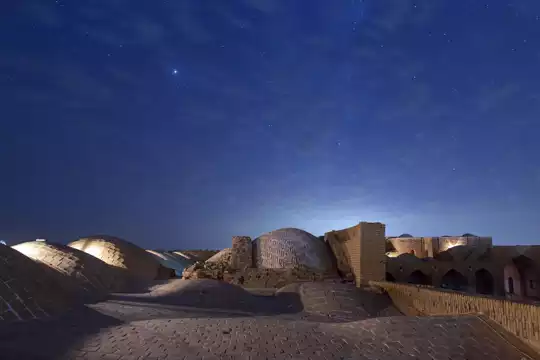
Most people still picture Bam as a tragic ruin frozen in 2003 earthquake photos; that’s outdated and sells the place short. Bam and its Cultural Landscape sits in southeastern Iran, in Kerman Province, on the edge of the Lut Desert, and it’s very much alive again. As a backpacker, you get a partly reconstructed mud-brick citadel that still delivers a serious “how was this all made of earth?” punch, without the suffocating crowds of Iran’s headline cities. It’s cheap once you’re there, but getting to Bam is a long haul and public transport can be slow. The vibe is quiet, almost eerie at sunrise, with huge photo potential if you like textures and empty alleys more than glossy perfection. Historically, it’s heavyweight; logistically, it’s for the patient.

Discover everything you want to know in the 📖 Iran Travel Guide.
Safety warning

The current risk level for Iran is high. Check the advice before going.


Get your Iran guide
118 ranked highlights, routes & tips, works offline (412 pages)
Loading the map 🌍
CLICK TO FILTER
cities
towns
villages
landmarks
national parks
hikes
beaches
attractions
festivals
regions
SHOW COUNTRY’S BESTSHOW ALL

✨ Why go?
Ranked #99 unique site in Iran
Why visitors keep coming back

Bam and its Cultural Landscape is a must-see for backpackers who crave authenticity over Instagram filters. Sure, it’s a UNESCO World Heritage site, but let’s get real: the crowds can be overwhelming, especially during peak season. Yet, the effort to navigate through the throngs is worth it.

Why? Because Bam isn’t just about the ancient mud-brick citadel; it’s a living testament to resilience. The history here is palpable, with stories etched into every wall. You’ll find locals who are eager to share their culture, making it a rich experience beyond the dusty ruins.

Accessibility is a breeze; it fits seamlessly into a broader route through Iran, linking you to other gems like Yazd and Kerman. And let’s talk cost: entry fees are minimal, and you can find budget accommodations nearby.

So, … read more 👉
Bam and its Cultural Landscape is a must-see for backpackers who crave authenticity over Instagram filters. Sure, it’s a UNESCO World Heritage site, but let’s get real: the crowds can be overwhelming, especially during peak season. Yet, the effort to navigate through the throngs is worth it.

Why? Because Bam isn’t just about the ancient mud-brick citadel; it’s a living testament to resilience. The history here is palpable, with stories etched into every wall. You’ll find locals who are eager to share their culture, making it a rich experience beyond the dusty ruins.

Accessibility is a breeze; it fits seamlessly into a broader route through Iran, linking you to other gems like Yazd and Kerman. And let’s talk cost: entry fees are minimal, and you can find budget accommodations nearby.

So, while Bam might not be the quiet escape you envisioned, the real magic lies in its depth and the connections you’ll forge. It’s a place that demands your time and rewards you with unforgettable experiences.
Want to include Bam and its Cultural Landscape in your Iran route?
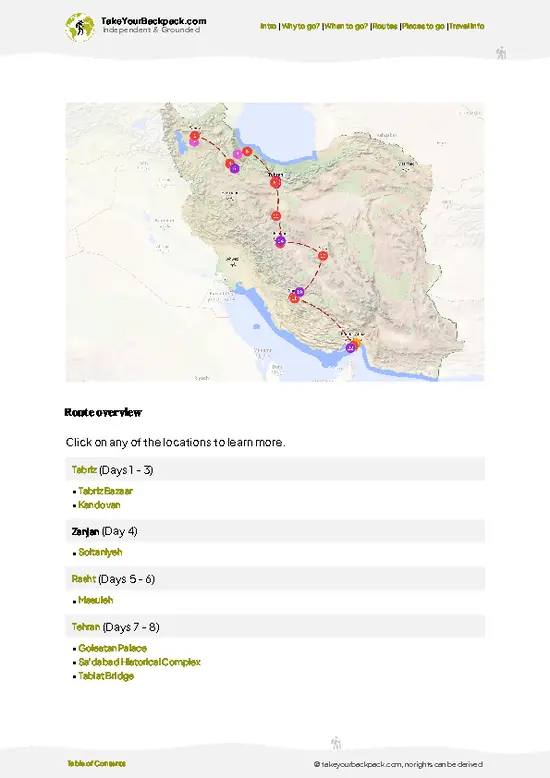
Create a personalized Iran itinerary that includes Bam and its Cultural Landscape and the places that fit your trip — based on your travel style, budget, and available time. Get your route in seconds.

Generate my trip

💡 HighlightsEssential experiences to have while visiting Bam and its Cultural Landscape

  • Arg-e Bam (the Citadel) — The giant mud-brick stronghold that gives Bam its reputation: massive, multi-level, and almost entirely built of adobe. Walking its ramps and courtyards feels like stepping into a living medieval city built for desert life.
  • Defensive walls and towers — Thick, crenellated walls and watchtowers ring the citadel with a raw, fortress-y presence. Climb a tower for sweeping views of the site and the flat desert beyond — a great place for photography and imagining past sieges.
  • Qanats and palm oases — The ingenious underground water channels (qanats) that feed Bam’s famous date palms are part of the cultural landscape. Seeing the shady palm groves against the arid plain highlights how ancient engineering made life possible here.
  • Traditional mud-brick houses and alleyways
read more 👉
  • Arg-e Bam (the Citadel) — The giant mud-brick stronghold that gives Bam its reputation: massive, multi-level, and almost entirely built of adobe. Walking its ramps and courtyards feels like stepping into a living medieval city built for desert life.
  • Defensive walls and towers — Thick, crenellated walls and watchtowers ring the citadel with a raw, fortress-y presence. Climb a tower for sweeping views of the site and the flat desert beyond — a great place for photography and imagining past sieges.
  • Qanats and palm oases — The ingenious underground water channels (qanats) that feed Bam’s famous date palms are part of the cultural landscape. Seeing the shady palm groves against the arid plain highlights how ancient engineering made life possible here.
  • Traditional mud-brick houses and alleyways — Narrow, shaded lanes and courtyard homes built from sun-dried adobe show how local architecture responds to heat and scarce water. It’s a compact lesson in passive cooling and community planning you won’t find in modern suburbs.
  • Archaeological layers of the old city — Scattered ruins around the citadel reveal long occupation, trade connections, and changing building styles. For anyone into history, those fragments tell the story of a Silk Road stop with regional importance.
  • Sunrise and sunset over the citadel — The light here turns the mud walls into warm oranges and deep ambers — short, dramatic shows that reward an early alarm or a lazy golden-hour wait. Bring layers; desert temperatures swing fast.
  • The earthquake and restoration story — Bam’s 2003 quake devastated the site and community, and the ongoing restoration is a humbling, human tale of loss, international help, and cultural preservation. Visiting you’ll see both fragility and resilience — and better understand why conservation matters.
Spotted a mistake or missing something? Contact us.

🌤️ When to go?Choosing the right time of year


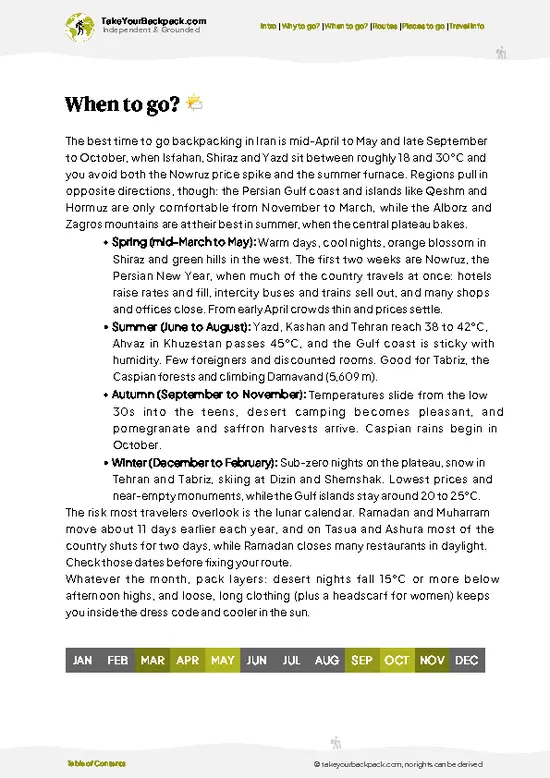
  • Weather: Bam’s desert climate means scorching summers with highs often above 40°C (104°F), making midday hiking brutal. Winters are mild but can drop to near freezing at night, so pack layers.

  • Temperature: Spring (March to May) and autumn (September to November) offer the sweet spot—daytime temps hover between 20-30°C (68-86°F), perfect for exploring without frying or freezing.

  • Daylight Hours: Expect roughly 11-13 hours of daylight in spring and autumn, giving you ample time to soak in the ruins and surrounding landscapes without rushing.

  • Crowds: Bam isn’t a tourist magnet, but spring attracts local visitors during Nowruz (Persian New Year), so expect some buzz. Otherwise, it’s peaceful, letting you wander the citadel’s vastness mostly alone.

  • Seasonal Activities: Spring brings blooming
read more 👉

  • Weather: Bam’s desert climate means scorching summers with highs often above 40°C (104°F), making midday hiking brutal. Winters are mild but can drop to near freezing at night, so pack layers.

  • Temperature: Spring (March to May) and autumn (September to November) offer the sweet spot—daytime temps hover between 20-30°C (68-86°F), perfect for exploring without frying or freezing.

  • Daylight Hours: Expect roughly 11-13 hours of daylight in spring and autumn, giving you ample time to soak in the ruins and surrounding landscapes without rushing.

  • Crowds: Bam isn’t a tourist magnet, but spring attracts local visitors during Nowruz (Persian New Year), so expect some buzz. Otherwise, it’s peaceful, letting you wander the citadel’s vastness mostly alone.

  • Seasonal Activities: Spring brings blooming desert flora, adding unexpected color to the ruins. Autumn’s cooler air is ideal for longer treks around the cultural landscape without the oppressive heat.

  • Price Fluctuations: Accommodation and transport costs spike slightly during Nowruz and the fall pilgrimage season but remain reasonable compared to Iran’s major cities year-round.


Pro-tip: Aim for late March or early October to dodge crowds, enjoy comfortable temperatures, and catch the desert’s subtle seasonal shifts that Instagram never shows you.


source: climatestotravel.comJANJanuary: good for travelingFEBFebruary: good for travelingMARMarch: highly recommended for travelingAPRApril: excellent for travelingMAYMay: highly recommended for travelingJUNJune: fair for travelingJULJuly: below average for travelingAUGAugust: below average for travelingSEPSeptember: highly recommended for travelingOCTOctober: excellent for travelingNOVNovember: highly recommended for travelingDECDecember: good for traveling
when-to-go

✈️ The backpacker research shortcutIran Travel Guide

An offline-friendly backpacking guide with optimized travel routes, ranked highlights, transport advice, and the best areas to stay.
example page 0 from our offline Travel Guide for Iran
example page 1 from our offline Travel Guide for Iran
example page 2 from our offline Travel Guide for Iran
example page 3 from our offline Travel Guide for Iran
example page 4 from our offline Travel Guide for Iran
example page 5 from our offline Travel Guide for Iran
example page 6 from our offline Travel Guide for Iran
example page 7 from our offline Travel Guide for Iran
The digital guide (412 pages) contains:
118 highlights, ranked by travel appeal
Optimized 7, 14 & 21-day travel routes
Cities, national parks, landmarks, beaches
How to get around
Offline-friendly for travel without Wi-Fi
👉 Click to see all 30+ guide features

📅 Plan smarter in minutes, not weeks
Month by month travel advice
Festivals & national holidays
Budget expectations

🗺️ Go to the right places, skip the overrated ones
Honest pros & cons of destinations
Top hikes, parks & viewpoints
Lesser-known places most travelers miss
Clear “worth it vs skip it” guidance

🛏️ Travel smoothly without rookie mistakes
Best areas to stay
Transport systems explained simply
Common scams & safety advice
SIM cards, money & practical tips

🌍 Understand the country, not just visit it
Culture & traditions
52 Essential phrases & customs
Festivals worth planning around
Traveler-friendly historical context
Insights that make places more meaningful

📱 Built for real travel conditions
Fully downloadable PDF
Works completely offline
Optimized for phone use
Useful in remote areas & buses
Everything in one place
Save weeks of stressful planning
Get instant access to your full guide. 30‑day money-back guarantee.
+ Add another guide for just US$7.80

By proceeding you agree to our terms.
Sent to your inbox immediately after payment • 100% Secure Checkout
Best Backpacking Travel Advisor 2025 tourism awardBest Backpacking
Travel Advisor
2025
What others say about Take Your Backpack Guides:
⭐⭐⭐⭐⭐
Fantastic, amazing amount of information!
⭐⭐⭐⭐⭐
My goodness this is amazing, it's what I've been looking for hats off too you!
⭐⭐⭐⭐⭐
I think this is absolutely BRILLIANT
⭐⭐⭐⭐
Very complete and informative. It's still missing places, but I gotta to commend you
⭐⭐⭐⭐⭐
This is truly amazing, thank you, can't wait to explore it with my kids!
⭐⭐⭐⭐⭐
Awesome resource, thank you!
⭐⭐⭐⭐⭐
This is amazing! Can't wait to explore the ones I haven't seen
⭐⭐⭐⭐
I love this! Well done, great idea.
⭐⭐⭐⭐⭐
Thanks for taking the time to make this gem!
⭐⭐⭐⭐⭐
This might be the best website I've ever seen.
⭐⭐⭐⭐⭐
Congratulations, and thank you so much for your work; it's incredibly valuable.
⭐⭐⭐⭐
In all seriousness I think you did a great job pointing out the important spots
⭐⭐⭐⭐⭐
10/10 very good
⭐⭐⭐⭐⭐
As someone who's only just starting to visit regularly this is awesome, thank you.
⭐⭐⭐⭐
Thank you very much! I'm going to visit my dad, it's going to be very useful!
⭐⭐⭐⭐⭐
This is really cool! We'll be travelling for the first time and this definitely come in handy.
⭐⭐⭐⭐⭐
You are now our minister of culture, congratulations 👨‍💼
⭐⭐⭐⭐⭐
Just wanted to tell you that this is a pearl! Going to follow your recommendations.
⭐⭐⭐⭐⭐
This is so cool. I'll definitely be using the resource for my travels soon.
⭐⭐⭐⭐⭐
This is very impressive! Good work.
⭐⭐⭐⭐⭐
This is an amazing and informative site. Very well done!

🛏️ Where to stay?Choosing the right base

Bam is a fascinating place, but let’s cut through the hype. The crowds can be overwhelming, especially during peak tourist seasons. You’ll find plenty of travelers snapping selfies, but the real magic lies in the quiet corners of the ancient citadel and the surrounding landscape.

For backpackers, the best areas to stay are around the city center and near the citadel itself. These spots are buzzing with fellow travelers, making it easy to connect. Look for guesthouses or budget accommodations that offer communal spaces. You’ll want a place where you can swap stories over tea or share a meal with … read more 👉
Bam is a fascinating place, but let’s cut through the hype. The crowds can be overwhelming, especially during peak tourist seasons. You’ll find plenty of travelers snapping selfies, but the real magic lies in the quiet corners of the ancient citadel and the surrounding landscape.

For backpackers, the best areas to stay are around the city center and near the citadel itself. These spots are buzzing with fellow travelers, making it easy to connect. Look for guesthouses or budget accommodations that offer communal spaces. You’ll want a place where you can swap stories over tea or share a meal with new friends.

Safety is generally good, but keep your wits about you, especially at night. The locals are welcoming, and you’ll often find that they’re eager to share their culture.

Don’t miss the chance to explore the nearby desert. It’s a short trek from the city, and the sunsets are breathtaking. This is where Bam’s true essence shines, away from the crowds. Embrace the experience, and you’ll leave with memories that far outweigh the Instagram likes.

👛 Costs (as of 4 September 2026)How expensive it really is

Visiting Bam and its Cultural Landscape in Iran can be a rewarding experience, but it comes with its own set of costs. Here’s a breakdown to help you plan your adventure.
  • Accommodation: Expect to pay between €20 to €60 per night for a decent hotel or guesthouse. Prices can vary based on location and amenities. Budget options are available, but they might lack some comforts.
  • Food: Meals can range from €5 to €15. Street food is a fantastic way to save money while enjoying local flavors. Restaurants will be pricier, especially in tourist areas, but you can still find affordable options.
  • Transportation: Local transport is quite cheap. A taxi ride within the city might cost around €2 to €5. If you’re traveling from Tehran to Bam, expect to pay around €15 to €30 for a bus ticket. Private taxis will
read more 👉
Visiting Bam and its Cultural Landscape in Iran can be a rewarding experience, but it comes with its own set of costs. Here’s a breakdown to help you plan your adventure.
  • Accommodation: Expect to pay between €20 to €60 per night for a decent hotel or guesthouse. Prices can vary based on location and amenities. Budget options are available, but they might lack some comforts.
  • Food: Meals can range from €5 to €15. Street food is a fantastic way to save money while enjoying local flavors. Restaurants will be pricier, especially in tourist areas, but you can still find affordable options.
  • Transportation: Local transport is quite cheap. A taxi ride within the city might cost around €2 to €5. If you’re traveling from Tehran to Bam, expect to pay around €15 to €30 for a bus ticket. Private taxis will be more expensive.
  • Entrance Fees: The entrance fee for Bam Citadel is approximately €2. This is a small price to pay for access to such a significant historical site. Other nearby attractions may have similar fees.
  • Guided Tours: If you want a deeper understanding of the area, consider a guided tour. Prices can range from €30 to €100, depending on the length and inclusions. It’s worth it for the insights you’ll gain.

Understanding these costs will help you navigate your visit to Bam without breaking the bank. The experience is rich, and the history is profound, making it a worthwhile journey.


source: irantravelingcenter.com
⚠️ Prices can change and everyone travels differently, so take this as a rough guide. Hope it helps you plan your adventure!

FAQFrequently asked questions about Bam and its Cultural Landscape

Bam and its Cultural Landscape is an ancient citadel complex in southeastern Iran, known for its mudbrick architecture and historical significance dating back over 2,000 years. It includes the Arg-e Bam, the largest adobe building in the world, and surrounding palm groves. The site reflects traditional Persian desert urban planning and agricultural practices.
Visiting Bam and its Cultural Landscape typically requires 1 to 2 days to explore the citadel thoroughly and experience the nearby palm oasis. Most travelers spend a full day at the Arg-e Bam and an additional half day to visit the surrounding cultural landscape and local markets. Night visits are possible but limited.
You can get to Bam by flying into Bam Airport, which has domestic flights from Tehran and other major Iranian cities. Alternatively, Bam is accessible by train or bus from cities like Kerman and Zahedan. The citadel is located about 5 kilometers from the city center, reachable by taxi or local transport.
⚠️ Things can change over time, so always validate details locally before you go.

Other Iranian landmarks near Bam and its Cultural Landscape

Explore more nearby:

  • Trans-Iranian Railway—mountain tunnels, viaducts, engineering landmarks| 40 km away
  • Dizin—Alborz slopes, ski lifts, high-altitude snowfields| 41 km away
  • Soltaniyeh—turquoise dome, Ilkhanid mausoleum, brickwork patterns| 210 km away

💡 Not sure where to go next?
Create a personalized itinerary for Iran including Bam and its Cultural Landscape and the places that fit your trip.

Generate my itinerary

👉 Discover all landmarks

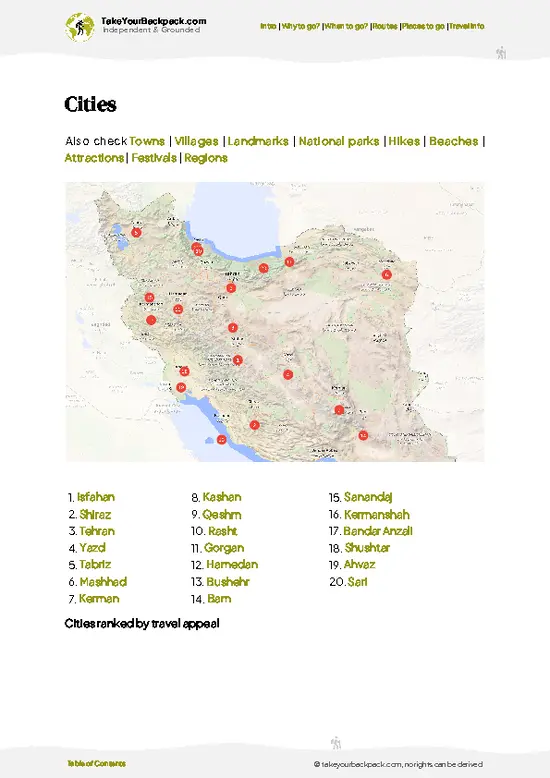
Or checkout all Iran has to offer (think cities, towns, villages, national parks, hikes, beaches, festivals)
Country photo of Iran

We 💚 feedbackSumming up the experience

Bam isn’t just about the ancient citadel; it’s the pulse of a resilient community. Expect crowds, especially during peak seasons, but don’t let that deter you. The real magic lies in the warmth of the locals and their stories. You’ll stumble upon a tiny tea shop where the owner shares tales of the earthquake that reshaped their lives. Just be ready for the heat—it’s relentless. Embrace it, and you’ll find a depth here that Instagram can’t capture.

✍️ Help improve this page!
The information on this page is based on in-depth research, insights shared by experienced travelers, and feedback from the local travel community in Iran. While every effort is made to keep the information accurate and current, conditions can change — so if you spot anything incorrect or outdated, please get in touch.


🙋‍♂️ Give feedback

👋 Meet the founderWho’s Behind Take Your Backpack?

Johan, backpacker and founder of TakeYourBackpackHi, I’m Johan (Netherlands 🇳🇱), the creator of TakeYourBackpack. Over the past decade, I’ve backpacked through 80+ countries across six continents, gaining extensive experience with independent travel, long-term trips, and overland routes.

This site is built on a combination of firsthand travel experience and carefully curated insights from other backpackers. Many guides are based on places I’ve personally visited, while others bring together tips, observations, and practical advice shared by trusted travelers I’ve met along the way.

The goal is to provide realistic, experience-driven guidance — not generic itineraries — so you can explore destinations with better context, clearer expectations, and more confidence.

Get full Iran guide •
Instant download • 118 highlights • Full Offline guide