×

Iran🇮🇷 | landmarksMasjed-e Jāmé of Isfahanlayered prayer halls, brick domes, calligraphic tilework | things to do and best time to go

Explore DizinExplore Meidan Emam, Esfahan

Backpacking in Masjed-e Jāmé of Isfahan
UNESCO World Heritage site
🌟 Highlightunique site ranked #4
By Johan Kruseman 🇳🇱 | Updated May 27, 2026

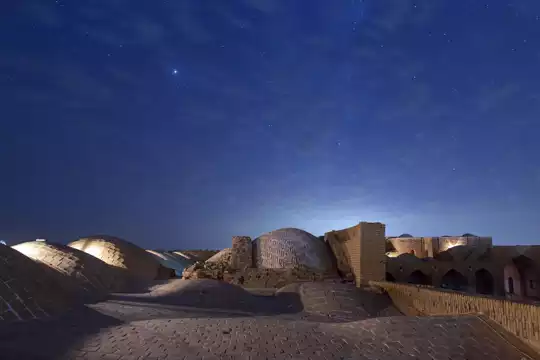
Your fingertips graze cool, carved brick as a call to prayer threads through the dim courtyard, echoing off a forest of pillars while dust motes drift in a shaft of blue Isfahan sky. This is Masjed-e Jāmé of Isfahan, the old congregational mosque in the historic core of Isfahan in central Iran, and it’s the opposite of an Instagram prop. For backpackers, it’s a slow-burn kind of wow: no flashy turquoise square, just a thousand years of layered dynasties, soot-darkened domes, and geometry that quietly scrambles your brain. It’s usually calmer than Naqsh-e Jahan, cheaper than you’d expect for a UNESCO heavyweight, and easy to reach by shared taxi or on foot from the bazaar. The trade-off: some sections are under restoration, light can be tricky for photos, and if you only chase “big blue domes,” you might miss how powerful this place actually feels.

Discover everything you want to know in the 📖 Iran Travel Guide.
Safety warning

The current risk level for Iran is high. Check the advice before going.


Get your Iran guide
121 ranked highlights, routes & tips, works offline (419 pages)
Loading the map 🌍
CLICK TO FILTER
cities
towns
villages
landmarks
national parks
hikes
beaches
attractions
festivals
regions
SHOW COUNTRY’S BESTSHOW ALL

✨ Why go?
Ranked #4 unique site in Iran
What sets this place apart

The Masjed-e Jāmé of Isfahan isn’t just another stop on your Iran itinerary; it’s a masterclass in architectural storytelling. Sure, you’ll encounter crowds, especially during peak hours, but that’s part of the experience. The intricate tile work and soaring arches are jaw-dropping, and the energy of the place is palpable.

What makes it worth your time? For starters, it’s incredibly accessible. Nestled in the heart of Isfahan, you can easily weave it into a broader route that includes the Naqsh-e Jahan Square and the Ali Qapu Palace. This isn’t just a standalone site; it’s part of a rich tapestry of history and culture.

And let’s talk costs. Entry is typically low, making it a no-brainer for backpackers. You’ll get a deep dive into Persian history without breaking the bank.

The real … read more 👉
The Masjed-e Jāmé of Isfahan isn’t just another stop on your Iran itinerary; it’s a masterclass in architectural storytelling. Sure, you’ll encounter crowds, especially during peak hours, but that’s part of the experience. The intricate tile work and soaring arches are jaw-dropping, and the energy of the place is palpable.

What makes it worth your time? For starters, it’s incredibly accessible. Nestled in the heart of Isfahan, you can easily weave it into a broader route that includes the Naqsh-e Jahan Square and the Ali Qapu Palace. This isn’t just a standalone site; it’s part of a rich tapestry of history and culture.

And let’s talk costs. Entry is typically low, making it a no-brainer for backpackers. You’ll get a deep dive into Persian history without breaking the bank.

The real magic lies in the details—the way the light filters through the stained glass, the whispers of history echoing in the courtyard. This isn’t just a photo op; it’s a chance to connect with a piece of the world that’s both ancient and alive. Don’t skip it.
Want to include Masjed-e Jāmé of Isfahan in your Iran route?
Create a personalized Iran itinerary that includes Masjed-e Jāmé of Isfahan and the places that fit your trip — based on your travel style, budget, and available time. Get your route in seconds.

Generate my trip

💡 HighlightsKey sights and experiences for travelers

  • Architectural timeline — a living museum of Persian mosque design: Walk the site and you literally see layers of history from the early Islamic period through the Seljuks, Ilkhanids and later dynasties; it’s one building that shows how mosque architecture evolved in Iran over centuries (reason UNESCO called it exceptional).
  • Seljuk brick domes and decorative vaulting: The old brick domes and vaults use intricate geometric patterns and structural ingenuity (double-shell techniques and patterned brickwork) — beautiful to study up close and very different from the later glazed-tile look.
  • The four-iwan courtyard: That four-large-arched-iwan layout that faces a central courtyard hits you in the face — it’s the mature Persian mosque plan, with dramatic vaults, muqarnas and tiled portals that
read more 👉
  • Architectural timeline — a living museum of Persian mosque design: Walk the site and you literally see layers of history from the early Islamic period through the Seljuks, Ilkhanids and later dynasties; it’s one building that shows how mosque architecture evolved in Iran over centuries (reason UNESCO called it exceptional).
  • Seljuk brick domes and decorative vaulting: The old brick domes and vaults use intricate geometric patterns and structural ingenuity (double-shell techniques and patterned brickwork) — beautiful to study up close and very different from the later glazed-tile look.
  • The four-iwan courtyard: That four-large-arched-iwan layout that faces a central courtyard hits you in the face — it’s the mature Persian mosque plan, with dramatic vaults, muqarnas and tiled portals that frame the light and space.
  • Ilkhanid/Timurid mosaics and the mihrab: Look for shimmering tile mosaics and finely carved stucco around the prayer niche; the color, calligraphy and floral motifs from the 13th-15th centuries have a different, more painterly quality than the older brickwork.
  • Columned hypostyle halls — a ”forest” of columns: The long, low halls with rows of columns create a calm, shady maze — some columns and capitals are reused from earlier periods, giving a layered, tactile feel underfoot.
  • Minarets, portals and inscriptions: Several minarets and grand entrances bear carved inscriptions and tile panels; they’re great for studying craftsmanship and for framing photos of patterns and calligraphy against the sky.
  • Living mosque life and Friday prayers: Beyond monuments, this is a functioning congregational mosque — catching a Friday prayer (or just sitting quietly between services) gives a real sense of how the building still shapes community and ritual.
Spotted a mistake or missing something? Contact us.
🌤️ When to go?Weather, crowds, and seasonal trade-offs


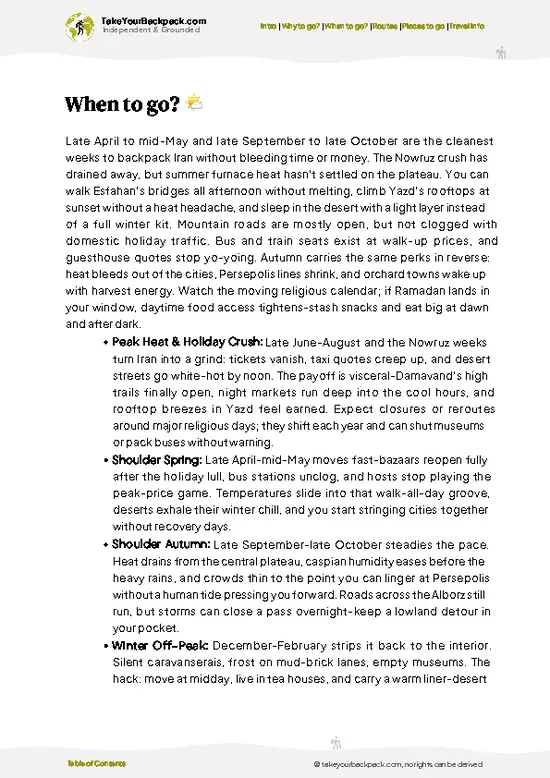
  • Weather: Spring (March to May) and autumn (September to November) offer the most comfortable weather. Expect highs around 20-25°C (68-77°F), perfect for wandering without melting or freezing.

  • Temperature: Summers scorch with highs hitting 35-40°C (95-104°F), brutal for exploring ancient stone and tile. Winters dip to near freezing, around 0-5°C (32-41°F), which can make outdoor visits less pleasant.

  • Daylight Hours: Longer days in spring and autumn give you 11-13 hours of light, ideal for soaking in the mosque’s intricate details without rushing.

  • Crowds: Peak tourist season aligns with spring and autumn, so expect more visitors, especially on weekends. Winter sees fewer tourists but less inviting weather.

  • Seasonal Activities: Spring brings local festivals and blossoming gardens nearby,
read more 👉

  • Weather: Spring (March to May) and autumn (September to November) offer the most comfortable weather. Expect highs around 20-25°C (68-77°F), perfect for wandering without melting or freezing.

  • Temperature: Summers scorch with highs hitting 35-40°C (95-104°F), brutal for exploring ancient stone and tile. Winters dip to near freezing, around 0-5°C (32-41°F), which can make outdoor visits less pleasant.

  • Daylight Hours: Longer days in spring and autumn give you 11-13 hours of light, ideal for soaking in the mosque’s intricate details without rushing.

  • Crowds: Peak tourist season aligns with spring and autumn, so expect more visitors, especially on weekends. Winter sees fewer tourists but less inviting weather.

  • Seasonal Activities: Spring brings local festivals and blossoming gardens nearby, adding cultural layers to your visit. Autumn offers a quieter vibe with harvest season energy in the city.

  • Price Fluctuations: Accommodation and flights spike in spring and autumn. Winter offers the best deals but at the cost of comfort and atmosphere.


Pro-tip: Aim for late March or early October—cool weather, manageable crowds, and a chance to catch local life in full swing without the tourist circus.


source: climatestotravel.comJANJanuary: fair for travelingFEBFebruary: fair for travelingMARMarch: highly recommended for travelingAPRApril: excellent for travelingMAYMay: excellent for travelingJUNJune: fair for travelingJULJuly: below average for travelingAUGAugust: below average for travelingSEPSeptember: highly recommended for travelingOCTOctober: excellent for travelingNOVNovember: highly recommended for travelingDECDecember: fair for traveling
when-to-go

✈️ The backpacker research shortcutIran Travel Guide

An offline-friendly backpacking guide with optimized travel routes, ranked highlights, transport advice, and the best areas to stay.
example page 0 from our offline Travel Guide for Iran
example page 1 from our offline Travel Guide for Iran
example page 2 from our offline Travel Guide for Iran
example page 3 from our offline Travel Guide for Iran
example page 4 from our offline Travel Guide for Iran
example page 5 from our offline Travel Guide for Iran
example page 6 from our offline Travel Guide for Iran
example page 7 from our offline Travel Guide for Iran
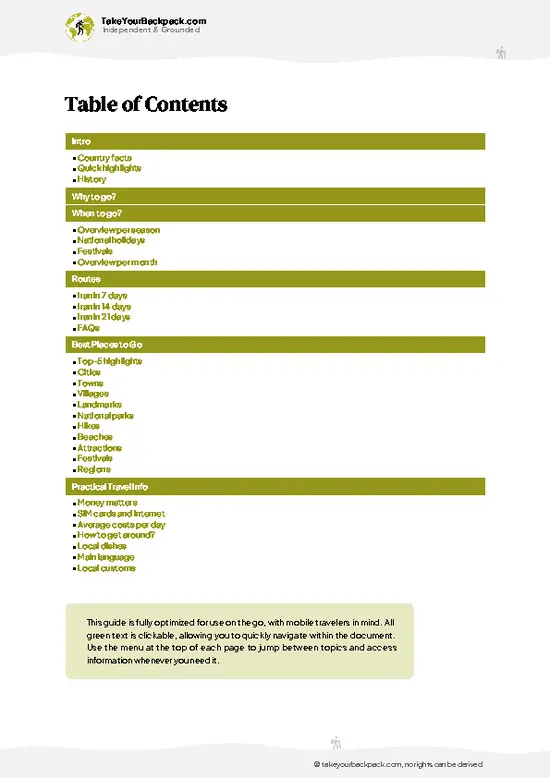
The digital guide (419 pages) contains:
121 highlights, ranked by travel appeal
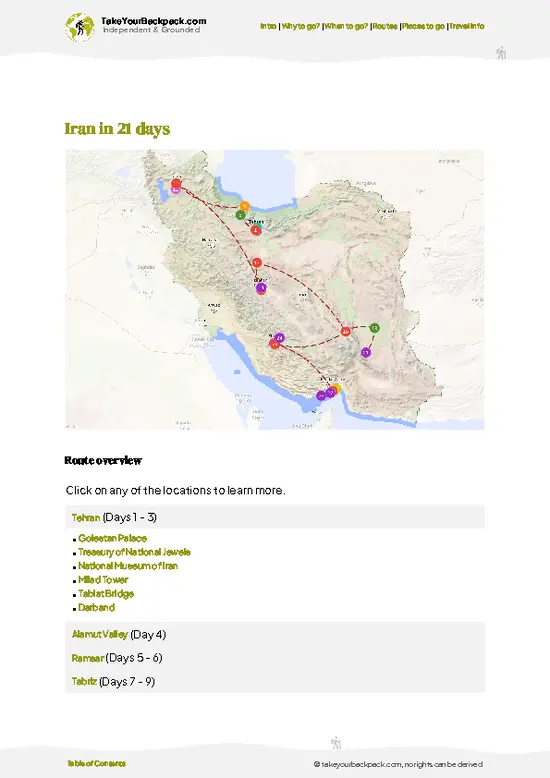
Optimized 7, 14 & 21-day travel routes
Cities, national parks, landmarks, beaches
How to get around
Offline-friendly for travel without Wi-Fi
👉 Click to see all 30+ guide features

📅 Plan smarter in minutes, not weeks
Month by month travel advice
Festivals & national holidays
Budget expectations

🗺️ Go to the right places, skip the overrated ones
Honest pros & cons of destinations
Top hikes, parks & viewpoints
Lesser-known places most travelers miss
Clear “worth it vs skip it” guidance

🛏️ Travel smoothly without rookie mistakes
Best areas to stay
Transport systems explained simply
Common scams & safety advice
SIM cards, money & practical tips

🌍 Understand the country, not just visit it
Culture & traditions
52 Essential phrases & customs
Festivals worth planning around
Traveler-friendly historical context
Insights that make places more meaningful

📱 Built for real travel conditions
Fully downloadable PDF
Works completely offline
Optimized for phone use
Useful in remote areas & buses
Everything in one place
Save weeks of stressful planning
Get instant access to your full guide. 30‑day money-back guarantee.


By proceeding you agree to our terms.
Sent to your inbox immediately after payment • 100% Secure Checkout
Best Backpacking Travel Advisor 2025 tourism awardBest Backpacking
Travel Advisor
2025
What others say about Take Your Backpack Guides:
⭐⭐⭐⭐⭐
Fantastic, amazing amount of information!
⭐⭐⭐⭐⭐
My goodness this is amazing, it's what I've been looking for hats off too you!
⭐⭐⭐⭐⭐
I think this is absolutely BRILLIANT
⭐⭐⭐⭐
Very complete and informative. It's still missing places, but I gotta to commend you
⭐⭐⭐⭐⭐
This is truly amazing, thank you, can't wait to explore it with my kids!
⭐⭐⭐⭐⭐
Awesome resource, thank you!
⭐⭐⭐⭐⭐
This is amazing! Can't wait to explore the ones I haven't seen
⭐⭐⭐⭐
I love this! Well done, great idea.
⭐⭐⭐⭐⭐
Thanks for taking the time to make this gem!
⭐⭐⭐⭐⭐
This might be the best website I've ever seen.
⭐⭐⭐⭐⭐
Congratulations, and thank you so much for your work; it's incredibly valuable.
⭐⭐⭐⭐
In all seriousness I think you did a great job pointing out the important spots
⭐⭐⭐⭐⭐
10/10 very good
⭐⭐⭐⭐⭐
As someone who's only just starting to visit regularly this is awesome, thank you.
⭐⭐⭐⭐
Thank you very much! I'm going to visit my dad, it's going to be very useful!
⭐⭐⭐⭐⭐
This is really cool! We'll be travelling for the first time and this definitely come in handy.
⭐⭐⭐⭐⭐
You are now our minister of culture, congratulations 👨‍💼
⭐⭐⭐⭐⭐
Just wanted to tell you that this is a pearl! Going to follow your recommendations.
⭐⭐⭐⭐⭐
This is so cool. I'll definitely be using the resource for my travels soon.
⭐⭐⭐⭐⭐
This is very impressive! Good work.
⭐⭐⭐⭐⭐
This is an amazing and informative site. Very well done!

🛏️ Where to stay?Choosing the right base

Staying near Masjed-e Jāmé in Isfahan is a balancing act between the allure of history and the reality of crowds. The area around the mosque is a magnet for tourists, which means you’ll encounter throngs snapping selfies. But don’t let that deter you; the vibrant atmosphere is part of the experience.

Look for accommodations in the neighborhoods of Naqsh-e Jahan Square or around the historic bazaar. These spots are buzzing with life, offering a mix of local culture and backpacker camaraderie. You’ll find plenty of budget-friendly options, from guesthouses to shared dorms, where you can swap stories … read more 👉
Staying near Masjed-e Jāmé in Isfahan is a balancing act between the allure of history and the reality of crowds. The area around the mosque is a magnet for tourists, which means you’ll encounter throngs snapping selfies. But don’t let that deter you; the vibrant atmosphere is part of the experience.

Look for accommodations in the neighborhoods of Naqsh-e Jahan Square or around the historic bazaar. These spots are buzzing with life, offering a mix of local culture and backpacker camaraderie. You’ll find plenty of budget-friendly options, from guesthouses to shared dorms, where you can swap stories with fellow travelers over a cup of strong Persian tea.

Safety is generally solid here, especially in well-trafficked areas. Just keep your wits about you, as you would anywhere. The real magic lies in wandering the narrow alleys, discovering hidden tea houses, and engaging with locals who are often more than willing to share a laugh or a meal.

The best part? You’re just a stone’s throw from the mosque, allowing you to soak in its beauty at sunrise or sunset when the crowds thin out. That’s when you’ll truly appreciate its intricate artistry and the spiritual vibe that permeates the air.

👛 Costs (as of 2 February 2026)What things cost and how to budget

Visiting Masjed-e Jāmé of Isfahan is a journey into architectural wonder, but it comes with its own set of costs. Here’s a breakdown to help you navigate the financial landscape.
  • Entrance Fee: Expect to pay around €2 to €5 (or $2 to $6). This fee grants you access to one of the most stunning mosques in Iran, showcasing intricate tile work and historical significance. It’s a small price for a slice of history.
  • Guided Tours: If you want a deeper understanding, guided tours range from €10 to €20 ($11 to $22). A knowledgeable guide can illuminate the mosque’s rich history and architectural details that you might miss on your own.
  • Transportation: Getting there can vary. A taxi ride from the city center will cost about €2 to €4 ($2 to $5). If you opt for public transport, expect to spend around €0.
read more 👉
Visiting Masjed-e Jāmé of Isfahan is a journey into architectural wonder, but it comes with its own set of costs. Here’s a breakdown to help you navigate the financial landscape.
  • Entrance Fee: Expect to pay around €2 to €5 (or $2 to $6). This fee grants you access to one of the most stunning mosques in Iran, showcasing intricate tile work and historical significance. It’s a small price for a slice of history.
  • Guided Tours: If you want a deeper understanding, guided tours range from €10 to €20 ($11 to $22). A knowledgeable guide can illuminate the mosque’s rich history and architectural details that you might miss on your own.
  • Transportation: Getting there can vary. A taxi ride from the city center will cost about €2 to €4 ($2 to $5). If you opt for public transport, expect to spend around €0.50 ($0.60) for a bus ticket. It’s affordable, but be prepared for some crowding.
  • Food and Drink: Nearby eateries offer meals for about €5 to €10 ($6 to $11). Local cuisine is a must-try, and you can enjoy a hearty meal without breaking the bank. Just be cautious of tourist traps that inflate prices.
  • Souvenirs: If you’re looking to take home a piece of Isfahan, budget around €5 to €15 ($6 to $17) for local crafts. Haggling is common, so don’t shy away from negotiating prices.

These costs can add up, but the experience at Masjed-e Jāmé is worth every cent. It’s not just about the price tag; it’s about immersing yourself in a place where history and beauty collide.


source: irantravelingcenter.com
⚠️ Prices can change and everyone travels differently, so take this as a rough guide. Hope it helps you plan your adventure!

Other Iranian landmarks near Masjed-e Jāmé of Isfahan

Explore more nearby:


💡 Not sure where to go next?
Create a personalized itinerary for Iran including Masjed-e Jāmé of Isfahan and the places that fit your trip.

Generate my itinerary

👉 Discover all landmarks

Or checkout all Iran has to offer (think cities, towns, villages, national parks, hikes, beaches, festivals)
Country photo of Iran

We 💚 feedbackWhat to keep in mind

The Masjed-e Jāmé is a stunning paradox. Yes, it attracts crowds, but step inside, and you’ll find a serene escape. The intricate tile work? It’s a visual feast, but the real magic lies in the whispers of history echoing through the arches. Don’t rush; linger in the corners where locals pray. Just a heads-up: the midday sun can be brutal, so plan your visit for the golden hours. Trust me, the light transforms everything. This place isn’t just a stop; it’s a moment to breathe.

✍️ Help improve this page!
The information on this page is based on in-depth research, insights shared by experienced travelers, and feedback from the local travel community in Iran. While every effort is made to keep the information accurate and current, conditions can change — so if you spot anything incorrect or outdated, please get in touch.


🙋‍♂️ Give feedback

👋 Meet the founderWho’s Behind Take Your Backpack?

Johan, backpacker and founder of TakeYourBackpackHi, I’m Johan (Netherlands 🇳🇱), the creator of TakeYourBackpack. Over the past decade, I’ve backpacked through 80+ countries across six continents, gaining extensive experience with independent travel, long-term trips, and overland routes.

This site is built on a combination of firsthand travel experience and carefully curated insights from other backpackers. Many guides are based on places I’ve personally visited, while others bring together tips, observations, and practical advice shared by trusted travelers I’ve met along the way.

The goal is to provide realistic, experience-driven guidance — not generic itineraries — so you can explore destinations with better context, clearer expectations, and more confidence.

Get full Iran guide •
Instant download • 121 highlights • Full Offline guide