×

Iran🇮🇷 | landmarksTchogha Zanbilziggurat tiers, Elamite sanctuary, mudbrick platforms | things to do and best time to go

Explore SoltaniyehExplore Trans-Iranian Railway

Backpacking in Tchogha Zanbil
UNESCO World Heritage site
👍 Recommendedunique site ranked #8
By Johan Kruseman 🇳🇱 | Updated June 5, 2026

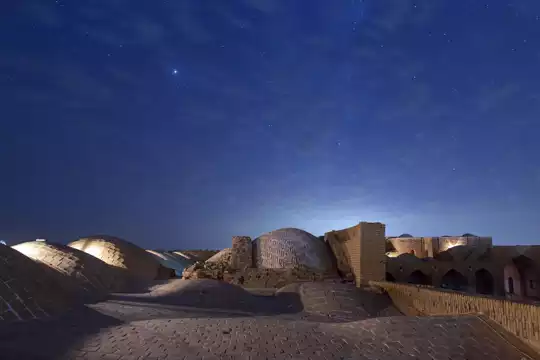
Most people online sell Tchogha Zanbil as “just a pile of old bricks in the desert.” The surprise: on a quiet day you can wander a 3,000-year-old ziggurat almost completely alone, with no ropes, no glass, and barely any other tourists in sight. Tchogha Zanbil sits in southwest Iran, in Khuzestan province, not far from Shush (ancient Susa).

For backpackers, it’s low on instant wow compared to Persepolis, but high on atmosphere and raw time-travel. Getting there takes effort and usually a taxi or tour from nearby towns, so it’s not the cheapest day out, yet ticket prices are still modest by global standards. Crowds are rare, sunsets are gold, photos can look otherworldly, and the vibe is calm, eerie, and deeply ancient rather than flashy.

Discover everything you want to know in the 📖 Iran Travel Guide.
Safety warning

The current risk level for Iran is high. Check the advice before going.


Get your Iran guide
121 ranked highlights, routes & tips, works offline (419 pages)
Loading the map 🌍
CLICK TO FILTER
cities
towns
villages
landmarks
national parks
hikes
beaches
attractions
festivals
regions
SHOW COUNTRY’S BESTSHOW ALL

✨ Why go?
Ranked #8 unique site in Iran
The unique appeal for travelers

Tchogha Zanbil is a must-see for backpackers in Iran, and here’s why. First off, it’s a UNESCO World Heritage Site that’s not just another dusty ruin. This ancient ziggurat, built around 1250 BC, is a stunning testament to Elamite civilization. You’ll find it in Khuzestan, which means it fits perfectly into a broader route through Iran, especially if you’re heading to Shushtar or Ahvaz.

Now, let’s talk crowds and costs. Unlike the tourist traps, Tchogha Zanbil is often quiet, allowing you to soak in its history without jostling for space. The entrance fee is a mere fraction of what you’d pay at more commercialized sites, making it a budget-friendly stop.

The real magic lies in its uniqueness. The intricate brickwork and the sheer scale of the ziggurat are awe-inspiring. It’s not just a … read more 👉
Tchogha Zanbil is a must-see for backpackers in Iran, and here’s why. First off, it’s a UNESCO World Heritage Site that’s not just another dusty ruin. This ancient ziggurat, built around 1250 BC, is a stunning testament to Elamite civilization. You’ll find it in Khuzestan, which means it fits perfectly into a broader route through Iran, especially if you’re heading to Shushtar or Ahvaz.

Now, let’s talk crowds and costs. Unlike the tourist traps, Tchogha Zanbil is often quiet, allowing you to soak in its history without jostling for space. The entrance fee is a mere fraction of what you’d pay at more commercialized sites, making it a budget-friendly stop.

The real magic lies in its uniqueness. The intricate brickwork and the sheer scale of the ziggurat are awe-inspiring. It’s not just a photo op; it’s a chance to connect with a piece of history that feels untouched. Don’t skip it; your journey deserves this kind of depth.
Want to include Tchogha Zanbil in your Iran route?
Create a personalized Iran itinerary that includes Tchogha Zanbil and the places that fit your trip — based on your travel style, budget, and available time. Get your route in seconds.

Generate my trip

💡 HighlightsPlaces and moments you shouldn't skip

  • The Ziggurat Core — the massive stepped temple mound that gives the site its name; one of the best-preserved Elamite ziggurats and a rare surviving example of a Near Eastern monumental temple outside Mesopotamia.
  • Inner Temple Complex — the sacral heart of the site where priests served the god Inshushinak; walking among the ruined sanctuaries you get a real sense of an ancient ritual city rather than just a lone ruin.
  • Stamped Foundation Bricks and Inscriptions — many bricks still bear the king’s name and Elamite inscriptions. Those stamped bricks are like ancient business cards — direct links to the builder, Untash-Napirisha, and the city’s story.
  • Concentric Walls and Gateways — the ziggurat sits inside multiple enclosing walls and courtyards. The layout shows planned urban and religious
read more 👉
  • The Ziggurat Core — the massive stepped temple mound that gives the site its name; one of the best-preserved Elamite ziggurats and a rare surviving example of a Near Eastern monumental temple outside Mesopotamia.
  • Inner Temple Complex — the sacral heart of the site where priests served the god Inshushinak; walking among the ruined sanctuaries you get a real sense of an ancient ritual city rather than just a lone ruin.
  • Stamped Foundation Bricks and Inscriptions — many bricks still bear the king’s name and Elamite inscriptions. Those stamped bricks are like ancient business cards — direct links to the builder, Untash-Napirisha, and the city’s story.
  • Concentric Walls and Gateways — the ziggurat sits inside multiple enclosing walls and courtyards. The layout shows planned urban and religious geometry, not a random heap of ruins; the gateways and buttressed walls are strikingly sculptural in their own right.
  • Construction Techniques — look closely at the baked-brick courses, mud bricks and bitumen layers: they reveal how Elamite builders wrestled durability out of clay long before modern cement. It’s a textbook in ancient engineering if you like that sort of thing.
  • Archaeological Finds and Ritual Objects — fragments of votive figurines, foundation deposits and other small finds dug up here give texture to the big stone story; they’re the human, devotional details behind the grand architecture.
  • The Setting and Light — Tchogha Zanbil sits on an open Khuzestan plain, and at sunrise or sunset the silhouette of the stepped tower against wide skies is unforgettable; it’s the kind of place where photos actually match the memory.
  • Historical Significance and Rarity — as a purpose-built religious city from the Elamite high point, and now a UNESCO site, Tchogha Zanbil stands out as one of the few intact windows into a non-Mesopotamian Bronze Age state in Iran.
Spotted a mistake or missing something? Contact us.
🌤️ When to go?Weather, crowds, and seasonal trade-offs


  • Weather: The best window is spring (March to May) and autumn (September to November). Summers scorch with highs often hitting 40°C (104°F), turning the ruins into a dry oven. Winters dip to near freezing, making exploration uncomfortable and sometimes damp.

  • Temperature: Spring and autumn offer mild days around 20-25°C (68-77°F), perfect for wandering without overheating or freezing. Nights can be chilly, so pack layers.

  • Daylight Hours: Around 12 hours of daylight in spring and autumn, enough to explore thoroughly without rushing but not so long that you burn out.

  • Crowds: Expect low to moderate crowds year-round, but spring sees a slight uptick with local tourists. Still, it’s nothing like the crush at more famous sites.

  • Seasonal Activities: Spring brings blooming wildflowers around
read more 👉

  • Weather: The best window is spring (March to May) and autumn (September to November). Summers scorch with highs often hitting 40°C (104°F), turning the ruins into a dry oven. Winters dip to near freezing, making exploration uncomfortable and sometimes damp.

  • Temperature: Spring and autumn offer mild days around 20-25°C (68-77°F), perfect for wandering without overheating or freezing. Nights can be chilly, so pack layers.

  • Daylight Hours: Around 12 hours of daylight in spring and autumn, enough to explore thoroughly without rushing but not so long that you burn out.

  • Crowds: Expect low to moderate crowds year-round, but spring sees a slight uptick with local tourists. Still, it’s nothing like the crush at more famous sites.

  • Seasonal Activities: Spring brings blooming wildflowers around the site, adding unexpected color to the dusty landscape. Autumn offers clearer skies, ideal for photography and sunset views.

  • Price Fluctuations: Accommodation and transport prices remain fairly stable year-round, but spring can be slightly pricier due to local travel peaks. No major tourist traps here to inflate costs.


Pro-tip: Aim for late March or early October to dodge the heat and crowds while catching the site at its most atmospheric—when the light and weather align for a genuine connection, not just a photo op.


source: climatestotravel.comJANJanuary: fair for travelingFEBFebruary: fair for travelingMARMarch: excellent for travelingAPRApril: excellent for travelingMAYMay: highly recommended for travelingJUNJune: below average for travelingJULJuly: below average for travelingAUGAugust: below average for travelingSEPSeptember: excellent for travelingOCTOctober: excellent for travelingNOVNovember: highly recommended for travelingDECDecember: fair for traveling
when-to-go

✈️ The backpacker research shortcutIran Travel Guide

An offline-friendly backpacking guide with optimized travel routes, ranked highlights, transport advice, and the best areas to stay.
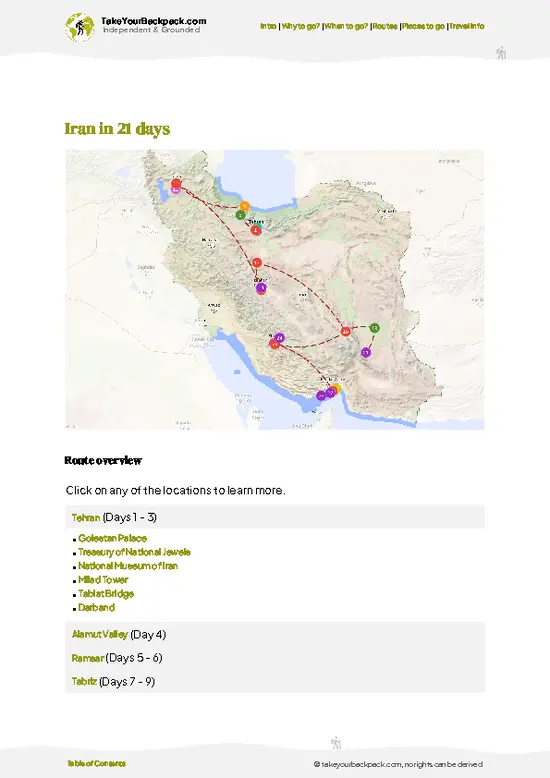
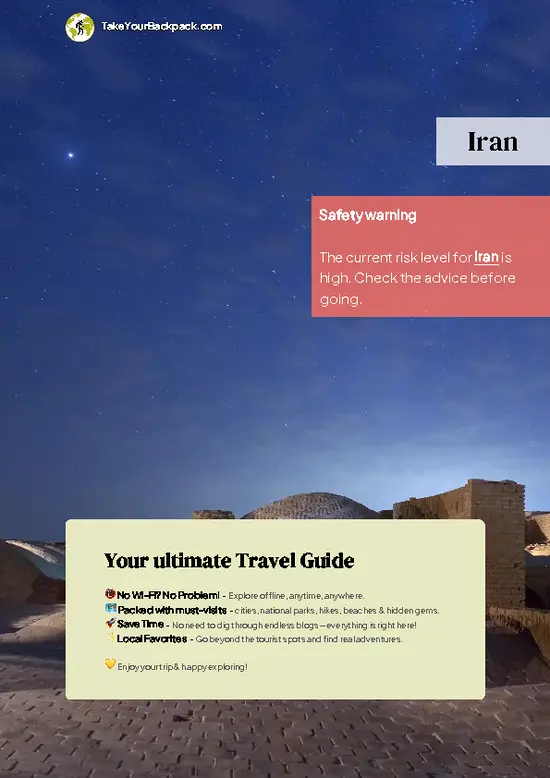
example page 0 from our offline Travel Guide for Iran
example page 1 from our offline Travel Guide for Iran
example page 2 from our offline Travel Guide for Iran
example page 3 from our offline Travel Guide for Iran
example page 4 from our offline Travel Guide for Iran
example page 5 from our offline Travel Guide for Iran
example page 6 from our offline Travel Guide for Iran
example page 7 from our offline Travel Guide for Iran
The digital guide (419 pages) contains:
121 highlights, ranked by travel appeal
Optimized 7, 14 & 21-day travel routes
Cities, national parks, landmarks, beaches
How to get around
Offline-friendly for travel without Wi-Fi
👉 Click to see all 30+ guide features

📅 Plan smarter in minutes, not weeks
Month by month travel advice
Festivals & national holidays
Budget expectations

🗺️ Go to the right places, skip the overrated ones
Honest pros & cons of destinations
Top hikes, parks & viewpoints
Lesser-known places most travelers miss
Clear “worth it vs skip it” guidance

🛏️ Travel smoothly without rookie mistakes
Best areas to stay
Transport systems explained simply
Common scams & safety advice
SIM cards, money & practical tips

🌍 Understand the country, not just visit it
Culture & traditions
52 Essential phrases & customs
Festivals worth planning around
Traveler-friendly historical context
Insights that make places more meaningful

📱 Built for real travel conditions
Fully downloadable PDF
Works completely offline
Optimized for phone use
Useful in remote areas & buses
Everything in one place
Save weeks of stressful planning
Get instant access to your full guide. 30‑day money-back guarantee.


By proceeding you agree to our terms.
Sent to your inbox immediately after payment • 100% Secure Checkout
Best Backpacking Travel Advisor 2025 tourism awardBest Backpacking
Travel Advisor
2025
What others say about Take Your Backpack Guides:
⭐⭐⭐⭐⭐
Fantastic, amazing amount of information!
⭐⭐⭐⭐⭐
My goodness this is amazing, it's what I've been looking for hats off too you!
⭐⭐⭐⭐⭐
I think this is absolutely BRILLIANT
⭐⭐⭐⭐
Very complete and informative. It's still missing places, but I gotta to commend you
⭐⭐⭐⭐⭐
This is truly amazing, thank you, can't wait to explore it with my kids!
⭐⭐⭐⭐⭐
Awesome resource, thank you!
⭐⭐⭐⭐⭐
This is amazing! Can't wait to explore the ones I haven't seen
⭐⭐⭐⭐
I love this! Well done, great idea.
⭐⭐⭐⭐⭐
Thanks for taking the time to make this gem!
⭐⭐⭐⭐⭐
This might be the best website I've ever seen.
⭐⭐⭐⭐⭐
Congratulations, and thank you so much for your work; it's incredibly valuable.
⭐⭐⭐⭐
In all seriousness I think you did a great job pointing out the important spots
⭐⭐⭐⭐⭐
10/10 very good
⭐⭐⭐⭐⭐
As someone who's only just starting to visit regularly this is awesome, thank you.
⭐⭐⭐⭐
Thank you very much! I'm going to visit my dad, it's going to be very useful!
⭐⭐⭐⭐⭐
This is really cool! We'll be travelling for the first time and this definitely come in handy.
⭐⭐⭐⭐⭐
You are now our minister of culture, congratulations 👨‍💼
⭐⭐⭐⭐⭐
Just wanted to tell you that this is a pearl! Going to follow your recommendations.
⭐⭐⭐⭐⭐
This is so cool. I'll definitely be using the resource for my travels soon.
⭐⭐⭐⭐⭐
This is very impressive! Good work.
⭐⭐⭐⭐⭐
This is an amazing and informative site. Very well done!

🛏️ Where to stay?Where staying makes the most sense

When you’re heading to Tchogha Zanbil, the ancient ziggurat that’s a UNESCO World Heritage site, you’ll want to find a place that balances safety, social vibes, and budget-friendliness.

Start in the nearby city of Shush. It’s a hub for backpackers, with a mix of local charm and a few decent budget accommodations. The streets are alive with the sounds of daily life, and you’ll find plenty of cafes where you can sip tea and chat with locals or fellow travelers.

Another option is the village of Susa, just a short ride away. It’s quieter, but you’ll get a more authentic experience. Here, you can … read more 👉
When you’re heading to Tchogha Zanbil, the ancient ziggurat that’s a UNESCO World Heritage site, you’ll want to find a place that balances safety, social vibes, and budget-friendliness.

Start in the nearby city of Shush. It’s a hub for backpackers, with a mix of local charm and a few decent budget accommodations. The streets are alive with the sounds of daily life, and you’ll find plenty of cafes where you can sip tea and chat with locals or fellow travelers.

Another option is the village of Susa, just a short ride away. It’s quieter, but you’ll get a more authentic experience. Here, you can connect with local families who often welcome travelers into their homes.

Both areas are safe, but keep your wits about you, as you would anywhere. The real magic lies in the stories you’ll hear and the connections you’ll make. Don’t just rush to the ziggurat; soak in the culture around it. That’s where the journey truly begins.

👛 Costs (as of 12 February 2026)What things cost and how to budget

Visiting Tchogha Zanbil, Iran, is a journey into ancient history, but it comes with its own set of costs. Here’s a breakdown to help you plan your visit without any surprises.
  • Entrance Fee: Expect to pay around €3 to €5 (or $3 to $5). This fee grants you access to one of the most significant archaeological sites in Iran. It’s a small price for a glimpse into a civilization that dates back over 3,000 years.
  • Transportation: Getting to Tchogha Zanbil can vary. If you’re coming from Shush, a taxi might cost you about €10 to €15 ($10 to $15). Public transport is cheaper, but it can be less convenient. Budget around €2 ($2) for a bus ride if you’re feeling adventurous.
  • Guided Tours: If you want a deeper understanding of the site, consider a guided tour. Prices range from €20 to €50 ($20 to $50) depending
read more 👉
Visiting Tchogha Zanbil, Iran, is a journey into ancient history, but it comes with its own set of costs. Here’s a breakdown to help you plan your visit without any surprises.
  • Entrance Fee: Expect to pay around €3 to €5 (or $3 to $5). This fee grants you access to one of the most significant archaeological sites in Iran. It’s a small price for a glimpse into a civilization that dates back over 3,000 years.
  • Transportation: Getting to Tchogha Zanbil can vary. If you’re coming from Shush, a taxi might cost you about €10 to €15 ($10 to $15). Public transport is cheaper, but it can be less convenient. Budget around €2 ($2) for a bus ride if you’re feeling adventurous.
  • Guided Tours: If you want a deeper understanding of the site, consider a guided tour. Prices range from €20 to €50 ($20 to $50) depending on the length and inclusivity of the tour. A knowledgeable guide can enhance your experience significantly.
  • Food and Drink: There aren’t many dining options right at the site, but nearby towns offer local cuisine. Budget around €5 to €10 ($5 to $10) for a meal. Street food is also a great option, often costing less than €2 ($2).
  • Accommodation: If you plan to stay overnight, budget accommodations in nearby Shush can range from €15 to €30 ($15 to $30) per night. For a more comfortable stay, expect to pay €40 to €70 ($40 to $70).

These costs can add up, but the experience of walking through history at Tchogha Zanbil is worth every cent. Just be prepared for the crowds, especially during peak tourist seasons.


source: irantravelingcenter.com
⚠️ Prices can change and everyone travels differently, so take this as a rough guide. Hope it helps you plan your adventure!

Other Iranian landmarks near Tchogha Zanbil

Explore more nearby:


💡 Not sure where to go next?
Create a personalized itinerary for Iran including Tchogha Zanbil and the places that fit your trip.

Generate my itinerary

👉 Discover all landmarks

Or checkout all Iran has to offer (think cities, towns, villages, national parks, hikes, beaches, festivals)
Country photo of Iran

We 💚 feedbackKey takeaways before you go

Tchogha Zanbil isn’t just another ancient site; it’s a pulse of history that hits differently when you’re standing among those towering ziggurats. Expect crowds, especially during peak season, but don’t let that deter you. The real surprise? The serene vibe that washes over you once you step away from the main path. Just be ready for the heat—bring water and a hat. Trust me, the experience is worth every drop of sweat.

✍️ Help improve this page!
The information on this page is based on in-depth research, insights shared by experienced travelers, and feedback from the local travel community in Iran. While every effort is made to keep the information accurate and current, conditions can change — so if you spot anything incorrect or outdated, please get in touch.


🙋‍♂️ Give feedback

👋 Meet the founderWho’s Behind Take Your Backpack?

Johan, backpacker and founder of TakeYourBackpackHi, I’m Johan (Netherlands 🇳🇱), the creator of TakeYourBackpack. Over the past decade, I’ve backpacked through 80+ countries across six continents, gaining extensive experience with independent travel, long-term trips, and overland routes.

This site is built on a combination of firsthand travel experience and carefully curated insights from other backpackers. Many guides are based on places I’ve personally visited, while others bring together tips, observations, and practical advice shared by trusted travelers I’ve met along the way.

The goal is to provide realistic, experience-driven guidance — not generic itineraries — so you can explore destinations with better context, clearer expectations, and more confidence.

Get full Iran guide •
Instant download • 121 highlights • Full Offline guide