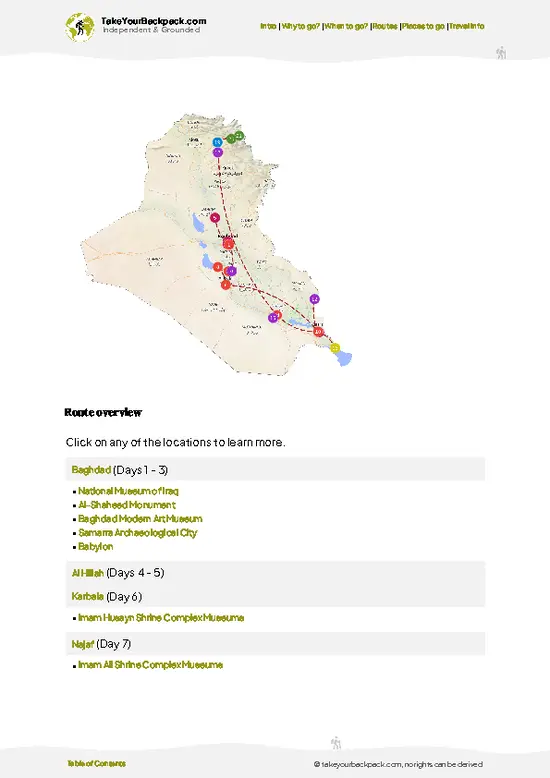
v2.webp)
The Golden Courtyard (Sahn al-Dhahabi)
Forget the filtered photos—this courtyard is a sensory overload in the best way. The gold-plated tiles aren’t just for show; they radiate heat, light, and a sense of awe that hits you the moment you step in. Yes, it’s crowded, especially during pilgrimage seasons, but the energy is electric. People from every corner of the Shia world are here, and the sheer scale of devotion is humbling. The real magic isn’t in snapping a selfie—it’s in standing still, letting the call to prayer echo off the gold, and realizing you’re in one of the most revered spaces on earth.
The Museum of Islamic Heritage
This isn’t your average glass-case snooze fest. The museum inside the complex is a crash course in Islamic art, calligraphy, and relics that actually matter. You’ll … read more 👉
Forget the filtered photos—this courtyard is a sensory overload in the best way. The gold-plated tiles aren’t just for show; they radiate heat, light, and a sense of awe that hits you the moment you step in. Yes, it’s crowded, especially during pilgrimage seasons, but the energy is electric. People from every corner of the Shia world are here, and the sheer scale of devotion is humbling. The real magic isn’t in snapping a selfie—it’s in standing still, letting the call to prayer echo off the gold, and realizing you’re in one of the most revered spaces on earth.
The Museum of Islamic Heritage
This isn’t your average glass-case snooze fest. The museum inside the complex is a crash course in Islamic art, calligraphy, and relics that actually matter. You’ll … read more 👉
The Golden Courtyard (Sahn al-Dhahabi)
Forget the filtered photos—this courtyard is a sensory overload in the best way. The gold-plated tiles aren’t just for show; they radiate heat, light, and a sense of awe that hits you the moment you step in. Yes, it’s crowded, especially during pilgrimage seasons, but the energy is electric. People from every corner of the Shia world are here, and the sheer scale of devotion is humbling. The real magic isn’t in snapping a selfie—it’s in standing still, letting the call to prayer echo off the gold, and realizing you’re in one of the most revered spaces on earth.
The Museum of Islamic Heritage
This isn’t your average glass-case snooze fest. The museum inside the complex is a crash course in Islamic art, calligraphy, and relics that actually matter. You’ll see centuries-old Qur’ans, impossibly intricate metalwork, and gifts from sultans and kings who tried to outdo each other in devotion (and, let’s be honest, in bling). The curation is surprisingly sharp—each artifact tells a story, not just about faith, but about power, politics, and the wild journey of this shrine through history. If you’re a detail nerd, you’ll lose hours here.
The Manuscript Library
This is the deep cut most tourists miss. The library isn’t just a room of dusty tomes—it’s a living archive of rare manuscripts, some over a thousand years old. Scholars from around the world come here to study, but even if you’re not fluent in Arabic, the sheer age and artistry of these books is jaw-dropping. The staff are fiercely protective, but if you show genuine interest, you might get a peek at a hand-illuminated Qur’an or a medieval treatise on astronomy. It’s a reminder that this place is as much about knowledge as it is about faith.
The Martyrs’ Museum
This one hits hard. Dedicated to those who died defending the shrine—especially during the Saddam era and the ISIS onslaught—the Martyrs’ Museum is raw, emotional, and absolutely unfiltered. You’ll see personal effects, photographs, and video footage that pull no punches. It’s not comfortable, but it’s essential. This is where the Instagram version of Najaf shatters, and you see the cost of devotion in real human terms. If you want to understand why this place matters, start here.
The Treasury of Gifts (Mawhiba)
Think of this as the shrine’s own “wow” room. Over centuries, rulers and pilgrims have donated everything from jewel-encrusted swords to carpets worth more than a small country. The display isn’t subtle—this is wealth as a statement of faith, and it’s unapologetic. But it’s also a fascinating look at how the shrine has been a magnet for power, politics, and generosity. If you want to see what devotion looks like when money is no object, this is your stop.
Forget the filtered photos—this courtyard is a sensory overload in the best way. The gold-plated tiles aren’t just for show; they radiate heat, light, and a sense of awe that hits you the moment you step in. Yes, it’s crowded, especially during pilgrimage seasons, but the energy is electric. People from every corner of the Shia world are here, and the sheer scale of devotion is humbling. The real magic isn’t in snapping a selfie—it’s in standing still, letting the call to prayer echo off the gold, and realizing you’re in one of the most revered spaces on earth.
The Museum of Islamic Heritage
This isn’t your average glass-case snooze fest. The museum inside the complex is a crash course in Islamic art, calligraphy, and relics that actually matter. You’ll see centuries-old Qur’ans, impossibly intricate metalwork, and gifts from sultans and kings who tried to outdo each other in devotion (and, let’s be honest, in bling). The curation is surprisingly sharp—each artifact tells a story, not just about faith, but about power, politics, and the wild journey of this shrine through history. If you’re a detail nerd, you’ll lose hours here.
The Manuscript Library
This is the deep cut most tourists miss. The library isn’t just a room of dusty tomes—it’s a living archive of rare manuscripts, some over a thousand years old. Scholars from around the world come here to study, but even if you’re not fluent in Arabic, the sheer age and artistry of these books is jaw-dropping. The staff are fiercely protective, but if you show genuine interest, you might get a peek at a hand-illuminated Qur’an or a medieval treatise on astronomy. It’s a reminder that this place is as much about knowledge as it is about faith.
The Martyrs’ Museum
This one hits hard. Dedicated to those who died defending the shrine—especially during the Saddam era and the ISIS onslaught—the Martyrs’ Museum is raw, emotional, and absolutely unfiltered. You’ll see personal effects, photographs, and video footage that pull no punches. It’s not comfortable, but it’s essential. This is where the Instagram version of Najaf shatters, and you see the cost of devotion in real human terms. If you want to understand why this place matters, start here.
The Treasury of Gifts (Mawhiba)
Think of this as the shrine’s own “wow” room. Over centuries, rulers and pilgrims have donated everything from jewel-encrusted swords to carpets worth more than a small country. The display isn’t subtle—this is wealth as a statement of faith, and it’s unapologetic. But it’s also a fascinating look at how the shrine has been a magnet for power, politics, and generosity. If you want to see what devotion looks like when money is no object, this is your stop.
Spotted a mistake or missing something? Contact us.
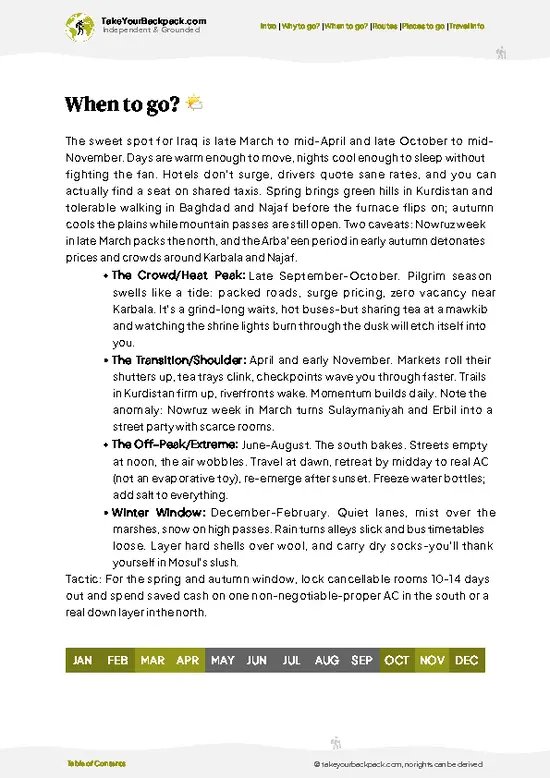

 Best Backpacking
.jpg) Hi, I’m Johan (Netherlands 🇳🇱), the creator of TakeYourBackpack. Over the past decade, I’ve backpacked through 80+ countries across six continents, gaining extensive experience with independent travel, long-term trips, and overland routes.
Hi, I’m Johan (Netherlands 🇳🇱), the creator of TakeYourBackpack. Over the past decade, I’ve backpacked through 80+ countries across six continents, gaining extensive experience with independent travel, long-term trips, and overland routes.