×

Israel🇮🇱 | hikesIsrael National Trailcross-country route, varied terrain, desert crossings, coastal stretches | things to do and best time to go

Explore Safed Klezmer FestivalExplore Mount Arbel

Backpacking in Israel National Trail
🏆 Top pickhike ranked #1
By Johan Kruseman 🇳🇱 | Updated September 4, 2026

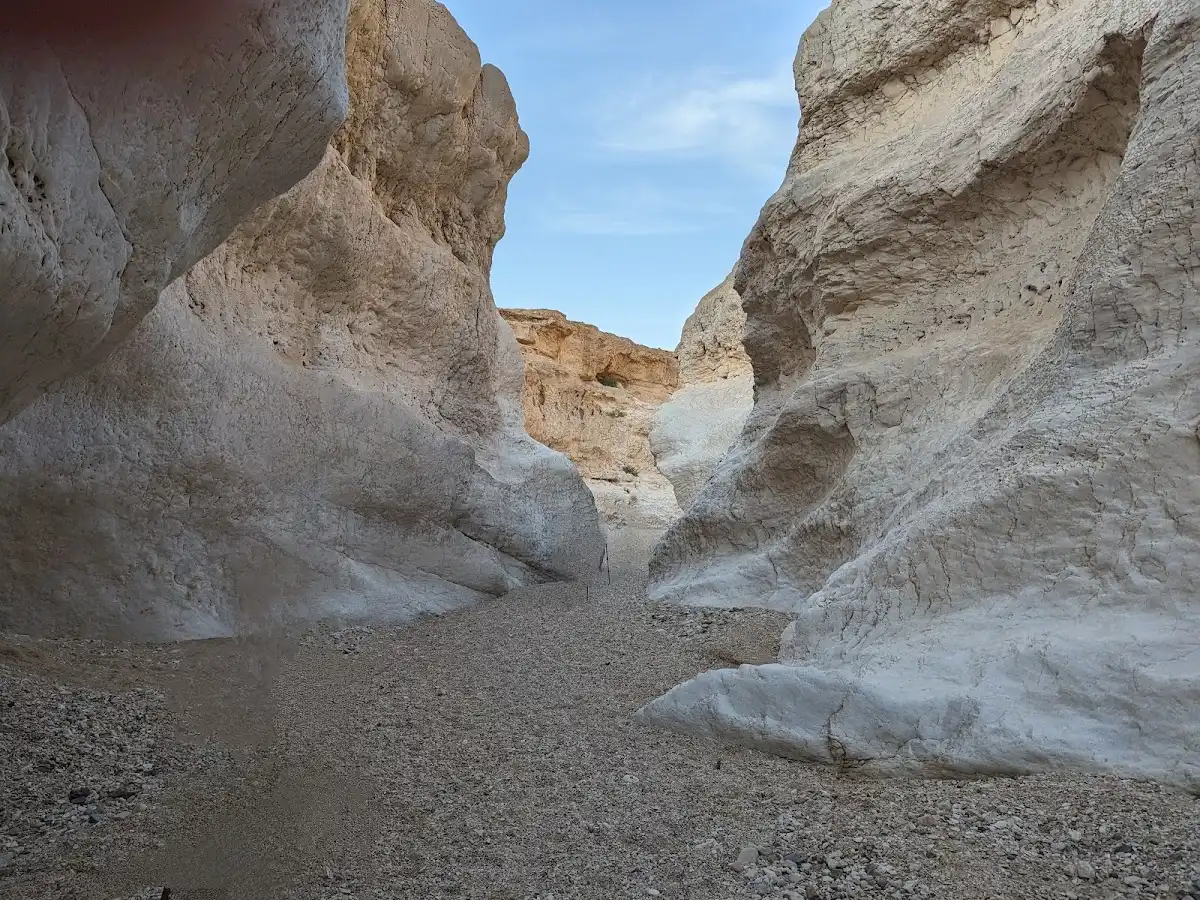
Most people only realize halfway through the Israel National Trail that its secret weapon is logistics: you’re almost never more than a bus ride from a town, a shower, or a plate of hummus, which makes a 1,000+ km thru-hike feel surprisingly doable. The trail runs the length of Israel, from the Egyptian border in the deep Negev desert up to the green hills near the Lebanese border, stitching together sand, cities, and scrubby mountains. It’s long, hot, and often brutally exposed; the desert sections kick hard with steep wadis, loose rock, and heavy water carries. But then you hit a ridge above Mitzpe Ramon at sunset or the cliffs above the Kinneret and it all clicks. Public transport to trailheads is easy by Middle East standards, and compared with shorter classics like Ein Gedi or Mount Arbel, the INT feels less like a day hike and more like a full-body, full-country immersion.

Discover everything you want to know in the 📖 Israel Travel Guide.
Best time to go: March - May, September - November
Duration: 30 to 40 days
Distance: 1,100 kilometers
Total ascent: 4,000 meters
Safety warning

The current risk level for Israel is high. Check the advice before going.


Get your Israel guide
81 ranked highlights, routes & tips, works offline (299 pages)
Loading the map 🌍
CLICK TO FILTER
cities
towns
villages
landmarks
national parks
hikes
beaches
attractions
festivals
regions
SHOW COUNTRY’S BESTSHOW ALL

✨ Why go?
Ranked #1 hike in Israel
What makes it a must-see hike

The Israel National Trail is a magnet for backpackers craving a mix of challenge and reward. This trail offers a scenery-to-effort ratio that’s hard to beat. You’ll traverse everything from sun-baked deserts to lush forests, each step revealing a new landscape that feels like a world away.

Access is a breeze thanks to public transport options that drop you right at the trailheads. You can hop on a bus or train, making it easy to start your adventure without breaking the bank. Speaking of costs, this hike is incredibly low-cost; you can camp or find budget-friendly accommodations along the way, allowing you to stretch your travel funds further.

Flexibility is key here. You can tackle sections of the trail based on your energy and time, making it adaptable to your pace. Whether you’re in … read more 👉
The Israel National Trail is a magnet for backpackers craving a mix of challenge and reward. This trail offers a scenery-to-effort ratio that’s hard to beat. You’ll traverse everything from sun-baked deserts to lush forests, each step revealing a new landscape that feels like a world away.

Access is a breeze thanks to public transport options that drop you right at the trailheads. You can hop on a bus or train, making it easy to start your adventure without breaking the bank. Speaking of costs, this hike is incredibly low-cost; you can camp or find budget-friendly accommodations along the way, allowing you to stretch your travel funds further.

Flexibility is key here. You can tackle sections of the trail based on your energy and time, making it adaptable to your pace. Whether you’re in for a quick weekend or a longer trek, the trail fits seamlessly into a broader backpacking route through Israel.

After a long day on the trail, nothing beats the moment you crack open that first cold beer, soaking in the sunset over the hills. That’s the real payoff.
Want to include Israel National Trail in your Israel route?
Create a personalized Israel itinerary that includes Israel National Trail and the places that fit your trip — based on your travel style, budget, and available time. Get your route in seconds.

Generate my trip

💡 HighlightsPlaces and moments you shouldn't skip

  • Banias (the Hermon foothills and waterfall) — A cool, green slice of Israel where limestone springs carve a narrow canyon and a roaring waterfall drops into pools. The sound, the moss, and the mix of birds and small mammals feel more like a European hike than the surrounding Middle Eastern hills — a welcome contrast on a long thru-hike.
  • Mount Hermon (the high alpine section) — The trail climbs into real alpine terrain with rare high-elevation views, wildflowers in season, and even snow in winter. It’s the highest point on the route, so the panoramas and the sense of “you’re way up here” make it stand out from everything else on the INT.
  • Sea of Galilee & Arbel Cliff (Kinneret viewpoints) — Sharp cliffs drop to one of the only freshwater lakes in the region and the views at sunrise or sunset
read more 👉
  • Banias (the Hermon foothills and waterfall) — A cool, green slice of Israel where limestone springs carve a narrow canyon and a roaring waterfall drops into pools. The sound, the moss, and the mix of birds and small mammals feel more like a European hike than the surrounding Middle Eastern hills — a welcome contrast on a long thru-hike.
  • Mount Hermon (the high alpine section) — The trail climbs into real alpine terrain with rare high-elevation views, wildflowers in season, and even snow in winter. It’s the highest point on the route, so the panoramas and the sense of “you’re way up here” make it stand out from everything else on the INT.
  • Sea of Galilee & Arbel Cliff (Kinneret viewpoints) — Sharp cliffs drop to one of the only freshwater lakes in the region and the views at sunrise or sunset are ridiculously photogenic. Add in ancient cave dwellings and a few historic sites nearby, and you get scenery plus cultural layers — perfect for a rest day with a view.
  • Masada & the Dead Sea (history above the lowest point on Earth) — Hiking up to Herod’s fortress at first light is cinematic: sheer dropoffs, ruins clinging to the top, then the otherworldly Dead Sea below where you can literally float. The shock of salty water and pale desert makes this section unforgettable and very different from typical mountain trails.
  • Makhtesh Ramon (the Ramon Crater) — personal favorite — A vast, eroded “crater” with layered rock, mute desert colors and a silence that grows on you. It’s geologically unique, excellent for spotting Nubian ibex, and at night the stars feel absurdly close — great for long, solitary miles and some proper desert stargazing.
Spotted a mistake or missing something? Contact us.

Things to do near Israel National Trail

Ratings based on Tripadvisor reviews. When you book through this link, you support our work at no extra cost to you.

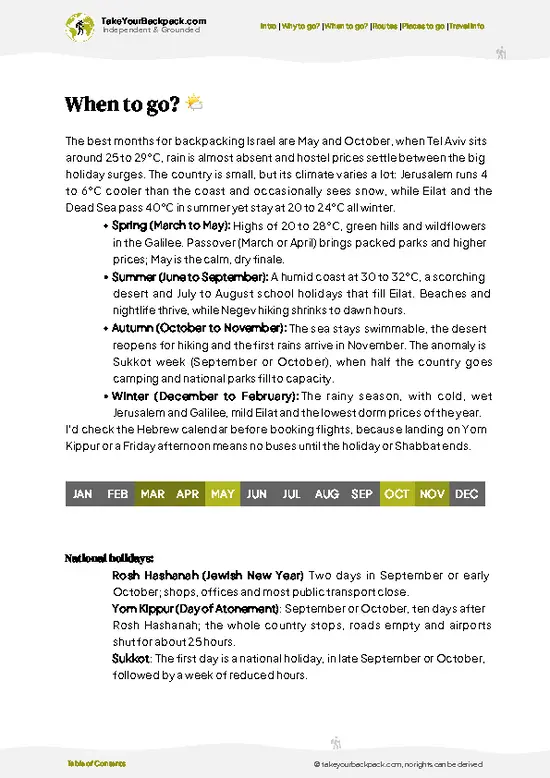
🌤️ When to go?Best time to hike the Israel National Trail


  • Weather: Spring (March to May) and autumn (September to November) deliver the best conditions. Expect mild, dry days perfect for long treks. Summer scorches with highs often above 35°C (95°F), turning the trail into a furnace, while winter can bring rain and muddy patches, especially in the north.

  • Temperature: Spring and autumn days hover between 15-25°C (59-77°F), ideal for sustained hiking without overheating or freezing. Nights can dip to 5-10°C (41-50°F), so pack layers. Summer days spike above 35°C (95°F), making midday hiking brutal and risky.

  • Daylight Hours: Longer days in spring and autumn offer 11-13 hours of light, giving you ample time to cover ground without rushing. Winter cuts daylight to around 10 hours, squeezing your daily mileage and forcing earlier stops.

  • Crowds:
read more 👉

  • Weather: Spring (March to May) and autumn (September to November) deliver the best conditions. Expect mild, dry days perfect for long treks. Summer scorches with highs often above 35°C (95°F), turning the trail into a furnace, while winter can bring rain and muddy patches, especially in the north.

  • Temperature: Spring and autumn days hover between 15-25°C (59-77°F), ideal for sustained hiking without overheating or freezing. Nights can dip to 5-10°C (41-50°F), so pack layers. Summer days spike above 35°C (95°F), making midday hiking brutal and risky.

  • Daylight Hours: Longer days in spring and autumn offer 11-13 hours of light, giving you ample time to cover ground without rushing. Winter cuts daylight to around 10 hours, squeezing your daily mileage and forcing earlier stops.

  • Crowds: Peak hiking season in spring and autumn means more trail traffic, but it’s manageable and adds camaraderie. Summer sees fewer hikers due to heat, but some sections become ghost towns. Winter draws the least crowd but watch for slippery conditions.

  • Seasonal Activities: Spring bursts with wildflowers and bird migrations, enriching the trail’s sensory payoff. Autumn offers harvest festivals and cooler nights perfect for campfires. Summer’s heat limits side adventures, while winter’s rain can dampen plans.

  • Price Fluctuations: Accommodation and transport costs spike during spring and autumn due to demand. Summer and winter offer better deals but come with trade-offs in comfort and safety.


Pro-tip: Start early in spring or late autumn mornings to dodge the midday heat and catch the trail’s best light—this is when the Israel National Trail truly rewards your grit with unforgettable vistas and a pace that feels just right.


source: climatestotravel.comJANJanuary: fair for travelingFEBFebruary: fair for travelingMARMarch: excellent for travelingAPRApril: excellent for travelingMAYMay: highly recommended for travelingJUNJune: fair for travelingJULJuly: below average for travelingAUGAugust: below average for travelingSEPSeptember: excellent for travelingOCTOctober: excellent for travelingNOVNovember: highly recommended for travelingDECDecember: fair for traveling
israel-hike-israel-national-trail
© Google |

✈️ The backpacker research shortcutIsrael Travel Guide

An offline-friendly backpacking guide with optimized travel routes, ranked highlights, transport advice, and the best areas to stay.
example page 0 from our offline Travel Guide for Israel
example page 1 from our offline Travel Guide for Israel
example page 2 from our offline Travel Guide for Israel
example page 3 from our offline Travel Guide for Israel
example page 4 from our offline Travel Guide for Israel
example page 5 from our offline Travel Guide for Israel
example page 6 from our offline Travel Guide for Israel
example page 7 from our offline Travel Guide for Israel
The digital guide (299 pages) contains:
81 highlights, ranked by travel appeal
Optimized 5, 10 & 15-day travel routes
Cities, national parks, landmarks, beaches
How to get around
Offline-friendly for travel without Wi-Fi
👉 Click to see all 30+ guide features

📅 Plan smarter in minutes, not weeks
Month by month travel advice
Festivals & national holidays
Budget expectations

🗺️ Go to the right places, skip the overrated ones
Honest pros & cons of destinations
Top hikes, parks & viewpoints
Lesser-known places most travelers miss
Clear “worth it vs skip it” guidance

🛏️ Travel smoothly without rookie mistakes
Best areas to stay
Transport systems explained simply
Common scams & safety advice
SIM cards, money & practical tips

🌍 Understand the country, not just visit it
Culture & traditions
52 Essential phrases & customs
Festivals worth planning around
Traveler-friendly historical context
Insights that make places more meaningful

📱 Built for real travel conditions
Fully downloadable PDF
Works completely offline
Optimized for phone use
Useful in remote areas & buses
Everything in one place
Save weeks of stressful planning
Get instant access to your full guide. 30‑day money-back guarantee.
+ Add another guide for just A$12.35

By proceeding you agree to our terms.
Sent to your inbox immediately after payment • 100% Secure Checkout
Best Backpacking Travel Advisor 2025 tourism awardBest Backpacking
Travel Advisor
2025
What others say about Take Your Backpack Guides:
⭐⭐⭐⭐⭐
Fantastic, amazing amount of information!
⭐⭐⭐⭐⭐
My goodness this is amazing, it's what I've been looking for hats off too you!
⭐⭐⭐⭐⭐
I think this is absolutely BRILLIANT
⭐⭐⭐⭐
Very complete and informative. It's still missing places, but I gotta to commend you
⭐⭐⭐⭐⭐
This is truly amazing, thank you, can't wait to explore it with my kids!
⭐⭐⭐⭐⭐
Awesome resource, thank you!
⭐⭐⭐⭐⭐
This is amazing! Can't wait to explore the ones I haven't seen
⭐⭐⭐⭐
I love this! Well done, great idea.
⭐⭐⭐⭐⭐
Thanks for taking the time to make this gem!
⭐⭐⭐⭐⭐
This might be the best website I've ever seen.
⭐⭐⭐⭐⭐
Congratulations, and thank you so much for your work; it's incredibly valuable.
⭐⭐⭐⭐
In all seriousness I think you did a great job pointing out the important spots
⭐⭐⭐⭐⭐
10/10 very good
⭐⭐⭐⭐⭐
As someone who's only just starting to visit regularly this is awesome, thank you.
⭐⭐⭐⭐
Thank you very much! I'm going to visit my dad, it's going to be very useful!
⭐⭐⭐⭐⭐
This is really cool! We'll be travelling for the first time and this definitely come in handy.
⭐⭐⭐⭐⭐
You are now our minister of culture, congratulations 👨‍💼
⭐⭐⭐⭐⭐
Just wanted to tell you that this is a pearl! Going to follow your recommendations.
⭐⭐⭐⭐⭐
This is so cool. I'll definitely be using the resource for my travels soon.
⭐⭐⭐⭐⭐
This is very impressive! Good work.
⭐⭐⭐⭐⭐
This is an amazing and informative site. Very well done!

🛏️ Where to stay?Best areas and accommodation options

If you enjoy meeting fellow travelers, consider choosing hostels with high ratings for atmosphere. On the other hand, if you prefer having your own space, a hotel might be a better option.

🥾 Hike detailsEverything you need to know before hiking Israel National Trail

Total Distance: The Israel National Trail stretches approximately 1,000 kilometers (about 620 miles) from the northern tip at the border with Lebanon down to the southern tip at Eilat on the Red Sea.

Estimated Duration: Most hikers take around 30 to 40 days to complete the trail, depending on their pace and how many rest days they take.

Difficulty Level: The trail is rated as moderate to challenging. It has sections that vary in difficulty, with rocky paths, steep climbs, and some technical areas, especially in the desert regions.

Starting Point: The trail officially begins in the northern … read more 👉
Total Distance: The Israel National Trail stretches approximately 1,000 kilometers (about 620 miles) from the northern tip at the border with Lebanon down to the southern tip at Eilat on the Red Sea.

Estimated Duration: Most hikers take around 30 to 40 days to complete the trail, depending on their pace and how many rest days they take.

Difficulty Level: The trail is rated as moderate to challenging. It has sections that vary in difficulty, with rocky paths, steep climbs, and some technical areas, especially in the desert regions.

Starting Point: The trail officially begins in the northern town of Metula. You can easily reach Metula by taking a bus from major cities like Tel Aviv or Haifa. Just check the Egged bus schedule for the latest routes and times.

Major Landmarks Along the Route:
  • Mount Hermon: The highest point in Israel, offering stunning views and a chance for some snow in winter.
  • Sea of Galilee: A beautiful freshwater lake that’s perfect for a rest day; you can swim or just chill by the shore.
  • Masada: An ancient fortress with historical significance, definitely worth a detour for its breathtaking sunrise views.
  • Ein Gedi: An oasis with waterfalls and lush vegetation, a fantastic spot to cool off.
  • Eilat: The endpoint, where you can relax on the beach after a long trek.

Type of Terrain and Scenery: The trail offers a mix of terrains including rocky paths, sandy stretches, and steep climbs. You’ll traverse lush forests in the north, rolling hills, arid deserts, and coastal paths in the south. Each section presents a unique landscape, from the green hills of Galilee to the stark beauty of the Negev Desert.

Typical Vegetation and Wildlife: Expect to see a variety of flora and fauna. In the north, you’ll find pine forests and wildflowers. As you head south, the vegetation shifts to desert shrubs and cacti. Wildlife includes ibex, foxes, and various bird species, especially during migration seasons. Keep your eyes peeled for the occasional tortoise or the elusive hyrax!

This trail is a real adventure, offering a taste of Israel’s diverse landscapes and cultures. Just make sure you’re well-prepared, stay hydrated, and enjoy the journey!
⚠️ Hiking info can sometimes be outdated or inaccurate. Before you hit the trail, check the latest conditions with locals. If you do spot anything that's off, I'd love to hear from you, so I can update it for fellow travelers.

🛡️ SafetyTraveler Safety Guide

The Israel National Trail is a captivating journey, but it demands respect. Weather can shift quickly, especially in spring and fall. Mornings might start cool, but by noon, the sun can blaze. Dress in layers and carry enough water—two to three liters is a solid rule.

The terrain varies from rocky paths to sandy stretches, with some steep ascents that will get your heart racing. Navigation is straightforward, but keep an eye on trail markers; they’re your best friends out there. Footing can be tricky, especially after rain, so sturdy shoes are a must.

Wildlife encounters are rare, but if you spot a snake or a curious ibex, admire from a distance. They’re more scared of you than you are of them.

Timing is key; start early to avoid the heat and enjoy the tranquility of the trail. Embrace … read more 👉
The Israel National Trail is a captivating journey, but it demands respect. Weather can shift quickly, especially in spring and fall. Mornings might start cool, but by noon, the sun can blaze. Dress in layers and carry enough water—two to three liters is a solid rule.

The terrain varies from rocky paths to sandy stretches, with some steep ascents that will get your heart racing. Navigation is straightforward, but keep an eye on trail markers; they’re your best friends out there. Footing can be tricky, especially after rain, so sturdy shoes are a must.

Wildlife encounters are rare, but if you spot a snake or a curious ibex, admire from a distance. They’re more scared of you than you are of them.

Timing is key; start early to avoid the heat and enjoy the tranquility of the trail. Embrace the challenge, and when you reach that panoramic view, the effort will feel worth every step.

FAQTraveler FAQ

The Israel National Trail typically takes about 45 to 60 days to complete, covering approximately 1,000 kilometers from north to south. Most hikers plan for around 4 to 6 weeks depending on their pace and rest days. The trail is well-marked and passes through diverse landscapes.
The difficulty of the Israel National Trail is moderate to challenging, with varied terrain including rocky paths, desert sections, and mountainous areas. Hikers should be prepared for long daily distances averaging 20 kilometers and some steep climbs. Physical fitness and good hiking experience are recommended.
No guide or permit is required to hike the Israel National Trail. The trail is open to the public year-round, but hikers should register their trip with local authorities or online for safety reasons. It is advisable to carry a detailed map or GPS device as some sections are remote.
⚠️ Things can change over time, so always validate details locally before you go.

Other Israeli hikes near Israel National Trail

Explore more nearby:

  • Nahal Katlav—wooded ravine, train tunnel, Mediterranean flora| 44 km away
  • Nahal Og—desert canyon, dry waterfalls, ladder climbs| 65 km away
  • Nahal Prat—spring-fed pools, limestone cliffs, monastery| 122 km away

💡 Not sure where to go next?
Create a personalized itinerary for Israel including Israel National Trail and the places that fit your trip.

Generate my itinerary

👉 Discover all hikes

Or checkout all Israel has to offer (think cities, towns, villages, national parks, hikes, beaches, festivals)
Country photo of Israel

We 💚 feedbackIs it worth it?

The Israel National Trail is a wild ride through history and nature, where every step reveals ancient ruins or breathtaking vistas. You’ll feel the pulse of the land beneath your boots. But be ready for the heat; it can be relentless, especially in summer. Hydration is your best friend. Embrace the grit, and the rewards—a sunset over the Negev or a cold beer in a local village—will make every drop of sweat worth it.

✈️ When did I visit Israel?
In October 2013 I visited Israel and the Westbank.

✍️ Help improve this page!
The information on this page is based on my own backpacking experience in Israel, supplemented with up-to-date research and feedback from other travelers. Travel details can change, so if you notice anything outdated or incomplete, feel free to let me know.


🙋‍♂️ Give feedback

👋 Meet the founderWho’s Behind Take Your Backpack?

Johan, backpacker and founder of TakeYourBackpackHi, I’m Johan (Netherlands 🇳🇱), the creator of TakeYourBackpack. Over the past decade, I’ve backpacked through 80+ countries across six continents, gaining extensive experience with independent travel, long-term trips, and overland routes.

This site is built on a combination of firsthand travel experience and carefully curated insights from other backpackers. Many guides are based on places I’ve personally visited, while others bring together tips, observations, and practical advice shared by trusted travelers I’ve met along the way.

The goal is to provide realistic, experience-driven guidance — not generic itineraries — so you can explore destinations with better context, clearer expectations, and more confidence.

Get full Israel guide •
Instant download • 81 highlights • Full Offline guide