×

Israel🇮🇱 | best hikesBest 8 hikes in Israel

Israel offers a diverse range of hikes that reflect its unique geography and cultural richness. From the rocky cliffs of the Negev Desert to the lush greenery of the Galilee, each region presents distinct challenges and rewards. Trail difficulty varies widely, impacting your overall experience. For instance, hikes in the Golan Heights can demand higher altitudes and stamina, while coastal trails offer easier terrain but can be crowded.

Timing is crucial; summer heat can drain your energy, while spring blooms create stunning scenery. Choosing wisely shapes your vibe, budget, and cultural immersion, ensuring your backpacking adventure is both safe and enriching.

By Johan Kruseman 🇳🇱 | Updated September 4, 2026
Explore the best beaches in Israel

Why go?Understanding Their Importance

Hiking in Israel offers a unique blend of terrain variety and cultural depth that sets it apart from other countries. The landscape ranges from the rugged cliffs of the Negev Desert to the lush greenery of the Galilee, providing a spectrum of experiences that cater to different skill levels. However, this diversity comes with trade-offs. Steep ascents may reward hikers with breathtaking views, but they also demand a higher level of fitness and preparation.

Trail infrastructure in Israel is generally well-maintained, with marked paths and ample signage. Yet, some trails can be remote, requiring careful planning regarding accessibility and logistics. Travelers should consider the seasonal climate, as summer heat can be punishing, while winter rains may render certain paths treacherous. Timing … read more 👉
Hiking in Israel offers a unique blend of terrain variety and cultural depth that sets it apart from other countries. The landscape ranges from the rugged cliffs of the Negev Desert to the lush greenery of the Galilee, providing a spectrum of experiences that cater to different skill levels. However, this diversity comes with trade-offs. Steep ascents may reward hikers with breathtaking views, but they also demand a higher level of fitness and preparation.

Trail infrastructure in Israel is generally well-maintained, with marked paths and ample signage. Yet, some trails can be remote, requiring careful planning regarding accessibility and logistics. Travelers should consider the seasonal climate, as summer heat can be punishing, while winter rains may render certain paths treacherous. Timing your hikes is crucial; the best experiences often come in the shoulder seasons when temperatures are milder and the trails less crowded.

Culturally, Israel’s trails are steeped in historical significance, often leading through ancient ruins or sites of religious importance. This adds a layer of meaning to the physical journey, but it also means that some areas may be more crowded or commercialized. Balancing travel time with the depth of exploration is essential; some of the most rewarding hikes may require longer drives or more effort to reach. Understanding these constraints will help preserve both energy and budget for the moments that truly matter.
Our Approach to Ranking
The list of best hikes in Israel is created based on scenery, challenge, trail quality, landmarks, and overall enjoyment. If you feel a hike is missing in this list, please let us know.

When to go?Best Time to Visit Israel for hikes

Seasonality affects hikes in Israel


Weather conditions in Israel vary significantly throughout the year, impacting hiking experiences. Summer brings intense heat, especially in lower elevations. Daytime temperatures can soar, making midday hikes risky. Early mornings or late afternoons are preferable, but be prepared for limited daylight hours.

Fall and spring offer a sweet spot for hiking. Temperatures are milder, and trails are more accessible. Rainfall is minimal, allowing for comfortable trekking. However, expect more crowds during these peak seasons. Costs may rise as well, particularly in popular areas.

Winter presents its own challenges. While some trails remain open, higher altitudes can experience snow and cold temperatures. Daylight hours are shorter, limiting hiking time. Recovery … read more 👉

Seasonality affects hikes in Israel


Weather conditions in Israel vary significantly throughout the year, impacting hiking experiences. Summer brings intense heat, especially in lower elevations. Daytime temperatures can soar, making midday hikes risky. Early mornings or late afternoons are preferable, but be prepared for limited daylight hours.

Fall and spring offer a sweet spot for hiking. Temperatures are milder, and trails are more accessible. Rainfall is minimal, allowing for comfortable trekking. However, expect more crowds during these peak seasons. Costs may rise as well, particularly in popular areas.

Winter presents its own challenges. While some trails remain open, higher altitudes can experience snow and cold temperatures. Daylight hours are shorter, limiting hiking time. Recovery needs increase, as colder weather can sap energy faster.

Shoulder seasons, like late spring and early fall, provide a balance. Crowds thin out, and costs drop, but conditions can be unpredictable. Rain may linger in spring, while early fall can still feel like summer in some areas.

Planning requires awareness of these seasonal constraints. Prioritize safety and comfort by choosing the right time to visit. This approach ensures that the focus remains on the breathtaking landscapes rather than battling the elements.

hike hoppingHow to Combine hikes Into One Trip

Combining hikes in Israel requires strategic planning to maximize both energy and experience. Start by clustering hikes regionally. The north, with its lush landscapes, contrasts sharply with the arid beauty of the south. Prioritize your direction of travel; moving from north to south or vice versa can help streamline logistics and minimize backtracking.

Typical time needed per stop varies. Expect to spend at least half a day on major hikes, allowing for recovery and exploration. Factor in travel time between locations, which can be longer than anticipated due to winding roads and traffic. A common mistake is underestimating this travel time, leading to rushed hikes and missed experiences.

Consider the trade-offs. Speed may get you to more locations, but depth of experience often suffers. … read more 👉
Combining hikes in Israel requires strategic planning to maximize both energy and experience. Start by clustering hikes regionally. The north, with its lush landscapes, contrasts sharply with the arid beauty of the south. Prioritize your direction of travel; moving from north to south or vice versa can help streamline logistics and minimize backtracking.

Typical time needed per stop varies. Expect to spend at least half a day on major hikes, allowing for recovery and exploration. Factor in travel time between locations, which can be longer than anticipated due to winding roads and traffic. A common mistake is underestimating this travel time, leading to rushed hikes and missed experiences.

Consider the trade-offs. Speed may get you to more locations, but depth of experience often suffers. Budget constraints can limit comfort, especially in remote areas where accommodations may be sparse. Balancing effort and reward is crucial; some trails may be challenging but offer breathtaking views that make the struggle worthwhile.

Flexibility is key. Weather can change plans, and some trails may require permits or have seasonal closures. Always have a backup plan. Prioritize hikes that resonate with personal interests, whether they’re historical, scenic, or challenging. This approach ensures that every step taken is meaningful, preserving energy for the moments that truly matter.

The ListTop hikes of Israel

1 Israel National Trail

cross-country route, varied terrain, desert crossings, coastal stretches

Traverse Israel’s length on a route that shifts from arid wilderness to green hills, passing through remote villages and changing landscapes.

israel-hike-israel-national-trail
© Google |

2 Yam L’Yam Trail

sea-to-sea crossing, forested ridges, river valleys

Hike from the Mediterranean to the Sea of Galilee, moving through dense woods, fertile valleys, and quiet rural stretches.

3 Mount Meron Summit Trail

highest peak, circular route, wildflowers

Circle the summit on a well-marked trail, encountering seasonal blooms and broad views across northern Israel’s rolling hills.

israel-hike-mount-meron-summit-trail
© Google |

4 Nahal Amud

streambed walk, shaded groves, ancient ruins

Follow a winding watercourse beneath thick foliage, passing old flour mills and limestone pillars along a cool, sheltered path.

israel-hike-nahal-amud
© Google |

5 Mount Arbel

cliffside views, steep ascents, Galilee panoramas

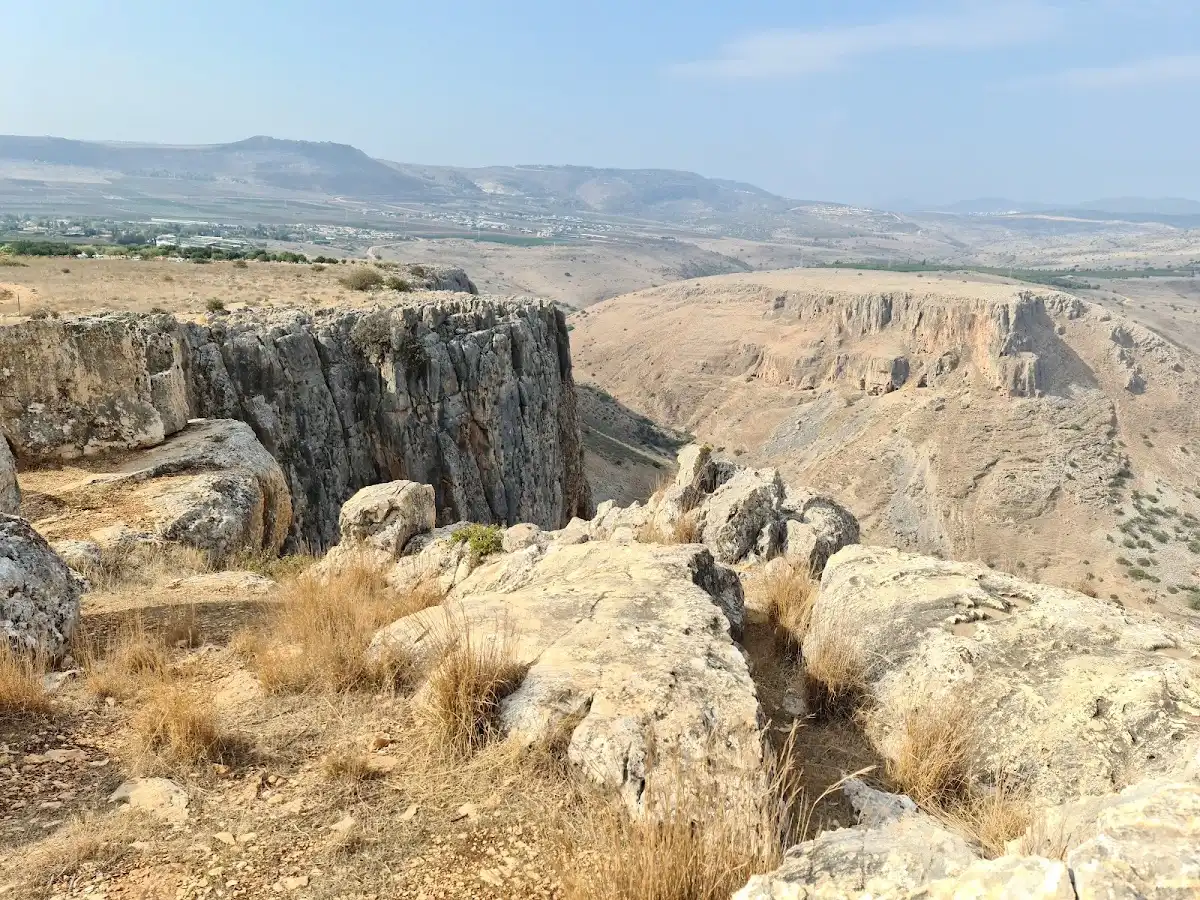
Climb rugged slopes to reach exposed cliffs, where open vistas reveal the Sea of Galilee and the Golan Heights beyond.

israel-hike-mount-arbel
© Google |

6 Nahal Prat

spring-fed pools, limestone cliffs, monastery

Walk along a perennial stream, pausing at natural pools and a centuries-old monastery tucked between sheer canyon walls.

7 Nahal Og

desert canyon, dry waterfalls, ladder climbs

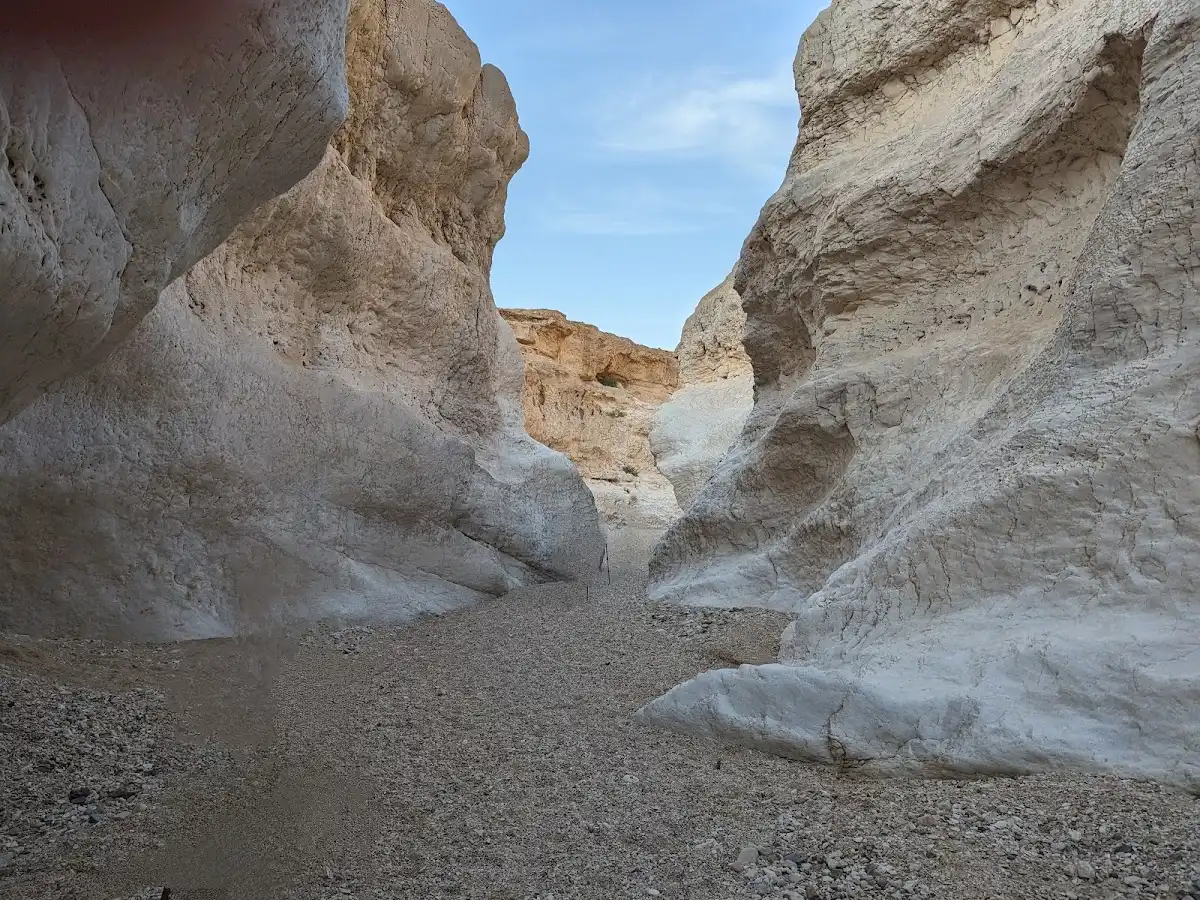
Navigate a narrow gorge with dry falls and short scrambles, experiencing the stark contrasts of the Judean Desert’s rocky terrain.

israel-hike-nahal-og
© Google |

8 Nahal Katlav

wooded ravine, train tunnel, Mediterranean flora

Descend through a shaded valley lined with native plants, passing a disused railway tunnel and quiet picnic spots.

israel-hike-nahal-katlav
© Google |
Loading the map 🌍

Expert viewInsights from Locals and Experts

Trail Logistics

Israel’s hiking scene is diverse, but it’s essential to approach it with a solid plan. Aim for three to five hikes to get a well-rounded experience. Each hike can vary significantly in difficulty and length, so choose wisely based on your fitness level and interests. Expect to spend anywhere from a couple of hours to a full day on the trails. The terrain can be rocky and uneven, so sturdy footwear is non-negotiable.

Altitude and Recovery

Many trails in Israel involve elevation changes that can catch you off guard. The Golan Heights and Mount Hermon offer stunning views but come with altitude that can sap your energy if you’re not acclimated. Factor in recovery time; a steep ascent can leave you feeling wiped out. Plan for breaks and hydration. If you’re tackling a challenging … read more 👉

Trail Logistics

Israel’s hiking scene is diverse, but it’s essential to approach it with a solid plan. Aim for three to five hikes to get a well-rounded experience. Each hike can vary significantly in difficulty and length, so choose wisely based on your fitness level and interests. Expect to spend anywhere from a couple of hours to a full day on the trails. The terrain can be rocky and uneven, so sturdy footwear is non-negotiable.

Altitude and Recovery

Many trails in Israel involve elevation changes that can catch you off guard. The Golan Heights and Mount Hermon offer stunning views but come with altitude that can sap your energy if you’re not acclimated. Factor in recovery time; a steep ascent can leave you feeling wiped out. Plan for breaks and hydration. If you’re tackling a challenging hike, consider a rest day afterward to recharge.

Difficulty and Pacing

Difficulty levels can be subjective, but generally, you’ll find everything from leisurely strolls to strenuous treks. Pay attention to trail markers and local advice. Some trails may seem easy on paper but can be deceptive due to heat or rocky paths. A common mistake is underestimating the time it takes to complete a hike. Always overestimate your time; it’s better to finish early than to be caught out after dark.

Planning and Prioritizing

Prioritize hikes based on your interests—historical sites, natural beauty, or cultural experiences. Research local festivals or events that might coincide with your hiking plans. This can enrich your experience but also complicate logistics, as popular trails can get crowded. If you’re looking for solitude, aim for less popular trails during weekdays.

Regional Variation

Israel’s geography is varied, from desert landscapes to lush hills. Each region has its own character and challenges. The Negev Desert offers unique beauty but can be brutally hot. Conversely, the northern regions can be lush and cooler, but trails may be muddy in the rainy season. Be prepared for these variations and adjust your gear accordingly.

Local Culture and Infrastructure

Understanding local customs can enhance your hiking experience. In some areas, you may encounter Bedouin communities. Respect their traditions and be mindful of cultural sensitivities. Infrastructure varies; while some trails are well-marked and maintained, others may lack clear signage. Always carry a map or a reliable GPS device.

Safety and Cultural Considerations

Safety is paramount. Always inform someone of your plans, especially if you’re heading into remote areas. Be aware of wildlife and local regulations regarding camping or fires. In some regions, military zones may be nearby; heed all warning signs.

In summary, Israel’s hiking trails offer a wealth of experiences, but preparation is key. By understanding the logistics, altitude challenges, and cultural nuances, you can navigate the trails with confidence. Embrace the journey, and let the landscapes speak for themselves.

✈️ The backpacker research shortcutIsrael Travel Guide

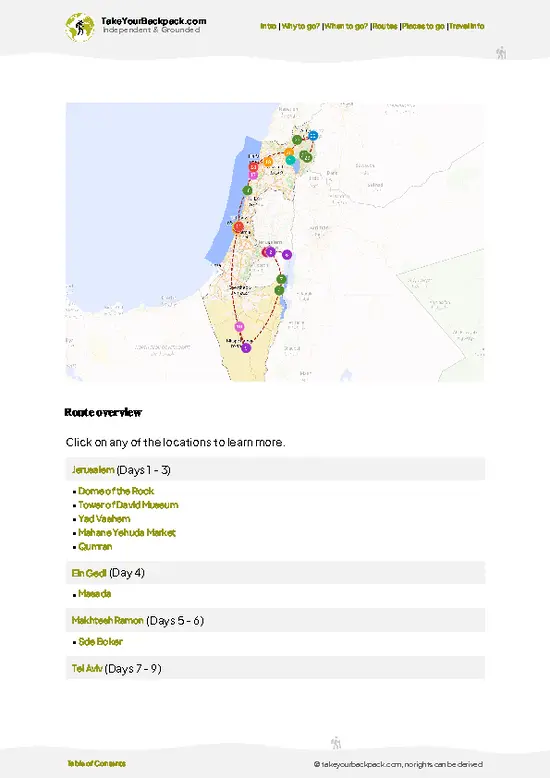
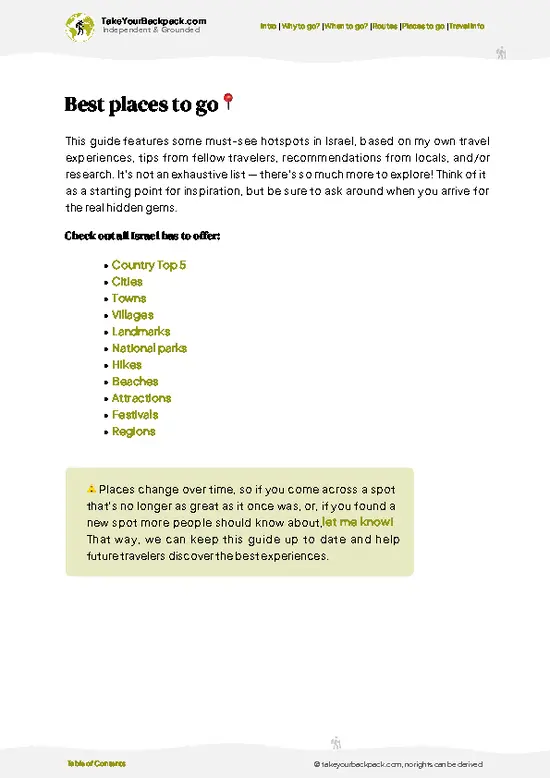
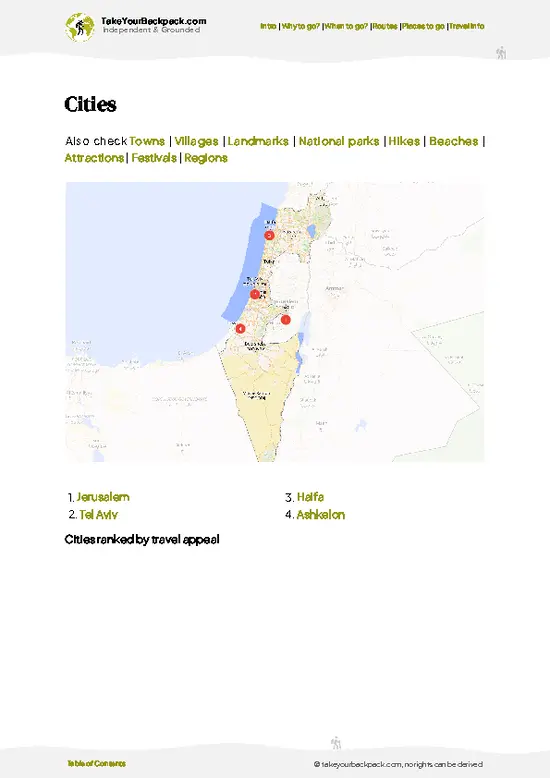
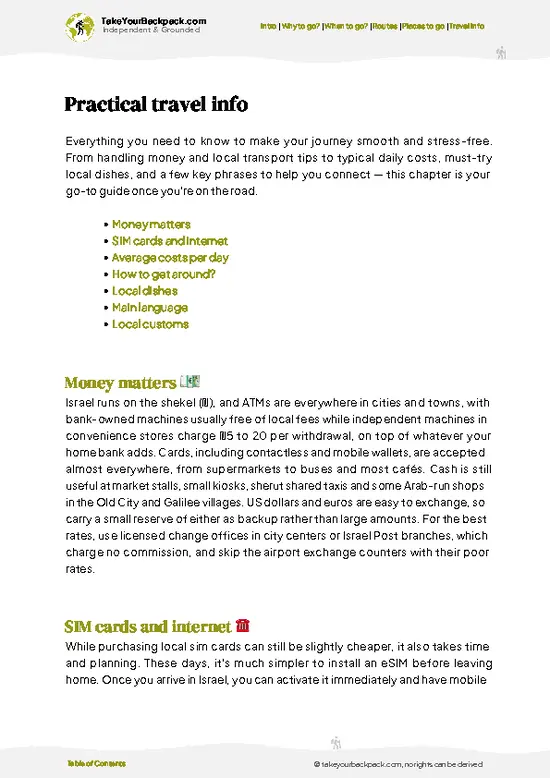
An offline-friendly backpacking guide with optimized travel routes, ranked highlights, transport advice, and the best areas to stay.
example page 0 from our offline Travel Guide for Israel
example page 1 from our offline Travel Guide for Israel
example page 2 from our offline Travel Guide for Israel
example page 3 from our offline Travel Guide for Israel
example page 4 from our offline Travel Guide for Israel
example page 5 from our offline Travel Guide for Israel
example page 6 from our offline Travel Guide for Israel
example page 7 from our offline Travel Guide for Israel
The digital guide (299 pages) contains:
81 highlights, ranked by travel appeal
Optimized 5, 10 & 15-day travel routes
Cities, national parks, landmarks, beaches
How to get around
Offline-friendly for travel without Wi-Fi
👉 Click to see all 30+ guide features

📅 Plan smarter in minutes, not weeks
Month by month travel advice
Festivals & national holidays
Budget expectations

🗺️ Go to the right places, skip the overrated ones
Honest pros & cons of destinations
Top hikes, parks & viewpoints
Lesser-known places most travelers miss
Clear “worth it vs skip it” guidance

🛏️ Travel smoothly without rookie mistakes
Best areas to stay
Transport systems explained simply
Common scams & safety advice
SIM cards, money & practical tips

🌍 Understand the country, not just visit it
Culture & traditions
52 Essential phrases & customs
Festivals worth planning around
Traveler-friendly historical context
Insights that make places more meaningful

📱 Built for real travel conditions
Fully downloadable PDF
Works completely offline
Optimized for phone use
Useful in remote areas & buses
Everything in one place
Save weeks of stressful planning
Get instant access to your full guide. 30‑day money-back guarantee.
+ Add another guide for just US$7.80

By proceeding you agree to our terms.
Sent to your inbox immediately after payment • 100% Secure Checkout
Best Backpacking Travel Advisor 2025 tourism awardBest Backpacking
Travel Advisor
2025
What others say about Take Your Backpack Guides:
⭐⭐⭐⭐⭐
Fantastic, amazing amount of information!
⭐⭐⭐⭐⭐
My goodness this is amazing, it's what I've been looking for hats off too you!
⭐⭐⭐⭐⭐
I think this is absolutely BRILLIANT
⭐⭐⭐⭐
Very complete and informative. It's still missing places, but I gotta to commend you
⭐⭐⭐⭐⭐
This is truly amazing, thank you, can't wait to explore it with my kids!
⭐⭐⭐⭐⭐
Awesome resource, thank you!
⭐⭐⭐⭐⭐
This is amazing! Can't wait to explore the ones I haven't seen
⭐⭐⭐⭐
I love this! Well done, great idea.
⭐⭐⭐⭐⭐
Thanks for taking the time to make this gem!
⭐⭐⭐⭐⭐
This might be the best website I've ever seen.
⭐⭐⭐⭐⭐
Congratulations, and thank you so much for your work; it's incredibly valuable.
⭐⭐⭐⭐
In all seriousness I think you did a great job pointing out the important spots
⭐⭐⭐⭐⭐
10/10 very good
⭐⭐⭐⭐⭐
As someone who's only just starting to visit regularly this is awesome, thank you.
⭐⭐⭐⭐
Thank you very much! I'm going to visit my dad, it's going to be very useful!
⭐⭐⭐⭐⭐
This is really cool! We'll be travelling for the first time and this definitely come in handy.
⭐⭐⭐⭐⭐
You are now our minister of culture, congratulations 👨‍💼
⭐⭐⭐⭐⭐
Just wanted to tell you that this is a pearl! Going to follow your recommendations.
⭐⭐⭐⭐⭐
This is so cool. I'll definitely be using the resource for my travels soon.
⭐⭐⭐⭐⭐
This is very impressive! Good work.
⭐⭐⭐⭐⭐
This is an amazing and informative site. Very well done!

🛏️ Where to stay?Where to Base Yourself

Yes — Israel has plenty of hostels and budget accommodation concentrated in major hubs: Tel Aviv, Jerusalem, Haifa, Eilat and the Sea of Galilee (Tiberias), with smaller pockets in Nazareth and Acre.
Tel Aviv (central/Florentin/Jaffa) puts you next to beaches and nightlife but is noisier and pricier in high season; Jerusalem (Old City/Ben Yehuda corridor) is unbeatable for sightseeing and transport but can be crowded and quieter at night in some neighborhoods; Haifa (German Colony/Carmel Center) is calmer with great views and day-trip access but has fewer late‑night options.
Eilat and Tiberias are ideal for sun and water access yet suffer seasonal price spikes and crowded periods, while … read more 👉
Yes — Israel has plenty of hostels and budget accommodation concentrated in major hubs: Tel Aviv, Jerusalem, Haifa, Eilat and the Sea of Galilee (Tiberias), with smaller pockets in Nazareth and Acre.
Tel Aviv (central/Florentin/Jaffa) puts you next to beaches and nightlife but is noisier and pricier in high season; Jerusalem (Old City/Ben Yehuda corridor) is unbeatable for sightseeing and transport but can be crowded and quieter at night in some neighborhoods; Haifa (German Colony/Carmel Center) is calmer with great views and day-trip access but has fewer late‑night options.
Eilat and Tiberias are ideal for sun and water access yet suffer seasonal price spikes and crowded periods, while Nazareth and Acre give cheaper guesthouse-style stays near historic centers but have limited hostel infrastructure and modest nightlife.

If you enjoy meeting fellow travelers, consider choosing hostels with high ratings for atmosphere. On the other hand, if you prefer having your own space, a hotel might be a better option.

IsraelExpand Your Journey

👋 Meet the founderWho’s Behind Take Your Backpack?

Johan, backpacker and founder of TakeYourBackpackHi, I’m Johan (Netherlands 🇳🇱), the creator of TakeYourBackpack. Over the past decade, I’ve backpacked through 80+ countries across six continents, gaining extensive experience with independent travel, long-term trips, and overland routes.

This site is built on a combination of firsthand travel experience and carefully curated insights from other backpackers. Many guides are based on places I’ve personally visited, while others bring together tips, observations, and practical advice shared by trusted travelers I’ve met along the way.

The goal is to provide realistic, experience-driven guidance — not generic itineraries — so you can explore destinations with better context, clearer expectations, and more confidence.

Get full Israel guide •
Instant download • 81 highlights • Full Offline guide