×

Israel🇮🇱 | landmarksMakhtesh Ramonerosion crater, desert vistas, geological formations | things to do and best time to go

Explore Dome of the RockExplore Rosh Hanikra

Backpacking in Makhtesh Ramon
🌟 Highlightunique site ranked #2
By Johan Kruseman 🇳🇱 | Updated October 15, 2026

Most people online call Mitzpeh Ramon a “crater.” It’s not. It’s a makhtesh - a freak geological erosion basin you basically don’t see anywhere else on Earth at this scale, and that difference matters once you’re standing on the edge wondering how the landscape got so weird. You’ll find it in Israel’s southern Negev Desert, roughly halfway between Be’er Sheva and Eilat, hanging out on the road to “nowhere” in the best possible way.

For backpackers, the wow-factor is real: a 40-kilometer-wide drop-off of striped rock, silence, and night skies that look fake. It’s cheaper and less crowded than Israel’s big-ticket sites, but still not “dirt cheap,” especially if you start booking guided jeep tours and boutique lodges. Hitching and buses make it reachable, though connections can be slow. There’s minimal historical drama, but huge space for head-clearing hikes, raw desert camping, and photos that don’t look like anyone else’s Israel trip.

Discover everything you want to know in the 📖 Israel Travel Guide.
Safety warning

The current risk level for Israel is high. Check the advice before going.


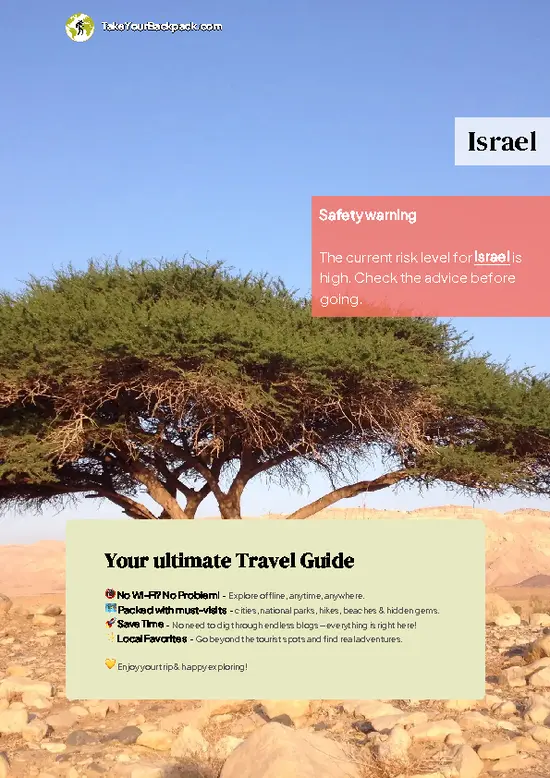
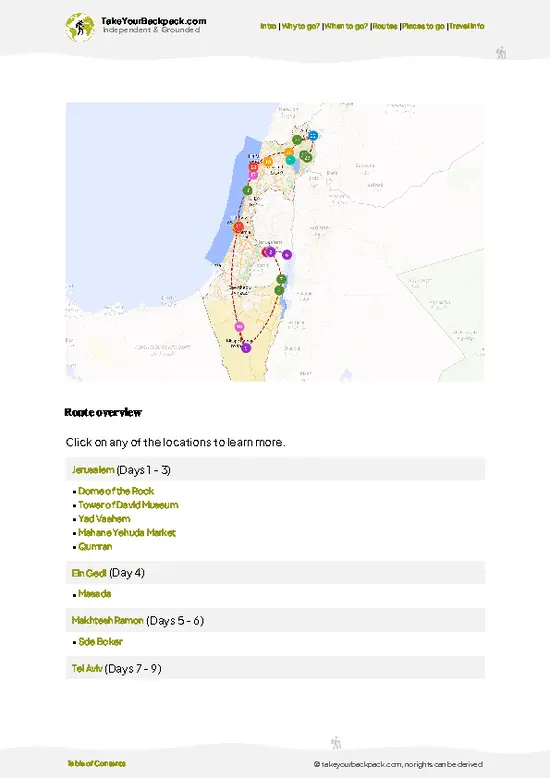
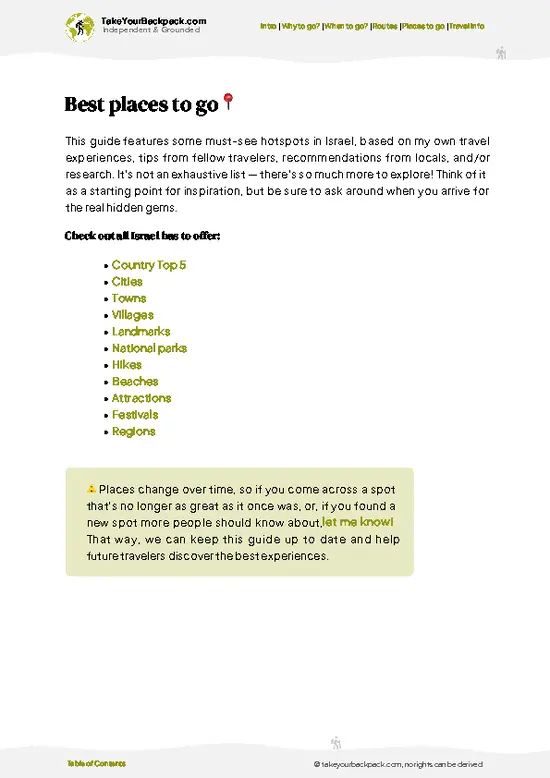
example page 0 from our offline Travel Guide for Israel
example page 1 from our offline Travel Guide for Israel
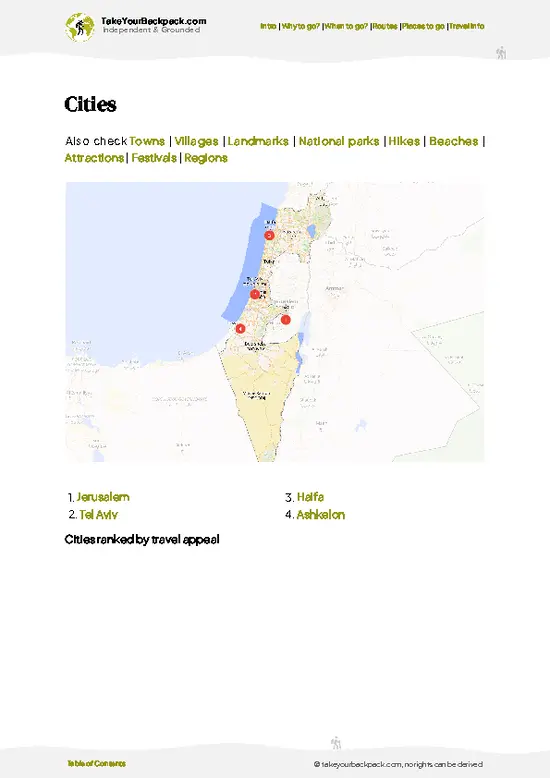
example page 2 from our offline Travel Guide for Israel
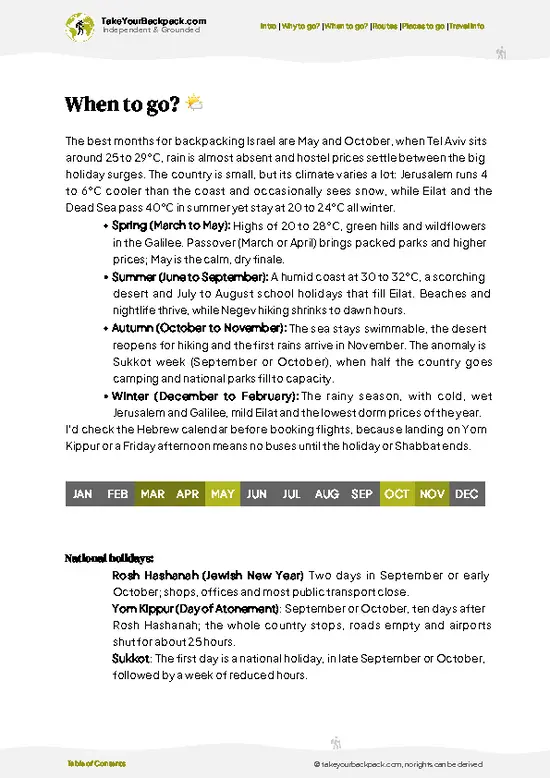
example page 3 from our offline Travel Guide for Israel
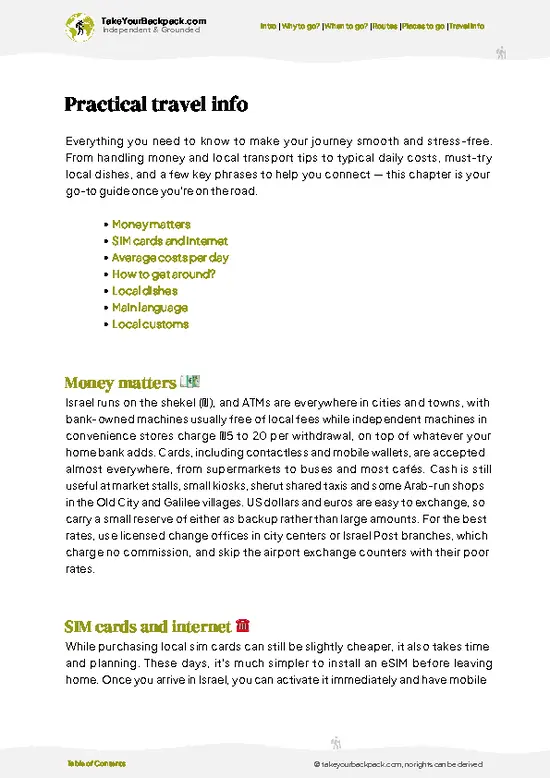
example page 4 from our offline Travel Guide for Israel
example page 5 from our offline Travel Guide for Israel
example page 6 from our offline Travel Guide for Israel
example page 7 from our offline Travel Guide for Israel
Loading the map 🌍
CLICK TO FILTER
cities
towns
villages
landmarks
national parks
hikes
beaches
attractions
festivals
regions
SHOW COUNTRY’S BESTSHOW ALL

✨ Why go?
Ranked #2 unique site in Israel
What makes it a must-see unique site

Makhtesh Ramon isn’t just another Instagram backdrop; it’s a raw, expansive marvel that demands your attention. Sure, the crowds can be a drag, especially during peak season, but the sheer scale of this geological wonder makes it worth the hustle. At about 40 kilometers long and 10 kilometers wide, it’s the largest erosion crater in the world, and standing on its rim, you’ll feel like you’re on another planet.

The cost? Minimal. You can hike, camp, or just soak in the views without breaking the bank. Plus, it fits seamlessly into a broader route through Israel. If you’re heading to Eilat or exploring the Negev Desert, this stop is a no-brainer.

What makes it special? The silence. The way the light shifts across the rocks at sunset is a spectacle that no photo can capture. You’ll find authenticity … read more 👉
Makhtesh Ramon isn’t just another Instagram backdrop; it’s a raw, expansive marvel that demands your attention. Sure, the crowds can be a drag, especially during peak season, but the sheer scale of this geological wonder makes it worth the hustle. At about 40 kilometers long and 10 kilometers wide, it’s the largest erosion crater in the world, and standing on its rim, you’ll feel like you’re on another planet.

The cost? Minimal. You can hike, camp, or just soak in the views without breaking the bank. Plus, it fits seamlessly into a broader route through Israel. If you’re heading to Eilat or exploring the Negev Desert, this stop is a no-brainer.

What makes it special? The silence. The way the light shifts across the rocks at sunset is a spectacle that no photo can capture. You’ll find authenticity in the local Bedouin culture nearby, offering a glimpse into a lifestyle that’s as rich as the landscape. This isn’t just a stop; it’s a transformative experience that connects you to the heart of Israel.

💡 HighlightsPlaces and moments you shouldn't skip

  1. The Makhtesh Itself (Ramon “Crater”) — It’s not a volcanic crater but the world’s largest makhtesh: an erosion-formed bowl carved into the Negev. The sheer scale hits you better in person than in photos — miles of layered cliffs, ridges and valleys that show millions of years of geology at a glance.
  2. Rim Viewpoints (sunrise & sunset spots) — A handful of easy pull-offs and formal lookouts give panoramic views into the bowl. Sunsets are gold and long; mornings bring sharp light that shows every fold and stripe. Perfect for quick stops if you’re short on time.
  3. Mitzpe Ramon Visitors’ Center — Small, practical, and worth the ten minutes: interactive exhibits explain why it’s a makhtesh, local geology, and safe routes. It’s your best prep stop for hikes and photography angles — plus the ranger
… read more 👉
  1. The Makhtesh Itself (Ramon “Crater”) — It’s not a volcanic crater but the world’s largest makhtesh: an erosion-formed bowl carved into the Negev. The sheer scale hits you better in person than in photos — miles of layered cliffs, ridges and valleys that show millions of years of geology at a glance.
  2. Rim Viewpoints (sunrise & sunset spots) — A handful of easy pull-offs and formal lookouts give panoramic views into the bowl. Sunsets are gold and long; mornings bring sharp light that shows every fold and stripe. Perfect for quick stops if you’re short on time.
  3. Mitzpe Ramon Visitors’ Center — Small, practical, and worth the ten minutes: interactive exhibits explain why it’s a makhtesh, local geology, and safe routes. It’s your best prep stop for hikes and photography angles — plus the ranger tips are solid and realistic.
  4. Nahal Ramon hikes (day trails & short canyons) — Walk the streambed trails that cut through the crater for close-up rock layers, narrow washes and desert silence. Trails range from easy strolls to rougher day-hikes; bring water and a map, and don’t expect cell coverage everywhere.
  5. Wildlife & Ibex spotting — Nubian ibex, desert foxes and raptors live here. Early morning and dusk are prime times; the ibex often graze right near the rims. It’s simple wildlife-watching—no zoo feel, just the animals doing their thing.
  6. Stargazing & astronomy evenings (my personal favorite) — Low light pollution makes the crater a glorious night-sky spot. Local groups run telescope nights and the Milky Way pops like you haven’t seen it next to a city. Bring a jacket — desert nights are cold.
  7. Adventure options: jeep tours, mountain biking, paragliding — If you want to add adrenaline, guided 4x4 tours and marked bike routes let you explore otherwise inaccessible folds and ridges. Paragliding and organized climbing are available in season; book locally for safety and route advice.
Spotted a mistake or missing something? Contact us.

Things to do near Makhtesh Ramon

Ratings based on Tripadvisor reviews. When you book through this link, you support our work at no extra cost to you.

🌤️ When to go?Seasonal considerations and timing

  • Weather: Mitzpeh Ramon is a desert crater, so expect scorching summers with highs around 38°C (100°F) and freezing nights dropping to 5°C (41°F). Winters are mild, hovering between 10-20°C (50-68°F), but nights can dip below freezing.
  • Temperature: Spring (March-May) and autumn (September-November) offer the sweet spot—daytime temps between 20-25°C (68-77°F), perfect for hiking without frying or freezing.
  • Daylight Hours: Summers bring long days, up to 14 hours of light, great for extended treks. Winters shrink daylight to about 10 hours, limiting your adventure window.
  • Crowds: Peak tourist season aligns with Israeli holidays and school vacations, mainly summer and around Passover. Expect more people and higher prices then. Off-season means solitude but fewer services.
  • Seasonal Activities:
… read more 👉
  • Weather: Mitzpeh Ramon is a desert crater, so expect scorching summers with highs around 38°C (100°F) and freezing nights dropping to 5°C (41°F). Winters are mild, hovering between 10-20°C (50-68°F), but nights can dip below freezing.
  • Temperature: Spring (March-May) and autumn (September-November) offer the sweet spot—daytime temps between 20-25°C (68-77°F), perfect for hiking without frying or freezing.
  • Daylight Hours: Summers bring long days, up to 14 hours of light, great for extended treks. Winters shrink daylight to about 10 hours, limiting your adventure window.
  • Crowds: Peak tourist season aligns with Israeli holidays and school vacations, mainly summer and around Passover. Expect more people and higher prices then. Off-season means solitude but fewer services.
  • Seasonal Activities: Spring blooms are rare but magical here, with wildflowers dotting the crater floor. Autumn offers clear skies for stargazing, arguably the crater’s best feature.
  • Price Fluctuations: Accommodation and tours spike in summer and holidays. Book early or go off-peak to snag deals and avoid inflated rates.
Pro-tip: Aim for late autumn—cool days, crisp nights, fewer crowds, and the night sky will blow your mind without the summer scorch or winter chill.


source: climatestotravel.comJANJanuary: good for travelingFEBFebruary: good for travelingMARMarch: highly recommended for travelingAPRApril: excellent for travelingMAYMay: excellent for travelingJUNJune: fair for travelingJULJuly: below average for travelingAUGAugust: below average for travelingSEPSeptember: excellent for travelingOCTOctober: excellent for travelingNOVNovember: highly recommended for travelingDECDecember: good for traveling
israel-unique-site-makhtesh-ramon
© Google |

✈️ The backpacker research shortcutIsrael Travel Guide

An offline-friendly backpacking guide with optimized travel routes, ranked highlights, transport advice, and the best areas to stay.
example page 0 from our offline Travel Guide for Israel
example page 1 from our offline Travel Guide for Israel
example page 2 from our offline Travel Guide for Israel
example page 3 from our offline Travel Guide for Israel
example page 4 from our offline Travel Guide for Israel
example page 5 from our offline Travel Guide for Israel
example page 6 from our offline Travel Guide for Israel
example page 7 from our offline Travel Guide for Israel
The digital guide (287 pages) contains:
✅ 77 highlights, ranked by travel appeal
✅ Optimized 5, 10 & 15-day travel routes
✅ Cities, national parks, landmarks, beaches
✅ How to get around
✅ Offline-friendly for travel without Wi-Fi
👉 Click to see all 30+ guide features

📅 Plan smarter in minutes, not weeks
✅ Month by month travel advice
✅ Festivals & national holidays
✅ Budget expectations

🗺️ Go to the right places, skip the overrated ones
✅ Honest pros & cons of destinations
✅ Top hikes, parks & viewpoints
✅ Lesser-known places most travelers miss
✅ Clear “worth it vs skip it” guidance

🛏️ Travel smoothly without rookie mistakes
✅ Best areas to stay
✅ Transport systems explained simply
✅ Common scams & safety advice
✅ SIM cards, money & practical tips

🌍 Understand the country, not just visit it
✅ Culture & traditions
✅ 52 Essential phrases & customs
✅ Festivals worth planning around
✅ Traveler-friendly historical context
✅ Insights that make places more meaningful

📱 Built for real travel conditions
✅ Fully downloadable PDF
✅ Works completely offline
✅ Optimized for phone use
✅ Useful in remote areas & buses
✅ Everything in one place
Stop searching, start planning
Get instant access to your full guide. 30‑day money-back guarantee.
+ Add another guide for just

By proceeding you agree to our terms.
Sent to your inbox immediately after payment • 100% Secure Checkout
Best Backpacking Travel Advisor 2025 tourism awardBest Backpacking
Travel Advisor
2025
What others say about Take Your Backpack Guides:
⭐⭐⭐⭐⭐
Fantastic, amazing amount of information!
⭐⭐⭐⭐⭐
My goodness this is amazing, it's what I've been looking for hats off too you!
⭐⭐⭐⭐⭐
I think this is absolutely BRILLIANT
⭐⭐⭐⭐
Very complete and informative. It's still missing places, but I gotta to commend you
⭐⭐⭐⭐⭐
This is truly amazing, thank you, can't wait to explore it with my kids!
⭐⭐⭐⭐⭐
Awesome resource, thank you!
⭐⭐⭐⭐⭐
This is amazing! Can't wait to explore the ones I haven't seen
⭐⭐⭐⭐
I love this! Well done, great idea.
⭐⭐⭐⭐⭐
Thanks for taking the time to make this gem!
⭐⭐⭐⭐⭐
This might be the best website I've ever seen.
⭐⭐⭐⭐⭐
Congratulations, and thank you so much for your work; it's incredibly valuable.
⭐⭐⭐⭐
In all seriousness I think you did a great job pointing out the important spots
⭐⭐⭐⭐⭐
10/10 very good
⭐⭐⭐⭐⭐
As someone who's only just starting to visit regularly this is awesome, thank you.
⭐⭐⭐⭐
Thank you very much! I'm going to visit my dad, it's going to be very useful!
⭐⭐⭐⭐⭐
This is really cool! We'll be travelling for the first time and this definitely come in handy.
⭐⭐⭐⭐⭐
You are now our minister of culture, congratulations 👨‍💼
⭐⭐⭐⭐⭐
Just wanted to tell you that this is a pearl! Going to follow your recommendations.
⭐⭐⭐⭐⭐
This is so cool. I'll definitely be using the resource for my travels soon.
⭐⭐⭐⭐⭐
This is very impressive! Good work.
⭐⭐⭐⭐⭐
This is an amazing and informative site. Very well done!

🛏️ Where to stay?Choosing the right base

Makhtesh Ramon isn’t just a pretty picture; it’s a sprawling desert wonder that deserves your attention. When it comes to staying nearby, you’ve got a few solid options that cater to budget travelers and solo adventurers.

First up, consider the town of Mitzpe Ramon itself. It’s small but vibrant, with a mix of local charm and backpacker-friendly spots. You’ll find communal areas where you can swap stories over a cup of strong coffee. The vibe is relaxed, and the locals are welcoming, making it easy to connect with fellow travelers.

Then there’s the surrounding desert. Camping is a fantastic … read more 👉
Makhtesh Ramon isn’t just a pretty picture; it’s a sprawling desert wonder that deserves your attention. When it comes to staying nearby, you’ve got a few solid options that cater to budget travelers and solo adventurers.

First up, consider the town of Mitzpe Ramon itself. It’s small but vibrant, with a mix of local charm and backpacker-friendly spots. You’ll find communal areas where you can swap stories over a cup of strong coffee. The vibe is relaxed, and the locals are welcoming, making it easy to connect with fellow travelers.

Then there’s the surrounding desert. Camping is a fantastic option if you’re feeling adventurous. Picture sleeping under a blanket of stars, with the crater’s rugged beauty as your backdrop. Just be prepared for the elements; the desert can be unforgiving.

Lastly, check out the nearby eco-lodges. They often focus on sustainability and community, offering a unique experience that’s both comfortable and socially engaging. You’ll meet like-minded souls while enjoying the stunning landscape.

Skip the tourist traps and embrace the real magic of Mitzpeh Ramon. It’s about the connections you make and the experiences you share.

👛 Costs (as of 15 October 2026)What things cost and how to budget

Visiting Makhtesh Ramon is a unique experience, but it comes with its own set of costs that you should be aware of.
  • Entrance Fees: Access to the Ramon Crater itself is generally free. However, if you want to explore the Ramon Nature Reserve or visit the visitor center, expect to pay around €5-€10 ($5-$12) per person. It’s worth it for the insights and facilities.
  • Accommodation: Options range from budget hostels at about €20-€40 ($22-$45) per night to mid-range hotels costing €70-€150 ($75-$160). If you’re feeling adventurous, consider camping, which can be as low as €10 ($11) per night.
  • Food: Dining can vary widely. Street food or casual eateries will set you back about €5-€15 ($5-$16) per meal. If you opt for a sit-down restaurant, expect to pay around €20-€40 ($22-$45) for a decent meal. Stocking
… read more 👉
Visiting Makhtesh Ramon is a unique experience, but it comes with its own set of costs that you should be aware of.
  • Entrance Fees: Access to the Ramon Crater itself is generally free. However, if you want to explore the Ramon Nature Reserve or visit the visitor center, expect to pay around €5-€10 ($5-$12) per person. It’s worth it for the insights and facilities.
  • Accommodation: Options range from budget hostels at about €20-€40 ($22-$45) per night to mid-range hotels costing €70-€150 ($75-$160). If you’re feeling adventurous, consider camping, which can be as low as €10 ($11) per night.
  • Food: Dining can vary widely. Street food or casual eateries will set you back about €5-€15 ($5-$16) per meal. If you opt for a sit-down restaurant, expect to pay around €20-€40 ($22-$45) for a decent meal. Stocking up on snacks and water is a smart move for hikes.
  • Transportation: Renting a car is the most convenient way to explore the area, costing around €30-€60 ($33-$66) per day. Public transport is limited, so factor in taxi fares if you’re relying on that, which can add up quickly.
  • Activities: Guided tours or adventure activities like jeep tours or hiking excursions can range from €50-€100 ($55-$110) per person. These experiences can elevate your visit, giving you deeper insights into the crater’s geology and history.

Understanding these costs will help you budget effectively and make the most of your visit to this remarkable landscape.


source: israel.travel
⚠️ Prices can change and everyone travels differently, so take this as a rough guide. Hope it helps you plan your adventure!

FAQCommon questions from travelers

Makhtesh Ramon is the world's largest erosion crater, located in the Negev Desert of southern Israel, stretching about 40 kilometers long and 2-10 kilometers wide. It offers unique geological formations and stunning desert landscapes. The site is a natural reserve with hiking trails and a visitor center.
Visiting Makhtesh Ramon typically requires at least half a day to explore key viewpoints, the visitor center, and some short hikes. For a more thorough experience including longer treks or stargazing, plan for one to two full days. Nighttime visits are popular due to the clear desert skies.
You get to Makhtesh Ramon by driving or taking a bus from major cities like Tel Aviv or Jerusalem, with the nearest town being Mitzpeh Ramon itself, about 2.5 hours from Tel Aviv by car. The crater is accessible via Route 40, which runs along its edge. Public transport options are limited, so renting a car is recommended for flexibility.
⚠️ Things can change over time, so always validate details locally before you go.

Other Israeli landmarks near Makhtesh Ramon

Explore more nearby:

  • Dome of the Rock—golden dome, sacred platform, Islamic artistry| 134 km away
  • Qumran—desert caves, ancient manuscripts, archaeological site| 137 km away
  • Shuni Fortress—Roman amphitheater, spring-fed pools, rural ruins| 214 km away

💡 Not sure where to go next?
Create a personalized itinerary for Israel including Makhtesh Ramon and the places that fit your trip.

Generate my itinerary

👉 Discover all landmarks

Or checkout all Israel has to offer (think cities, towns, villages, national parks, hikes, beaches, festivals)
Country photo of Israel

We 💚 feedbackWhat to keep in mind

Makhtesh Ramon is a stunner, no doubt. The sheer scale of it will leave you speechless, especially at sunrise when the colors explode. But let’s be real: it can get crowded, especially during peak season. You’ll have to share the view with plenty of other travelers snapping selfies. Still, if you can find a quiet spot and soak in the silence, you’ll discover a profound connection to nature that’s worth every step.

✈️ When did I visit Israel?
In October 2013 I visited Israel and the West Bank.

✍️ Help improve this page!
The information on this page is based on my own backpacking experience in Israel, supplemented with up-to-date research and feedback from other travelers. Travel details can change, so if you notice anything outdated or incomplete, feel free to let me know.


🙋‍♂️ Give feedback

👋 Meet the founderWho’s Behind Take Your Backpack?

Johan, backpacker and founder of TakeYourBackpackHi, I’m Johan (Netherlands 🇳🇱), the creator of TakeYourBackpack. Over the past 3 decades, I’ve backpacked through 90+ countries across six continents, gaining extensive experience with independent travel, long-term trips, and overland routes.

This site is built on a combination of firsthand travel experience and carefully curated insights from other backpackers. Many guides are based on places I’ve personally visited, while others bring together tips, observations, and practical advice shared by trusted travelers I’ve met along the way.

The goal is to provide realistic, experience-driven guidance — not generic itineraries — so you can explore destinations with better context, clearer expectations, and more confidence.