×

Italy🇮🇹 | citiesTriesteAustrian-era squares, Adriatic waterfront, literary cafés | things to do and best time to go

Explore PerugiaExplore Trento

Backpacking in Trieste
👍 Recommendedcity ranked #17
By Johan Kruseman 🇳🇱 | Updated September 4, 2026

Trieste quietly breaks the “sleepy port town” stereotype: it’s one of the most intellectually intense cities in Italy, more James Joyce than beach resort. Tucked into Italy’s far northeast corner, pressed against Slovenia and the Adriatic, it feels half-Italian, half-Central European. For backpackers, it’s safe, walkable, and cheaper than Venice but not exactly a party hub; think café-hopping on Piazza Unità, Habsburg-era architecture, Miramare Castle, and long, windy waterfront walks. Trains are decent, hostels are few, and meeting other travelers takes effort but pays off with deeper conversations than bar crawls.

Discover everything you want to know in the 📖 Italy Travel Guide.


Get your Italy guide
143 ranked highlights, routes & tips, works offline (526 pages)
Loading the map 🌍
CLICK TO FILTER
cities
towns
villages
landmarks
national parks
hikes
beaches
attractions
festivals
regions
SHOW COUNTRY’S BESTSHOW ALL

✨ Why go?
Ranked #17 city in Italy
The unique appeal for travelers

Trieste is a backpacker’s dream for several reasons. First, its walkability makes exploring effortless; you can wander from the historic center to the waterfront without breaking a sweat. The hostel scene is solid, offering affordable stays that foster a sense of community. Food is a highlight, with local cafes serving up hearty meals that won’t break the bank. Trieste also serves as a fantastic basecamp for day trips to nearby gems, maximizing your travel experience without the hassle of constant packing. Plus, the nightlife is vibrant yet laid-back, perfect for unwinding after a day of exploration. This city fits seamlessly into a backpacking route, making it more than just a quick stop.
Want to include Trieste in your Italy route?
Create a personalized Italy itinerary that includes Trieste and the places that fit your trip — based on your travel style, budget, and available time. Get your route in seconds.

Generate my trip

💡 HighlightsDon't-miss highlights and experiences

  1. Piazza Unità d’Italia — Europe’s largest sea-facing square; grand Austro-Hungarian façades meet the Adriatic, and sitting at a café here gives you the full civic and maritime story of Trieste in one view.
  2. Castello di Miramare — 19th-century seaside castle with manicured park, original furnishings and sweeping Gulf of Trieste views; the walk through the gardens to the cliff-edge terraces is worth the trip alone.
  3. Castello di San Giusto & Duomo di San Giusto — the hilltop fortress and cathedral complex overlooking the city. You get medieval walls, civic museums, and one of the best panoramas of rooftops and port from the bastions.
  4. Teatro Romano — an intact Roman theatre tucked under San Giusto hill. It’s compact but atmospheric; sit on the ancient seats and imagine the performances that
read more 👉
  1. Piazza Unità d’Italia — Europe’s largest sea-facing square; grand Austro-Hungarian façades meet the Adriatic, and sitting at a café here gives you the full civic and maritime story of Trieste in one view.
  2. Castello di Miramare — 19th-century seaside castle with manicured park, original furnishings and sweeping Gulf of Trieste views; the walk through the gardens to the cliff-edge terraces is worth the trip alone.
  3. Castello di San Giusto & Duomo di San Giusto — the hilltop fortress and cathedral complex overlooking the city. You get medieval walls, civic museums, and one of the best panoramas of rooftops and port from the bastions.
  4. Teatro Romano — an intact Roman theatre tucked under San Giusto hill. It’s compact but atmospheric; sit on the ancient seats and imagine the performances that once played to this same skyline.
  5. Canal Grande & Borgo Teresiano — a lively neighborhood of canals, historic market stalls and the red Ponte Rosso; wander the side streets for seafood, small bakeries and a real sense of daily Trieste life.
  6. Caffè San Marco — one of Trieste’s storied literary cafés. It’s less flashy than the main square cafés but steeped in the city’s intellectual, coffeehouse culture—perfect for people-watching and a proper espresso.
  7. Galleria d’Arte Moderna “Revoltella” — the Revoltella Museum’s modern art collection and the 19th-century palazzo itself tell the story of a city that bridged Central Europe and the Adriatic; small but thoughtfully put together.
  8. Risiera di San Sabba — the only Nazi concentration camp on Italian soil turned memorial and museum. It’s a difficult visit but essential for understanding Trieste’s 20th-century history and remembering the victims.
  9. Faro della Vittoria (Victory Lighthouse) — a striking monument-lighthouse on the waterfront commemorating sailors lost in WWI. The site, views and the two large anchors make it a quiet, reflective stop with maritime atmosphere.
  10. La Barcola — a long, rocky seaside promenade where locals sunbathe, swim and jog; in summer it’s Trieste’s living room. Bring a towel, stroll, and watch ferries, kite-sailors and the light change on the sea.
Just outside Trieste you can easily day-trip to Duino Castle (dramatic clifftop views — my personal favorite), the huge Grotta Gigante show cave, or the charming seaside town of Muggia.
Spotted a mistake or missing something? Contact us.

Things to do in Trieste

Ratings based on Tripadvisor reviews. When you book through this link, you support our work at no extra cost to you.

🏘️ NeighborhoodsUnderstanding the local layout

Trieste is a captivating blend of Italian charm and Central European flair, making it a unique stop for backpackers. Here’s how the neighborhoods stack up:

Centro Storico: The heart of Trieste, this area buzzes with history and culture. You’ll find affordable hostels and local eateries. It’s walkable, with easy access to transport. Perfect for short stays, but the nightlife can get lively, so expect some noise.

San Giusto: A quieter, residential vibe with stunning views from the castle. It’s a bit more upscale, but you can still find budget-friendly options. Great for longer stays if you prefer a peaceful atmosphere, yet still close enough to the action.

Barcola: Ideal for those who love the sea. This coastal area offers a relaxed vibe and scenic promenades. It’s a bit further from the … read more 👉
Trieste is a captivating blend of Italian charm and Central European flair, making it a unique stop for backpackers. Here’s how the neighborhoods stack up:

Centro Storico: The heart of Trieste, this area buzzes with history and culture. You’ll find affordable hostels and local eateries. It’s walkable, with easy access to transport. Perfect for short stays, but the nightlife can get lively, so expect some noise.

San Giusto: A quieter, residential vibe with stunning views from the castle. It’s a bit more upscale, but you can still find budget-friendly options. Great for longer stays if you prefer a peaceful atmosphere, yet still close enough to the action.

Barcola: Ideal for those who love the sea. This coastal area offers a relaxed vibe and scenic promenades. It’s a bit further from the city center, but public transport is reliable. Perfect for sunbathers and those seeking tranquility.

Old Port: A blend of history and modernity, this area has a vibrant nightlife scene. It’s walkable and offers a mix of budget and mid-range accommodations. Great for social backpackers looking to connect with others.

⌛️ 1 day1-day itinerary for Trieste

Trieste is a city where the Adriatic Sea meets a rich tapestry of history, culture, and coffee. It’s a place that feels like a well-kept secret, with its grand squares and eclectic architecture whispering stories of the past.

Start your morning at Piazza Unità d’Italia, the largest sea-facing square in Europe. Grab a cappuccino at Caffè degli Specchi, where the aroma of freshly brewed coffee mingles with the salty sea breeze. After that, stroll along the waterfront promenade, taking in the views of the harbor and the majestic Miramare Castle perched on the cliffs.

In the afternoon, head to the San Giusto neighborhood. Visit the San Giusto Cathedral and climb the hill for panoramic views of the city. Don’t miss the Roman Theatre, a hidden gem that often gets overlooked by tourists. It’s … read more 👉
Trieste is a city where the Adriatic Sea meets a rich tapestry of history, culture, and coffee. It’s a place that feels like a well-kept secret, with its grand squares and eclectic architecture whispering stories of the past.

Start your morning at Piazza Unità d’Italia, the largest sea-facing square in Europe. Grab a cappuccino at Caffè degli Specchi, where the aroma of freshly brewed coffee mingles with the salty sea breeze. After that, stroll along the waterfront promenade, taking in the views of the harbor and the majestic Miramare Castle perched on the cliffs.

In the afternoon, head to the San Giusto neighborhood. Visit the San Giusto Cathedral and climb the hill for panoramic views of the city. Don’t miss the Roman Theatre, a hidden gem that often gets overlooked by tourists. It’s a slice of history that feels intimate and personal.

As evening falls, make your way to the Canal Grande area. Here, you’ll find a mix of local trattorias and wine bars. Try some local seafood dishes paired with a glass of Friulano wine. The ambiance is relaxed, and you’ll feel like a part of the community rather than just a visitor.

Trieste is a city that rewards those who take the time to explore its nooks and crannies, making every moment feel like a discovery.
Turn your Trieste visit into an Italy adventure
Build a complete Italy route with Trieste, hidden gems, must-see destinations, and realistic travel times included.

Generate my trip

🌤️ When to go?Weather, crowds, and seasonal trade-offs


  • Weather: Spring and early autumn offer mild, pleasant conditions—think 15-22°C (59-72°F)—perfect for exploring without overheating or freezing.

  • Temperature: Summers can hit 28-30°C (82-86°F), which is fine if you like heat but expect sweaty city walks. Winters dip to 0-5°C (32-41°F), often damp and gray.

  • Daylight Hours: Long days from May to August give you up to 15 hours of light, ideal for squeezing in sightseeing and seaside breaks.

  • Crowds: Peak summer draws tourists, hiking prices and filling streets. Shoulder seasons keep crowds manageable, letting you enjoy the city’s vibe without elbowing through.

  • Seasonal Activities: Spring and autumn bring local festivals and fresh seafood markets, adding authentic flavor without the tourist gloss.

  • Price Fluctuations: Accommodation and
read more 👉

  • Weather: Spring and early autumn offer mild, pleasant conditions—think 15-22°C (59-72°F)—perfect for exploring without overheating or freezing.

  • Temperature: Summers can hit 28-30°C (82-86°F), which is fine if you like heat but expect sweaty city walks. Winters dip to 0-5°C (32-41°F), often damp and gray.

  • Daylight Hours: Long days from May to August give you up to 15 hours of light, ideal for squeezing in sightseeing and seaside breaks.

  • Crowds: Peak summer draws tourists, hiking prices and filling streets. Shoulder seasons keep crowds manageable, letting you enjoy the city’s vibe without elbowing through.

  • Seasonal Activities: Spring and autumn bring local festivals and fresh seafood markets, adding authentic flavor without the tourist gloss.

  • Price Fluctuations: Accommodation and flights spike in summer; booking in shoulder seasons often nets better deals and more flexible options.


Pro-tip: Aim for late April to early June or September to early October—sweet spots where weather, crowds, and prices align for maximum value and comfort.


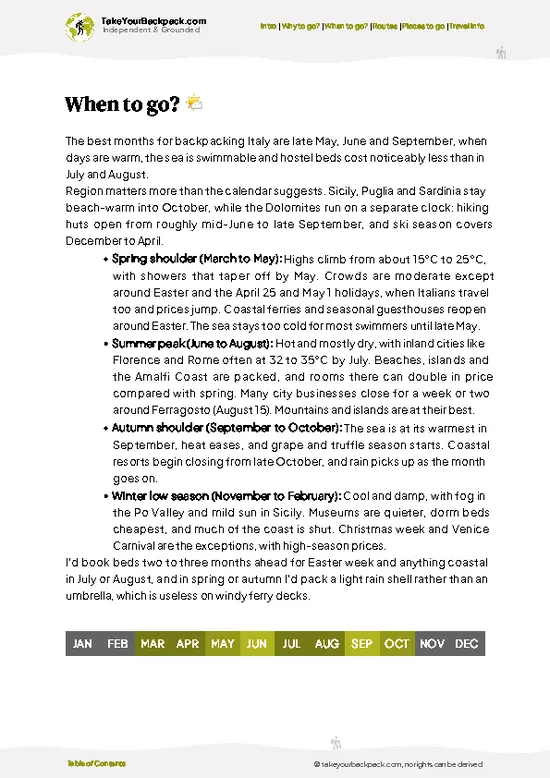
source: climatestotravel.comJANJanuary: fair for travelingFEBFebruary: fair for travelingMARMarch: good for travelingAPRApril: highly recommended for travelingMAYMay: excellent for travelingJUNJune: excellent for travelingJULJuly: good for travelingAUGAugust: good for travelingSEPSeptember: excellent for travelingOCTOctober: highly recommended for travelingNOVNovember: fair for travelingDECDecember: fair for traveling
when-to-go

✈️ The backpacker research shortcutItaly Travel Guide

An offline-friendly backpacking guide with optimized travel routes, ranked highlights, transport advice, and the best areas to stay.
example page 0 from our offline Travel Guide for Italy
example page 1 from our offline Travel Guide for Italy
example page 2 from our offline Travel Guide for Italy
example page 3 from our offline Travel Guide for Italy
example page 4 from our offline Travel Guide for Italy
example page 5 from our offline Travel Guide for Italy
example page 6 from our offline Travel Guide for Italy
example page 7 from our offline Travel Guide for Italy
The digital guide (526 pages) contains:
143 highlights, ranked by travel appeal
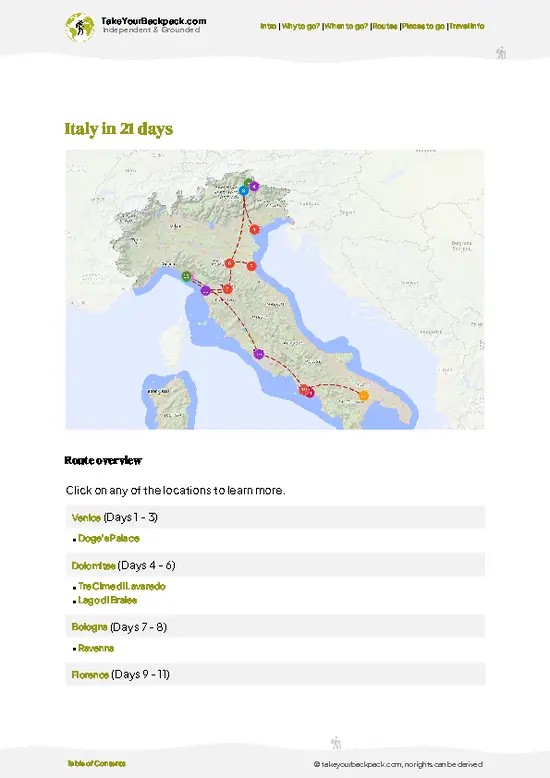
Optimized 7, 14 & 21-day travel routes
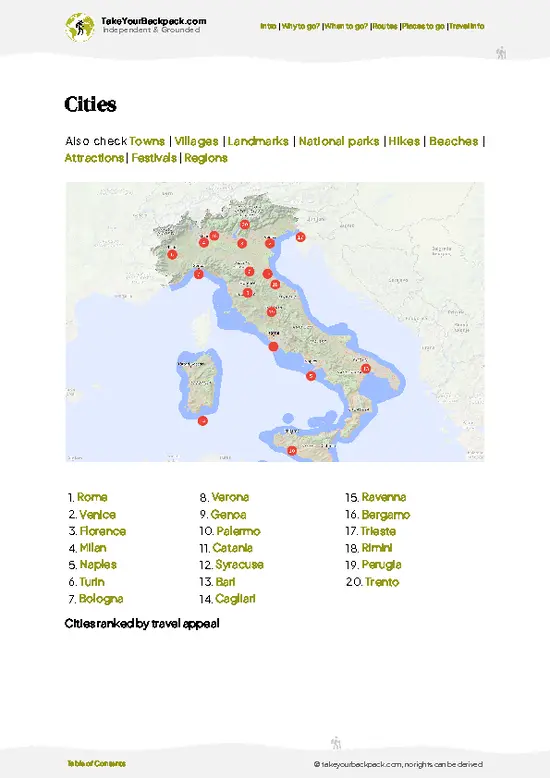
Cities, national parks, landmarks, beaches
How to get around
Offline-friendly for travel without Wi-Fi
👉 Click to see all 30+ guide features

📅 Plan smarter in minutes, not weeks
Month by month travel advice
Festivals & national holidays
Budget expectations

🗺️ Go to the right places, skip the overrated ones
Honest pros & cons of destinations
Top hikes, parks & viewpoints
Lesser-known places most travelers miss
Clear “worth it vs skip it” guidance

🛏️ Travel smoothly without rookie mistakes
Best areas to stay
Transport systems explained simply
Common scams & safety advice
SIM cards, money & practical tips

🌍 Understand the country, not just visit it
Culture & traditions
52 Essential phrases & customs
Festivals worth planning around
Traveler-friendly historical context
Insights that make places more meaningful

📱 Built for real travel conditions
Fully downloadable PDF
Works completely offline
Optimized for phone use
Useful in remote areas & buses
Everything in one place
Save weeks of stressful planning
Get instant access to your full guide. 30‑day money-back guarantee.
+ Add another guide for just US$7.80

By proceeding you agree to our terms.
Sent to your inbox immediately after payment • 100% Secure Checkout
Best Backpacking Travel Advisor 2025 tourism awardBest Backpacking
Travel Advisor
2025
What others say about Take Your Backpack Guides:
⭐⭐⭐⭐⭐
Fantastic, amazing amount of information!
⭐⭐⭐⭐⭐
My goodness this is amazing, it's what I've been looking for hats off too you!
⭐⭐⭐⭐⭐
I think this is absolutely BRILLIANT
⭐⭐⭐⭐
Very complete and informative. It's still missing places, but I gotta to commend you
⭐⭐⭐⭐⭐
This is truly amazing, thank you, can't wait to explore it with my kids!
⭐⭐⭐⭐⭐
Awesome resource, thank you!
⭐⭐⭐⭐⭐
This is amazing! Can't wait to explore the ones I haven't seen
⭐⭐⭐⭐
I love this! Well done, great idea.
⭐⭐⭐⭐⭐
Thanks for taking the time to make this gem!
⭐⭐⭐⭐⭐
This might be the best website I've ever seen.
⭐⭐⭐⭐⭐
Congratulations, and thank you so much for your work; it's incredibly valuable.
⭐⭐⭐⭐
In all seriousness I think you did a great job pointing out the important spots
⭐⭐⭐⭐⭐
10/10 very good
⭐⭐⭐⭐⭐
As someone who's only just starting to visit regularly this is awesome, thank you.
⭐⭐⭐⭐
Thank you very much! I'm going to visit my dad, it's going to be very useful!
⭐⭐⭐⭐⭐
This is really cool! We'll be travelling for the first time and this definitely come in handy.
⭐⭐⭐⭐⭐
You are now our minister of culture, congratulations 👨‍💼
⭐⭐⭐⭐⭐
Just wanted to tell you that this is a pearl! Going to follow your recommendations.
⭐⭐⭐⭐⭐
This is so cool. I'll definitely be using the resource for my travels soon.
⭐⭐⭐⭐⭐
This is very impressive! Good work.
⭐⭐⭐⭐⭐
This is an amazing and informative site. Very well done!

🛏️ Where to stay?Where staying makes the most sense

In Trieste, the sweet spot for backpackers is the city center around Piazza Unità d’Italia and the nearby Borgo Teresiano district. This area nails the balance between safety, social buzz, and budget options. You’re close enough to the waterfront to soak in the Adriatic breeze without the tourist crush of peak spots. Hostels cluster here, offering lively common rooms where solo travelers can swap stories over espresso or a cheap glass of local wine. Compared to the quieter, more residential San Giusto or the business-heavy Barriera Vecchia, this central zone keeps you plugged into the city’s pulse … read more 👉
In Trieste, the sweet spot for backpackers is the city center around Piazza Unità d’Italia and the nearby Borgo Teresiano district. This area nails the balance between safety, social buzz, and budget options. You’re close enough to the waterfront to soak in the Adriatic breeze without the tourist crush of peak spots. Hostels cluster here, offering lively common rooms where solo travelers can swap stories over espresso or a cheap glass of local wine. Compared to the quieter, more residential San Giusto or the business-heavy Barriera Vecchia, this central zone keeps you plugged into the city’s pulse without sacrificing comfort or wallet-friendliness. It’s a strategic base, letting you maximize your time exploring Trieste’s unique blend of Austro-Hungarian charm and Italian coastal life.

🚌 Getting aroundMoving around without the hassle

Trieste moves with a curious rhythm—part Mediterranean ease, part Central European precision. It’s not a city where you’ll find frantic rush hours or a strict timetable dictating every step. Instead, it flows like a well-rehearsed dance, where buses and ferries show up mostly on time, but locals don’t sweat a few minutes’ delay. The streets invite you to slow down, but the transit options keep you nimble, balancing your time, money, and comfort like a strategic game. Knowing when to walk, when to hop on a bus, or when to catch a ferry can turn your trip from a slog into a smooth, rewarding experience.


  • Walking: Trieste’s compact center means many sights are within a 20-30 minute stroll; zero cost, full control over your pace, and the best way to soak in the city’s layered history and sea
read more 👉
Trieste moves with a curious rhythm—part Mediterranean ease, part Central European precision. It’s not a city where you’ll find frantic rush hours or a strict timetable dictating every step. Instead, it flows like a well-rehearsed dance, where buses and ferries show up mostly on time, but locals don’t sweat a few minutes’ delay. The streets invite you to slow down, but the transit options keep you nimble, balancing your time, money, and comfort like a strategic game. Knowing when to walk, when to hop on a bus, or when to catch a ferry can turn your trip from a slog into a smooth, rewarding experience.


  • Walking: Trieste’s compact center means many sights are within a 20-30 minute stroll; zero cost, full control over your pace, and the best way to soak in the city’s layered history and sea breeze.

  • Bus (Trieste Trasporti): Runs roughly from 5:30 AM to midnight, tickets cost about €1.30 for 75 minutes, offering a reliable, budget-friendly way to cover longer distances with decent comfort and frequent service.

  • Ferry to Muggia: A 15-minute ride costing around €3, this option blends transit with a scenic break, perfect if you want to stretch your legs and enjoy the Adriatic without spending much time or money.

  • Taxi: Expensive relative to other options, starting at about €4 plus €1.20 per km, taxis offer door-to-door comfort and speed but quickly eat into your budget—best saved for late nights or heavy luggage.

👛 Costs (as of 4 September 2026)Travel costs and budget guide for Trieste

Backpacking in Trieste, Italy, means balancing your wallet against time and comfort, and knowing exactly where your euros go is the key to mastering the game.
  • Dorm Accommodation (High Season): Expect to pay around €25 to €35 per night in popular hostels during peak months (spring to early fall). These spots often fill fast, so booking ahead can save you from last-minute price hikes.
  • Dorm Accommodation (Off-Season): From late fall through winter, prices drop to about €15 to €25. The city is quieter, and you might snag a better bed or even a private room upgrade for less.
  • Meals: Budget about €10 to €15 daily if you stick to casual spots—think panini, pizza slices, or simple trattorias. Cooking your own meals from local markets can cut this down to €5 to €8, but eating out is part of the experience
read more 👉
Backpacking in Trieste, Italy, means balancing your wallet against time and comfort, and knowing exactly where your euros go is the key to mastering the game.
  • Dorm Accommodation (High Season): Expect to pay around €25 to €35 per night in popular hostels during peak months (spring to early fall). These spots often fill fast, so booking ahead can save you from last-minute price hikes.
  • Dorm Accommodation (Off-Season): From late fall through winter, prices drop to about €15 to €25. The city is quieter, and you might snag a better bed or even a private room upgrade for less.
  • Meals: Budget about €10 to €15 daily if you stick to casual spots—think panini, pizza slices, or simple trattorias. Cooking your own meals from local markets can cut this down to €5 to €8, but eating out is part of the experience here.
  • Local Transport: Single bus tickets cost roughly €1.30 each, but if you plan multiple rides, this adds up quickly.
  • City Transport Pass: A 24-hour pass runs about €4.50, offering unlimited rides on buses and trams—smart if you want to explore without watching the clock or your ticket count.
  • Basic Activities/Entry Fees: Museums and galleries typically charge between €5 and €10. Some historical sites or special exhibitions might push that to €12 or €15, but many public spaces and viewpoints are free.
  • Miscellaneous Expenses: Factor in around €3 to €7 for essentials like bottled water, a coffee break, or a quick snack. Small splurges add up, so keep an eye on these to avoid surprises.

Altogether, a realistic daily budget for backpacking in Trieste ranges from about €40 on a tight, off-season plan to €70 if you lean into comfort and convenience during high season. Knowing these trade-offs lets you decide where to save and where to indulge, turning your trip into a strategic win rather than a budget scramble.


source: numbeo.com
⚠️ Prices can change and everyone travels differently, so take this as a rough guide. Hope it helps you plan your adventure!

🚌 Day tripsBest day trips from Trieste

Trieste is a fantastic launchpad for day trips that blend culture, nature, and history. Each destination offers a unique flavor, making it easy to fill your itinerary with high-value experiences.

Piran
Just an hour away by bus, this charming coastal town in Slovenia is a must-see. Stroll through its narrow streets, where Venetian architecture meets a vibrant Mediterranean vibe. Grab a gelato and enjoy the view from the hilltop church. The bus fare is around €5, making it a budget-friendly option. Avoid the mistake of sticking to the main square; venture into the back alleys for authentic local eateries.


Castello di Miramare
A mere 15 minutes from Trieste, this stunning castle sits on the cliffs overlooking the Adriatic Sea. Explore the lush gardens and the opulent interiors that tell … read more 👉
Trieste is a fantastic launchpad for day trips that blend culture, nature, and history. Each destination offers a unique flavor, making it easy to fill your itinerary with high-value experiences.

Piran
Just an hour away by bus, this charming coastal town in Slovenia is a must-see. Stroll through its narrow streets, where Venetian architecture meets a vibrant Mediterranean vibe. Grab a gelato and enjoy the view from the hilltop church. The bus fare is around €5, making it a budget-friendly option. Avoid the mistake of sticking to the main square; venture into the back alleys for authentic local eateries.


Castello di Miramare
A mere 15 minutes from Trieste, this stunning castle sits on the cliffs overlooking the Adriatic Sea. Explore the lush gardens and the opulent interiors that tell the story of Archduke Ferdinand Maximilian. Entry is about €10, and the best time to visit is early morning to beat the crowds. First-timers often miss the scenic walking path that leads to the castle, which offers breathtaking views.


Gorizia
A quick train ride of about 30 minutes takes you to Gorizia, a town steeped in history. Walk across the border into Nova Gorica, Slovenia, and experience the blend of cultures. The train ticket costs around €4. The best time to visit is spring when the flowers bloom. Many overlook the local wine scene; don’t skip the chance to taste some regional vintages.


Aquileia
About an hour by train, this ancient Roman city is a UNESCO World Heritage site. Marvel at the stunning mosaics in the basilica and wander through the archaeological site. A round-trip ticket will set you back about €10. Visit in the fall for fewer tourists and cooler weather. First-timers often underestimate the size of the site; give yourself plenty of time to explore.
Want to know what more Italy offers?
The Italy Travel Guide describes 143 highlights, from cities to national parks, from beaches to hikes

Get the Travel Guide -

🍲 FoodLocal Flavors for Backpackers

Trieste is a culinary crossroads, where Italian, Slovenian, and Austro-Hungarian influences collide. Don’t miss the prosciutto di San Daniele—thinly sliced and bursting with flavor. Pair it with frico, a cheesy, crispy delight that’s a local staple.

For drinks, the caffè culture is serious here. Try a cappuccino in the morning, but remember, locals sip it standing at the bar. As the sun sets, the spritz comes alive—refreshing and perfect for socializing.

Markets buzz with life, offering fresh produce and street food. Grab a tramezzino, a soft sandwich filled with local ingredients, and enjoy it at a nearby café. Embrace the relaxed pace; meals are meant to be savored, not rushed. This is where the heart of Trieste truly beats.

🛡️ SafetyTraveler Safety Guide

Trieste is generally safe, but like any city, it has its quirks. Stay alert in crowded areas like Piazza Unità d’Italia, where pickpockets can operate. If you’re solo and out at night, stick to well-lit streets and avoid empty alleys; the waterfront is lively and usually safe.

Watch for common scams, like overly friendly locals offering unsolicited help or asking for money. Just be polite and walk away. Everyday annoyances include the occasional aggressive street performer; a simple smile and a nod can often defuse the situation. Carry yourself confidently, and you’ll navigate Trieste with ease.

FAQCommon questions from travelers

2 to 3 days are sufficient to explore Trieste's main attractions, including Piazza Unità d'Italia, Miramare Castle, and the historic coffee houses. This allows time to enjoy the city's unique blend of Italian, Austro-Hungarian, and Slavic cultures. A day trip to the nearby Carso plateau or Grotta Gigante cave can be added if time permits.
Yes, Trieste is safe for solo backpackers. The city has low crime rates and a welcoming atmosphere, especially in tourist areas and during the day. Standard precautions like avoiding poorly lit areas at night and keeping an eye on belongings are advised.
Trieste is known for its historic port, its coffee culture with famous cafes like Caffè San Marco, and its unique mix of Italian and Central European influences. It is also recognized for its literary heritage, being home to writers like James Joyce and Italo Svevo.
⚠️ Things can change over time, so always validate details locally before you go.

Other Italian cities near Trieste

Explore more nearby:

  • Venice—canal network, stone bridges, lagoon islands| 115 km away
  • Padua—frescoed chapels, botanical gardens, arcaded piazzas| 150 km away
  • Vicenza—Palladian villas, arcaded streets, goldsmith workshops| 174 km away

💡 Not sure where to go next?
Create a personalized itinerary for Italy including Trieste and the places that fit your trip.

Generate my itinerary

👉 Discover all cities

Or checkout all Italy has to offer (think cities, towns, villages, national parks, hikes, beaches, festivals)
Country photo of Italy

We 💚 feedbackSumming up the experience

Trieste’s coffee culture is a revelation. Sipping a rich espresso at historic cafés feels like stepping back in time. But be prepared: the city’s layout can be a workout. Hills and cobblestones challenge your legs, so pack comfy shoes. Embrace the burn; it’s part of the charm.

✈️ When did I visit Italy?
Italy I have vistited a couple of times: Rome already when I was still in high school, and I did a 7 day hike in the Dolomites in 2021.

✍️ Help improve this page!
The information on this page is based on my own backpacking experience in Italy, supplemented with up-to-date research and feedback from other travelers. Travel details can change, so if you notice anything outdated or incomplete, feel free to let me know.


🙋‍♂️ Give feedback

👋 Meet the founderWho’s Behind Take Your Backpack?

Johan, backpacker and founder of TakeYourBackpackHi, I’m Johan (Netherlands 🇳🇱), the creator of TakeYourBackpack. Over the past decade, I’ve backpacked through 80+ countries across six continents, gaining extensive experience with independent travel, long-term trips, and overland routes.

This site is built on a combination of firsthand travel experience and carefully curated insights from other backpackers. Many guides are based on places I’ve personally visited, while others bring together tips, observations, and practical advice shared by trusted travelers I’ve met along the way.

The goal is to provide realistic, experience-driven guidance — not generic itineraries — so you can explore destinations with better context, clearer expectations, and more confidence.

Get full Italy guide •
Instant download • 143 highlights • Full Offline guide