×

Italy🇮🇹 | best citiesWhere to Find the 10 Best cities in Italy

Italy is a tapestry of cities, each with its own pulse and character, making it a prime destination for backpacking and independent travel. Major hubs like Rome and Milan offer vibrant nightlife and extensive transport connections, perfect for those seeking a bustling atmosphere. In contrast, smaller urban centers like Bologna or Matera provide a more intimate experience, rich in local culture and history.

Seasonal nuances also play a crucial role. Summer brings throngs of tourists to Florence, while autumn in Venice offers a quieter, more authentic vibe. Choosing the right city impacts your budget, safety, and overall cultural immersion. For example, while Rome may be pricier, its wealth of attractions justifies the expense. Meanwhile, cities like Naples can offer incredible experiences at a fraction of the cost. Understanding these dynamics will help you navigate Italy’s diverse urban landscape and maximize your adventure.

By Johan Kruseman 🇳🇱 | Updated September 5, 2026
Explore the best towns in Italy

Why go?Why These city Stand Out

Italy’s cities are a living canvas of cultural diversity and historical depth, each one a chapter in a story that spans millennia. Unlike many countries, Italy’s urban landscapes are steeped in layers of regional identities. From the bustling streets of Milan to the ancient ruins of Rome, each city reflects its unique heritage, shaped by centuries of trade, conquest, and artistic innovation. This rich tapestry offers travelers a chance to engage with history in a way that feels immediate and personal.

The transport networks in Italy are generally efficient, connecting major cities with high-speed trains that make it easy to traverse the country. However, this convenience comes with a trade-off: the faster you travel, the less time you have to immerse yourself in the local culture. Quick stops … read more 👉
Italy’s cities are a living canvas of cultural diversity and historical depth, each one a chapter in a story that spans millennia. Unlike many countries, Italy’s urban landscapes are steeped in layers of regional identities. From the bustling streets of Milan to the ancient ruins of Rome, each city reflects its unique heritage, shaped by centuries of trade, conquest, and artistic innovation. This rich tapestry offers travelers a chance to engage with history in a way that feels immediate and personal.

The transport networks in Italy are generally efficient, connecting major cities with high-speed trains that make it easy to traverse the country. However, this convenience comes with a trade-off: the faster you travel, the less time you have to immerse yourself in the local culture. Quick stops can lead to a superficial experience, where the essence of a city is lost in transit. For those seeking depth, it’s often better to linger in fewer places, allowing the nuances of regional cuisine, dialects, and traditions to unfold.

Italy’s geographic diversity also plays a crucial role in shaping urban experiences. From the coastal charm of the Amalfi Coast to the alpine beauty of the Dolomites, the climate varies significantly, influencing local lifestyles and activities. This variety can be both a blessing and a curse; while it offers a range of experiences, it can complicate travel plans and expectations.

Ultimately, Italy is well-suited for those who appreciate historical context and cultural richness. However, travelers should be prepared for the constraints of navigating busy urban centers and the occasional language barrier. Understanding these dynamics is essential for making the most of Italy’s vibrant cities, ensuring that each visit is not just a trip, but a meaningful exploration of a country that thrives on its past while embracing the present.
Why These Made the Cut
The list of best cities in Italy is created based on culture, vibe, attractions, transport ease, and local charm. If you feel a city is missing in this list, please let us know.

When to go?Best Time to Visit Italy for cities

Spring brings a refreshing energy to Italy. Temperatures are mild, making it ideal for exploring. Crowds are manageable, especially in March and April. However, late spring sees an uptick in visitors, particularly around major holidays. Festivals start to bloom, offering a taste of local culture. The trade-off? Prices begin to rise as demand increases.

Summer is peak tourist season. Expect sweltering heat and throngs of visitors. Cities can feel congested, and accommodations are at a premium. While the vibrant atmosphere is undeniable, the heat can be oppressive, especially in July and August. This season is packed with events, but the experience can be diluted by the sheer number of tourists. For those who thrive in the hustle, summer offers a lively backdrop, but be prepared for long lines … read more 👉
Spring brings a refreshing energy to Italy. Temperatures are mild, making it ideal for exploring. Crowds are manageable, especially in March and April. However, late spring sees an uptick in visitors, particularly around major holidays. Festivals start to bloom, offering a taste of local culture. The trade-off? Prices begin to rise as demand increases.

Summer is peak tourist season. Expect sweltering heat and throngs of visitors. Cities can feel congested, and accommodations are at a premium. While the vibrant atmosphere is undeniable, the heat can be oppressive, especially in July and August. This season is packed with events, but the experience can be diluted by the sheer number of tourists. For those who thrive in the hustle, summer offers a lively backdrop, but be prepared for long lines and crowded attractions.

Autumn is a hidden treasure. The weather is still pleasant, with warm days and cooler nights. Crowds thin out after September, making it easier to navigate popular spots. Harvest festivals celebrate local produce, adding a unique flavor to the experience. This season strikes a balance between good weather and fewer tourists, but be mindful that some attractions may begin to close for the off-season.

Winter transforms Italy into a quieter, more introspective place. While temperatures drop, the absence of crowds allows for a more authentic experience. Major cities may host festive markets and events, but some attractions operate on reduced hours. The trade-off here is the chill; travelers must be prepared for colder conditions. However, the serene atmosphere can be rewarding for those seeking a different side of Italy.

Understanding these seasonal dynamics is crucial for planning a trip that aligns with personal preferences and desired experiences.

city hoppingPlanning Your Route Efficiently

Transport Networks
Italy’s transport system is a well-oiled machine. High-speed trains connect major cities like Milan, Florence, and Rome in under three hours. Use this to your advantage. Start in the north and work your way south, or vice versa. This directionality minimizes backtracking and maximizes your time spent exploring.

Regional Clustering
Cluster cities by region. The north is rich with art and fashion—think Milan and Venice. The central region offers historical depth with Florence and Rome. The south, with its stunning coastlines, includes Naples and the Amalfi Coast. This approach allows for a more cohesive experience, letting you dive deeper into each locale’s unique vibe.

Typical Time Needed
Allocate at least two full days for major cities. This gives you time to wander, … read more 👉
Transport Networks
Italy’s transport system is a well-oiled machine. High-speed trains connect major cities like Milan, Florence, and Rome in under three hours. Use this to your advantage. Start in the north and work your way south, or vice versa. This directionality minimizes backtracking and maximizes your time spent exploring.

Regional Clustering
Cluster cities by region. The north is rich with art and fashion—think Milan and Venice. The central region offers historical depth with Florence and Rome. The south, with its stunning coastlines, includes Naples and the Amalfi Coast. This approach allows for a more cohesive experience, letting you dive deeper into each locale’s unique vibe.

Typical Time Needed
Allocate at least two full days for major cities. This gives you time to wander, savor local cuisine, and absorb the culture. Smaller towns can be tackled in a day, but don’t rush. The goal is to balance seeing more with truly experiencing each place.

Common Planning Mistakes
Avoid cramming too many stops into a tight schedule. It’s tempting to tick off cities like a checklist, but this leads to burnout. Prioritize quality over quantity. Also, don’t underestimate travel time between cities. Factor in delays and the time it takes to get to and from train stations.

Trade-offs and Constraints
Speed often comes at the cost of depth. A whirlwind tour may seem efficient, but it sacrifices the chance to connect with the local culture. Budget travelers might opt for slower, less comfortable transport, while those seeking comfort should consider splurging on high-speed trains. Flexibility is key; be ready to adjust plans based on what resonates with you.

The ListMust-Visit cities in Italy

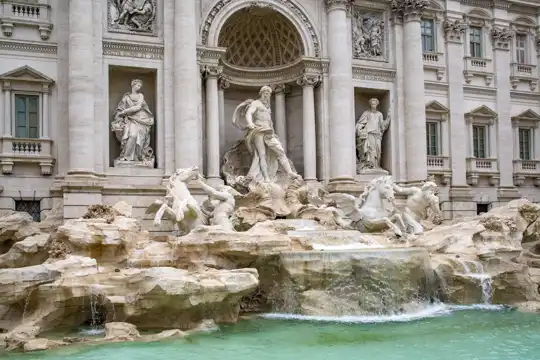
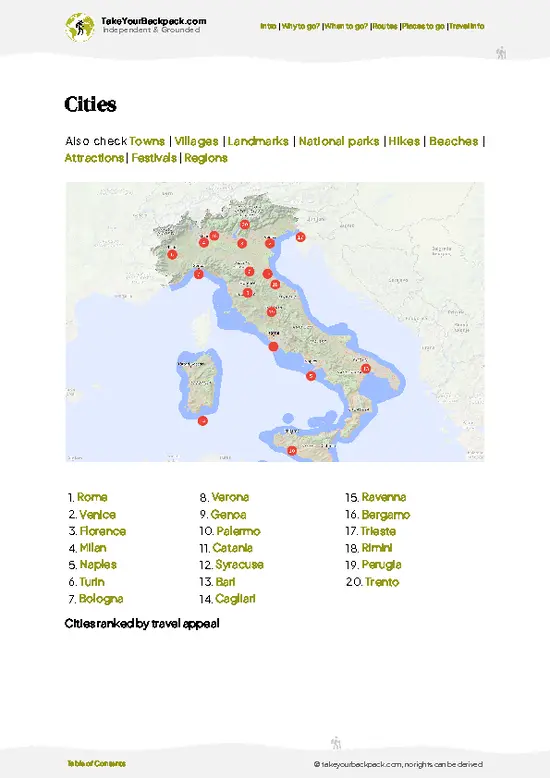
1 Rome

ancient ruins, monumental piazzas, layered neighborhoods

Move between eras as you cross busy squares, explore archaeological sites, and find quiet corners in a sprawling metropolis.

Italy - Rome

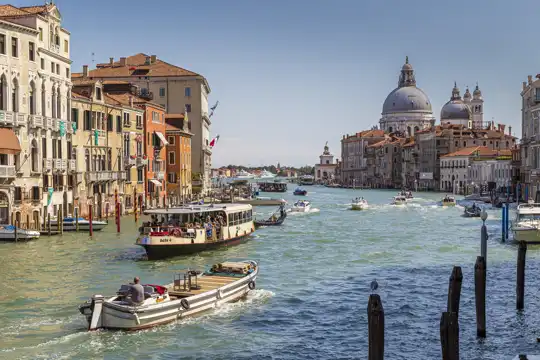
2 Venice

canal network, stone bridges, lagoon islands

Travel by boat or on foot through a city built on water, where each neighborhood offers a distinct rhythm and atmosphere.

Italy - Venice

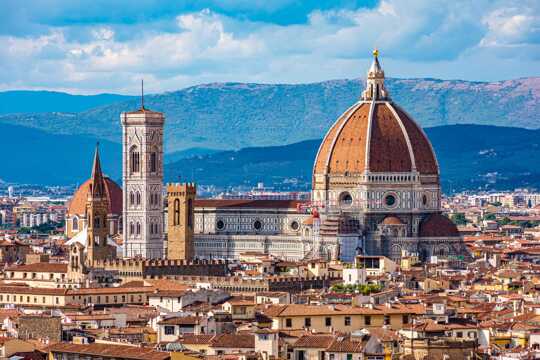
3 Florence

Renaissance art, river bridges, artisan workshops

Trace the legacy of artists and architects, cross the Arno on historic bridges, and watch craftspeople at work in hidden studios.

Italy - Florence

4 Milan

fashion district, modern skyline, Gothic cathedral

Experience a city where cutting-edge design meets centuries-old landmarks, and daily life moves at a brisk urban pace.

italy-city-milan
© Google | Raffaele Messetti

5 Naples

volcanic backdrop, chaotic streets, ancient catacombs

Descend into underground tunnels, sample bold street food, and feel the energy of a city in constant motion.

italy-city-naples
© Google | Anita Chambost

6 Turin

grand boulevards, café-lined squares, industrial heritage

Stroll through elegant avenues, pause in historic cafés, and discover how industry and art coexist in this northern city.

7 Bologna

porticoed streets, university quarter, food markets

Wander under endless arcades, sample regional specialties in lively markets, and experience a city shaped by centuries of student life.

italy-city-bologna
© Google |

8 Verona

Roman arena, river bends, medieval lanes

Attend open-air performances, cross the Adige on ancient bridges, and explore winding streets lined with centuries-old buildings.

italy-city-verona
© Google | Aneta Kupszta

9 Genoa

maze-like alleys, maritime museums, hillside elevators

Navigate narrow passageways, ride funiculars for city views, and discover a port city layered with maritime history.

italy-city-genoa
© Google | Andrea Anichini

10 Palermo

Arab-Norman architecture, street food stalls, layered neighborhoods

Navigate a city where ornate churches meet bustling markets, and every district reveals traces of diverse Mediterranean influences.

italy-city-palermo
© Google |

11 Catania

lava-stone streets, baroque facades, Mount Etna views

Experience a city rebuilt from volcanic stone, where daily life unfolds beneath the shadow of Sicily’s most active volcano.

12 Syracuse

island quarter, Greek theater, baroque piazzas

Wander from ancient amphitheaters to sunlit squares, with the sea always nearby and history visible at every turn.

italy-city-syracuse
© Google | Serghei Turcan

13 Bari

harborfront, labyrinthine old town, seafood trattorias

Follow winding alleys to the sea, watch daily routines unfold along the waterfront, and taste fresh Adriatic catches.

14 Cagliari

hilltop citadel, Mediterranean beaches, Phoenician ruins

Climb to panoramic viewpoints, descend to sandy shores, and find traces of ancient civilizations along the coast.

15 Ravenna

Byzantine mosaics, quiet streets, early Christian sites

Seek out shimmering mosaics in peaceful churches and walk tranquil lanes that reveal layers of ancient religious history.

16 Bergamo

walled upper town, funicular rides, Lombard cuisine

Ride between two distinct city levels, savor regional dishes, and wander cobbled streets with sweeping alpine views.

italy-city-bergamo
© Google | Olaf Hunger

17 Trieste

Austrian-era squares, Adriatic waterfront, literary cafés

Absorb a blend of Central European and Italian influences while sipping coffee by the sea or wandering stately piazzas.

18 Rimini

Roman arch, sandy coastline, nightlife strips

Balance days on wide beaches with walks past ancient monuments, then experience the city’s after-dark energy.

19 Perugia

hilltop alleys, medieval arches, student energy

Climb steep lanes to panoramic viewpoints, explore ancient passageways, and feel the pulse of a city shaped by its university.

20 Trento

Alpine backdrop, Renaissance palazzi, mountain access

Use this compact city as a gateway to the Dolomites, with frescoed buildings and crisp mountain air at every turn.

21 Padua

frescoed chapels, botanical gardens, arcaded piazzas

Visit world-renowned art sites, relax in Europe’s oldest botanical garden, and enjoy the rhythm of student-filled squares.

22 Ferrara

moated castle, Renaissance walls, cycling routes

Pedal along broad city walls, visit a castle surrounded by water, and explore a flat landscape ideal for slow travel.

23 Reggio Calabria

Ionian promenade, Greek bronzes, citrus groves

Walk the palm-lined seafront, visit world-famous sculptures, and explore a region known for its citrus and sea breezes.

24 Brescia

Roman ruins, industrial districts, alpine foothills

Move between ancient archaeological sites and modern neighborhoods, with the mountains always visible on the horizon.

25 Vicenza

Palladian villas, arcaded streets, goldsmith workshops

Admire harmonious architecture, browse artisan shops, and discover a city shaped by the vision of a single Renaissance architect.

26 Taranto

Greek ruins, swinging bridges, naval base

Cross between old and new districts, visit ancient archaeological sites, and observe daily life shaped by the sea.

27 Livorno

canal district, seafood markets, Liberty-era facades

Explore a port city with a network of canals, lively fish markets, and architecture influenced by centuries of trade.

Think you know Italy?

Prove you’re a true local — uncover 17 lesser-known cities in Italy that locals tend to keep to themselves.
Loading the map 🌍

Expert viewTips and Advice from Travelers

Essential

Italy is a treasure trove of cities, but let’s get real: you can’t see them all in one trip without feeling like you’re sprinting through a museum. Aim for three to five cities, depending on your pace and interests. This allows you to soak in the local culture without feeling like a tourist on a treadmill.

The trade-off here is between breadth and depth. If you rush through too many cities, you’ll miss the nuances that make each place unique. You’ll be left with a blur of sights and sounds, but little understanding of the local vibe. Instead, focus on a few cities that resonate with you. Spend a few days in each, and you’ll leave with stories, not just snapshots.

Transport Hubs

Italy’s transport infrastructure is generally solid, with high-speed trains connecting major cities. … read more 👉

Essential

Italy is a treasure trove of cities, but let’s get real: you can’t see them all in one trip without feeling like you’re sprinting through a museum. Aim for three to five cities, depending on your pace and interests. This allows you to soak in the local culture without feeling like a tourist on a treadmill.

The trade-off here is between breadth and depth. If you rush through too many cities, you’ll miss the nuances that make each place unique. You’ll be left with a blur of sights and sounds, but little understanding of the local vibe. Instead, focus on a few cities that resonate with you. Spend a few days in each, and you’ll leave with stories, not just snapshots.

Transport Hubs

Italy’s transport infrastructure is generally solid, with high-speed trains connecting major cities. This makes it tempting to hop from one place to another. However, don’t underestimate the time it takes to get from the train station to your accommodation. Factor in waiting times, potential delays, and the occasional wrong turn.

Consider the regional differences in transport. Northern cities often have more efficient connections, while southern regions may require more planning. If you’re in a smaller town, public transport might be less reliable, so be prepared to walk or rent a bike.

The trade-off here is convenience versus experience. Quick train rides can save time, but they can also rob you of the chance to see the countryside. Sometimes, a slower journey can be more rewarding.

Urban Pacing

Each city has its own rhythm. Some are bustling and fast-paced, while others are laid-back and leisurely. Understanding this can help you plan your itinerary. If you thrive in a vibrant atmosphere, you might want to spend more time in the livelier spots. If you prefer a slower pace, seek out the quieter towns where you can enjoy a leisurely meal or a stroll through the streets.

The trade-off here is energy management. If you’re constantly on the go, you risk burnout. Balance your itinerary with days of exploration and days of relaxation. Don’t feel pressured to see everything. Sometimes, the best experiences come from simply sitting in a piazza with a gelato, watching life unfold around you.

Local Costs

Italy can be a mixed bag when it comes to costs. Major cities often have higher prices for accommodation and dining, while smaller towns can offer better value. However, don’t let the allure of budget options lead you to miss out on authentic experiences.

Street food and local markets can provide delicious meals without breaking the bank. But be cautious of tourist traps that offer overpriced meals with lackluster quality. The trade-off here is between saving money and enjoying quality. Sometimes, splurging on a memorable meal is worth it, especially if it’s a local specialty.

Exploring More Cities Quickly vs. Deeper Immersion

The allure of visiting multiple cities quickly is tempting, but it often leads to a superficial experience. You might check off a list of places, but you’ll miss the heart of each city. Instead, prioritize a deeper immersion in fewer locations.

Spend time in local neighborhoods, engage with residents, and try to learn a few phrases in Italian. This will enrich your experience and create lasting memories. The trade-off is between the thrill of ticking off destinations and the satisfaction of truly connecting with a place.

Safety & Cultural Considerations

Italy is generally safe for travelers, but like any country, it has its quirks. Be aware of pickpockets in crowded areas and keep your belongings secure. Understanding local customs can also enhance your experience. Italians value politeness and a good greeting, so don’t skip the “buongiorno” or “grazie.”

The trade-off here is between being a passive observer and an active participant. Engaging with locals can lead to richer experiences, but it requires stepping out of your comfort zone. Embrace the culture, and you’ll find that the rewards far outweigh the risks.

In summary, Italy offers a wealth of experiences, but the key is to choose wisely. Focus on a few cities, understand the transport dynamics, and immerse yourself in the local culture. The journey is as important as the destination, so take your time and savor every moment.

✈️ The backpacker research shortcutItaly Travel Guide

An offline-friendly backpacking guide with optimized travel routes, ranked highlights, transport advice, and the best areas to stay.
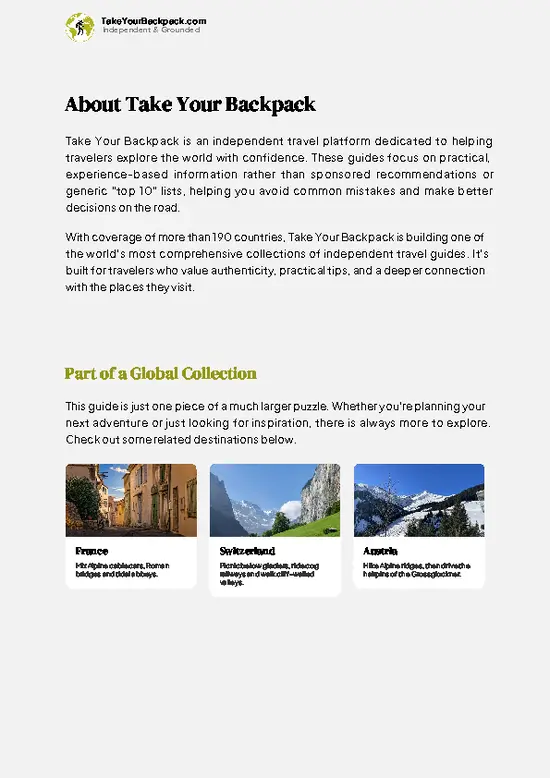
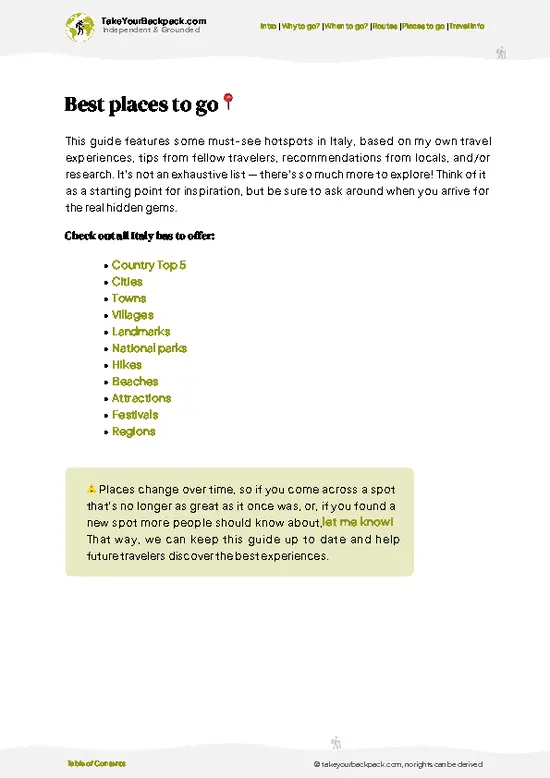
example page 0 from our offline Travel Guide for Italy
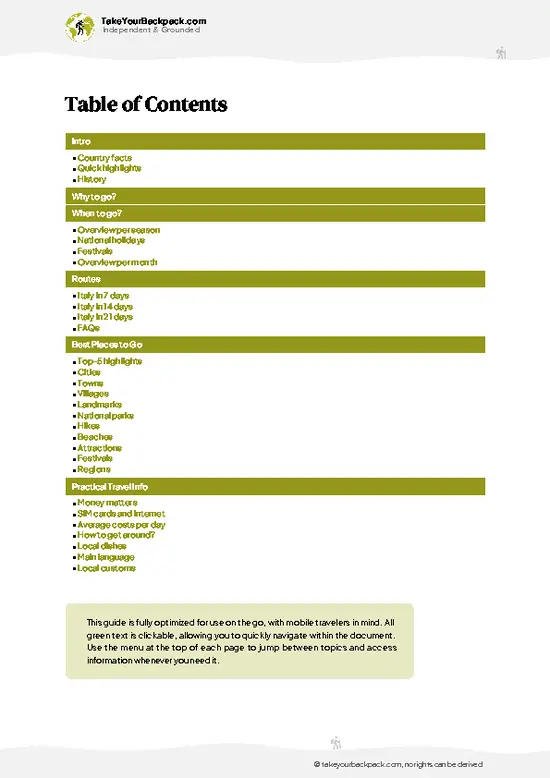
example page 1 from our offline Travel Guide for Italy
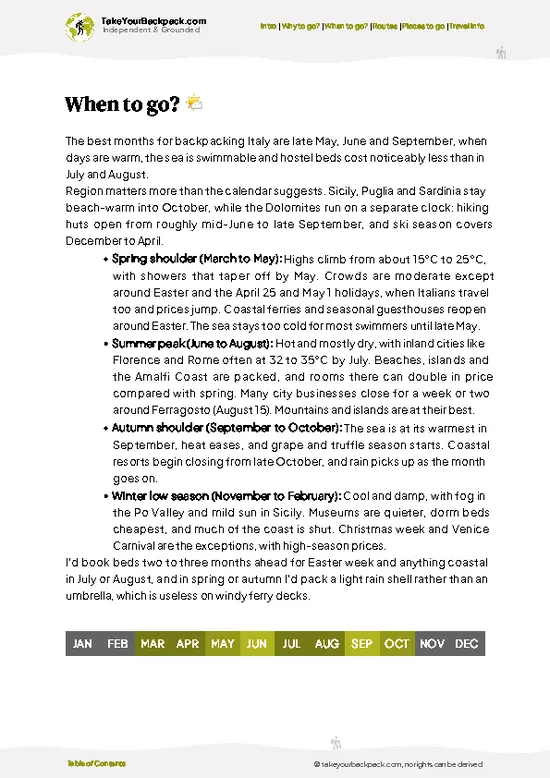
example page 2 from our offline Travel Guide for Italy
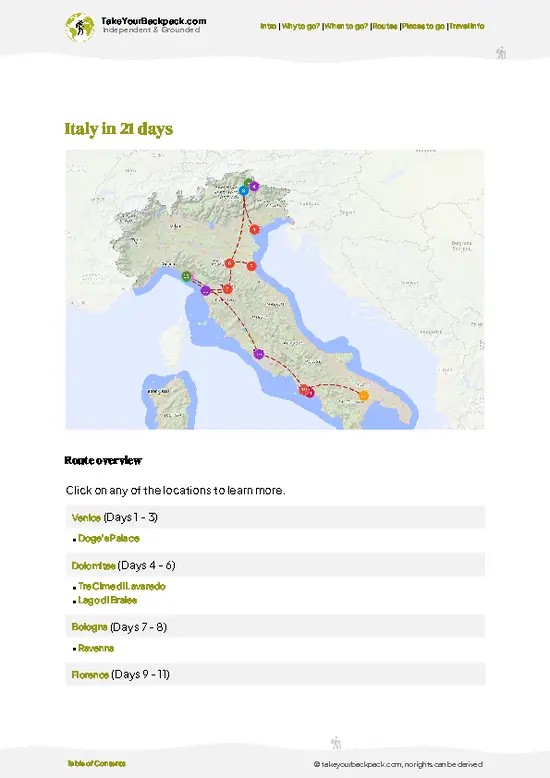
example page 3 from our offline Travel Guide for Italy
example page 4 from our offline Travel Guide for Italy
example page 5 from our offline Travel Guide for Italy
example page 6 from our offline Travel Guide for Italy
example page 7 from our offline Travel Guide for Italy
The digital guide (526 pages) contains:
143 highlights, ranked by travel appeal
Optimized 7, 14 & 21-day travel routes
Cities, national parks, landmarks, beaches
How to get around
Offline-friendly for travel without Wi-Fi
👉 Click to see all 30+ guide features

📅 Plan smarter in minutes, not weeks
Month by month travel advice
Festivals & national holidays
Budget expectations

🗺️ Go to the right places, skip the overrated ones
Honest pros & cons of destinations
Top hikes, parks & viewpoints
Lesser-known places most travelers miss
Clear “worth it vs skip it” guidance

🛏️ Travel smoothly without rookie mistakes
Best areas to stay
Transport systems explained simply
Common scams & safety advice
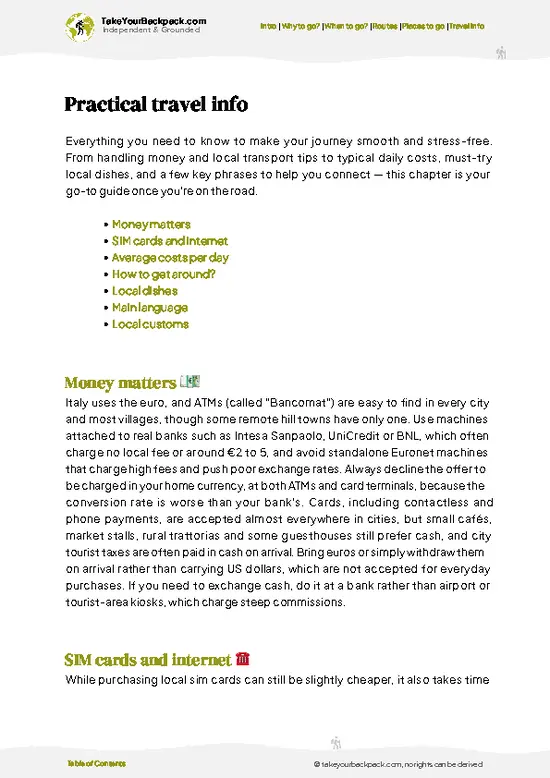
SIM cards, money & practical tips

🌍 Understand the country, not just visit it
Culture & traditions
52 Essential phrases & customs
Festivals worth planning around
Traveler-friendly historical context
Insights that make places more meaningful

📱 Built for real travel conditions
Fully downloadable PDF
Works completely offline
Optimized for phone use
Useful in remote areas & buses
Everything in one place
Save weeks of stressful planning
Get instant access to your full guide. 30‑day money-back guarantee.
+ Add another guide for just €6.50

By proceeding you agree to our terms.
Sent to your inbox immediately after payment • 100% Secure Checkout
Best Backpacking Travel Advisor 2025 tourism awardBest Backpacking
Travel Advisor
2025
What others say about Take Your Backpack Guides:
⭐⭐⭐⭐⭐
Fantastic, amazing amount of information!
⭐⭐⭐⭐⭐
My goodness this is amazing, it's what I've been looking for hats off too you!
⭐⭐⭐⭐⭐
I think this is absolutely BRILLIANT
⭐⭐⭐⭐
Very complete and informative. It's still missing places, but I gotta to commend you
⭐⭐⭐⭐⭐
This is truly amazing, thank you, can't wait to explore it with my kids!
⭐⭐⭐⭐⭐
Awesome resource, thank you!
⭐⭐⭐⭐⭐
This is amazing! Can't wait to explore the ones I haven't seen
⭐⭐⭐⭐
I love this! Well done, great idea.
⭐⭐⭐⭐⭐
Thanks for taking the time to make this gem!
⭐⭐⭐⭐⭐
This might be the best website I've ever seen.
⭐⭐⭐⭐⭐
Congratulations, and thank you so much for your work; it's incredibly valuable.
⭐⭐⭐⭐
In all seriousness I think you did a great job pointing out the important spots
⭐⭐⭐⭐⭐
10/10 very good
⭐⭐⭐⭐⭐
As someone who's only just starting to visit regularly this is awesome, thank you.
⭐⭐⭐⭐
Thank you very much! I'm going to visit my dad, it's going to be very useful!
⭐⭐⭐⭐⭐
This is really cool! We'll be travelling for the first time and this definitely come in handy.
⭐⭐⭐⭐⭐
You are now our minister of culture, congratulations 👨‍💼
⭐⭐⭐⭐⭐
Just wanted to tell you that this is a pearl! Going to follow your recommendations.
⭐⭐⭐⭐⭐
This is so cool. I'll definitely be using the resource for my travels soon.
⭐⭐⭐⭐⭐
This is very impressive! Good work.
⭐⭐⭐⭐⭐
This is an amazing and informative site. Very well done!

🛏️ Where to stay?Top Places to Consider Staying

Yes — hostels and budget guesthouses are widespread across Italy, especially in major cities, tourist towns and near train stations; book ahead for summer and holiday weekends to avoid paying a premium or being stuck with very limited options.
Best concentrations: Rome — Termini (cheapest, top transport links, noisy and can feel seedy at night), Trastevere (atmosphere and nightlife, slightly pricier), Monti (central and quieter); Florence — Santa Maria Novella (near train and sights, busy), Oltrarno (quieter, local vibe); Venice — Cannaregio (more budget options, residential and safer at night), Dorsoduro (student scene and bars); Milan — Central/Brera (good transport, pricier), Navigli (nightlife); … read more 👉
Yes — hostels and budget guesthouses are widespread across Italy, especially in major cities, tourist towns and near train stations; book ahead for summer and holiday weekends to avoid paying a premium or being stuck with very limited options.
Best concentrations: Rome — Termini (cheapest, top transport links, noisy and can feel seedy at night), Trastevere (atmosphere and nightlife, slightly pricier), Monti (central and quieter); Florence — Santa Maria Novella (near train and sights, busy), Oltrarno (quieter, local vibe); Venice — Cannaregio (more budget options, residential and safer at night), Dorsoduro (student scene and bars); Milan — Central/Brera (good transport, pricier), Navigli (nightlife); Bologna — Station/student area (cheap, lively); Naples — Historic Centre (very central, chaotic and noisy).
Trade-offs are clear: station areas save time and cash but add noise and late crowds, central/atmospheric neighborhoods cost more but put you next to highlights, and choosing dorms over private rooms maximizes savings at the expense of privacy and sometimes secure storage.

If you enjoy meeting fellow travelers, consider choosing hostels with high ratings for atmosphere. On the other hand, if you prefer having your own space, a hotel might be a better option.

ItalyMore Places Across Italy

👋 Meet the founderWho’s Behind Take Your Backpack?

Johan, backpacker and founder of TakeYourBackpackHi, I’m Johan (Netherlands 🇳🇱), the creator of TakeYourBackpack. Over the past decade, I’ve backpacked through 80+ countries across six continents, gaining extensive experience with independent travel, long-term trips, and overland routes.

This site is built on a combination of firsthand travel experience and carefully curated insights from other backpackers. Many guides are based on places I’ve personally visited, while others bring together tips, observations, and practical advice shared by trusted travelers I’ve met along the way.

The goal is to provide realistic, experience-driven guidance — not generic itineraries — so you can explore destinations with better context, clearer expectations, and more confidence.

Get full Italy guide •
Instant download • 143 highlights • Full Offline guide