
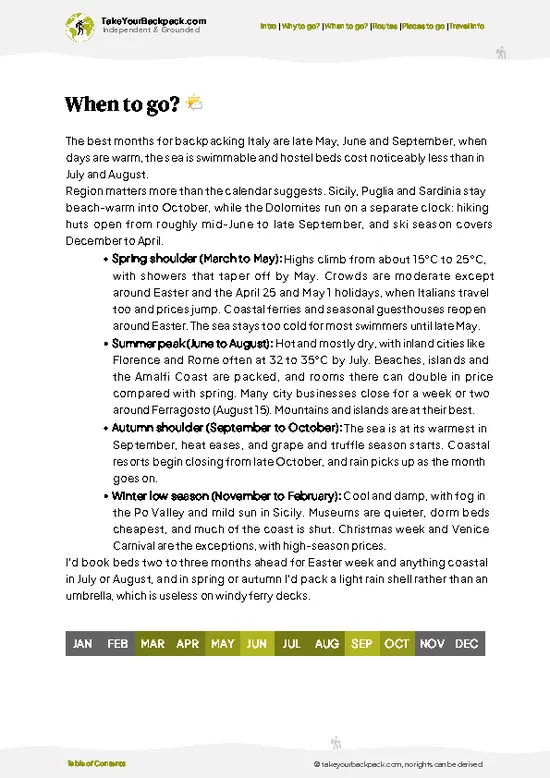
- Pienza (the Renaissance town) — A tiny town that’s basically a live-in architectural treatise: Pope Pius II’s 15th-century redesign gives you wide vistas, Piazza Pio II and the Duomo within a 10-minute stroll. Don’t skip the local pecorino shops and the Belvedere for those rolling-valley shots that actually match the postcards.
- Bagno Vignoni (thermal pool square) — The village’s “piazza” is a steaming thermal basin instead of pavement; it’s unique in Europe and atmospheric at dawn or after sunset. Walk up to Vignoni Alto above the pool for quieter cobbled streets and real village life away from the photographers.
- Abbazia di Sant’Antimo — A Romanesque abbey tucked in a valley, where sometimes monks still chant; the stonework and the silence hit different at golden hour. It’s one of the
- Pienza (the Renaissance town) — A tiny town that’s basically a live-in architectural treatise: Pope Pius II’s 15th-century redesign gives you wide vistas, Piazza Pio II and the Duomo within a 10-minute stroll. Don’t skip the local pecorino shops and the Belvedere for those rolling-valley shots that actually match the postcards.
- Bagno Vignoni (thermal pool square) — The village’s “piazza” is a steaming thermal basin instead of pavement; it’s unique in Europe and atmospheric at dawn or after sunset. Walk up to Vignoni Alto above the pool for quieter cobbled streets and real village life away from the photographers.
- Abbazia di Sant’Antimo — A Romanesque abbey tucked in a valley, where sometimes monks still chant; the stonework and the silence hit different at golden hour. It’s one of the most spiritual, photogenic spots in Val d’Orcia and my personal favorite for long, slow visits and listening to the acoustics.
- Cappella della Madonna di Vitaleta — That small, lonely chapel framed by cypresses is pure Val d’Orcia iconography, but it’s more than a photo op: the surrounding lanes and fields are great to walk at sunrise when the light sculpts the hills. Respect private roads and stay on public viewpoints—classic postcard views without the cliché behavior.
- La Foce estate (hidden gem) — A somewhat secluded villa and formal garden with sweeping terraces and a famous cypress-lined drive; the family’s wartime archives add human history, and the viewpoint over the valley is quietly spectacular. It’s less crowded than the big towns and feels like a private stage set of Tuscany.
- Bagni San Filippo — Fosso Bianco (hidden gem) — Raw, smoky thermal streams that have deposited white travertine terraces and little warm pools you can sit in free of ticket booths. It’s rugged and a little gritty — exactly why locals love it — so bring towels and expect natural, basic facilities.
- Campiglia d’Orcia (hidden gem) — A tiny hilltop village that tourists often zip past; narrow lanes, a medieval keep and panoramic drops make it perfect for a slow coffee stop and wandering with zero lines. Great for seeing daily Tuscan village life and grabbing homemade pastries from a local bar.
- Montalcino and the Fortezza — The hilltown famous for Brunello di Montalcino and its fortress with insane views over the Val d’Orcia. Wine tastings here are different — many producers are tiny and terroir-driven — and the fortress is the practical place to drink in the panorama before the tasting room.
- Montepulciano — town and underground cantine — Renaissance streets, Piazza Grande and a maze of cellars dug into the tuff where Vino Nobile ages in oak. Go cellar-hopping for low-key tastings in atmospheric caves; it’s cultural history and winemaking literally under your feet.
- Rocca di Radicofani — A dramatic fortress perched on a basalt spur that dominates the southern Val d’Orcia; climb up for sweeping, almost lunar views of the valley and the chance to watch storms roll in from miles away. It’s a medieval stronghold with panoramic payoff — excellent for sunset or storm-chasing photos.
Spotted a mistake or missing something? Contact us.

Full Day Tour to Val d'Orcia and Gladiator's Fields with Wines

Small-Group Montepulciano and Pienza Day Trip from Siena

Siena, Cortona, Montepulciano & Val D'Orcia – Minivan Tour, Max 8

Brunello Wine Tour and Val D'Orcia Landscape

Brunello and Nobile, Wine Lover Tour Montalcino and Montepulciano

Siena: Val d’Orcia Wine Tour with Lunch & Brunello

VIP Brunello Montalcino, Montepulciano & Val d'Orcia with Lunch

Val d’Orcia Wine Tour with Lunch & Brunello from Florence

Tuscan Hills Tour: Val d’Orcia with 2 Wine and Cheese Tastings


 Best Backpacking

 Hi, I’m Johan (Netherlands 🇳🇱), the creator of TakeYourBackpack. Over the past 3 decades, I’ve backpacked through 90+ countries across six continents, gaining extensive experience with independent travel, long-term trips, and overland routes.