×

Italy🇮🇹 | best regionsWhere to Find the 6 Best regions in Italy

Italy is a mosaic of regions, each with its own climate, landscapes, and cultural character. Understanding these regions is crucial for any backpacker or independent traveler. From the sun-soaked coasts of Sicily to the rolling hills of Tuscany, each area offers distinct experiences that can shape your journey.

The climate varies significantly; northern regions like Lombardy can be chilly and foggy, while southern areas bask in warmth. This affects not just what you pack, but also when to visit.

Choosing the right region impacts your budget and safety. Some areas are more touristy, driving up prices, while others offer authentic experiences at a fraction of the cost. The ease of travel also varies; regions like Veneto are well-connected, making it simpler to explore. Ultimately, your choice of region defines the vibe and depth of your cultural immersion in Italy.

By Johan Kruseman 🇳🇱 | Updated September 5, 2026
Explore the best cities in Italy

Why go?Why These region Stand Out

Italy’s regions are a masterclass in climatic diversity and cultural character, setting them apart from other countries. From the snow-capped Alps in the north to the sun-drenched coasts of Sicily, each area boasts its own unique climate, influencing everything from cuisine to local traditions. This variety allows travelers to experience a spectrum of landscapes, from rolling hills and vineyards to rugged coastlines and ancient ruins.

The cultural richness of Italy is unparalleled. Each region has its own dialects, festivals, and culinary specialties, reflecting centuries of history and local influences. This depth of culture invites travelers to engage more meaningfully, but it also requires time and effort. The trade-off here is significant: while Italy offers a wealth of experiences, the … read more 👉
Italy’s regions are a masterclass in climatic diversity and cultural character, setting them apart from other countries. From the snow-capped Alps in the north to the sun-drenched coasts of Sicily, each area boasts its own unique climate, influencing everything from cuisine to local traditions. This variety allows travelers to experience a spectrum of landscapes, from rolling hills and vineyards to rugged coastlines and ancient ruins.

The cultural richness of Italy is unparalleled. Each region has its own dialects, festivals, and culinary specialties, reflecting centuries of history and local influences. This depth of culture invites travelers to engage more meaningfully, but it also requires time and effort. The trade-off here is significant: while Italy offers a wealth of experiences, the distances between regions can be considerable. A journey from the north to the south can take hours, which may deter those seeking a quick trip. However, those willing to invest the time will find that the rewards—immersive experiences and authentic interactions—are well worth it.

Infrastructure in Italy is generally robust, with extensive train networks connecting major cities and regions. However, rural areas may present challenges, requiring careful planning. Travelers should consider whether they prefer the convenience of urban exploration or the immersive experience of the countryside. Each choice comes with its own set of constraints, from accessibility to the depth of exploration.

Ultimately, Italy’s regions are not just destinations; they are living tapestries of history, culture, and natural beauty. Understanding these nuances is crucial for making informed travel decisions that align with personal interests and time constraints.
How the List Was Created
The list of best regions in Italy is created based on landscapes, local culture, attractions, vibes, and overall appeal. If you feel a region is missing in this list, please let us know.

When to go?Best Time to Visit Italy for regions

Climate Variation
Italy’s climate varies significantly from north to south, influencing the best times to visit. The northern regions experience cold winters and mild summers, while the south enjoys a Mediterranean climate with hot summers and mild winters. This variation means that travelers should consider the regional climate when planning their trips.

Optimal Months
Spring (April to June) and fall (September to October) are generally the best times to visit. During these months, the weather is pleasant, and the crowds are manageable. Spring brings blooming landscapes, while fall offers harvest festivals and stunning autumn colors. Summer can be sweltering, especially in the south, making outdoor activities less enjoyable.

Shoulder Seasons
Shoulder seasons are a sweet spot for many … read more 👉
Climate Variation
Italy’s climate varies significantly from north to south, influencing the best times to visit. The northern regions experience cold winters and mild summers, while the south enjoys a Mediterranean climate with hot summers and mild winters. This variation means that travelers should consider the regional climate when planning their trips.

Optimal Months
Spring (April to June) and fall (September to October) are generally the best times to visit. During these months, the weather is pleasant, and the crowds are manageable. Spring brings blooming landscapes, while fall offers harvest festivals and stunning autumn colors. Summer can be sweltering, especially in the south, making outdoor activities less enjoyable.

Shoulder Seasons
Shoulder seasons are a sweet spot for many regions. They offer a balance between good weather and fewer tourists. However, travelers should be aware that some attractions may have limited hours or be closed for maintenance during these times. Costs can also vary; while accommodations may be cheaper, some experiences might not be available.

Peak Periods
Summer is peak tourist season, particularly in coastal areas and popular cultural hubs. Expect larger crowds and higher prices. Winter, while less crowded, can limit access to certain attractions, especially in mountainous regions where snow can disrupt travel plans.

Seasonal Constraints
Travelers should consider the trade-offs of timing. Visiting during peak season means vibrant local festivals and events but also crowded spaces and inflated prices. Off-peak travel can offer a more intimate experience but may lack some of the lively atmosphere that characterizes Italy’s famous events. Balancing comfort, experience, and timing is crucial for a fulfilling journey.

region hoppingPlanning Your Route Efficiently

Italy’s regions are like chapters in a captivating novel. To truly appreciate the story, a strategic approach is essential. Start by clustering regions based on geography and culture. For instance, combine the northern lakes with the Dolomites, then head south to Tuscany and finish in the vibrant cities of the south like Naples or Palermo. This flow not only minimizes travel time but also allows for a richer understanding of Italy’s diverse landscapes and traditions.

Travel infrastructure is generally robust. High-speed trains connect major cities, making it easy to hop from Milan to Florence in under two hours. However, don’t underestimate the charm of regional trains; they often lead to lesser-known towns that offer authentic experiences. Allocate at least two to three days in each major … read more 👉
Italy’s regions are like chapters in a captivating novel. To truly appreciate the story, a strategic approach is essential. Start by clustering regions based on geography and culture. For instance, combine the northern lakes with the Dolomites, then head south to Tuscany and finish in the vibrant cities of the south like Naples or Palermo. This flow not only minimizes travel time but also allows for a richer understanding of Italy’s diverse landscapes and traditions.

Travel infrastructure is generally robust. High-speed trains connect major cities, making it easy to hop from Milan to Florence in under two hours. However, don’t underestimate the charm of regional trains; they often lead to lesser-known towns that offer authentic experiences. Allocate at least two to three days in each major stop. This pacing allows for exploration without feeling rushed.

Common mistakes include trying to cram too much into a short time frame. Italy rewards those who linger. Rushing through regions can lead to missed opportunities, like savoring a local meal or wandering through a quaint village.

Consider trade-offs carefully. Speed may get you to more places, but depth of experience often comes from slowing down. Budget travelers might opt for hostels or local eateries, while those seeking comfort may prefer boutique hotels and fine dining.

Flexibility is key. Weather can change plans, especially in coastal areas. Always have a backup plan for rainy days. Prioritize what truly matters to you—be it art, food, or history—and let that guide your journey. Balancing effort and reward will lead to a trip that resonates long after the last gelato is consumed.

The ListMust-Visit regions in Italy

1 Costiera Amalfitana

terraced cliffs, lemon groves, coastal villages

Follow winding roads above the Tyrrhenian Sea, where pastel villages, steep agriculture, and local ferries shape daily travel along the coast.

italy-region-costiera-amalfitana
© Google | Massimo Canciani

2 Dolomites

jagged peaks, alpine meadows, mountain refuges

Hike through dramatic limestone formations and high-altitude valleys, encountering distinct Ladin culture and a network of well-marked trails.

italy-region-dolomites
© Google | Yan Helena

3 Sicily

volcanic landscapes, Greek temples, street markets

Experience a crossroads of civilizations, where active volcanoes, layered history, and diverse regional food traditions define every journey.

4 Lake Como

deep lake, neoclassical villas, forested slopes

Travel between lakeside towns by ferry, discovering ornate gardens, hillside hamlets, and a landscape shaped by both water and mountains.

italy-region-lake-como
© Google | Aakash

5 Sardinia

granite coastlines, Bronze Age ruins, wild interior

Venture beyond beaches to find ancient stone towers, rugged hiking routes, and a fiercely independent island culture distinct from mainland Italy.

italy-region-sardinia
© Google | Magda Sosinska

6 Val d’Orcia

rolling hills, cypress-lined roads, medieval hamlets

Drive or cycle through a UNESCO-listed landscape, passing wheat fields, hilltop towns, and thermal springs that invite slow exploration.

italy-region-val-dorcia
© Google | Paul Rudman
Loading the map 🌍

Expert viewTips and Advice from Travelers

Essential Regions
Italy is a patchwork of regions, each with its own flavor. To truly appreciate the country, aim for at least four to six regions. This allows you to experience the rich tapestry of culture, cuisine, and landscapes. The north offers the Alps and lakes, while the south boasts sun-soaked coasts and ancient ruins. Each region has its own identity, shaped by history, geography, and local customs.

Traveling between regions is generally straightforward, thanks to Italy’s robust train system. High-speed trains can whisk you from one end to the other in a matter of hours. However, don’t underestimate the time it takes to truly soak in each area. You might think you can zip through regions, but the reality is that each one deserves a few days to really get a feel for its unique … read more 👉
Essential Regions
Italy is a patchwork of regions, each with its own flavor. To truly appreciate the country, aim for at least four to six regions. This allows you to experience the rich tapestry of culture, cuisine, and landscapes. The north offers the Alps and lakes, while the south boasts sun-soaked coasts and ancient ruins. Each region has its own identity, shaped by history, geography, and local customs.

Traveling between regions is generally straightforward, thanks to Italy’s robust train system. High-speed trains can whisk you from one end to the other in a matter of hours. However, don’t underestimate the time it takes to truly soak in each area. You might think you can zip through regions, but the reality is that each one deserves a few days to really get a feel for its unique vibe.

Budget-wise, be prepared for a range. Northern regions can be pricier, especially around tourist hotspots, while southern areas often offer better value. Factor in accommodation, food, and transport. A week in the north might stretch your wallet more than a week in the south, but the experiences are worth the investment.

Overrated Regions
Some areas are touted as must-sees but often fall short of the hype. While they may be beautiful, they can feel like tourist traps. For instance, certain coastal spots are packed with visitors, making it hard to enjoy the scenery. You’ll find inflated prices and crowded streets that detract from the experience.

Consider the trade-off: do you want to be part of the crowd, or do you want to explore less-traveled paths that offer a more authentic experience? The latter often leads to discovering local gems—family-run trattorias, quiet beaches, and genuine interactions with locals.

Cultural Variation
Italy’s regions are like different countries in one. The north is influenced by its proximity to the Alps and has a more reserved culture, while the south is warm and welcoming, with a slower pace of life. This cultural variation is crucial when planning your trip.

In the north, expect a focus on hearty, rich dishes, while the south leans toward lighter, Mediterranean flavors. Each region has its own dialect, traditions, and festivals. Engaging with locals can enhance your experience, but be mindful of cultural nuances. For example, in the south, a casual greeting might be met with warmth, while in the north, a more formal approach is appreciated.

Transport Considerations
While trains are efficient, they can also be crowded, especially during peak tourist seasons. If you’re venturing into more remote areas, consider renting a car. This gives you the freedom to explore at your own pace but comes with its own set of challenges—narrow roads, parking issues, and navigating local traffic laws.

Public transport is generally reliable, but delays can happen. Always build in some buffer time when planning your itinerary. If you’re hopping between regions, aim for a mix of train travel and local transport to get a feel for the landscape.

Pacing Trade-Offs
Pacing is everything in Italy. You might be tempted to cram in as much as possible, but that often leads to burnout. Instead, focus on quality over quantity. Spend a few days in each region, allowing yourself time to wander, eat, and soak in the atmosphere.

If you’re short on time, prioritize regions that are geographically close to each other. This minimizes travel time and maximizes your experience. For example, if you’re in the north, consider exploring the lakes and nearby cities rather than trying to fit in the entire region.

Safety & Cultural Considerations
Italy is generally safe, but like any popular destination, it has its share of petty crime. Keep an eye on your belongings, especially in crowded areas. Be respectful of local customs; for instance, dress modestly when visiting churches and be mindful of dining etiquette.

Engaging with locals can enrich your experience, but be aware of cultural differences. Italians value family and tradition, so showing interest in their customs can lead to meaningful interactions.

In summary, Italy is a land of diversity, and the regions you choose to explore will shape your experience. Aim for a mix of regions, be mindful of pacing, and embrace the cultural nuances. The journey is as rewarding as the destination, so take the time to savor every moment.

✈️ The backpacker research shortcutItaly Travel Guide

An offline-friendly backpacking guide with optimized travel routes, ranked highlights, transport advice, and the best areas to stay.
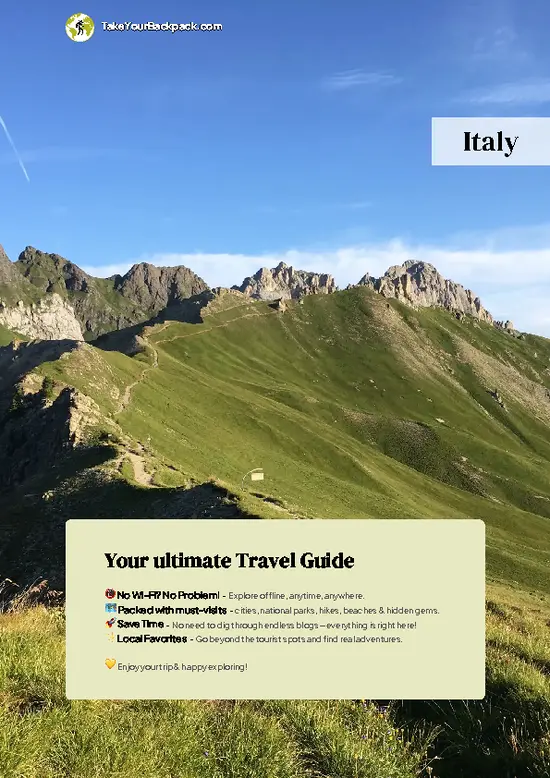
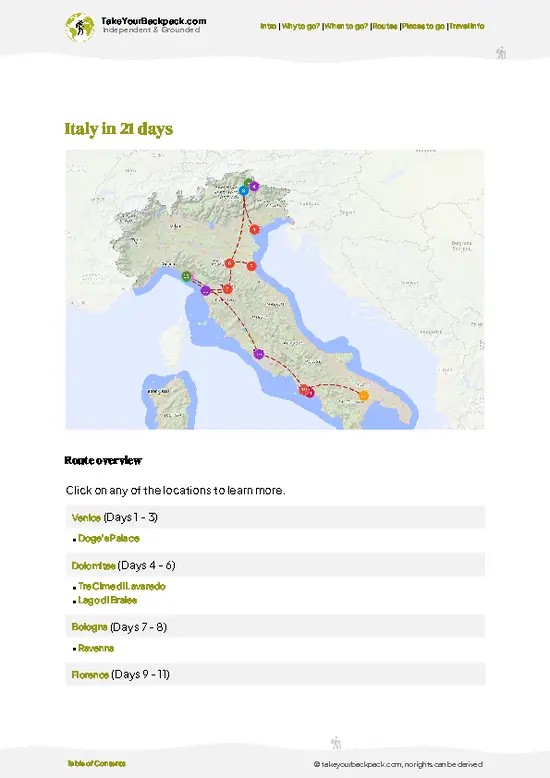
example page 0 from our offline Travel Guide for Italy
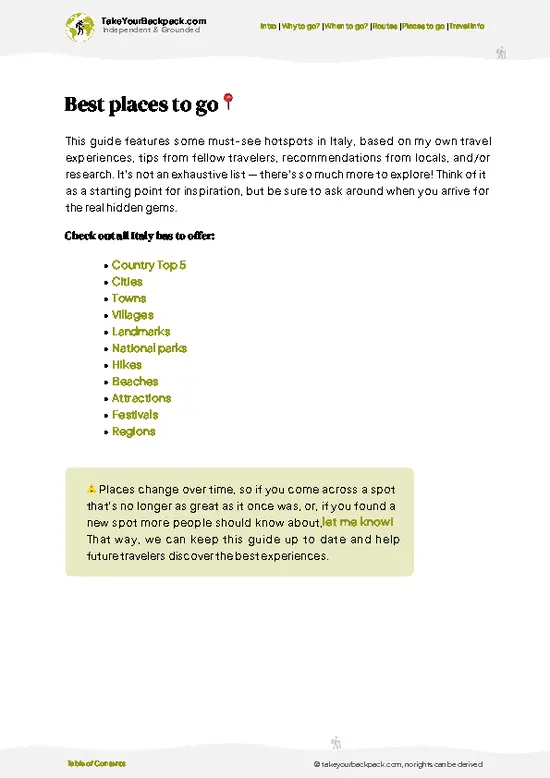
example page 1 from our offline Travel Guide for Italy
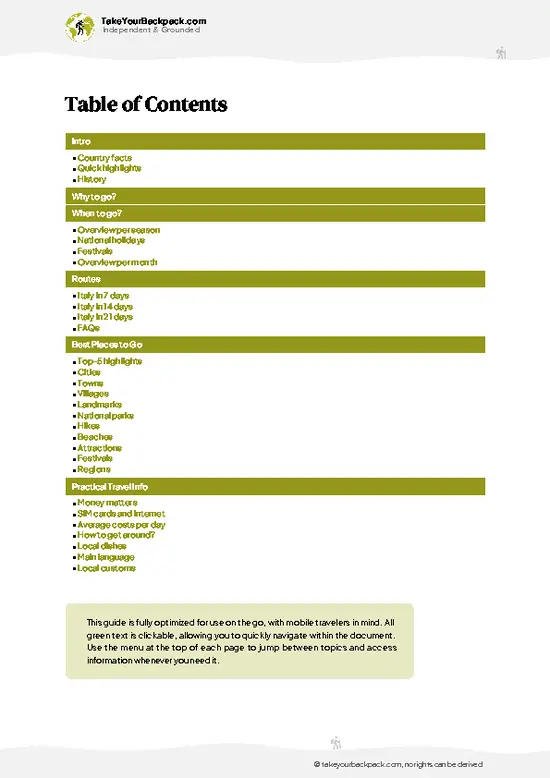
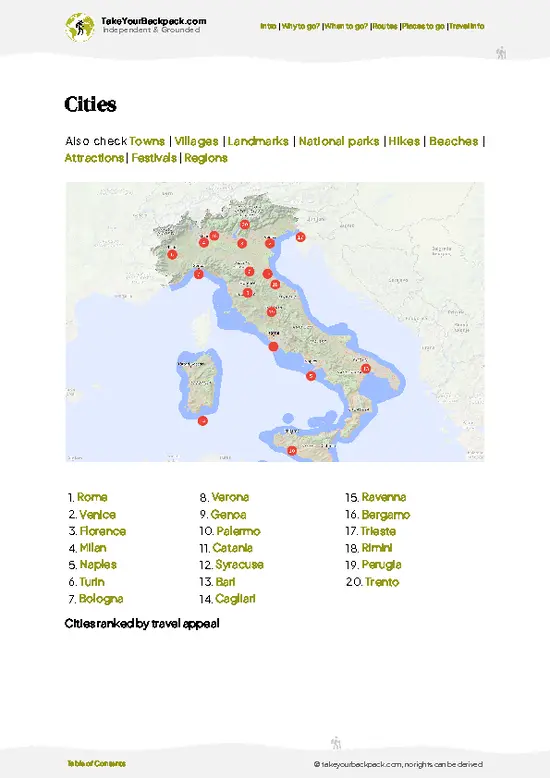
example page 2 from our offline Travel Guide for Italy
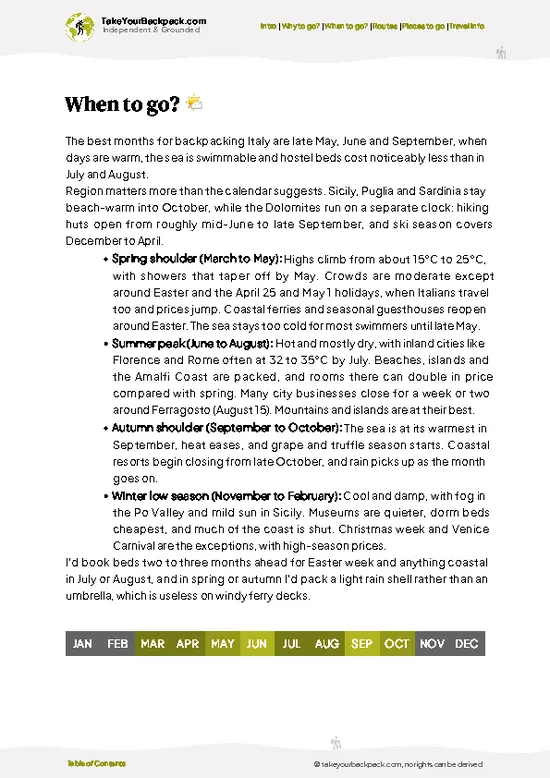
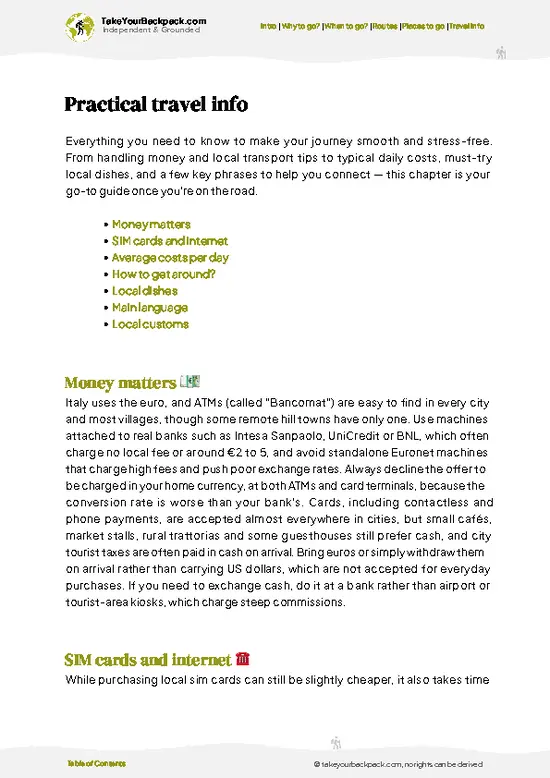
example page 3 from our offline Travel Guide for Italy
example page 4 from our offline Travel Guide for Italy
example page 5 from our offline Travel Guide for Italy
example page 6 from our offline Travel Guide for Italy
example page 7 from our offline Travel Guide for Italy
The digital guide (526 pages) contains:
143 highlights, ranked by travel appeal
Optimized 7, 14 & 21-day travel routes
Cities, national parks, landmarks, beaches
How to get around
Offline-friendly for travel without Wi-Fi
👉 Click to see all 30+ guide features

📅 Plan smarter in minutes, not weeks
Month by month travel advice
Festivals & national holidays
Budget expectations

🗺️ Go to the right places, skip the overrated ones
Honest pros & cons of destinations
Top hikes, parks & viewpoints
Lesser-known places most travelers miss
Clear “worth it vs skip it” guidance

🛏️ Travel smoothly without rookie mistakes
Best areas to stay
Transport systems explained simply
Common scams & safety advice
SIM cards, money & practical tips

🌍 Understand the country, not just visit it
Culture & traditions
52 Essential phrases & customs
Festivals worth planning around
Traveler-friendly historical context
Insights that make places more meaningful

📱 Built for real travel conditions
Fully downloadable PDF
Works completely offline
Optimized for phone use
Useful in remote areas & buses
Everything in one place
Save weeks of stressful planning
Get instant access to your full guide. 30‑day money-back guarantee.
+ Add another guide for just US$7.80

By proceeding you agree to our terms.
Sent to your inbox immediately after payment • 100% Secure Checkout
Best Backpacking Travel Advisor 2025 tourism awardBest Backpacking
Travel Advisor
2025
What others say about Take Your Backpack Guides:
⭐⭐⭐⭐⭐
Fantastic, amazing amount of information!
⭐⭐⭐⭐⭐
My goodness this is amazing, it's what I've been looking for hats off too you!
⭐⭐⭐⭐⭐
I think this is absolutely BRILLIANT
⭐⭐⭐⭐
Very complete and informative. It's still missing places, but I gotta to commend you
⭐⭐⭐⭐⭐
This is truly amazing, thank you, can't wait to explore it with my kids!
⭐⭐⭐⭐⭐
Awesome resource, thank you!
⭐⭐⭐⭐⭐
This is amazing! Can't wait to explore the ones I haven't seen
⭐⭐⭐⭐
I love this! Well done, great idea.
⭐⭐⭐⭐⭐
Thanks for taking the time to make this gem!
⭐⭐⭐⭐⭐
This might be the best website I've ever seen.
⭐⭐⭐⭐⭐
Congratulations, and thank you so much for your work; it's incredibly valuable.
⭐⭐⭐⭐
In all seriousness I think you did a great job pointing out the important spots
⭐⭐⭐⭐⭐
10/10 very good
⭐⭐⭐⭐⭐
As someone who's only just starting to visit regularly this is awesome, thank you.
⭐⭐⭐⭐
Thank you very much! I'm going to visit my dad, it's going to be very useful!
⭐⭐⭐⭐⭐
This is really cool! We'll be travelling for the first time and this definitely come in handy.
⭐⭐⭐⭐⭐
You are now our minister of culture, congratulations 👨‍💼
⭐⭐⭐⭐⭐
Just wanted to tell you that this is a pearl! Going to follow your recommendations.
⭐⭐⭐⭐⭐
This is so cool. I'll definitely be using the resource for my travels soon.
⭐⭐⭐⭐⭐
This is very impressive! Good work.
⭐⭐⭐⭐⭐
This is an amazing and informative site. Very well done!

🛏️ Where to stay?Top Areas to Stay

Yes — hostels and budget guesthouses are widespread across Italy, especially in major cities, tourist towns and near train stations; book ahead for summer and holiday weekends to avoid paying a premium or being stuck with very limited options.
Best concentrations: Rome — Termini (cheapest, top transport links, noisy and can feel seedy at night), Trastevere (atmosphere and nightlife, slightly pricier), Monti (central and quieter); Florence — Santa Maria Novella (near train and sights, busy), Oltrarno (quieter, local vibe); Venice — Cannaregio (more budget options, residential and safer at night), Dorsoduro (student scene and bars); Milan — Central/Brera (good transport, pricier), Navigli (nightlife); … read more 👉
Yes — hostels and budget guesthouses are widespread across Italy, especially in major cities, tourist towns and near train stations; book ahead for summer and holiday weekends to avoid paying a premium or being stuck with very limited options.
Best concentrations: Rome — Termini (cheapest, top transport links, noisy and can feel seedy at night), Trastevere (atmosphere and nightlife, slightly pricier), Monti (central and quieter); Florence — Santa Maria Novella (near train and sights, busy), Oltrarno (quieter, local vibe); Venice — Cannaregio (more budget options, residential and safer at night), Dorsoduro (student scene and bars); Milan — Central/Brera (good transport, pricier), Navigli (nightlife); Bologna — Station/student area (cheap, lively); Naples — Historic Centre (very central, chaotic and noisy).
Trade-offs are clear: station areas save time and cash but add noise and late crowds, central/atmospheric neighborhoods cost more but put you next to highlights, and choosing dorms over private rooms maximizes savings at the expense of privacy and sometimes secure storage.

If you enjoy meeting fellow travelers, consider choosing hostels with high ratings for atmosphere. On the other hand, if you prefer having your own space, a hotel might be a better option.

ItalyDiscover the Country

👋 Meet the founderWho’s Behind Take Your Backpack?

Johan, backpacker and founder of TakeYourBackpackHi, I’m Johan (Netherlands 🇳🇱), the creator of TakeYourBackpack. Over the past decade, I’ve backpacked through 80+ countries across six continents, gaining extensive experience with independent travel, long-term trips, and overland routes.

This site is built on a combination of firsthand travel experience and carefully curated insights from other backpackers. Many guides are based on places I’ve personally visited, while others bring together tips, observations, and practical advice shared by trusted travelers I’ve met along the way.

The goal is to provide realistic, experience-driven guidance — not generic itineraries — so you can explore destinations with better context, clearer expectations, and more confidence.

Get full Italy guide •
Instant download • 143 highlights • Full Offline guide