


×
Kumano Kodo

Japan🇯🇵 | hikesKumano Kodoancient pilgrimage, mossy stone paths, cedar forests, UNESCO route | things to do and best time to go

Explore Aomori Yasukata MatsuriExplore Mount Fuji

Backpacking in Kumano Kodo
🏆 Top pickhike ranked #2
By Johan Kruseman 🇳🇱 | Updated July 23, 2026

Most people hear “Kumano Kodo” and picture one single, gentle forest stroll; in reality it’s a whole web of pilgrimage routes, and some of them will chew up your legs if you underestimate them. The trails cut across the Kii Peninsula in Wakayama Prefecture, south of Osaka and Kyoto, where mountains drop fast toward the Pacific and villages cling to narrow valleys. You get mossy stone steps, cedar tunnels, hot springs at the end of brutal days, and shrines that feel earned, not visited. It’s gorgeous, but the climbs are relentless, the humidity in summer is punishing, and the stone can turn slick and treacherous in rain. Public transport to trailheads like Takijiri or Kii-Tanabe is decent by Japanese standards but involves a few transfers and some waiting. Compared with Nakasendo or Yoshino, Kumano Kodo feels wilder, steeper, and more spiritual than scenic-postcard tidy.

Discover everything you want to know in the 📖 Japan Travel Guide.
Best time to go: March - June, September - November
Duration: 5 to 10 days
Distance: 170 kilometers
Total ascent: 4,000 meters


Get your Japan guide
140 ranked highlights, routes & tips, works offline (482 pages)
Loading the map 🌍
CLICK TO FILTER
cities
towns
villages
landmarks
national parks
hikes
beaches
attractions
festivals
regions
SHOW COUNTRY’S BESTSHOW ALL

✨ Why go?
Ranked #2 hike in Japan
Why visitors keep coming back

The Kumano Kodo is a magnet for backpackers craving a blend of challenge and reward. This ancient pilgrimage trail winds through Japan’s lush mountains, offering a scenery-to-effort ratio that’s hard to beat. You’ll sweat it out on steep ascents, but the payoff? Jaw-dropping views of verdant valleys and serene shrines that feel like stepping back in time.

Getting there is a breeze. Public transport whisks you to trailheads, making it easy to dive into the adventure without breaking the bank. The low cost of accommodation—think cozy guesthouses and traditional inns—means you can stretch your yen while soaking in the local culture.

What’s more, the flexible distances allow you to tailor your trek. Whether you’re up for a multi-day challenge or a quick day hike, you can mix and match routes … read more 👉
The Kumano Kodo is a magnet for backpackers craving a blend of challenge and reward. This ancient pilgrimage trail winds through Japan’s lush mountains, offering a scenery-to-effort ratio that’s hard to beat. You’ll sweat it out on steep ascents, but the payoff? Jaw-dropping views of verdant valleys and serene shrines that feel like stepping back in time.

Getting there is a breeze. Public transport whisks you to trailheads, making it easy to dive into the adventure without breaking the bank. The low cost of accommodation—think cozy guesthouses and traditional inns—means you can stretch your yen while soaking in the local culture.

What’s more, the flexible distances allow you to tailor your trek. Whether you’re up for a multi-day challenge or a quick day hike, you can mix and match routes to fit your vibe. This trail seamlessly integrates into a longer backpacking route through Japan, making it a perfect pit stop between bustling cities and tranquil countryside.

Each step on the Kumano Kodo is a dance with nature, where the journey itself becomes as exhilarating as the destination.
Want to include Kumano Kodo in your Japan route?
Create a personalized Japan itinerary that includes Kumano Kodo and the places that fit your trip — based on your travel style, budget, and available time. Get your route in seconds.

Generate my trip

💡 HighlightsTop highlights of Kumano Kodo

  1. Nachi Falls and Seiganto-ji Pagoda — A jaw-dropping combo: a 133 m single-drop waterfall framed with a red, three-storied pagoda. The spray, the roar, the mossy rocks and the centuries-old temple all make it feel cinematic and sacred at once (my personal favorite).
  2. Daimonzaka Cedar Slope — A long, stone-paved approach lined with towering cedars. Walking it feels like stepping back into the pilgrimage route of old: filtered light, soft needle-carpet underfoot, and lots of Instagram-able mossy stones — but real, not staged.
  3. Kumano Hongu Taisha and Oyunohara Sandbank — The spiritual heart of the Kumano shrines. You get the huge open sandbank where the original shrine once stood (marked by a giant torii), wooden shrine architecture, and that strong sense of arrival pilgrims have felt for a
read more 👉
  1. Nachi Falls and Seiganto-ji Pagoda — A jaw-dropping combo: a 133 m single-drop waterfall framed with a red, three-storied pagoda. The spray, the roar, the mossy rocks and the centuries-old temple all make it feel cinematic and sacred at once (my personal favorite).
  2. Daimonzaka Cedar Slope — A long, stone-paved approach lined with towering cedars. Walking it feels like stepping back into the pilgrimage route of old: filtered light, soft needle-carpet underfoot, and lots of Instagram-able mossy stones — but real, not staged.
  3. Kumano Hongu Taisha and Oyunohara Sandbank — The spiritual heart of the Kumano shrines. You get the huge open sandbank where the original shrine once stood (marked by a giant torii), wooden shrine architecture, and that strong sense of arrival pilgrims have felt for a thousand years.
  4. Yunomine Onsen and Kawayu River Baths — Tiny, rustic hot-spring village with a UNESCO-listed private bath (Tsuboyu) and the fun, hands-on river baths at Kawayu where you can literally dig your own hot pool in the sand. Best post-hike reward imaginable.
  5. Hosshinmon-oji and the remote cedar forests — A quieter, less-trodden stretch with small oji shrines marking the old pilgrim checkpoints. Expect dense forest, stone markers, occasional ridge views and a real feeling of solitude that sets this trail apart from regular hiking routes.
Spotted a mistake or missing something? Contact us.

Things to do near Kumano Kodo

Ratings based on Tripadvisor reviews. When you book through this link, you support our work at no extra cost to you.

🌤️ When to go?Weather, crowds, and seasonal trade-offs


  • Topic: Weather – Spring (March to May) and autumn (September to November) bring the best weather. Expect mild temperatures around 15-22°C (59-72°F) with low humidity. Summer is hot and sticky, often above 30°C (86°F), while winter can drop below freezing, making trails slippery and less accessible.

  • Topic: Temperature – Daytime highs in spring and autumn hover comfortably between 15-22°C (59-72°F), perfect for long hikes without overheating or freezing. Nights can dip to 5-10°C (41-50°F), so pack layers.

  • Topic: Daylight Hours – Spring and autumn offer roughly 10-12 hours of daylight, enough to cover long distances without rushing. Winter days shrink to 9 hours or less, limiting hiking time and increasing risk on tricky trails.

  • Topic: Crowds – Peak seasons in spring (cherry blossoms)
read more 👉

  • Topic: Weather – Spring (March to May) and autumn (September to November) bring the best weather. Expect mild temperatures around 15-22°C (59-72°F) with low humidity. Summer is hot and sticky, often above 30°C (86°F), while winter can drop below freezing, making trails slippery and less accessible.

  • Topic: Temperature – Daytime highs in spring and autumn hover comfortably between 15-22°C (59-72°F), perfect for long hikes without overheating or freezing. Nights can dip to 5-10°C (41-50°F), so pack layers.

  • Topic: Daylight Hours – Spring and autumn offer roughly 10-12 hours of daylight, enough to cover long distances without rushing. Winter days shrink to 9 hours or less, limiting hiking time and increasing risk on tricky trails.

  • Topic: Crowds – Peak seasons in spring (cherry blossoms) and autumn (fall foliage) attract crowds, especially on weekends. Weekdays offer a quieter experience but expect some company on popular sections.

  • Topic: Seasonal Activities – Spring’s cherry blossoms and autumn’s fiery leaves transform the trail into a living postcard. Winter offers solitude but fewer cultural events, while summer’s festivals can be intense but sweaty.

  • Topic: Price Fluctuations – Accommodation and transport costs spike during peak seasons (spring and autumn). Booking early is essential. Off-peak months like winter and early summer offer better deals but come with weather trade-offs.


Pro-tip: Aim for late April or mid-October weekdays—cool air, vivid colors, manageable crowds, and a trail that feels like it’s yours alone.


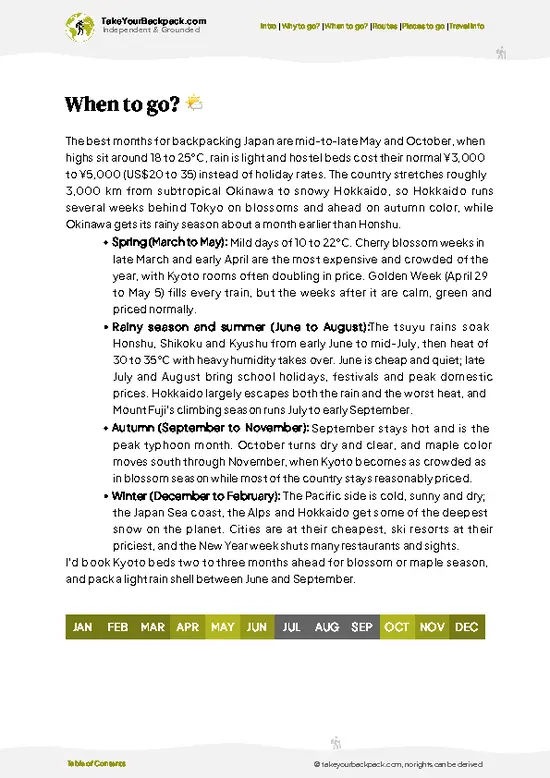
source: climatestotravel.comJANJanuary: fair for travelingFEBFebruary: fair for travelingMARMarch: highly recommended for travelingAPRApril: excellent for travelingMAYMay: highly recommended for travelingJUNJune: good for travelingJULJuly: fair for travelingAUGAugust: fair for travelingSEPSeptember: highly recommended for travelingOCTOctober: excellent for travelingNOVNovember: highly recommended for travelingDECDecember: fair for traveling
Japan - the Kumano Kodo

✈️ The backpacker research shortcutJapan Travel Guide

An offline-friendly backpacking guide with optimized travel routes, ranked highlights, transport advice, and the best areas to stay.
example page 0 from our offline Travel Guide for Japan
example page 1 from our offline Travel Guide for Japan
example page 2 from our offline Travel Guide for Japan
example page 3 from our offline Travel Guide for Japan
example page 4 from our offline Travel Guide for Japan
example page 5 from our offline Travel Guide for Japan
example page 6 from our offline Travel Guide for Japan
example page 7 from our offline Travel Guide for Japan
The digital guide (482 pages) contains:
140 highlights, ranked by travel appeal
Optimized 7, 14 & 21-day travel routes
Cities, national parks, landmarks, beaches
How to get around
Offline-friendly for travel without Wi-Fi
👉 Click to see all 30+ guide features

📅 Plan smarter in minutes, not weeks
Month by month travel advice
Festivals & national holidays
Budget expectations

🗺️ Go to the right places, skip the overrated ones
Honest pros & cons of destinations
Top hikes, parks & viewpoints
Lesser-known places most travelers miss
Clear “worth it vs skip it” guidance

🛏️ Travel smoothly without rookie mistakes
Best areas to stay
Transport systems explained simply
Common scams & safety advice
SIM cards, money & practical tips

🌍 Understand the country, not just visit it
Culture & traditions
52 Essential phrases & customs
Festivals worth planning around
Traveler-friendly historical context
Insights that make places more meaningful

📱 Built for real travel conditions
Fully downloadable PDF
Works completely offline
Optimized for phone use
Useful in remote areas & buses
Everything in one place
Save weeks of stressful planning
Get instant access to your full guide. 30‑day money-back guarantee.


By proceeding you agree to our terms.
Sent to your inbox immediately after payment • 100% Secure Checkout
Best Backpacking Travel Advisor 2025 tourism awardBest Backpacking
Travel Advisor
2025
What others say about Take Your Backpack Guides:
⭐⭐⭐⭐⭐
Fantastic, amazing amount of information!
⭐⭐⭐⭐⭐
My goodness this is amazing, it's what I've been looking for hats off too you!
⭐⭐⭐⭐⭐
I think this is absolutely BRILLIANT
⭐⭐⭐⭐
Very complete and informative. It's still missing places, but I gotta to commend you
⭐⭐⭐⭐⭐
This is truly amazing, thank you, can't wait to explore it with my kids!
⭐⭐⭐⭐⭐
Awesome resource, thank you!
⭐⭐⭐⭐⭐
This is amazing! Can't wait to explore the ones I haven't seen
⭐⭐⭐⭐
I love this! Well done, great idea.
⭐⭐⭐⭐⭐
Thanks for taking the time to make this gem!
⭐⭐⭐⭐⭐
This might be the best website I've ever seen.
⭐⭐⭐⭐⭐
Congratulations, and thank you so much for your work; it's incredibly valuable.
⭐⭐⭐⭐
In all seriousness I think you did a great job pointing out the important spots
⭐⭐⭐⭐⭐
10/10 very good
⭐⭐⭐⭐⭐
As someone who's only just starting to visit regularly this is awesome, thank you.
⭐⭐⭐⭐
Thank you very much! I'm going to visit my dad, it's going to be very useful!
⭐⭐⭐⭐⭐
This is really cool! We'll be travelling for the first time and this definitely come in handy.
⭐⭐⭐⭐⭐
You are now our minister of culture, congratulations 👨‍💼
⭐⭐⭐⭐⭐
Just wanted to tell you that this is a pearl! Going to follow your recommendations.
⭐⭐⭐⭐⭐
This is so cool. I'll definitely be using the resource for my travels soon.
⭐⭐⭐⭐⭐
This is very impressive! Good work.
⭐⭐⭐⭐⭐
This is an amazing and informative site. Very well done!

🛏️ Where to stay?Where staying makes the most sense

If you enjoy meeting fellow travelers, consider choosing hostels with high ratings for atmosphere. On the other hand, if you prefer having your own space, a hotel might be a better option.

🥾 Hike detailsRoute, distance, and difficulty explained

Total Distance: The Kumano Kodo trail spans approximately 75 kilometers (about 46 miles) if you take the Nakahechi route, which is the most popular section.

Estimated Duration: It typically takes around 5 to 7 days to complete, depending on your pace and how much you stop to soak in the scenery or explore the small towns along the way.

Difficulty Level: This trail is generally considered moderate. While there are some steep sections, most of the path is well-marked and manageable for hikers with a reasonable level of fitness.

Starting Point: The trail usually begins in Takijiri-oji, which … read more 👉
Total Distance: The Kumano Kodo trail spans approximately 75 kilometers (about 46 miles) if you take the Nakahechi route, which is the most popular section.

Estimated Duration: It typically takes around 5 to 7 days to complete, depending on your pace and how much you stop to soak in the scenery or explore the small towns along the way.

Difficulty Level: This trail is generally considered moderate. While there are some steep sections, most of the path is well-marked and manageable for hikers with a reasonable level of fitness.

Starting Point: The trail usually begins in Takijiri-oji, which is easily accessible by public transport. You can take a train to Kii-Tanabe Station and then hop on a bus that heads to Takijiri-oji. The bus ride takes about 30 minutes.

Major Landmarks Along the Route:
  • Hongu Taisha: One of the main shrines in the Kumano region, this is a great spot for a rest and some cultural immersion.
  • Nachi Falls: A stunning waterfall that’s worth the detour; it’s one of Japan’s tallest and has a beautiful shrine nearby.
  • Wakayama: A charming town where you can find local food and hot springs to unwind after a long day of hiking.

Type of Terrain and Scenery: The terrain varies from well-maintained paths to rugged trails through dense forests. You’ll encounter rocky sections, ancient stone steps, and some paved roads. The scenery ranges from lush greenery and towering cedar trees to breathtaking mountain views and serene river valleys.

Typical Vegetation and Wildlife: Expect to see a mix of broadleaf and coniferous trees, including Japanese cedars and various ferns. Wildlife includes deer, monkeys, and a variety of birds, so keep your eyes peeled. The area is also home to some unique plant species, making it a treat for nature lovers.

This trail is not just about the hike; it’s a journey through history, spirituality, and nature, making it a memorable experience for any independent traveler.
⚠️ Hiking info can sometimes be outdated or inaccurate. Before you hit the trail, check the latest conditions with locals. If you do spot anything that's off, I'd love to hear from you, so I can update it for fellow travelers.

🛡️ SafetyStaying Safe: What Travelers Should Know

The Kumano Kodo trails are a mix of ancient pathways and modern adventure, inviting you to explore Japan’s spiritual heart. Expect variable weather; rain can roll in unexpectedly, so pack a reliable waterproof jacket. The terrain is mostly manageable, with well-marked paths, but some sections can be steep and rocky. Good footwear is essential—think sturdy hiking boots with solid grip.

Keep an eye out for wildlife, especially in the early morning or late afternoon. Encounters with deer are common, and they’re generally unbothered by humans. If you spot one, enjoy the moment but maintain a respectful distance.

Timing is key; spring and autumn offer the best conditions, with mild temperatures and fewer crowds. Don’t underestimate the power of pacing—take breaks to soak in the surroundings. … read more 👉
The Kumano Kodo trails are a mix of ancient pathways and modern adventure, inviting you to explore Japan’s spiritual heart. Expect variable weather; rain can roll in unexpectedly, so pack a reliable waterproof jacket. The terrain is mostly manageable, with well-marked paths, but some sections can be steep and rocky. Good footwear is essential—think sturdy hiking boots with solid grip.

Keep an eye out for wildlife, especially in the early morning or late afternoon. Encounters with deer are common, and they’re generally unbothered by humans. If you spot one, enjoy the moment but maintain a respectful distance.

Timing is key; spring and autumn offer the best conditions, with mild temperatures and fewer crowds. Don’t underestimate the power of pacing—take breaks to soak in the surroundings. Trail etiquette matters here; be courteous to fellow hikers and keep noise to a minimum. The reward? A serene view from a mountain shrine or the first cold beer in a local village. That’s the real magic of the Kumano Kodo.

Other Japanese hikes near Kumano Kodo

Explore more nearby:

  • Mount Tsurugi—knife-edge ridges, chains and ladders, rugged ascent, deep valleys| 143 km away
  • Shikoku Pilgrimage Trail—temple circuit, rural villages, forested hills, spiritual heritage| 185 km away
  • Nakasendo Trail—post towns, cobbled paths, wooded passes, Edo-era history| 283 km away

💡 Not sure where to go next?
Create a personalized itinerary for Japan including Kumano Kodo and the places that fit your trip.

Generate my itinerary

👉 Discover all hikes

Or checkout all Japan has to offer (think cities, towns, villages, national parks, hikes, beaches, festivals)
Country photo of Japan

We 💚 feedbackFinal thoughts on hiking the Kumano Kodo

The Kumano Kodo is a raw, soul-stirring experience. Picture yourself trudging through ancient forests, the scent of cedar in the air, and the thrill of history echoing in your footsteps. But be ready for the reality check: the trails can be steep and relentless. You’ll earn that view at the top, but it’s not a stroll in the park. Still, the moment you crack open that cold beer at the end? Worth every drop of sweat.

✈️ When did I visit Japan?
As part of my 1.5 year travel around the world trip, I visited Japan in August 2015.

✍️ Help improve this page!
The information on this page is based on my own backpacking experience in Japan, supplemented with up-to-date research and feedback from other travelers. Travel details can change, so if you notice anything outdated or incomplete, feel free to let me know.


🙋‍♂️ Give feedback

👋 Meet the founderWho’s Behind Take Your Backpack?

Johan, backpacker and founder of TakeYourBackpackHi, I’m Johan (Netherlands 🇳🇱), the creator of TakeYourBackpack. Over the past decade, I’ve backpacked through 80+ countries across six continents, gaining extensive experience with independent travel, long-term trips, and overland routes.

This site is built on a combination of firsthand travel experience and carefully curated insights from other backpackers. Many guides are based on places I’ve personally visited, while others bring together tips, observations, and practical advice shared by trusted travelers I’ve met along the way.

The goal is to provide realistic, experience-driven guidance — not generic itineraries — so you can explore destinations with better context, clearer expectations, and more confidence.

Get full Japan guide •
Instant download • 140 highlights • Full Offline guide