
×
Mount Fuji

Japan🇯🇵 | hikesMount Fujiiconic cone, volcanic scree, sunrise ascent, seasonal crowds | things to do and best time to go

Explore Kumano KodoExplore Nakasendo Trail

Backpacking in Mount Fuji
🏆 Top pickhike ranked #1
By Johan Kruseman 🇳🇱 | Updated July 24, 2026

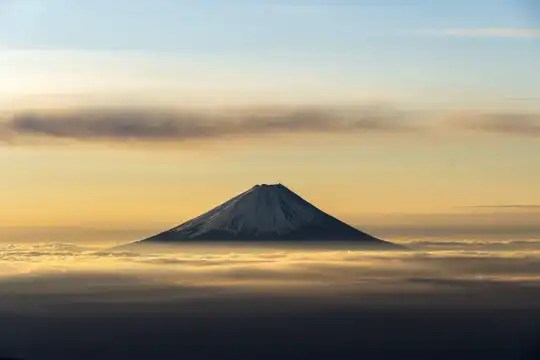
Your headlamp beam catches the white paint of the summit torii just as the wind knifes through your jacket and someone’s gas stove hisses to life beside you. Boots crunch on volcanic gravel, sulfur drifts on the air, and a line of strangers in plastic ponchos goes quiet as the sky over Yamanashi and Shizuoka shifts from black to bruised purple. This is Mount Fuji, Japan’s highest peak, rising just west of Tokyo, and the climb is equal parts pilgrimage and slog. The good: it’s absurdly accessible by buses and trains, the route is clear, the sunrise over the cloud sea is pure adrenaline. The bad: loose scree, altitude headaches, crowds that feel like a queue at an amusement park. Compared to quieter Japanese hikes like the Northern Alps or Kumano Kodo, Fuji is less about wilderness and more about earning that sunrise and the vending-machine coffee at 3,700 meters.

Discover everything you want to know in the 📖 Japan Travel Guide.
Best time to go: June - September
Duration: 5 to 10 hours
Distance: 14 to 20 kilometers
Total ascent: 1,500 meters


Get your Japan guide
140 ranked highlights, routes & tips, works offline (482 pages)
Loading the map 🌍
CLICK TO FILTER
cities
towns
villages
landmarks
national parks
hikes
beaches
attractions
festivals
regions
SHOW COUNTRY’S BESTSHOW ALL

✨ Why go?
Ranked #1 hike in Japan
What makes this hike worth hiking

Mount Fuji is a magnet for backpackers, and it’s easy to see why. The scenery-to-effort ratio is off the charts. You’re not just hiking; you’re scaling Japan’s iconic peak, where every step brings you closer to that breathtaking view from the summit. The public transport access is seamless. Trains and buses whisk you from Tokyo to the trailhead in just a few hours, making it a breeze to fit into your itinerary.

Cost? Minimal. The trail fees are low, and you can camp or find budget lodgings nearby. What’s more, the hike offers flexible distances. Whether you’re a seasoned pro or a casual trekker, you can choose your route and pace. The Yoshida Trail is popular for its well-maintained path and facilities, while the more rugged routes challenge the adventurous spirit.

But it’s not just about … read more 👉
Mount Fuji is a magnet for backpackers, and it’s easy to see why. The scenery-to-effort ratio is off the charts. You’re not just hiking; you’re scaling Japan’s iconic peak, where every step brings you closer to that breathtaking view from the summit. The public transport access is seamless. Trains and buses whisk you from Tokyo to the trailhead in just a few hours, making it a breeze to fit into your itinerary.

Cost? Minimal. The trail fees are low, and you can camp or find budget lodgings nearby. What’s more, the hike offers flexible distances. Whether you’re a seasoned pro or a casual trekker, you can choose your route and pace. The Yoshida Trail is popular for its well-maintained path and facilities, while the more rugged routes challenge the adventurous spirit.

But it’s not just about the climb. The moment you reach the top, the reward is palpable: a panoramic view that stretches for miles, the sunrise painting the sky in hues you didn’t know existed. And after the descent, nothing beats that first cold beer at a local izakaya, celebrating the journey you just conquered.
Want to include Mount Fuji in your Japan route?
Create a personalized Japan itinerary that includes Mount Fuji and the places that fit your trip — based on your travel style, budget, and available time. Get your route in seconds.

Generate my trip

💡 HighlightsTop highlights of Mount Fuji

  1. Sunrise from the summit (Goraiko) — Catching the first light breaking over the cloud sea is the reason most people haul themselves up at 2 a.m. The color shift is dramatic, the chill sharp, and the silence (until everyone starts cheering) makes it feel like an achievement, not just a hike. Personal favorite.
  2. The crater rim and summit panorama — Walking the rim gives you that lunar, other-worldly volcanic feel while also offering 360° views: clear days show lakes, ridgelines and even Tokyo’s skyline far off. The contrast between the jagged crater and long-distance vistas is something most other trails can’t match.
  3. Mt. Fuji’s stations and mountain huts — The trail’s network of numbered stations and tiny huts is part cultural, part logistical: you get simple food, a bunk, and the comradery
read more 👉
  1. Sunrise from the summit (Goraiko) — Catching the first light breaking over the cloud sea is the reason most people haul themselves up at 2 a.m. The color shift is dramatic, the chill sharp, and the silence (until everyone starts cheering) makes it feel like an achievement, not just a hike. Personal favorite.
  2. The crater rim and summit panorama — Walking the rim gives you that lunar, other-worldly volcanic feel while also offering 360° views: clear days show lakes, ridgelines and even Tokyo’s skyline far off. The contrast between the jagged crater and long-distance vistas is something most other trails can’t match.
  3. Mt. Fuji’s stations and mountain huts — The trail’s network of numbered stations and tiny huts is part cultural, part logistical: you get simple food, a bunk, and the comradery of other climbers. Those cramped hut nights, shared headlamp stories and early-morning departures are a big part of the Fuji experience.
  4. Volcanic terrain and the “sand run” descent — The upper slopes are loose volcanic scree and ash, so descending can feel like skiing on dirt — fast and oddly fun if you lean into it. The geology is obvious underfoot: layered lava, pumice and sharp rock that looks like no green-swathed trail back home.
  5. Shrines, stone markers and changing vegetation zones — From torii gates and small summit shrines to the shift from cedar forests to alpine moss and bare rock, the trail blends spiritual history with clear ecological transitions. Those old stone markers remind you this is a sacred pilgrimage route, not just a weekend scramble.
Spotted a mistake or missing something? Contact us.

Things to do around Mount Fuji

Ratings based on Tripadvisor reviews. When you book through this link, you support our work at no extra cost to you.

🌤️ When to go?Choosing the right time of year


  • Topic: Weather – The official climbing season runs from early July to mid-September. Outside this window, snow and ice turn the trails into a treacherous mess. During the season, expect clear skies but sudden rain showers; pack a rain shell.

  • Topic: Temperature – At the summit, temperatures hover around 5°C to 10°C (41°F to 50°F) in summer, dropping near freezing at night. Lower elevations warm up to 20°C (68°F) or more, so layer smartly to handle the climb’s shifting chills.

  • Topic: Daylight Hours – Summer days stretch long, with sunrise around 4:30 AM and sunset near 7 PM. This gives you a solid window to summit and descend safely without rushing in the dark.

  • Topic: Crowds – July and August pack the trails with weekend warriors and international climbers. Weekdays see fewer people,
read more 👉

  • Topic: Weather – The official climbing season runs from early July to mid-September. Outside this window, snow and ice turn the trails into a treacherous mess. During the season, expect clear skies but sudden rain showers; pack a rain shell.

  • Topic: Temperature – At the summit, temperatures hover around 5°C to 10°C (41°F to 50°F) in summer, dropping near freezing at night. Lower elevations warm up to 20°C (68°F) or more, so layer smartly to handle the climb’s shifting chills.

  • Topic: Daylight Hours – Summer days stretch long, with sunrise around 4:30 AM and sunset near 7 PM. This gives you a solid window to summit and descend safely without rushing in the dark.

  • Topic: Crowds – July and August pack the trails with weekend warriors and international climbers. Weekdays see fewer people, but expect lines at mountain huts and the summit during peak season.

  • Topic: Seasonal Activities – The climbing season coincides with the mountain’s official opening ceremonies and festivals, adding cultural flavor but also more foot traffic.

  • Topic: Price Fluctuations – Accommodation and transport costs spike in July and August. Booking early or aiming for early July or late September can save you some yen.


Pro-tip: Start your climb before dawn to dodge the crowds and catch the sunrise from the summit—a moment that makes every blister worth it.


source: climatestotravel.comJANJanuary: below average for travelingFEBFebruary: below average for travelingMARMarch: below average for travelingAPRApril: fair for travelingMAYMay: fair for travelingJUNJune: good for travelingJULJuly: excellent for travelingAUGAugust: excellent for travelingSEPSeptember: highly recommended for travelingOCTOctober: fair for travelingNOVNovember: below average for travelingDECDecember: below average for traveling
Japan - Mount Fuji

✈️ The backpacker research shortcutJapan Travel Guide

An offline-friendly backpacking guide with optimized travel routes, ranked highlights, transport advice, and the best areas to stay.
example page 0 from our offline Travel Guide for Japan
example page 1 from our offline Travel Guide for Japan
example page 2 from our offline Travel Guide for Japan
example page 3 from our offline Travel Guide for Japan
example page 4 from our offline Travel Guide for Japan
example page 5 from our offline Travel Guide for Japan
example page 6 from our offline Travel Guide for Japan
example page 7 from our offline Travel Guide for Japan
The digital guide (482 pages) contains:
140 highlights, ranked by travel appeal
Optimized 7, 14 & 21-day travel routes
Cities, national parks, landmarks, beaches
How to get around
Offline-friendly for travel without Wi-Fi
👉 Click to see all 30+ guide features

📅 Plan smarter in minutes, not weeks
Month by month travel advice
Festivals & national holidays
Budget expectations

🗺️ Go to the right places, skip the overrated ones
Honest pros & cons of destinations
Top hikes, parks & viewpoints
Lesser-known places most travelers miss
Clear “worth it vs skip it” guidance

🛏️ Travel smoothly without rookie mistakes
Best areas to stay
Transport systems explained simply
Common scams & safety advice
SIM cards, money & practical tips

🌍 Understand the country, not just visit it
Culture & traditions
52 Essential phrases & customs
Festivals worth planning around
Traveler-friendly historical context
Insights that make places more meaningful

📱 Built for real travel conditions
Fully downloadable PDF
Works completely offline
Optimized for phone use
Useful in remote areas & buses
Everything in one place
Save weeks of stressful planning
Get instant access to your full guide. 30‑day money-back guarantee.


By proceeding you agree to our terms.
Sent to your inbox immediately after payment • 100% Secure Checkout
Best Backpacking Travel Advisor 2025 tourism awardBest Backpacking
Travel Advisor
2025
What others say about Take Your Backpack Guides:
⭐⭐⭐⭐⭐
Fantastic, amazing amount of information!
⭐⭐⭐⭐⭐
My goodness this is amazing, it's what I've been looking for hats off too you!
⭐⭐⭐⭐⭐
I think this is absolutely BRILLIANT
⭐⭐⭐⭐
Very complete and informative. It's still missing places, but I gotta to commend you
⭐⭐⭐⭐⭐
This is truly amazing, thank you, can't wait to explore it with my kids!
⭐⭐⭐⭐⭐
Awesome resource, thank you!
⭐⭐⭐⭐⭐
This is amazing! Can't wait to explore the ones I haven't seen
⭐⭐⭐⭐
I love this! Well done, great idea.
⭐⭐⭐⭐⭐
Thanks for taking the time to make this gem!
⭐⭐⭐⭐⭐
This might be the best website I've ever seen.
⭐⭐⭐⭐⭐
Congratulations, and thank you so much for your work; it's incredibly valuable.
⭐⭐⭐⭐
In all seriousness I think you did a great job pointing out the important spots
⭐⭐⭐⭐⭐
10/10 very good
⭐⭐⭐⭐⭐
As someone who's only just starting to visit regularly this is awesome, thank you.
⭐⭐⭐⭐
Thank you very much! I'm going to visit my dad, it's going to be very useful!
⭐⭐⭐⭐⭐
This is really cool! We'll be travelling for the first time and this definitely come in handy.
⭐⭐⭐⭐⭐
You are now our minister of culture, congratulations 👨‍💼
⭐⭐⭐⭐⭐
Just wanted to tell you that this is a pearl! Going to follow your recommendations.
⭐⭐⭐⭐⭐
This is so cool. I'll definitely be using the resource for my travels soon.
⭐⭐⭐⭐⭐
This is very impressive! Good work.
⭐⭐⭐⭐⭐
This is an amazing and informative site. Very well done!

🛏️ Where to stay?Best areas to stay in Japan

If you enjoy meeting fellow travelers, consider choosing hostels with high ratings for atmosphere. On the other hand, if you prefer having your own space, a hotel might be a better option.

🥾 Hike detailsRoute, distance, and difficulty explained

Total Distance: The trail up Mount Fuji is approximately 22 kilometers (about 14 miles) round trip, depending on the route you choose. The most popular route is the Yoshida Trail, which is well-marked and easy to follow.

Estimated Duration: Most hikers take about 5 to 7 hours to ascend and around 3 to 5 hours to descend. Keep in mind that this can vary based on your fitness level and the number of breaks you take.

Difficulty Level: The hike is considered moderate to challenging. While the trails are well-maintained, the altitude and steep sections can be tough, especially for those not acclimated … read more 👉
Total Distance: The trail up Mount Fuji is approximately 22 kilometers (about 14 miles) round trip, depending on the route you choose. The most popular route is the Yoshida Trail, which is well-marked and easy to follow.

Estimated Duration: Most hikers take about 5 to 7 hours to ascend and around 3 to 5 hours to descend. Keep in mind that this can vary based on your fitness level and the number of breaks you take.

Difficulty Level: The hike is considered moderate to challenging. While the trails are well-maintained, the altitude and steep sections can be tough, especially for those not acclimated to higher elevations.

Starting Point: The Yoshida Trail starts at the 5th Station, which you can reach easily by public transport.
  • From Tokyo: Take the JR Chuo Line to Otsuki Station, then transfer to the Fujikyu Railway and ride to Fujisan Station. From there, catch a bus to the 5th Station.
  • From Kawaguchiko: Buses run directly to the 5th Station, making it a convenient option if you’re staying in the area.

Major Landmarks Along the Route:
  • 5th Station: The starting point with facilities like restrooms, shops, and food stalls.
  • 6th Station: A rest stop with some stunning views, a great place to take a breather.
  • 8th Station: Close to the summit, this area has huts where you can rest and grab a snack.
  • Summit (Fujisan): The peak offers breathtaking views and a shrine, a perfect spot for a photo op.

Type of Terrain and Scenery: The terrain varies significantly as you ascend.
  • Lower Sections: Expect rocky paths and some forested areas, with a mix of dirt and gravel trails.
  • Mid-Sections: You’ll encounter more volcanic rock, with a steeper incline and less vegetation.
  • Summit Area: The final stretch is a rocky scramble, but the panoramic views are worth it.

Typical Vegetation and Wildlife:
  • Vegetation: Lower elevations are lush with trees and shrubs, while higher up, you’ll mostly see hardy alpine plants.
  • Wildlife: Keep an eye out for mountain birds and small mammals, though they can be elusive at higher altitudes.

This hike is a unique experience, so make sure you’re well-prepared, stay hydrated, and enjoy the stunning views!
⚠️ Hiking info can sometimes be outdated or inaccurate. Before you hit the trail, check the latest conditions with locals. If you do spot anything that's off, I'd love to hear from you, so I can update it for fellow travelers.

🛡️ SafetySafety Tips and Common Scams in Mount Fuji

Mount Fuji is a well-trodden path, but don’t let that fool you into thinking it’s a walk in the park. Weather can shift on a dime; sunny mornings can morph into chilly, fog-laden afternoons. Dress in layers and keep an eye on the forecast.

The trails are steep, especially as you near the summit. Good footing is essential, so sturdy hiking boots are a must. Navigation is straightforward, but don’t underestimate the altitude. Take your time, pace yourself, and hydrate—your lungs will thank you.

Wildlife encounters are rare, but you might spot a curious monkey or two. Keep your distance; they’re not shy, but they’re also not pets.

First-timers often underestimate the trail’s demands. Start early to avoid crowds and give yourself ample time to enjoy the views. Embrace the challenge; the reward … read more 👉
Mount Fuji is a well-trodden path, but don’t let that fool you into thinking it’s a walk in the park. Weather can shift on a dime; sunny mornings can morph into chilly, fog-laden afternoons. Dress in layers and keep an eye on the forecast.

The trails are steep, especially as you near the summit. Good footing is essential, so sturdy hiking boots are a must. Navigation is straightforward, but don’t underestimate the altitude. Take your time, pace yourself, and hydrate—your lungs will thank you.

Wildlife encounters are rare, but you might spot a curious monkey or two. Keep your distance; they’re not shy, but they’re also not pets.

First-timers often underestimate the trail’s demands. Start early to avoid crowds and give yourself ample time to enjoy the views. Embrace the challenge; the reward of standing atop Japan’s iconic peak is worth every step.

Other Japanese hikes near Mount Fuji

Explore more nearby:

  • Yatsugatake Mountains—jagged peaks, forest trails, mountain huts, varied terrain| 75 km away
  • Nakasendo Trail—post towns, cobbled paths, wooded passes, Edo-era history| 100 km away
  • Mount Norikura—gentle summit, crater lakes, subalpine plateau, easy access| 136 km away

💡 Not sure where to go next?
Create a personalized itinerary for Japan including Mount Fuji and the places that fit your trip.

Generate my itinerary

👉 Discover all hikes

Or checkout all Japan has to offer (think cities, towns, villages, national parks, hikes, beaches, festivals)
Country photo of Japan

We 💚 feedbackWhat to keep in mind

Climbing Mount Fuji is like stepping into a living postcard. The sunrise from the summit? Pure magic. You’ll feel the burn in your legs, but that view is worth every step. Just know that the trails can get crowded, especially in peak season. If you crave solitude, aim for the off-peak hours. Embrace the challenge, soak in the beauty, and let the experience reshape your perspective. You won’t regret it.

✈️ When did I visit Japan?
As part of my 1.5 year travel around the world trip, I visited Japan in August 2015.

✍️ Help improve this page!
The information on this page is based on my own backpacking experience in Japan, supplemented with up-to-date research and feedback from other travelers. Travel details can change, so if you notice anything outdated or incomplete, feel free to let me know.


🙋‍♂️ Give feedback

👋 Meet the founderWho’s Behind Take Your Backpack?

Johan, backpacker and founder of TakeYourBackpackHi, I’m Johan (Netherlands 🇳🇱), the creator of TakeYourBackpack. Over the past decade, I’ve backpacked through 80+ countries across six continents, gaining extensive experience with independent travel, long-term trips, and overland routes.

This site is built on a combination of firsthand travel experience and carefully curated insights from other backpackers. Many guides are based on places I’ve personally visited, while others bring together tips, observations, and practical advice shared by trusted travelers I’ve met along the way.

The goal is to provide realistic, experience-driven guidance — not generic itineraries — so you can explore destinations with better context, clearer expectations, and more confidence.

Get full Japan guide •
Instant download • 140 highlights • Full Offline guide