



×

Japan🇯🇵 | hikesNakasendo Trailpost towns, cobbled paths, wooded passes, Edo-era history | things to do and best time to go

Explore Mount FujiExplore Shirakami Sanchi

Backpacking in Nakasendo Trail
🏆 Top pickhike ranked #3
By Johan Kruseman 🇳🇱 | Updated September 4, 2026

Your boots thud on old stone, slick from last night’s rain, while a bell on a passing grandma’s bicycle chimes behind you and the smell of woodsmoke and miso drifts out of a dark little doorway. A crow shouts from a cedar, then it’s just your breathing and the creak of your pack as the path tilts uphill again. This is the Nakasendo Trail, the old highway running through the mountains between Kyoto and Tokyo, threading right through central Japan’s Kiso Valley. It’s not a brutal hike—more a rolling, on-and-off trail between post towns like Magome and Tsumago—so most reasonably fit hikers can handle a day section, and trains plus local buses make the starts almost embarrassingly easy to reach. The payoff is big: mossy cobbles, cypress forests, tiled roofs and tea houses, but also crowds and asphalt stretches that feel tame compared with wilder Japanese routes like the Kumano Kodo or the Northern Alps.

Discover everything you want to know in the 📖 Japan Travel Guide.
Best time to go: March - June, September - November
Duration: 5 to 7 days
Distance: 534 kilometers
Total ascent: 3,000 meters


Get your Japan guide
140 ranked highlights, routes & tips, works offline (482 pages)
Loading the map 🌍
CLICK TO FILTER
cities
towns
villages
landmarks
national parks
hikes
beaches
attractions
festivals
regions
SHOW COUNTRY’S BESTSHOW ALL

✨ Why go?
Ranked #3 hike in Japan
What sets this place apart

The Nakasendo Trail is a magnet for backpackers craving a blend of history and nature. This ancient route connects Kyoto and Tokyo, offering a scenery-to-effort ratio that’s hard to beat. You’ll trek through lush forests, past traditional inns, and alongside gurgling streams. Each step is a dance with Japan’s past, where samurai once roamed.

Access is a breeze. Public transport whisks you to trailheads, making it easy to hop on and off. You can choose your distance, whether you want a leisurely stroll or a full day’s challenge. This flexibility means you can tailor your hike to fit your energy levels or schedule.

Cost? Minimal. You can find affordable accommodations in charming villages, allowing you to stretch your budget while soaking in local culture. Plus, the Nakasendo fits seamlessly … read more 👉
The Nakasendo Trail is a magnet for backpackers craving a blend of history and nature. This ancient route connects Kyoto and Tokyo, offering a scenery-to-effort ratio that’s hard to beat. You’ll trek through lush forests, past traditional inns, and alongside gurgling streams. Each step is a dance with Japan’s past, where samurai once roamed.

Access is a breeze. Public transport whisks you to trailheads, making it easy to hop on and off. You can choose your distance, whether you want a leisurely stroll or a full day’s challenge. This flexibility means you can tailor your hike to fit your energy levels or schedule.

Cost? Minimal. You can find affordable accommodations in charming villages, allowing you to stretch your budget while soaking in local culture. Plus, the Nakasendo fits seamlessly into a longer backpacking route, letting you explore the best of Japan without feeling rushed.

The reward? A breathtaking view from a mountain pass, the first cold beer at a local izakaya, or the satisfaction of conquering another piece of this stunning landscape.
Want to include Nakasendo Trail in your Japan route?
Create a personalized Japan itinerary that includes Nakasendo Trail and the places that fit your trip — based on your travel style, budget, and available time. Get your route in seconds.

Generate my trip

💡 HighlightsPlaces and moments you shouldn't skip

  1. Magome-Tsumago section — The classic day-hike: a well-marked, cobbled mountain path linking two perfectly preserved post towns. You get old stone steps, mossy walls, cedar forest, tiny shrine gates and peaceful valley views without the crowds of bigger trails. Feels like walking back into the Edo period.
  2. Tsumago Post Town — One of Japan’s best-preserved juku (post towns). Cars are restricted and wooden merchant houses line the street, so it actually feels lived-in rather than staged. Small museums, traditional inns and tea houses keep the atmosphere authentic—and quiet in the evenings.
  3. Magome lookout and cobbled main street — Perched on a slope with a wide view down the Kiso Valley, Magome’s steep cobbled street is dramatic at sunrise or late afternoon. The panorama across terraced rice
read more 👉
  1. Magome-Tsumago section — The classic day-hike: a well-marked, cobbled mountain path linking two perfectly preserved post towns. You get old stone steps, mossy walls, cedar forest, tiny shrine gates and peaceful valley views without the crowds of bigger trails. Feels like walking back into the Edo period.
  2. Tsumago Post Town — One of Japan’s best-preserved juku (post towns). Cars are restricted and wooden merchant houses line the street, so it actually feels lived-in rather than staged. Small museums, traditional inns and tea houses keep the atmosphere authentic—and quiet in the evenings.
  3. Magome lookout and cobbled main street — Perched on a slope with a wide view down the Kiso Valley, Magome’s steep cobbled street is dramatic at sunrise or late afternoon. The panorama across terraced rice fields and river bends is what sets this spot apart from a typical “town walk.”
  4. Narai-juku (Narai of a Thousand Houses) — A longer ribbon of Edo-era buildings stretching along the route, Narai feels like a continuous living museum: long wooden facades, craftsmen’s shops, and old signboards. It’s where you notice how commercial life on the Nakasendo actually ran—stables, inns and merchant spaces still readable in the architecture.
  5. Kiso Valley scenery and river crossings — The trail isn’t just towns—there are sidelong river views, red wooden bridges and deep valleys framed by cedar and beech. Seasonal highlights: spring green, summer fireflies near streams, autumn colors and the quiet misty mornings when the valley really shows its mood. Also nice for birdwatching and the odd macaque sighting.
Personal favorite: Magome-Tsumago section — short, scenic, historic and perfectly paced for a day’s wandering.
Spotted a mistake or missing something? Contact us.

Things to do around Nakasendo Trail

Ratings based on Tripadvisor reviews. When you book through this link, you support our work at no extra cost to you.

🌤️ When to go?Weather, crowds, and seasonal trade-offs


  • Weather: Spring (April to early June) and autumn (mid-September to November) offer the most reliable weather. Expect crisp, clear days perfect for pounding the trail without the oppressive humidity of summer or the icy grip of winter.

  • Temperature: Spring highs hover around 15-22°C (59-72°F), with chilly mornings that wake you up faster than coffee. Autumn cools down to 10-18°C (50-64°F), ideal for steady hiking without overheating or freezing.

  • Daylight Hours: Spring and autumn provide a sweet spot of 10-13 hours of daylight, enough to cover long stretches without rushing but not so long that you lose track of time and energy.

  • Crowds: Peak cherry blossom season in April and the vibrant fall foliage in October draw crowds, especially on weekends. Weekdays or shoulder weeks offer a quieter
read more 👉

  • Weather: Spring (April to early June) and autumn (mid-September to November) offer the most reliable weather. Expect crisp, clear days perfect for pounding the trail without the oppressive humidity of summer or the icy grip of winter.

  • Temperature: Spring highs hover around 15-22°C (59-72°F), with chilly mornings that wake you up faster than coffee. Autumn cools down to 10-18°C (50-64°F), ideal for steady hiking without overheating or freezing.

  • Daylight Hours: Spring and autumn provide a sweet spot of 10-13 hours of daylight, enough to cover long stretches without rushing but not so long that you lose track of time and energy.

  • Crowds: Peak cherry blossom season in April and the vibrant fall foliage in October draw crowds, especially on weekends. Weekdays or shoulder weeks offer a quieter trail and more breathing room.

  • Seasonal Activities: Spring brings blooming azaleas and camellias, while autumn dazzles with fiery maple leaves. Both seasons reward your sweat with nature’s own spectacle, making every step worth it.

  • Price Fluctuations: Expect higher lodging costs during peak cherry blossom and autumn foliage seasons. Booking early can save you yen, especially in popular post towns along the trail.


Pro-tip: Hit the trail just before or after peak bloom or foliage weeks to dodge crowds, snag better prices, and still soak in the season’s best sights without the crush.


source: climatestotravel.comJANJanuary: below average for travelingFEBFebruary: below average for travelingMARMarch: good for travelingAPRApril: excellent for travelingMAYMay: highly recommended for travelingJUNJune: good for travelingJULJuly: fair for travelingAUGAugust: fair for travelingSEPSeptember: highly recommended for travelingOCTOctober: excellent for travelingNOVNovember: highly recommended for travelingDECDecember: fair for traveling
when-to-go

✈️ The backpacker research shortcutJapan Travel Guide

An offline-friendly backpacking guide with optimized travel routes, ranked highlights, transport advice, and the best areas to stay.
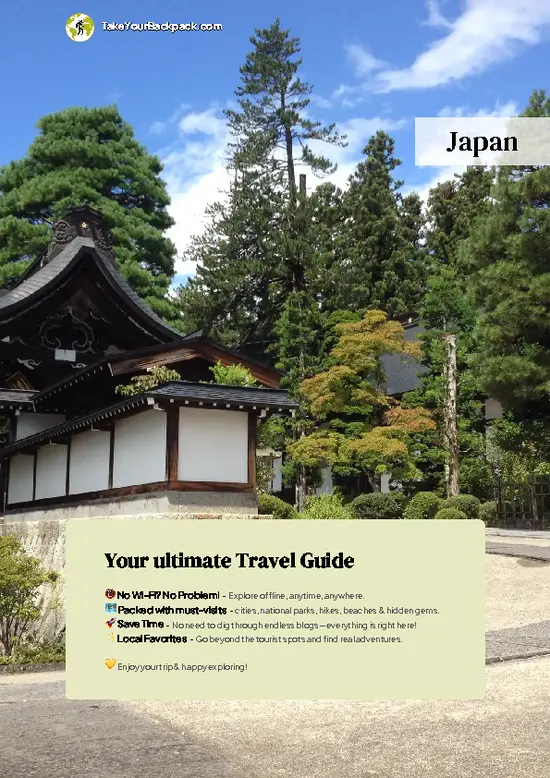
example page 0 from our offline Travel Guide for Japan
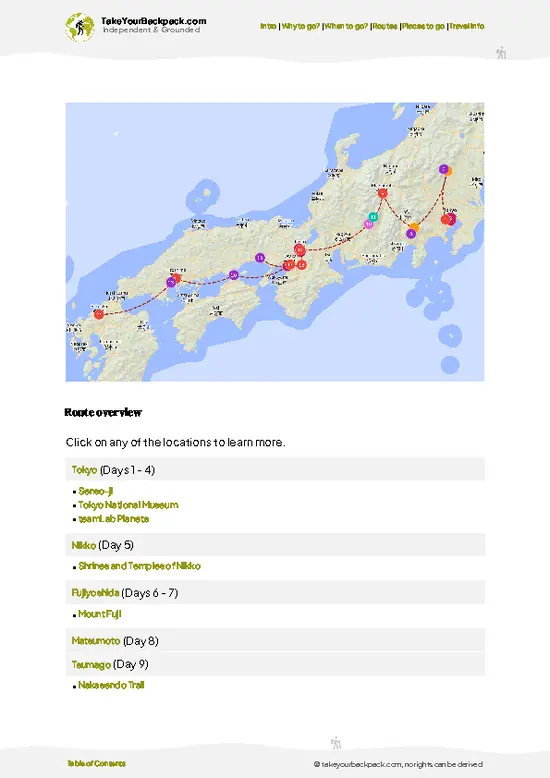
example page 1 from our offline Travel Guide for Japan
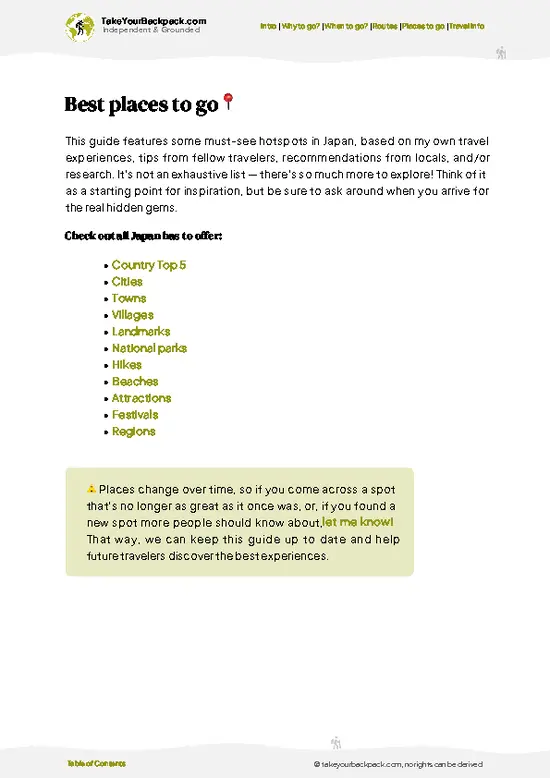
example page 2 from our offline Travel Guide for Japan
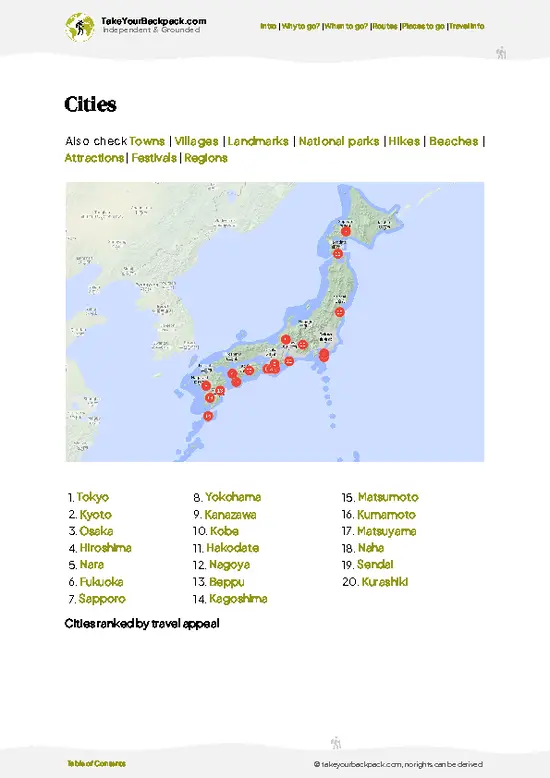
example page 3 from our offline Travel Guide for Japan
example page 4 from our offline Travel Guide for Japan
example page 5 from our offline Travel Guide for Japan
example page 6 from our offline Travel Guide for Japan
example page 7 from our offline Travel Guide for Japan
The digital guide (482 pages) contains:
140 highlights, ranked by travel appeal
Optimized 7, 14 & 21-day travel routes
Cities, national parks, landmarks, beaches
How to get around
Offline-friendly for travel without Wi-Fi
👉 Click to see all 30+ guide features

📅 Plan smarter in minutes, not weeks
Month by month travel advice
Festivals & national holidays
Budget expectations

🗺️ Go to the right places, skip the overrated ones
Honest pros & cons of destinations
Top hikes, parks & viewpoints
Lesser-known places most travelers miss
Clear “worth it vs skip it” guidance

🛏️ Travel smoothly without rookie mistakes
Best areas to stay
Transport systems explained simply
Common scams & safety advice
SIM cards, money & practical tips

🌍 Understand the country, not just visit it
Culture & traditions
52 Essential phrases & customs
Festivals worth planning around
Traveler-friendly historical context
Insights that make places more meaningful

📱 Built for real travel conditions
Fully downloadable PDF
Works completely offline
Optimized for phone use
Useful in remote areas & buses
Everything in one place
Save weeks of stressful planning
Get instant access to your full guide. 30‑day money-back guarantee.
+ Add another guide for just US$7.80

By proceeding you agree to our terms.
Sent to your inbox immediately after payment • 100% Secure Checkout
Best Backpacking Travel Advisor 2025 tourism awardBest Backpacking
Travel Advisor
2025
What others say about Take Your Backpack Guides:
⭐⭐⭐⭐⭐
Fantastic, amazing amount of information!
⭐⭐⭐⭐⭐
My goodness this is amazing, it's what I've been looking for hats off too you!
⭐⭐⭐⭐⭐
I think this is absolutely BRILLIANT
⭐⭐⭐⭐
Very complete and informative. It's still missing places, but I gotta to commend you
⭐⭐⭐⭐⭐
This is truly amazing, thank you, can't wait to explore it with my kids!
⭐⭐⭐⭐⭐
Awesome resource, thank you!
⭐⭐⭐⭐⭐
This is amazing! Can't wait to explore the ones I haven't seen
⭐⭐⭐⭐
I love this! Well done, great idea.
⭐⭐⭐⭐⭐
Thanks for taking the time to make this gem!
⭐⭐⭐⭐⭐
This might be the best website I've ever seen.
⭐⭐⭐⭐⭐
Congratulations, and thank you so much for your work; it's incredibly valuable.
⭐⭐⭐⭐
In all seriousness I think you did a great job pointing out the important spots
⭐⭐⭐⭐⭐
10/10 very good
⭐⭐⭐⭐⭐
As someone who's only just starting to visit regularly this is awesome, thank you.
⭐⭐⭐⭐
Thank you very much! I'm going to visit my dad, it's going to be very useful!
⭐⭐⭐⭐⭐
This is really cool! We'll be travelling for the first time and this definitely come in handy.
⭐⭐⭐⭐⭐
You are now our minister of culture, congratulations 👨‍💼
⭐⭐⭐⭐⭐
Just wanted to tell you that this is a pearl! Going to follow your recommendations.
⭐⭐⭐⭐⭐
This is so cool. I'll definitely be using the resource for my travels soon.
⭐⭐⭐⭐⭐
This is very impressive! Good work.
⭐⭐⭐⭐⭐
This is an amazing and informative site. Very well done!

🛏️ Where to stay?Choosing the right base

If you enjoy meeting fellow travelers, consider choosing hostels with high ratings for atmosphere. On the other hand, if you prefer having your own space, a hotel might be a better option.

🥾 Hike detailsKey facts about the Nakasendo Trail hike

Total Distance: The Nakasendo Trail stretches about 534 kilometers (332 miles) from Kyoto to Tokyo. However, most hikers tackle only sections of it, with the popular segment between Magome and Tsumago being around 8 kilometers (5 miles).

Estimated Duration: If you’re hiking the full trail, expect to spend around 12-14 days, depending on your pace and how often you stop to explore. The Magome to Tsumago section can be done in about 2-3 hours.

Difficulty Level: The trail is generally moderate in difficulty. While some sections have steep inclines, they’re manageable for most hikers with a reasonable … read more 👉
Total Distance: The Nakasendo Trail stretches about 534 kilometers (332 miles) from Kyoto to Tokyo. However, most hikers tackle only sections of it, with the popular segment between Magome and Tsumago being around 8 kilometers (5 miles).

Estimated Duration: If you’re hiking the full trail, expect to spend around 12-14 days, depending on your pace and how often you stop to explore. The Magome to Tsumago section can be done in about 2-3 hours.

Difficulty Level: The trail is generally moderate in difficulty. While some sections have steep inclines, they’re manageable for most hikers with a reasonable fitness level.

Starting Point: A common starting point is Magome. To get there, take a train from Nagoya to Nakatsugawa Station, then hop on a bus that takes you directly to Magome. The bus ride is about 30 minutes.

Major Landmarks Along the Route:
  • Magome: A charming post town with traditional wooden buildings and a great view.
  • Tsumago: Another well-preserved post town, famous for its Edo-period ambiance.
  • Waki-Honjin Museum: Located in Tsumago, it’s a former inn that gives insight into the history of the trail.
  • Oniwa-San: A scenic viewpoint along the trail, perfect for a break and some photos.

Type of Terrain and Scenery: The trail features a mix of well-maintained paths, stone steps, and some forest trails. You’ll wander through picturesque villages, rice fields, and dense forests. The scenery is stunning, with mountains, rivers, and seasonal changes that bring vibrant colors.

Typical Vegetation and Wildlife: Expect to see a variety of plant life, including cedar and cypress trees, along with wildflowers in spring. Wildlife includes deer, monkeys, and various bird species, though they tend to be shy and elusive. Keep an eye out for the occasional snake, too!

This trail offers a perfect blend of culture and nature, making it a rewarding experience for independent hikers. Just remember to pack light, stay hydrated, and enjoy the journey!
⚠️ Hiking info can sometimes be outdated or inaccurate. Before you hit the trail, check the latest conditions with locals. If you do spot anything that's off, I'd love to hear from you, so I can update it for fellow travelers.

🛡️ SafetyScams, Hazards, and Annoyances

The Nakasendo Trail offers a blend of manageable challenges and breathtaking rewards. Weather can shift quickly, especially in spring and autumn, so pack layers. Mornings may start cool, but by midday, you could be shedding that jacket.

The terrain is generally well-marked and maintained, but expect some steep sections. Footing can be tricky on the stone paths, especially after rain. Take your time; a steady pace will keep you upright and enjoying the scenery. River crossings are rare but can be slippery, so watch your step.

Wildlife encounters are minimal, but you might spot a deer or hear the rustle of a monkey in the trees. Keep your distance and respect their space.

First-timers often underestimate the importance of hydration and snacks. Carry enough water and energy bars to keep … read more 👉
The Nakasendo Trail offers a blend of manageable challenges and breathtaking rewards. Weather can shift quickly, especially in spring and autumn, so pack layers. Mornings may start cool, but by midday, you could be shedding that jacket.

The terrain is generally well-marked and maintained, but expect some steep sections. Footing can be tricky on the stone paths, especially after rain. Take your time; a steady pace will keep you upright and enjoying the scenery. River crossings are rare but can be slippery, so watch your step.

Wildlife encounters are minimal, but you might spot a deer or hear the rustle of a monkey in the trees. Keep your distance and respect their space.

First-timers often underestimate the importance of hydration and snacks. Carry enough water and energy bars to keep your spirits high. Embrace the journey; the views and the sense of connection to history make every step worth it.

FAQFrequently asked questions about Nakasendo Trail

The full Nakasendo Trail hike takes about 5 to 7 days to complete, covering roughly 180 kilometers between Kyoto and Tokyo. Most hikers choose to do shorter sections, which can be done in 1 to 3 days depending on the segment. The trail passes through historic post towns and scenic countryside.
The Nakasendo Trail is moderately difficult, suitable for hikers with basic fitness. The terrain includes forest paths, mountain passes, and paved roads, with some elevation changes but no technical climbing. Daily distances typically range from 15 to 25 kilometers.
No guide or permit is required to hike the Nakasendo Trail. The route is well-marked and can be done independently, though some travelers opt for guided tours for convenience or cultural insights. Accommodation in post towns can be booked in advance but does not require special permits.
⚠️ Things can change over time, so always validate details locally before you go.

Other Japanese hikes near Nakasendo Trail

Explore more nearby:

  • Mount Norikura—gentle summit, crater lakes, subalpine plateau, easy access| 47 km away
  • Yatsugatake Mountains—jagged peaks, forest trails, mountain huts, varied terrain| 65 km away
  • Mount Yari—sharp spire, technical ridges, alpine huts, Northern Alps| 69 km away

💡 Not sure where to go next?
Create a personalized itinerary for Japan including Nakasendo Trail and the places that fit your trip.

Generate my itinerary

👉 Discover all hikes

Or checkout all Japan has to offer (think cities, towns, villages, national parks, hikes, beaches, festivals)
Country photo of Japan

We 💚 feedbackParting advice and final tips

The Nakasendo Trail is a slice of history wrapped in nature’s embrace. Walking through ancient post towns, you feel the pulse of Japan’s past. But be ready for the steep climbs; they’ll test your legs and lungs. The reward? A cold beer in a local izakaya, savoring the flavors of the region while reflecting on the journey. It’s a beautiful struggle that leaves you craving more. Just don’t underestimate those uphill battles!

✈️ When did I visit Japan?
As part of my 1.5 year travel around the world trip, I visited Japan in August 2015.

✍️ Help improve this page!
The information on this page is based on my own backpacking experience in Japan, supplemented with up-to-date research and feedback from other travelers. Travel details can change, so if you notice anything outdated or incomplete, feel free to let me know.


🙋‍♂️ Give feedback

👋 Meet the founderWho’s Behind Take Your Backpack?

Johan, backpacker and founder of TakeYourBackpackHi, I’m Johan (Netherlands 🇳🇱), the creator of TakeYourBackpack. Over the past decade, I’ve backpacked through 80+ countries across six continents, gaining extensive experience with independent travel, long-term trips, and overland routes.

This site is built on a combination of firsthand travel experience and carefully curated insights from other backpackers. Many guides are based on places I’ve personally visited, while others bring together tips, observations, and practical advice shared by trusted travelers I’ve met along the way.

The goal is to provide realistic, experience-driven guidance — not generic itineraries — so you can explore destinations with better context, clearer expectations, and more confidence.

Get full Japan guide •
Instant download • 140 highlights • Full Offline guide