×

Japan🇯🇵 | hikesDaisetsuzan Grand Traversevolcanic ridges, alpine meadows, remote huts, Hokkaido wilderness | things to do and best time to go

Explore Shirakami SanchiExplore Tateyama Kurobe Alpine Route

Backpacking in Daisetsuzan Grand Traverse
🌟 Highlighthike ranked #4
By Johan Kruseman 🇳🇱 | Updated September 4, 2026

Most people only realize on day three that the real advantage of the Daisetsuzan Grand Traverse is this: once you’re up on the ridge, you can stay high for days, hopping volcano to volcano without dropping back into civilization every night. Daisetsuzan sits in central Hokkaido, Japan’s wild northern island, and the traverse stitches together its core peaks into one long, committing line. It’s big: several days, serious elevation, and weather that can flip from blue to brutal in an hour. Scenery swings hard—sulfur vents, moonlike plateaus, alpine flowers, and, if you’re lucky, sea-of-cloud inversions at sunrise. Getting to trailheads like Asahidake or Tokachidake by bus is doable but slower and less intuitive than classic routes near Tokyo or Kamikochi. Compared to those, Daisetsuzan feels rougher, emptier, and far more like you’ve stepped into real backcountry, not a managed hiking park.

Discover everything you want to know in the 📖 Japan Travel Guide.
Best time to go: July - October
Duration: 6 days
Distance: 60 kilometers
Total ascent: 3,000 meters


Get your Japan guide
140 ranked highlights, routes & tips, works offline (482 pages)
Loading the map 🌍
CLICK TO FILTER
cities
towns
villages
landmarks
national parks
hikes
beaches
attractions
festivals
regions
SHOW COUNTRY’S BESTSHOW ALL

✨ Why go?
Ranked #4 hike in Japan
Why Daisetsuzan Grand Traverse should be on your travel list

The Daisetsuzan Grand Traverse is a magnet for backpackers craving a mix of challenge and reward. Imagine striding through Japan’s largest national park, where the scenery-to-effort ratio is off the charts. You’ll tackle rugged trails that lead to breathtaking vistas—think jagged peaks and lush valleys that make every step worthwhile.

Getting here is a breeze, thanks to public transport access from major cities like Sapporo. Hop on a train, and you’re in the heart of the wilderness in no time. The low cost of entry makes it even sweeter; you can immerse yourself in nature without breaking the bank.

What’s more, the flexible distances allow you to tailor your trek. Whether you’re in for a quick overnight or a multi-day adventure, you can adapt your route to fit your style. This hike seamlessly … read more 👉
The Daisetsuzan Grand Traverse is a magnet for backpackers craving a mix of challenge and reward. Imagine striding through Japan’s largest national park, where the scenery-to-effort ratio is off the charts. You’ll tackle rugged trails that lead to breathtaking vistas—think jagged peaks and lush valleys that make every step worthwhile.

Getting here is a breeze, thanks to public transport access from major cities like Sapporo. Hop on a train, and you’re in the heart of the wilderness in no time. The low cost of entry makes it even sweeter; you can immerse yourself in nature without breaking the bank.

What’s more, the flexible distances allow you to tailor your trek. Whether you’re in for a quick overnight or a multi-day adventure, you can adapt your route to fit your style. This hike seamlessly integrates into a longer backpacking journey across Hokkaido, making it a perfect pit stop.

Every sweat-soaked moment leads to a rewarding view or a cold beer at the end of the day. That’s the essence of the Daisetsuzan experience.
Want to include Daisetsuzan Grand Traverse in your Japan route?
Create a personalized Japan itinerary that includes Daisetsuzan Grand Traverse and the places that fit your trip — based on your travel style, budget, and available time. Get your route in seconds.

Generate my trip

💡 HighlightsEssential experiences to have while hiking the Daisetsuzan Grand Traverse

  1. Asahidake summit and volcanic plateau — The highest peak in Hokkaido, Asahidake feels more like a moonscape than a Japanese mountain: steaming vents, black lava fields and a wide alpine bowl. On a clear morning the views sweep out over the whole Daisetsuzan massif. (Personal favorite — the climb to sunrise here is brutally honest and unforgettable.)
  2. Tokachidake crater and fumaroles — Active volcanic drama: sulfur-streaked slopes, hot steam vents and crater rims you can walk right up to. It’s raw, otherworldly terrain that reminds you this isn’t just a hiking trail — it’s a volcanic playground.
  3. Alpine tundra and seasonal flowers — Above the treeline you get broad, treeless plains carpeted with tiny alpine plants in summer and brilliant lichen-and-shrub colour in autumn. The scale and openness
read more 👉
  1. Asahidake summit and volcanic plateau — The highest peak in Hokkaido, Asahidake feels more like a moonscape than a Japanese mountain: steaming vents, black lava fields and a wide alpine bowl. On a clear morning the views sweep out over the whole Daisetsuzan massif. (Personal favorite — the climb to sunrise here is brutally honest and unforgettable.)
  2. Tokachidake crater and fumaroles — Active volcanic drama: sulfur-streaked slopes, hot steam vents and crater rims you can walk right up to. It’s raw, otherworldly terrain that reminds you this isn’t just a hiking trail — it’s a volcanic playground.
  3. Alpine tundra and seasonal flowers — Above the treeline you get broad, treeless plains carpeted with tiny alpine plants in summer and brilliant lichen-and-shrub colour in autumn. The scale and openness feel rare in Japan, more like Iceland than the usual forested trails.
  4. Ridgeline panoramas and long, exposed traverses — The Grand Traverse is all about long ridgewalking: multiple summits, constant horizons, weather that moves fast and gives great drama. Those hours walking a knife-edge ridge with 360° exposure are what make this route stand out from crowded temple trails or heavily-treed passes.
  5. Wildlife encounters and rustic trail culture — Keep an eye out for Ezo brown bears (take precautions), rock ptarmigan, and alpine birds; wildlife here is real and less habituated to people. Pairing a tough day on the ridge with a steaming onsen soak at a nearby trailhead makes the whole trip distinctly Hokkaido — wild by day, warm and communal by night.
Spotted a mistake or missing something? Contact us.

Things to do near Daisetsuzan Grand Traverse

Ratings based on Tripadvisor reviews. When you book through this link, you support our work at no extra cost to you.

🌤️ When to go?Best time to hike the Daisetsuzan Grand Traverse


  • Topic: Weather – The Daisetsuzan Grand Traverse demands respect from May through October. Snow clings stubbornly until late June, turning trails into a slippery slog. July and August bring milder, stable weather, but sudden mountain storms can still soak you in minutes.

  • Topic: Temperature – Summer highs hover around 15-20°C (59-68°F), perfect for sweating it out without frying. Nights dip to 5-10°C (41-50°F), so pack layers. Early season hikes face freezing temps, while fall chills sneak in by September.

  • Topic: Daylight Hours – Peak season gifts you 14-15 hours of daylight, stretching your trekking window. By late September, daylight shrinks to 11 hours, pushing you to start early or risk hiking in the dark.

  • Topic: Crowds – July and August pull the biggest crowds, especially weekends. Early
read more 👉

  • Topic: Weather – The Daisetsuzan Grand Traverse demands respect from May through October. Snow clings stubbornly until late June, turning trails into a slippery slog. July and August bring milder, stable weather, but sudden mountain storms can still soak you in minutes.

  • Topic: Temperature – Summer highs hover around 15-20°C (59-68°F), perfect for sweating it out without frying. Nights dip to 5-10°C (41-50°F), so pack layers. Early season hikes face freezing temps, while fall chills sneak in by September.

  • Topic: Daylight Hours – Peak season gifts you 14-15 hours of daylight, stretching your trekking window. By late September, daylight shrinks to 11 hours, pushing you to start early or risk hiking in the dark.

  • Topic: Crowds – July and August pull the biggest crowds, especially weekends. Early June and late September offer solitude but risk harsher conditions. Midweek treks slice through the busiest times.

  • Topic: Seasonal Activities – Summer blooms carpet the alpine meadows, a reward for the climb. Fall paints the landscape in fiery reds and golds, but trails can get slick with early frost.

  • Topic: Price Fluctuations – Accommodation and transport peak in summer, especially August. Booking early saves cash. Shoulder seasons offer better deals but brace for limited services.


Pro-tip: Aim for late July to early August—weather is solid, days are long, and the alpine flowers are in full riot. Just get an early start to beat the crowds and afternoon storms.


source: climatestotravel.comJANJanuary: below average for travelingFEBFebruary: below average for travelingMARMarch: below average for travelingAPRApril: fair for travelingMAYMay: fair for travelingJUNJune: fair for travelingJULJuly: excellent for travelingAUGAugust: excellent for travelingSEPSeptember: good for travelingOCTOctober: good for travelingNOVNovember: below average for travelingDECDecember: below average for traveling
japan-hike-daisetsuzan-grand-traverse
© Google |

✈️ The backpacker research shortcutJapan Travel Guide

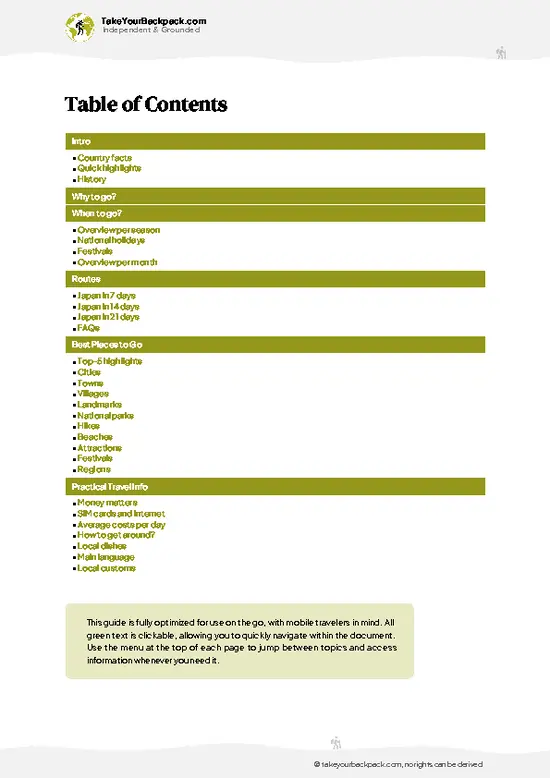
An offline-friendly backpacking guide with optimized travel routes, ranked highlights, transport advice, and the best areas to stay.
example page 0 from our offline Travel Guide for Japan
example page 1 from our offline Travel Guide for Japan
example page 2 from our offline Travel Guide for Japan
example page 3 from our offline Travel Guide for Japan
example page 4 from our offline Travel Guide for Japan
example page 5 from our offline Travel Guide for Japan
example page 6 from our offline Travel Guide for Japan
example page 7 from our offline Travel Guide for Japan
The digital guide (482 pages) contains:
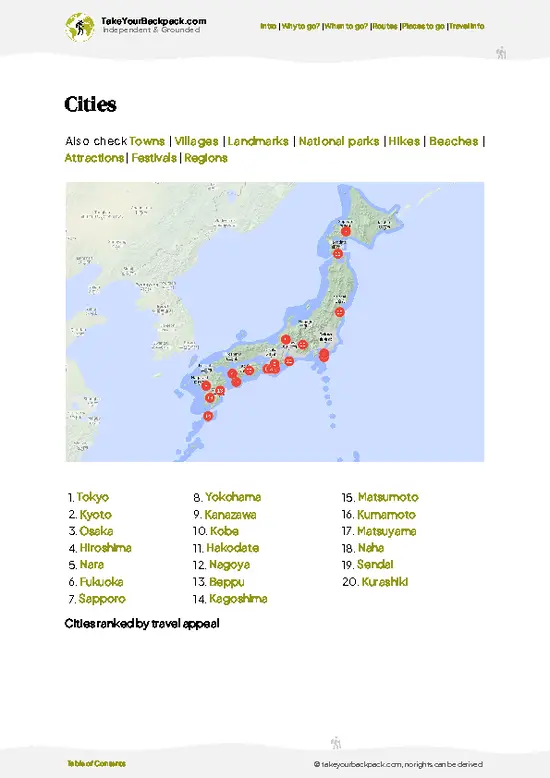
140 highlights, ranked by travel appeal
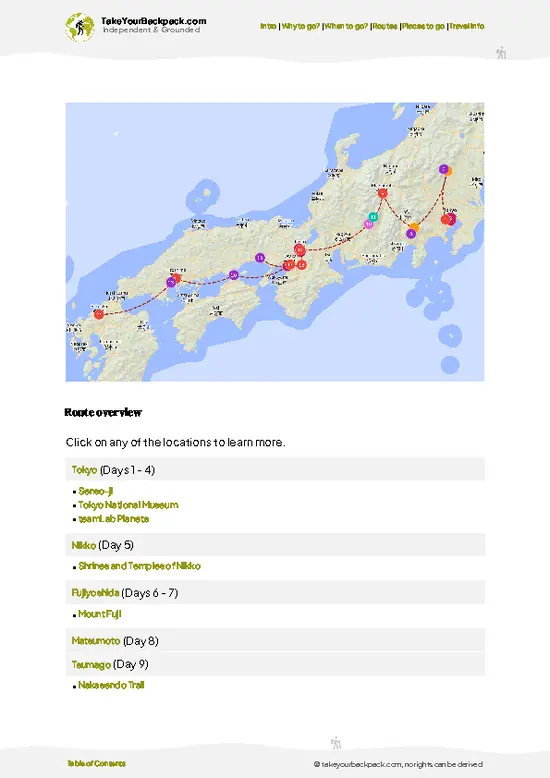
Optimized 7, 14 & 21-day travel routes
Cities, national parks, landmarks, beaches
How to get around
Offline-friendly for travel without Wi-Fi
👉 Click to see all 30+ guide features

📅 Plan smarter in minutes, not weeks
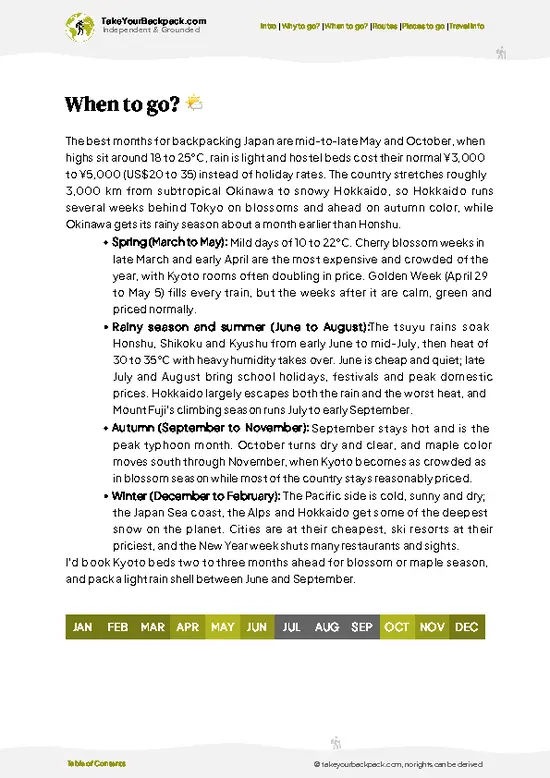
Month by month travel advice
Festivals & national holidays
Budget expectations

🗺️ Go to the right places, skip the overrated ones
Honest pros & cons of destinations
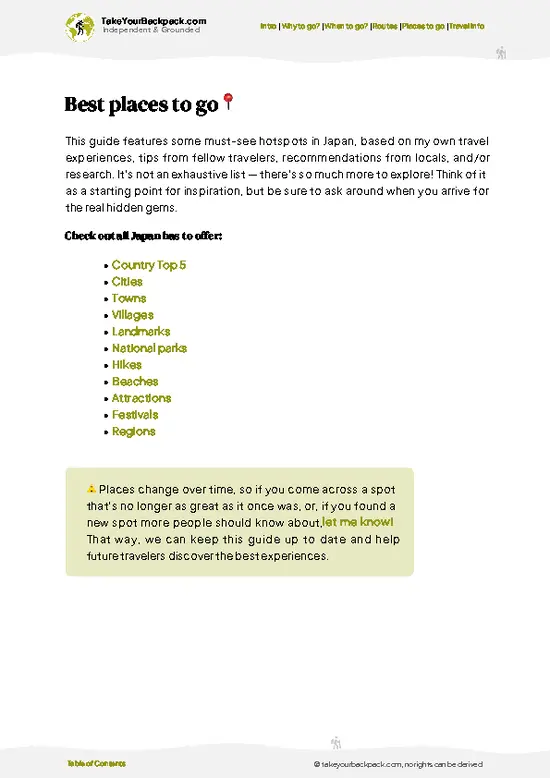
Top hikes, parks & viewpoints
Lesser-known places most travelers miss
Clear “worth it vs skip it” guidance

🛏️ Travel smoothly without rookie mistakes
Best areas to stay
Transport systems explained simply
Common scams & safety advice
SIM cards, money & practical tips

🌍 Understand the country, not just visit it
Culture & traditions
52 Essential phrases & customs
Festivals worth planning around
Traveler-friendly historical context
Insights that make places more meaningful

📱 Built for real travel conditions
Fully downloadable PDF
Works completely offline
Optimized for phone use
Useful in remote areas & buses
Everything in one place
Save weeks of stressful planning
Get instant access to your full guide. 30‑day money-back guarantee.
+ Add another guide for just US$7.80

By proceeding you agree to our terms.
Sent to your inbox immediately after payment • 100% Secure Checkout
Best Backpacking Travel Advisor 2025 tourism awardBest Backpacking
Travel Advisor
2025
What others say about Take Your Backpack Guides:
⭐⭐⭐⭐⭐
Fantastic, amazing amount of information!
⭐⭐⭐⭐⭐
My goodness this is amazing, it's what I've been looking for hats off too you!
⭐⭐⭐⭐⭐
I think this is absolutely BRILLIANT
⭐⭐⭐⭐
Very complete and informative. It's still missing places, but I gotta to commend you
⭐⭐⭐⭐⭐
This is truly amazing, thank you, can't wait to explore it with my kids!
⭐⭐⭐⭐⭐
Awesome resource, thank you!
⭐⭐⭐⭐⭐
This is amazing! Can't wait to explore the ones I haven't seen
⭐⭐⭐⭐
I love this! Well done, great idea.
⭐⭐⭐⭐⭐
Thanks for taking the time to make this gem!
⭐⭐⭐⭐⭐
This might be the best website I've ever seen.
⭐⭐⭐⭐⭐
Congratulations, and thank you so much for your work; it's incredibly valuable.
⭐⭐⭐⭐
In all seriousness I think you did a great job pointing out the important spots
⭐⭐⭐⭐⭐
10/10 very good
⭐⭐⭐⭐⭐
As someone who's only just starting to visit regularly this is awesome, thank you.
⭐⭐⭐⭐
Thank you very much! I'm going to visit my dad, it's going to be very useful!
⭐⭐⭐⭐⭐
This is really cool! We'll be travelling for the first time and this definitely come in handy.
⭐⭐⭐⭐⭐
You are now our minister of culture, congratulations 👨‍💼
⭐⭐⭐⭐⭐
Just wanted to tell you that this is a pearl! Going to follow your recommendations.
⭐⭐⭐⭐⭐
This is so cool. I'll definitely be using the resource for my travels soon.
⭐⭐⭐⭐⭐
This is very impressive! Good work.
⭐⭐⭐⭐⭐
This is an amazing and informative site. Very well done!

🛏️ Where to stay?How to pick the right area

If you enjoy meeting fellow travelers, consider choosing hostels with high ratings for atmosphere. On the other hand, if you prefer having your own space, a hotel might be a better option.

🥾 Hike detailsHike details: route, duration, and difficulty of Daisetsuzan Grand Traverse

Total Distance: Approximately 60 kilometers (37 miles) if you tackle the whole traverse from north to south.

Estimated Duration: Most hikers complete it in about 4 to 6 days, depending on your pace and how much time you spend soaking in the views.

Difficulty Level: Moderate to challenging. Expect some steep sections and variable weather, so be prepared for anything.

Starting Point: The trail kicks off at the Daisetsuzan National Park’s Asahidake Onsen area.
  • Access: From Sapporo, take a train to Kamikawa Station, then hop on a bus to Asahidake Onsen. The bus ride takes about 2 hours, so plan
read more 👉
Total Distance: Approximately 60 kilometers (37 miles) if you tackle the whole traverse from north to south.

Estimated Duration: Most hikers complete it in about 4 to 6 days, depending on your pace and how much time you spend soaking in the views.

Difficulty Level: Moderate to challenging. Expect some steep sections and variable weather, so be prepared for anything.

Starting Point: The trail kicks off at the Daisetsuzan National Park’s Asahidake Onsen area.
  • Access: From Sapporo, take a train to Kamikawa Station, then hop on a bus to Asahidake Onsen. The bus ride takes about 2 hours, so plan accordingly.

Major Landmarks Along the Route:
  • Asahidake: The highest peak in Hokkaido, offering stunning panoramic views.
  • Ginsendai: A beautiful alpine area with hot springs nearby, perfect for a relaxing soak.
  • Furepe Waterfall: A picturesque waterfall that’s a great spot for a break and some photos.
  • Kurodake: Another peak offering breathtaking scenery and a chance to see the famous Daisetsuzan flora.

Type of Terrain and Scenery: The trail features a mix of rocky paths, grassy meadows, and some forested sections. Expect steep ascents and descents, especially around the peaks. The scenery is a feast for the eyes—think rugged mountains, lush valleys, and vibrant wildflower fields.

Typical Vegetation and Wildlife:
  • Vegetation: You’ll encounter alpine plants, such as rhododendrons and various grasses, especially in the higher elevations.
  • Wildlife: Keep your eyes peeled for Japanese black bears, deer, and a variety of birds. The area is rich in biodiversity, so you might spot some unique critters if you’re lucky!

This trail is a gem for independent hikers, but make sure to pack plenty of water, snacks, and a solid map. Weather can change quickly, so layers are your best friend. Enjoy the adventure!
⚠️ Hiking info can sometimes be outdated or inaccurate. Before you hit the trail, check the latest conditions with locals. If you do spot anything that's off, I'd love to hear from you, so I can update it for fellow travelers.

🛡️ SafetyStaying Safe: What Travelers Should Know

The Daisetsuzan Grand Traverse is a wild beauty, but it demands respect. Weather can shift in an instant; sunny skies can morph into sudden downpours or thick fog. Keep an eye on the forecast and be ready to adapt.

The terrain is a mix of steep ascents and rocky paths, so sturdy footwear is essential. Navigation is straightforward, but a map and compass are your best friends—don’t rely solely on your phone. River crossings can be tricky after heavy rains, so gauge the flow before you leap.

Wildlife is part of the experience. You might spot a bear or a deer, but keep your distance. Make noise to avoid surprises; a simple shout or whistle can keep critters at bay.

Pack wisely. Layers are key for temperature swings, and a good rain jacket can save your day. Hydration is crucial, so fill … read more 👉
The Daisetsuzan Grand Traverse is a wild beauty, but it demands respect. Weather can shift in an instant; sunny skies can morph into sudden downpours or thick fog. Keep an eye on the forecast and be ready to adapt.

The terrain is a mix of steep ascents and rocky paths, so sturdy footwear is essential. Navigation is straightforward, but a map and compass are your best friends—don’t rely solely on your phone. River crossings can be tricky after heavy rains, so gauge the flow before you leap.

Wildlife is part of the experience. You might spot a bear or a deer, but keep your distance. Make noise to avoid surprises; a simple shout or whistle can keep critters at bay.

Pack wisely. Layers are key for temperature swings, and a good rain jacket can save your day. Hydration is crucial, so fill up at streams when you can. Embrace the challenge; the views and the sense of accomplishment at the end are worth every step.

FAQFrequently asked questions about Daisetsuzan Grand Traverse

The Daisetsuzan Grand Traverse typically takes 4 to 6 days to complete, covering around 40 to 50 kilometers depending on the route taken. Most hikers plan for 5 days to allow for a steady pace and rest. Weather conditions can affect the duration, especially in early summer or late autumn.
The hike is considered very difficult due to its length, elevation gain, and remote terrain. It involves steep ascents, rugged paths, and potentially harsh weather, requiring good physical fitness and experience in mountain hiking. Navigation skills are essential as some sections are less marked.
No permit is required to hike the Daisetsuzan Grand Traverse, but a guide is recommended for less experienced hikers or those unfamiliar with the area. The trail crosses remote wilderness where weather and trail conditions can change rapidly, so local guides enhance safety and navigation.
⚠️ Things can change over time, so always validate details locally before you go.

Other Japanese hikes near Daisetsuzan Grand Traverse

Explore more nearby:

  • Mount Asahi—active volcano, sulfur vents, alpine flora, Hokkaido’s highest| 5 km away
  • Mount Rishiri—island peak, coastal views, steep ascent, wildflowers| 208 km away
  • Mount Hakkoda—hot springs, deep snow, beech forests, volcanic plateaus| 370 km away

💡 Not sure where to go next?
Create a personalized itinerary for Japan including Daisetsuzan Grand Traverse and the places that fit your trip.

Generate my itinerary

👉 Discover all hikes

Or checkout all Japan has to offer (think cities, towns, villages, national parks, hikes, beaches, festivals)
Country photo of Japan

We 💚 feedbackWhat to keep in mind

The Daisetsuzan Grand Traverse is a wild symphony of rugged peaks and lush valleys that rewards every ounce of sweat. You’ll feel the burn in your legs, but when you finally reach the summit, the panoramic views are a jaw-dropper. Just be ready for unpredictable weather; it can shift from sunshine to storms in a heartbeat. Pack wisely, embrace the challenge, and you’ll find the journey is as exhilarating as the destination.

✈️ When did I visit Japan?
As part of my 1.5 year travel around the world trip, I visited Japan in August 2015.

✍️ Help improve this page!
The information on this page is based on my own backpacking experience in Japan, supplemented with up-to-date research and feedback from other travelers. Travel details can change, so if you notice anything outdated or incomplete, feel free to let me know.


🙋‍♂️ Give feedback

👋 Meet the founderWho’s Behind Take Your Backpack?

Johan, backpacker and founder of TakeYourBackpackHi, I’m Johan (Netherlands 🇳🇱), the creator of TakeYourBackpack. Over the past decade, I’ve backpacked through 80+ countries across six continents, gaining extensive experience with independent travel, long-term trips, and overland routes.

This site is built on a combination of firsthand travel experience and carefully curated insights from other backpackers. Many guides are based on places I’ve personally visited, while others bring together tips, observations, and practical advice shared by trusted travelers I’ve met along the way.

The goal is to provide realistic, experience-driven guidance — not generic itineraries — so you can explore destinations with better context, clearer expectations, and more confidence.

Get full Japan guide •
Instant download • 140 highlights • Full Offline guide