

×

Japan🇯🇵 | regionsKiso Valleypost towns, cedar forests, Nakasendo trail | things to do and best time to go

Explore Kansai regionExplore Northern region

Backpacking in Kiso Valley
👌 Worth visitingregion ranked #6
By Johan Kruseman 🇳🇱 | Updated May 24, 2026

Most blogs sell Kiso Valley as a sleepy Nakasendo hiking museum; the surprise is how fast it flips from “tour bus crowd” to “you and the cicadas only” just by walking 15 minutes off the main drag. Kiso sits in the mountains of Nagano Prefecture, between Matsumoto and Nagoya, stitched together by old post towns like Magome, Tsumago, and Narai. For backpackers, it’s a sweet spot: classic Edo-period streets, forested passes, river views, and enough guesthouses that you don’t need a tour, but not so many that it feels like Kyoto 2.0. Trains and buses connect the towns, but they’re infrequent and not ultra-cheap, so you trade spontaneity for peace and quiet. Compared with nearby Kamikochi or Takayama, Kiso is calmer, more linear, and feels less curated—great if you like your history with a bit of grit and early bedtimes.

Discover everything you want to know in the 📖 Japan Travel Guide.
Loading the map 🌍
CLICK TO FILTER
city
town
village
unique site
national park
hike
beach
attraction
festival
region
SHOW COUNTRY’S BESTSHOW ALL

✨ Why go?
Ranked #6 region in Japan
Why visitors keep coming back

Kiso Valley is a backpacker’s paradise in Japan, and for good reason. First off, the variety of landscapes is jaw-dropping. You’ve got everything from lush forests to rugged mountains, all within a short hike. This means you can soak in nature without the hassle of constant relocation.

Transport here is a breeze. The flexible train system lets you hop between charming towns like Narai and Tsumago with ease. Each stop offers a unique slice of Japanese culture, from traditional inns to local crafts.

What’s more, Kiso Valley is perfect for slow travel. You can spend a few days in one spot, really immersing yourself in the local vibe. Take your time exploring ancient trails, savoring local cuisine, and chatting with the friendly locals.

This blend of nature and culture creates high-value … read more 👉
Kiso Valley is a backpacker’s paradise in Japan, and for good reason. First off, the variety of landscapes is jaw-dropping. You’ve got everything from lush forests to rugged mountains, all within a short hike. This means you can soak in nature without the hassle of constant relocation.

Transport here is a breeze. The flexible train system lets you hop between charming towns like Narai and Tsumago with ease. Each stop offers a unique slice of Japanese culture, from traditional inns to local crafts.

What’s more, Kiso Valley is perfect for slow travel. You can spend a few days in one spot, really immersing yourself in the local vibe. Take your time exploring ancient trails, savoring local cuisine, and chatting with the friendly locals.

This blend of nature and culture creates high-value experiences that stick with you long after the trip. You’re not just visiting; you’re living it.
Get the complete Travel Guide for Japan
Everything organized for offline planning — routes, highlights, costs & tips

See what’s inside 👉

Get the Travel Guide -

💡 HighlightsTop highlights of Kiso Valley

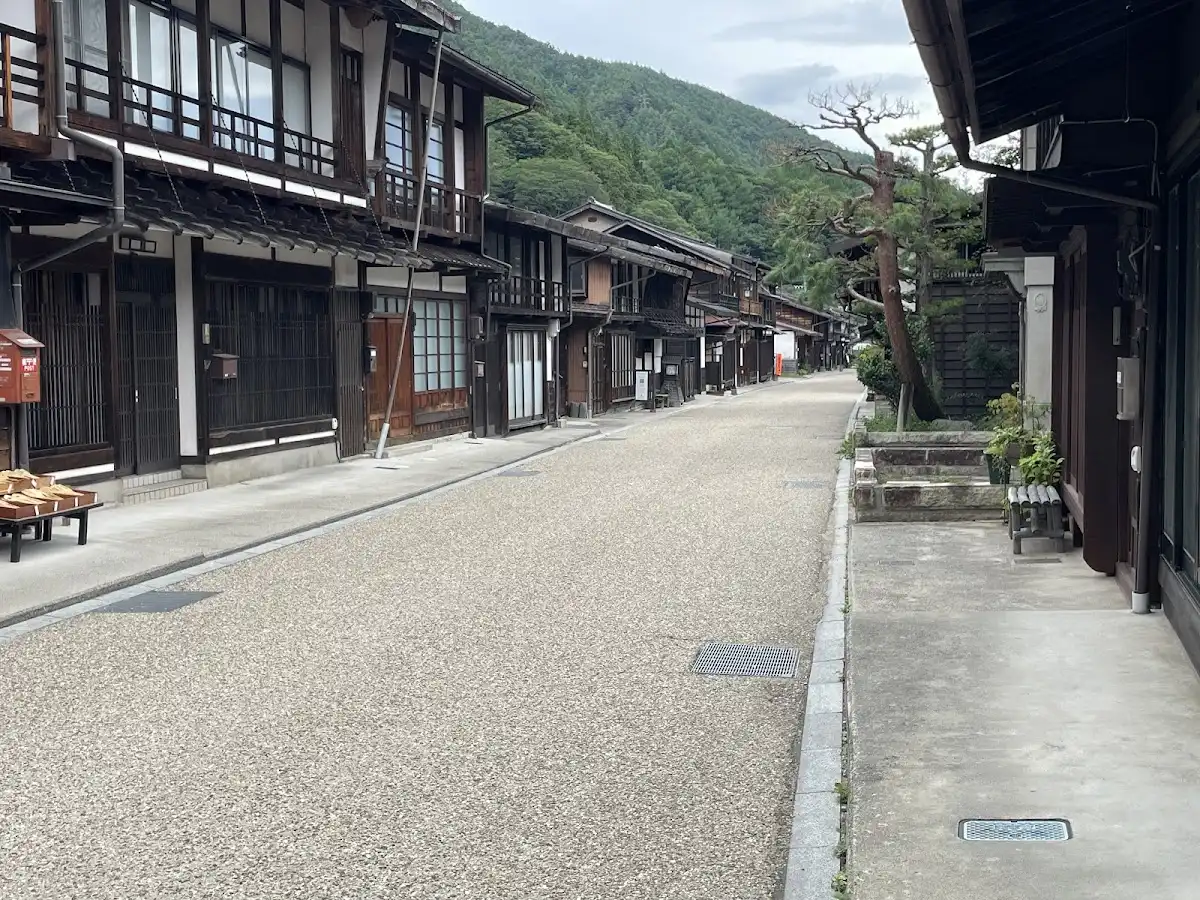
  1. Tsumago-juku — One of the best-preserved Nakasendō post towns: wooden storefronts, narrow alleys and rules that keep modern clutter out. Walk the village at dusk, sleep in a family-run minshuku, and you’ll feel like you stepped into the Edo period without the theme-park vibe.
  2. Narai-juku — Long, uninterrupted row of historic wooden buildings famously called “the town of a thousand houses.” It’s larger and less tweaked for tourists than some other post towns, so you get genuine craft shops, old inns, and easy walks into cedar forests behind town.
  3. Kiso-Fukushima old town & riverside — The valley’s commercial hub for centuries: shop lanes, wooden merchant houses, and riverbanks where locals fish and picnic. It’s a practical base for exploring nearby trails and getting a feel for working Kiso
read more 👉
  1. Tsumago-juku — One of the best-preserved Nakasendō post towns: wooden storefronts, narrow alleys and rules that keep modern clutter out. Walk the village at dusk, sleep in a family-run minshuku, and you’ll feel like you stepped into the Edo period without the theme-park vibe.
  2. Narai-juku — Long, uninterrupted row of historic wooden buildings famously called “the town of a thousand houses.” It’s larger and less tweaked for tourists than some other post towns, so you get genuine craft shops, old inns, and easy walks into cedar forests behind town.
  3. Kiso-Fukushima old town & riverside — The valley’s commercial hub for centuries: shop lanes, wooden merchant houses, and riverbanks where locals fish and picnic. It’s a practical base for exploring nearby trails and getting a feel for working Kiso Valley life.
  4. Nakasendō trails inside the Kiso Valley — Hike short sections between post towns through cedar tunnels, stone steps and mossy waymarkers. These stretches are quieter than the Magome-Tsumago stretch and offer that mix of history and green quiet that’s genuinely Kiso.
  5. Mount Ontake foothills & lower pilgrimage routes — You don’t have to summit the volcano to feel its presence: lower trails, alpine meadows (seasonal), and remote hamlets carry a distinct mountain pilgrimage atmosphere you won’t find in lowland Japan.
  6. Kiso-Hirasawa woodcraft village — Small workshops where local artisans turn Kiso’s fragrant woods into bowls, plates and simple lacquered wares. Watching a lathe-turned piece being finished by hand is a quiet, local craft encounter that feels native to this valley.
  7. Nojiri-juku (hidden gem) — A compact, overlooked post town that most day-trippers miss. Low-key streets, a relaxed riverside vibe and good access to lesser-trod forest walks — perfect if you want the Edo-era look without the crowds.
  8. Agematsu-juku & surrounding cedar lanes (hidden gem) — Small, lived-in town with old cedar avenues and rolling rice terraces. Few guidebooks linger here, so you can soak in rural Kiso rhythms: farm gates, seasonal work, and quiet shrine approaches (scenic, not touristy).
  9. Suhara and the valley hamlets (hidden gem) — Tiny villages tucked between river and mountain where traditional houses, seasonal festivals and local soba shops still dominate daily life. Walk the lanes, chat with hosts, and you’ll get the local flavor most visitors miss.
  10. Kiso River paddles & riverside day trips — Rent a kayak or join a short raft run for a different angle on the valley: steep forested banks, small rapids, and waterside villages. It’s a hands-on way to feel the geography of Kiso rather than just look at it.


Personal favorite: Tsumago-juku — stay overnight in a minshuku and do the old-town walk at dusk; it’s small, atmospheric and sticks with you longer than the photo.
Spotted a mistake or missing something? Contact us.
Things to do near Kiso Valley

Ratings based on Tripadvisor reviews. When you book through this link, you support our work at no extra cost to you.

⌛️ 5 daysHow to make the most of Kiso Valley

Day 1: Nakatsugawa
Kicking off in Nakatsugawa sets the stage for your Kiso Valley adventure. This town is your gateway, where you can hop on the train and feel the pulse of the region. The transport system here is efficient, with the JR Chuo Line whisking you to your next stop in no time. Spend the day exploring the local shops and grabbing a bite of gohei-mochi, a rice cake slathered in a savory sauce. It’s a perfect way to ease into the local culture.

Day 2: Magome
From Nakatsugawa, a short bus ride takes you to Magome, a picturesque post town. The charm here is palpable, with traditional wooden buildings lining the streets. The real treat? The hike from Magome to Tsumago, about 8 kilometers along a well-marked trail. This is where you’ll feel the essence of the Kiso Valley. The scenery … read more 👉
Day 1: Nakatsugawa
Kicking off in Nakatsugawa sets the stage for your Kiso Valley adventure. This town is your gateway, where you can hop on the train and feel the pulse of the region. The transport system here is efficient, with the JR Chuo Line whisking you to your next stop in no time. Spend the day exploring the local shops and grabbing a bite of gohei-mochi, a rice cake slathered in a savory sauce. It’s a perfect way to ease into the local culture.

Day 2: Magome
From Nakatsugawa, a short bus ride takes you to Magome, a picturesque post town. The charm here is palpable, with traditional wooden buildings lining the streets. The real treat? The hike from Magome to Tsumago, about 8 kilometers along a well-marked trail. This is where you’ll feel the essence of the Kiso Valley. The scenery is stunning, and the trail is manageable, making it a rewarding experience without exhausting your energy reserves.

Day 3: Tsumago
Tsumago is a step back in time. Spend the morning wandering its narrow streets, then take the bus to the nearby Nakasendo Trail. Here, you can explore the less-trodden paths that connect to the main route. This detour is your ‘Off-Path Reward’—you’ll encounter serene landscapes and perhaps a local farmer or two. It’s a slice of authenticity that enriches your journey.

Day 4: Kiso-Fukushima
Traveling to Kiso-Fukushima, you’ll find a different vibe. This town is a hub for hot springs. After a day of soaking in an onsen, you’ll feel rejuvenated. The train connections are frequent, allowing you to explore nearby attractions like the Kiso Valley Museum without feeling rushed.

Day 5: Matsumoto
Finish strong in Matsumoto, where the iconic castle awaits. The train ride is quick, and the castle’s history is captivating. This day is the cherry on top of your Kiso Valley experience. If you only have time for one day, make it this one. The blend of culture, history, and stunning architecture justifies the trip.
Build the Right Itinerary
Use the Japan Travel Guide’s 7, 14 & 21-day routes as a starting point to plan a trip that actually works on the ground.

Get the Travel Guide -

🌤️ When to go?When to go for the best experience


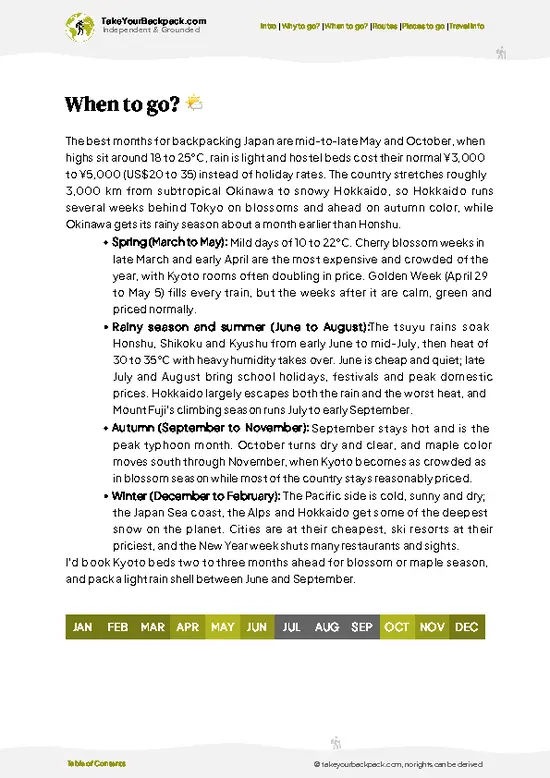
  • Weather: Spring (April to June) and autumn (September to November) bring the best weather—mild and dry. Summers can be hot and humid, hitting 30°C (86°F), while winters drop below freezing, often with snow.

  • Temperature: Expect comfortable 15-22°C (59-72°F) in spring and autumn. Winter chills hover around -2 to 5°C (28-41°F), so pack layers if you go then.

  • Daylight Hours: Spring and autumn offer roughly 11-13 hours of daylight—enough to hit the trails without rushing. Winter days shrink to 9-10 hours, limiting hiking time.

  • Crowds: Autumn’s peak foliage draws crowds mid-October to early November. Spring cherry blossoms bring a surge in April. For quiet trails, aim for late May or early October.

  • Seasonal Activities: Autumn is prime for leaf-peeping and local festivals. Spring offers
read more 👉

  • Weather: Spring (April to June) and autumn (September to November) bring the best weather—mild and dry. Summers can be hot and humid, hitting 30°C (86°F), while winters drop below freezing, often with snow.

  • Temperature: Expect comfortable 15-22°C (59-72°F) in spring and autumn. Winter chills hover around -2 to 5°C (28-41°F), so pack layers if you go then.

  • Daylight Hours: Spring and autumn offer roughly 11-13 hours of daylight—enough to hit the trails without rushing. Winter days shrink to 9-10 hours, limiting hiking time.

  • Crowds: Autumn’s peak foliage draws crowds mid-October to early November. Spring cherry blossoms bring a surge in April. For quiet trails, aim for late May or early October.

  • Seasonal Activities: Autumn is prime for leaf-peeping and local festivals. Spring offers blooming azaleas and fresh greenery. Winter’s snow transforms the valley into a serene, icy playground but limits access.

  • Price Fluctuations: Expect higher accommodation rates during peak foliage and cherry blossom seasons. Shoulder months like May and September offer better deals and more availability.


Pro-tip: Arrive midweek in late May or early October to dodge crowds and snag lower prices—plus, the trails feel like your own secret playground.


source: climatestotravel.comJANJanuary: fair for travelingFEBFebruary: fair for travelingMARMarch: good for travelingAPRApril: excellent for travelingMAYMay: highly recommended for travelingJUNJune: highly recommended for travelingJULJuly: fair for travelingAUGAugust: fair for travelingSEPSeptember: highly recommended for travelingOCTOctober: excellent for travelingNOVNovember: highly recommended for travelingDECDecember: fair for traveling
japan-region-kiso-valley
© Google |

✈️ The backpacker research shortcutJapan Travel Guide

An offline-friendly backpacking guide with optimized travel routes, ranked highlights, transport advice, and the best areas to stay.
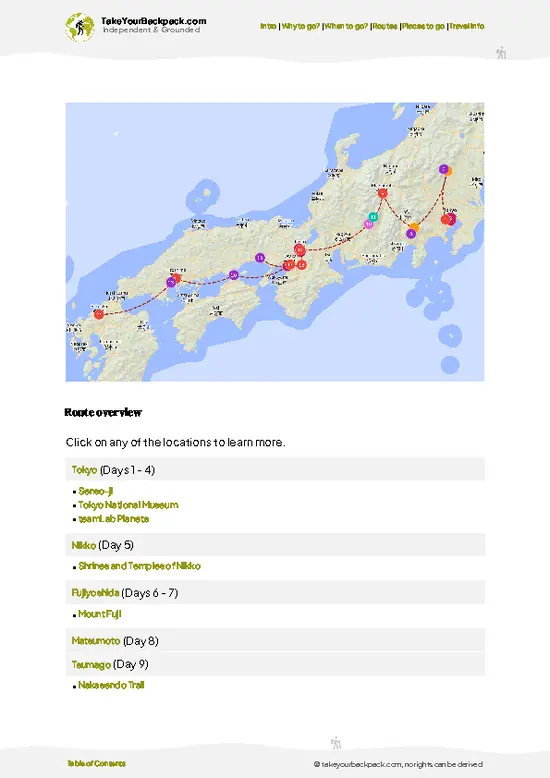
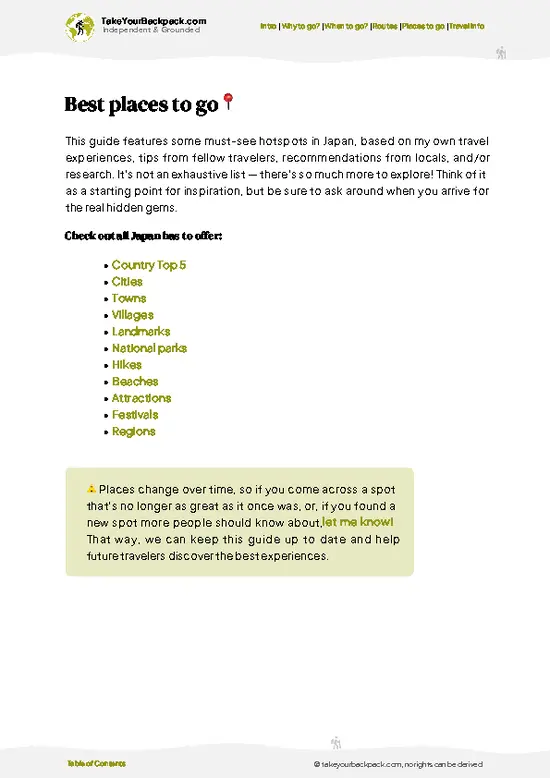
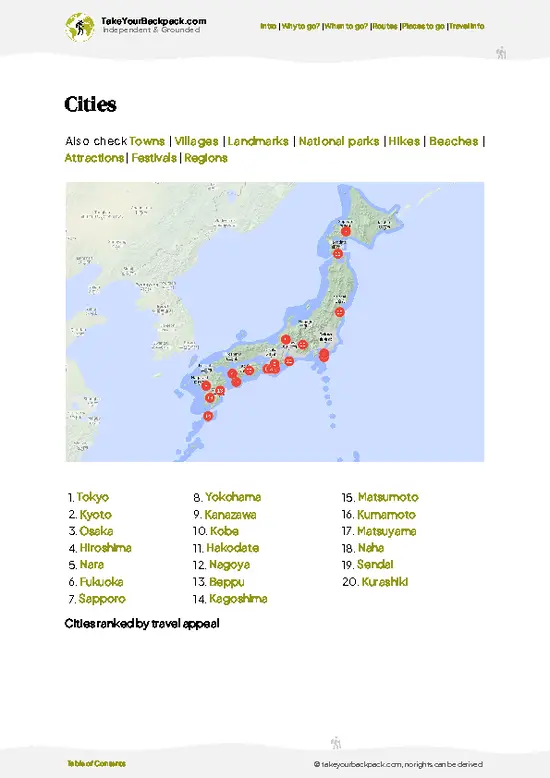
example page 0 from our offline Travel Guide for Japanexample page 1 from our offline Travel Guide for Japanexample page 2 from our offline Travel Guide for Japanexample page 3 from our offline Travel Guide for Japanexample page 4 from our offline Travel Guide for Japanexample page 5 from our offline Travel Guide for Japanexample page 6 from our offline Travel Guide for Japanexample page 7 from our offline Travel Guide for Japan
The digital guide (490 pages) contains:
140 highlights, ranked by travel appeal
Optimized 7, 14 & 21-day travel routes
Cities, national parks, beaches, historical sites, ...
How to get around
Offline-friendly for travel without Wi-Fi
👉 Click to see all 30+ guide features

📅 Plan smarter in minutes, not weeks
Month by month travel advice
Festivals & national holidays
Budget expectations

🗺️ Go to the right places, skip the overrated ones
Honest pros & cons of destinations
Top hikes, parks & viewpoints
Lesser-known places most travelers miss
Clear “worth it vs skip it” guidance

🛏️ Travel smoothly without rookie mistakes
Best areas to stay
Transport systems explained simply
Common scams & safety advice
SIM cards, money & practical tips

🌍 Understand the country, not just visit it
Culture & traditions
52 Essential phrases & customs
Festivals worth planning around
Traveler-friendly historical context
Insights that make places more meaningful

📱 Built for real travel conditions
Fully downloadable PDF
Works completely offline
Optimized for phone use
Useful in remote areas & buses
Everything in one place
Save weeks of stressful planning
Get instant access to the full guide directly. 30-day money-back guarantee.


Sent to your inbox immediately after payment • 100% Secure Checkout
Best Backpacking Travel Advisor 2025 tourism awardBest Backpacking
Travel Advisor
2025
What others say about Take Your Backpack Guides:
⭐⭐⭐⭐⭐
Fantastic, amazing amount of information!
⭐⭐⭐⭐⭐
My goodness this is amazing, it's what I've been looking for hats off too you!
⭐⭐⭐⭐⭐
I think this is absolutely BRILLIANT
⭐⭐⭐⭐
Very complete and informative. It's still missing places, but I gotta to commend you
⭐⭐⭐⭐⭐
This is truly amazing, thank you, can't wait to explore it with my kids!
⭐⭐⭐⭐⭐
Awesome resource, thank you!
⭐⭐⭐⭐⭐
This is amazing! Can't wait to explore the ones I haven't seen
⭐⭐⭐⭐
I love this! Well done, great idea.
⭐⭐⭐⭐⭐
Thanks for taking the time to make this gem!
⭐⭐⭐⭐⭐
This might be the best website I've ever seen.
⭐⭐⭐⭐⭐
Congratulations, and thank you so much for your work; it's incredibly valuable.
⭐⭐⭐⭐
In all seriousness I think you did a great job pointing out the important spots
⭐⭐⭐⭐⭐
10/10 very good
⭐⭐⭐⭐⭐
As someone who's only just starting to visit regularly this is awesome, thank you.
⭐⭐⭐⭐
Thank you very much! I'm going to visit my dad, it's going to be very useful!
⭐⭐⭐⭐⭐
This is really cool! We'll be travelling for the first time and this definitely come in handy.
⭐⭐⭐⭐⭐
You are now our minister of culture, congratulations 👨‍💼
⭐⭐⭐⭐⭐
Just wanted to tell you that this is a pearl! Going to follow your recommendations.
⭐⭐⭐⭐⭐
This is so cool. I'll definitely be using the resource for my travels soon.
⭐⭐⭐⭐⭐
This is very impressive! Good work.
⭐⭐⭐⭐⭐
This is an amazing and informative site. Very well done!

🛏️ Where to stay?Choosing the right base

In the Kiso Valley, you’ve got a few standout spots that scream backpacker-friendly.

Start with Kiso-Fukushima. This town has a laid-back vibe, perfect for solo travelers. The streets are lined with traditional wooden houses, and you can easily strike up conversations with locals over a bowl of soba. Plus, it’s a great base for hiking the Nakasendo Trail.

Then there’s Narai, often dubbed the “Post Town.” It’s picturesque and feels like stepping back in time. The narrow lanes are buzzing with fellow travelers, and you can find cozy spots to share stories over tea. Don’t miss the chance to explore … read more 👉
In the Kiso Valley, you’ve got a few standout spots that scream backpacker-friendly.

Start with Kiso-Fukushima. This town has a laid-back vibe, perfect for solo travelers. The streets are lined with traditional wooden houses, and you can easily strike up conversations with locals over a bowl of soba. Plus, it’s a great base for hiking the Nakasendo Trail.

Then there’s Narai, often dubbed the “Post Town.” It’s picturesque and feels like stepping back in time. The narrow lanes are buzzing with fellow travelers, and you can find cozy spots to share stories over tea. Don’t miss the chance to explore the local craft shops; they’re a treasure trove of unique souvenirs.

Finally, check out Tsumago. This village is all about that rustic charm. It’s car-free, which means you can wander freely and soak in the atmosphere. The community is welcoming, and you’ll find plenty of opportunities to connect with other backpackers.

Each of these spots offers a blend of safety, social interaction, and budget-friendly options, making them ideal for your Kiso Valley adventure.

🚌 Getting aroundHow to get from A to B

Kiso Valley is a realm where time feels fluid, almost like a gentle stream winding through the mountains. Here, rigid schedules take a backseat to the rhythm of nature and the pulse of local life. You won’t find the frenetic energy of Tokyo; instead, there’s a laid-back vibe that encourages you to embrace spontaneity. Sure, you can plan your day, but the real magic happens when you let the valley guide you. Whether you’re hopping between charming post towns or soaking in an onsen, the journey itself becomes part of the experience.

Here’s the lowdown on how to navigate this enchanting region without breaking the bank:


  • Train: The Kiso Valley is serviced by the JR Chuo Line. Trains run approximately every hour, with the first train leaving around 6:00 AM and the last around 9:00 PM. A one-way
read more 👉
Kiso Valley is a realm where time feels fluid, almost like a gentle stream winding through the mountains. Here, rigid schedules take a backseat to the rhythm of nature and the pulse of local life. You won’t find the frenetic energy of Tokyo; instead, there’s a laid-back vibe that encourages you to embrace spontaneity. Sure, you can plan your day, but the real magic happens when you let the valley guide you. Whether you’re hopping between charming post towns or soaking in an onsen, the journey itself becomes part of the experience.

Here’s the lowdown on how to navigate this enchanting region without breaking the bank:


  • Train: The Kiso Valley is serviced by the JR Chuo Line. Trains run approximately every hour, with the first train leaving around 6:00 AM and the last around 9:00 PM. A one-way ticket costs about ¥1,500, taking you through stunning landscapes at a comfortable pace.


  • Bus: Local buses connect the key towns like Nakatsugawa, Magome, and Tsumago. They typically run every 30-60 minutes, with the first bus around 7:00 AM and the last around 6:00 PM. Fares range from ¥500 to ¥1,000, depending on the distance. Buses are a bit slower but offer a chance to soak in the scenery.


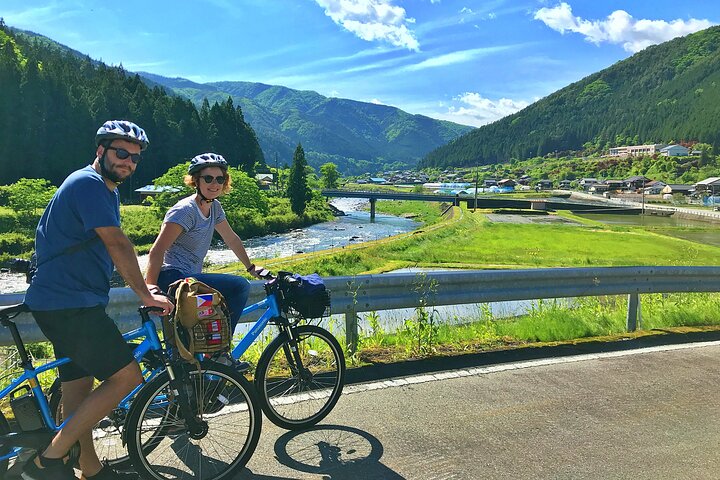
  • Bicycle Rentals: Renting a bike is a fantastic way to explore at your own pace. Prices hover around ¥1,000 for a day. Most rental shops open around 8:00 AM and close by 5:00 PM. You’ll feel like a local as you pedal through quaint villages and lush landscapes.


  • Walking: The Kiso Valley is famous for its Nakasendo Trail, a historic route connecting Kyoto and Tokyo. Walking between towns like Magome and Tsumago takes about 2-3 hours. It’s free, and the experience is priceless—just make sure to wear good shoes!


For a tactical tip: start your day early. Catch the first train or bus to maximize daylight and avoid the crowds. This way, you can enjoy the serenity of the valley before the day-trippers arrive. Trust me, the early bird gets the best views and the quietest trails.

🍲 FoodWhat to Eat & Drink

In the Kiso Valley, food is a celebration of local flavors and traditions. You can’t miss the Kiso beef, known for its rich marbling and melt-in-your-mouth texture. Try it grilled or in a hearty stew. Pair it with soba noodles, made from local buckwheat, served hot or cold, and you’ll understand why this dish is a staple.

For a true local experience, hit up the morning markets in towns like Narai. Stalls overflow with fresh produce, pickled vegetables, and handmade snacks. Grab a kakigori (shaved ice) on a hot day, flavored with sweet syrup, and feel the coolness wash over you.

Cafés dot the valley, often serving matcha tea that’s whisked to perfection. Sip it slowly while soaking in the atmosphere—locals chatting, the sound of water flowing nearby.

Dining here is relaxed. Don’t rush; … read more 👉
In the Kiso Valley, food is a celebration of local flavors and traditions. You can’t miss the Kiso beef, known for its rich marbling and melt-in-your-mouth texture. Try it grilled or in a hearty stew. Pair it with soba noodles, made from local buckwheat, served hot or cold, and you’ll understand why this dish is a staple.

For a true local experience, hit up the morning markets in towns like Narai. Stalls overflow with fresh produce, pickled vegetables, and handmade snacks. Grab a kakigori (shaved ice) on a hot day, flavored with sweet syrup, and feel the coolness wash over you.

Cafés dot the valley, often serving matcha tea that’s whisked to perfection. Sip it slowly while soaking in the atmosphere—locals chatting, the sound of water flowing nearby.

Dining here is relaxed. Don’t rush; savor each bite. When eating, it’s customary to say “Itadakimasu” before your meal and “Gochisousama” afterward. These little phrases show respect for the food and the effort behind it. Embrace the slow food culture, and you’ll leave with a full belly and a happy heart.

Other Japanese regions near Kiso Valley

Explore more nearby:

  • Japanese Alps—alpine peaks, mountain huts, seasonal trails| 76 km away
  • Kansai region—imperial cities, culinary districts, temple complexes| 226 km away
  • Sado Island—gold mines, taiko drumming, rugged shores| 262 km away

👉 Discover all regions

Or checkout all Japan has to offer (think cities, towns, villages, national parks, hikes, beaches, festivals)
Country photo of Japan

We 💚 feedbackSumming up the experience

Kiso Valley is a slice of Japan that feels like stepping back in time. The ancient post towns are a dream for anyone craving authentic culture and stunning hikes. But here’s the catch: it’s not the easiest place to get to. Expect some travel time and limited transport options. If you’re up for the adventure, though, the payoff is a rich experience that’s hard to find elsewhere.

✈️ When did I visit Japan?
As part of my 1.5 year travel around the world trip, I visited Japan in August 2015.

✍️ Help improve this page!
The information on this page is based on my own backpacking experience in Japan, supplemented with up-to-date research and feedback from other travelers. Travel details can change, so if you notice anything outdated or incomplete, feel free to let me know.


🙋‍♂️ Give feedback

👋 Meet the founderWho’s Behind Take Your Backpack?

Johan, backpacker and founder of TakeYourBackpackHi, I’m Johan (Netherlands 🇳🇱), the creator of TakeYourBackpack. Over the past decade, I’ve backpacked through 80+ countries across six continents, gaining extensive experience with independent travel, long-term trips, and overland routes.

This site is built on a combination of firsthand travel experience and carefully curated insights from other backpackers. Many guides are based on places I’ve personally visited, while others bring together tips, observations, and practical advice shared by trusted travelers I’ve met along the way.

The goal is to provide realistic, experience-driven guidance — not generic itineraries — so you can explore destinations with better context, clearer expectations, and more confidence.

Get full Japan guide •
Instant download • 140 highlights • Full Offline guide