×

Japan🇯🇵 | citiesKochiSunday market, castle, Pacific coastline | things to do and best time to go

Explore IwakuniExplore Tottori

Backpacking in Kochi
👌 Worth visitingcity ranked #32
By Johan Kruseman 🇳🇱 | Updated September 4, 2026

The yuzu smoke from a tiny yakitori stall curls into the cool river air while the tram bell clangs and an old man in a straw hat laughs at your terrible Japanese. This is Kochi, on Shikoku’s south coast, far from Japan’s big-city circuit. It’s cheap, relaxed, and safe, with castle views, Sunday market chaos, and late-night hirome ichiba food-hall beers instead of neon clubs. Fewer hostels mean fewer backpackers, but the ones who make it here actually talk to each other.

Discover everything you want to know in the 📖 Japan Travel Guide.


Get your Japan guide
140 ranked highlights, routes & tips, works offline (482 pages)
Loading the map 🌍
CLICK TO FILTER
cities
towns
villages
landmarks
national parks
hikes
beaches
attractions
festivals
regions
SHOW COUNTRY’S BESTSHOW ALL

✨ Why go?
Ranked #32 city in Japan
What makes this city worth visiting

Kochi is a strategic basecamp for backpackers, offering a blend of affordable hostels and delicious local food that keeps your budget in check. The city is walkable, making it easy to explore its vibrant streets and soak in the culture without needing a bus or taxi. With a variety of highlights to experience, you can fill your days without feeling rushed. The nightlife is lively yet laid-back, perfect for unwinding after a day of adventure. Plus, it’s a convenient launchpad for day trips, ensuring you maximize your time in this captivating region.
Want to include Kochi in your Japan route?
Create a personalized Japan itinerary that includes Kochi and the places that fit your trip — based on your travel style, budget, and available time. Get your route in seconds.

Generate my trip

💡 HighlightsTop highlights of Kochi

  • Kōchi Castle — One of the few Japanese castles with an original wooden keep you can climb; great views over the city, samurai rooms to peek through, and a proper sense of place that’s not just a photo spot.
  • Hirome Market — A raucous indoor-outdoor food hall where locals eat, drink, and share tables; perfect for trying tataki (seared bonito) and cheap local izakaya-style stalls in one lively space.
  • Katsurahama Beach & Sakamoto Ryōma Statue — A scenic stretch of black sand with a dramatic view out to the Pacific and the iconic Ryōma statue; it’s both shrine-y and postcard-y, and good for sunset walks.
  • Sakamoto Ryōma Memorial Museum — Compact, well-curated, and full of documents and artifacts about the man who helped modernize Japan; it gives you context that makes the Ryōma statue and local
read more 👉
  • Kōchi Castle — One of the few Japanese castles with an original wooden keep you can climb; great views over the city, samurai rooms to peek through, and a proper sense of place that’s not just a photo spot.
  • Hirome Market — A raucous indoor-outdoor food hall where locals eat, drink, and share tables; perfect for trying tataki (seared bonito) and cheap local izakaya-style stalls in one lively space.
  • Katsurahama Beach & Sakamoto Ryōma Statue — A scenic stretch of black sand with a dramatic view out to the Pacific and the iconic Ryōma statue; it’s both shrine-y and postcard-y, and good for sunset walks.
  • Sakamoto Ryōma Memorial Museum — Compact, well-curated, and full of documents and artifacts about the man who helped modernize Japan; it gives you context that makes the Ryōma statue and local lore mean more.
  • Kōchi Sunday Market (Hiromachi/Otesuji) — One of Japan’s oldest continuous street markets, stretching along Otesuji in front of the castle; morning is best for food stalls, local produce, and watching city life unfold.
  • Makino Botanical Garden (Godaisan) — Built on the slopes of Mount Godai, this is a lovely mix of native-species collections, seasonal flowers, and quiet paths—good for a peaceful afternoon away from the city bustle.
  • Chikurin-ji Temple (Godaisan) — A serene Buddhist temple on Mount Godai, linked to the Shikoku pilgrimage; it’s atmospheric and easy to combine with the botanical garden and viewpoints nearby.
  • Harimayabashi & Obiyamachi shopping district — That tiny, colorful Harimaya bridge is a local icon; the surrounding streets are full of tiny shops, retro cafés and late-night izakayas where you’ll feel the city’s daily rhythm.
  • Kōchi Prefectural Museum of Art — A nicely proportioned museum with local and regional art, plus rotating shows; it’s a quieter cultural stop that often highlights Tosa crafts and artists.
  • Tosaden (Kōchi tram) experience — Not flashy, but hopping the tram is one of the best low-effort ways to feel the city: short rides, friendly drivers, and a moving window onto neighborhoods you’d otherwise miss.
For easy day trips from Kōchi, check out the Shimanto River (best for kayaking and raw countryside), the Niyodo River / Niyodo Blue spots (stunning river color), and Cape Ashizuri (wild coastal cliffs)—my personal favorite for a day out is the Shimanto River.
Spotted a mistake or missing something? Contact us.

Things to do in Kochi

Ratings based on Tripadvisor reviews. When you book through this link, you support our work at no extra cost to you.

🏘️ NeighborhoodsWhere things are and how it's laid out

Kochi is a city where tradition meets modernity, making it a fascinating stop for backpackers. Here’s how the neighborhoods stack up:

Chuo Ward: The heart of Kochi, buzzing with shops and eateries. It’s walkable, with a vibrant nightlife scene. Perfect for short stays, but can get pricey.

Harimaya-cho: Known for its local markets and street food. Affordable and easy to navigate on foot. Great for longer stays if you want to soak in the local culture without breaking the bank.

Kochi Castle Area: A quieter vibe, ideal for history buffs. Close to transport links, making it easy to explore. Best for those who prefer a peaceful retreat after a day of sightseeing.

Yasuda: A residential area with a laid-back atmosphere. Inexpensive and less touristy, it’s perfect for longer stays if you want to live like a local.

⌛️ 1 day1-day itinerary for Kochi

Kochi, Japan, is a captivating blend of rich history and vibrant culture, nestled along the Shikoku coastline. Start your day in the bustling Hirome Market, where you can savor local delicacies like katsuo no tataki—seared bonito that’s a must-try. The lively atmosphere sets the perfect tone for your adventure.

After breakfast, stroll through the nearby Kochi Castle. This well-preserved gem offers stunning views and a glimpse into Japan’s feudal past. Spend some time wandering the castle grounds, soaking in the serene gardens.

In the afternoon, head to the Katsurahama Beach. It’s a bit off the beaten path, but the tranquil scenery and the statue of Sakamoto Ryoma make it worthwhile. Grab a coffee at a local café and enjoy the ocean breeze.

As evening falls, return to the city center and … read more 👉
Kochi, Japan, is a captivating blend of rich history and vibrant culture, nestled along the Shikoku coastline. Start your day in the bustling Hirome Market, where you can savor local delicacies like katsuo no tataki—seared bonito that’s a must-try. The lively atmosphere sets the perfect tone for your adventure.

After breakfast, stroll through the nearby Kochi Castle. This well-preserved gem offers stunning views and a glimpse into Japan’s feudal past. Spend some time wandering the castle grounds, soaking in the serene gardens.

In the afternoon, head to the Katsurahama Beach. It’s a bit off the beaten path, but the tranquil scenery and the statue of Sakamoto Ryoma make it worthwhile. Grab a coffee at a local café and enjoy the ocean breeze.

As evening falls, return to the city center and explore the vibrant nightlife in the Chuo area. Try some local sake and enjoy the friendly atmosphere. Kochi’s charm lies in its balance of tradition and modernity, making every moment feel special.
Turn your Kochi visit into an Japan adventure
Build a complete Japan route with Kochi, hidden gems, must-see destinations, and realistic travel times included.

Generate my trip

🌤️ When to go?Choosing the right time of year


  • Weather: Kochi’s subtropical climate means hot, humid summers with frequent rain, especially June to August. Winters are mild and dry, making December to February more comfortable for trekking and exploring.

  • Temperature: Summer highs hit 30-33°C (86-91°F), often sticky. Winter lows hover around 5-10°C (41-50°F), crisp but manageable with layers.

  • Daylight Hours: Longer days from April to September offer up to 14 hours of light, ideal for maximizing sightseeing. Shorter winter days limit outdoor time but reduce heat stress.

  • Crowds: Tourist numbers spike during Golden Week (late April–early May) and summer holidays, pushing prices and crowd density up. Off-peak months see fewer travelers and more authentic local interactions.

  • Seasonal Activities: Spring cherry blossoms and autumn foliage
read more 👉

  • Weather: Kochi’s subtropical climate means hot, humid summers with frequent rain, especially June to August. Winters are mild and dry, making December to February more comfortable for trekking and exploring.

  • Temperature: Summer highs hit 30-33°C (86-91°F), often sticky. Winter lows hover around 5-10°C (41-50°F), crisp but manageable with layers.

  • Daylight Hours: Longer days from April to September offer up to 14 hours of light, ideal for maximizing sightseeing. Shorter winter days limit outdoor time but reduce heat stress.

  • Crowds: Tourist numbers spike during Golden Week (late April–early May) and summer holidays, pushing prices and crowd density up. Off-peak months see fewer travelers and more authentic local interactions.

  • Seasonal Activities: Spring cherry blossoms and autumn foliage add color but attract crowds. Summer festivals bring energy but also humidity and heat.

  • Price Fluctuations: Accommodation and transport costs rise sharply during peak seasons and festivals. Booking off-season can save a significant chunk of your budget.


Pro-tip: Aim for late autumn—cool, fewer crowds, and vibrant nature without the premium prices. It’s the sweet spot where comfort meets value.


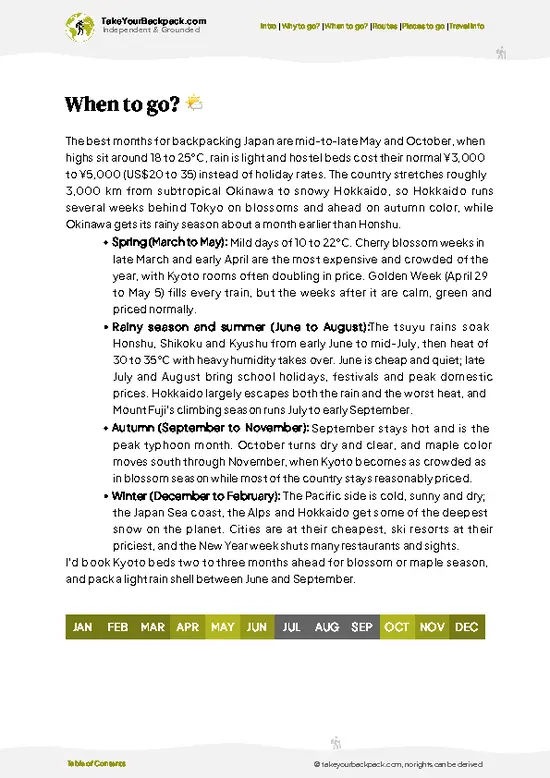
source: climatestotravel.comJANJanuary: highly recommended for travelingFEBFebruary: highly recommended for travelingMARMarch: good for travelingAPRApril: good for travelingMAYMay: fair for travelingJUNJune: fair for travelingJULJuly: fair for travelingAUGAugust: fair for travelingSEPSeptember: good for travelingOCTOctober: excellent for travelingNOVNovember: excellent for travelingDECDecember: highly recommended for traveling
when-to-go

✈️ The backpacker research shortcutJapan Travel Guide

An offline-friendly backpacking guide with optimized travel routes, ranked highlights, transport advice, and the best areas to stay.
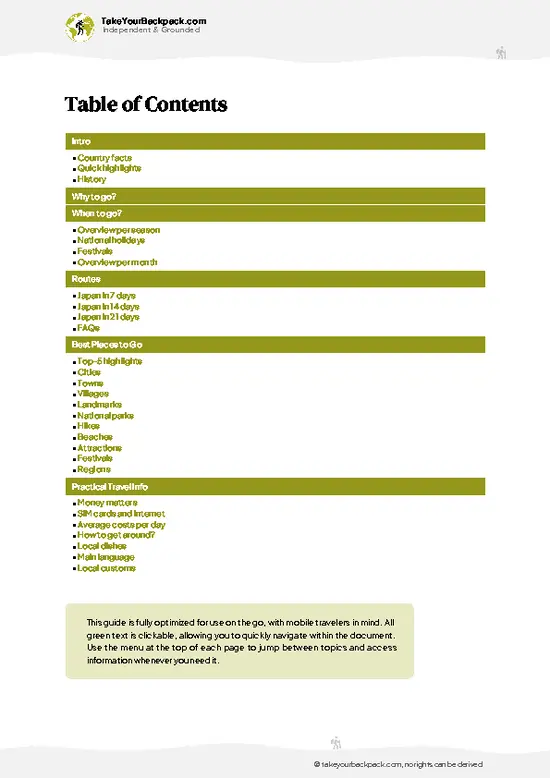
example page 0 from our offline Travel Guide for Japan
example page 1 from our offline Travel Guide for Japan
example page 2 from our offline Travel Guide for Japan
example page 3 from our offline Travel Guide for Japan
example page 4 from our offline Travel Guide for Japan
example page 5 from our offline Travel Guide for Japan
example page 6 from our offline Travel Guide for Japan
example page 7 from our offline Travel Guide for Japan
The digital guide (482 pages) contains:
140 highlights, ranked by travel appeal
Optimized 7, 14 & 21-day travel routes
Cities, national parks, landmarks, beaches
How to get around
Offline-friendly for travel without Wi-Fi
👉 Click to see all 30+ guide features

📅 Plan smarter in minutes, not weeks
Month by month travel advice
Festivals & national holidays
Budget expectations

🗺️ Go to the right places, skip the overrated ones
Honest pros & cons of destinations
Top hikes, parks & viewpoints
Lesser-known places most travelers miss
Clear “worth it vs skip it” guidance

🛏️ Travel smoothly without rookie mistakes
Best areas to stay
Transport systems explained simply
Common scams & safety advice
SIM cards, money & practical tips

🌍 Understand the country, not just visit it
Culture & traditions
52 Essential phrases & customs
Festivals worth planning around
Traveler-friendly historical context
Insights that make places more meaningful

📱 Built for real travel conditions
Fully downloadable PDF
Works completely offline
Optimized for phone use
Useful in remote areas & buses
Everything in one place
Save weeks of stressful planning
Get instant access to your full guide. 30‑day money-back guarantee.
+ Add another guide for just US$7.80

By proceeding you agree to our terms.
Sent to your inbox immediately after payment • 100% Secure Checkout
Best Backpacking Travel Advisor 2025 tourism awardBest Backpacking
Travel Advisor
2025
What others say about Take Your Backpack Guides:
⭐⭐⭐⭐⭐
Fantastic, amazing amount of information!
⭐⭐⭐⭐⭐
My goodness this is amazing, it's what I've been looking for hats off too you!
⭐⭐⭐⭐⭐
I think this is absolutely BRILLIANT
⭐⭐⭐⭐
Very complete and informative. It's still missing places, but I gotta to commend you
⭐⭐⭐⭐⭐
This is truly amazing, thank you, can't wait to explore it with my kids!
⭐⭐⭐⭐⭐
Awesome resource, thank you!
⭐⭐⭐⭐⭐
This is amazing! Can't wait to explore the ones I haven't seen
⭐⭐⭐⭐
I love this! Well done, great idea.
⭐⭐⭐⭐⭐
Thanks for taking the time to make this gem!
⭐⭐⭐⭐⭐
This might be the best website I've ever seen.
⭐⭐⭐⭐⭐
Congratulations, and thank you so much for your work; it's incredibly valuable.
⭐⭐⭐⭐
In all seriousness I think you did a great job pointing out the important spots
⭐⭐⭐⭐⭐
10/10 very good
⭐⭐⭐⭐⭐
As someone who's only just starting to visit regularly this is awesome, thank you.
⭐⭐⭐⭐
Thank you very much! I'm going to visit my dad, it's going to be very useful!
⭐⭐⭐⭐⭐
This is really cool! We'll be travelling for the first time and this definitely come in handy.
⭐⭐⭐⭐⭐
You are now our minister of culture, congratulations 👨‍💼
⭐⭐⭐⭐⭐
Just wanted to tell you that this is a pearl! Going to follow your recommendations.
⭐⭐⭐⭐⭐
This is so cool. I'll definitely be using the resource for my travels soon.
⭐⭐⭐⭐⭐
This is very impressive! Good work.
⭐⭐⭐⭐⭐
This is an amazing and informative site. Very well done!

🛏️ Where to stay?Choosing the right base

Kochi’s best backpacker base is undeniably around Harimayabashi and the nearby Otemachi district. This area strikes a smart balance: it’s safe, lively, and packed with affordable hostels that attract solo travelers and budget adventurers. You’re close to the main train station, which means easy access to day trips without wasting time or money on complicated transfers. The vibe here is relaxed but social—cafés and small eateries buzz with locals and travelers alike, making it easy to strike up conversations. Compared to quieter residential zones or pricier waterfront areas, Harimayabashi offers … read more 👉
Kochi’s best backpacker base is undeniably around Harimayabashi and the nearby Otemachi district. This area strikes a smart balance: it’s safe, lively, and packed with affordable hostels that attract solo travelers and budget adventurers. You’re close to the main train station, which means easy access to day trips without wasting time or money on complicated transfers. The vibe here is relaxed but social—cafés and small eateries buzz with locals and travelers alike, making it easy to strike up conversations. Compared to quieter residential zones or pricier waterfront areas, Harimayabashi offers a practical hub where comfort meets connection without breaking the bank.

🚌 Getting aroundTransportation options and practical tips

Kochi moves at its own rhythm—a blend of old-world calm and bursts of bustling energy. It’s not a city where every minute is accounted for, but neither is it a free-for-all. You’ll find a pulse that’s part laid-back coastal town, part working port, where timing is flexible but not absent. Understanding this flow is your first win: you don’t have to race the clock, but you do need to pick your moments and modes wisely to maximize your time, money, and comfort.


  • Walking: The most budget-friendly and immersive way to explore Kochi’s compact neighborhoods, especially Fort Kochi. No cost, zero schedule, but prepare for uneven sidewalks and tropical heat.

  • Local Buses: Runs roughly from 5:30 AM to 10 PM, fares under ₹20. Slow and crowded during rush hours, but unbeatable for stretching your
read more 👉
Kochi moves at its own rhythm—a blend of old-world calm and bursts of bustling energy. It’s not a city where every minute is accounted for, but neither is it a free-for-all. You’ll find a pulse that’s part laid-back coastal town, part working port, where timing is flexible but not absent. Understanding this flow is your first win: you don’t have to race the clock, but you do need to pick your moments and modes wisely to maximize your time, money, and comfort.


  • Walking: The most budget-friendly and immersive way to explore Kochi’s compact neighborhoods, especially Fort Kochi. No cost, zero schedule, but prepare for uneven sidewalks and tropical heat.

  • Local Buses: Runs roughly from 5:30 AM to 10 PM, fares under ₹20. Slow and crowded during rush hours, but unbeatable for stretching your rupee and seeing everyday life up close.

  • Auto Rickshaws: Available 24/7, fares start around ₹30 for short trips. Faster than buses, more flexible, but negotiate prices upfront or insist on the meter to avoid tourist premiums.

  • Ferry Services: Connects mainland Kochi with islands like Vypin and Willingdon. Runs from early morning to evening, fares ₹5-₹15. A scenic, breezy alternative that saves time compared to road detours.

  • App-Based Cabs (Ola, Uber): Operate all day, fares vary but generally affordable for short hops. Offers comfort and air conditioning, ideal when you want to skip the heat or travel late at night safely.

👛 Costs (as of 4 September 2026)How expensive it really is

Backpacking in Kochi, Japan, demands a clear-eyed look at where your money goes so you can play the budget game smartly. Here’s the breakdown of what you’ll typically spend daily:
  • Dorm Accommodation (High Season): Expect to pay around $25 to $35 per night. High season here means cherry blossom time and major festivals, when beds fill fast and prices spike.
  • Dorm Accommodation (Off-Season): Drop to about $15 to $25 per night. Off-season offers a quieter, cheaper stay, perfect if you want to stretch your funds without sacrificing safety or cleanliness.
  • Meals: Budget roughly $10 to $20 daily. Street food stalls and local eateries serve up hearty, authentic meals for $3 to $7 each, while occasional splurges at mid-range restaurants push the upper limit.
  • Local Transport: Single bus rides typically
read more 👉
Backpacking in Kochi, Japan, demands a clear-eyed look at where your money goes so you can play the budget game smartly. Here’s the breakdown of what you’ll typically spend daily:
  • Dorm Accommodation (High Season): Expect to pay around $25 to $35 per night. High season here means cherry blossom time and major festivals, when beds fill fast and prices spike.
  • Dorm Accommodation (Off-Season): Drop to about $15 to $25 per night. Off-season offers a quieter, cheaper stay, perfect if you want to stretch your funds without sacrificing safety or cleanliness.
  • Meals: Budget roughly $10 to $20 daily. Street food stalls and local eateries serve up hearty, authentic meals for $3 to $7 each, while occasional splurges at mid-range restaurants push the upper limit.
  • Local Transport: Single bus rides typically cost $1.50 to $2.50. Kochi’s buses cover most tourist spots efficiently, so factor in about $5 daily if you’re hopping around.
  • City Transport Pass: A day pass for unlimited bus rides runs about $4 to $6. If you plan multiple trips, this is a no-brainer for saving both time and money.
  • Basic Activities/Entry Fees: Museums, temples, and gardens usually charge between $2 and $7. Budget $5 to $10 daily if you want to explore a few spots without breaking the bank.
  • Miscellaneous Expenses: Snacks, bottled water, occasional coffee, or small souvenirs add up to around $5 to $10 daily. It’s the buffer zone for those little indulgences that make travel feel personal.

Add it all up, and you’re looking at a daily budget range of roughly $45 to $80. The trick is balancing when to splurge and when to save—like choosing a dorm in off-season but grabbing a city transport pass to maximize your sightseeing. Kochi rewards the traveler who understands these trade-offs and plans accordingly.


source: welcome.city
⚠️ Prices can change and everyone travels differently, so take this as a rough guide. Hope it helps you plan your adventure!

🚌 Day tripsBest day trips from Kochi

Kochi is a fantastic base for day trips, offering a blend of culture, nature, and history just a train ride away.

Shikoku Island
A quick ferry ride takes you to Shikoku, where you can explore the 88 Temple Pilgrimage route. The journey is about 30 minutes, and you’ll find yourself immersed in serene landscapes and spiritual sites. Budget around ¥1,500 for transport and a meal. Spring is ideal for cherry blossoms, but fall colors are equally stunning. First-timers often underestimate the time needed to fully appreciate the temples, so plan for a leisurely pace.


Kochi Castle
Just a 15-minute train ride from the city center, Kochi Castle is a must-see. This well-preserved fortress offers a glimpse into Japan’s feudal past. Entry is around ¥420, and you can easily spend a couple of hours … read more 👉
Kochi is a fantastic base for day trips, offering a blend of culture, nature, and history just a train ride away.

Shikoku Island
A quick ferry ride takes you to Shikoku, where you can explore the 88 Temple Pilgrimage route. The journey is about 30 minutes, and you’ll find yourself immersed in serene landscapes and spiritual sites. Budget around ¥1,500 for transport and a meal. Spring is ideal for cherry blossoms, but fall colors are equally stunning. First-timers often underestimate the time needed to fully appreciate the temples, so plan for a leisurely pace.


Kochi Castle
Just a 15-minute train ride from the city center, Kochi Castle is a must-see. This well-preserved fortress offers a glimpse into Japan’s feudal past. Entry is around ¥420, and you can easily spend a couple of hours wandering the grounds and enjoying the views. Visit in the morning to avoid crowds, and don’t miss the adjacent market for local snacks. Many overlook the castle’s museum, which is packed with fascinating artifacts.


Niyodo River
For a refreshing escape, head to the Niyodo River, about an hour from Kochi. Known for its crystal-clear waters, it’s perfect for a swim or a picnic. Expect to spend around ¥1,000 on transport and snacks. Summer is prime time for river activities, but spring offers beautiful blooms along the banks. A common mistake is not checking the weather; the river can be less inviting in the rain.
Want to know what more Japan offers?
The Japan Travel Guide describes 140 highlights, from cities to national parks, from beaches to hikes

Get the Travel Guide -

🍲 FoodEating & Drinking in Kochi

Kochi’s culinary scene is a feast for the senses. Dive into katsu curry, where crispy pork meets rich, savory sauce, or savor yaki-imo, sweet roasted sweet potatoes sold by street vendors. The local markets buzz with energy, offering fresh seafood and vibrant produce.

For drinks, don’t miss shochu, a distilled spirit that locals sip casually, often with a splash of water or on the rocks. The izakaya culture invites you to share small plates and laughter, fostering a communal vibe. Remember to say “itadakimasu” before your meal; it’s a nod to gratitude. Embrace the flavors and let the city’s spirit guide your palate.

🛡️ SafetyStaying Safe: What Travelers Should Know

Kochi is generally safe, but staying aware enhances your experience. Stick to well-lit areas at night, especially if you’re solo; the streets can be quiet, and it’s easy to lose your bearings.

While scams are rare, be cautious around overly friendly locals offering unsolicited help—politely decline and keep moving. Everyday annoyances might include language barriers; a translation app can be your best friend. Carry yourself confidently, and you’ll blend in seamlessly, making the most of this charming city.

FAQCommon questions from travelers

3 to 4 days are sufficient to explore Kochi thoroughly. This allows time to visit Kochi Castle, the Sunday Market, and nearby natural attractions like Katsurahama Beach. Additional days can be spent exploring local cuisine and cultural sites.
Yes, Kochi is safe for solo backpackers. The city has low crime rates and a friendly local population, making it comfortable for travelers on their own. Basic precautions like avoiding isolated areas at night are still recommended.
Kochi is known for its historic Kochi Castle, vibrant Sunday Market, and fresh seafood, especially katsuo no tataki (seared bonito). It is also famous for its natural beauty, including beaches and the Shimanto River, one of Japan's cleanest rivers.
⚠️ Things can change over time, so always validate details locally before you go.

Other Japanese cities near Kochi

Explore more nearby:

  • Matsuyama—hilltop castle, literary heritage, Dogo Onsen| 77 km away
  • Takamatsu—island ferries, udon shops, Ritsurin garden| 99 km away
  • Tokushima—Awa Odori dance, river whirlpools, indigo dyeing| 110 km away

💡 Not sure where to go next?
Create a personalized itinerary for Japan including Kochi and the places that fit your trip.

Generate my itinerary

👉 Discover all cities

Or checkout all Japan has to offer (think cities, towns, villages, national parks, hikes, beaches, festivals)
Country photo of Japan

We 💚 feedbackWhat to keep in mind

Kochi’s vibrant food scene is a feast for the senses—fresh seafood and local specialties will have you savoring every bite. But be ready for the humidity; it can be stifling in summer. Embrace it, and you’ll find the charm in every drop.

✈️ When did I visit Japan?
As part of my 1.5 year travel around the world trip, I visited Japan in August 2015.

✍️ Help improve this page!
The information on this page is based on my own backpacking experience in Japan, supplemented with up-to-date research and feedback from other travelers. Travel details can change, so if you notice anything outdated or incomplete, feel free to let me know.


🙋‍♂️ Give feedback

👋 Meet the founderWho’s Behind Take Your Backpack?

Johan, backpacker and founder of TakeYourBackpackHi, I’m Johan (Netherlands 🇳🇱), the creator of TakeYourBackpack. Over the past decade, I’ve backpacked through 80+ countries across six continents, gaining extensive experience with independent travel, long-term trips, and overland routes.

This site is built on a combination of firsthand travel experience and carefully curated insights from other backpackers. Many guides are based on places I’ve personally visited, while others bring together tips, observations, and practical advice shared by trusted travelers I’ve met along the way.

The goal is to provide realistic, experience-driven guidance — not generic itineraries — so you can explore destinations with better context, clearer expectations, and more confidence.

Get full Japan guide •
Instant download • 140 highlights • Full Offline guide