
×

Japan🇯🇵 | festivalsKurama Fire Festivalgiant torches, mountain procession, Kyoto outskirts | things to do and best time to go

Explore Chichibu Night FestivalExplore Hadaka Matsuri

Backpacking in Kurama Fire
👍 Recommendedfestival ranked #13
By Johan Kruseman 🇳🇱 | Updated September 4, 2026

Most people imagine the Kurama Fire Festival as a chill lantern stroll with polite clapping. Wrong. It’s a shoulder-to-shoulder inferno of smoke, chanting, and half-naked guys hauling flaming logs up a mountain village street. Kurama sits in the hills north of Kyoto, an easy train hop but a different world once the torches ignite. The festival runs for one intense October night, with no stage, no DJs—just drums, ritual shouts, and the crackle of pine torches. Backpackers get raw, chaotic energy, heavy crowds, and almost no personal space. It’s worth it if you crave primal, physical festival culture; skip it if you hate smoke, crushes, or late-night logistics.

Discover everything you want to know in the 📖 Japan Travel Guide.


Get your Japan guide
140 ranked highlights, routes & tips, works offline (482 pages)
Loading the map 🌍
CLICK TO FILTER
cities
towns
villages
landmarks
national parks
hikes
beaches
attractions
festivals
regions
SHOW COUNTRY’S BESTSHOW ALL

✨ Why go?
Ranked #13 festival in Japan
What makes it a must-see festival

Backpackers flock to the Kurama Fire Festival for its electric social energy and the chance to dive into a temporary community. This isn’t just a spectacle; it’s a visceral experience where you can feel the heat of the flames and the pulse of the drums. The festival offers rich cultural immersion without the hefty price tag of similar events. You’ll find yourself surrounded by locals, sharing laughter and stories, all while enjoying the vibrant atmosphere. Plus, it seamlessly fits into longer travel plans—nestled in the stunning landscapes of Kyoto, it’s an ideal stop that amplifies your journey. Don’t miss this chance to connect, celebrate, and explore!
Want to include Kurama Fire Festival in your Japan route?
Create a personalized Japan itinerary that includes Kurama Fire Festival and the places that fit your trip — based on your travel style, budget, and available time. Get your route in seconds.

Generate my trip

💡 HighlightsEssential experiences to have while celebrating the Kurama Fire

  1. Torch procession up the mountain — Massive, hand-held torches carried by lines of locals up steep stone steps create a moving wall of fire. It’s visceral: heat on your face, sparks flying, and that slow, relentless rhythm as the procession climbs. Personal favorite — nothing else quite matches the raw, up-close spectacle.
  2. Nighttime shrine setting — The whole thing unfolds around a centuries-old mountain shrine, with torches cutting through cedar trees and stone lanterns. The architecture and the steep paths make the event feel ancient and cinematic; you really sense the place’s history when it’s lit by fire.
  3. Traditional dress and local roles — Participants wear traditional festival garb and carry defined roles passed down through families, so the event feels like a living community ritual,
read more 👉
  1. Torch procession up the mountain — Massive, hand-held torches carried by lines of locals up steep stone steps create a moving wall of fire. It’s visceral: heat on your face, sparks flying, and that slow, relentless rhythm as the procession climbs. Personal favorite — nothing else quite matches the raw, up-close spectacle.
  2. Nighttime shrine setting — The whole thing unfolds around a centuries-old mountain shrine, with torches cutting through cedar trees and stone lanterns. The architecture and the steep paths make the event feel ancient and cinematic; you really sense the place’s history when it’s lit by fire.
  3. Traditional dress and local roles — Participants wear traditional festival garb and carry defined roles passed down through families, so the event feels like a living community ritual, not a staged show. Seeing locals perform their parts with obvious pride gives the night cultural weight and authenticity.
  4. Drumming, chanting and live sound — Deep drums, shouted calls and rhythmic chants thread through the night, giving the procession a primal soundtrack. The soundscape builds tension and keeps the whole valley buzzing long after a torch passes.
  5. Intense sensory and communal atmosphere — Smoke, heat, fragrant wood, packed pathways and shared awe combine into an almost tribal, very human experience. It’s intimate, sometimes crowded, often a little chaotic — which is exactly why it feels so alive and unforgettable.
Spotted a mistake or missing something? Contact us.

Things to do near Kurama Fire Festival

Ratings based on Tripadvisor reviews. When you book through this link, you support our work at no extra cost to you.

🌤️ When to go?When is the celebration of Kurama Fire Festival?


  • Topic: Weather – The festival takes place in October, when Kyoto’s crisp autumn air settles in. Expect temperatures around 12-18°C (54-64°F), cool but not freezing—perfect for layering without overheating during the fiery spectacle.

  • Topic: Daylight Hours – Days shorten to about 10-11 hours, meaning the festival’s evening flames hit peak drama against early nightfall. Arrive with daylight to explore Kurama village before darkness amplifies the fire’s impact.

  • Topic: Crowds – October draws steady visitors, but the festival’s remote mountain setting keeps crowds manageable compared to Kyoto’s city events. Still, book accommodations early to dodge last-minute price spikes and sold-out rooms.

  • Topic: Seasonal Activities – Autumn foliage is just starting to color the landscape, adding a natural
read more 👉

  • Topic: Weather – The festival takes place in October, when Kyoto’s crisp autumn air settles in. Expect temperatures around 12-18°C (54-64°F), cool but not freezing—perfect for layering without overheating during the fiery spectacle.

  • Topic: Daylight Hours – Days shorten to about 10-11 hours, meaning the festival’s evening flames hit peak drama against early nightfall. Arrive with daylight to explore Kurama village before darkness amplifies the fire’s impact.

  • Topic: Crowds – October draws steady visitors, but the festival’s remote mountain setting keeps crowds manageable compared to Kyoto’s city events. Still, book accommodations early to dodge last-minute price spikes and sold-out rooms.

  • Topic: Seasonal Activities – Autumn foliage is just starting to color the landscape, adding a natural backdrop that’s quieter than peak leaf season. This timing lets you soak in both cultural and natural highlights without the shoulder-season crush.

  • Topic: Price Fluctuations – Expect a moderate bump in lodging costs around the festival weekend. Weekdays before or after offer better deals and a chance to explore the area with fewer tourists.


Pro-tip: Arrive a day early to acclimate, scout the terrain in daylight, and lock in better rates—then dive into the festival with full energy and zero surprises.


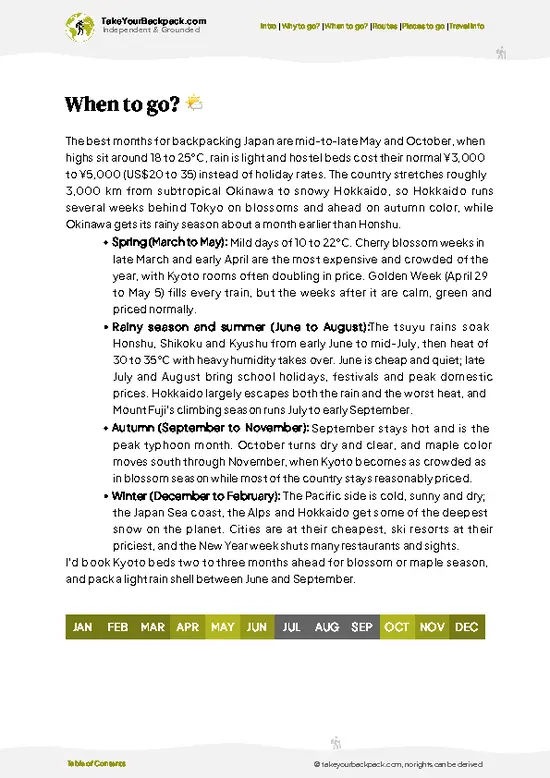
source: climatestotravel.comJANJanuary: not recommended for travelingFEBFebruary: not recommended for travelingMARMarch: not recommended for travelingAPRApril: not recommended for travelingMAYMay: not recommended for travelingJUNJune: not recommended for travelingJULJuly: not recommended for travelingAUGAugust: not recommended for travelingSEPSeptember: not recommended for travelingOCTOctober: excellent for travelingNOVNovember: not recommended for travelingDECDecember: not recommended for traveling

✈️ The backpacker research shortcutJapan Travel Guide

An offline-friendly backpacking guide with optimized travel routes, ranked highlights, transport advice, and the best areas to stay.
example page 0 from our offline Travel Guide for Japan
example page 1 from our offline Travel Guide for Japan
example page 2 from our offline Travel Guide for Japan
example page 3 from our offline Travel Guide for Japan
example page 4 from our offline Travel Guide for Japan
example page 5 from our offline Travel Guide for Japan
example page 6 from our offline Travel Guide for Japan
example page 7 from our offline Travel Guide for Japan
The digital guide (482 pages) contains:
140 highlights, ranked by travel appeal
Optimized 7, 14 & 21-day travel routes
Cities, national parks, landmarks, beaches
How to get around
Offline-friendly for travel without Wi-Fi
👉 Click to see all 30+ guide features

📅 Plan smarter in minutes, not weeks
Month by month travel advice
Festivals & national holidays
Budget expectations

🗺️ Go to the right places, skip the overrated ones
Honest pros & cons of destinations
Top hikes, parks & viewpoints
Lesser-known places most travelers miss
Clear “worth it vs skip it” guidance

🛏️ Travel smoothly without rookie mistakes
Best areas to stay
Transport systems explained simply
Common scams & safety advice
SIM cards, money & practical tips

🌍 Understand the country, not just visit it
Culture & traditions
52 Essential phrases & customs
Festivals worth planning around
Traveler-friendly historical context
Insights that make places more meaningful

📱 Built for real travel conditions
Fully downloadable PDF
Works completely offline
Optimized for phone use
Useful in remote areas & buses
Everything in one place
Save weeks of stressful planning
Get instant access to your full guide. 30‑day money-back guarantee.
+ Add another guide for just US$7.80

By proceeding you agree to our terms.
Sent to your inbox immediately after payment • 100% Secure Checkout
Best Backpacking Travel Advisor 2025 tourism awardBest Backpacking
Travel Advisor
2025
What others say about Take Your Backpack Guides:
⭐⭐⭐⭐⭐
Fantastic, amazing amount of information!
⭐⭐⭐⭐⭐
My goodness this is amazing, it's what I've been looking for hats off too you!
⭐⭐⭐⭐⭐
I think this is absolutely BRILLIANT
⭐⭐⭐⭐
Very complete and informative. It's still missing places, but I gotta to commend you
⭐⭐⭐⭐⭐
This is truly amazing, thank you, can't wait to explore it with my kids!
⭐⭐⭐⭐⭐
Awesome resource, thank you!
⭐⭐⭐⭐⭐
This is amazing! Can't wait to explore the ones I haven't seen
⭐⭐⭐⭐
I love this! Well done, great idea.
⭐⭐⭐⭐⭐
Thanks for taking the time to make this gem!
⭐⭐⭐⭐⭐
This might be the best website I've ever seen.
⭐⭐⭐⭐⭐
Congratulations, and thank you so much for your work; it's incredibly valuable.
⭐⭐⭐⭐
In all seriousness I think you did a great job pointing out the important spots
⭐⭐⭐⭐⭐
10/10 very good
⭐⭐⭐⭐⭐
As someone who's only just starting to visit regularly this is awesome, thank you.
⭐⭐⭐⭐
Thank you very much! I'm going to visit my dad, it's going to be very useful!
⭐⭐⭐⭐⭐
This is really cool! We'll be travelling for the first time and this definitely come in handy.
⭐⭐⭐⭐⭐
You are now our minister of culture, congratulations 👨‍💼
⭐⭐⭐⭐⭐
Just wanted to tell you that this is a pearl! Going to follow your recommendations.
⭐⭐⭐⭐⭐
This is so cool. I'll definitely be using the resource for my travels soon.
⭐⭐⭐⭐⭐
This is very impressive! Good work.
⭐⭐⭐⭐⭐
This is an amazing and informative site. Very well done!

🛏️ Where to stay?How to pick the right area

Stay in the heart of Kurama for the festival buzz. The village itself is small, but its charm is magnetic. You’ll find cozy guesthouses and shared spaces where stories flow as freely as the sake.

Head to nearby Kibune for a slightly quieter vibe. It’s just a short hike away, and the riverside inns offer a perfect blend of tranquility and camaraderie.

Don’t overlook the outskirts of Kyoto. Areas like Arashiyama are a bit farther but provide easy access to the festival via public transport. Plus, you’ll soak in the local culture and meet fellow travelers in bustling cafes.

Wherever you land, … read more 👉
Stay in the heart of Kurama for the festival buzz. The village itself is small, but its charm is magnetic. You’ll find cozy guesthouses and shared spaces where stories flow as freely as the sake.

Head to nearby Kibune for a slightly quieter vibe. It’s just a short hike away, and the riverside inns offer a perfect blend of tranquility and camaraderie.

Don’t overlook the outskirts of Kyoto. Areas like Arashiyama are a bit farther but provide easy access to the festival via public transport. Plus, you’ll soak in the local culture and meet fellow travelers in bustling cafes.

Wherever you land, prioritize places with communal areas. That’s where the real magic happens—connections that fuel your journey.

👛 Costs (as of 4 September 2026)Typical daily expenses

The Kurama Fire Festival is a thrilling experience, but navigating the costs can be tricky. Here’s how to budget wisely for this fiery celebration in Japan.
  • Festival Tickets: Entry to the festival is typically free. However, if you want to secure a good viewing spot or participate in certain activities, consider budgeting around €10-€30 ($10-$35). This small investment can enhance your experience significantly.
  • Accommodation: Options vary widely. Expect to pay between €50-€150 ($55-$165) per night for a decent hotel or ryokan. Book early, as places fill up fast during the festival. Alternatively, consider hostels or guesthouses for around €20-€50 ($22-$55) per night.
  • Local Transport: Getting to Kurama from Kyoto is straightforward. A round-trip train ticket will cost about €6-€10 ($7-$11). Factor
read more 👉
The Kurama Fire Festival is a thrilling experience, but navigating the costs can be tricky. Here’s how to budget wisely for this fiery celebration in Japan.
  • Festival Tickets: Entry to the festival is typically free. However, if you want to secure a good viewing spot or participate in certain activities, consider budgeting around €10-€30 ($10-$35). This small investment can enhance your experience significantly.
  • Accommodation: Options vary widely. Expect to pay between €50-€150 ($55-$165) per night for a decent hotel or ryokan. Book early, as places fill up fast during the festival. Alternatively, consider hostels or guesthouses for around €20-€50 ($22-$55) per night.
  • Local Transport: Getting to Kurama from Kyoto is straightforward. A round-trip train ticket will cost about €6-€10 ($7-$11). Factor in local buses or taxis if you plan to explore nearby areas, which can add another €5-€20 ($6-$22) depending on distance.
  • Food & Drinks: Street food is a highlight at the festival. Budget around €10-€25 ($11-$28) for a meal. If you indulge in drinks, expect to spend an additional €5-€15 ($6-$17) for local beverages. Keep your energy up with snacks, which can add another €5-€10 ($6-$11).
  • Miscellaneous Expenses: This includes souvenirs, festival merchandise, or unexpected costs. Set aside €20-€50 ($22-$55) for these extras. It’s always good to have a buffer for those spontaneous moments that make travel special.

Planning ahead will help you enjoy the festival without financial stress. Keep these costs in mind, and you’ll be ready to dive into the excitement of the Kurama Fire Festival.


source: kyoto.travel
⚠️ Prices can change and everyone travels differently, so take this as a rough guide. Hope it helps you plan your adventure!

🍲 FoodLocal Flavors for Backpackers

At the Kurama Fire Festival, food and drink pulse with local flavor. Dive into yaki-tori, skewered chicken grilled to smoky perfection, or savor kakigori, fluffy shaved ice drizzled with sweet syrup. Don’t miss the yakiimo, roasted sweet potatoes that warm your hands and heart.

For drinks, grab a cup of matcha or a local sake to toast the night. The atmosphere buzzes with laughter and the crackle of fire, so embrace the sharing culture—it’s common to swap bites with friends or even strangers.

Be ready for lines; they’re part of the experience. Cash is king here, so stock up before you dive into the stalls. Serving sizes are often generous, so pace yourself and enjoy each bite as the flames dance around you.

FAQFrequently asked questions about Kurama Fire

October 22nd is the date of the Kurama Fire Festival, held annually in the village of Kurama, north of Kyoto. The event lasts for one day and is known for its dramatic nighttime fire displays.
Attending the Kurama Fire Festival is free of charge. There are no entrance fees, but transportation and accommodation costs should be considered if traveling from Kyoto or other areas.
No, tickets are not required in advance to attend the Kurama Fire Festival. It is an open public event, but arriving early is recommended due to large crowds and limited viewing space.
⚠️ Things can change over time, so always validate details locally before you go.

Other Japanese festivals near Kurama Fire

Explore more nearby:

  • Gion Matsuri—towering floats, Kyoto streets, July rituals| 12 km away
  • Tanabata Matsuri—colorful streamers, wish writing, star legend| 56 km away
  • SummerSonic—urban festival, pop and rock, Tokyo and Osaka| 57 km away

💡 Not sure where to go next?
Create a personalized itinerary for Japan including Kurama Fire and the places that fit your trip.

Generate my itinerary

👉 Discover all festivals

Or checkout all Japan has to offer (think cities, towns, villages, national parks, hikes, beaches, festivals)
Country photo of Japan

We 💚 feedbackParting advice and final tips

Kurama Fire Festival is a fiery spectacle that ignites your spirit. The raw energy of the procession, with torches blazing and drums pounding, is unforgettable. But be ready: the crowds can be overwhelming, and accommodations fill up fast. Plan ahead to keep your adventure smooth and your budget intact.

✈️ When did I visit Japan?
As part of my 1.5 year travel around the world trip, I visited Japan in August 2015.

✍️ Help improve this page!
The information on this page is based on my own backpacking experience in Japan, supplemented with up-to-date research and feedback from other travelers. Travel details can change, so if you notice anything outdated or incomplete, feel free to let me know.


🙋‍♂️ Give feedback

👋 Meet the founderWho’s Behind Take Your Backpack?

Johan, backpacker and founder of TakeYourBackpackHi, I’m Johan (Netherlands 🇳🇱), the creator of TakeYourBackpack. Over the past decade, I’ve backpacked through 80+ countries across six continents, gaining extensive experience with independent travel, long-term trips, and overland routes.

This site is built on a combination of firsthand travel experience and carefully curated insights from other backpackers. Many guides are based on places I’ve personally visited, while others bring together tips, observations, and practical advice shared by trusted travelers I’ve met along the way.

The goal is to provide realistic, experience-driven guidance — not generic itineraries — so you can explore destinations with better context, clearer expectations, and more confidence.

Get full Japan guide •
Instant download • 140 highlights • Full Offline guide