×

Japan🇯🇵 | citiesNahaRyukyu heritage, covered markets, coastal fortress | things to do and best time to go

Explore YamagataExplore Gifu

Backpacking in Naha
🌟 Highlightcity ranked #18
By Johan Kruseman 🇳🇱 | Updated September 4, 2026

Most people realize too late that Naha is the cheapest, easiest “soft landing” for exploring tropical Japan: you can test Okinawa life without renting a car or blowing your budget. Sitting on Okinawa’s main island far south of mainland Japan, Naha feels like a humid mash-up of Tokyo convenience and island chill. Backpacker pros: walkable monorail, cheap hostels, safe streets, easy food, and a social scene around Kokusai-dori and hostel bars. Cons: beaches in town are mediocre, nightlife skews a bit bro-y, and compared with Ishigaki or Zamami it’s grittier and more urban than postcard-pretty. I like it as a base: Shuri Castle, markets, day trips to Kerama Islands, then back to a bowl of Okinawa soba and a shower that doesn’t cost half your daily budget.

Discover everything you want to know in the 📖 Japan Travel Guide.


Get your Japan guide
140 ranked highlights, routes & tips, works offline (482 pages)
Loading the map 🌍
CLICK TO FILTER
cities
towns
villages
landmarks
national parks
hikes
beaches
attractions
festivals
regions
SHOW COUNTRY’S BESTSHOW ALL

✨ Why go?
Ranked #18 city in Japan
What makes this city worth visiting

Naha is a strategic basecamp for backpackers exploring Okinawa. Its walkability makes it easy to navigate, with vibrant markets and local eateries just a stroll away. The hostel scene is lively and affordable, perfect for meeting fellow travelers. You’ll find a mix of cultural highlights and activities that cater to various interests, from history buffs to beach lovers. Plus, Naha’s nightlife offers a taste of local flavor without breaking the bank. With easy onward travel options, it’s a smart stopover for those looking to balance exploration with relaxation. Choose wisely, and you’ll maximize your experience here.
Want to include Naha in your Japan route?
Create a personalized Japan itinerary that includes Naha and the places that fit your trip — based on your travel style, budget, and available time. Get your route in seconds.

Generate my trip

💡 HighlightsWhat this place is best known for

  • Shurijo (Shuri Castle) — The symbolic heart of the old Ryukyu Kingdom; even while reconstruction continues after the 2019 fire, the restored gates, castle plaza, on-site exhibits and surrounding Shuri neighborhood give real context to Okinawa’s royal history and offer great views over Naha.
  • Shikinaen Garden — A tucked-away UNESCO garden used by Ryukyu kings for banquets: lovely ponds, stone bridges and bonsai-style plantings that feel very different from mainland Japanese gardens and make for a peaceful stroll.
  • Tamaudun Mausoleum — The royal tomb near Shuri Castle; it’s compact but powerful—intricately carved, historically important and a direct link to Ryukyu funerary rituals, best visited with a short read or an audio guide to get the meaning behind the layout.
  • Okinawa Prefectural Museum
read more 👉
  • Shurijo (Shuri Castle) — The symbolic heart of the old Ryukyu Kingdom; even while reconstruction continues after the 2019 fire, the restored gates, castle plaza, on-site exhibits and surrounding Shuri neighborhood give real context to Okinawa’s royal history and offer great views over Naha.
  • Shikinaen Garden — A tucked-away UNESCO garden used by Ryukyu kings for banquets: lovely ponds, stone bridges and bonsai-style plantings that feel very different from mainland Japanese gardens and make for a peaceful stroll.
  • Tamaudun Mausoleum — The royal tomb near Shuri Castle; it’s compact but powerful—intricately carved, historically important and a direct link to Ryukyu funerary rituals, best visited with a short read or an audio guide to get the meaning behind the layout.
  • Okinawa Prefectural Museum & Art Museum — The best one-stop intro to Okinawan history, natural environment and contemporary art; excellent multimedia displays that explain Ryukyu trade, WWII impact and local crafts—great rainy-day backup.
  • Tsuboya Pottery District (Tsuboya-yachimun) — Narrow streets lined with pottery shops, tiny kilns and studios where you can watch artisans or buy a hand-thrown yunomi; this neighborhood really shows Okinawa’s living craft tradition.
  • Makishi Public Market — Loud, chaotic and delicious: fresh fish, tropical produce, and small stalls willing to cook what you buy. It’s the clearest, tastiest way to meet local food culture in Naha.
  • Kokusai-dori (International Street) — Naha’s main artery for people-watching, street food, souvenir-hunting and late-night izakaya life; not a museum, but essential for feeling the city’s energy and sampling local eats like sata andagi and taco rice.
  • Naminoue Shrine & Naminoue Beach — A tiny cliff-top Shinto shrine with ocean views that feels characteristically Okinawan; the adjacent beach is small but pleasant, and the whole spot is excellent for sunset photos and quiet reflection.
  • Fukushu-en Garden — A Chinese-style garden built to celebrate historic ties between Naha and Fuzhou; smaller than Shikinaen but beautifully landscaped, with a tea house and koi ponds—easy to drop into between other sights.
  • Naha City Museum of History — Compact, well-curated exhibits focused on Naha’s local story from Ryukyu times through WWII and reconstruction; it’s great context before you wander Shuri and the old town streets.
For day trips from Naha try the Kerama Islands (Zamami/Tokashiki) for snorkeling, Okinawa World/Gyokusendo Cave and craft village in Nanjo, or Cape Manzamo on the west coast—my personal favorite is the Kerama Islands (Zamami) for the insanely clear water and easy ferries from Tomari Port.
Spotted a mistake or missing something? Contact us.
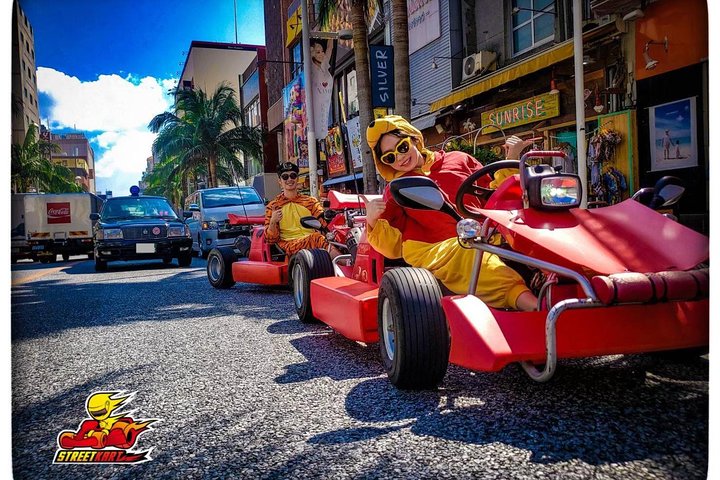
Things to do in Naha

Ratings based on Tripadvisor reviews. When you book through this link, you support our work at no extra cost to you.

🏘️ NeighborhoodsHow different areas shape the experience

Naha is a vibrant hub in Okinawa, blending rich culture with modern conveniences. Here’s how its neighborhoods stack up for backpackers:

Kokusai Street: The heart of Naha, buzzing with shops and eateries. It’s walkable and perfect for short stays. Expect a lively nightlife, but it can get crowded. Great for budget travelers seeking local flavors.

Shuri: Home to the iconic Shuri Castle, this area offers a quieter vibe. It’s less touristy, making it ideal for longer stays. The transport links are decent, but you’ll want to explore on foot to soak in the history.

Makishi: Known for its market, this area is a food lover’s paradise. It’s walkable and affordable, with a mix of quiet corners and bustling stalls. Perfect for those wanting a taste of local life without the nightlife chaos.

⌛️ 1 daySeeing the highlights in 24 hours

Naha, the capital of Okinawa, is a vibrant blend of history, culture, and tropical charm. Start your day in the bustling Kokusai Street, where you can grab a hearty Okinawan breakfast—try the goya champuru, a stir-fry that packs a punch. After fueling up, stroll through the nearby Shurijo Castle Park. This UNESCO World Heritage site offers a glimpse into the Ryukyu Kingdom’s past, with stunning architecture and serene gardens.

In the afternoon, head to the Makishi Public Market. Here, you can sample local delicacies and pick up unique souvenirs. Don’t miss the lesser-known Tsuboya Pottery District, where you can explore artisan shops and even try your hand at pottery.

As evening falls, make your way to the waterfront at Naminoue Beach. It’s a perfect spot to unwind, with the sunset painting … read more 👉
Naha, the capital of Okinawa, is a vibrant blend of history, culture, and tropical charm. Start your day in the bustling Kokusai Street, where you can grab a hearty Okinawan breakfast—try the goya champuru, a stir-fry that packs a punch. After fueling up, stroll through the nearby Shurijo Castle Park. This UNESCO World Heritage site offers a glimpse into the Ryukyu Kingdom’s past, with stunning architecture and serene gardens.

In the afternoon, head to the Makishi Public Market. Here, you can sample local delicacies and pick up unique souvenirs. Don’t miss the lesser-known Tsuboya Pottery District, where you can explore artisan shops and even try your hand at pottery.

As evening falls, make your way to the waterfront at Naminoue Beach. It’s a perfect spot to unwind, with the sunset painting the sky. Grab dinner at a local izakaya, where the atmosphere is lively and the food is fresh. This blend of experiences makes Naha a city that resonates long after you leave.
Turn your Naha visit into an Japan adventure
Build a complete Japan route with Naha, hidden gems, must-see destinations, and realistic travel times included.

Generate my trip

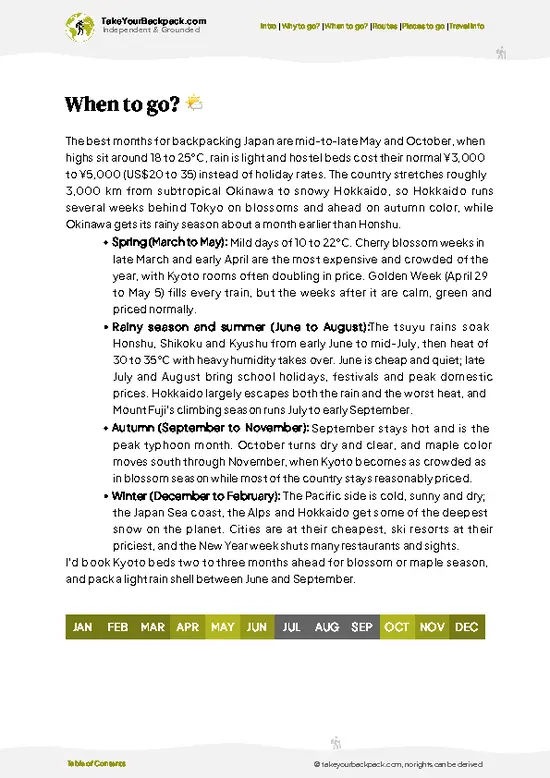
🌤️ When to go?Seasonal considerations and timing


  • Topic: Weather – Naha’s subtropical climate means hot, humid summers with temps hitting 30–33°C (86–91°F), while winters are mild, around 15–20°C (59–68°F). Rain peaks in May and September, so avoid those months if you want dry days.

  • Topic: Temperature – Spring (March–May) offers comfortable 20–25°C (68–77°F) weather, perfect for long hikes and city strolls without sweating buckets or bundling up.

  • Topic: Daylight Hours – From late March to early October, expect 11–13 hours of daylight, giving you plenty of time to explore before sunset.

  • Topic: Crowds – Golden Week (late April to early May) swells visitor numbers dramatically, hiking prices and crowding attractions. Off-peak spring or autumn months keep things chill.

  • Topic: Seasonal Activities – The Naha Tug-of-War Festival in October
read more 👉

  • Topic: Weather – Naha’s subtropical climate means hot, humid summers with temps hitting 30–33°C (86–91°F), while winters are mild, around 15–20°C (59–68°F). Rain peaks in May and September, so avoid those months if you want dry days.

  • Topic: Temperature – Spring (March–May) offers comfortable 20–25°C (68–77°F) weather, perfect for long hikes and city strolls without sweating buckets or bundling up.

  • Topic: Daylight Hours – From late March to early October, expect 11–13 hours of daylight, giving you plenty of time to explore before sunset.

  • Topic: Crowds – Golden Week (late April to early May) swells visitor numbers dramatically, hiking prices and crowding attractions. Off-peak spring or autumn months keep things chill.

  • Topic: Seasonal Activities – The Naha Tug-of-War Festival in October is a cultural highlight but draws big crowds; cherry blossoms in February-March are rare but magical.

  • Topic: Price Fluctuations – Accommodation and flights spike during Golden Week and summer holidays. Booking in shoulder seasons like late autumn or early spring nets better deals.


Pro-tip: Aim for late March to early May—sweet spot for weather, daylight, and manageable crowds, turning your Naha trip into a smooth, high-value win.


source: climatestotravel.comJANJanuary: good for travelingFEBFebruary: highly recommended for travelingMARMarch: excellent for travelingAPRApril: highly recommended for travelingMAYMay: fair for travelingJUNJune: good for travelingJULJuly: fair for travelingAUGAugust: fair for travelingSEPSeptember: fair for travelingOCTOctober: highly recommended for travelingNOVNovember: highly recommended for travelingDECDecember: good for traveling
when-to-go

✈️ The backpacker research shortcutJapan Travel Guide

An offline-friendly backpacking guide with optimized travel routes, ranked highlights, transport advice, and the best areas to stay.
example page 0 from our offline Travel Guide for Japan
example page 1 from our offline Travel Guide for Japan
example page 2 from our offline Travel Guide for Japan
example page 3 from our offline Travel Guide for Japan
example page 4 from our offline Travel Guide for Japan
example page 5 from our offline Travel Guide for Japan
example page 6 from our offline Travel Guide for Japan
example page 7 from our offline Travel Guide for Japan
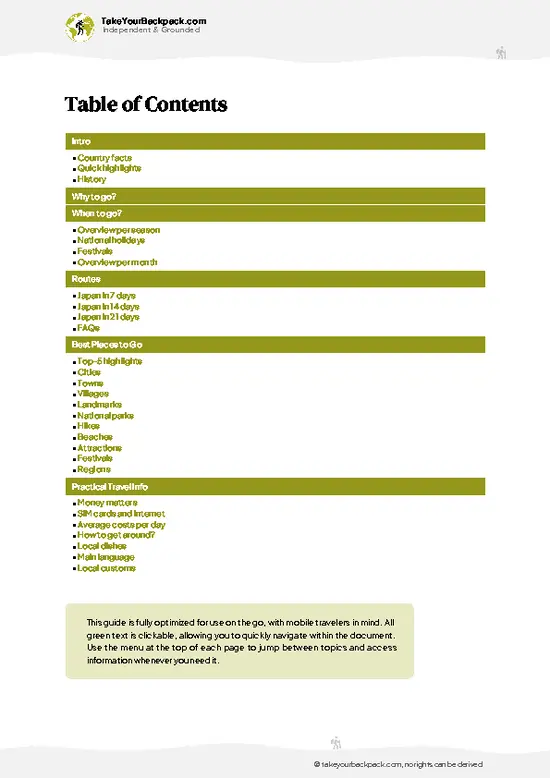
The digital guide (482 pages) contains:
140 highlights, ranked by travel appeal
Optimized 7, 14 & 21-day travel routes
Cities, national parks, landmarks, beaches
How to get around
Offline-friendly for travel without Wi-Fi
👉 Click to see all 30+ guide features

📅 Plan smarter in minutes, not weeks
Month by month travel advice
Festivals & national holidays
Budget expectations

🗺️ Go to the right places, skip the overrated ones
Honest pros & cons of destinations
Top hikes, parks & viewpoints
Lesser-known places most travelers miss
Clear “worth it vs skip it” guidance

🛏️ Travel smoothly without rookie mistakes
Best areas to stay
Transport systems explained simply
Common scams & safety advice
SIM cards, money & practical tips

🌍 Understand the country, not just visit it
Culture & traditions
52 Essential phrases & customs
Festivals worth planning around
Traveler-friendly historical context
Insights that make places more meaningful

📱 Built for real travel conditions
Fully downloadable PDF
Works completely offline
Optimized for phone use
Useful in remote areas & buses
Everything in one place
Save weeks of stressful planning
Get instant access to your full guide. 30‑day money-back guarantee.
+ Add another guide for just US$7.80

By proceeding you agree to our terms.
Sent to your inbox immediately after payment • 100% Secure Checkout
Best Backpacking Travel Advisor 2025 tourism awardBest Backpacking
Travel Advisor
2025
What others say about Take Your Backpack Guides:
⭐⭐⭐⭐⭐
Fantastic, amazing amount of information!
⭐⭐⭐⭐⭐
My goodness this is amazing, it's what I've been looking for hats off too you!
⭐⭐⭐⭐⭐
I think this is absolutely BRILLIANT
⭐⭐⭐⭐
Very complete and informative. It's still missing places, but I gotta to commend you
⭐⭐⭐⭐⭐
This is truly amazing, thank you, can't wait to explore it with my kids!
⭐⭐⭐⭐⭐
Awesome resource, thank you!
⭐⭐⭐⭐⭐
This is amazing! Can't wait to explore the ones I haven't seen
⭐⭐⭐⭐
I love this! Well done, great idea.
⭐⭐⭐⭐⭐
Thanks for taking the time to make this gem!
⭐⭐⭐⭐⭐
This might be the best website I've ever seen.
⭐⭐⭐⭐⭐
Congratulations, and thank you so much for your work; it's incredibly valuable.
⭐⭐⭐⭐
In all seriousness I think you did a great job pointing out the important spots
⭐⭐⭐⭐⭐
10/10 very good
⭐⭐⭐⭐⭐
As someone who's only just starting to visit regularly this is awesome, thank you.
⭐⭐⭐⭐
Thank you very much! I'm going to visit my dad, it's going to be very useful!
⭐⭐⭐⭐⭐
This is really cool! We'll be travelling for the first time and this definitely come in handy.
⭐⭐⭐⭐⭐
You are now our minister of culture, congratulations 👨‍💼
⭐⭐⭐⭐⭐
Just wanted to tell you that this is a pearl! Going to follow your recommendations.
⭐⭐⭐⭐⭐
This is so cool. I'll definitely be using the resource for my travels soon.
⭐⭐⭐⭐⭐
This is very impressive! Good work.
⭐⭐⭐⭐⭐
This is an amazing and informative site. Very well done!

🛏️ Where to stay?How to pick the right area

Naha’s Kokusai-dori area is the backpacker sweet spot—safe, lively, and packed with budget hostels that make socializing effortless. It’s the city’s main artery, so you’re never far from street food stalls, bars, and shops, all buzzing with a mix of locals and travelers. Compared to quieter residential zones, Kokusai-dori offers a built-in community vibe, perfect for solo backpackers craving connection without sacrificing convenience. If you want to stretch your yen, the nearby Makishi district also delivers affordable stays with a slightly more local feel, though it’s less tourist-centric. Both … read more 👉
Naha’s Kokusai-dori area is the backpacker sweet spot—safe, lively, and packed with budget hostels that make socializing effortless. It’s the city’s main artery, so you’re never far from street food stalls, bars, and shops, all buzzing with a mix of locals and travelers. Compared to quieter residential zones, Kokusai-dori offers a built-in community vibe, perfect for solo backpackers craving connection without sacrificing convenience. If you want to stretch your yen, the nearby Makishi district also delivers affordable stays with a slightly more local feel, though it’s less tourist-centric. Both areas balance comfort and cost smartly, making them the logical base for exploring Naha without overpaying or feeling isolated.

🚌 Getting aroundHow to get around Naha

Naha moves with a rhythm that’s part laid-back island vibe, part city hustle. It’s not a place where you’ll find trains running every five minutes or a subway map that looks like a circuit board. Instead, the flow here leans on a mix of steady buses, scooters zipping through narrow streets, and plenty of walking. The schedules aren’t rigid, but they’re reliable enough to plan around if you’re paying attention. You’ll want to balance your time, money, and comfort carefully—because every choice here shifts the experience in subtle but meaningful ways.


  • Walking: The heart of Naha is compact and walkable. Free, obviously, and perfect for soaking in local life at your own pace. It’s the slowest option but the richest in detail and discovery.

  • Yui Rail (Monorail): Runs from 6 a.m. to midnight,
read more 👉
Naha moves with a rhythm that’s part laid-back island vibe, part city hustle. It’s not a place where you’ll find trains running every five minutes or a subway map that looks like a circuit board. Instead, the flow here leans on a mix of steady buses, scooters zipping through narrow streets, and plenty of walking. The schedules aren’t rigid, but they’re reliable enough to plan around if you’re paying attention. You’ll want to balance your time, money, and comfort carefully—because every choice here shifts the experience in subtle but meaningful ways.


  • Walking: The heart of Naha is compact and walkable. Free, obviously, and perfect for soaking in local life at your own pace. It’s the slowest option but the richest in detail and discovery.

  • Yui Rail (Monorail): Runs from 6 a.m. to midnight, with trains every 7-15 minutes. Tickets cost about 300 yen for a full ride. Fast and comfortable, it’s the backbone for covering longer distances without breaking the bank.

  • Local Bus: Extensive network, fares around 230-300 yen depending on distance. Buses run roughly from 6 a.m. to 10 p.m. Slower than the monorail but cheaper and more flexible for reaching neighborhoods off the rail line.

  • Rental Bicycle: Costs vary but expect around 500-800 yen per day. Offers a middle ground—faster than walking, cheaper than taxis, and gives you freedom to explore at your own speed.

  • Taxi: Starting fare about 600 yen, then roughly 300 yen per kilometer. Convenient for late nights or heavy luggage but expensive for solo budget travelers. Best saved for when time is tight or comfort is a priority.

👛 Costs (as of 4 September 2026)Typical daily expenses

Backpacking in Naha, Japan, demands a clear-eyed view of where your money goes, so you can pick your battles between time, comfort, and cost without surprises.
  • Dorm Accommodation (High Season): Expect to pay around $25 to $40 per night. High season here means cherry blossom time and major holidays when demand spikes, pushing prices up for the limited budget hostels.
  • Dorm Accommodation (Off-Season): Drop to about $15 to $25 per night. Off-season rates are friendlier, especially in the humid summer months when fewer travelers brave Okinawa’s heat.
  • Meals: Budget meals hover between $5 and $10. Convenience stores offer surprisingly decent options, while local eateries serve Okinawan specialties at wallet-friendly prices if you avoid tourist traps.
  • Local Transport: Single bus rides typically
read more 👉
Backpacking in Naha, Japan, demands a clear-eyed view of where your money goes, so you can pick your battles between time, comfort, and cost without surprises.
  • Dorm Accommodation (High Season): Expect to pay around $25 to $40 per night. High season here means cherry blossom time and major holidays when demand spikes, pushing prices up for the limited budget hostels.
  • Dorm Accommodation (Off-Season): Drop to about $15 to $25 per night. Off-season rates are friendlier, especially in the humid summer months when fewer travelers brave Okinawa’s heat.
  • Meals: Budget meals hover between $5 and $10. Convenience stores offer surprisingly decent options, while local eateries serve Okinawan specialties at wallet-friendly prices if you avoid tourist traps.
  • Local Transport: Single bus rides typically cost $1.50 to $2.50. Naha’s public buses are the main way to get around, but routes can be a bit labyrinthine, so factor in some time for navigation.
  • City Transport Pass: A one-day bus pass runs about $5 to $7, ideal if you plan multiple trips. It’s a smart buy for squeezing the most out of your day without fussing over exact fares.
  • Basic Activities/Entry Fees: Museums and cultural sites usually charge between $3 and $8. Okinawa’s history and unique culture come at a modest price, making it easy to fill your days without breaking the bank.
  • Miscellaneous Expenses: Budget around $3 to $7 for things like bottled water, snacks, or small souvenirs. These add up quietly but are essential for comfort and convenience.

All told, a realistic daily budget for backpacking in Naha ranges from about $30 on a shoestring off-season day to $60 if you lean into comfort and convenience during peak times. Knowing these trade-offs lets you decide if you want to spend more time hunting down cheap eats and navigating buses or pay a bit extra for ease and speed.
⚠️ Prices can change and everyone travels differently, so take this as a rough guide. Hope it helps you plan your adventure!

🚌 Day tripsExploring the surroundings

Naha is a fantastic launchpad for day trips that blend culture, nature, and adventure. Here are some top picks that pack a punch without draining your wallet.

Shurijo Castle
Just a short bus ride from Naha, Shurijo Castle is a UNESCO World Heritage site that showcases the unique Ryukyu culture. The vibrant architecture and lush gardens make it a must-see. Aim to visit early in the morning to avoid crowds. Entry is around 400 yen, and you can easily spend a few hours soaking in the history. A common mistake? Skipping the guided tour; it adds depth to the experience.


Kokusai Street
For a taste of local life, head to Kokusai Street. This bustling thoroughfare is lined with shops, eateries, and street performers. Grab some Okinawan soba or try a sweet potato donut. It’s a 15-minute walk … read more 👉
Naha is a fantastic launchpad for day trips that blend culture, nature, and adventure. Here are some top picks that pack a punch without draining your wallet.

Shurijo Castle
Just a short bus ride from Naha, Shurijo Castle is a UNESCO World Heritage site that showcases the unique Ryukyu culture. The vibrant architecture and lush gardens make it a must-see. Aim to visit early in the morning to avoid crowds. Entry is around 400 yen, and you can easily spend a few hours soaking in the history. A common mistake? Skipping the guided tour; it adds depth to the experience.


Kokusai Street
For a taste of local life, head to Kokusai Street. This bustling thoroughfare is lined with shops, eateries, and street performers. Grab some Okinawan soba or try a sweet potato donut. It’s a 15-minute walk from the city center, and you can easily spend a few hours exploring. Budget around 1,000 yen for food and souvenirs. Best visited in the late afternoon when the street comes alive.


Cape Manzamo
If you’re craving stunning coastal views, Cape Manzamo is your spot. About an hour’s bus ride from Naha, this scenic overlook features dramatic cliffs and the iconic elephant rock formation. Bring a picnic and enjoy the scenery. The trip costs around 1,200 yen round-trip. Late afternoon is ideal for golden hour photos. Just don’t forget your camera!
Want to know what more Japan offers?
The Japan Travel Guide describes 140 highlights, from cities to national parks, from beaches to hikes

Get the Travel Guide -

🍲 FoodEating & Drinking in Naha

In Naha, local cuisine is a vibrant tapestry of flavors. Dive into Okinawa soba, a hearty noodle dish served in a rich broth, often topped with tender pork. Don’t miss goya champuru, a stir-fry featuring the bitter melon that’s a staple here, balancing health and taste.

Street food stalls buzz with energy, offering taco rice, a fusion of Okinawan and Tex-Mex flavors. For drinks, try awamori, a local spirit that packs a punch and is best enjoyed chilled.

When dining, embrace the sharing culture; it’s common to order several dishes for the table. This communal vibe enhances the experience, making every meal a social affair.

🛡️ SafetyTraveler Safety Guide

Naha is generally safe, but a few areas deserve your attention. Stay alert in crowded markets like Kokusai Dori, where pickpockets might lurk. If you’re solo at night, stick to well-lit streets and avoid quiet alleys.

While scams are rare, be cautious of overly friendly locals offering unsolicited help; they might lead you to shops with inflated prices. Carry yourself confidently, and don’t hesitate to ask for directions or assistance from official sources. This way, you’ll navigate Naha smoothly and enjoy its charm without unnecessary hassle.

FAQFrequently asked questions about Naha

2 to 3 days are sufficient to explore Naha thoroughly. This allows time to visit key sites like Shuri Castle, Kokusai Street, and the Makishi Public Market. Day trips to nearby islands can be added if time permits.
Yes, Naha is safe for solo backpackers. The city has low crime rates and a friendly local population. Basic precautions like avoiding poorly lit areas at night are recommended.
Naha is known for its rich Ryukyu culture, vibrant markets, and historic sites like Shuri Castle. It is also famous for Okinawan cuisine and its proximity to beautiful beaches and coral reefs.
⚠️ Things can change over time, so always validate details locally before you go.

Other Japanese cities near Naha

Explore more nearby:

  • Kagoshima—active volcano, seaside parks, Satsuma history| 661 km away
  • Miyazaki—beach resorts, subtropical gardens, Shinto shrines| 730 km away
  • Kumamoto—fortress ruins, Suizenji garden, local sweets| 789 km away

💡 Not sure where to go next?
Create a personalized itinerary for Japan including Naha and the places that fit your trip.

Generate my itinerary

👉 Discover all cities

Or checkout all Japan has to offer (think cities, towns, villages, national parks, hikes, beaches, festivals)
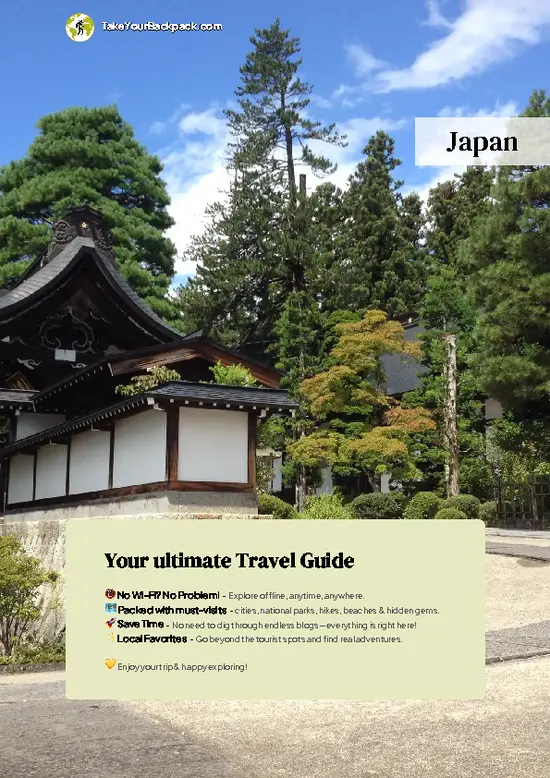
Country photo of Japan

We 💚 feedbackFinal thoughts on visiting Naha

Naha’s vibrant street food scene is a feast for the senses—try the Okinawan soba and local pork. But be ready for the humidity; it can be stifling in summer. Embrace the sweat, and you’ll uncover the city’s true flavor.

✈️ When did I visit Japan?
As part of my 1.5 year travel around the world trip, I visited Japan in August 2015.

✍️ Help improve this page!
The information on this page is based on my own backpacking experience in Japan, supplemented with up-to-date research and feedback from other travelers. Travel details can change, so if you notice anything outdated or incomplete, feel free to let me know.


🙋‍♂️ Give feedback

👋 Meet the founderWho’s Behind Take Your Backpack?

Johan, backpacker and founder of TakeYourBackpackHi, I’m Johan (Netherlands 🇳🇱), the creator of TakeYourBackpack. Over the past decade, I’ve backpacked through 80+ countries across six continents, gaining extensive experience with independent travel, long-term trips, and overland routes.

This site is built on a combination of firsthand travel experience and carefully curated insights from other backpackers. Many guides are based on places I’ve personally visited, while others bring together tips, observations, and practical advice shared by trusted travelers I’ve met along the way.

The goal is to provide realistic, experience-driven guidance — not generic itineraries — so you can explore destinations with better context, clearer expectations, and more confidence.

Get full Japan guide •
Instant download • 140 highlights • Full Offline guide