



×
Okinawa Churaumi Aquarium

Japan🇯🇵 | attractionsOkinawa Churaumi Aquariummassive tank, whale sharks, coral reef displays | things to do and best time to go

Explore Tokyo National MuseumExplore Osaka Aquarium Kaiyukan

Backpacking in Okinawa Churaumi Aquarium
👌 Worth visitingattraction ranked #16
By Johan Kruseman 🇳🇱 | Updated October 15, 2026

Here’s what nobody tells you until you’re standing there, ticket in hand: the best part of Okinawa Churaumi Aquarium isn’t the whale sharks or the glass tunnel—it’s that you can wander the surrounding Emerald Beach and Ocean Expo Park for free, even after the aquarium closes. That’s your secret weapon against the tour bus crowds. Churaumi sits on the northwestern tip of Okinawa’s main island, a good two-hour haul from Naha, so don’t expect a quick pit stop. For backpackers, it’s a splurge—admission isn’t cheap, and getting there by public transport is a test of patience and bus schedules. But the payoff is real: the Kuroshio Sea tank is a blue cathedral, and watching manta rays glide overhead is a gut-punch reminder of how wild the world still is. Yes, you’ll dodge selfie sticks and school groups, but the vibe is more laid-back than Tokyo’s tourist magnets. If you crave a break from temples and neon, Churaumi delivers a different kind of awe—one that lingers long after the crowds thin out.

Discover everything you want to know in the 📖 Japan Travel Guide.


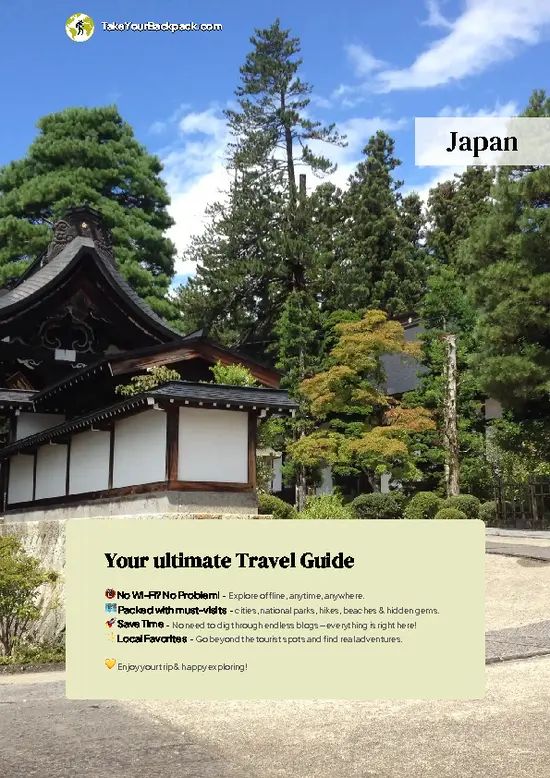
example page 0 from our offline Travel Guide for Japan
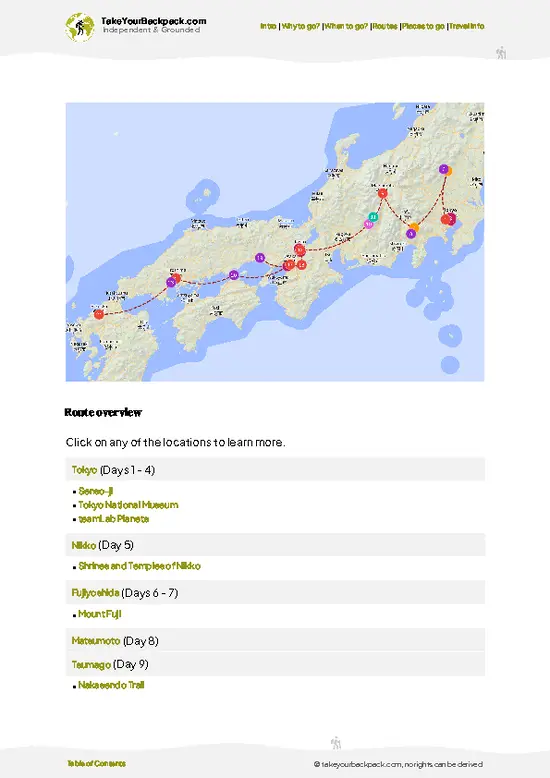
example page 1 from our offline Travel Guide for Japan
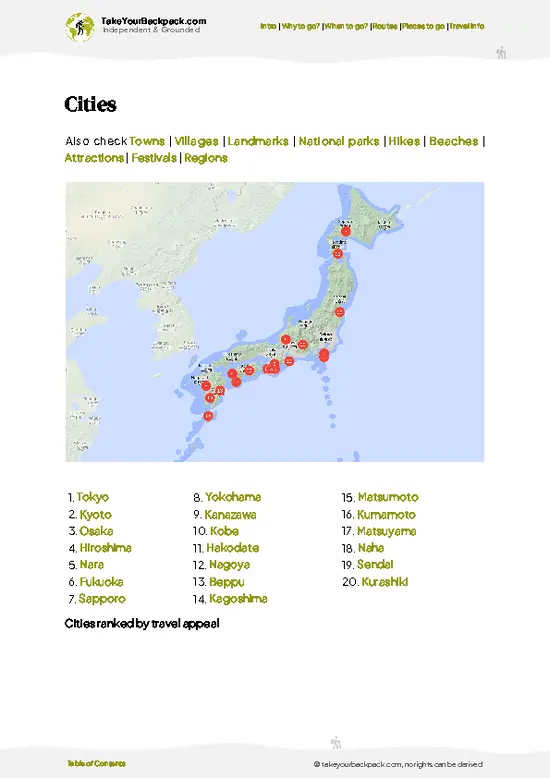
example page 2 from our offline Travel Guide for Japan
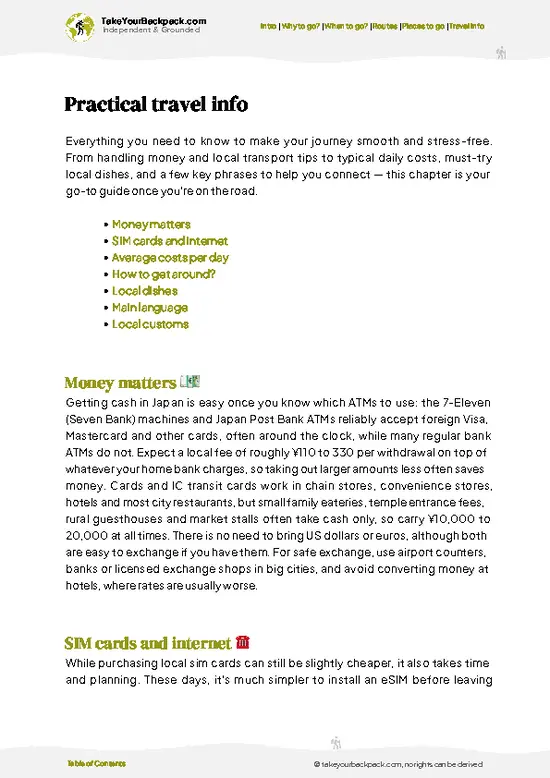
example page 3 from our offline Travel Guide for Japan
example page 4 from our offline Travel Guide for Japan
example page 5 from our offline Travel Guide for Japan
example page 6 from our offline Travel Guide for Japan
example page 7 from our offline Travel Guide for Japan
Loading the map 🌍
CLICK TO FILTER
cities
towns
villages
landmarks
national parks
hikes
beaches
attractions
festivals
regions
SHOW COUNTRY’S BESTSHOW ALL

✨ Why go?
Ranked #16 attraction in Japan
What sets this place apart

The Okinawa Churaumi Aquarium is not your average fish tank stop. Sure, it’s famous—one of the largest and most impressive aquariums in the world—but that’s only part of the story. Backpackers who carve out time here aren’t just chasing Instagram shots of whale sharks gliding through the massive Kuroshio Sea tank. They’re after a deeper connection to Okinawa’s unique marine ecosystem, which feels worlds apart from mainland Japan’s coastal waters. This place is a living classroom, showcasing species that have shaped local culture and survival for centuries.

Yes, it gets crowded, and the entrance fee isn’t dirt cheap, but the payoff is real. You’re not just watching fish; you’re witnessing a carefully curated dive into the ocean’s complexity, from coral reefs to rare manta rays. It’s a milestone … read more 👉
The Okinawa Churaumi Aquarium is not your average fish tank stop. Sure, it’s famous—one of the largest and most impressive aquariums in the world—but that’s only part of the story. Backpackers who carve out time here aren’t just chasing Instagram shots of whale sharks gliding through the massive Kuroshio Sea tank. They’re after a deeper connection to Okinawa’s unique marine ecosystem, which feels worlds apart from mainland Japan’s coastal waters. This place is a living classroom, showcasing species that have shaped local culture and survival for centuries.

Yes, it gets crowded, and the entrance fee isn’t dirt cheap, but the payoff is real. You’re not just watching fish; you’re witnessing a carefully curated dive into the ocean’s complexity, from coral reefs to rare manta rays. It’s a milestone on any Japan route because it breaks the usual temple-and-city rhythm with something visceral and elemental. If you’re serious about understanding Japan beyond the surface, this aquarium is a rare chance to see the ocean’s pulse up close—without needing scuba gear or a boat. That blend of accessibility and authenticity is why backpackers keep coming back.

💡 HighlightsThe experiences that define the visit

Kuroshio Sea Tank
Let’s get real: you’ve seen the Instagram shots. The wall of blue, the whale sharks gliding past glass, the crowds pressed shoulder-to-shoulder for a selfie. Here’s the truth—yes, it’s busy, and yes, it’s worth every jostle. This is one of the largest aquarium tanks on Earth, and it’s not just a fishbowl. It’s a living, swirling oceanic ballet. Whale sharks (plural, not just one!) cruise alongside manta rays the size of dinner tables. The scale is mind-bending. Don’t just snap a photo and bolt—find a bench, let the school groups pass, and watch the choreography. The longer you stay, the more you notice: the way the light shifts, the silent communication between the animals, the sheer size of those sharks. This is the main event, and it earns its reputation.

Shark Research … read more 👉
Kuroshio Sea Tank
Let’s get real: you’ve seen the Instagram shots. The wall of blue, the whale sharks gliding past glass, the crowds pressed shoulder-to-shoulder for a selfie. Here’s the truth—yes, it’s busy, and yes, it’s worth every jostle. This is one of the largest aquarium tanks on Earth, and it’s not just a fishbowl. It’s a living, swirling oceanic ballet. Whale sharks (plural, not just one!) cruise alongside manta rays the size of dinner tables. The scale is mind-bending. Don’t just snap a photo and bolt—find a bench, let the school groups pass, and watch the choreography. The longer you stay, the more you notice: the way the light shifts, the silent communication between the animals, the sheer size of those sharks. This is the main event, and it earns its reputation.

Shark Research Lab
Skip the cutesy gift shop for a minute and head to the Shark Research Lab. This isn’t a cartoonish “shark tunnel”—it’s a deep dive into the science and myth of these misunderstood creatures. You’ll see preserved specimens, real jaws, and interactive displays that don’t talk down to you. The lab’s focus on conservation and research is the real deal, not just PR fluff. If you want to walk away with a new respect for sharks (and maybe a little existential dread about what’s lurking in the deep), this is your stop.

Coral Sea Tank
Most aquariums toss a few sad, plastic-looking corals in a tank and call it a reef. Not here. Okinawa Churaumi is famous for its living coral displays—one of the few places in the world where you can see a thriving, actively growing coral ecosystem indoors. The colors are wild, but it’s the movement that gets you: tiny fish darting, polyps waving, the whole thing alive and shifting. It’s a reminder that coral isn’t just background scenery; it’s the backbone of the ocean.

Outdoor Touch Pools
Here’s where the aquarium drops the velvet rope. You can actually touch starfish, sea cucumbers, and other tidepool creatures—no glass, no barriers. It’s designed for kids, but don’t let that stop you. There’s something primal about feeling a living sea cucumber squirm in your hand. It’s messy, it’s real, and it’s a sensory jolt after the polished glass of the main tanks. This is my personal favorite—because travel should be about getting your hands dirty, not just looking through a lens.

Dolphin Lagoon & Sea Turtle Pool
Yes, there are dolphin shows, and yes, they draw crowds. But the real magic is in the quieter moments: watching sea turtles glide in the outdoor pools, seeing dolphins up close (without the circus music), and realizing just how much personality these animals have. Skip the bleachers and linger at the railings for a more honest connection.
Spotted a mistake or missing something? Contact us.

Things to do around Okinawa Churaumi Aquarium

Ratings based on Tripadvisor reviews. When you book through this link, you support our work at no extra cost to you.

🌤️ When to go?Choosing the right time of year

  • Weather: Okinawa’s subtropical climate means hot, humid summers from June to September, with temperatures often hitting 30-33°C (86-91°F). Typhoon season peaks around August and September, which can disrupt plans. Winters (December to February) are mild and dry, hovering around 15-20°C (59-68°F), making it more comfortable for exploring.
  • Temperature: Spring (March to May) offers a sweet spot with pleasant warmth, 20-25°C (68-77°F), ideal for outdoor activities without the oppressive summer humidity. Avoid the peak summer heat unless you’re a fan of sweating through your day.
  • Daylight Hours: Okinawa enjoys long days in summer, up to 13-14 hours of daylight, perfect for squeezing in the aquarium and nearby beaches. Winter days shorten to about 10-11 hours, so plan accordingly if you want
… read more 👉
  • Weather: Okinawa’s subtropical climate means hot, humid summers from June to September, with temperatures often hitting 30-33°C (86-91°F). Typhoon season peaks around August and September, which can disrupt plans. Winters (December to February) are mild and dry, hovering around 15-20°C (59-68°F), making it more comfortable for exploring.
  • Temperature: Spring (March to May) offers a sweet spot with pleasant warmth, 20-25°C (68-77°F), ideal for outdoor activities without the oppressive summer humidity. Avoid the peak summer heat unless you’re a fan of sweating through your day.
  • Daylight Hours: Okinawa enjoys long days in summer, up to 13-14 hours of daylight, perfect for squeezing in the aquarium and nearby beaches. Winter days shorten to about 10-11 hours, so plan accordingly if you want to maximize daylight.
  • Crowds: The aquarium swells with visitors during Japanese school holidays (late March, late July to August) and weekends. Early spring and late autumn see fewer tourists, giving you more breathing room to enjoy the massive tanks without feeling like you’re in a sardine can.
  • Seasonal Activities: Summer brings vibrant marine life displays and occasional night events at the aquarium, but also the risk of typhoons. Spring and autumn offer calmer seas and better chances for snorkeling or diving nearby, complementing your aquarium visit.
  • Price Fluctuations: Entry fees stay stable year-round, but accommodation and flights spike during Golden Week (late April to early May) and Obon (mid-August). Booking outside these peak times can save you serious cash.
Pro-tip: Aim for late March to early May or October to November—cooler temps, manageable crowds, and a better chance to soak in Okinawa’s marine wonders without the chaos or heat.


source: climatestotravel.comJANJanuary: highly recommended for travelingFEBFebruary: highly recommended for travelingMARMarch: excellent for travelingAPRApril: excellent for travelingMAYMay: highly recommended for travelingJUNJune: good for travelingJULJuly: fair for travelingAUGAugust: fair for travelingSEPSeptember: fair for travelingOCTOctober: excellent for travelingNOVNovember: excellent for travelingDECDecember: highly recommended for traveling
Japan - Okinawa Churaumi Aquarium

✈️ The backpacker research shortcutJapan Travel Guide

An offline-friendly backpacking guide with optimized travel routes, ranked highlights, transport advice, and the best areas to stay.
example page 0 from our offline Travel Guide for Japan
example page 1 from our offline Travel Guide for Japan
example page 2 from our offline Travel Guide for Japan
example page 3 from our offline Travel Guide for Japan
example page 4 from our offline Travel Guide for Japan
example page 5 from our offline Travel Guide for Japan
example page 6 from our offline Travel Guide for Japan
example page 7 from our offline Travel Guide for Japan
The digital guide (475 pages) contains:
✅ 139 highlights, ranked by travel appeal
✅ Optimized 7, 14 & 21-day travel routes
✅ Cities, national parks, landmarks, beaches
✅ How to get around
✅ Offline-friendly for travel without Wi-Fi
👉 Click to see all 30+ guide features

📅 Plan smarter in minutes, not weeks
✅ Month by month travel advice
✅ Festivals & national holidays
✅ Budget expectations

🗺️ Go to the right places, skip the overrated ones
✅ Honest pros & cons of destinations
✅ Top hikes, parks & viewpoints
✅ Lesser-known places most travelers miss
✅ Clear “worth it vs skip it” guidance

🛏️ Travel smoothly without rookie mistakes
✅ Best areas to stay
✅ Transport systems explained simply
✅ Common scams & safety advice
✅ SIM cards, money & practical tips

🌍 Understand the country, not just visit it
✅ Culture & traditions
✅ 52 Essential phrases & customs
✅ Festivals worth planning around
✅ Traveler-friendly historical context
✅ Insights that make places more meaningful

📱 Built for real travel conditions
✅ Fully downloadable PDF
✅ Works completely offline
✅ Optimized for phone use
✅ Useful in remote areas & buses
✅ Everything in one place
Stop searching, start planning
Get instant access to your full guide. 30‑day money-back guarantee.
+ Add another guide for just

By proceeding you agree to our terms.
Sent to your inbox immediately after payment • 100% Secure Checkout
Best Backpacking Travel Advisor 2025 tourism awardBest Backpacking
Travel Advisor
2025
What others say about Take Your Backpack Guides:
⭐⭐⭐⭐⭐
Fantastic, amazing amount of information!
⭐⭐⭐⭐⭐
My goodness this is amazing, it's what I've been looking for hats off too you!
⭐⭐⭐⭐⭐
I think this is absolutely BRILLIANT
⭐⭐⭐⭐
Very complete and informative. It's still missing places, but I gotta to commend you
⭐⭐⭐⭐⭐
This is truly amazing, thank you, can't wait to explore it with my kids!
⭐⭐⭐⭐⭐
Awesome resource, thank you!
⭐⭐⭐⭐⭐
This is amazing! Can't wait to explore the ones I haven't seen
⭐⭐⭐⭐
I love this! Well done, great idea.
⭐⭐⭐⭐⭐
Thanks for taking the time to make this gem!
⭐⭐⭐⭐⭐
This might be the best website I've ever seen.
⭐⭐⭐⭐⭐
Congratulations, and thank you so much for your work; it's incredibly valuable.
⭐⭐⭐⭐
In all seriousness I think you did a great job pointing out the important spots
⭐⭐⭐⭐⭐
10/10 very good
⭐⭐⭐⭐⭐
As someone who's only just starting to visit regularly this is awesome, thank you.
⭐⭐⭐⭐
Thank you very much! I'm going to visit my dad, it's going to be very useful!
⭐⭐⭐⭐⭐
This is really cool! We'll be travelling for the first time and this definitely come in handy.
⭐⭐⭐⭐⭐
You are now our minister of culture, congratulations 👨‍💼
⭐⭐⭐⭐⭐
Just wanted to tell you that this is a pearl! Going to follow your recommendations.
⭐⭐⭐⭐⭐
This is so cool. I'll definitely be using the resource for my travels soon.
⭐⭐⭐⭐⭐
This is very impressive! Good work.
⭐⭐⭐⭐⭐
This is an amazing and informative site. Very well done!

🛏️ Where to stay?Where staying makes the most sense

Okinawa Churaumi Aquarium is a knockout, no doubt. But let’s cut through the Instagram gloss: it’s not in the middle of a buzzing city, and the crowds can be thick, especially on weekends and holidays. If you’re chasing that solo backpacker vibe with a social scene, your best bets aren’t right next door but in the nearby towns of Nago and Motobu. These spots strike a balance—safe, chill, and with enough guesthouses and budget stays to meet fellow travelers without feeling like a ghost town.

Nago offers a livelier atmosphere with local eateries and bars where you can swap stories over a cold drink. … read more 👉
Okinawa Churaumi Aquarium is a knockout, no doubt. But let’s cut through the Instagram gloss: it’s not in the middle of a buzzing city, and the crowds can be thick, especially on weekends and holidays. If you’re chasing that solo backpacker vibe with a social scene, your best bets aren’t right next door but in the nearby towns of Nago and Motobu. These spots strike a balance—safe, chill, and with enough guesthouses and budget stays to meet fellow travelers without feeling like a ghost town.

Nago offers a livelier atmosphere with local eateries and bars where you can swap stories over a cold drink. Motobu is quieter but closer, perfect if you want to hit the aquarium early and avoid the rush. Both areas have easy bus connections to the aquarium, so you’re not stuck with pricey taxis. Staying here means you get the real Okinawa experience—local life, affordable eats, and a chance to connect with other backpackers who aren’t just passing through.

👛 Costs (as of 15 October 2026)What things cost and how to budget

As of the latest available information, the Okinawa Churaumi Aquarium charges an admission fee of ¥2,180 (approximately €15) for adults, ¥1,440 (approximately €10) for high school students, and ¥710 (approximately €5) for elementary and junior high school students. Children under 6 years old enter free of charge. Group discounts are available for parties of 20 or more, with reduced rates of ¥1,730 (approximately €12) for adults, ¥1,140 (approximately €8) for high school students, and ¥560 (approximately €4) for elementary and junior high school students. An annual passport is also available for ¥4,360 (approximately €30) for adults, ¥2,880 (approximately €20) for high school students, and ¥1,420 (approximately €10) for elementary and junior high school students. Please note that these prices … read more 👉
As of the latest available information, the Okinawa Churaumi Aquarium charges an admission fee of ¥2,180 (approximately €15) for adults, ¥1,440 (approximately €10) for high school students, and ¥710 (approximately €5) for elementary and junior high school students. Children under 6 years old enter free of charge. Group discounts are available for parties of 20 or more, with reduced rates of ¥1,730 (approximately €12) for adults, ¥1,140 (approximately €8) for high school students, and ¥560 (approximately €4) for elementary and junior high school students. An annual passport is also available for ¥4,360 (approximately €30) for adults, ¥2,880 (approximately €20) for high school students, and ¥1,420 (approximately €10) for elementary and junior high school students. Please note that these prices are subject to change, and it's advisable to check the official website for the most current information.


source: churaumi.okinawa
⚠️ Prices can change and everyone travels differently, so take this as a rough guide. Hope it helps you plan your adventure!

FAQTraveler FAQ

Plan for about 2 to 3 hours to visit Okinawa Churaumi Aquarium to fully enjoy the main exhibits, including the Kuroshio Sea tank and dolphin shows. Additional time may be needed if you want to explore the surrounding Ocean Expo Park. Weekends and holidays can be busier, so allocate extra time accordingly.
Yes, Okinawa Churaumi Aquarium is worth the entrance fee of around 1,880 yen for adults. It features one of the largest aquarium tanks in the world and rare marine species like whale sharks and manta rays, offering a unique and educational experience. The quality and scale of exhibits justify the cost for most visitors.
Take a bus from Naha Bus Terminal to the Ocean Expo Park, which takes about 2 hours. Alternatively, rent a car for more flexibility; the aquarium is approximately 100 km north of Naha city. There is parking available on-site, and the aquarium is well-signposted from major roads.
⚠️ Things can change over time, so always validate details locally before you go.

Other Japanese attractions near Okinawa Churaumi Aquarium

Explore more nearby:


💡 Not sure where to go next?
Create a personalized itinerary for Japan including Okinawa Churaumi Aquarium and the places that fit your trip.

Generate my itinerary

👉 Discover all attractions

Or checkout all Japan has to offer (think cities, towns, villages, national parks, hikes, beaches, festivals)
Country photo of Japan

We 💚 feedbackParting advice and final tips

Okinawa Churaumi Aquarium isn’t just another fish tank—it’s a deep dive into the ocean’s soul, with whale sharks gliding like slow-motion giants that grab your attention in a way no photo can. But brace yourself: it’s a magnet for crowds, especially on weekends and holidays, which can turn the experience into a jostling scramble rather than a peaceful encounter. If you can time it right, though, this place delivers a rare, almost hypnotic connection to marine life that’s worth every yen and every elbow.

✈️ When did I visit Japan?
As part of my 1.5 year travel around the world trip, I visited Japan in August 2015.

✍️ Help improve this page!
The information on this page is based on my own backpacking experience in Japan, supplemented with up-to-date research and feedback from other travelers. Travel details can change, so if you notice anything outdated or incomplete, feel free to let me know.


🙋‍♂️ Give feedback

👋 Meet the founderWho’s Behind Take Your Backpack?

Johan, backpacker and founder of TakeYourBackpackHi, I’m Johan (Netherlands 🇳🇱), the creator of TakeYourBackpack. Over the past 3 decades, I’ve backpacked through 90+ countries across six continents, gaining extensive experience with independent travel, long-term trips, and overland routes.

This site is built on a combination of firsthand travel experience and carefully curated insights from other backpackers. Many guides are based on places I’ve personally visited, while others bring together tips, observations, and practical advice shared by trusted travelers I’ve met along the way.

The goal is to provide realistic, experience-driven guidance — not generic itineraries — so you can explore destinations with better context, clearer expectations, and more confidence.