×

Japan🇯🇵 | citiesSasebonaval port, island cruises, fusion cuisine | things to do and best time to go

Explore KofuExplore Numazu

Backpacking in Sasebo
👀 For curious travelerscity ranked #41
By Johan Kruseman 🇳🇱 | Updated September 4, 2026

Steam from a bowl of champon fogs your glasses while US Navy guys laugh at the next table and a local grandma silently destroys a plate of lemon steak like it’s a sport. That’s Sasebo, tucked in northwest Kyushu near Nagasaki. It’s low-key for backpackers: cheap eats, easy trains, safe streets, but nightlife is scattered and the scene skews military more than hostel-social. I like it as a slow, port-city base, not a headline destination.

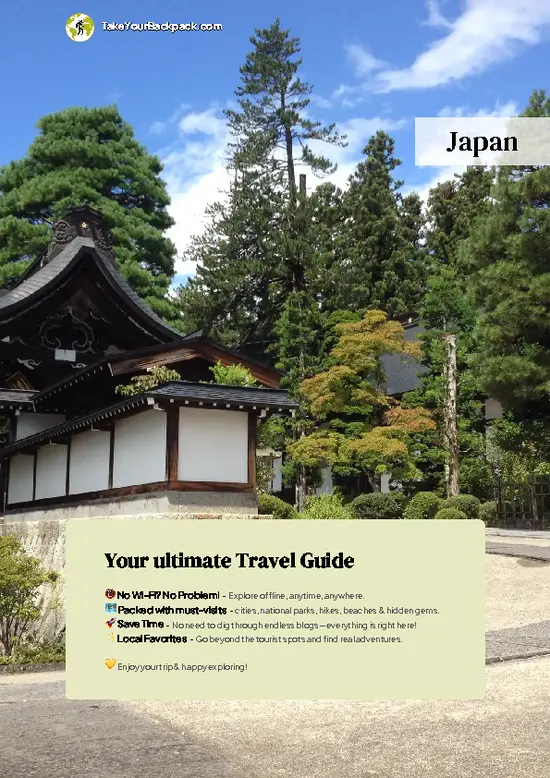
Discover everything you want to know in the 📖 Japan Travel Guide.


Get your Japan guide
140 ranked highlights, routes & tips, works offline (482 pages)
Loading the map 🌍
CLICK TO FILTER
cities
towns
villages
landmarks
national parks
hikes
beaches
attractions
festivals
regions
SHOW COUNTRY’S BESTSHOW ALL

✨ Why go?
Ranked #41 city in Japan
Why Sasebo should be on your travel list

Sasebo is a strategic stop for backpackers navigating Japan. Its walkability makes it easy to explore, while a range of hostels offers budget-friendly stays. The city serves as a solid basecamp for day trips to nearby attractions, maximizing your time without sacrificing comfort. Food options are diverse, from local eateries to international fare, ensuring you won’t go hungry. The nightlife is lively yet laid-back, perfect for unwinding after a day of exploration. Plus, with easy onward travel connections, you can seamlessly continue your journey. Sasebo is ideal for those seeking a mix of adventure and relaxation.
Want to include Sasebo in your Japan route?
Create a personalized Japan itinerary that includes Sasebo and the places that fit your trip — based on your travel style, budget, and available time. Get your route in seconds.

Generate my trip

💡 HighlightsEssential experiences to have while visiting Sasebo

Sasebo Naval Base & Museum
Japan’s naval history is on full display here, and you’ll feel the city’s strategic pulse. The museum’s artifacts and ship models are a crash course in Sasebo’s military DNA. Expect to spend 1-2 hours. Entry is free, but bring ID for security. Go on a weekday morning for fewer crowds and a more immersive experience.

Sasebo Yonkacho Shopping Arcade
This covered arcade is the city’s social engine. It’s not just shopping—think street food, local crafts, and the best people-watching in town. Try a Sasebo burger from a tiny stand. Budget ¥500-¥1,500 for snacks and souvenirs. One hour is enough unless you get lost in the side alleys. Early evening is prime time.

Kujukushima Pearl Sea Resort
The gateway to the “99 Islands” is technically within city limits. Take a short … read more 👉
Sasebo Naval Base & Museum
Japan’s naval history is on full display here, and you’ll feel the city’s strategic pulse. The museum’s artifacts and ship models are a crash course in Sasebo’s military DNA. Expect to spend 1-2 hours. Entry is free, but bring ID for security. Go on a weekday morning for fewer crowds and a more immersive experience.

Sasebo Yonkacho Shopping Arcade
This covered arcade is the city’s social engine. It’s not just shopping—think street food, local crafts, and the best people-watching in town. Try a Sasebo burger from a tiny stand. Budget ¥500-¥1,500 for snacks and souvenirs. One hour is enough unless you get lost in the side alleys. Early evening is prime time.

Kujukushima Pearl Sea Resort
The gateway to the “99 Islands” is technically within city limits. Take a short cruise for panoramic views and salty air, or visit the aquarium for a local marine life primer. Cruises run ¥1,500-¥2,000 and last 50 minutes. The aquarium is ¥1,470. Go in the late afternoon for golden light on the water.

Miuramachi Catholic Church
A rare glimpse into Nagasaki’s Christian heritage. The church’s simple brickwork and stained glass tell stories of hidden faith. Free to enter, 20-30 minutes is enough. Visit mid-morning for quiet reflection.

Sasebo Morning Market
This is where Sasebo wakes up. Fishermen, grandmas, and chefs all converge for the day’s catch. Try the sashimi or a steaming bowl of champon. Bring cash; ¥1,000-¥2,000 covers a hearty breakfast. Arrive before 8 a.m. for the full sensory overload.

For day trips, don’t miss Huis Ten Bosch (Dutch theme park with surreal architecture), Hirado’s samurai-era streets, or the wild coastline of Saikai National Park—my personal favorite for its hiking and island views.
Spotted a mistake or missing something? Contact us.

Things to do near Sasebo

Ratings based on Tripadvisor reviews. When you book through this link, you support our work at no extra cost to you.

🏘️ NeighborhoodsHow different areas shape the experience

Sasebo offers a unique blend of urban charm and coastal beauty, making it a fascinating stop for backpackers.

Downtown Sasebo: This area buzzes with energy. It’s packed with affordable eateries and shops. Walkability is high, so you can easily explore. Nightlife is lively but not overwhelming, perfect for socializing without the chaos. Great for short stays.

Huis Ten Bosch: A themed park area that feels like a slice of Europe. While it can be pricier, the experience is worth it for a day trip. Transport access is straightforward, but it’s quieter at night. Ideal for longer stays if you enjoy a more relaxed vibe.

Shimanose: A residential area with local charm. It’s less touristy, offering a glimpse into daily life. Costs are lower, and it’s walkable. Perfect for those wanting to escape the hustle and soak in the local atmosphere.

⌛️ 1 dayWhat you can realistically do in a day

Sasebo, Japan, is a delightful blend of maritime charm and rich history, known for its stunning waterfront and the unique influence of the U.S. Navy. Start your morning at the Sasebo Fish Market, where the air is filled with the scent of fresh seafood. Grab a bowl of local ramen; it’s a must-try.

After fueling up, stroll through the picturesque Huis Ten Bosch, a Dutch-themed park that feels like a whimsical escape. Spend a few hours wandering its gardens and canals, soaking in the vibrant atmosphere.

In the afternoon, head to the quiet neighborhood of Kameyama Park. It’s less touristy but offers a serene spot to relax and enjoy views of the surrounding hills.

As evening approaches, make your way to the Sasebo Bay area. The sunset here is spectacular, especially from the Sasebo Maritime … read more 👉
Sasebo, Japan, is a delightful blend of maritime charm and rich history, known for its stunning waterfront and the unique influence of the U.S. Navy. Start your morning at the Sasebo Fish Market, where the air is filled with the scent of fresh seafood. Grab a bowl of local ramen; it’s a must-try.

After fueling up, stroll through the picturesque Huis Ten Bosch, a Dutch-themed park that feels like a whimsical escape. Spend a few hours wandering its gardens and canals, soaking in the vibrant atmosphere.

In the afternoon, head to the quiet neighborhood of Kameyama Park. It’s less touristy but offers a serene spot to relax and enjoy views of the surrounding hills.

As evening approaches, make your way to the Sasebo Bay area. The sunset here is spectacular, especially from the Sasebo Maritime Museum. For dinner, indulge in the local specialty, Sasebo burger, at a nearby diner. This day is a perfect mix of culture, relaxation, and culinary delight, making Sasebo a city worth savoring.
Turn your Sasebo visit into an Japan adventure
Build a complete Japan route with Sasebo, hidden gems, must-see destinations, and realistic travel times included.

Generate my trip

🌤️ When to go?Weather, crowds, and seasonal trade-offs


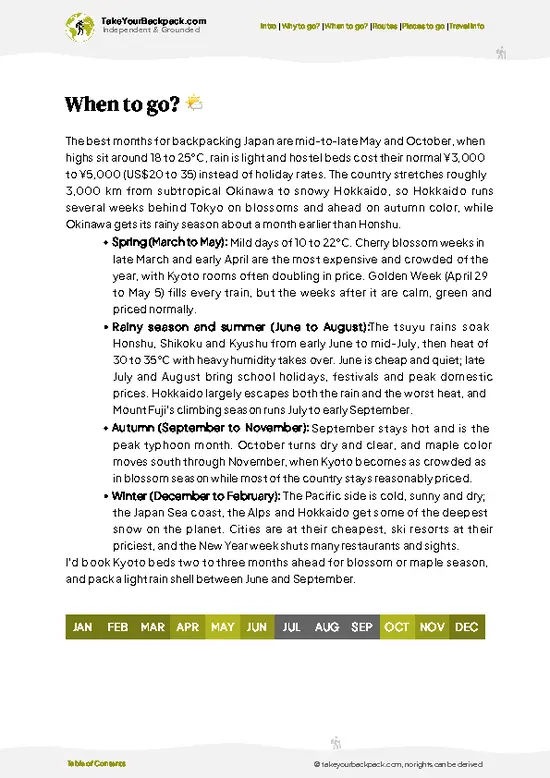
  • Weather: Spring (March to May) and autumn (September to November) offer mild, dry conditions ideal for hiking and exploring. Summers can be hot and humid, with temperatures hitting 30°C (86°F), while winters drop to around 5°C (41°F) and can be damp.

  • Temperature: Spring and autumn average 15-22°C (59-72°F), perfect for layering without overheating or freezing. Winter’s chill and summer’s muggy heat can sap energy fast.

  • Daylight Hours: Longer days in late spring and early autumn give you 12-14 hours of light, maximizing your trekking and sightseeing windows.

  • Crowds: Golden Week (late April to early May) and summer holidays pack the city with tourists, hiking trails, and ferries. Off-peak spring and autumn are quieter, letting you savor local life.

  • Seasonal Activities: Cherry blossoms
read more 👉

  • Weather: Spring (March to May) and autumn (September to November) offer mild, dry conditions ideal for hiking and exploring. Summers can be hot and humid, with temperatures hitting 30°C (86°F), while winters drop to around 5°C (41°F) and can be damp.

  • Temperature: Spring and autumn average 15-22°C (59-72°F), perfect for layering without overheating or freezing. Winter’s chill and summer’s muggy heat can sap energy fast.

  • Daylight Hours: Longer days in late spring and early autumn give you 12-14 hours of light, maximizing your trekking and sightseeing windows.

  • Crowds: Golden Week (late April to early May) and summer holidays pack the city with tourists, hiking trails, and ferries. Off-peak spring and autumn are quieter, letting you savor local life.

  • Seasonal Activities: Cherry blossoms bloom in April, while autumn paints the hills in fiery reds and oranges—both prime for photography and outdoor adventures.

  • Price Fluctuations: Accommodation and transport costs spike during Golden Week and summer. Booking in shoulder seasons can save you 20-30% without sacrificing experience.


Pro-tip: Aim for late April or mid-October to balance weather, crowds, and cost—this is when Sasebo feels like it’s yours alone.


source: climatestotravel.comJANJanuary: fair for travelingFEBFebruary: fair for travelingMARMarch: highly recommended for travelingAPRApril: excellent for travelingMAYMay: good for travelingJUNJune: fair for travelingJULJuly: fair for travelingAUGAugust: fair for travelingSEPSeptember: highly recommended for travelingOCTOctober: excellent for travelingNOVNovember: highly recommended for travelingDECDecember: fair for traveling
when-to-go

✈️ The backpacker research shortcutJapan Travel Guide

An offline-friendly backpacking guide with optimized travel routes, ranked highlights, transport advice, and the best areas to stay.
example page 0 from our offline Travel Guide for Japan
example page 1 from our offline Travel Guide for Japan
example page 2 from our offline Travel Guide for Japan
example page 3 from our offline Travel Guide for Japan
example page 4 from our offline Travel Guide for Japan
example page 5 from our offline Travel Guide for Japan
example page 6 from our offline Travel Guide for Japan
example page 7 from our offline Travel Guide for Japan
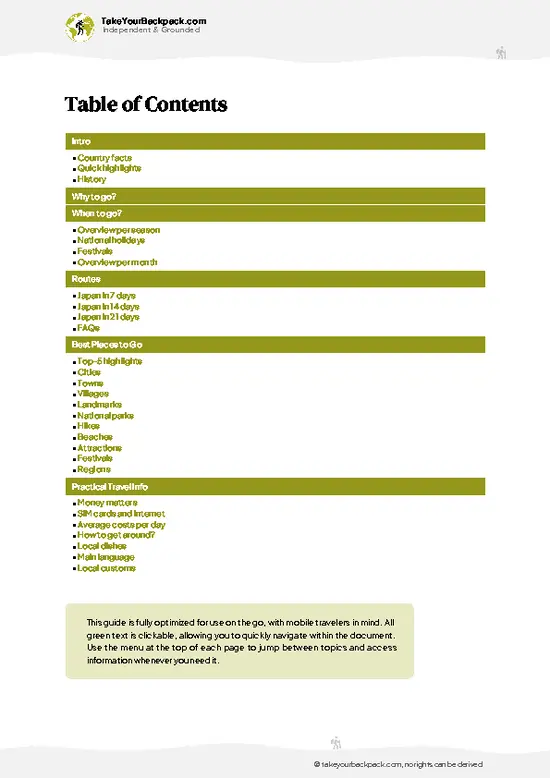
The digital guide (482 pages) contains:
140 highlights, ranked by travel appeal
Optimized 7, 14 & 21-day travel routes
Cities, national parks, landmarks, beaches
How to get around
Offline-friendly for travel without Wi-Fi
👉 Click to see all 30+ guide features

📅 Plan smarter in minutes, not weeks
Month by month travel advice
Festivals & national holidays
Budget expectations

🗺️ Go to the right places, skip the overrated ones
Honest pros & cons of destinations
Top hikes, parks & viewpoints
Lesser-known places most travelers miss
Clear “worth it vs skip it” guidance

🛏️ Travel smoothly without rookie mistakes
Best areas to stay
Transport systems explained simply
Common scams & safety advice
SIM cards, money & practical tips

🌍 Understand the country, not just visit it
Culture & traditions
52 Essential phrases & customs
Festivals worth planning around
Traveler-friendly historical context
Insights that make places more meaningful

📱 Built for real travel conditions
Fully downloadable PDF
Works completely offline
Optimized for phone use
Useful in remote areas & buses
Everything in one place
Save weeks of stressful planning
Get instant access to your full guide. 30‑day money-back guarantee.
+ Add another guide for just US$7.80

By proceeding you agree to our terms.
Sent to your inbox immediately after payment • 100% Secure Checkout
Best Backpacking Travel Advisor 2025 tourism awardBest Backpacking
Travel Advisor
2025
What others say about Take Your Backpack Guides:
⭐⭐⭐⭐⭐
Fantastic, amazing amount of information!
⭐⭐⭐⭐⭐
My goodness this is amazing, it's what I've been looking for hats off too you!
⭐⭐⭐⭐⭐
I think this is absolutely BRILLIANT
⭐⭐⭐⭐
Very complete and informative. It's still missing places, but I gotta to commend you
⭐⭐⭐⭐⭐
This is truly amazing, thank you, can't wait to explore it with my kids!
⭐⭐⭐⭐⭐
Awesome resource, thank you!
⭐⭐⭐⭐⭐
This is amazing! Can't wait to explore the ones I haven't seen
⭐⭐⭐⭐
I love this! Well done, great idea.
⭐⭐⭐⭐⭐
Thanks for taking the time to make this gem!
⭐⭐⭐⭐⭐
This might be the best website I've ever seen.
⭐⭐⭐⭐⭐
Congratulations, and thank you so much for your work; it's incredibly valuable.
⭐⭐⭐⭐
In all seriousness I think you did a great job pointing out the important spots
⭐⭐⭐⭐⭐
10/10 very good
⭐⭐⭐⭐⭐
As someone who's only just starting to visit regularly this is awesome, thank you.
⭐⭐⭐⭐
Thank you very much! I'm going to visit my dad, it's going to be very useful!
⭐⭐⭐⭐⭐
This is really cool! We'll be travelling for the first time and this definitely come in handy.
⭐⭐⭐⭐⭐
You are now our minister of culture, congratulations 👨‍💼
⭐⭐⭐⭐⭐
Just wanted to tell you that this is a pearl! Going to follow your recommendations.
⭐⭐⭐⭐⭐
This is so cool. I'll definitely be using the resource for my travels soon.
⭐⭐⭐⭐⭐
This is very impressive! Good work.
⭐⭐⭐⭐⭐
This is an amazing and informative site. Very well done!

🛏️ Where to stay?Choosing the right base

Sasebo’s best backpacker base is the area around Sasebo Station. It’s the city’s transport hub, so you’re plugged into buses and trains without hassle. This neighborhood balances safety with a steady flow of travelers, making it easy to strike up conversations or find fellow solo adventurers. Hostels cluster here, offering budget beds without sacrificing comfort or social buzz. Compared to the quieter, more residential zones, this spot keeps you close to eateries and nightlife without the touristy chaos of the waterfront. You trade a bit of serene charm for convenience and connection—perfect if … read more 👉
Sasebo’s best backpacker base is the area around Sasebo Station. It’s the city’s transport hub, so you’re plugged into buses and trains without hassle. This neighborhood balances safety with a steady flow of travelers, making it easy to strike up conversations or find fellow solo adventurers. Hostels cluster here, offering budget beds without sacrificing comfort or social buzz. Compared to the quieter, more residential zones, this spot keeps you close to eateries and nightlife without the touristy chaos of the waterfront. You trade a bit of serene charm for convenience and connection—perfect if you want to maximize your time and meet people without overspending.

🚌 Getting aroundGetting around like a local

Sasebo moves at its own rhythm—neither a frantic rush nor a lazy drift. The city’s pulse is a blend of punctuality and laid-back charm, where trains and buses stick to schedules but locals often navigate with a relaxed, intuitive flow. You’ll find that timing here is a strategic game: miss a bus by minutes, and you’re recalculating your route; catch it just right, and you glide through the city’s coastal streets with ease. Understanding this balance is your key to mastering Sasebo’s transit trade-offs.


  • Walking: The ultimate budget option, especially in downtown Sasebo. It’s free, flexible, and lets you soak in the city’s character at your own pace. Ideal for short distances and spontaneous detours.

  • JR Sasebo Line: Connects Sasebo with Nagasaki and other regional hubs. Trains run roughly
read more 👉
Sasebo moves at its own rhythm—neither a frantic rush nor a lazy drift. The city’s pulse is a blend of punctuality and laid-back charm, where trains and buses stick to schedules but locals often navigate with a relaxed, intuitive flow. You’ll find that timing here is a strategic game: miss a bus by minutes, and you’re recalculating your route; catch it just right, and you glide through the city’s coastal streets with ease. Understanding this balance is your key to mastering Sasebo’s transit trade-offs.


  • Walking: The ultimate budget option, especially in downtown Sasebo. It’s free, flexible, and lets you soak in the city’s character at your own pace. Ideal for short distances and spontaneous detours.

  • JR Sasebo Line: Connects Sasebo with Nagasaki and other regional hubs. Trains run roughly every 30 minutes from early morning (around 6:00 AM) until late evening (around 10:30 PM). Tickets cost about 500–1,000 yen depending on distance. Fast and reliable, but less frequent than urban metros.

  • Nagasaki Kotsu Buses: Cover local routes extensively, with fares starting at 150 yen. Buses run from about 6:00 AM to 9:00 PM. They’re slower than trains but reach neighborhoods and attractions beyond walking range. Comfort varies; expect standard city bus seating.

  • Rental Bicycles: A sweet spot between speed and cost, usually around 500 yen per day. Great for exploring beyond the core city without the hassle of schedules. Weather-dependent and requires moderate fitness.

👛 Costs (as of 4 September 2026)Travel costs and budget guide for Sasebo

Backpacking in Sasebo, Japan, means balancing your budget with the unique pace and charm of this port city. Here’s the real deal on what your daily expenses look like, broken down so you can see exactly where your money goes.
  • Dorm Accommodation (High Season): Expect to pay around $25 to $35 per night during peak travel times. Sasebo’s hostels and guesthouses offer clean, simple dorm beds, but prices spike slightly when tourists flock in, especially around holidays or festivals.
  • Dorm Accommodation (Off-Season): Drop to about $15 to $25 per night. The quieter months mean better deals and more breathing room in shared spaces, perfect if you’re flexible with timing.
  • Meals: Budget roughly $10 to $20 daily if you stick to convenience stores, local eateries, and street food. Sasebo is famous for
read more 👉
Backpacking in Sasebo, Japan, means balancing your budget with the unique pace and charm of this port city. Here’s the real deal on what your daily expenses look like, broken down so you can see exactly where your money goes.
  • Dorm Accommodation (High Season): Expect to pay around $25 to $35 per night during peak travel times. Sasebo’s hostels and guesthouses offer clean, simple dorm beds, but prices spike slightly when tourists flock in, especially around holidays or festivals.
  • Dorm Accommodation (Off-Season): Drop to about $15 to $25 per night. The quieter months mean better deals and more breathing room in shared spaces, perfect if you’re flexible with timing.
  • Meals: Budget roughly $10 to $20 daily if you stick to convenience stores, local eateries, and street food. Sasebo is famous for its burger culture, so grabbing a burger from a local joint can be both filling and affordable. Splurging on a sit-down meal will push you closer to $25 or more.
  • Local Transport: Single bus rides within the city typically cost around $1.50 to $2.50. Taxis are available but expensive for backpackers, so stick to buses or rent a bike for about $10 a day if you want more freedom.
  • City Transport Pass: A day pass for unlimited bus rides runs about $5 to $7. This is a smart buy if you plan to explore multiple neighborhoods or attractions in one day.
  • Basic Activities/Entry Fees: Many local sights, like parks and small museums, charge between $3 and $8. The Kujukushima Pearl Sea Resort, a popular spot, costs around $10 for entry. Budget around $10 to $15 daily if you want to mix in a few paid experiences.
  • Miscellaneous Expenses: Think snacks, bottled drinks, occasional laundry, or small souvenirs. Set aside $5 to $10 to cover these little extras that add up but keep your trip smooth.

All told, you’re looking at a daily budget between $50 and $80 for a solid backpacking experience in Sasebo. This range gives you enough room to enjoy the city without feeling pinched, balancing comfort and cost cleverly. Knowing where to spend and where to save turns your trip into a strategic win, not just a checklist of expenses.


source: sasebo99.com
⚠️ Prices can change and everyone travels differently, so take this as a rough guide. Hope it helps you plan your adventure!

🚌 Day tripsEasy escapes and nearby places

Sasebo, Japan, serves as a fantastic launchpad for day trips that blend culture, nature, and adventure. Here are some standout options.

Nagasaki
Just an hour away by train, Nagasaki offers a rich history and stunning views from Mount Inasa. Explore the poignant Atomic Bomb Museum and the beautiful Glover Garden. Don’t miss the local champon noodles for a budget-friendly meal. A common mistake? Skipping the scenic tram ride, which adds a local touch to your journey.


Kujukushima
A short 30-minute bus ride takes you to Kujukushima, where you can hop on a ferry to explore the archipelago’s 99 islands. The views are breathtaking, and you can even enjoy fresh seafood at local eateries. Ideal in spring or autumn, this trip is a nature lover’s paradise. Just remember to check ferry schedules … read more 👉
Sasebo, Japan, serves as a fantastic launchpad for day trips that blend culture, nature, and adventure. Here are some standout options.

Nagasaki
Just an hour away by train, Nagasaki offers a rich history and stunning views from Mount Inasa. Explore the poignant Atomic Bomb Museum and the beautiful Glover Garden. Don’t miss the local champon noodles for a budget-friendly meal. A common mistake? Skipping the scenic tram ride, which adds a local touch to your journey.


Kujukushima
A short 30-minute bus ride takes you to Kujukushima, where you can hop on a ferry to explore the archipelago’s 99 islands. The views are breathtaking, and you can even enjoy fresh seafood at local eateries. Ideal in spring or autumn, this trip is a nature lover’s paradise. Just remember to check ferry schedules to avoid long waits.


Huis Ten Bosch
This Dutch-themed park is only 30 minutes from Sasebo and offers a quirky escape with gardens, windmills, and even a replica of a Dutch town. Entrance fees can be steep, but you can often find discounts online. Aim for a weekday visit to dodge the crowds.


Shimabara
About an hour’s bus ride from Sasebo, Shimabara is known for its hot springs and the impressive Shimabara Castle. The town’s onsen (hot springs) are a perfect way to unwind after a day of exploration. Be cautious of the limited bus schedule, especially on weekends.
Want to know what more Japan offers?
The Japan Travel Guide describes 140 highlights, from cities to national parks, from beaches to hikes

Get the Travel Guide -

🍲 FoodLocal Flavors for Backpackers

In Sasebo, local cuisine is a delightful mix of flavors. Don’t miss the Sasebo burger, a juicy creation that’s a must-try for any backpacker. Street vendors serve up yakitori—grilled chicken skewers that sizzle with smoky goodness.

The night market buzzes with energy, offering everything from takoyaki to sweet taiyaki. Grab a seat at a casual izakaya, where you can sip on local sake or shochu while mingling with friendly locals.

Etiquette is simple: slurp your noodles to show appreciation. Embrace the communal vibe; sharing dishes is common and adds to the experience. Enjoy the flavors and the connections you’ll make!

🛡️ SafetyTraveler Safety Guide

Sasebo is generally safe, but like any city, a bit of awareness goes a long way. Stick to well-lit areas at night, especially if you’re solo. The waterfront is beautiful but can feel isolated after dark.

While scams are rare, be cautious around overly friendly locals offering unsolicited help; they might expect something in return. Everyday annoyances include occasional language barriers, so a translation app can be your best friend. Carry yourself confidently, and you’ll navigate Sasebo like a pro.

FAQCommon questions from travelers

2 to 3 days are sufficient to explore Sasebo, covering key attractions like Kujukushima Islands and the Sasebo Naval Base. This timeframe allows for day trips to nearby natural sites and sampling local cuisine without rushing.
Yes, Sasebo is safe for solo backpackers. The city has low crime rates and a friendly local population, making it comfortable for solo travelers to navigate both day and night. Basic precautions typical for any urban area should be observed.
Sasebo is known for its scenic Kujukushima Islands, a cluster of 208 islands offering boat tours and hiking. It is also famous for Sasebo Burger, a local specialty influenced by the nearby U.S. naval base.
⚠️ Things can change over time, so always validate details locally before you go.

Other Japanese cities near Sasebo

Explore more nearby:

  • Saga—ceramic villages, hot air balloons, castle ruins| 55 km away
  • Fukuoka—canal-side dining, city beaches, ramen alleys| 78 km away
  • Kumamoto—fortress ruins, Suizenji garden, local sweets| 102 km away

💡 Not sure where to go next?
Create a personalized itinerary for Japan including Sasebo and the places that fit your trip.

Generate my itinerary

👉 Discover all cities

Or checkout all Japan has to offer (think cities, towns, villages, national parks, hikes, beaches, festivals)
Country photo of Japan

We 💚 feedbackFinal thoughts on visiting Sasebo

Sasebo’s charm lies in its unique blend of Japanese culture and Western influences, especially in its food scene—don’t miss the famous Sasebo burgers. However, the city’s public transport can be a bit tricky, so plan your routes ahead to avoid frustration.

✈️ When did I visit Japan?
As part of my 1.5 year travel around the world trip, I visited Japan in August 2015.

✍️ Help improve this page!
The information on this page is based on my own backpacking experience in Japan, supplemented with up-to-date research and feedback from other travelers. Travel details can change, so if you notice anything outdated or incomplete, feel free to let me know.


🙋‍♂️ Give feedback

👋 Meet the founderWho’s Behind Take Your Backpack?

Johan, backpacker and founder of TakeYourBackpackHi, I’m Johan (Netherlands 🇳🇱), the creator of TakeYourBackpack. Over the past decade, I’ve backpacked through 80+ countries across six continents, gaining extensive experience with independent travel, long-term trips, and overland routes.

This site is built on a combination of firsthand travel experience and carefully curated insights from other backpackers. Many guides are based on places I’ve personally visited, while others bring together tips, observations, and practical advice shared by trusted travelers I’ve met along the way.

The goal is to provide realistic, experience-driven guidance — not generic itineraries — so you can explore destinations with better context, clearer expectations, and more confidence.

Get full Japan guide •
Instant download • 140 highlights • Full Offline guide