


×

Japan🇯🇵 | national parksShiretoko National ParkUntamed coastline, primeval forest, wildlife encounters, sea cliffs | things to do and best time to go

Explore Nikko National ParkExplore Yakushima

Backpacking in Shiretoko
🏆 Top picknational park ranked #2
By Johan Kruseman 🇳🇱 | Updated September 4, 2026

Your boots crunch on frozen boardwalk planks, breath hanging in the air while drift ice grinds softly against the shore below; somewhere in the trees, a crow snaps you back to the fact that you’re very much in bear country. This is Shiretoko National Park, on the remote northeastern tip of Hokkaido, almost the end of Japan’s road network. For backpackers, it’s serious wilderness: big coastal cliffs, dense forest, real chance of seeing brown bears, foxes, and orcas offshore. Trails range from easy lakeside walks to guided-only ridge routes, but access is awkward, buses are sparse, and hitchhiking is common by necessity, not romance. No general entrance fee, yet guided hikes, bear precautions, and limited-season campsites add up. It’s quieter and wilder than Daisetsuzan or Akan–Mashu, with fewer facilities, fewer casual tourists, and more “you’d better know what you’re doing” energy than postcard views on demand.

Discover everything you want to know in the 📖 Japan Travel Guide.


Get your Japan guide
140 ranked highlights, routes & tips, works offline (482 pages)
Loading the map 🌍
CLICK TO FILTER
cities
towns
villages
landmarks
national parks
hikes
beaches
attractions
festivals
regions
SHOW COUNTRY’S BESTSHOW ALL

✨ Why go?
Ranked #2 national park in Japan
What makes this national park worth exploring

Shiretoko National Park is a top choice for backpackers seeking independent exploration. The park’s remote location in Hokkaido offers a sense of solitude that’s hard to find elsewhere. You can wander its trails without the crowds, making it perfect for those who prefer to set their own pace.

Budget camping is a major draw. There are several campsites and hostels nearby, allowing you to stretch your yen while enjoying the great outdoors. This means you can save your funds for experiences that truly matter, like sampling local seafood in nearby towns.

The trail variety is another highlight. From coastal paths with breathtaking views to forest trails that lead to stunning waterfalls, there’s something for everyone. Whether you’re a seasoned hiker or a casual walker, you’ll find routes that … read more 👉
Shiretoko National Park is a top choice for backpackers seeking independent exploration. The park’s remote location in Hokkaido offers a sense of solitude that’s hard to find elsewhere. You can wander its trails without the crowds, making it perfect for those who prefer to set their own pace.

Budget camping is a major draw. There are several campsites and hostels nearby, allowing you to stretch your yen while enjoying the great outdoors. This means you can save your funds for experiences that truly matter, like sampling local seafood in nearby towns.

The trail variety is another highlight. From coastal paths with breathtaking views to forest trails that lead to stunning waterfalls, there’s something for everyone. Whether you’re a seasoned hiker or a casual walker, you’ll find routes that match your skill level.

Shiretoko is well-suited for self-guided travelers. While guided tours exist, they often come with a hefty price tag. Navigating the park on your own not only saves money but also allows for a more personal connection with the landscape. Just be prepared with a good map and some basic navigation skills.
Want to include Shiretoko National Park in your Japan route?
Create a personalized Japan itinerary that includes Shiretoko National Park and the places that fit your trip — based on your travel style, budget, and available time. Get your route in seconds.

Generate my trip

💡 HighlightsDon't-miss highlights and experiences

  1. Shiretoko Five Lakes (Shiretoko Goko) — A cluster of small mirror-like lakes set against dense old-growth forest and sharp peaks. Boardwalks make for stunning reflections and moody mist shots at dawn; bears use the area too, so the upper lakes sometimes require a guide. Personal favorite — the quiet early-morning light there is unbeatable.
  2. Kamuiwakka Falls (Kamuiwakka-no-taki / Hot Falls) — A rare thermal waterfall that creates warm, turquoise pools as it tumbles to the sea. You can clamber up the stream and soak in natural hot-water pockets (water shoes recommended), but check closures — safety and conservation rules change seasonally.
  3. Drift-ice & sea-eagle cruises (Utoro/Rausu) — In winter (usually Feb-Mar) the Sea of Okhotsk pushes floes against the peninsula; boat tours get you close
read more 👉
  1. Shiretoko Five Lakes (Shiretoko Goko) — A cluster of small mirror-like lakes set against dense old-growth forest and sharp peaks. Boardwalks make for stunning reflections and moody mist shots at dawn; bears use the area too, so the upper lakes sometimes require a guide. Personal favorite — the quiet early-morning light there is unbeatable.
  2. Kamuiwakka Falls (Kamuiwakka-no-taki / Hot Falls) — A rare thermal waterfall that creates warm, turquoise pools as it tumbles to the sea. You can clamber up the stream and soak in natural hot-water pockets (water shoes recommended), but check closures — safety and conservation rules change seasonally.
  3. Drift-ice & sea-eagle cruises (Utoro/Rausu) — In winter (usually Feb-Mar) the Sea of Okhotsk pushes floes against the peninsula; boat tours get you close to blue-white ice and to Steller’s sea eagles and white-tailed eagles riding the currents. One of the most otherworldly wildlife experiences in Hokkaido.
  4. Mt. Rausu (Rausu-dake) — A steep, rewarding climb with alpine meadows, asters in summer, and wide views out to the Kuril Islands. It’s a serious day or overnight trek—expect scree, sudden weather, and the usual bear precautions—but the summit panorama is worth the sweat.
  5. Shiretoko Pass (Shiretoko-toge) — A short, dramatic drive up to a high ridge with sweeping views down both sides of the peninsula. Easy to reach by car in summer and perfect for quick photo stops and watching clouds roll through the valleys.
  6. Cape Shiretoko (Shiretoko-misaki) — The rugged eastern tip of the peninsula with cliffs, a lighthouse, and wild sea views. Great for sunrise, solitary walks, and scanning for seals or seabirds along the rocky coast.
  7. Furepe Waterfall & coastal rock garden — A short, pleasant trail leads to Furepe, a slender waterfall that drops straight into the ocean. Nearby coastal rock formations and boat-access “rock garden” scenery make this a nice easy stop if you want dramatic sea-and-waterfall contrasts without a long hike.
Spotted a mistake or missing something? Contact us.

🌤️ When to go?Seasonal considerations and timing


  • Topic: Weather – Shiretoko’s weather swings sharply. Summer (June to August) is mild, around 15-22°C (59-72°F), but spring and autumn bring unpredictable rain and early snow. Winter is brutal, often below freezing with heavy snow, limiting trail access.

  • Topic: Temperature – Expect comfortable hiking temps in summer, but spring and fall can dip to 5°C (41°F) or lower, especially at night. Winter temperatures often plunge below -10°C (14°F), making backpacking impractical without serious gear.

  • Topic: Daylight Hours – Long summer days stretch up to 16 hours, giving you plenty of daylight for exploring. In contrast, winter days shrink to about 7 hours, restricting hiking windows and increasing risk.

  • Topic: Crowds – Peak season is summer, especially July and August, when domestic tourists
read more 👉

  • Topic: Weather – Shiretoko’s weather swings sharply. Summer (June to August) is mild, around 15-22°C (59-72°F), but spring and autumn bring unpredictable rain and early snow. Winter is brutal, often below freezing with heavy snow, limiting trail access.

  • Topic: Temperature – Expect comfortable hiking temps in summer, but spring and fall can dip to 5°C (41°F) or lower, especially at night. Winter temperatures often plunge below -10°C (14°F), making backpacking impractical without serious gear.

  • Topic: Daylight Hours – Long summer days stretch up to 16 hours, giving you plenty of daylight for exploring. In contrast, winter days shrink to about 7 hours, restricting hiking windows and increasing risk.

  • Topic: Crowds – Peak season is summer, especially July and August, when domestic tourists flood the park. Spring and autumn see fewer visitors, offering solitude but less predictable conditions.

  • Topic: Seasonal Activities – Summer is prime for hiking and wildlife spotting, including brown bears and rare birds. Autumn offers vibrant foliage but shorter trails access. Winter focuses on ice festivals and drift ice tours, not backpacking.

  • Topic: Price Fluctuations – Accommodation and transport costs spike in summer. Shoulder seasons (late spring and early autumn) offer better deals but come with trade-offs in weather and trail availability.


Pro-tip: Aim for late June or early September to balance decent weather, manageable crowds, and better prices—just be ready for sudden weather shifts.


source: climatestotravel.comJANJanuary: below average for travelingFEBFebruary: below average for travelingMARMarch: fair for travelingAPRApril: fair for travelingMAYMay: good for travelingJUNJune: highly recommended for travelingJULJuly: excellent for travelingAUGAugust: excellent for travelingSEPSeptember: highly recommended for travelingOCTOctober: good for travelingNOVNovember: fair for travelingDECDecember: below average for traveling
japan-national-park-shiretoko-national-park
© Google |

✈️ The backpacker research shortcutJapan Travel Guide

An offline-friendly backpacking guide with optimized travel routes, ranked highlights, transport advice, and the best areas to stay.
example page 0 from our offline Travel Guide for Japan
example page 1 from our offline Travel Guide for Japan
example page 2 from our offline Travel Guide for Japan
example page 3 from our offline Travel Guide for Japan
example page 4 from our offline Travel Guide for Japan
example page 5 from our offline Travel Guide for Japan
example page 6 from our offline Travel Guide for Japan
example page 7 from our offline Travel Guide for Japan
The digital guide (482 pages) contains:
140 highlights, ranked by travel appeal
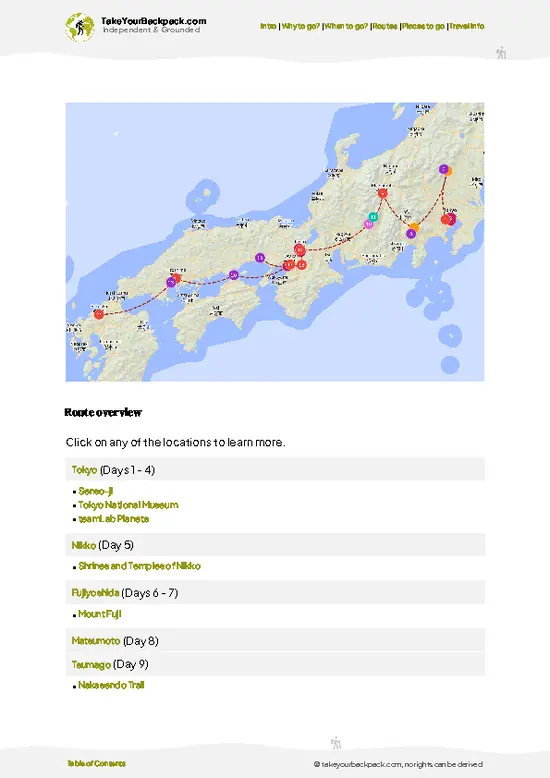
Optimized 7, 14 & 21-day travel routes
Cities, national parks, landmarks, beaches
How to get around
Offline-friendly for travel without Wi-Fi
👉 Click to see all 30+ guide features

📅 Plan smarter in minutes, not weeks
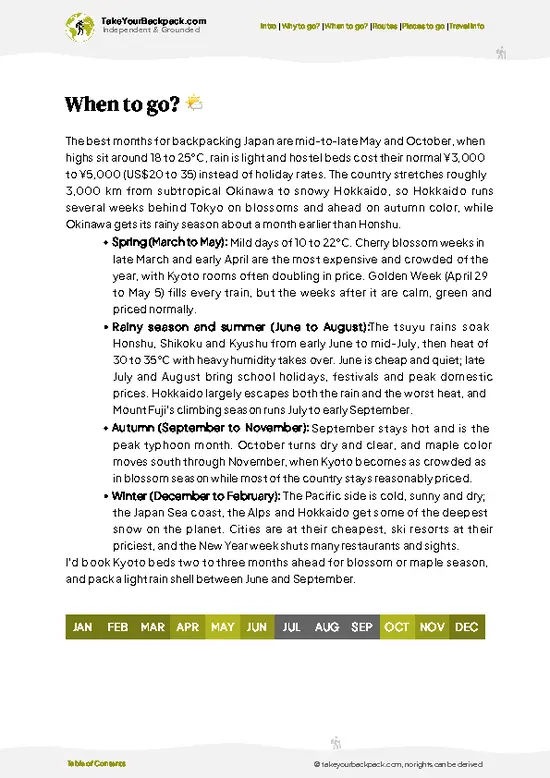
Month by month travel advice
Festivals & national holidays
Budget expectations

🗺️ Go to the right places, skip the overrated ones
Honest pros & cons of destinations
Top hikes, parks & viewpoints
Lesser-known places most travelers miss
Clear “worth it vs skip it” guidance

🛏️ Travel smoothly without rookie mistakes
Best areas to stay
Transport systems explained simply
Common scams & safety advice
SIM cards, money & practical tips

🌍 Understand the country, not just visit it
Culture & traditions
52 Essential phrases & customs
Festivals worth planning around
Traveler-friendly historical context
Insights that make places more meaningful

📱 Built for real travel conditions
Fully downloadable PDF
Works completely offline
Optimized for phone use
Useful in remote areas & buses
Everything in one place
Save weeks of stressful planning
Get instant access to your full guide. 30‑day money-back guarantee.
+ Add another guide for just US$7.80

By proceeding you agree to our terms.
Sent to your inbox immediately after payment • 100% Secure Checkout
Best Backpacking Travel Advisor 2025 tourism awardBest Backpacking
Travel Advisor
2025
What others say about Take Your Backpack Guides:
⭐⭐⭐⭐⭐
Fantastic, amazing amount of information!
⭐⭐⭐⭐⭐
My goodness this is amazing, it's what I've been looking for hats off too you!
⭐⭐⭐⭐⭐
I think this is absolutely BRILLIANT
⭐⭐⭐⭐
Very complete and informative. It's still missing places, but I gotta to commend you
⭐⭐⭐⭐⭐
This is truly amazing, thank you, can't wait to explore it with my kids!
⭐⭐⭐⭐⭐
Awesome resource, thank you!
⭐⭐⭐⭐⭐
This is amazing! Can't wait to explore the ones I haven't seen
⭐⭐⭐⭐
I love this! Well done, great idea.
⭐⭐⭐⭐⭐
Thanks for taking the time to make this gem!
⭐⭐⭐⭐⭐
This might be the best website I've ever seen.
⭐⭐⭐⭐⭐
Congratulations, and thank you so much for your work; it's incredibly valuable.
⭐⭐⭐⭐
In all seriousness I think you did a great job pointing out the important spots
⭐⭐⭐⭐⭐
10/10 very good
⭐⭐⭐⭐⭐
As someone who's only just starting to visit regularly this is awesome, thank you.
⭐⭐⭐⭐
Thank you very much! I'm going to visit my dad, it's going to be very useful!
⭐⭐⭐⭐⭐
This is really cool! We'll be travelling for the first time and this definitely come in handy.
⭐⭐⭐⭐⭐
You are now our minister of culture, congratulations 👨‍💼
⭐⭐⭐⭐⭐
Just wanted to tell you that this is a pearl! Going to follow your recommendations.
⭐⭐⭐⭐⭐
This is so cool. I'll definitely be using the resource for my travels soon.
⭐⭐⭐⭐⭐
This is very impressive! Good work.
⭐⭐⭐⭐⭐
This is an amazing and informative site. Very well done!

🛏️ Where to stay?Best areas and accommodation options

Shiretoko National Park is a wild, rugged paradise in Hokkaido, Japan. For backpackers, finding the right place to stay can make or break your experience.

Inside the park, accommodations are limited but worth considering. The Shiretoko Nature Center offers basic lodging and is a great base for exploring the trails. It’s simple but puts you right in the heart of nature. If you prefer a bit more comfort, the Shiretoko Grand Hotel is nearby, providing a mix of traditional Japanese hospitality and modern amenities. Just be prepared for higher rates, especially during peak season.

For a more budget-friendly … read more 👉
Shiretoko National Park is a wild, rugged paradise in Hokkaido, Japan. For backpackers, finding the right place to stay can make or break your experience.

Inside the park, accommodations are limited but worth considering. The Shiretoko Nature Center offers basic lodging and is a great base for exploring the trails. It’s simple but puts you right in the heart of nature. If you prefer a bit more comfort, the Shiretoko Grand Hotel is nearby, providing a mix of traditional Japanese hospitality and modern amenities. Just be prepared for higher rates, especially during peak season.

For a more budget-friendly option, head to Utoro, a small town just outside the park. Here, you’ll find guesthouses and hostels that cater to backpackers. Places like Shiretoko Hostel and Utoro Onsen offer affordable beds and a chance to meet fellow travelers. Plus, you can easily access the park’s entrance from here.

Keep in mind that public transport can be sparse, so plan your travel times carefully. Also, be aware of seasonal closures; some facilities may shut down in winter. Prioritize your energy and budget for the experiences that truly matter, like hiking the stunning trails and soaking in the natural hot springs.

👛 Costs (as of 4 September 2026)How expensive it really is

Visiting Shiretoko National Park in Japan can be a rewarding experience, but it’s essential to be aware of the costs involved to avoid surprises.

Entry fees for the park are generally around ¥1,000 to ¥1,500 (approximately $7 to $10 USD). This fee grants you access to various trails and visitor centers. However, if you plan to join guided tours or special activities, expect to pay more. Guided tours can range from $50 to $150 USD, depending on the length and inclusivity of the experience.

Transportation is another factor. If you’re traveling from Sapporo or other major cities, budget for train or bus fares. A train ride from Sapporo to Shiretoko can cost between $60 and $100 USD one way. Local buses within the park are typically around $5 to $10 USD per ride.

Accommodations vary widely. … read more 👉
Visiting Shiretoko National Park in Japan can be a rewarding experience, but it’s essential to be aware of the costs involved to avoid surprises.

Entry fees for the park are generally around ¥1,000 to ¥1,500 (approximately $7 to $10 USD). This fee grants you access to various trails and visitor centers. However, if you plan to join guided tours or special activities, expect to pay more. Guided tours can range from $50 to $150 USD, depending on the length and inclusivity of the experience.

Transportation is another factor. If you’re traveling from Sapporo or other major cities, budget for train or bus fares. A train ride from Sapporo to Shiretoko can cost between $60 and $100 USD one way. Local buses within the park are typically around $5 to $10 USD per ride.

Accommodations vary widely. Basic guesthouses or hostels can cost around $30 to $70 USD per night, while mid-range hotels might range from $100 to $200 USD. If you’re looking for a more luxurious stay, be prepared to spend upwards of $300 USD.

Food costs can also add up. Expect to pay around $10 to $20 USD for a meal at a casual restaurant. If you’re on a budget, convenience stores offer affordable options for around $5 to $10 USD.

Plan your budget carefully. Factor in these costs to ensure you have enough for the experiences that matter most.


source: visit-hokkaido.jp
⚠️ Prices can change and everyone travels differently, so take this as a rough guide. Hope it helps you plan your adventure!

🥾 TrailsHiking Shiretoko national park: highlights and difficulty

Shiretoko National Park is a gem in Japan, offering a mix of stunning landscapes and diverse wildlife. The park is known for its rugged coastline, dense forests, and volcanic mountains, making it a paradise for hikers. You can expect to encounter everything from serene lakes to dramatic cliffs. Wildlife is abundant here; keep your eyes peeled for deer, foxes, and even the occasional brown bear. Just remember, these bears are wild and should be respected from a distance!

One of the standout trails is the Shiretoko Five Lakes Trail. It’s a relatively easy hike, perfect for those who want to soak … read more 👉
Shiretoko National Park is a gem in Japan, offering a mix of stunning landscapes and diverse wildlife. The park is known for its rugged coastline, dense forests, and volcanic mountains, making it a paradise for hikers. You can expect to encounter everything from serene lakes to dramatic cliffs. Wildlife is abundant here; keep your eyes peeled for deer, foxes, and even the occasional brown bear. Just remember, these bears are wild and should be respected from a distance!

One of the standout trails is the Shiretoko Five Lakes Trail. It’s a relatively easy hike, perfect for those who want to soak in the scenery without too much strain. Here are the details:
  • Length: 3.6 km
  • Estimated Duration: 1.5 to 2 hours
  • Difficulty Level: Easy
  • Key Features: Five picturesque lakes, stunning views of the Shiretoko mountain range, and a chance to see local wildlife.
  • Terrain: Mostly flat with some boardwalk sections, making it accessible for most hikers.

Another great option is the Rausu Pass Trail, which offers a bit more of a challenge. Here’s what to know:
  • Length: 8 km
  • Estimated Duration: 3 to 4 hours
  • Difficulty Level: Moderate
  • Key Features: Breathtaking views of the Sea of Okhotsk and Rausu town, possible sightings of sea lions and various seabirds.
  • Terrain: Steep sections with rocky paths, so sturdy shoes are a must!

Getting to Shiretoko National Park is pretty straightforward. You can take a train or bus to the nearby town of Utoro, which is the main access point. Public transport is reliable, but it can get crowded during peak seasons, especially in summer. As for entrance fees, there’s no charge to enter the park itself, which is a nice bonus for budget travelers. Just be sure to check local guidelines, as some areas may have specific regulations or seasonal closures. Enjoy the wild beauty!
⚠️ Hiking info can sometimes be outdated or inaccurate. Before you hit the trail, check the latest conditions with locals. If you do spot anything that's off, I'd love to hear from you, so I can update it for fellow travelers.

🛡️ SafetyTraveler Safety Guide

Shiretoko National Park offers a stunning backdrop for backpackers, but it’s essential to stay grounded in reality. Weather can shift quickly, especially in the mountains. Be prepared for rain and sudden temperature drops, even in summer. Layering is your best friend here.

The terrain varies. Some trails are steep and rocky, demanding good footing and careful navigation. Pay attention to trail markers; getting lost can sap your energy and time. River crossings can be tricky, especially after rain, so scout your route before committing.

Wildlife encounters are possible, including bears. Keep food stored properly and make noise while hiking to avoid surprising them. Respect their space—observe from a distance.

Many first-timers underestimate the physical demands. Pace yourself, and don’t … read more 👉
Shiretoko National Park offers a stunning backdrop for backpackers, but it’s essential to stay grounded in reality. Weather can shift quickly, especially in the mountains. Be prepared for rain and sudden temperature drops, even in summer. Layering is your best friend here.

The terrain varies. Some trails are steep and rocky, demanding good footing and careful navigation. Pay attention to trail markers; getting lost can sap your energy and time. River crossings can be tricky, especially after rain, so scout your route before committing.

Wildlife encounters are possible, including bears. Keep food stored properly and make noise while hiking to avoid surprising them. Respect their space—observe from a distance.

Many first-timers underestimate the physical demands. Pace yourself, and don’t rush. Start early to maximize daylight and enjoy the experience. With thoughtful preparation, you’ll preserve your energy for the breathtaking moments that truly matter.

FAQTraveler FAQ

3 to 4 days are recommended to explore Shiretoko National Park thoroughly, allowing time for hiking, wildlife viewing, and boat tours. Key spots like the Shiretoko Five Lakes and Kamuiwakka Falls require at least a full day each. Additional days help accommodate travel time and weather delays.
Yes, you can visit Shiretoko National Park without a car by using public buses and guided tours. The Shiretoko Nature Center and main trailheads are accessible by bus from Utoro and Rausu towns, especially during the peak season from May to October. However, public transport is limited in frequency, so plan accordingly.
No entrance fee or permit is required to enter Shiretoko National Park. Some specific activities, like guided boat tours or certain protected areas, may have separate charges or require booking. Always check local regulations for seasonal restrictions or access rules.
⚠️ Things can change over time, so always validate details locally before you go.

Other Japanese national parks near Shiretoko

Explore more nearby:


💡 Not sure where to go next?
Create a personalized itinerary for Japan including Shiretoko and the places that fit your trip.

Generate my itinerary

👉 Discover all national parks

Or checkout all Japan has to offer (think cities, towns, villages, national parks, hikes, beaches, festivals)
Country photo of Japan

We 💚 feedbackWhat to keep in mind

Shiretoko National Park is a raw slice of nature where you can witness wildlife up close, from deer to sea eagles. It’s a paradise for those who crave authentic experiences. However, be prepared for the weather; it can turn on a dime, and trails might close unexpectedly. This isn’t a place for the faint-hearted, but if you embrace the unpredictability, you’ll find moments that truly resonate.

✈️ When did I visit Japan?
As part of my 1.5 year travel around the world trip, I visited Japan in August 2015.

✍️ Help improve this page!
The information on this page is based on my own backpacking experience in Japan, supplemented with up-to-date research and feedback from other travelers. Travel details can change, so if you notice anything outdated or incomplete, feel free to let me know.


🙋‍♂️ Give feedback

👋 Meet the founderWho’s Behind Take Your Backpack?

Johan, backpacker and founder of TakeYourBackpackHi, I’m Johan (Netherlands 🇳🇱), the creator of TakeYourBackpack. Over the past decade, I’ve backpacked through 80+ countries across six continents, gaining extensive experience with independent travel, long-term trips, and overland routes.

This site is built on a combination of firsthand travel experience and carefully curated insights from other backpackers. Many guides are based on places I’ve personally visited, while others bring together tips, observations, and practical advice shared by trusted travelers I’ve met along the way.

The goal is to provide realistic, experience-driven guidance — not generic itineraries — so you can explore destinations with better context, clearer expectations, and more confidence.

Get full Japan guide •
Instant download • 140 highlights • Full Offline guide