

×

Japan🇯🇵 | national parksYakushimaAncient cedar forests, misty mountains, mossy valleys, endemic species | things to do and best time to go

Explore Shiretoko National ParkExplore Fuji-Hakone-Izu National Park

Backpacking in Yakushima
🏆 Top picknational park ranked #3
By Johan Kruseman 🇳🇱 | Updated October 15, 2026

Most online blurbs sell Yakushima as a mossy, mystical forest escape; the surprise is how physically demanding and logistically pricey it can be for a backpacker who expects an easy stroll. Yakushima sits off the southern tip of Kyushu, in Kagoshima Prefecture, and the national park is basically the island’s mountainous, forested spine. The hiking is serious: long, wet, rooty trails to the ancient cedars, with weather that can dump rain on you even in “good” season, but the payoff is dense, primeval forest, monkeys, deer, and cloud-wrapped ridges that feel far wilder than most of Honshu. Access is decent by ferry, but not cheap, and buses are limited, so you either plan carefully or bleed money on taxis. No park entrance fee, but trailheads, shelters, and basic guesthouses add up; camping exists yet is tightly regulated and often inconvenient. Compared with Kirishima or Aso, Yakushima is less volcanic drama, more slow, wet, moss-soaked endurance—and that’s either exactly your thing or absolutely not.

Discover everything you want to know in the 📖 Japan Travel Guide.


example page 0 from our offline Travel Guide for Japan
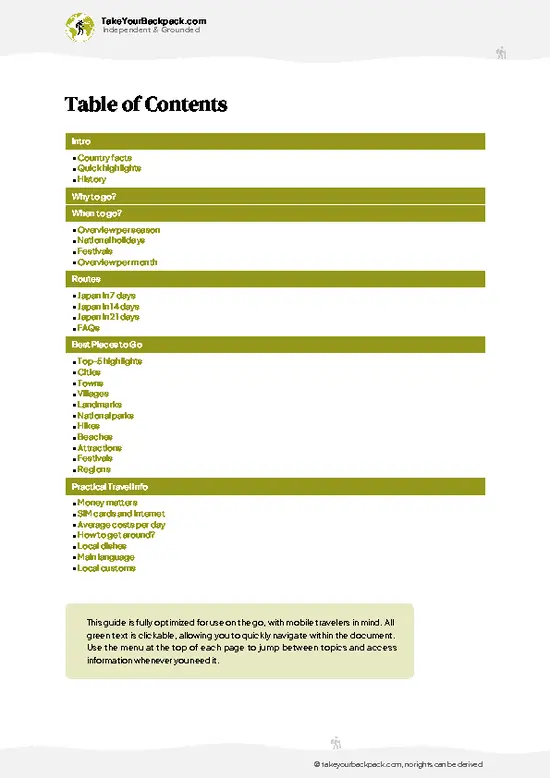
example page 1 from our offline Travel Guide for Japan
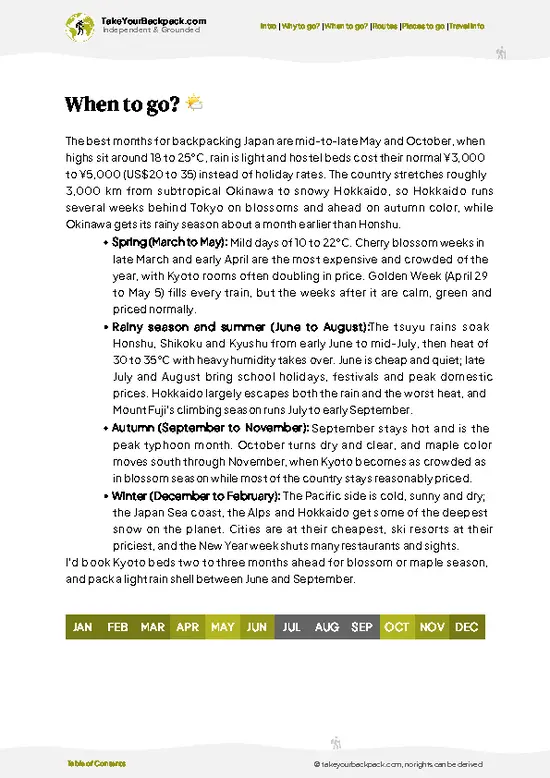
example page 2 from our offline Travel Guide for Japan
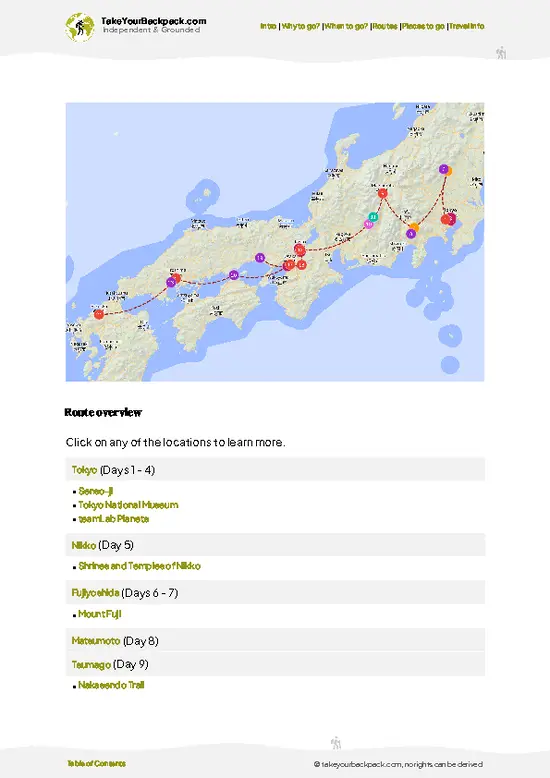
example page 3 from our offline Travel Guide for Japan
example page 4 from our offline Travel Guide for Japan
example page 5 from our offline Travel Guide for Japan
example page 6 from our offline Travel Guide for Japan
example page 7 from our offline Travel Guide for Japan
Loading the map 🌍
CLICK TO FILTER
cities
towns
villages
landmarks
national parks
hikes
beaches
attractions
festivals
regions
SHOW COUNTRY’S BESTSHOW ALL

✨ Why go?
Ranked #3 national park in Japan
What makes it a must-see national park

Backpackers flock to Yakushima for its blend of independent exploration and stunning natural beauty. This island park offers a network of trails that cater to all levels, from leisurely strolls to challenging hikes. You can easily spend days wandering through ancient cedar forests and lush landscapes without the need for guided tours.

Budget-conscious travelers appreciate the camping options and affordable hostels nearby. Pitching a tent under the stars or staying in a cozy dorm allows you to save money for experiences that matter, like a soak in a natural hot spring after a long day on the trails.

The trail variety is another draw. You can choose your own adventure, whether you want to tackle the famous Shiratani Unsuikyo or explore lesser-known paths. This flexibility makes Yakushima … read more 👉
Backpackers flock to Yakushima for its blend of independent exploration and stunning natural beauty. This island park offers a network of trails that cater to all levels, from leisurely strolls to challenging hikes. You can easily spend days wandering through ancient cedar forests and lush landscapes without the need for guided tours.

Budget-conscious travelers appreciate the camping options and affordable hostels nearby. Pitching a tent under the stars or staying in a cozy dorm allows you to save money for experiences that matter, like a soak in a natural hot spring after a long day on the trails.

The trail variety is another draw. You can choose your own adventure, whether you want to tackle the famous Shiratani Unsuikyo or explore lesser-known paths. This flexibility makes Yakushima particularly appealing for self-guided travelers. Just be prepared for the weather; it can change quickly, so pack accordingly. By planning wisely, you’ll preserve your energy and budget for the moments that truly count.

💡 HighlightsTop highlights of Yakushima

  • Jōmon Sugi — The island’s most famous ancient cedar and the reason many people make the long trek here. Seeing that gnarled, enormous trunk in person gives you a real sense of scale and time; it’s a full-day, rugged hike (often 10-12 hours round-trip) unless you plan an overnight on the trail, but worth it for the history and atmosphere.
  • Shiratani Unsuikyo Ravine — A moss-draped, fairytale-like forest of streams, granite boulders and old cedars that inspired Studio Ghibli’s Princess Mononoke. Trails range from easy loops to longer routes; the light filtering through the moss makes every photo look otherworldly. (Personal favorite — brilliant for a half- to full-day wander without committing to the Jōmon Sugi slog.)
  • Yakusugi Land — A tidy network of boardwalks and marked loops giving up-close
… read more 👉
  • Jōmon Sugi — The island’s most famous ancient cedar and the reason many people make the long trek here. Seeing that gnarled, enormous trunk in person gives you a real sense of scale and time; it’s a full-day, rugged hike (often 10-12 hours round-trip) unless you plan an overnight on the trail, but worth it for the history and atmosphere.
  • Shiratani Unsuikyo Ravine — A moss-draped, fairytale-like forest of streams, granite boulders and old cedars that inspired Studio Ghibli’s Princess Mononoke. Trails range from easy loops to longer routes; the light filtering through the moss makes every photo look otherworldly. (Personal favorite — brilliant for a half- to full-day wander without committing to the Jōmon Sugi slog.)
  • Yakusugi Land — A tidy network of boardwalks and marked loops giving up-close views of several huge, ancient cedars without the ultra-long hikes. Great if you want iconic Yakushima cedar scenery on a shorter, more relaxed walk.
  • Mount Miyanoura — The island’s highest summit and a serious alpine trek with rewarding views, rare high-altitude plants, and dramatic ridgelines. It’s for fit hikers and often done as a multi-day route; summit sunrise is a proper payoff if you’re prepared.
  • Senpiro & Ōkō-no-taki (waterfalls) — Two very different, beautiful falls: wide, curtain-like cascades and more dramatic plunges into deep basins. Easy viewpoints make them accessible even if you’re not up for a long hike, and they’re especially photogenic after rain.
  • Nagata Inakahama Beach (sea turtle nesting) — A rare chance to see loggerhead turtles come ashore to nest (mainly June-August). There’s a small visitor setup and nighttime observation rules to protect the turtles — hugely moving to watch if you time it right and follow the guidelines.
  • Moss forests, endemic wildlife and plants — Beyond the big trees, Yakushima’s charm is the carpet of mosses, the island-specific plants and the wildlife: Yaku macaques, Yaku sika deer, and a handful of endemic birds. Hike slowly and you’ll notice tiny ecosystems everywhere — it’s the detail work of the island that stays with you.
Spotted a mistake or missing something? Contact us.

🌤️ When to go?When to go for the best experience

  • Weather: Yakushima’s climate is famously wet, with rain possible year-round. The summer months (June to August) bring heavy rainfall and humidity, making trails slippery and less enjoyable. Spring and autumn offer more stable weather, but expect occasional showers.
  • Temperature: Winters are mild, ranging from 8°C to 15°C (46°F to 59°F), which is comfortable for hiking but can feel chilly in the mornings. Summers climb to 25°C to 30°C (77°F to 86°F), combined with humidity that can sap your energy quickly.
  • Daylight Hours: Yakushima enjoys roughly 10 to 14 hours of daylight depending on the season. Longer days in summer mean more hiking time but also hotter conditions; shorter winter days require earlier starts to avoid hiking in the dark.
  • Crowds: Peak season aligns with Japan’s Golden Week
… read more 👉
  • Weather: Yakushima’s climate is famously wet, with rain possible year-round. The summer months (June to August) bring heavy rainfall and humidity, making trails slippery and less enjoyable. Spring and autumn offer more stable weather, but expect occasional showers.
  • Temperature: Winters are mild, ranging from 8°C to 15°C (46°F to 59°F), which is comfortable for hiking but can feel chilly in the mornings. Summers climb to 25°C to 30°C (77°F to 86°F), combined with humidity that can sap your energy quickly.
  • Daylight Hours: Yakushima enjoys roughly 10 to 14 hours of daylight depending on the season. Longer days in summer mean more hiking time but also hotter conditions; shorter winter days require earlier starts to avoid hiking in the dark.
  • Crowds: Peak season aligns with Japan’s Golden Week (late April to early May) and summer holidays, when trails and accommodations fill up fast. Visiting outside these windows means quieter paths and better access to lodgings.
  • Seasonal Activities: Spring brings fresh greenery and blooming flowers, while autumn offers vibrant foliage. Winter’s cooler weather is perfect for those who want solitude and don’t mind damp conditions. Summer’s heavy rain limits outdoor activities.
  • Price Fluctuations: Accommodation and ferry prices spike during Golden Week and summer holidays. Booking well in advance is essential if traveling then. Off-peak seasons offer better deals but fewer services may be available.
Pro-tip: Aim for late autumn (October to November) to catch crisp air, manageable crowds, and colorful leaves without the heavy rain or summer heat draining your energy.


source: climatestotravel.comJANJanuary: good for travelingFEBFebruary: good for travelingMARMarch: highly recommended for travelingAPRApril: highly recommended for travelingMAYMay: good for travelingJUNJune: fair for travelingJULJuly: fair for travelingAUGAugust: fair for travelingSEPSeptember: good for travelingOCTOctober: excellent for travelingNOVNovember: excellent for travelingDECDecember: good for traveling
when-to-go

✈️ The backpacker research shortcutJapan Travel Guide

An offline-friendly backpacking guide with optimized travel routes, ranked highlights, transport advice, and the best areas to stay.
example page 0 from our offline Travel Guide for Japan
example page 1 from our offline Travel Guide for Japan
example page 2 from our offline Travel Guide for Japan
example page 3 from our offline Travel Guide for Japan
example page 4 from our offline Travel Guide for Japan
example page 5 from our offline Travel Guide for Japan
example page 6 from our offline Travel Guide for Japan
example page 7 from our offline Travel Guide for Japan
The digital guide (475 pages) contains:
✅ 139 highlights, ranked by travel appeal
✅ Optimized 7, 14 & 21-day travel routes
✅ Cities, national parks, landmarks, beaches
✅ How to get around
✅ Offline-friendly for travel without Wi-Fi
👉 Click to see all 30+ guide features

📅 Plan smarter in minutes, not weeks
✅ Month by month travel advice
✅ Festivals & national holidays
✅ Budget expectations

🗺️ Go to the right places, skip the overrated ones
✅ Honest pros & cons of destinations
✅ Top hikes, parks & viewpoints
✅ Lesser-known places most travelers miss
✅ Clear “worth it vs skip it” guidance

🛏️ Travel smoothly without rookie mistakes
✅ Best areas to stay
✅ Transport systems explained simply
✅ Common scams & safety advice
✅ SIM cards, money & practical tips

🌍 Understand the country, not just visit it
✅ Culture & traditions
✅ 52 Essential phrases & customs
✅ Festivals worth planning around
✅ Traveler-friendly historical context
✅ Insights that make places more meaningful

📱 Built for real travel conditions
✅ Fully downloadable PDF
✅ Works completely offline
✅ Optimized for phone use
✅ Useful in remote areas & buses
✅ Everything in one place
Stop searching, start planning
Get instant access to your full guide. 30‑day money-back guarantee.
+ Add another guide for just

By proceeding you agree to our terms.
Sent to your inbox immediately after payment • 100% Secure Checkout
Best Backpacking Travel Advisor 2025 tourism awardBest Backpacking
Travel Advisor
2025
What others say about Take Your Backpack Guides:
⭐⭐⭐⭐⭐
Fantastic, amazing amount of information!
⭐⭐⭐⭐⭐
My goodness this is amazing, it's what I've been looking for hats off too you!
⭐⭐⭐⭐⭐
I think this is absolutely BRILLIANT
⭐⭐⭐⭐
Very complete and informative. It's still missing places, but I gotta to commend you
⭐⭐⭐⭐⭐
This is truly amazing, thank you, can't wait to explore it with my kids!
⭐⭐⭐⭐⭐
Awesome resource, thank you!
⭐⭐⭐⭐⭐
This is amazing! Can't wait to explore the ones I haven't seen
⭐⭐⭐⭐
I love this! Well done, great idea.
⭐⭐⭐⭐⭐
Thanks for taking the time to make this gem!
⭐⭐⭐⭐⭐
This might be the best website I've ever seen.
⭐⭐⭐⭐⭐
Congratulations, and thank you so much for your work; it's incredibly valuable.
⭐⭐⭐⭐
In all seriousness I think you did a great job pointing out the important spots
⭐⭐⭐⭐⭐
10/10 very good
⭐⭐⭐⭐⭐
As someone who's only just starting to visit regularly this is awesome, thank you.
⭐⭐⭐⭐
Thank you very much! I'm going to visit my dad, it's going to be very useful!
⭐⭐⭐⭐⭐
This is really cool! We'll be travelling for the first time and this definitely come in handy.
⭐⭐⭐⭐⭐
You are now our minister of culture, congratulations 👨‍💼
⭐⭐⭐⭐⭐
Just wanted to tell you that this is a pearl! Going to follow your recommendations.
⭐⭐⭐⭐⭐
This is so cool. I'll definitely be using the resource for my travels soon.
⭐⭐⭐⭐⭐
This is very impressive! Good work.
⭐⭐⭐⭐⭐
This is an amazing and informative site. Very well done!

🛏️ Where to stay?Best areas and accommodation options

Yakushima offers a range of accommodations that cater to backpackers, from budget-friendly hostels to traditional inns. Staying within the national park itself is limited, but you can find options in nearby towns like Miyanoura and Anbo.

In Miyanoura, the Yakushima Youth Hostel is a solid choice. It’s clean, affordable, and has a friendly vibe. You’ll meet fellow travelers and get tips on the best trails. Plus, it’s close to the ferry terminal, making arrivals and departures a breeze.

If you’re looking for something more traditional, consider Minpaku, which are guesthouses run by locals. They … read more 👉
Yakushima offers a range of accommodations that cater to backpackers, from budget-friendly hostels to traditional inns. Staying within the national park itself is limited, but you can find options in nearby towns like Miyanoura and Anbo.

In Miyanoura, the Yakushima Youth Hostel is a solid choice. It’s clean, affordable, and has a friendly vibe. You’ll meet fellow travelers and get tips on the best trails. Plus, it’s close to the ferry terminal, making arrivals and departures a breeze.

If you’re looking for something more traditional, consider Minpaku, which are guesthouses run by locals. They often provide meals and a chance to experience local culture. Just be aware that these can fill up quickly, especially during peak seasons.

Anbo is another option, with places like Hotel Yakushima offering a bit more comfort. It’s not a hostel, but if you want a hot shower and a cozy bed after a long hike, it’s worth the splurge.

Keep in mind that public transport is limited, so plan your stays accordingly. Booking in advance is crucial, especially in the busy months. This way, you preserve your energy and budget for the adventures that await in the lush wilderness of Yakushima.

👛 Costs (as of 15 October 2026)Money, prices, and spending tips

Visiting Yakushima National Park in Japan can be a rewarding experience, but it’s essential to be aware of the costs involved to avoid surprises.

Entry to the park is free, which is a relief. However, if you plan to hike, consider the cost of transportation. Buses from Yakushima Airport or the ferry terminal to the park can range from €10 to €20 (about $11 to $22).

If you’re staying overnight, accommodation options vary widely. Budget hostels start around €30 ($33) per night, while mid-range hotels can go up to €100 ($110) or more. For a unique experience, consider a ryokan, which may cost between €80 and €150 ($88 to $165) per night.

Food is another factor. Expect to spend about €10 to €20 ($11 to $22) per meal at local restaurants. If you’re on a tighter budget, convenience stores offer … read more 👉
Visiting Yakushima National Park in Japan can be a rewarding experience, but it’s essential to be aware of the costs involved to avoid surprises.

Entry to the park is free, which is a relief. However, if you plan to hike, consider the cost of transportation. Buses from Yakushima Airport or the ferry terminal to the park can range from €10 to €20 (about $11 to $22).

If you’re staying overnight, accommodation options vary widely. Budget hostels start around €30 ($33) per night, while mid-range hotels can go up to €100 ($110) or more. For a unique experience, consider a ryokan, which may cost between €80 and €150 ($88 to $165) per night.

Food is another factor. Expect to spend about €10 to €20 ($11 to $22) per meal at local restaurants. If you’re on a tighter budget, convenience stores offer affordable options for around €5 ($5.50) per meal.

Lastly, guided tours can enhance your experience but come at a cost. Prices typically range from €50 to €150 ($55 to $165) depending on the length and inclusions of the tour.

Plan accordingly, and you’ll preserve your energy and budget for the moments that truly matter in this beautiful national park.


source: kagoshima-kankou.com
⚠️ Prices can change and everyone travels differently, so take this as a rough guide. Hope it helps you plan your adventure!

🥾 TrailsExploring Yakushima: trails, terrain, and views

Yakushima is a gem for hikers, with its lush, ancient forests and stunning coastal views. The terrain varies from gentle strolls through cedar groves to challenging climbs up rugged peaks. You’ll find yourself surrounded by unique wildlife, like the Yakushima macaque and the endangered Yakushima deer, adding a touch of magic to your trek.

One of the standout trails is Shiratani Unsuikyo, which is a must-do for its breathtaking mossy forests and picturesque streams.
  • Length: 7 km
  • Estimated Duration: 3-4 hours
  • Difficulty Level: Moderate
  • Key Features: Moss-covered trees, ancient cedar, scenic viewpoints
  • Terrain:
… read more 👉
Yakushima is a gem for hikers, with its lush, ancient forests and stunning coastal views. The terrain varies from gentle strolls through cedar groves to challenging climbs up rugged peaks. You’ll find yourself surrounded by unique wildlife, like the Yakushima macaque and the endangered Yakushima deer, adding a touch of magic to your trek.

One of the standout trails is Shiratani Unsuikyo, which is a must-do for its breathtaking mossy forests and picturesque streams.
  • Length: 7 km
  • Estimated Duration: 3-4 hours
  • Difficulty Level: Moderate
  • Key Features: Moss-covered trees, ancient cedar, scenic viewpoints
  • Terrain: Mixed forest paths with some elevation changes

For a more adventurous option, check out Yakusugi Land.
  • Length: 10 km
  • Estimated Duration: 4-5 hours
  • Difficulty Level: Moderate to Challenging
  • Key Features: Massive Yakusugi trees, diverse plant life, stunning vistas
  • Terrain: Varied, with steep sections and well-maintained paths

Getting to Yakushima is pretty straightforward, with ferries and flights from Kagoshima being the main options. Public transport is reliable, but it can get a bit crowded, especially during peak seasons like spring and fall. As for entrance fees, there’s a nominal charge for some areas, but it’s worth every yen for the breathtaking scenery and experience. Just remember to pack enough snacks and water—those trails can work up an appetite!
⚠️ Hiking info can sometimes be outdated or inaccurate. Before you hit the trail, check the latest conditions with locals. If you do spot anything that's off, I'd love to hear from you, so I can update it for fellow travelers.

🛡️ SafetyTraveler Safety Guide

Yakushima is a well-managed national park, but it’s wise to stay grounded about its realities. Weather can shift quickly, so pack layers and a reliable rain jacket. The trails are generally well-marked, but some sections can be steep and slippery, especially after rain. Good footwear is essential; leave the flip-flops at home.

Wildlife encounters are rare, but you might spot monkeys or deer. Keep your distance and don’t feed them; it’s not just for your safety but theirs too.

Timing is crucial. Start early to avoid afternoon rain and give yourself ample daylight. Trail etiquette matters; yield to those ascending and keep noise to a minimum to respect the serene environment.

Preparation is key. Many first-timers underestimate the need for hydration and snacks. Carry enough water and energy … read more 👉
Yakushima is a well-managed national park, but it’s wise to stay grounded about its realities. Weather can shift quickly, so pack layers and a reliable rain jacket. The trails are generally well-marked, but some sections can be steep and slippery, especially after rain. Good footwear is essential; leave the flip-flops at home.

Wildlife encounters are rare, but you might spot monkeys or deer. Keep your distance and don’t feed them; it’s not just for your safety but theirs too.

Timing is crucial. Start early to avoid afternoon rain and give yourself ample daylight. Trail etiquette matters; yield to those ascending and keep noise to a minimum to respect the serene environment.

Preparation is key. Many first-timers underestimate the need for hydration and snacks. Carry enough water and energy bars to keep your energy up for those breathtaking views.

FAQCommon questions from travelers

3 to 4 days are ideal to explore Yakushima thoroughly, allowing time for key hikes like the Shiratani Unsuikyo and Jomon Sugi trails. This duration also accommodates travel time to and from the island and some relaxation. Longer stays are recommended if you want to explore more remote areas or enjoy slower-paced trekking.
Yes, you can visit Yakushima without a car. The island has a reliable bus network connecting major points like Miyanoura Port, Anbo, and trailheads. However, buses may be infrequent on weekends and holidays, so plan your schedule carefully or consider renting a bicycle for more flexibility.
No entrance fee or permit is required to enter Yakushima National Park. However, some specific trails like the Jomon Sugi hike require a guide or registration for safety reasons, especially during peak seasons. Always check local regulations before starting long hikes.
⚠️ Things can change over time, so always validate details locally before you go.

Other Japanese national parks near Yakushima

Explore more nearby:


💡 Not sure where to go next?
Create a personalized itinerary for Japan including Yakushima and the places that fit your trip.

Generate my itinerary

👉 Discover all national parks

Or checkout all Japan has to offer (think cities, towns, villages, national parks, hikes, beaches, festivals)
Country photo of Japan

We 💚 feedbackKey takeaways before you go

Yakushima is a slice of paradise for nature lovers, with ancient cedar trees that whisper stories of time. The lush trails and vibrant ecosystems are a true reward for your efforts. But be prepared: the weather can turn on a dime. Rain is common, and it can be relentless. Pack smart and embrace the elements; it’s all part of the adventure. Just don’t let a little rain dampen your spirit.

✈️ When did I visit Japan?
As part of my 1.5 year travel around the world trip, I visited Japan in August 2015.

✍️ Help improve this page!
The information on this page is based on my own backpacking experience in Japan, supplemented with up-to-date research and feedback from other travelers. Travel details can change, so if you notice anything outdated or incomplete, feel free to let me know.


🙋‍♂️ Give feedback

👋 Meet the founderWho’s Behind Take Your Backpack?

Johan, backpacker and founder of TakeYourBackpackHi, I’m Johan (Netherlands 🇳🇱), the creator of TakeYourBackpack. Over the past 3 decades, I’ve backpacked through 90+ countries across six continents, gaining extensive experience with independent travel, long-term trips, and overland routes.

This site is built on a combination of firsthand travel experience and carefully curated insights from other backpackers. Many guides are based on places I’ve personally visited, while others bring together tips, observations, and practical advice shared by trusted travelers I’ve met along the way.

The goal is to provide realistic, experience-driven guidance — not generic itineraries — so you can explore destinations with better context, clearer expectations, and more confidence.